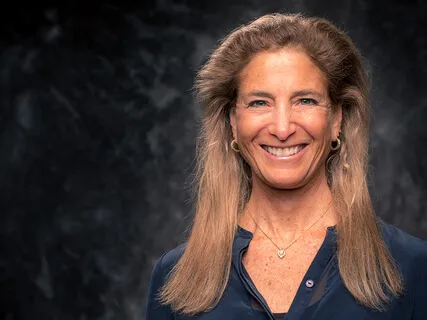
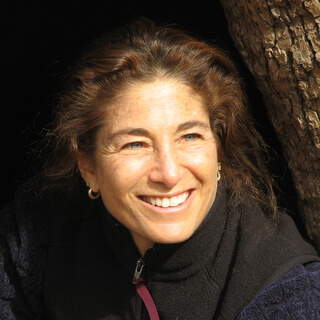
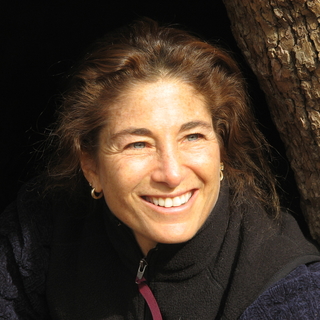
The following talk is given by Tara Brach,
Meditation teacher,
Psychologist and author.
So we begin again a namaste and a welcome to each of you.
It's really one of those strange things with this virtual world that usually as many of you know there's a live group that I'm with and I've probably had about thirty hugs before I sit down to give a talk so now I'm feeling a virtual collective hug going on and I'm trying to imagine you and listening from many,
Many different places around the globe and it's very sweet,
Very sweet to be with you.
What I'd like to reflect on tonight is very much what is right in the times is what it means to face a pandemic,
A time of really widespread fear,
How we can do that with a compassionate heart.
And I really invite you as we will be doing some experiential reflections and so on as we practice together it's so powerful to keep remembering and visualizing that you are joining in with humans from all parts of the globe,
Beings like you who really want to live with presence and courage and love through these times because it's so important to realize our togetherness.
I don't need to name it really,
These are frightening times and I imagine like myself most everyone listening has some real fear maybe for yourself or for others that are close in or maybe it's the fear for so many in our world that are struggling.
And what is going on now feels quite different than personal suffering and what I mean by that is in contrast to if we get that cancer diagnosis or a relationship fails we are all in it.
There is that well-known saying,
Be kind.
Everyone you meet is fighting a hard battle.
And what's growing clearer than ever is that each of us is having to face at a different pace but face our vulnerability and it feels out of control and it can feel scary.
I want to share personally if we were in a live group I'd be asking us to kind of talk to each other and share,
Well,
How is it for you right now?
For me my daughter-in-law is pregnant and she is a nurse working at the largest hospital in the San Francisco area,
Committed to staying on,
So she is super high risk.
And my son's father who is a very dear friend lives with them because he is very ill,
He has a severe heart condition,
So he might not survive the virus and it's very likely to be brought into that home.
It's complex but that's scary.
And then of course I have many more friends in quarantine as probably so many of you and many,
Many friends who are financially on the edge and we know pandemics are toughest on those who are most vulnerable.
It's been like this through history.
So those with the least access to good jobs and reliable incomes,
To the resources really of our society,
They are the ones that are most likely to contract the virus,
To die of it,
And if they don't die to be financially devastated.
So as I imagine this,
As I think of this – and it's very much in my heart and mind – of the close ones in and those that I know and those that I don't know and how our hospitals are quickly running out of supplies,
There will not be enough beds,
There won't be enough ventilators.
Well what comes up in me,
Just to name it,
Is this very real mix of fear,
I feel grief with my kind of… my heart's anticipating real loss,
There's a rawness,
There's a tenderness.
And with all that is also a sense of possibility that the possibility that this suffering,
It's so deep and so wide,
Will wake up our hearts in a collective way.
And many of you are familiar,
I know,
With the Bodhisattva aspiration,
A Bodhisattva is an awakening being,
And the words are,
May whatever arises,
Whatever circumstances arise,
May they serve the awakening of compassion.
So I want to bring that into our shared reflection because this prayer is really in very deep in me that,
May this suffering awaken this heart and all hearts,
May it help make love go viral.
That's really the prayer.
So maybe I'll pause for a moment and just invite you to sense in what is it like for you in these times of global crisis where many have already suffered and many… much suffering yet to come.
I want to invite you to,
As the poet Martha Postlewaite says,
Create a clearing in the dense forest of your life.
And let these moments right now be a pause where you listen inwardly and feel,
What is there?
What wants attention?
What maybe have you been unwilling to feel?
And as you let yourself touch what really is living in you right now,
Your own perhaps sense of vulnerability,
Sorrow,
Fear,
You might ask the question that as I face this collective suffering,
What is being called forth in me?
What is it that's being called forth?
Who do you want to be?
Who do you want to be in the midst of this?
These are important questions,
My friends.
They're important because our prayer,
Our sensing,
Who do I really want to be through this?
That has the power to guide us.
Many of you know and love this teaching from Zen master Thich Nhat Hanh.
I circulated it some in the last week or so and it helps me every time I reflect on it.
He writes that when the crowded Vietnamese refugee boats met with storms or pirates,
If everyone panicked all would be lost but if even one person on the boat remained calm and centered it was enough.
It showed the way for everyone to survive.
So here we are.
We are in the midst of this huge unprecedented uncertainty,
Reactivity and fear and confusion and a lot more.
Can we be that person?
Because in a way we've been training for this.
Each of us in our own ways we've been training how to open more in our personal life to the joys and the sorrows,
To the fears,
To the losses with an awake heart.
We've been training.
So if you're intentional right at this juncture in time,
If you're intentional how you want to move through this,
The suffering that arises can turn you towards your deepest resources.
We kind of get backed into it,
Into our bravery and into our wisdom and our love.
And I'm sure you've seen it in your own life how it's often the periods of suffering,
The real losses,
The failures,
When we actually grow,
When our consciousness wakes up some.
So we'll look together now at how these very circumstances of our times,
The dangers that are presented to our bodies,
Our health,
Our life,
Our loved ones,
Our financial security,
How these very circumstances can be a grounds for compassion.
We'll explore that together and I'd like to do this in two parts.
First how what's going on and what's coming up in us,
How we can then find an inner refuge of love and of presence.
How can we do that?
And the second part is how we can find refuge with each other.
Because if ever there was a time for sangha,
If ever this world is going to experience truly moving through something,
Holding hands,
Whether it's… we might call it virtually but our hearts together,
This is the time.
So we start with the first.
And I'd like to name that it's important as we practice with the fears that come up,
As we seek inner refuge,
That we remember that fear is utterly natural and appropriate when we're facing danger and loss.
I love the language,
It's nature's protector.
It's telling us to take good care.
And in many ways in some parts of the world and with some of us,
I'd say the United States,
We haven't been awake and scared enough to do what we needed to do to prevent as much loss as may be coming.
So fear is an intelligent part of us.
And so often when it comes up there's a sense,
Oh,
I shouldn't be experiencing this.
There's something wrong with me for feeling fear in a sense that we should just try to get rid of it.
So for me one of the most powerful little practices I do when fear comes up is I'll mentally whisper,
This belongs.
It's like it's a wave in the ocean and it belongs.
So fear is natural,
It's intelligent.
And the challenge as we know is that if we don't know how to be mindful of fear,
You know,
If fear possesses us,
Then it can become truly debilitating.
When we get hijacked by fear we lose contact with our most recently evolved part of our brain,
Our frontal cortex,
We lose contact with compassion,
We lose contact with perspective,
With humor,
With all executive functioning.
So it's a matter of degree of course.
But fear when it takes over causes a tremendous amount of suffering.
And in a pandemic it's contagious.
So it can become widespread and it becomes one of the greatest dangers of a pandemic.
So again that question,
Can we be that person in the boat who feels the intelligence of the fear but knows how to hold it with mindfulness and with compassion?
Because this is where the training and mindfulness comes in.
And we're going to explore it bringing RAIN – which is a weave of mindfulness and compassion – to fear.
But first to say,
Many of you are probably aware that along with my colleague Jack Kornfield I teach a mindfulness teacher training certification program and a number of people in the current cohort are from China.
And several of them reported in,
They told us that the Chinese government has just officially recommended that to reduce stress and support community during these times everybody in China should practice mindfulness meditation.
So I heard this and kind of celebrated.
It's pretty cool.
And some of you might know that I and a couple of colleagues are currently offering webinars,
Mindfulness webinars,
To the House of Representatives and staff.
So here we are now waiting for the official word that we're supposed to do physical distancing,
Washing hands,
Quieting our minds and arriving in presence.
May it be so.
So let's take a look.
How do we find that inner refuge of calm in the midst of the storm for ourselves and for the sake of others?
When we begin I'd like to start by saying when fear is really strong,
When it's the level of panic or it's trauma,
We're what's called outside the window of tolerance.
And that's a phrase from my friend and colleague Dan Siegel,
A great psychiatrist,
And he describes the window of tolerance.
If we're within it,
If fear is within it,
Then we can bring mindfulness and compassion and really transform our relationship to it.
But when it gets outside the window of tolerance we first need to calm down our nervous system.
We need to do some reducing of the activation of the sympathetic nervous system,
Of fight-flight-freeze.
So there are a number of ways we can do this.
And you are probably familiar with them.
They're all forms of nurturing ourselves,
Helping us feel some sense of safety and love.
And one of them that is so helpful is breathing a long deep breath,
Breathing and counting to five in the in-breath and then counting to five in the out-breath.
And if you can do that for a few minutes,
Ten minutes,
Fifteen minutes,
You totally shift your nervous system around.
Other ways of calming fight-flight-freeze,
Grounding – and that means feeling gravity,
Feeling your belonging to the earth.
Part of grounding might be to touch the fabric of what you're wearing and to sense the surface of the desk or the material of your chair,
Name something you're seeing in the room so that you're bringing yourself into the here and now with your senses.
Another way of reducing fight-flight-freeze is by offering comforting phrases to yourself or by imagining a person or a place that feels safe to,
Person that's loving.
And then there's the physical ways of shaking,
Of stretching,
Of free movement,
Dancing,
Walk in nature.
So each of these that I'm naming has a common denominator in a sense that they actually are quiet thoughts and that's important because,
As you know,
Fear-thinking,
The thoughts in our mind then affect our biochemistry and we get trapped in a cycling that keeps us a prisoner of fear.
The most basic practice for quieting thoughts is to train in being mindful of thinking so that as you're meditating you're just getting the knack of noticing when a thought's there so you can actually say,
Oh,
This is a thought and have a choice to come back to the breath or the body or the sounds.
One of the most intuitive and true and useful kind of quotes that is attributed to the Buddha is that whatever you regularly think about that becomes the inclination of your mind.
These are times when there is real danger around us that we actually go on hyperdrive with worry.
So it's intelligent to be aware of danger and it actually causes suffering and makes us less effective in responding when we perseverate.
It's always been interesting to me that the word worry has the roots in the English language of strangle,
To strangle.
So the intention in practice of mindfulness is to become mindful of fear-thinking and come back into our senses.
If we can come back into our body or to the breath or to our senses we can then have a choice as to we can deepen presence and we can really begin to heal the roots of the fear.
So once we've done that,
Once we've dealt with super intense fears,
We've grounded,
We've shaken,
We've done whatever we do to calm the nervous system,
That's when we can start deepening attention with RAIN.
For those of you that aren't familiar RAIN is a weaving of mindfulness and compassion and the letters of the acronym give us an easy to remember sequence that can help us to recognize what's going on,
R,
A,
Allow it to be there,
I,
Investigate it,
And N,
Nurture it.
And then there is after the RAIN where we actually rest in presence.
This weave of mindfulness and compassion in a kind of evolutionary sense shifts us from fight-flight-freeze to attend and befriend.
I'm thinking right now of my favorite story that in a sense is the most psychologically sophisticated in some of the Buddhist lore is of the Buddha teaching and he teaches these fields and there would be many people there and often when he'd be teaching the God of the shadow side whose name is Mara,
And that's the God of fear,
Of hatred,
Of anger,
Of lust,
Of confusion,
Of uncertainty,
Mara would always show up and Mara would kind of lurk around the sidelines and the Buddha's loyal attendant and who is also his cousin Ananda would see Mara and be pretty freaked out,
Oh my God,
Fear,
Fear seer,
You know,
And he'd go to the Buddha and say,
What are we going to do?
And the Buddha would calm him down and say,
It's fine.
Then he'd walk over to Mara and he'd say,
I see you Mara,
Come,
Let's have tea.
I see you Mara,
Come,
Let's have tea.
And this is a model of how we can come into relationship with fear in a way that frees us.
It's also,
You can see it in RAIN how it works that when we start with the recognizing that's I see you Mara,
Let's have tea,
Allow,
We're not going to fight,
It's okay,
It's kind of the beginning of warmth and then the investigate is I really see you Mara,
Looking deeper into Mara,
Really understanding Mara and nurturing is when having tea becomes a sense of communion,
Of love.
So we're going to look at this a little more closely.
I would like to just make a few comments on because we're particularly applying RAIN to fear in this exploration.
And some of the keys are that recognizing means whatever is predominant in the moment.
And it's a very powerful way if you can,
When you recognize it,
Just with a mental whisper name what you are aware of.
Okay,
Fear,
Anxiety,
Worry,
Agitation.
There is really good research,
One I'm thinking of from UCLA,
That describes how when you name an emotion it reduces the limbic activity,
The unpleasant emotions,
And it activates the prefrontal cortex which gives you much more resourcefulness.
So naming an emotion just right at the very get go.
Okay,
Fear is here.
There is a little more space,
There is a little more awareness,
You've reconnected to your resourcefulness.
The shaman have an understanding that is when you name a fear it loses its power.
Of course not all at once.
This is the beginning of RAIN is recognizing the power of naming.
Then the second step allowing.
Now what happens when we try to allow fear?
It's not easy because most of us want it to go away.
So you'll notice with allowing – and these are just some tips here to help you as you practice – you'll notice with allowing comes bargaining mind.
Okay,
I'll allow you to be here if you'll go away.
The problem is it knows.
So you can't really get away with bargaining mind but it's natural.
It's natural that there is a part of you that wants the fear to go away.
So allowing doesn't mean you have to wholeheartedly toss aside all resistances and just open your being because you can't legislate that.
It just means there is some level of willingness to let it be there,
To let be,
Some level of willingness.
And that you can offer because there is some wisdom in each of us that knows that what we resist persists,
That if we fight it we are going to be imprisoned by it.
So the A allow – I often will just say,
Okay,
This belongs as I mentioned earlier – that creates some space of allowing.
So we've just done recognize as I see you Mara and allow,
Okay,
We are going to get together,
I'm just going to be with you for a while,
It's like I'm willing to pause with you.
With fear we typically need to go deeper which is why we need the investigate and the nurture.
Now investigating we are really asking ourselves,
Well,
What am I unwilling to feel about this?
And investigating is somatic.
The biggest misunderstanding of RAIN – and if you misunderstand it in this way there will be no real healing – is that investigating is cognitive.
There can be some cognitive questions but they need to bring you back into your body because as we know our issues are in our tissues.
So it's not until we bring a full presence to the fear in our body that we actually find freedom from it.
So the investigating might have a question like what most wants my attention,
Where am I feeling this?
What does it feel like?
And with investigating it's very helpful to bring your hand to wherever you feel the fear – it's usually the throat,
The chest,
The belly.
There's two reasons.
One is that when you bring your hand there it'll help you keep your investigating attention where you are looking because our mind tends to scatter so it helps to focus the investigation.
But it also begins to offer some nurturing because if investigating isn't gentle,
Isn't kind,
Then we won't be able to really discover anything.
You might think of the parts of us that are fearful as these shy creatures that hide in the shadows of the woods and we're trying to bring them into the light of awareness with investigating and that means it needs to be an invitation,
You know,
We need to invite the vulnerability to show itself so that hand can be helpful with that.
Then comes the nurturing.
We investigate and find out what does this vulnerable part really need and the nurturing we really have to customize.
Each one of you needs to find for yourself what really feels nurturing in this moment and with fear as with any other emotion sometimes it'll be words of comfort,
Sometimes it'll be words like,
You know,
I'm here,
I'm not leaving,
I care about you,
You're not alone,
I'm sorry and I love you,
It's okay sweetheart.
There's different words you might find.
Often it's the continued touch and to keep it tender and sometimes as we'll practice because we're going to practice in a few moments doing a light rain,
We let the nurturing come from a larger source.
Nurturing doesn't mean it's self-nurturing.
Nurturing means that we're nurturing the vulnerability,
Calling on whatever source of love,
Our own away card or something that we perceive as larger,
To offer kindness.
Let me give you a little example that is quite current with myself working with fear and bringing rain to fear.
And this was just a few days ago because as I shared with you my nervous system is agitated.
I've woken up in the middle of many nights now sensing those that are close to me that are vulnerable and also just the countless numbers of vulnerable people.
It feels like a lot of impending loss.
So often I'll do my meditation down by the river when I'm walking and I'll walk and then do a meditation sitting on a rock by the river.
And I was feeling the agitation in my body so I recognized – I just named it – okay,
Agitated,
Afraid.
And then A was allow,
Just okay,
Agreeing to let it be there.
I didn't like the feeling so I was allowing that I didn't like the feeling but began to investigate and asking myself,
Well,
What's this like?
And I could feel it.
It was in this chest area and sensing it was kind of squeezing and there was kind of a crushing feeling.
And it helps sometimes with investigating to just name what you're noticing there,
You know,
Just a mental whisper,
Feeling into what was most vulnerable.
And then the investigating was,
Well,
What really am I unwilling to feel or what really wants attention?
And I went right into the epicenter of where there was the most of a twist and a squeeze and the unpleasantness of fear and I just started breathing with it.
And the intention was a kind of surrendering presence.
And I just feel this,
Just feel this exactly as it is.
And as I did I just started sensing into what is this squeeze of fear most need.
And it was clear that what it most needed was pure loving.
It most needed to belong to love.
It was like the waves needed to belong to the ocean.
So the nurturing then was really calling on the entire universe.
And it wasn't like an abstract universe,
A very intimate but vast field of loving that I just imagine and feel it washing into the vulnerability,
Washing in,
Washing in.
And there was kind of a background of just a whisper of the word beloved,
Beloved,
Washing in,
Washing in.
And with that there was a dissolving.
There was still a tenderness.
It was full and big.
And so that led to After the Rain.
And I want to just name to you that the moments after you've gone through recognize,
Allow,
Investigate and nurture what we call After the Rain,
If you skip it you miss the deep transformation and realization that's possible in the process because it's during After the Rain where you just rest in the presence that's there,
That you start becoming familiar with that presence as more true,
More the truth of who you are than any of the stories that you were living in.
So rather than being the agitated self or the scared self,
That open,
Tender awareness was what I felt as the experience of my own being.
And it could include whatever was coming and going.
So I wanted to share with you that because it feels really current and mostly the message is that rain is a tool of radical compassion,
That it has certain key elements that if you can with the recognizing and allowing and investigating really get embodied,
Really feel directly the fear without resistance.
And then if you can actively nurture,
Like really sense actively the care and the love,
You will discover that kind of all-inclusive presence that we call radical compassion.
And the secret,
The key piece really for me is loving the fear.
And here's the deal.
If I started off when I felt fear saying,
Okay,
I'm going to love this fear,
It would just be my ego trying to will myself to love fear and that wouldn't be possible because the biochemistry of fear and the biochemistry of love are so different.
But we can gradually unfold into loving the fear by first just recognizing it,
Allowing it as much as possible,
And then that gentle investigating in the body,
Putting our hand there until gradually there is a sense of this vulnerability,
Being in relationship with it in a way that love can wash through us.
A couple of other comments now.
One is that rain is never a one-shot.
For anything that's a deep and ongoing emotional experience we have to keep doing it.
But here's the good news which is every time you practice with fear the pathway of finding inner refuge becomes more spontaneous and more natural.
You find your way more easily.
Rain shall take a longer time.
When I described it the river that was probably about ten minutes.
It wasn't really long.
Sometimes much quicker.
In fact one teacher from our meditation teacher training program was sharing how they've been using rain to deal with what she called the pandemic trance,
Getting just caught in the agitation,
The fear,
All the reactivity.
And she described how even a light rain could help her that when she felt this fear for what was around the corner she would recognize it and allow it.
And then she'd find inner body and just take three breaths,
Breathing with it,
Just three breaths,
And tell herself,
Come home to your heart.
And she'd just stay quiet for some moments and notice the quality of the presence that was there.
But that was it.
Just a few minutes.
So I invite you to explore it in light ways and deeper ways.
And it really can free you up.
And we'll just practice a little bit right now just to give you a taste especially if you're new to rain on how to bring rain to fear.
Take a moment if you will to adjust how you're sitting if that's helpful.
Just take a few full breaths.
And you might scan and sense whatever might be going on in your life,
It may be pandemic related or other,
It might be bringing up some form of fear.
And I want to make clear this is not a time to bring up a traumatic kind of fear or panic.
Practice with something that doesn't feel overwhelming to you right now.
Just to get a taste.
And as you bring to mind whatever circumstances bring up fear just to make it more immediate just visualize whatever it is that involves another person,
See that person,
What's going on for them,
If it involves you,
Just see the setting that most might in your mind relate to or associate with the fear.
If there's something being spoken that brings up fear,
Something you're visualizing in the future.
And begin the practice of rain recognizing whatever is most predominant.
Maybe that you mentally whisper the word worried or angry or fearful,
Anxious,
Tight,
Whatever is predominant.
And then let your intention be to allow.
That means a willingness to pause with what is here.
So that wisdom in you just says let be,
This belongs,
This is a natural part of life,
A wave in the ocean.
If you can allow even for some moments that enables you to begin to investigate the eye of rain.
You might notice where you feel this in your body.
Your throat,
Your chest,
Your belly.
Sometimes with investigating you can ask yourself what am I believing,
What am I anticipating?
And whatever comes up then find out how your body experiences that.
If you're believing something bad is going to happen to you,
That you're going to lose something precious,
What's that like to feel in your body?
So again feeling the throat,
Chest,
The belly,
The center line of your body.
You might find it helpful to put your hand wherever you can sense fear.
And for some because so many of us are dissociated from our body it can be very vague and that's okay.
A sense that you're inviting whatever wants to be accepted and included into awareness.
Just invite the fear to be felt.
Breathing with whatever vulnerability you're contacting.
And with some interest and gentleness what does it feel like?
How is fear living in this body right now?
Perhaps you can breathe with it and feel right to the epicenter.
Whatever you're experiencing as you investigate to again allow it to be there.
A kind of surrendering presence,
No resistance.
With an intimate attention you might ask the vulnerable part of you,
How do you want me to be with you?
What do you most need right now?
And sense that you can listen from the most awake,
Wise part of your being,
From your awake heart,
What does this place most need?
Is it love?
Is it pure acceptance or forgiveness?
To feel embraced?
And sense that your awake heart can offer what's needed in a very direct and intimate and immediate way just washing through and bathing that vulnerable place with some quality of tender presence,
Of love,
Of compassion.
And if for you it's easier to imagine that compassion and love coming from another source,
From a loved one that you trust who is wise and you know cares about you or from a spiritual figure or from a formless loving presence,
Just imagine and feel and sense that love pouring in.
Let your deepest intention be to let that vulnerable place feel loved,
Washed and bathed in love.
You might imagine light,
Warmth,
A wash of tenderness.
Become aware of the quality of presence that's here.
Let yourself relax,
Open,
Just rest and be that presence,
That open,
Tender presence.
Notice the difference between being identified as a fearful or agitated self and the spaciousness and openness and freedom of loving presence.
As you're ready,
Taking a few full breaths.
Then you can open your eyes if you'd like or if you're enjoying sitting with your eyes closed that's quite fine too.
So we spent a good amount of our time talking about the pathway to inner refuge,
How to bring rain to the fear within us and really wake up a compassionate heart.
The second part – and we'll explore some,
Reflect together some and then perhaps continue it at another time – is that if we've been able to befriend the fear that's within us that heart-space naturally can include others so that in this time of pandemic while there is physical distancing we can deepen our heart connection.
Last week,
About four days ago,
I did an interview with the Washington Post and one of the questions that the reporter asked me was,
Well,
So how is this for you?
And I shared what I've shared with you that I do have these very real fears for close-in beings and really real fears for countless beings I don't know.
And then she asked me,
So what does help?
And I talked about this meditation practice and rain and I also talked about walking in nature which is – how to say what my real religion is – it's probably taking refuge in nature,
You know,
The wild flowers by the river as spring is here,
It's wonderful.
And then I said,
You know,
In the deepest way it's the moments of being real and open-hearted with others.
And there is a quote – it used to be attributed to the Buddha and I'm not sure now but it's a great quote – which is that,
Our fear is great but greater yet is the truth of our connectedness.
That's the opportunity right now.
And yet we need to be conscious about it because – and this is in contrast to other natural disasters like volcanoes and earthquakes and so on – pandemics can actually be a setup for disconnection because our fear of each other can separate us.
You know,
There is the physical distancing,
There is competition for scant resources,
So it can actually exacerbate loneliness and depression and feelings of distance.
And interestingly it really can shut down compassion.
Historically in pandemics people have often been so terrified,
So filled with dread of each other that they weren't able to take good care of each other.
Of course the exception has been through the age of the heroism of healthcare workers.
But for most there has been dread.
So it's important to know that and also know that we have ways to face this conditioning and to be aware of that tendency to feel separate and then to bring our deepest intention to actually leaning in with our hearts,
Leaning in with our hearts.
And there are three domains that we can explore this in.
And I'm going to touch on them lightly and then as I mentioned we may kind of expand on them over time,
Over these weeks.
But there are three domains where we can with each other reduce the fear and increase the love.
One of them quite simply is to get in the practice of reaching out to each other,
Being with each other by phone.
There are a growing number of online sitting groups,
At times where we actually can just as I'm doing with you share with each other,
This is what it's like for me.
And when I practice with this,
This is what's happening,
What we're afraid of,
What our aspiration is.
For those of you that are familiar with RAIN it's a really powerful time in our lives to have a RAIN partner.
Many,
Many people in our teacher trainings and others that Jack and I work with are teaming up as RAIN partners.
And you can find all the information on RAIN partners in my website.
And to the extent you want to do a deeper dive into RAIN – this is shameless promotion of my book Radical Compassion – it will teach you all the nuances of how to practice with it.
So reach out,
Team up,
Be open,
Be vulnerable,
Be real with each other,
It's so rewarding.
That's the first domain.
The second is engage in ways that can be helpful.
You know,
When we're traumatized the feeling is of powerlessness,
We're in a deep feeling of being threatened but we freeze.
And one of the healing processes in trauma is to engage in a way that can bring us towards healing and safety.
And part of that is engaging with each other and helping each other.
We can reach out to someone who might be lonely.
It makes such a difference.
Whether for you the other ways of engaging might be contributing time or money to initiatives that are helping others directly volunteering.
Two friends this weekend were on the bike trail and they made their intention is they were going to have eye contact,
Smile and wave with as many people as possible to kind of send out that sense that we're here together.
And they came back and reported such a high from that,
Just that feeling of connection.
In Ireland some of you might have heard through tweeting what went viral was this message of who needed medicine and food of the elderly and it got matched with volunteers.
You can support people on the front lines,
Those that are the healthcare workers by walking their dogs or getting food or taking care of their children.
So the first way,
Reach out and be with your friends and your peers.
The second way,
Engage and help.
And the third way,
And it's critical that we don't forget this,
Celebrate the goodness that's here.
Walk outside.
Take in the beauty of spring.
Take in the dearness of those that you might be working at home with or the caring of so many in this world who want to serve the good.
You know a few days ago in the New York Times there was an article on Italy,
Some of you probably saw it,
It was so poignant,
It said,
It started with the national anthem,
Then came the piano chords,
Trumpet blasts,
Violin serenades and even the clanging of pots and pans,
All of it spilling from people's homes,
Out of the windows and from the balconies,
Rippling across the rooftops.
Finally on Saturday afternoon a nationwide round of applause broke out for the doctors on the medical front lines fighting the spread of Europe's worst coronavirus outbreak.
In China,
Patriotic truck drivers risked infection to bring desperately needed food to the people of Wuhan.
It's the epicenter.
In Iran there were videos that showed doctors in full scrubs and mass dancing to keep people's spirits up.
And of course here in the States we had Stephen Colbert,
The comedian,
He did his last live audience and he's saying,
You know at times like this we all need to laugh,
We all need to be together.
And then he kind of backed away and he said,
From a distance of about twenty feet.
So fortunately physical distance does not have to limit our hearts.
So in closing my friends,
When things fall apart as they are collectively we can turn to that beautiful aspiration,
Please may this serve the awakening of our hearts.
For you to really ask yourself what is being called forth in you?
Who do you want to be through this?
How do you want to be?
And really together what kind of world do we want?
What can we build out of this?
We are just so aware of the viral contagion and the panic is contagious and loving presence is contagious.
We have this opportunity to make this a viral time of caring.
Let me close with a poem and we'll just be quiet together and do a brief closing meditation.
And this is a poem that is as so many,
It's one of the ones that's beautiful and going viral.
Many of you may be familiar and reflect together on it.
If you'd like to close your eyes please feel free.
This is composed by Richard Hendrick,
Catholic priest from Ireland and it's called Lockdown.
Yes,
There is fear.
Yes,
There is isolation.
Yes,
There is panic buying.
Yes,
There is sickness.
Yes,
There is even death.
But they say that in Wuhan after so many years of noise you can hear the birds again.
They say that after just a few weeks of quiet the sky is no longer thick with fumes but blue and gray and clear.
They say that in the streets of Assisi people are singing to each other across the empty squares keeping the windows open so that those who are alone may hear the sounds of families around them.
They say that a hotel in the west of Ireland is offering free meals and delivery to the housebound.
Today a young woman I know is busy spreading flyers with her number through the neighborhood so that the elders may have someone to call on.
Today churches,
Synagogues,
Mosques and temples are preparing to welcome and shelter the homeless,
The sick,
The weary.
All over the world people are slowing down and reflecting.
All over the world people are looking at their neighbors in a new way.
All over the world people are waking up to a new reality to how big we really are,
To how little control we really have,
To what really matters,
To love.
In these final moments you might scan through your body and your heart sensing what wants to healing attention inside you.
And take some moments to whisper whatever words of comfort to your own heart you feel will bring most healing.
Really whisper them though.
Feeling the heart-space that's here,
Bringing to mind someone else in your life that's here,
Someone else that you'd like to bring some healing presence to and perhaps sensing their fear and uncertainty.
And take a moment to whisper some care,
Some prayer to them.
Bringing to mind someone who is different from you,
Different class,
Race,
Religion,
Someone who you might forget really is just like you deep down,
Wanting to feel safe and loved.
Bring someone to mind.
And remembering that wisdom to be kind,
Everyone you meet has a hard battle to sense this person's vulnerability to and whisper a prayer of care.
And feeling all beings,
All of us,
This living web of beings all in it together,
Feeling your heart's prayer and our shared prayer that each and all of us might remember the loving presence that holds our life,
That we may take refuge in that loving presence,
That we might live from loving presence,
Meeting each other and all beings with care and with understanding.
May all beings everywhere be free from suffering.
May all beings find a great natural peace.
May all beings awaken and be free.
I want to thank you,
My friends,
For participating in this and I'll look forward week by week.
We'll see what unfolds to being with you in this way.
Please take good,
Good care.
Thank you.
Blessings.
For more talks and meditations and to learn about my schedule or join my email list please visit TaraBrock.
Com.