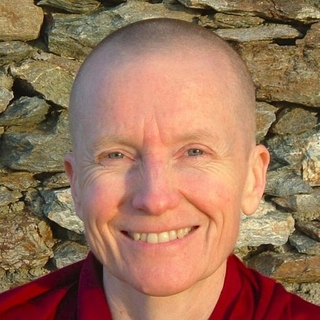
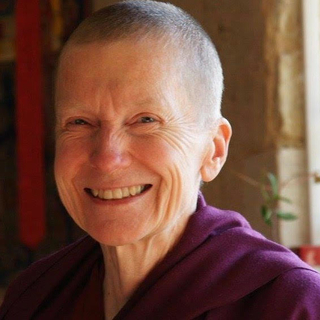
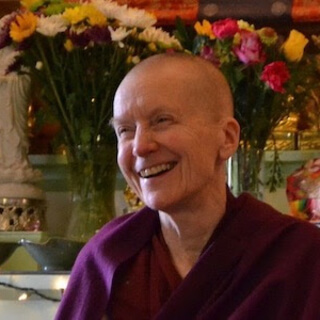
So the topic for both the meditation and the talk that Venerable Chodron will give later is Working with Anger,
The title of one of the books that she wrote.
It was interesting,
The other day there was a visitor to the Abbey,
Someone who came here for the first time and just wanted to look around.
And she was told about today's event and her response was,
Oh,
I don't have anger.
And.
.
.
I remember a time long,
Long ago that I thought that way.
I didn't think I had anger.
And that was before I started learning Buddhism.
And I realized that I think my idea of anger was yelling and screaming and throwing things and hitting people,
And I didn't do those things.
You know,
So I thought,
Oh,
I don't have anger.
But then as I learned more about Buddhism and also doing meditation,
Looking at my mind,
Getting to know my mind better,
I realized that I did have anger.
In fact,
I had a lot of anger.
I just kept it inside.
Didn't act it out.
And.
.
.
And some years later,
While I was teaching Buddhism,
One woman who had been coming to classes I was teaching and would talk about anger and she told me that when she first heard me talking about anger she thought,
Oh,
I don't need to listen to this,
I don't have a problem with anger.
And then thinking more,
She realized she did,
But she was calling it something else.
She was calling it being upset.
So she realized that she got upset with people or about things.
So anger isn't just this external display of,
You know,
Violence and yelling and screaming and.
.
.
It can also include just subtle thoughts in our mind,
Like being upset,
Having critical thoughts,
Nasty thoughts about people,
Even if you have a smile on your face,
But inside there is something else going on.
It can also include irritation,
Impatience.
Being cold,
Unfriendly,
Withholding love or friendliness from others – I used to do that a lot – and being upset,
Frustrated,
Or even a low-level feeling of dislike,
Irritation.
So those are like different forms of anger,
Low-level forms of anger.
And I can't help but think that everybody has those kind of things going on in their mind,
At least occasionally.
Like when the team you're rooting for loses the game,
Soccer or basketball or whatever,
If you're into sports.
Or something happens that doesn't go the way we want it to and we feel this inside.
So yeah,
Don't be too quick to think that anger is just somebody else,
Other people's problems and not mine.
So in the last few of these sessions,
Sharing the Dharma Day sessions,
Venerable Chodron was talking about causes and conditions for anger to arise in our mind.
So anger,
You know,
Comes up sometimes,
And there's always causes and conditions for it.
And if we can understand those causes and conditions,
At least some of them we can work with.
We can learn how to work with the causes and conditions to reduce them or even avoid them,
Eliminate them,
And that will really help to reduce the incidents of anger coming up in our mind.
So this is actually one way we can start to work on anger or whatever you want to call it,
Being upset,
Irritated and so on.
So that's what we'll do a meditation on.
We'll do some silent meditation for five or ten minutes just to cool down,
Calm down.
And I'll give a little bit of instruction on that in case you are new to meditation.
And then we'll do what we call an analytical meditation,
Which involves thinking,
Contemplating,
Reflecting.
On this topic of,
You know,
The causes of anger and what we can do about those.
Okay,
So let's begin.
So as most of you probably know,
We're advised to have a positive motivation for the things we do,
Especially when it comes to spiritual things like meditation.
So the prayer we just recited called the prayer of the four immeasurables expresses four really positive beautiful thoughts that we can develop in our mind towards other beings and that will really help us have a good motivation.
For what we're doing,
For being here today and meditating,
Listening,
Talking,
And so on.
So just as it was expressed in the prayer,
See if you can feel how wonderful it would be if all living beings could be happy,
Could have whatever they need to be happy,
Comfortable,
Flourish,
Have physical and mental well-being.
Wouldn't that be wonderful?
And how wonderful it would be if they could be free of all suffering,
All problems.
So if there could be an end to all wars and fighting and conflicts,
Abuse,
Injustice,
Hunger and sickness.
So all the various kinds of physical,
Mental,
Emotional problems that people experience,
If all of those could disappear.
And how wonderful it would be if all people and all beings could achieve higher and higher forms of happiness,
Spiritual happiness,
Peaceful minds,
Virtuous qualities,
Realizations,
All the way up to enlightenment.
I just feel how wonderful that would be.
And then how wonderful it would be if all people,
All beings,
Could be free of the strong afflictions like anger,
Hatred,
And attachment,
And jealousy,
And so on,
That cause them to get into quarrels,
Conflicts with others,
Not have equanimity and unbiased attitude of concern for everyone.
I feel how wonderful it would be if their minds could be in a balanced state of equanimity towards all other people and beings.
And then connecting that with what we're doing here,
You can think,
May the activities we're doing here today be a contribution toward those goals,
Those aims,
May it help all of us and all living beings get closer to awakening.
Okay,
So.
.
.
Let's do a quick body scan.
Just let your mind travel through your body from the top of your head down.
And if you notice any tension in any part of your body,
Maybe your neck,
Your shoulders,
Your back,
See if you can let go of that tension.
Imagine it disappearing.
Are melting and flowing out of you and sinking into the ground.
And check your mind and if you notice thoughts in your mind not related to what we're doing here,
Maybe you're still thinking about something that happened earlier this morning or yesterday,
Last week,
Put those thoughts aside for now so that you can just be here in the present.
Fully attentive to what we're doing.
And the same with thoughts of the future,
Plans you have for later today or tomorrow,
Next week and so on.
Put those aside.
Just let your awareness be in the present right here right now And a good way to settle our mind in the present is by observing the breath,
Being aware of the breath coming in and going out.
So you can do that in whatever way you know how or whatever way is easier for you.
And just try to keep your mind,
Your attention on the feelings,
The sensations of the breath coming in,
Going out,
One breath after another And if you notice your mind wandering away from the breath to something else like thoughts,
Memories,
Plans,
Or sounds in the room or outside,
To anything other than the breath,
As soon as you notice that,
Just let go of that thought or that other experience and come back to the breath.
Even if you have to do that again and again and again,
It's fine,
It's okay.
No reason to get frustrated.
Just part of the practice.
Okay,
So we'll move now into the reflective part of the meditation.
So I'll just give you some ideas of things to think about and give you some time to think about them.
So just do your best to stay on the topic and not let your mind wander elsewhere and think of things not related to this topic.
So,
First of all.
.
.
Check to see if you do have the wish to work on anger.
Can you see that anger leads to problems?
Like it makes you unhappy.
It's really hard to be happy at the same time as being angry.
And it can cause problems in relationships.
Tension,
Arguments,
Sometimes even destroying relationships.
So just check if that's ever happened.
And it can lead us to say things or do things that we regret later.
Even if we make an apology and the other person accepts the apology,
But there's still some damage done that can maybe never be completely repaired.
And also with meditation or other spiritual practices,
It can come up in our mind,
Disturbing our mind,
Making it difficult to have a good meditation.
And then on the other hand,
If we can learn to manage anger,
Reduce anger,
Then we'll have fewer of those problems.
We'll have more happiness and peace of mind.
We'll be able to get along better with people.
And fewer disturbances when we do meditation or other spiritual practice or study.
So,
One way we can work on anger.
Is to recognize causes that bring it up and then learn to avoid or eliminate or change those causes.
And one of the main causes is having contact with people or objects that we dislike or that irritate us.
So this is similar to,
Say,
A person who's trying to recover from addiction,
Like alcoholism.
They want to stop drinking.
So it's best for them just to avoid being around alcohol,
Going to bars,
Going to parties where people are drinking.
Otherwise,
If they see the alcohol,
Smell it,
See people drinking,
Then that can trigger their addiction and make it really hard for them to stop.
That's kind of similar with anger.
There are certain people,
Objects that trigger our anger,
Then it's best to minimize contact with them.
Or even avoid them altogether if that's possible.
So bring to mind a person that triggers your anger or milder forms of anger like aversion,
Irritation,
Impatience,
And so on.
And can you recognize how seeing that person or even just seeing a picture of them hearing their voice.
.
.
Being in the same room with them and even thinking about them,
How that can trigger your anger.
And in this kind of situation we usually think that we can't help but be angry or irritated with that person because They're just so irritable.
There's so many things wrong with them,
So many things they do wrong,
That we can't help it.
It's just a natural response.
But you might notice that not everybody feels the same way as you do.
Not everybody gets angry.
Some people like that person,
Even love that person,
Are happy to be around them.
So in Buddhism it's said that if we have anger or other afflictions towards somebody it's not their fault but rather it's because of things going on in our mind,
Our ways of thinking,
Our likes and dislikes,
So factors in ourself that cause us to have anger.
And the good thing is that we can change these.
We can change our thoughts,
Our concepts,
Our ideas.
And even get to the point where we don't get angry at anybody.
But that takes time.
That'd be easy to change the mind So in the meantime,
While we are in the process of working on our mind.
.
.
Then it can be helpful to cut down the contact we have with that person.
So just check if that is doable,
Something possible.
And that doesn't mean being unfriendly So we can still have some contact with a person,
But we can try to make some changes in our lifestyle and our way of doing things that we don't have too much contact.
And when we do have contact,
We can still be friendly towards the person.
And one way of doing that is.
.
.
Learning the phrases in the prayer of the four measurables and using those you know specifically focusing on that person and thinking may you be happy May you be free of suffering and so on.
And another thing is that if we know we're going to have contact with that person.
We can prepare ourselves mentally.
So that we reduce the likelihood of anger coming up.
And so one thing we could do would be to.
Think about some positive thing that that person has done.
Or some good quality they have.
That way we can see them in a more positive light.
And there's another factor that can cause or increase anger coming up in our mind,
And that is rumination.
So,
For example,
While we're driving or washing dishes or.
.
.
Lying in bed at night trying to go to sleep.
Thoughts about that person might come up in our mind and our mind gets hooked.
We start thinking about them in a negative way.
And then our mind gets caught up in anger,
Irritation,
Criticalness.
So if we can recognize how unhelpful this is,
Unskillful,
How it can cause problems,
Then we can resolve that if we notice this happening in our mind to change the subject,
Change the channel.
Just make an attempt to stop thinking in that way and think in some more positive way.
Just completely think of something else other than that person.
Something that's more positive,
More constructive.
So now let's wrap up the meditation.
And as a conclusion,
If there were any insights that you had,
Anything that was useful,
Beneficial,
Came to your mind,
Make a resolution that you'll try to keep this in mind and bring it into your life,
Into your experience,
To help you have less anger,
Less irritation.
And then let's do a mental dedication of the merit of this meditation,
The positive energy.
May it help us and everyone else,
All beings,
Have less anger and other afflictive states of mind and more positive states of mind that bring happiness and benefit to ourselves and to others and help us get closer to awakening.