The perfection of what is is always true.
That does not mean that we never look forward and decide,
Okay,
I'm going to change this and we do this a little bit differently.
But what we do know for certain,
This is where I think that the work,
A lot of the work begins,
Is that whatever scenario the universe conspires for my benefit to create for me today,
That's the perfection of what is.
I think you start there and trusting that the universe has your back and that everything comes to us for your greatest good.
Your responsibility is to find out what that is.
Be curious to have enough self-love,
Self-awareness to really go all the way in and say,
Okay,
How can I really use this to become a great gift?
The illusion of perfection has to be thrown out.
Welcome to the Spiritually Hungry Podcast,
Episode 62.
Alrighty then.
I am excited as usual.
We are going to focus on focus.
No,
We're not.
Yes,
We are.
Maybe we didn't get the same memo.
I'm completely unprepared then.
That's what we're talking about.
And specifically,
Just stay with me,
How easy it is to focus on one or two things that maybe aren't working or things that we feel we lack.
Is it starting to bring a bell now?
And before we know it,
We've wandered into the realm of should be and begin mistaking our differences for imperfections.
Let me tell you a little story.
I know how you like stories.
I love them.
Spoon.
Oh,
By the way,
I'm still concerned about that poor girl.
Alison.
I'll try not to traumatize you this time.
Spoon by Amy Rosenthal is a children's book about a little spoon from a large loving family of spoons.
Intrigued?
Very intrigued.
But the little spoon is jealous of his friend,
Knife.
I would be too,
By the way.
Knife's pretty powerful.
Really?
I like spoons.
You use spoons a lot more than you use knives.
Yes,
But you can use many things in place of a spoon,
But not in place of a knife.
Therefore,
A knife is more than a spoon.
I don't think you can argue that.
Let's not divert,
Because as soon as you're going to tell me we're running out of time.
If you need to scoop things up,
You can only use a spoon.
Or your hand.
If you want to cut something,
Though.
If it's a sharp knife.
Exactly.
I win.
All righty,
Back to the story.
I know you're still trying to think about it.
I'll smart me on this,
But the knife wins.
I'm just envisioning the spoon family.
I'd rather be the knife.
Spoon never gets to cut things or spread jam.
I'll be the spoon to your name.
And his friend Forky gets to go everywhere.
In salads,
To the grill.
She even gets to twirl spaghetti around her tines.
And chopsticks?
So exotic and cool.
He'll never be as cool as a chopstick.
But Knife is sad,
Because Spoon gets to have way more fun than he ever does.
Spoon gets to visit ice cream and bang on pots.
See,
You didn't think of that,
So you don't get that win for the spoon.
Knives are too dangerous to have any fun.
Fork is sad because she can never measure things like Spoon can.
Chopsticks wish they could be independent like Spoon.
They have to go everywhere together.
We are all a little like Spoon someday,
Self-critical of what we perceive as our shortcomings.
Differences are not imperfections.
We can spend our whole lives trying to be someone else.
When all along,
We were whole and perfect just as we are.
Right.
Don't you love that story?
I love it.
It's very beautiful.
Again,
And I'm sure you're saying this as well,
But that even the word imperfection,
Right?
Imperfections are good too.
Yes,
Because it's just differences.
What makes something perfect or not is your perception of what is.
Right,
So what we're actually saying is there really is no such thing as an imperfection.
Correct.
We should never.
.
.
We just use that code word because I don't think anybody else would understand what we're talking about.
Right.
I think we can say different.
But then even that,
You know,
We have to use the word imperfection for the sake of making the point.
Although we don't believe in imperfections.
Right,
Because imperfection I think often has a negative connotation.
Whereas,
What I think the focus of this podcast is really to come to an understanding or a consciousness that everything is perfect.
Okay,
So we're talking about the same thing today.
Hopefully.
Great.
Actually,
Brene Brown wrote a new book called The Gifts of Imperfection.
I'm not sure how new it is,
It's fairly new.
And she said that when we love and accept ourselves,
We can be vulnerable and tell our stories,
Expose our imperfections to others,
Which forms deeply meaningful versus superficial connections that fulfill us.
I started living this way,
I think,
Probably 15 years ago.
And that's why today when people hear me speak,
They're like,
Oh my God,
You were so vulnerable.
And for me,
It's kind of like I stopped for a second.
I'm like,
Wait,
Did I say anything that I wouldn't want to say?
Because for me,
It's just so normal.
That's just the way I operate,
Because I did go through that really difficult.
.
.
And by the way,
Let me point out that there are people who take it the wrong way.
I mean,
That's the reality of life.
They're always gonna.
.
.
By the way,
I've been misunderstood.
Of course,
We're all misunderstood to some degree.
The question is the percentages and who do you choose to give your thoughts to?
But the reality,
Of course,
Is,
And I've seen this,
You know,
Whether with myself or people that are really important,
Significant to me,
Where my view of them was never that they were perfect,
But I have often seen people take that part of them that was not perfect,
Or at least in the eyes of others might not be perfect or vulnerable,
And see it as a negative and judge them as a negative.
And I think the point of this podcast,
We're not gonna change the way other people see us.
The most important thing is how we see ourselves.
And the idea is that,
Yes,
To be the best version of yourself,
That includes what others might,
Or even you might perceive as imperfections,
But that they are actually what makes you the perfect,
Right?
So perfect means as you are.
Well,
Here's the thing.
Yeah,
I've just gotten to a point where,
You know,
I think I'm just giving people more information and probably content to judge me if they wanted to.
But this is the thing.
I realize that people will judge anyway,
Which is not what the podcast is about today.
But so instead of trying to be unassailable and look like nothing bothers me and this perfection nonsense,
Decided to drop it.
This is who I am.
And if you were going to judge me with less content,
You're going to anyway,
Right?
It might be more salacious now or interesting,
Or you have,
You know,
A little more information to work with.
So I just decided to go all the way in it.
Exactly.
As it should be.
My only point is that living in this way,
Which is what we're speaking of takes bravery,
Takes both bravery,
Courage,
The acceptance that there are people who are going to use that as a way to judge us,
Which is fine,
Right?
We should use something that in me sharing it is actually helping the people that want to be helped.
It's freeing for me.
Then them making up lies.
The point is this,
If somebody wants to judge you,
They will find ways to do it and to spread it.
It's just that's the reality.
But Renee went on to say,
We have to own our story and share it with someone who's earned the right to hear it.
Someone whom we can count on to respond with compassion.
Now,
Wait.
That is so important.
Wait.
Yes.
However,
Yes.
Right?
Can you repeat that?
Okay.
We have to own our story and share it with someone who has earned the right to hear it.
Earned the right to hear it.
Someone whom we can count on to respond with compassion.
Now,
I want to add there though,
That is the starting point and that is your home base.
That is the place where you live.
Once you have that,
Then you can choose to put yourself out there.
Because people always say,
How did you get to that place of just not caring?
And I think it's that.
I think that I chose you to share these things with and I'm very selective about the people that I really let into my personal,
Like really like,
What is it?
My kishkas?
Is that the Yiddish phrase?
Which I never,
Ever say.
I think it sounds funny.
That's what came to mind.
And I can say like,
I can count three people that live in that realm for me.
As I've shared with Donald Winnicott's circle of creativity,
Having had that,
Feeling safe in that space,
Allowed me to venture out beyond that.
So I think that it's important.
Even though you will be met with.
.
.
It's fine.
I don't know.
I'm never going to.
.
.
No,
No.
I'm not talking about you.
Yeah.
The initial thing.
Yeah.
Nobody,
By the way,
Wants to.
.
.
It's going to be a very.
.
.
It's going to be a bit difficult,
But it's going to be equally worthwhile.
But again,
I think it's worth repeating.
What you just said is so important,
Really quoting Brene Brown,
That those who are going to judge are just not worthy to hear it.
And that's the way you need to view it.
Like you said,
I think it's really the perfect setup that you choose who are the one,
Two,
Three,
Whatever that circle of creativity that people you really know will hear who you are with compassion,
Which we all need.
And then once you have that in strength,
You can go out as you often do and speak to 5,
000 and 10,
000 people,
Knowing that,
Of course,
In that group of 10,
000 people,
People are going to hear your vulnerability and your openness.
.
.
And mistake it for weakness.
.
.
.
Or mistake it for weakness or judge all the things that silly people do sometimes,
Or not even silly people do,
People do.
But because you begin with the foundation of,
I know who are the people that I care how they hear me.
And those are the one,
Two,
Three,
Or even if it's 500,
But it doesn't have to be everybody because that's never a possibility and it's not even necessary.
But I think what happens in our.
.
.
To many people is that we fall into the thought,
Oh,
I need everybody.
If I'm going to be vulnerable,
There can't even be one person out of 10,
000 who hears that and either judges me or uses that as a way to see that as weakness and so on.
Or if I'm going to be popular,
Or if I'm going to be accepted,
Or if I'm going to be liked,
Everybody has to like me.
And that's one of the big lies we tell ourselves.
So we often try to hide our differences in the interest of fitting in,
Right?
Especially when we're children.
And I think that that's why with our kids,
I'm always,
I'm like,
You're different,
That's awesome.
I want that to be the norm and I want that to be the voice in their head.
So later when they see people are all alike,
They'll think that that's the strange thing that's occurring.
But- It's fine.
I just realized something.
If you don't want me sharing it,
To be vulnerable.
About you or me?
About me,
About me.
Oh,
Great.
Yeah.
So what's funny is that when you just said that,
You said that,
Repeat that,
Do people hide themselves?
Is that what was the word you used,
The phrase you used?
Or- They try to hide their differences.
Their differences.
In the interest of fitting in?
So yeah.
So,
You know,
I always knew that I grew up,
I know that I grew up being very introverted,
Right?
And I'm sure a lot of that has to be with my nature.
We can go into the background of that.
But also growing up,
I did know that we were different.
My parents in the communities that we live were very different.
What they were doing was very different.
And therefore,
On some level I was probably,
You know,
Trying to be as quiet as I can so that nobody starts judging me in a negative way because of whatever.
I remember once I had one of my best friends in elementary school came home and on the Sabbath,
On Shabbat,
My father wore white.
And he comes to my house and I was probably 12,
11 or 12 years old.
And- And he used to be really careful.
Yeah.
And he says to me,
He looked at my father and after my father left the room,
He says,
Your father,
Doctor?
I said,
Why?
Because he's wearing this white robe.
That's very funny.
So,
But my point is I realize now that what happened is that probably a part of the reason why I grew up to be an introvert is because I was concerned that if my friends in school knew,
You know,
What my parents did,
You know,
They might not have a positive view as often would actually happen.
We did find out,
But that's a whole other story we can get into.
So that idea that when we grow up,
We often hide those things that we think others,
Any differences or whatever other people will judge,
Be they good or bad,
It doesn't even matter.
But just the fact that we believe that they,
If they saw this or they knew this,
They might look at me in a negative way or in some way look at me as less than,
And therefore we hide ourselves.
I love that you just had an aha moment.
Thank you,
Monica.
Woohoo!
That's great.
I'm no longer an introvert though,
Unfortunately.
You're welcome.
So it reminds me of,
As I was saying about our kids,
That,
And this has come up and I don't want to give too much of the story away because Abigail,
Our youngest,
And I wrote children's books during the pandemic.
And it was the theme really for all four books is that our differences are really our strengths.
So she was recently diagnosed as having dyslexia.
And before I had a chance to sit down and explain it to her,
She came to me and she said,
Mommy,
Do I have a tutor so often because I'm stupid?
And that just broke my heart into pieces.
And I stopped everything that I was doing,
Literally in the middle of whatever,
Just got out of the shower,
Running to dinner.
I was like,
Okay,
Nothing matters in this moment.
And you remember you came up,
You're like,
We're late.
I'm like,
I don't care.
But I said,
Of course you're not stupid.
You're smart,
You're creative,
You're kind,
Empathetic.
You just learn differently than other people.
I asked her after I explained to her that she's really intelligent and then that that's the only difference.
Did you believe me?
And she said,
Well,
Kind of,
And I could tell that she didn't.
So I pulled out this book that I was reading that I was researching about how she learned because I really wanted to know how she saw things.
And on this one page,
I brought the book out and it says in the margin,
Abigail to a T.
And it was all the characteristics that people who have dyslexia have.
She said,
Where does Abigail to a T mean?
And I said,
Oh,
That means it describes you perfectly.
And I started to read the list to her.
And then I said,
These are some of the other exceptional people that have dyslexia.
Winston Churchill,
Albert Einstein,
Henry Ford,
Coco Chanel,
Steven Spielberg,
Guy Ritchie,
Stephen Hawking,
Leonardo da Vinci.
And of course,
After I read that long list and of course,
Some of the people that she knew about,
She was like,
Okay,
This is great.
And we discovered that it's her superpower.
And one interview I watched,
The host said,
Isn't it amazing that all people could be genius in spite of having dyslexia?
All of those people in that list.
And she missed the point.
Their genius didn't occur in spite of their dyslexia.
It occurred because of it.
And Abigail just started a new school,
Right,
That helps children learn in this way.
And Friday nights,
We have these kinds of dinners and we go around the table asking people very specific questions.
And the question was,
What do you want?
Was that the question?
What do you want to take into the new year?
Or do you want to change something like that?
And Abigail was talking about how in her new school,
Or what's a change you want or something like that.
But in her new school,
We are now,
Because it's a school for children that are intelligent and have dyslexia,
That even though she now will be around children that are just like her,
She wants to really be different and stand out and not be like everybody else.
And to be recognized for being different,
Which I thought was so powerful for an eight-year-old.
Beautiful.
Yeah,
That was really beautiful.
Is there anyone of my favorite Leonard Cohen quotes,
Right?
He said that there's a crack in everything.
That's how the light gets in,
Right?
And that's really what we're saying is that what we might perceive as imperfections are actually what make us the perfect being that we are.
And certainly so much of our unhappiness comes from the fact that we look either at ourselves or at our lives and we hone in on,
We focus on that smaller part that is to our mind imperfect.
When in reality,
Everything has imperfection.
You know,
One of the things that the psychologists often speak about when they speak about this idea of imperfection is we think everybody else is perfect.
I'm the only one who has this problem.
I'm the only one who has this issue.
When in reality,
Everybody has imperfections.
And actually that is,
As you were sharing with Abigail,
That is what makes them their most perfected self.
And it's interesting.
There's this.
.
.
Well,
There's that saying comparisons of thief with joy.
Exactly.
Exactly.
You know,
That's what social media is,
Right?
I was thinking about that.
Like moment,
One minute in a life and you're like,
Oh,
They're living and then you wake up and you're like in a bad mood and you look at this whole thing and my life is horrible because look what that person's doing.
Exactly.
Whereas technology has a lot of benefits.
I think one of the worst things that has happened to our world in the last 10 years,
15 years is imagine,
You know,
Certainly 100 years ago,
20 years ago,
You only knew if the guy in the village next door bought a new wagon,
Right?
So you can find out about the 100 good things that are happening in the lives of the thousand people living in your village.
But today you get to look at the million good things happening to a hundred million people.
And that when in reality,
Of course,
Those windows into their lives is a tiny fraction and guarantee that every single person to whom you're looking at a piece of their lives and saying,
Oh,
Now I have,
I feel less than because their life seems like this or their life seems like that.
Everybody has imperfections.
That's actually one of the foundational realities,
Truths about the human condition.
But when we start focusing on rather what others have that we don't as opposed to focusing on,
Which is an important work,
Those who don't have what we have.
And I think that shift really in Kabbalistic terms,
It's a very important practice to root out the moments,
The times,
The thoughts that we have,
That we look outwards to somebody who has,
We believe something more than we do.
And therefore focusing on our lack to diminish that and to awaken more of the moments that we look at those who have less than us and what we have.
So the appreciation that comes from that.
And there's really two ways of living.
Most of us,
Unfortunately,
Too often fall to that first.
Whereas in reality,
We should fall to the second.
We should work on developing the second because that really is fulfillment.
That really brings us to fulfillment.
But the point is,
I think it's so important that we realize that with all the benefits of technology,
This is a huge dark hole created that I know millions of people fall to.
Of course,
There's benefits that can come from social media and so on.
But catch yourself.
If you're a person who when looking through social media,
You hone in on,
Oh,
The thought is,
Oh,
This person is doing this.
Or this person has that.
And I don't.
What does it say about me?
Exactly.
Then I would strongly recommend either finding a way to doing the spiritual work to transform that or just completely excise social media from your life because that really is a path to lack.
That is a path towards lack of fulfillment.
Whereas.
.
.
Well,
There is a Swedish study that said building self-confidence and lack thereof to Facebook use.
Interesting.
Of course.
Those who interacted with Facebook for excessive amounts of time,
On average,
Over one hour a day were more likely to experience low self-esteem.
Another study conducted by the University of Houston found the likelihood that participants engaged in social comparison and experienced symptoms of depression was directly related to how much time they spent on Facebook.
Makes a lot of sense.
Because it perpetuates the illusion of perfection.
Exactly.
You ever hear of wabi-sabi?
I hope I'm pronouncing it right.
I don't know.
So it's a Japanese,
It's sort of an ancient.
.
.
It's both a philosophy and it finds its way into art.
And the way it's encapsulated,
Although of course it's a lot more to it than this,
But the appreciation of beauty that is imperfect,
Impermanent,
And incomplete.
Can you say that again?
The appreciation of beauty that is impermanent,
Imperfect,
And incomplete.
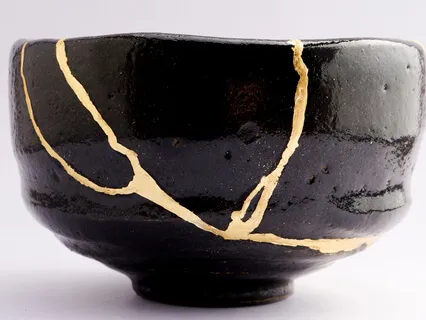
And for instance,
If you ever see those vases that have cracks in them filled in with gold,
That's based on wabi-sabi.
That idea is that real beauty.
.
.
Which we love the way that looks in a vase so much in a life.
Right.
But that's really the truth of life.
The truth of life is that the beauty is in what is imperfect,
Incomplete,
And impermanent.
And it's funny,
We often go to walks in nature and there's beautiful trees that are standing tall.
And then there are those trees that were rather blown over or fell over.
And as a matter of fact,
I think it was this weekend we were walking and we noticed that.
I mean,
We noticed how beautiful that looks,
Right?
When you see those trees that have fallen.
So in nature,
We view what you can call the perfection,
The tree that is growing and all green,
But also the trees that have fallen have created all kinds of different forms as beautiful as well.
And I think the big shift that we're talking about is really accepting,
Really accepting that we are in this world for perfection,
But a different type of perfection.
We're in this world for beauty,
But a different type of beauty.
The beauty that is in the imperfect,
The perfection that is the imperfect,
The incomplete.
There's a story that I often find.
.
.
By the way,
Our flaws,
If you want to call it that,
Is what really makes us interesting.
PAUL Absolutely.
Absolutely.
And again,
I think a big part of the message is that,
Of the teaching is that we have to put the lie to the unfortunate constant thought.
Until things are perfect,
Until things are in myself or in my life perfect,
I can't be happy.
Whereas the opposite is true.
Happiness comes from those parts that are not perfect.
So there's a there's a story from one of the ancient Kabbalists and a man once came to him.
It's a longer story than this,
But in the beginning of the year of the lunar cycle called the high holidays,
The Rosh Hashanah Yom Kippur,
For those who know,
But there are days that are seen as setting up the rest of the year and our consciousness at that time,
Our prayers at that time really influence what happens over the next 12 months.
So the story goes that a student once came to a great Kabbalist and he said to him,
You know,
It's a 24 hour period.
He said,
I am,
The Kabbalists told him,
He says,
I'm able to tell you what you prayed for over those 24 hour period and also what the supernal world answered you,
What the Creator answered you.
So he tells him at night,
This man was an inn owner.
He had a little inn,
People would come and he would sell food and a few rooms for board.
But he was very busy all day and all night.
So at night you stood before the Creator and you said,
You know what,
I feel that I want my work to be more perfect.
I feel that my life is so busy with running the inn and taking care of the people that it doesn't leave me enough time for meditation and contemplation and connection to the light of the Creator,
What I want,
My spiritual work.
So at night you asked the Creator,
You know what,
I don't need any more money than I had this year,
But give me all the money that I do need that I had last year in the beginning of the year.
And then I don't have to worry about running an inn.
I don't have to worry about taking care of people.
I could spend all day,
Every day in perfect meditation,
Contemplation,
Prayer and studying connection to the divine.
That's what I want.
It'd be very spiritual without any challenge.
Well,
Perfect.
And then in the morning you started thinking further and you said to the Creator,
You know,
I changed my mind.
I still want this year to be perfect.
I want my spiritual work to be perfect.
I want to have all the time that I need to meditate and to contemplate and to pray.
But I'm worried if you give me all the money in the beginning of the year,
I may get too involved in investing and worrying about it.
So give me half of it in the beginning of the year and then half of it in the middle of the year.
And then my year can be perfect.
I could spend all the time praying,
Meditating and doing the spiritual work.
And in the afternoon you said to the Creator,
I changed my mind.
Again,
I still want this year to be perfect.
I want it to be full with only the most perfect meditation and prayers and study and spiritual work.
But I'm still worried if you give me half and half,
It's still too much.
So give me a quarter in the beginning of the year,
Quarter in the second quarter of the year,
Another quarter in the third quarter of the year and then a fourth quarter in the beginning of the fourth quarter of the year and then my year can be perfect.
And the man was very impressed.
He said,
Wow,
That's amazing.
You were able to read my mind,
Read my prayers.
That's exactly what I was praying for.
So the capitalist turned to him and said,
Do you want to know what the answer was,
What the Creator answered to your prayer,
To your request?
He said,
Yes,
Of course.
He said,
The Creator says,
You think that the Creator desires your perfect prayers,
Your perfect spiritual work,
Your perfect study.
He says,
Angels,
The Creator has countless angels in heaven,
Perfect.
Humans are in this world not to be perfect.
You're in this world to be in the mud.
You're in this world to be busy running.
You're in this world and we have people screaming at you and yelling at you and yet find two minutes for prayer and meditation,
To find five minutes for study.
That's the purpose of man in this world.
And I think it's such a beautiful,
Really understanding the answer is about spiritual work,
But about perfection.
Perfection is for the heavens,
For human beings.
The work is to be imperfect.
And from that imperfection,
Find light.
And transform and change.
That's why we have those opportunities.
We need to jump and run to find that.
If you just sat there all day,
By the way,
You wouldn't really appreciate any of that.
Of course.
Of course.
I think a lot of what we're talking about has to do with up-raising and conditioning.
And I think this might be more directed towards women,
But not fully.
I'm listening.
Some of us have been taught,
Raised to celebrate the success of others.
Some of us have been conditioned to believe when good things happen to others,
It's a threat to us.
Conditioned to believe the universe is not abundant,
That there is a limited supply of all that we seek,
Health,
Happiness,
Money,
Love.
And therefore,
If someone else succeeds acquiring a good deal of it,
That means there's less left for you.
Right?
A lot of people subscribe to this,
Whether they fully are aware of it or not.
I was out with a friend and we were shopping and we saw this tea towel.
It said,
Equal rights for others does not mean less rights for you.
It's not pie.
And I think that we're also taught through families,
Society,
Relationships,
How we should be through spoken or unspoken expectations.
So,
I think it's about really… I mean,
I don't like any should be's or should haves or should have done's.
I noticed.
And I see this part with women is that there's a lot of competition among women.
Remember,
I was in an exercise class.
This was a while back.
And it was early,
Really early before class.
And I was standing with a group of women.
We were all gathered at the door.
And I was thinking to myself,
How am I going to get through this week?
And I threw my hands up in the air and I said,
Oh my,
Monday morning,
I wish it were Sunday.
Because I was really like,
I had bit off.
I knew too much.
And it was only Monday morning.
And one of the women responded to my comment about Monday.
She said,
I'm so glad to hear you say that because you always look so perfect in a tone flat and tinged with derision.
And I was taken off guard.
So,
I said,
Me?
I'm far from perfect.
And then she replied,
You always look like you have it all together,
Kind of triumphantly.
So,
I think a man,
I don't think that would really – that kind of conversation,
I don't think it would go that way.
But women have,
I think,
More experience.
I certainly have had that experience with other women.
There's also that movie in Mean Girls.
And there's a scene and the girl one says,
Well,
You're like really pretty.
And girl two says,
Thank you.
And then girl one says,
So you agree?
You think you're really pretty.
But the point is that there's enough for everybody.
I think this idea of lack,
Right?
If you are doing well or you seem to have more or you seem to have it all figured out,
That means that I'm far from that or that you've taken up all of what was available in the world,
You know?
I think that's part of the problem.
JS For sure.
And also,
I think it's really important to realize this other point.
Kabbalistically,
We understand that within every one of us,
There are really two parts,
Two really polar parts,
Polar opposite parts.
One that is who we are,
Our essence,
We refer to as our soul.
And then this other part,
Call it the opponent,
That other voice.
And that means that when you go throughout your day and you hear that voice,
Whether it's in words or in feelings,
You open up Instagram and you see somebody you know,
Unfortunately,
Somebody you don't know at all,
Doing something that you wish you did or having something you wish you had.
And the voice is saying,
You know,
Your life is not as it should be.
It's imperfect because you don't have this or that.
You have to realize that that voice is coming from your opponent,
From the person,
From that force that does not want what is best for you.
So it's not you who's really awakening that feeling.
Yes,
You succumb to it and you allow it maybe to take you down for the next hour or half a day or day.
But in reality,
I think being able to separate that other voice from my voice,
Which is simply to this,
Every time I hear that voice,
Every time you compare yourself to somebody else,
Every time you look at somebody else and envy or in some way wish you had what they had,
Anytime you look inside and you see imperfection as something negative,
You are listening to a voice that is not yours.
You are listening to the opponent,
Your strongest opponent,
Not to the voice of your soul.
Because the voice of your soul is the voice that is reminding you maybe it's quieter but it's there if you allow yourself to hear it.
This is perfect.
Who I am is perfect.
You're listening to a mean girl or a mean guy.
Exactly.
It's just mean.
Exactly.
But the confusion is because it seems to be emanating from within but it is not.
Well,
It also depends how much time you spend being kind to yourself versus the latter,
Right?
I mean.
.
.
Right,
But it's still.
.
.
But the point is.
.
.
It's not true.
That voice is never you.
It's never you.
And why would you spend your life listening to the force that is in opposition to you?
Why not focus more on the voice that actually is you?
And again,
Like I said,
It's very simple.
Whenever that feeling,
That thought,
That I am perfect as I am,
That this or that that is wrong with me.
.
.
I hate using that word.
I can't use the word perfect though.
I think I am whole as I am.
Exactly.
And then from that space,
You can choose what you want to work on or eliminate or release.
But the understanding is that this.
.
.
There's two voices in my head and I have to become.
.
.
And I would recommend to our listeners next time you're,
Again,
Hearing a story about a friend reading something on Instagram,
Whatever it is that triggers you to have even the slightest thought of I am not perfect because of this or that or I am lacking this or that or this person has something to.
.
.
Stop.
Say,
That is the voice of a force that does not wish the best for me.
That is a voice of my opponent.
Why would I listen to it?
Why would I listen to it?
I think also we all go to,
Again,
That place of the should be's.
It's something that's external,
Right?
It's an alert that happens.
We might be wake up,
Energized,
Excited in the morning.
And again,
We look at Instagram or maybe we get a call from the school where our kids are at and we get information that they're struggling in math or whatever it is,
Right?
So,
I think it's the comparison of what we think should be versus what is presented to us and we take that as being reality.
So,
For instance,
Why is my kid struggling with math?
I never struggled with math.
This must be his dad's genes.
I mean,
This is not us,
Right?
I'm a much better parent than my brother and their kids are always on the honor roll,
Right?
So,
You take a belief system or a lack or an insecurity of your own.
Then you're given information in the present and based on your past history,
Your flawed belief system and what you think this day should be like or what your life should look like.
Again,
So what you're presented and you take both too seriously when in actuality,
Whatever you're presented with,
You shouldn't take seriously because anything can change and that's really why we're given those opportunities to seek change,
To create something new and to grow from it.
But if you take that as fact,
Right?
Something that is disappointing and you take also your ideal version of what life should be or this day should be,
You're basically living in La La Land your whole life and you don't have an exit route.
You have no strategy because you've taken all of the illusions as fact and the illusions are usually based in where we feel most lack.
PAUL Right.
And I think it's a very important point.
I think a phrase that I often speak of is the perfection of what is,
Right?
The perfection of what is because as we go through life,
The reality is that there are the decisions that we make and the plans that we have.
But thankfully there's a greater force,
Call it the creator,
Call it the universe,
That is.
.
.
RACHEL The big guy in the sky.
PAUL The big guy in the sky.
That is conspiring to make our life as it should be.
So for example,
You wake up in the morning,
You didn't have the great night's sleep,
So you're feeling a little bit,
You know,
Not yourself.
The first thought is,
Oh,
I wish I would have gotten sleep earlier or I wish I had the right amount of sleep.
Now my whole day is going to be whatever.
What I say to myself is no,
Yeah,
Whatever I did,
I didn't.
Now I'm in a place where I didn't get it.
RACHEL Or if you're darker in the mind,
What did I do yesterday that created this?
Did I make a bad choice to eat the wrong thing?
What is lack of sleep going to do to my body and my cells?
And it depends how far you take it.
PAUL Or you can say,
If this is what is,
It is perfect.
Which means that today,
The best day that I'm meant to have,
The best day that I can have is one within which I do what I need to do while I'm a little bit tired.
And that whole view that perfect isn't what I think perfect should be,
But rather perfect is what is because I'm not responsible solely for the situation that I am in.
There is this force,
The creative force of the universe that is directing my life and creating situations that are perfect for me.
Perfect for me doesn't mean as I planned them,
But perfect for me.
RACHEL Let me give you a list.
I agree with you a thousand percent,
Right?
So when a person struggles with these thoughts like my kid should be smarter or my car should be newer or my partner should be more attentive,
Successful,
Available,
Attractive,
Nicer,
Or my job should pay more,
Be less stressful,
More fun,
Require fewer hours,
Or my friend should be more supportive,
Call more,
Be more generous,
Complain less,
Right?
PAUL Those are long lists.
I think this could even catch all those complaints.
RACHEL This is the realm of where people live.
So there has to be a big shift in understanding,
Not only,
Which we've talked about a lot,
The purpose of your reality,
But also your power and your ability to change your reality.
PAUL Right.
RACHEL Which will not happen if you focus on either lack or the desire and need and pursuit of perfection.
PAUL Right.
So but I'd like to separate out two things because in that long list,
Which I only call it half of it.
RACHEL Do you want me to read it again?
PAUL No,
It's okay.
There are certain things that are changeable.
For instance,
If a person says,
Why is my kid not doing well in math?
So.
.
.
RACHEL Well,
Wait a second,
Friend.
If it's why is my kid not doing well in math versus my kid's not doing well in math,
Therefore he's stupid.
No,
That's where people go.
PAUL You just went dark.
RACHEL No,
I went there.
That was at the beginning.
PAUL Yes.
But my point is there are certain.
.
.
So there's two things that I can do.
I can say,
Okay,
That's just the way it is.
I just spoke about two minutes ago,
The perfection of what is.
No,
If there's something that I can do,
I can get a tutor,
I can switch school,
Right?
So there are changeable.
.
.
RACHEL Or maybe he's not good at math,
But he's good at other things.
PAUL There are changeable realities moving forward and then there is the reality that exists now.
So that example,
If I got a call from my kid's school today that said,
You know,
Your kid's failing math,
The reaction should be that news is perfect for me today.
For whatever reason,
It's not great news,
I don't love hearing that,
But for whatever reason,
For my soul's process to the next 24,
12 hours that I'm awake,
It needed that information,
Needed that energy.
And therefore the perfection of what is.
Yet,
If there's something that I can do better tomorrow,
I plan for that,
I change towards that though.
So I think it's really important to separate two parts of reality,
The things that we can change moving forward and the things that exist right now.
And what we're saying is that the perfection of what is is always true.
That does not mean that we never look forward and decide,
Okay,
I'm going to change this,
I'm going to do this a little bit differently.
But what we do know for certain,
This is where I think the work,
A lot of the work begins,
Is that whatever scenario the universe conspires for my benefit to create for me today,
That's the perfection of what is.
RACHEL And also the starting point is do not compare it of what you thought it should be.
PAUL Also true.
RACHEL Because if you stay in that mindset and that belief system,
It's a loop.
You can't actually get off of that treadmill,
It's going over and over and over again.
I think you start there and trusting that the universe has your back and that everything comes to you as for your greatest good.
Your responsibility is to find out what that is,
To be curious,
To have enough self-love,
Self-awareness to really go all the way in and say,
Okay,
How can I really use this to become a great gift?
PAUL Right.
So that's a third,
I would say that as a third element,
Right?
So if we're talking about three,
The first being what is happening right now is the perfection of what is.
What I can change,
I should endeavor to change.
But number three,
What you're saying,
Which is really important,
The illusion of perfection has to be thrown out.
Because that illusion that a person creates,
Whether for who or what their spouse will be,
What their marriage is going to be,
What their kids are going to be,
What their career is going to be,
Everything,
Right?
And the view is that's going to be perfect,
Whether we're conscious of this or not.
That is never going to be the case.
There's always going to be.
Last night I was having a conversation with somebody who was looking to get married.
And I shared with him this,
Of course,
Reality that there's no such thing as the perfect partner.
There is the partner that is perfect for you,
Which means,
Yes,
They have this and they have that.
I love this.
I don't love this so much.
But the totality of that package is perfect for me,
Right?
As opposed to a person saying,
No,
I need somebody who's perfect in all these areas.
So I think to be really clear,
Right,
I think if we look at how we want to go through life,
In the moment,
The perfection of what is.
Whatever scenario happened,
I didn't sleep,
I got the call about my kid,
And so on and so forth,
What is,
Is perfect.
What I can change,
I should endeavor to change.
Never towards the goal of perfection because that is an illusion and that is never the goal.
I think there's a.
.
.
You need to have an understanding of the difference between a healthy striving versus perfectionism.
It's exactly what Tom is explaining a little bit more.
So,
Well,
One is healthy striving is,
Okay,
I want to create a better scenario,
Make it better,
Create change,
Move forward something that's different versus the absolute,
You know,
Nothing can look flawed.
I mean,
It's a whole different lens you're looking through.
Researchers show that perfectionism hampers success,
Which we know,
And it's not perfect.
And it also is a path to depression,
Anxiety,
Addiction.
So,
If you start to feel those feelings,
I think that's an indication of,
Okay,
I'm going into perfectionism.
This is not healthy striving.
If it's healthy,
It has to actually feel calming,
Inspiring.
You feel connected to something greater than you.
You like yourself.
You don't hear that mean girl voice or guy voice.
It's something that's really,
You feel fluid,
You know,
One with the universe.
The other one is just mean and critical.
And really that you will know the difference.
SL.
One of the things that always inspires me about you is the fact that,
And this is,
I think,
For all of our listeners,
The idea that those parts of us that are not perfect,
And we're going to really hate that word,
Right?
But all those parts of us that are different have many purposes.
But one of them is that those imperfections,
Those cracks,
Those challenges that we go through are one of their reasons,
One of their purposes is to enable us to assist others who have those same differences or have those same challenges.
I know,
For instance,
You often speak about having gone through anorexia,
And I know so many people reach out to you,
And you spend so much time counseling and assisting others who are going through those same types of challenges.
And I think this is all for all of our listeners.
In whatever way,
In every one of you,
Every one of us every one of us is imperfect in the perfect way,
Has those differences.
One of the reasons that you have them is because you are meant to find a way to use that to assist others who have those same,
Go through those same challenges or have those same differences.
And.
.
.
CB First you need to be able to use it to assist yourself.
SL.
Absolutely.
It begins exactly.
If you don't see yourself.
.
.
SL.
Then you can never help another.
SL.
Absolutely.
Absolutely.
SL.
Well,
This was perfect.
Just kidding.
SL.
Yes,
It was absolutely perfect.
So we have time.
I'll read one,
Not a little bit of review.
SL.
Yeah,
Of course we have time.
SL.
So a quick review,
Because again,
We want to remind all our listeners to keep sending in your questions,
Stories,
Comments,
Perfect assessments to manakanmichael.
Com and keep going to Apple podcasts,
Share this podcast through all of your friends,
All of your family.
This is a review from Apple podcasts,
One of our listeners.
The Love More,
Judge Less podcast today was extremely powerful.
As I am aware of some judgments that I make,
I realize there are thousands more that I am not.
You uncovered how damaging it is to myself,
Others and the world on a much deeper level than I ever imagined.
Even the thoughts of judgment that we never express verbally as they carry a vibrational frequency.
Compassion is what we all need to show ourselves and others.
Thank you,
Manakanmichael.
SL.
That's so nice.
SL.
I have to,
You know,
We have the opportunity again to both meet many of our listeners,
But every story,
Every single time I meet somebody from anywhere in the world was listening to the podcast and comes over and says,
You know,
This podcast or that or the podcast in general really brings wisdom,
Inspiration into my life.
It brings us great joy.
So please continue to write your reviews,
To send us your comments and stories and questions to manakanmichael at kabala.
Com.
We are inspired by them and our listeners when they hear them are inspired by them as well.
I hope you enjoyed.
You almost made this not a perfect podcast.
I hope,
We hope you enjoyed listening.
I'm purposely making it an imperfect podcast.
Too bad.
It's imperfect.
We hope.
We hope you enjoyed listening to this podcast as much as we enjoyed recording it.
Bye.