Hello,
Welcome to Serenity Wellness Podcast.
My name is Nicole White and I'll be your host.
This podcast is dedicated to helping you tap into your full potential of how you can heal and balance your mental,
Emotional,
And physical wellbeing.
Together,
Let's explore inner self,
Connect to our strength and manifest your true nature.
One full of love,
Purpose,
And passion.
Welcome to episode 26,
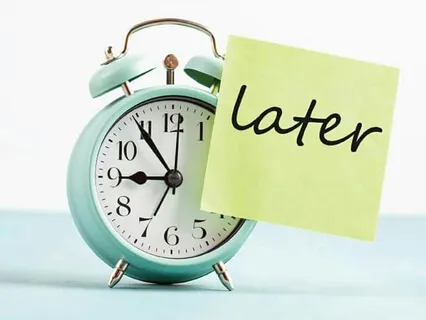
Procrastination Pitfall.
As always,
Thank you so much for your ongoing feedback and support.
And I hope you're continuing to build your wellness toolbox and find time for self-care,
Balance,
And joy.
Thank you so much,
Joanna from New Zealand for your beautiful message and feedback.
And I'm happy to hear that you found that episode on pushy people and that Dear Man technique when you felt it was most needed for you.
I love when that happens,
The synchronicity of when things fall in place when we're looking or needing them.
And then also Mark Allen from Georgia,
Thank you for sharing your own insight that came into your awareness after listening to the episode that talked about the codependency triangle when we were looking at boundaries.
So thank you both for your feedback as well as the rest of you who have continued to send me feedback and questions and ideas.
I really appreciate all of you.
So with today,
Procrastination Pitfall,
Sometimes we can feel suffocated by the tasks that we have to complete.
We might be avoiding completing them.
We might start ignoring that we have to complete them or just feel overall burdened and overwhelmed by what we have to complete.
So today I'm gonna share some common things that will contribute to procrastination for us and some tools to maybe help you get into a different pattern.
Because often procrastination is,
As we've been talking about in different ways,
It's just another pattern that we can get into and almost like a habit that we start to create for ourselves.
So to begin,
Let's look at some of the contributors that are common that people experience and what leads to procrastination.
One of the first ones to look at is that feeling of overwhelm.
We can sometimes look too broadly at the task we have to complete.
So we will look at the whole pile of things that have to get checked off in order to get to the end goal of completing the task.
And that makes us feel overwhelmed.
Like how am I possibly gonna do all these things?
And so with that overwhelm,
It just makes a feeling of avoidance or that we just don't even wanna kinda look at what we have to do.
In the overwhelm also,
Something that will contribute to that is we will often overestimate the amount of time that it will need,
That we need to complete the task.
So something that might take us,
You know,
A half an hour to do when we think about doing it,
We will envision it that it's gonna take,
You know,
Sometimes you will just be like forever,
But sometimes in our mind,
We will think it will take like an hour or even longer.
And the amount of time we spend avoiding and thinking about the avoidance and thinking about what we haven't done is really where we're wasting time.
When we just move forward and complete the task,
The time is actually often not as much as we think it's going to be,
Which we'll talk about when we get to the tool section of this podcast.
But this overwhelm,
We look too broadly at the task.
We see everything that has to be done or sometimes we'll bring in our mind multiple tasks that we have to do.
And so now we're looking at not only one big pile,
But we're looking at piles of piles in a big pile.
And now it's just too much and we feel overwhelmed and we just start to avoid.
Another area that contributes to procrastination is for those of us who are adrenaline seekers,
We can easily fall into the habit of procrastination.
First off,
A body can kind of get connected to that adrenaline rush,
You know,
How the heart beats faster under stress.
And so if you're adrenaline seeker,
Procrastination is kind of mimicking some of those feelings in your body system and making you think that that's actually something that you want.
Oftentimes adrenaline seekers who procrastinate will often say things like,
I think best under pressure.
I perform at a higher rate or higher performance if I wait till the last minute.
I used to be great,
A master procrastinator in college,
Especially in grad school with writing papers.
I would truly wait till the last minute,
Pull some all-nighters and I would produce a good paper,
But at the same time,
It was not good for my whole body system.
And research shows that as well as just if you tap in and understand your body system,
You'll notice yourself that it's not at all good for the whole body system.
Because when we do this,
Again,
We might think we're performing our best and maybe even the outcome that we get is a good outcome from the task that we're doing.
But overall,
If we're trying to support our full body system,
This is not something that is going to be healthy for us.
It will actually decrease our performance rate.
We can easily make mistakes.
It increases stress,
Decreases our sleep and eating habits.
We have very low frustration tolerance.
And then often we have to put other things off to the side that need to be completed in our day.
Some of maybe even our daily tasks that now we don't have the opportunity or ability to complete because we're filling with all of this other stuff.
And then also we can look at another contributor to procrastination is perfectionism and a fear of failing.
Perfections,
Individuals who struggle with perfectionism,
It's more of that black and white thinking.
Either I have completed everything correctly or I have failed.
So by not moving forward in starting the task,
They will think that they're protecting themselves from this idea of a mistake or failure.
But by us not allowing ourselves the opportunity to move forward in task completion,
That's actually where we're kind of letting ourselves down and not giving ourselves the best opportunity to try to move forward with things.
So this fear of failing or a perfectionist mindset,
Well,
We don't wanna risk not being successful,
So we don't do it at all.
And that way we think we can't fail,
But by not doing is when we let ourselves down.
Mistakes are how some of the greatest inventions are made.
So mistakes allow us to create something new and something different.
And in terms of this idea,
With the stress and this avoidance of all of this,
There was a study done,
I'm sure there's been more studies since this time.
This is just one that I pulled up.
There was a study done in 1997 and it looked at college students and procrastination habits and what happened there for them long-term in terms of health.
And what they found was students who were higher in procrastination behaviors had much higher levels of stress,
More illnesses,
As well as lower grades.
And when we look at the pulling out that more illnesses,
When you look at stress and what it does to the body system,
We've talked about this in various ways in different episodes,
And I'll get more into it too when I get more into the stuff related to integrative body health and what I do as a holistic practitioner.
But with some of the stuff we've already talked about and to kind of bring that back into your awareness,
With stress and what it does to our body system,
I mean,
It is increasing our adrenaline.
So our adrenals are getting taxed and we can get adrenal fatigue.
It is affecting our serotonin and dopamine levels.
It's affecting that area in the brain,
That trauma center area,
If you kind of think about it in those terms,
But the amygdala and the area in the brain that has emotion control and kind of more of the ability for us to ground in our emotions,
It's affecting that.
It's affecting our digestive system because it's also probably affecting our food intake,
Our sleep hygiene and how well we're sleeping and what we're getting in terms of sleep.
All of those things directly correlate and have a bi-directional correlation with our inflammation cycle in our body.
And again,
I know I've expressed this several times,
But our inflammation cycle in our body is directly correlated to our mental,
Emotional and physical health.
There are many,
Many studies that are now showing us that and studies are continuing to grow and help us see this further,
But your inflammation cycle in your body is one of the biggest tools to try to get under a more balanced area and bringing down the inflammation and in terms of mental,
Emotional and physical health.
So when our stress is at this increased level,
It's affecting all of that.
And again,
There was that one research study and probably many,
Many more since then and continuing to happen,
But just to give you a little example.
Another contributor to procrastination is the fear of success.
We might have a goal in mind and that goal involves success and growth in whatever it is we're working towards.
But on the back end,
We actually might fear the success,
Which is gonna then make us procrastinate and not complete the task or move forward in completion.
We might fear the success in terms of it's going to then add more requirements to my list of things I have to do or create more attention for me or more responsibility or more time that I'll have to commit to X,
Y or Z,
Whatever it is I'm working towards.
So we might want success and then we actually fear the success and it becomes a contributor to why we procrastinate.
We may also fear the emotion.
We might fear the emotion that's going to come in in completing the task,
Feeling stressed or overwhelmed or anxious or whatever emotion we think the task itself is going to bring in.
However,
We also might fear the emotion the task is going to bring or unearth within us.
I remember many times,
But as an example,
I had to complete this stuff for,
This was like last year,
But I had to complete this stuff for taxes.
And one of the items that I had to pull up for taxes was something that had to do just kind of a not so pleasant period of time that was happening or had happened in my personal life.
And I found myself procrastinating and avoiding completing my taxes because,
Well,
It just sucks doing them,
So not a task I like to complete really for various reasons,
But that wasn't actually what was driving the procrastination the most.
The thing that was driving it more was I didn't want to have to feel the emotion that getting this paperwork together that I needed in this other compartment of life was going to potentially open up and bring back to surface that I had worked through mostly and that was kind of filed away,
Well,
Now I had to unfile it,
And it was gonna probably bring those emotions back to surface.
And so that was in my own awareness,
Kind of sitting with self and trying to explore like,
Okay,
What is this about?
What is going on that you just can't sit down and let yourself complete this when you know it's taking up so much mental and emotional space by not completing it?
Because when we don't complete stuff and we procrastinate,
It's taking up more mental and emotional space often,
Because it's a constant reminder we haven't done it,
And so we're stressed about it.
So by sitting with myself and kind of asking myself a little bit more direct questions and going within,
I was able to recognize,
Okay,
This is what it's about.
I don't wanna feel that emotion.
It's fine,
I'm gonna work through the emotion.
I worked through it when it was the heaviest of heavy at the moment it was happening.
What is making me think that I don't have the strength to work through it now?
And then giving myself supportive language,
Like it's gonna be fine,
I'm gonna be okay.
I'll talk to a friend if I need to after and process what's going on for me.
So allowing ourselves to recognize the emotion that maybe we're avoiding and giving ourselves supportive language also to realize that we have the strength to work through that.
And then another area that contributes to procrastination is our own lack of management of our emotion.
And this comes in terms of impulse control and immediate gratification.
We are in a society often that is contributing to this idea of immediate gratification.
We need something now,
We need to see what the outcome is now,
We need to feel the positive now.
Well,
That is really not how life works,
But we can get ourselves into the cycle and this pattern and this habit of thinking immediate gratification is necessary and we might lose track of our impulse control and start bringing in different distractors that will help us to feel a little bit better than the task that we are trying to complete.
So the management of our own emotion recognizing that impulse control and immediate gratification can really come in and get us off track and make us do tasks that really are kind of mindless tasks in order to avoid doing the tasks that we want.
I'll talk more about that in just a moment.
And then another area that can really help us in terms of contributing to procrastination is we will have a lower capacity and connection to our future self.
So we will not connect to the stress or overwhelm or hardship that this procrastination is going to create and kind of lose sight of having compassion and empathy for our future self and who we will be in that moment of experiencing this delay or this procrastination cycle.
There was a psychologist Hal Hirschfeld from UCLA and he did probably more than just these two studies I'm gonna share,
But he did this one study and it looked at MRI mapping.
And what he did was have participants in their mind's eye visualize their current self and then visualize a celebrity,
Gave like some celebrity names.
And then he did this one study like some celebrity names and then visualize their future self.
I think it was like maybe 10 years out or five years out,
I can't remember,
But it was like a five or 10 year out visualizing your future self.
And what the MRI showed was that in brain activity,
The brain activation activity was similar when they thought about a celebrity as when they thought about their future self.
So it was like this kind of disconnect to them being them almost kind of thing.
Like when they thought about themselves in the future,
It didn't activate sense of self in the brain activity.
It activated like a connection to a stranger or a celebrity,
You know,
Cause celebrities are kind of strangers for most of us,
But it activated that same area of the brain.
So this disconnect from our future self.
Another study that he did was he showed individuals images of their future self as someone older,
Like an aging individual.
And then what happened from that is individuals who saw this imagery of their future self put in two times as much money into their retirement accounts than those who did not.
So just by visualizing and seeing who they would be in the future and seeing this in their face as this image of self,
Then it activated and elevated this compassionate awareness towards their future self.
And they,
Again,
Put in two times as much money into their retirement accounts for their future self.
Another study was done in Princeton by,
Man,
I'm trying to remember her name,
Emily Perlman,
I think was her name.
And she did this study in Princeton and it looked at,
She had participants,
She mixed up some kind of like nasty tasting,
Nasty,
Nasty,
Tasting concoction of soy sauce and ketchup and maybe some other things.
And she had participants choose to,
It was like a half a cup,
I think.
And she had the participants choose to either drink it all then,
Give it to a stranger or take some now and then two weeks later.
And what this study found was that individuals who were less connected to compassion and understanding of future self were more likely to say they would just drink the half a cup in the future,
In two weeks,
And maybe take two tablespoons now,
I think was the average of what they took.
So it was like,
They would take a small amount now and then just future self would take that.
Where individuals who are more connected and aware of future self were less likely to procrastinate the situation and more likely to just take it then or give it to a stranger,
That was the other option.
So again,
This lower compassion and connection to our future self,
The lack of connection to awareness of the stress and pressure that we're creating for our future self and what that's going to look like and feel like.
The beauty of that is we can absolutely work on training ourselves about that awareness if we feel like we are disconnected from it,
Just by simple asking ourselves questions like what will be the outcome of this if I put it off?
How will I feel next week when I still haven't done this?
How much mental energy and time am I gonna waste thinking about all of this in the next week while I don't complete it,
That I might want to spend that energy and time doing something more pleasant once I do complete this.
So we can definitely train ourselves to connect more to our future self and having compassion and connection to what that will look like.
Some other tools,
So that was just a tool there on connecting to the future self.
So some other tools to consider in terms of breaking down some of these contributors to procrastination is,
Well,
That's the first one,
Is breaking things down.
So we talked about that overwhelm and overestimation of time completion and how when we were looking at these big pictures of things,
How it really can discombobulate us,
Excuse me,
Or keep us off track.
So by breaking things down into smaller steps,
What do I want to do in the next 30 seconds or minute?
And then the next 30 seconds or minute,
And then the next.
Energy moving moves energy.
We might feel stuck,
But once we begin moving,
We can begin completely moving.
So energy moving moves energy.
Just starting movement will get you moving.
Break it down.
What do I need to do in the next 30 seconds?
If I'm writing a paper,
I need to get out my paper and pen.
I know most of us use the computer now to do that.
So maybe I need to get my computer and my charger and plug it in,
And that will take me 30 seconds.
What's the next thing?
Well,
Now I need to open up the program I'm gonna use.
So allowing ourselves just small,
Small chunks,
And then that's gonna create its own momentum and get us moving.
Being mindful of the language we use.
Using word choices such as I choose and I want,
Not I need and have to.
When we use things like I need and have to,
It takes away a sense of control and can increase our internal resistance to completing the task.
So use supportive language.
Make yourself recognize that this is something that you wanna do.
You wanna complete this task,
Otherwise it wouldn't be on your task completion.
It might be something that's boring.
It might be something that you don't like to do,
But you wanna complete it because it's something that you wanna complete so that it's done.
So using the language,
Recognizing that even if it's not something that you like,
It is something that you want and something you are choosing to do.
Another tool is having increased emotion awareness.
So allow yourself some space and time to recognize and be mindfully aware of your own emotional patterns and what's coming up for you.
I gave some examples of some of those questions I asked myself,
But recognize what emotion are you fearing?
What exactly is the fear?
Are you afraid you're not gonna be able to handle the emotion?
It's gonna become too overwhelming.
If that's the case,
What can you do to better support yourself?
In terms of emotion avoiding,
Recognizing is it the emotion of the task itself or is it the emotion that the task might unearth and bring to surface in that example,
Like that example I gave of self?
And then also recognizing that the emotion that might come through or come up might not be as emotionally charged as our mind is beginning to create.
As I mentioned,
When I paused and went within and asked myself some questions,
I was able to recognize that like,
Wait a minute,
I already went through this experience.
So I already went through the heaviest part.
I'm gonna be fine.
It's gonna be okay.
It might not be pleasant,
But I'm gonna work through this too,
Just like I have every other emotion.
As that reminder,
I think it was towards one of the beginning episodes,
But just as that reminder,
You have already worked through some very difficult emotions.
You will work through more.
So recognizing your own strength and ability and that whatever emotion is gonna come through,
It's gonna be okay.
As long as you also allow yourself to realize it's gonna be okay.
Otherwise we get ourselves down in a spiral and we make ourselves feel even more emotionally deep into the emotions that we're fearing.
So being supportive towards yourself,
Having that compassionate support and language to recognize that everything is going to be okay and you're going to work through whatever emotion will come through and it's going to allow for more cleansing and clarity in the end.
Recognizing if the emotion is going to be okay and the emotion that's coming through is the sphere of success and asking questions in terms of self with what that is about.
What about success are you fearing?
What goal is it that you're seeking and how can you embrace the success that you're working towards?
Looking at the positive outcomes,
Looking at what that long-term goal is.
As I mentioned,
I think it was the last episode or maybe the one before,
I have this plan for myself that I'm working towards on being able to be 100% remote.
And I have now taken down to three years.
So in three years is my plan to be 100% remote.
That involves an increase in some other things that I have going on in life right now,
Which is in making me have to juggle a little bit more.
And at times it can bring in a desire to procrastinate.
At times I feel a little bit like my plate's a bit full and so that's that pause and recognizing that this idea of what is my longer term plan and my fearing success and part of that is,
I noticed that coming through because if my plan comes to fruition that I'm working towards,
It probably will bring a little bit more things my way.
And so I had to work through that fear and look at,
Well,
What is my long-term goal when I want to procrastinate doing some of these tasks and putting some of the things together that I have to do and finding that I get a little overwhelmed when I think of doing some of them.
So for example,
I'm getting ready to start recording my online courses.
And when I start thinking about,
Okay,
What's my next step?
I can start to feel a little bit overwhelmed and then I just have to pause and recognize,
Wait,
What am I working towards?
Like,
What is this plan even here in my plan for?
And so helping me to connect to what is the purpose of this and allowing myself to realize that it's okay that fears come through,
But I can support myself in a different way so that I can work through the fears so that I can work and continue to make progress towards my long-term goal.
Another thing or a tool to keep in mind is that time warp and how we can overestimate the time it takes and recognizing or asking yourself,
How am I coming up with this estimation?
What am I basing this on?
So that you can have a little bit more of a clear indicator of really how long it's gonna take you.
But also sometimes we get in a time warp where we feel like we lose track of time or that time just kind of slips away.
And so being mindful of what are the distractors that you're bringing in to create that as well.
We can have lots of different distractors and one of those fears of completing tasks also in the background of our mind might be the fear that we're just gonna keep distracting ourself.
So set yourself up for success.
Put yourself in a place in a space that's going to lead to successful behavior and completion of task.
Our phones are huge distractors.
Put your phone in a different room on silent when you're trying to do something.
Don't open up additional tabs on your browser when you're working on something so that you can get distracted by other news or other things that pop up.
Be on the lookout for those distractors that seem like a good idea in the moment.
But what they're really doing is just avoidance and creating space from doing what we're really trying to do.
So those would be things like,
Oh,
Let me go organize my closet right now instead.
Seems like a good idea,
Right?
Maybe it's on your tasks of something that you wanna do,
But it's just really a slide in to avoid doing the thing that you're trying to do in the moment.
Or let me go rearrange furniture or create a playlist.
Yeah,
Let me work on creating a playlist because that way if I have the playlist,
Then maybe I could just listen to that music and that will keep me motivated.
And now I just spent two hours creating a playlist.
Well,
That's not really an effective use of time.
Trust me,
I love music.
So I'm not saying don't have music playing if that's helpful for you,
But you don't need to create a playlist right there.
Use like Spotify or something,
Pandora,
I don't know.
And then,
Again,
Being on the lookout for those need lists or tasks that really don't need to be done at that time,
Like that playlist or,
Oh,
Let me go rearrange my photo albums on Facebook to make them more succinct.
You know,
These little things that really aren't things that we need to be doing at the time,
But hey,
It's a good use of time and a way to distract me from the task that I don't really want to be doing at this time.
And keeping in mind that idea of wanting to do,
Sometimes we attach that to the motivation or energy we're feeling towards task completion.
And as I talked about in goal setting,
We don't have to be motivated to move forward.
It might not be the most pleasant thing,
Or it might be rather boring,
The task we have to complete,
But motivation is not needed for action.
Action can create its own motivation.
Energy moving moves energy.
So allow yourself to just start moving.
Allow yourself to maybe think about and be mindful of what contributors you have to procrastination.
And then maybe some of these tools can help you to break that habit and break the cycle because again,
Often we'll just blindly get into the habit of procrastination and we won't take some time to be conscious of really how it's affecting us as a whole being and how it's affecting us in terms of our success and what we're trying to build for ourselves.
Thank you everybody for joining me today.
I hope that this helps you in breaking apart your own procrastination habits and maybe some of these tools are things that you can add to your own toolbox in your awareness and conscious way of living.
As always,
Thank you so much.
I appreciate each and every one of you for your ongoing feedback and support.
I'm continuing to work on putting together this retreat but those of you who are interested,
If you wanna save a date,
It is going to be the weekend of October 11th through 13th and will be located in Coburn,
Pennsylvania.
Super excited to get the information out too.
I'm hoping to have that out in the next week.
I'm just finalizing some more details with some of the amazing practitioners that will be joining me.
So you can look forward for that information and then also down the line here,
I'm gonna have an episode on just answering your questions.
So I did develop a new email address that you can send your questions to me and I will potentially be answering your question on a future episode.
And you can send those questions to ask at serenitywellnesstools.
Com.
So askask at serenitywellnesstools.
Com.
And then as always,
You can check us out on social media,
Facebook and Instagram at serenitywellnescentere,
C-E-N-T-R-E,
And our website,
Serenitywellnesstools or serenitywellnescentere.
Com to see what we've got going on and learn more about our practitioners and services.
Thanks so much,
Everyone.
I greatly appreciate you.
Have a beautiful day and continue to incorporate those tools into your wellness.
Bye-bye.