Hello everyone.
You are listening to The Adventures of Saraputa and Mogulana.
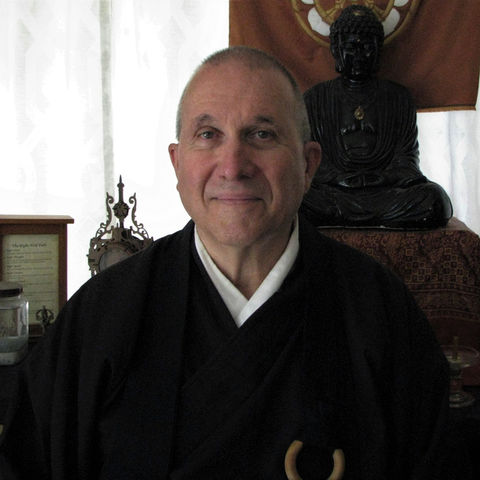
I'm your host,
Morris Sullivan.
Today I'll share with you a Dharma talk I gave at White Sands Buddhist Center on the importance of letting go.
But first,
I want to tell you about a conversation between Mogulana and a very interesting character who appears frequently in Buddhist literature,
An ascetic called Vachagoda.
Vachagoda is referred to as the wanderer because he was one of the ascetics who,
Like the Buddha and like Mogulana and Saraputa,
Lived without a home and wandered from place to place.
When we encounter him in the discourses,
He's often asking some deep philosophical question.
Apparently that was kind of his deal.
He went around asking different teachers about their positions on various topics.
Well,
He came to visit Mogulana,
Who was known for having a very refined consciousness,
Able to see things the average person could not see,
Perceive obscure knowledge,
And things like that.
But Mogulana was very circumspect about demonstrating his abilities,
And he was careful not to show off and not to stray from the Buddha's teachings.
Vachagoda exchanged a few pleasantries with him and then sat down to talk,
And he started off by asking,
Master Mogulana,
Is the cosmos eternal?
Mogulana answered that the Buddha had not declared that the cosmos is eternal.
Well,
Then,
Master Mogulana,
Is the cosmos not eternal?
The Buddha has also not declared the cosmos is not eternal,
Mogulana said.
This went on for some time,
With Vachagoda asking,
Is the cosmos finite?
Is the cosmos infinite?
Are the body and the soul the same thing?
Is the body one thing and the soul another?
Does a Buddha exist after death?
Does a Buddha not exist after death?
And so on.
And each time,
Mogulana replied that the Buddha had not declared a position on these statements.
So Vachagoda changes tack a little bit.
Now Master Mogulana,
Why is it when teachers of other sects are asked questions like this,
Is the cosmos eternal?
They will answer,
Yes,
The cosmos is eternal,
Or no,
The cosmos is not eternal,
And so on.
In other words,
He wanted to know why did other teachers assert some knowledge about these things that Mogulana refused to discuss?
I think the implication here is that since these other teachers contradicted one another,
Vachagoda undoubtedly knew that they couldn't all be right,
But probably none of them really knew.
So why were they claiming to have the answers?
So now he's not heading down some rabbit hole debating the eternality of the cosmos and that kind of jock.
He's asked what was probably his first authentic question.
So Mogulana answers that question thoughtfully.
These members of other sects assume of the senses that this is mine,
This is myself,
This is what I am,
He says.
In other words,
They're identifying as self,
Their perceptions,
Their mental fabrications,
And so on.
Rather than seeing impermanence,
Seeing the emptiness of self,
Seeing the true nature of stress and suffering,
They get caught up in these metaphysical arguments that don't lead to true happiness and transcendence at all.
Well,
One of the first skills you need to develop if you're going to make real spiritual progress is the ability to let go of the things you think you really need but that actually don't get you anywhere.
That can include your opinion about mystical matters,
Perhaps,
If you're like the ascetics Vachagoda mentioned,
But our attachment to our self-identity takes many forms that can lead us back to stress and difficulty again and again.
I used to like to go fishing.
My dad would take me fishing and so I learned how when I was a kid.
And then when I got a little older,
I would fish with some friends and things like that.
But when I started studying Buddhism a lot,
I drifted away from it.
It didn't really seem to align too well.
But back when I was doing a lot of freelance writing,
In my previous career,
I was a freelance journalist.
And one of my editors called me one day and asked me if I would do a story about fishing from a kayak.
And I said yes.
And so I cleaned up my fishing tackle,
Which had been gathering dust in a storage shed for quite a while,
And went up to Flagler County to meet this fishing guy at a kayak rental place.
And it was about this time of year,
So it was springtime.
It was still a little cool.
It was a really beautiful,
Beautiful day.
And I caught about a half a dozen redfish,
Which are pretty desirable game fish.
If you like to fish,
That's one of the things you like to catch.
And this was all catch and release stuff,
So we caught them,
But we didn't keep them.
Well,
The last fish that I caught that morning was the biggest fish of the day.
And besides my hook,
This fish had two other hooks in its mouth.
And so it must have been a pretty good fighter,
Because it had broken away from at least two other fishing hooks.
And so I got out the needle-nose pliers,
And I took out my hook and the other two hooks,
And then I dropped it and put it down in the water and let it swim away.
I released it.
So as it was swimming away,
I was glad that I had caught it,
So that I could get all of those hooks out of its mouth.
And as it swam away,
I was also sure that I would never go fishing again.
It was just one of those moments where I said,
Yeah,
I'm done with this.
I'm going to let that one go.
So I thought about that fish again the other day.
I was reading something,
And someone had written about letting yourself get hooked by certain kinds of thoughts and feelings and situations.
And it occurred to me that when a hungry fish sees bait going by,
It grabs it.
The bait doesn't hook anything.
It catches the fish because the fish catches it,
Right?
The bait catches the fish because the fish catches the bait.
And in the same way,
If you're concentrating on your breath during meditation and some desire arises or some diversion arises,
It doesn't hook you.
Thoughts and feelings like that don't catch you.
You catch them,
And then you stay caught.
Unlike the fish,
There's not somebody else on the other end trying to dig the hook in deeper and keep you on the line.
If you're hooked,
You can just let go of the hook,
And that's it.
Of course,
We really like to hang on to the bait sometimes.
Even if we know the bait's going to drag us to some place that's harmful to us,
Still,
It's very difficult sometimes to let go.
But if we want to free ourselves to live a peaceful life,
We have to learn to let go of things.
So this reminds me of a Zen koan.
You know,
Koans are those little stories that don't make a whole lot of sense.
To unpack them,
You have to stop thinking about them.
You just kind of have to live with them.
But this one,
There was a Dharma talk.
When there was Dharma talks with this particular monastery,
This was about 700 CE,
So about 1300 years ago,
They would hoist a flag outside the meditation hall to let people know that there was going to be a Dharma talk.
Well,
One day,
There were two monks that had seen this flag,
And they were arguing about it.
And one said,
The flag is moving.
And the other said,
No,
The wind is moving.
And they were really getting into arguing about whether the flag was moving or whether the wind was moving.
Well,
The teacher there was Eno,
The sixth patriarch of Zen,
And he happened by,
And he heard them arguing,
And he stopped them.
And he said,
Not wind,
Not flag,
The mind is moving.
Well,
Monks later on heard about this incident,
And the word spread about it.
And sometime later,
There were a group of monks that had stopped on a retreat at a nun's temple,
And they had struck up a conversation about this wind and flag story.
And the nun happened to overhear this.
And she said,
It is not the wind that moves,
It is not the flag that moves,
It is not the mind that moves.
And the nun's comment became the final word on this.
So you may be wondering,
What does this 1300-year-old argument about flags have to do,
Letting go of whatever you need to release today in your life?
Well,
The monks who were having this argument had hooked onto their preferences,
Their dogmas,
Their need to be seen as right.
They were hooked on their own ways of seeing the world and their beliefs about what should be and what people should think and say and that sort of thing.
And Eno's comment to them was to help them see that their minds were being pushed around and pulled around by this clinging,
And the resulting wind of mental fabrication was creating this big destructive storm.
And he was correct in that their minds were determining their experience,
Not the wind,
Not the flag.
And by the way,
Whether the wind moves or the flag moves really is a matter of where you're putting your attention.
The nun's remark just took this further.
She suggested that these monks who were discussing this had not yet learned to look past all of these conceptions,
The judgments,
The valuations,
To simply see the world move as it moves and to move with it without trying to figure it out.
This is a problem a lot of the time as we try to figure life out when we really should see what's there.
And to do this requires a mental stillness that only comes when we let go of clinging.
We don't learn how to release,
To let go so that we can see clearly.
And we develop that skill of letting go in meditation,
And then we can use it in the rest of our lives so that we see the rest of our life more clearly.
So in terms of the path of practice in Buddhism,
This is part of what the Buddha meant when he talked about right effort.
If a harmful mental state arises,
You let it go.
And you do what you can to prevent it from arising again.
For example,
If you're meditating and anger comes up or anxiety,
You let that go.
And you try to keep it from returning,
But not by repressing it because thoughts arise,
Feelings arise.
We can't prevent that,
But we prevent its arising by learning to keep the mind still.
Right effort also means that we cultivate helpful mental states like gratitude and good will,
And then maintain them.
And so this is a two-part process.
We let go,
And we cultivate.
I was sitting at my desk one afternoon,
And I got a phone call from a man who lived not too far away.
And he said that he had gotten really interested in Buddhism,
And he wanted some guidance on how to practice.
And I said,
Okay,
I was happy to help him.
And so I told him about where we were meeting and invited him to come and things like that.
But he didn't want to do that.
He said,
Well,
I need to turn my backyard into a meditation garden so that I'll have a place to meditate.
Can you come over and help me with that?
I know.
I really didn't know what to say.
He was convinced that his first step in Buddhist practice would require building a garden in his backyard.
And he seemed genuinely surprised when I said I didn't go around helping people design gardens.
And I suggested that maybe he contact a landscape architect.
And that he didn't need a special place to train his mind,
All he needed was a mind to train.
The important garden isn't in the backyard,
It's in the mind.
If you're a gardener,
You plant the seeds that you want to have ripen,
And you nurture them so that they'll grow and be healthy.
You first need to clear the ground of weeds and unwanted vegetation.
And you try to keep the soil free of those things.
When things sprout,
You let them go,
You pull them out.
It's the same with the mind.
You clear away the hindrances to make room for spiritual growth.
One time a couple of years ago,
I was at the correctional institution and a couple of the incarcerated Buddhists there.
We were talking about during our meeting in the chapel,
And one was saying that someone in his dorm was asking him why he belongs to the Buddhist group.
He said,
What do you get out of Buddhism?
And he said,
What I get out of it is not nearly as important as what I lose.
By that he meant that he was losing,
Was letting go of things that had caused him suffering for a long time.
But it's very difficult to let things go unless we recognize the benefit of giving it up.
We hold on to things because we're comfortable with them.
We're afraid of what will happen if we turn loose.
Even to turn loose of things that we know on some level are causing us misery.
There's a TV show called Hoarders.
Have you ever seen this?
It's about people who hoard things.
They just hang on to everything to the point that they start living with such positive job that their whole life is a hassle.
So the producers bring in experts and counselors and clean up teams and all this stuff.
Usually there's a family member that's trying to help them and that kind of thing.
They try to clean up their house so that they can live comfortably.
For the hoarders,
Most of them it's very traumatic.
They might be having to climb over piles of just junk and trash to get to their beds.
They might be in danger of being evicted or institutionalized or even to lose their kids or their pets and things like that.
But to give up these useless things is very difficult because they're comfortable with them.
They create a sense of meaning in their life somehow,
Even if it's very superficial or destructive.
But once in a while,
One of these hoarders will really start to commit to the cleanup process.
They may have trouble letting go of things at first,
But once they get started,
You realize it feels really good to get this junk out of their lives.
And you'll see them very happily throwing things into the dumpster after a while.
So probably nobody here is a hoarder,
But how much mental junk do we all have to climb over to get where we really want to be?
How many emotional hangups and opinions and dogmas and fears and things like that do we have to navigate in order to get where we want to go spiritually?
So like these hoarders,
We have to at least get a glimpse that there's a benefit to letting go of those piles of mental junk,
And then we can start getting rid of it.
Sometimes we're real good with letting go until it comes to our feelings about things that are really important to us.
Maybe injustice,
You know,
Anger about really bad situations and things like that.
And I totally understand.
If I let myself,
I can get very worked up about social injustice and things like that.
A lot of the groups that invite me to speak get pretty deeply involved in activism.
And there's this whole area of Buddhism called engaged Buddhism.
Social issues have been a part of Buddhism since the Buddhist time,
But that particular term was coined by the revered Vietnamese master,
Venerable Thich Nhat Hanh,
Who feels that social engagement can arise out of meditation practice.
So I'm not trying to turn you all into engaged Buddhists and tell you to go out and be activists.
You can bring mindfulness and concentration to any activity in your life.
In fact,
It's a mistake to separate your life from your spirituality.
But be quiet long enough to let your mind settle once in a while.
And then you can take action from a place of serenity,
From a place of calmness.
To let the mind rest like that requires letting go of the things that are stirring up these winds of emotions.
If you can't let your mind rest,
It's very difficult to see clearly what can be the most helpful thing to do.
And you can also wear yourself out with some of this stuff.
People experience compassion fatigue and things like that,
Because sometimes we don't know how to stop doing something,
Even when we're not really doing anything that's particularly helpful.
So if you really want to move forward in your spiritual life,
You'll also have to let go of your ego.
And that's the ultimate act of letting go.
It's the one that will get you the farthest,
And it's the scariest.
But I encourage you,
As you continue with your spiritual practice,
To start to notice those things that you're really better off without,
Even if you think you can't afford to lose them.
And see if you can let go of them just a little bit so that you don't stay hooked.
So thank you.
Thank you for joining me and for listening to Episode 6 of The Adventures of Saraputa and Mogulana.
I hope you found something useful in this episode and that the adventures of our Dharma superheroes inspire your own practice.
Now go save the world.