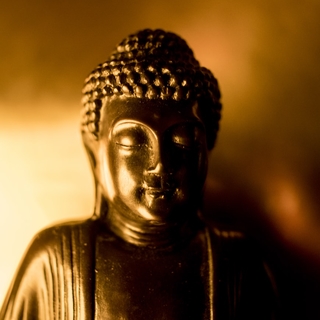
Satsang with Mooji Om Tassa Bhagavato Arhato Sammasambuddhassa Sadhguru chants Sanskrit chants So,
Thank you.
We arrive in the place where we are.
And settling the body for comfort,
Ease.
If you're in any of the sitting postures,
Cushion,
Bench,
Chair,
Tough it.
As best you can,
Bring the spine to a tall,
Bright,
Upright posture.
Or the breath in through the nose,
Down the column of the body,
Filling the vase of the body.
And letting each in-breath just reset,
Refresh,
Nourish the body.
Each out-breath,
Let go,
Relax.
Arrive more fully.
We'll practice today partly with our attention tuned for.
Internal speech.
Thoughts that come in the form of words,
Story,
Narrative.
Often in mindfulness.
We are.
Directing our inquiry.
To learn something about processes that are happening.
Unconsciously or unbidden.
So to understand thinking,
And particularly discursive thinking.
We don't understand habitual discursive thought by thinking on purpose.
We understand by observing thought that comes by itself,
Unbidden,
Unwanted.
Habitual.
But we can start by.
Tuning our inner mindfulness.
To the sound of our own inner voice.
Let's do this by just noting the breath.
For a little while.
So when the breath is pouring in through the nose and down into the body.
You can say,
Breathing in.
Just in the mind.
Or you could repeat the word in,
In,
In.
Or down,
Down.
Or like the Mahasi tradition does,
You can notice the rising of the belly and say,
Rising.
Which words you choose don't matter,
But hear the words.
Notice this is what words in the mind is like,
Sounds like,
Feels like.
If the breath is relatively slow.
You could say an entire sentence.
You could say this is breathing in,
Or the body is breathing in,
Or I am breathing in now.
Breathing out now.
And we're both gathering our attention.
Stabilizing,
Sustaining the attention.
Calming and centering.
Arriving right where we are.
And we are.
Investigating this experience that we do all the time.
Talking to ourselves.
So listen to yourself reporting the breath.
Really notice.
How do the words arise?
Where do they come from?
Where do they go?
What's it like when they're speaking?
What's it like when the sentence finishes and there's a space of silence before you say the next one?
And as you have a clear sense of the inner words,
You can let them soften or drop away altogether.
And here's where we begin to investigate habitual.
Or unintended words,
Thinking.
Let your attention rest on the rising and falling breath.
Hold the breath at the center of your awareness,
Just lightly.
Like you're meditating without intense effort to stay concentrated.
But you're intending to stay with the best.
And this is the basic instruction.
Feel the breath rise and fall.
Pour in and pour out.
And stay with it.
And we'll do this mostly in silence,
So I'm not adding words to the stream.
But whenever your mind wanders,
Interrupts the silence with any kind of words.
Whether it's reflecting on what's happening now,
Or thinking about the future,
Or the past,
Or remembering a conversation.
Having a song appear.
Whatever it is.
Notice it.
And don't just push it away right away,
But really listen for a moment.
Listen for what it's like,
What it's saying.
What happens when we notice?
A stream of thought as it bubbles through.
Sometimes it just stops.
Other times we notice.
What the thought is about,
The content.
And so we notice the tone.
It's pleasant or unpleasant,
Kind or cruel.
Feels like us or feels like someone else.
It's just an old memory bubbling up again.
Whatever it is,
Notice it.
If you want to go further,
You could ask yourself whether it's true.
On whether it's kind.
Two of the qualities of wise speech.
Is it true?
Is it kind?
And we'll just start with these two.
And see what you notice.
And anytime,
Just come back to the breath and the silence.
And start again.
We'll explore in silence from here.
As we practice noticing and understanding.
Inward speech.
Scurcithon.
We can add two more qualities.
The qualities of wise speech.
To our investigation.
And we start with,
Is it true,
Is it kind?
And the inquiry continues with,
Is it helpful?
A lot of our thinking is just.
Repeating conversations from the past or going over things that have happened.
More or less true.
Maybe or maybe not kind or just neutral.
It's almost a definition of distracted thinking.
That it's not really helpful.
In this moment.
But occasionally it is,
Occasionally it's not.
Something that really needed to be seen or understood.
Spoken clearly to oneself.
You can ask,
Is this helpful?
A skillful use of my time here in meditation.
To be thinking this.
And the last quality.
You can bring in is,
Is it timely?
Something could be true and kind and helpful.
Important for you to know.
To speak to yourself.
But it's not the right moment.
And again,
Mostly in meditation,
We say.
Well,
It's not timely to be lost in destructive thought.
So then we set down the creative thoughts,
The inspired thoughts.
Mostly,
Just as much as that.
Repetitive,
Habitual.
Ones.
And of course,
We want to see clearly the thought that is unkind or untrue.
The negative or harsh self-talk.
This is a part of the heart of vipassana,
To not just Train the mind toward stability and calm,
But toward understanding.
Compassion.
Skillful action.
We rest with the breath.
Notice thoughts when they come,
Really understand them.
Is it true?
Is it kind?
Is it helpful?
Is it timely?
And when you understand it,
Setting it down.
Maybe gratefully.
Returning to the silence,
Resting again into the silence between words,
Between thoughts.
A very special kind of wise speech.
Is the sacred speech.
Of chanting and invoking.
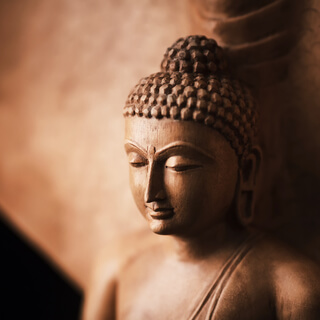
The Triple Gem,
The Buddha,
The Dhamma,
The Sangha.
All of the qualities.
Woven into their chanting practice.
So as always,
We'll finish the meditation with the homage to the Buddha.
These are the ancient Pali words,
Namo tassa bhagavato arahato samma sambuddhassa.
Probably like Sanskrit was at times.
In the Buddhist tradition considered a magical language.
Invocations were considered to have a kind of numinous power in themselves.
These words,
Nam mo,
I bow,
I honor,
They return my life.
Namo Tassa.
To the blessed one,
Bhagavato.
Bhagavato,
The one who arises from the womb of blessedness.
Arahato,
The perfected one,
Sama,
Fully,
Completely.
Samasambuddhassa.
The fully awakened one or the fully self-awakened one.
It's both a sentence that makes sense and,
Like all mantra and many of the magical kinds of speech used in these traditions,
It's also an invocation that goes beyond the rational meaning of the words.
Invokes the body of the Buddha,
The perfection,
The brightness of this one we would call blessed.
Namo tassa bhagavato arahato samma sambuddhassa.
Let's sing it three times together.
Namo Tassa Bhagavato Arahato Samma Sambuddhassa Namo Tassa Bhagavato Arahato Sammasambuddhassa Namo Tassa Bhagavato Arahato Samma Sambuddhassa you