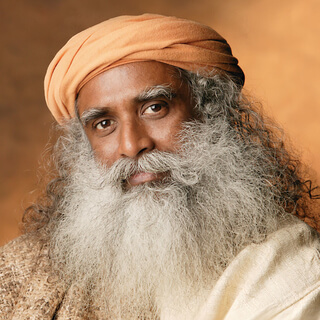
Namaskaram.
Ah,
Floki and Yawn,
Look at them.
Both of them together.
Wonderful talking to both of you,
Please.
Likewise,
An honor,
A privilege,
A delight.
Both of you are stationed where,
Like in which part of America are you?
Right now I'm in Los Angeles.
Oh.
Yeah.
But normally I'm in Sweden,
In Stockholm,
Sweden most of the time,
That's where I'm based.
Oh,
Okay.
Yeah,
I'm in Atlanta,
Georgia.
I moved here because we're doing a new show at the moment.
So I'm not far away from Tennessee.
So next time you're there,
I would love to come visit.
I'm there in July,
Let's catch up,
Huh?
Oh,
Absolutely.
Actually,
That's a perfect time because I'm done in July.
So that'd be great.
I'd love that.
You golf,
You guys,
Anybody golfs?
I'm terrible at golfing.
But I like riding around in a golf cart.
This Sadhguru,
This initiative that I've been looking at what you're doing is really incredible.
I'm so happy you finally get to meet one of my best friends,
Gustaf because he is.
.
.
He is,
I would say even more passionate about this than I am simply.
.
.
And I'm very passionate about the environment.
It's just that he's.
.
.
He's just taken the initiative to really educate himself on everything he's doing.
And we're both so fascinated about what you're doing.
And we'd love to learn more about everything.
That's wonderful,
Gustaf.
And you know,
It's great that young people like you are concerned about this because as a generation,
If we don't do the right things now,
We will live a life of regret.
That's the way I look at it as well.
We can't.
.
.
We can't be ignorant to the information that we're getting.
What has blown my mind about what you're doing,
Just to.
.
.
Because I want to share this with as many people as we can,
Something I had never even heard of before,
Which was soil being.
.
.
Being an issue.
That's something I think that's not talked about at all.
And I would love to know in what ways we can help spread the word and how people can take the initiative to support this.
See,
What I see is in the last eight months,
I've been talking to various world leaders,
People who are in the environmental work,
Many,
Many,
Many scientists across the world,
Top scientists in the world.
And as I speak to them,
What I see is,
Every one of them knows what is the problem.
And every one of them knows this needs to happen now,
Which is very important that this time it needs to happen.
But I think everybody was waiting for one idiot who is willing to bell the cat and here I am.
Yeah,
We appreciate that Sadhguru.
You appreciate me being an idiot,
Come on.
Yes,
Yes.
You know,
Most.
.
.
But I join you in the idiocy.
Definitely.
So somewhere in Europe,
Maybe on the ride you can catch up with me.
Yeah,
I hope so.
Yeah,
Definitely.
So tell us a little bit.
.
.
Tell us a little bit about the ride.
Well,
It's starting on 21st of March.
So it's just another twenty-four days away from today.
And we are riding through Europe,
Going to Holland,
Then to Berlin and down south to Praha,
Warsaw,
And down south further to Slovakia,
Rome,
Geneva,
Paris and again looping through Bonn,
Because that's a UNCCD capital.
We are partnering with UNCCD or the UN Agency to Combat Desertification.
We are partners with them.
So we spend a day or two with them and then go further.
See,
This is one thing when it comes to soil.
This is one thing that all of us are connected to.
In nationalities,
We may be different,
In race,
We may be different,
In religion,
We may be different,
Ethnicities may be different,
So many differences.
But soil is one thing that all of us are connected to.
I want to use this soil,
Not only as an ecological movement,
But also as a way to connect people – something,
There is a common ground for all of us.
Well,
There are so many differences,
There is so much emotion,
There is so much anger,
There is so much everything everywhere.
But at least.
.
.
At least the things that we are.
.
.
That we hold as common factors,
I think we need to highlight that in a big way.
I feel this safe soil movement can not only be an ecological movement,
But also it's a way of creating a more inclusive humanity,
Because everybody can connect to the soil.
Nationalities are made up by us,
Race and religions are made up by us,
Okay?
As if we are something very different,
But all of us come from the same soil.
So I would like to use the soil message as a way of creating a more inclusive humanity,
Which has always been our work,
Fundamentally,
You know.
Yeah,
That's lovely,
And is it possible to then also draw the connection between soil and earth,
Which are synonymous,
And that the extension of this is also that we are all one species on one planet,
Which is the same.
It's.
.
.
It's also.
.
.
So whether you use the word soil or earth,
It's not different.
In most languages,
It's a common word,
Soil and earth.
So.
.
.
And so,
Earth is also the planet,
It's also our home.
So it extends even to that global consciousness,
Doesn't it?
Yes,
Yes,
They cannot be separated.
It is very obvious,
Yeah.
Sadhguru,
For those who aren't as aware of soil's connection to climate change,
Or what they can be doing to further educate themselves on this or to help in any way,
Could you speak a bit to that?
Yes.
See,
Everybody's talking about climate change,
That narrative has picked up,
It's a very good thing that that's happened in the last ten,
Fifteen years' time.
But one needs to understand,
Healthy soil is one of the best carbon sinks in the world.
It is the best actually.
It is even better than the ocean if you take in terms of square feet or square meters,
Because the ocean has two-thirds of the surface.
Ocean is a bigger sink,
But in terms of square footage,
If you take.
.
.
Take a piece of ocean and a piece of land,
The land or the soil is a much better carbon sink than even ocean surface.
But at the same time,
Unhealthy soil,
Ploughed and exposed soil is a source of emission of both carbon dioxide and methane above all,
Which heats up the atmosphere almost eighty times more than carbon dioxide.
So the same thing can work as a carbon sink,
As a way of capturing the carbon,
Or the same thing can exude,
You know,
Gases which will enhance the climate change or global warming.
And the crop land and the desert lands have the lowest level of carbon in education per hectare,
You know.
Crop lands and desert lands have the lowest carbon in their vegetation.
Any other place if you take,
If to water.
.
.
Watershed areas or forests,
The level of carbon in that vegetation and in the soil is very,
Very high.
But these lands have the lowest.
Deserts are another.
.
.
It's another reality,
We can't really go and fix the desert tomorrow morning.
But the significance of agricultural land or crop lands is,
This is the only piece of land on the planet,
Which amounts to seventy percent of the land on the planet,
Is that land which is every day tended to by human beings.
The land that we are tending to,
If you cannot transform,
How are you going to go and transform the desert or the ocean or even the rainforest,
How are you going to do anything about it?
This is a land where every day there's a human hand on it.
This is the land we should first turn it around.
And it's possible to do it if we take the necessary steps,
If you institute this in the policy of every nation,
In eight to twelve years,
A massive reversal of what is happening right now can be done.
What are some of those steps that would be implemented,
Would have to be implemented?
See,
We've.
.
.
We've produced a soil document,
A common document for the world and also for every nation,
Based on its latitudinal positions,
Regions where they are,
And the soil types that exist.
We have identified fourteen types of basic types of soil,
And also the economic conditions of the region,
And of course the agricultural traditions,
Because you cannot change agricultural traditions overnight.
You will have to work with that.
So considering all this,
We have made a policy document for every nation,
Or in some cases for every region.
Right now,
All the Caribbean nations are signing up with us.
We are signing MOUs with them with the soil policy document how to implement.
We will do similar things with most nations.
Maybe the large nations may not want to sign because they have their own systems to do it,
But it's okay as long as they do it.
But smaller nations,
We're trying to sign up and handhold them in that direction.
When you ask specifically what.
.
.
See,
There is one fundamental thing that we need to understand.
When Alexander asked about.
.
.
What about climate change?
Essentially one important aspect of climate change is the number.
.
.
Amount of ppm per,
You know,
In the.
.
.
In the air around us.
On an average,
If it's three-hundred-and-fifty,
It is considered normal,
But today we've reached four-hundred-and-ten.
This four-hundred-and-ten means sixty ppm extra.
Pm is a unit for the,
You know,
Carbon dioxide or carbon molecules in the.
.
.
Carbon particles in the air.
To bring this down,
One important thing is to enhance photosynthesis on the planet.
Whether it's a cover crop,
Or whether it's a bush,
Or it's a tree,
Or grasses,
Whatever it is,
Always land should have photosynthesis going on.
Photosynthesis is the magic,
Perpetual magic that is going on using the perpetual energy of the sun.
The very life that we are is manufactured from this,
Because before photosynthesis started on this planet,
People say.
.
.
Scientists say approximately a billion years ago or whatever,
Whenever it started,
Before that,
The oxygen levels in our atmosphere was less than two percent.
Obviously,
Human beings and most mammals could not exist in that.
But today it is twenty-one percent where all of us are comfortable.
So this twenty-one percent of oxygen has happened mainly because of photosynthesis.
So right now if you look at,
You know,
Human habitations,
The lands that human beings have occupied,
If you fly across the world,
You will see the level of photosynthesis happening in every land that human beings have put their hands into is minimal or nothing,
You know.
Large parts of the time in the.
.
.
Large,
You know,
For months on end in the.
.
.
In a year,
There is nothing happening,
It just ploughed and left open,
Killing all the microbial activity.
The first fifteen inches,
Twelve to fifteen inches of soil is responsible for eighty-seven percent of the life on the planet,
Including you and me.
Today we are using machines where they're ploughing almost like twelve to fourteen inches deep and leaving it open to the sun.
This is like we peel off our skin and stand in the sun,
You know,
You will be screaming.
That's exactly what the land is doing.
Land is screaming,
But nobody is hearing.
So the most important thing is always there must be a crop.
If you have no yield crops coming,
There must be a cover crop all the time.
So one of the things that we've been pushing for is for the governments to give some financial assistance to put cover crops.
Just now,
About ten days ago,
United States announced one billion dollar fund to enhance the cover crop in various states in the country.
Similarly,
United Kingdom has announced a subsidy for cover crops.
Now we're pushing the Indian government and every other government,
At least in the seasons when you're not growing food on it,
There must be a cover crop enormous foliage.
When time comes,
You just put this back,
That creates humus in the soil.
And that humus is the basis of who we are,
Because the word human itself comes from the word humus.
So essentially,
We have to reteach people everything that they know is essentially about.
.
.
No,
No,
We just have to remind them because forty,
Fifty years ago,
We knew what to do.
Suddenly we forgot,
Because from land we moved to lab.
It's time from lab we once again come back to the land because it's on the land that life happens.
In the lab,
You can experiment.
It is life happens only in the land.
And there's.
.
.
I was.
.
.
I was watching the YouTube video about this already and is it.
.
.
There's something like we have eighty more harvests or less?
Different people are saying from sixty to eighty harvests,
Some people are more optimistic are saying eighty to hundred harvests.
Eighty to hundred harvests means approximately forty-five to sixty years is max.
But every responsible scientist is clearly pointing out,
By 2045,
We'll be producing 40% less food,
But our population will be over nine billion.
That's not a world we want to live in.
That's not a world where we want to leave our children and go.
But this can be turned around.
We are in a cusp of time right now.
If we act now in the ten.
.
.
In the next ten to fifteen years or maximum twenty years,
We can make a significant turnaround in the soil quality and in turn,
The.
.
.
All the other aspects related to it.
But if we'll say.
.
.
Let us say we let it go for another thirty to forty years,
Because the loss of biodiversity per year on an average is around 27,
000 species.
I'll repeat that.
27,
000 species,
Not organisms,
That many species of microorganisms are going extinct.
So if you let this roll for another thirty to forty years,
We will come to a place where if we do everything possible to turn it around,
It will take hundred-and-fifty to two-hundred years.
That's a disaster.
Dr.
Benjamin R.
Doolittle For Sadhguru,
First of all,
Thank you for taking this on.
You know,
This can't be easy for you to do video after video,
Trip after trip,
Educating all these people on this and it's incredible what you're doing.
For.
.
.
For everyday people like Gustav and I,
What can we be doing as individuals to help?
Sadhguru See,
Right now,
Everybody wants to get their hands in the earth right now because they're inspired by a video or something.
That is not what we need.
First thing we need to understand is,
We should stop doing things for our satisfaction and do something that is a solution.
We are interested in a solution,
Not doing something for my personal satisfaction.
This is an important step everybody must take.
So if we want a solution,
It has to be enshrined in the policy of every nation.
Why should it be enshrined in every policy of every nation?
See right now,
If you have hundred acres of land,
You're doing a great job with the soil,
You're taking very good care about it.
But what is the guarantee that the next generation will do that?
They may turn it into a desert.
That's what we have done.
In one or two generations,
We've done that,
Right?
So it has to get instituted in the policy.
If you want to understand what I'm saying,
See for example,
If you see the cities right now,
In every city there is a building law.
If you have 10,
000 square feet of land,
You can't build 10,
000 square feet of building.
You can build six,
7,
000,
You have to allow space for yourself and your neighbor.
But just go to the old cities and see,
Wherever there are really old cities,
You will see there is no concept of a window.
They've all just built side by side,
Attached to each other.
There's one door to enter,
One door to get out.
So that is simply because there was no law.
Today you can have hundred acres of land,
You can plow every inch of it,
Turn it into a desert in the next ten years,
Nobody to ask you,
Why are you doing this?
We must understand soil is not our property.
Soil is not our property.
It has come to us from previous generations.
It's very important we hand it over to future generations in its living condition as a living soil,
Not as dead material.
Yes,
Wow,
Wow,
You've blown my mind yet again.
When do you start your trip to begin this process?
So I understand you're meeting with politicians,
People all over,
Trying to institute this one step at a time.
Your ride is something like 30,
000 kilometers.
So right now,
I'm coming to United States on 5th of.
.
.
5th of March,
I'm sorry.
And I have some media interactions and stuff,
I finished that.
Then I'm in Caribbean region for about four days.
And then by 15th,
I'm in London,
There are many events till 20th.
21st,
I start to ride from London.
So then we go to Holland and from there Germany and that whole trip,
As I said earlier,
But on the way,
I'm taking a two-day break and going to Ivory Coast,
Because it is a UNCCDs COP 15,
170 countries representatives will be there.
So I will be addressing them and also handing over these soil policy document to each nation.
And we have written separate sections for every nation.
For every nation,
We have made a separate book.
So we will be giving it to those nations or whoever the representatives of those nations.
And from then again,
I fly back to Riyadh.
And from there,
I ride down to UAE Muscat.
And from Muscat,
I'm taking a boat with my motorcycle and two-day,
Two-and-a-half-day trip to Indian coast.
From there,
I'm again,
I'm riding for another twenty-five days.
Matthew G.
Ritchie It sounds incredibly relaxing.
Sadhguru I am sixty-five,
I hope I survive.
I thought before I'm too old and no good for anything,
I must do this because as a generation,
If we don't do this,
This is not going to be good.
I'm not a doomsayer,
But I'm saying we are in a situation where if we act now,
We can turn this around.
This is our challenge.
This is our responsibility.
And this is also our privilege that we have the opportunity to turn around such a massive irregularity that we have created in the carbon chain.
See when you utter the word carbon today,
A whole lot of people who are just reading textbooks,
If you say carbon,
They think it's some kind of poison,
Because they think carbon monoxide,
Carbon dioxide,
Whatever.
But we are all carbon life.
We are all carbon life.
Every life that you see,
Whether it's a worm,
Insect,
Bird,
Animal,
Tree,
You and me,
We are all carbon life.
Carbon is life.
So this is a carbon chain that is going on.
If you break one link of the chain,
The chain will fall apart.
Right now,
The soil is one link that we are breaking very badly.
If you break this,
The life chain that is going on right now could be broken,
Or at least seriously damaged.
So what about our dependence on fossil fuels?
Because that is also.
.
.
That is also a way of breaking the chain,
Isn't it?
That we're taking carbon that has been stored in concentrated form in the ground for millennia,
We take that and we combust that and bring it out into the atmosphere and that enhances tremendously and disrupts this whole cycle,
Doesn't it?
It definitely does.
Not that it is not there,
It is very much there.
But right now the way we structured the world,
We can't stop that tomorrow morning,
All right?
It will take time.
People can talk as much as they want.
It may take another thirty to fifty years before we make a significant turnaround in that area.
But the nature of the soil is such that if we are willing,
If all of us are determined,
If the governments make the policies,
In the next anywhere between six to twelve years,
We can make a significant turnaround and soil accounts for forty percent of the climate change.
Dr.
Benjamin R.
Doolittle It's really fascinating to me,
I think,
When I start thinking about,
You know,
Initiatives like this and,
You know,
One thing I've always loved about you,
Sadhguru,
Is you're very optimistic but solution-based.
And I think that,
You know,
Because you're not,
You're not a doomsayer.
But I also think that it's important for people to realize the importance of educating themselves and the responsibility they have to do that,
You know,
Because just because we say that we can turn it around in sixteen years doesn't mean that it will be if we do nothing about it.
And I think that's something that I'm learning along the way just from speaking to you and actually speaking to Gustav as well and doing my own research is just like how important it is for my generation and the younger generations to take it upon themselves as a moral obligation to our planet to educate themselves as best they can on these scenarios.
Sadhguru It's very important,
But right now,
The most important thing is see whether it is going to happen in the next eight,
Ten years or not,
Is still a question mark,
I'm not denying that.
But if it gets instituted in the policy now,
See as a part of this,
What we have done is,
We have written to all the heads of state,
The letters are in the process of being delivered,
And we have written to seven hundred and thirty political parties on the planet.
Because we are telling them in your election manifestos,
You must make soil and ecology an important part of your election manifesto,
Depending on your nation,
Your economic condition,
Whatever,
But you do this.
Why this is so is,
See once it gets instituted in the policy of a nation,
If they have money,
They may start tomorrow.
If they don't have money,
They may do it slowly.
If they're lazy,
They will do it after five years,
But it is bound to happen once it's in the policy.
If it's not in the policy,
It will be ad hoc,
Something here and there will be done,
But the real thing will not happen.
Now I'm talking about,
Like there are building laws in a urban area,
We need agricultural laws where if you own agricultural land,
Minimum three to six percent organic content must be there.
Initially give them incentives,
Nudge them to do it,
As things get worse,
We have to make it mandatory,
It's going to happen anyway,
All right?
When things get bad,
When food production gets hit,
It will happen.
But the reverse that can happen is,
As already some of the agencies,
UN agencies are speaking about is,
To bridge the.
.
.
To bridge the food shortages that will inevitably come after 2030,
They're talking about making GMO crops the only way to do cropping in most of the countries,
Because they want to bridge that food crisis.
When there is no food,
Eat some damn food,
That is the philosophy.
I agree with them,
When there is no food,
You have to eat something,
That's fine.
But that bridge will last only for twenty to twenty-five years.
After that when we crash,
That will be a real crash,
That will be a very bad crash.
So the more sensible thing will be to enrich the soil.
We are not advocating any particular kind of farming.
It is for the farmer to decide what kind of farming he wants to do.
But we are just asking,
Keep the soil alive for yourself and future generations.
For this you need three to six percent organic content,
Only then the soil will stay alive,
Otherwise soil will become sand.
Can I ask Sadhguru,
Do you think most farmers,
Just out of curiosity,
Do you think,
Or at least from the people you've spoken to,
Do you think they know that,
Or do you think and are ignoring it,
Or do you think that they're not even aware that soil needs three to six percent organic content in it?
I've lived on the farms in India.
Every farmer knew this forty years ago,
Fifty years ago.
There was simply no question.
Everybody knew this.
Whether they understood three.
.
.
Three percent,
Six percent or not,
That's not the point.
But if they took soil in their hand,
They would always feel for the organic content,
Whether it's there or not.
So they knew and they always practiced that.
Because India is a land where we have had agricultural.
.
.
Organized agriculture for over 12,
000 years,
Probably the longest in the world.
So 12,
000 years we maintained and managed our soil richness,
But in forty to fifty years we've destroyed it.
All right?
Why this has happened is,
Somebody told them there is a better idea.
All this,
You know,
Picking up dung and picking up bullshit,
This picking up dung and putting into the land is all bullshit.
So I will give you a magic powder,
Just throw it,
Everything will be fantastic.
And it was for some three to eight years' time it worked in most lands.
You threw the fertilizer and boom,
Everything came up like never before.
All right?
So now they are paying the price after fifteen,
Twenty,
Twenty-five years of fertilizer usage and now the costs are simply going up to such a point that over 300,
000 farmers in India have committed suicide in the last twenty years.
Even in United States,
People tell me that in the last twelve years,
Fifty percent,
Fifty percent of the American farmers have not seen a dollar of profit.
Okay?
And the highest numbers of.
.
.
The highest number of suicides in America of all the professions,
It is the farmers.
So,
The farmer always knew but now he's forgotten because somebody to sell whatever they want to sell has advised him.
But at the same time,
I'm not against fertilizer,
I'm not against pesticides,
I'm not against anything.
All I'm saying is,
Let's keep the soil as a living entity for ourselves and future generations.
This is a must.
But isn't some of the means in order to do that,
To decrease fertilizers and pesticides?
See,
It's other way around.
If you increase organic content,
The need for fertilizer and pesticide will come down by itself.
So I'm saying first increase the organic content.
See,
Right now suppose you take away all the fertilizer from the planet,
Your food production in the world will go down by fifty to sixty percent.
Take away all the pesticides and fertilizers together,
Then your food production will go to something like twenty-five to thirty percent of what it is right now.
So let us not talk about that.
You cannot remove those things right now.
This is all fanciful things,
You do your house garden in an organic way and you think you can do it that way.
If you look at the cost of production and what's coming out of it,
You will know it can't provide food for the world.
We are talking about world's food produce.
So do not talk about impractical things.
Increase the organic content.
If you increase organic content,
For example,
One thing I can say for sure is,
If you increase organic content to eight to ten percent in the soil,
The irrigation requirement will come down to thirty percent of what is right now.
To seventy percent of the water,
You will save.
If you raise the organic content to twelve to fifteen percent,
Your irrigation requirement will come down to ten to fifteen percent.
That means if you are using hundred liters of water,
Fifteen liters of water will do the same job for you,
Because organically rich soil,
Retained soil.
If people don't understand what I'm saying,
Ask them to walk into a rich thick forest and just with your hands,
Not with any implement,
With your hands,
With your fingers,
You just dig three inches,
You will see it is damp.
That's what a crop needs,
Moisture.
So organic content,
When you say that,
What is some.
.
.
What are some examples of just organic things?
You can't get it from the moon or Mars.
There is only two sources of organic content,
Either,
You know,
Plant material or animal waste.
These are the only two ways.
You need a lot of plant material that.
.
.
Like cover crops and other things that you put back into the soil,
Or you need trees where you can use the leaves to fertilize the soil,
Or you need animal waste.
There is simply no other way.
Right now the problem is most farms don't have either trees or animals on them,
You know,
Agricultural farm.
They have to bring their organic material,
Buy somewhere and bring it.
It will not work.
It will simply not work that way,
Because the costs are too high.
You know,
In the southern India,
I've been running this campaign for over twenty-four,
Twenty-five years now,
That I went on campaigning for farmers to plant ten percent of their land as trees.
Ten percent of land produces enough organic material for the remaining ninety percent,
And your yield on the ninety percent is better than what the hundred percent were doing before.
And the organic.
.
.
Organic quantity is high,
Water tables have come up,
And the nutritional value has gone up significantly.
This is another important part.
Right now,
See,
Most countries have put their COVID,
You know,
Deaths down.
But in US,
Still you're hitting about nearly 2000 number per day,
Which is a disastrous number.
Well,
People can ascribe it to many things.
One fundamental thing is,
Any.
.
.
Any rudimentary doctor,
I'm not saying some virology expert or something,
A simple doctor,
Basic education doctor can clearly tell you,
If you don't have enough vitamin A,
Vitamin B,
B6,
B12,
C,
E and foliate and iron and you know,
These things in your body,
You become susceptible to respiratory infections.
This is commonly known.
Upper respiratory infections and lack of micronutrients are very directly connected.
In United States in 1920,
Let's say a vegetable,
For example,
Today everybody is going for salads believing they're eating something healthy.
All right?
At least in California and other places,
I don't think these Atlanta people are still eating salads.
I'm just joking,
Okay?
So for example,
Lettuce is one of the,
You know,
Important part of any salad anywhere these days,
At least in the Western countries.
What lettuce was offering you as nourishment in 1920,
What it is offering to you now is only ten percent of what it was in 1920,
Ten percent.
Ninety percent nourishment is lost.
If you ate one orange in 1920,
In 2022,
You have to eat eight oranges to get the same stuff.
Yesterday.
.
.
Yesterday I was at our school,
All the little tiny tots were there and I said,
Can you eat eight oranges per day?
They said,
We can.
I said,
Okay.
They're not giving it to us,
We can eat eight oranges per day,
They're saying.
That's wild.
I've been reading a few books about the nutrition content in food nowadays compared to how it was and it is just truly staggering.
But Sadhguru,
I know you are so busy and I just can't thank you enough for your time and it's always such a pleasure to see you.
Thank you and yourself and all the others of your tribe,
I'm not talking about the Vikings,
I'm talking about all the actors.
.
.
Humans.
You know,
People.
.
.
The boss of my tribe,
My wife is in the room.
So make sure from March 21st for one hundred days,
The whole world should talk about soil.
This is what is important.
It's not about supporting me,
They don't have to support me.
They must talk about soil.
If they do this on the social media platforms,
We'll aggregate these numbers.
If we move 3.
5 billion people,
Which amounts to sixty percent of the world's electorate on the planet,
Then we can move the governments,
We can give confidence to the governments that they can invest in this direction.
Right now the problem is people have not spoken.
It's time the people speak.
March 21st,
For that month.
.
.
For one hundred days from there.
One hundred days from there.
Okay,
For a hundred days from there.
Yes.
When I'm on the road for a hundred days,
Every day say something about soil.
Yes,
Sir.
Can I just raise one concern,
If I may?
Yes.
Do you feel like there.
.
.
That there might be a risk that governments will see this as a potential cop-out to deal with the carbon emissions?
See,
This is a concern that most activists have.
And that is one reason why they have never brought soil into the picture.
I was talking to environment ministers who have attended the COP26 in Glasgow,
And they said,
Sadhguru,
What is the matter?
We were there for one whole week,
We did not hear the word soil.
See,
Because you want to fix one industry,
You leave a huge gap.
In what way?
In what way will enhancing the soil organic content,
Will make oil companies,
Automobile companies escape that?
Because that momentum has already happened.
Most governments are committed,
It's only a question of speed.
All right?
All governments in the world are already committed to changing or reducing their fossil fuel consumption in a big way.
Everybody has committed to timelines.
It is only a question of speed.
But they're not.
.
.
They're not acting on those timelines though.
Oh no,
That is.
.
.
And during the pandemic,
They.
.
.
They gave 370 billion dollars in economical support to the fossil fuel industry.
That is true,
Gustav,
That is true,
But you need to understand the economic conditions of different nations.
Because they can't just turn around like that,
It's not possible for them to do it.
So there are many challenges,
But everybody largely is committed to the direction of going free of fossil fuels in a certain amount of time.
Speed is a question.
What you're talking about is speed.
So that speed,
We must keep the pressure on them for speed,
That we need not relax.
Just because we enhance the organic content in the soil,
We need not relax that.
And the beautiful thing about soil is,
Enhancing the carbon.
.
.
Organic carbon in the soil is.
.
.
One thing is it's not against anybody,
Nobody will resist this.
It's for everybody,
And its costs are very,
Very low.
It is just a commitment that is needed.
But shifting from fossil fuel to something else,
One thing is it's a question of technology.
People are not sharing technology.
They're advising everybody,
But they're not sharing technology.
They're advising everybody,
They're not willing to compensate,
You know,
Nations which are not able to do it in their period of time.
They're not able to look at the per capita consumption of a given nation.
We're talking standards which are not all right,
Okay?
So naturally,
Some nations will resist,
But every nation right now is committed to move in the direction.
We must continuously inspire them,
Encourage them,
Support them,
Buttress them to see that they're able to fulfill that in a reasonable amount of time,
Not stretching it endlessly.
But see now,
A war breaks out,
All right?
We could have easily avoided this,
I don't want to get into the politics of it.
But I'm saying a war breaks out,
Just after the pandemic,
When nations are just beginning to recover,
Just beginning to have reasonable normal life,
A war breaks out.
Well,
If all the wise men who are ruling the world got together,
We could avoid this,
Right?
Very easily.
We're talking about fossil fuels.
What do you fight a war with?
With air,
Is it?
With sunlight,
Are we fighting?
Are we fighting a war with sunlight?
Matthew G.
R.
N.
Worse kind of poisons we are throwing all over the place.
So,
I'm saying I'm not saying that carbon fuels is not a issue,
It's a serious issue.
It's a significant issue.
We should not let up on that.
But that's not connected to this,
Because this doesn't cost money.
This is not against any industry or any lobby.
This is for everybody.
This we must do because this is a easier piece to do.
And it accounts to thirty-six to forty percent of the problem.
Right?
Yeah,
Thank you.
Sadhguru,
We are going to spread the word and again,
We're so grateful for you.
Hey,
This is not my planet,
This is our planet.
Let's make it happen,
Hmm?
Yeah,
That's it.
That's it,
For sure.
I definitely want to.
.
.
And get your Viking tribe going,
Hmm?
What other new work you're doing I have not seen,
Both of you.
You see Vikings?
I saw,
Because my daughter insisted that I must see.
That's amazing,
Amazing.
I've met Yawn and Floki,
I just have to meet what,
Lothberg guy.
Oh,
Ragnar.
Ragnar.
Yeah,
Exactly,
We'll bring Nima on next time.
Thank you,
Thank you very much.
So good to see you.
Hope to meet you again,
Sadhguru.
Namaskaram.
Namaskaram.
Namaskaram.
See you later,
Be safe.