Welcome to the Mindfulness Meditation Podcast.
I'm your host,
Dawn Eshelman.
Every Wednesday at the Rubin Museum of Art in Chelsea,
We present a meditation session led by a prominent meditation teacher from the New York area.
This podcast is a recording of our weekly practice.
If you would like to join us in person,
Please visit our website at rubinmuseum.
Org slash meditation.
We are proud to be partnering with Sharon Salzberg and teachers from the New York Insight Meditation Center.
The series is supported in part by the Hamera Foundation.
In the description for each episode,
You will find information about the theme for that week's session,
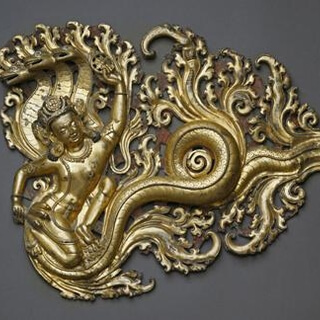
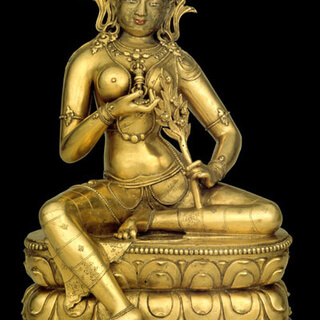
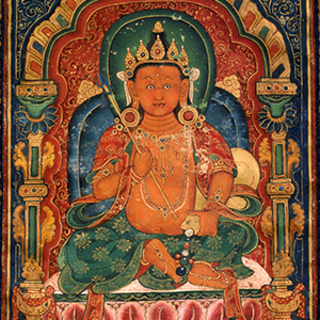
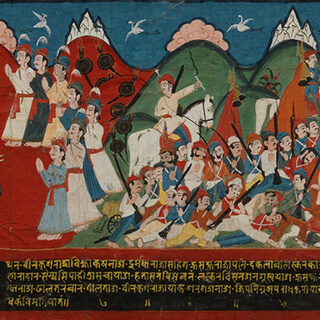
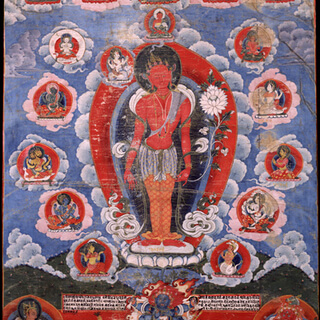
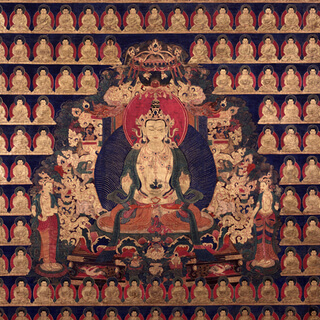
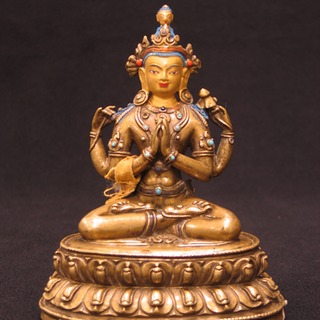
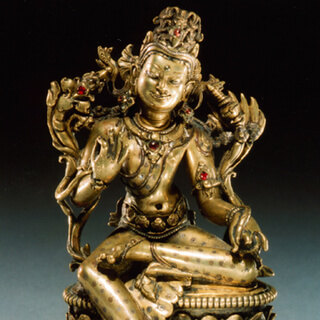
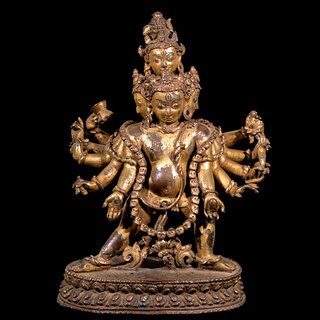
Including an image of a related artwork chosen from the Rubin Museum's permanent collection.
And now,
Please enjoy your practice.
Wisdom and compassion.
As I've been thinking about being with you here today,
I've just been appreciating the opportunity to repeat those two words to myself,
Given the context of daily challenges,
But also just what we've been dealing with as a nation this week.
And I'm really thankful for the opportunity to take a look at these two concepts,
Wisdom and compassion,
Here with you today.
And the two ritual objects behind me represent wisdom and compassion.
We have the Vajra or the scepter,
Which is that compassion aspect.
And it's not just compassion,
It's compassionate action.
So it's having skillful means and the ability to act out of a place of compassion.
And then the bell representing wisdom or the kind of a clarity of truth.
And if you imagine hearing the sound of a bell,
It can be very clear and strong and really give you an experience of that clarity.
So I think one of the most important takeaways from these two concepts of wisdom and compassion and the fact that they,
Through perfecting these skills,
Tibetan Buddhists believe that enlightenment can be reached,
Liberation.
But the overarching concept there is that it's really for the benefit of all that this is practiced and not just us individually.
So I love that overarching concept and keeping that in mind as the ultimate goal.
So Tracy Cochran is here with us,
Delighted to have her back.
She's a writer and editorial director of the quarterly magazine Parabola,
Which can be found online at parabola.
Org and of course,
Upstairs in the shop as well.
It's a beautiful publication.
She's been a student of meditation and other spiritual practices for decades.
And in addition to teaching here at the Rubin,
She teaches at New York Insight and every Thursday and Sunday at Tarrytown Insight in Tarrytown,
New York.
Her writings and teaching schedule can be found online via parabola on Facebook and Twitter and tracycochran.
Org.
Please welcome her back.
Tracy Cochran.
For those of you who are here for the first time,
I don't always talk like this.
But I've been met by extraordinary kindness and compassion.
So I'm not afraid.
And I'm glad that I have this kind of spooky voice because I'm going to tell you a ghost story.
A ghost story in August.
So many,
Many years ago when my mother was a little girl,
She lived in the panhandle of western Nebraska and the prairies.
And one night as she drove with her father,
She saw in the distance a cross burning and a circle of Klu Klux Klan.
And she was full of terror.
Even many years later when she told me the story,
There was still fear in her voice because she was the daughter of Danish immigrants who stood out from the rest of the community because of their heavy accents and their foreign ways.
So my mother was terrified that these men in her hoods would come for them with their torches and their guns.
Now my grandfather worked very hard and he was a very prosperous man,
Which some people in the town really hated because they thought that his prosperity and his happiness and the happiness of his family,
As you saw,
Was taking away from them.
That's what they thought.
So under Durd,
He built a big brick house for his family.
They had six kids.
And it was very beautiful but very strange to the townspeople.
It looked like a kind of Anne's Christian Anderson house sitting out there in the middle of the prairie.
This like fairy tale house.
And my grandmother heard some of the townspeople say,
What a shame this beautiful if very strange house is going to be lived in by these dumb Swedes.
Now these townspeople didn't know the difference between a Dane and a Swede.
But that wasn't the point.
Scandinavian wasn't the point.
Foreign was the point.
And even as a little girl,
My mother understood that they were other,
They were interlopers.
These people believed that their happiness,
Their strange and beautiful Anne's Christian Anderson house,
Their flourishing,
Took something from them.
So as a little girl sitting there in the car looking at this burning cross,
She said,
Daddy,
Are we going to die?
And he said,
In a very thick Danish accent,
That I cannot reproduce.
Nobody can speak Danish except Danish people.
It doesn't trip off the tongue.
But he said,
Notice always how they cover their faces and notice how they dress like ghosts,
Not like humans.
So yesterday,
Who knows why,
I Googled Klu Klux Klan.
Something was in the air.
And one of the theories of the way they dress,
The way they do their whole bunch,
Is that they're dressing like angry confederate ghosts.
So I'm here to tell you that in Buddhism,
The ghostly realm is a hell realm beneath the plane of the human.
Those who descend into the realm of the angry ghost don't have the same possibilities that we have.
They're under very heavy loss because they're captured by the fear and the hate that haunts them.
So the Buddha was once confronted by his monks when they were living in the forest and they were terrified because the forest was full of ghosts and angry and evil spirits.
So the Buddha taught them metta,
Loving-kindness practice.
Imagine that.
Not so that they would space out,
But so that they would remember who they were in the capacities of their own hearts and their own bodies.
And remember that night when the Buddha was terrified because Mara brought the images of terrible armies,
Of hate,
Of fearful things.
The Buddha reached down and touched the earth.
That was his answer.
The first thing we do when we sit is remember the body,
The sensation of sitting in a body breathing,
Connected to life,
Connected to the earth that supports us,
Connected to the stars,
Because our body is literally made up of the same elements of the stars.
Life is with us the whole of life.
And then in the metta practice we soften the heart and bring these phrases,
May I be well and happy and safe and may all my good purposes be fulfilled.
And we remember the power of compassion that we're not alone.
There is innate goodness in ourselves and in this room.
Just listen to me.
I dare to sit up here with this raspy,
Croaky voice,
Totally trusting the goodness and compassion that just spontaneously meets me.
So I want to remind you a story I told.
I'm going to just tell it in a sentence.
Once I met Andrew Young,
Who was the mayor of Atlanta.
He was the ambassador to the United Nations and he marched with Martin Luther King and he said to me,
Personally,
How do you think that Martin dealt with fear?
He was full of fear.
But Martin knew the truth and he lived it every day.
It was always with him and he has written and he has spoken about that truth as Don said,
The sense of being part of the greater wholeness of life.
We totally are,
Every single one of us have been given these bodies and these hearts and these minds and we can turn towards that wholeness at any moment.
And the interesting thing is,
One of the most available ways is through kindness.
Turning this kindness practice towards ourselves,
This compassion.
We give ourselves back to ourselves.
We remember who we are.
We're not ghosts.
So I thought it would be interesting not to make,
I don't want to waste this wonderful voice of mine,
That today we could do a little metta practice.
I'm going to make it very simple.
I was up at Shuang Yan monastery on Saturday with a scholar monk,
Bhikkhu Bodhi,
And we were practicing metta.
And I like the way he describes it,
Taking it from the ancient tradition that these metta phrases are like bellows,
Banning the ember of a feeling.
It might just be a little bit of an ember.
So you say these phrases just to two groups,
Some of us just to one.
The phrases are very simple and these are the ones Bhikkhu Bodhi likes to use and I like them too.
May I be well.
May I feel alive and strong in my body.
May I be well.
May I be happy in my mind at peace.
May I be safe from the inner and outer harm and danger of all kinds.
May I be safe.
May I be,
All my good purposes be fulfilled.
So some of us today will just bring those phrases to ourselves and take care of ourselves today because we might be afraid and upset and we might have seen horrible things,
Swastikas,
Things that trigger drama from our past.
And some of us will at a certain point be invited to bring compassion to everybody in this room,
Including ourselves.
We always start with ourselves and we always include ourselves because that's our way of remembering that we have this subjective inner life.
We're not just thoughts and we're not just what comes in from outside.
We have a world of feeling with us.
We're not going to force ourselves to feel any way.
We're just going to gently bring an invitation to remember.
Okay?
So now we're going to take a comfortable seat.
Feet on the ground,
Back straight.
We're going to feel our feet on the earth.
We're going to feel our spines stretching up to the stars.
We're going to let our eyes close.
And just sense the body in the simplest and most global sense,
Bringing in a feeling of welcome,
Total acceptance,
However you find it.
Welcome.
You belong here.
You belong here.
And as you feel the body begin to relax and soften just a little bit,
Bring the attention to rest on the breathing in the simplest way.
Just notice in-breath and out-breath,
Either in the chest or as a sensation of air in the nostrils.
Just sensing the body.
Noticing that sensations are present,
Thoughts,
Tensions allow everything to be exactly as it is without judgment,
Without any kind of stress or pressure.
And as you feel ready,
Allow yourself to picture yourself from about five yards off.
You can picture yourself as you are now,
Smiling,
Or even as a baby or a little kid.
Just allow.
Allow yourself to appear and offer yourself these wishes.
May I be well.
May I be happy.
May I be safe.
May all my good purposes be fulfilled.
Without any asking for any particular feeling or result,
We simply offer the wishes.
And when we get lost and forget,
We come home to the body and the breath without judgment or comment,
And we begin again.
May I be well.
May I be happy.
May I be safe.
May all my good purposes be fulfilled.
May I be happy.
Noticing that even if you lose the words,
You can have a kind attention towards yourself,
Allowing yourself to be with no judgment.
May all my good purposes be fulfilled.
May all my good purposes be fulfilled.
Noticing that an intention to be kind can bring softness but also awareness,
Sensitivity,
And the strength of resilience,
Of accepting.
Now some of us will stay with ourselves and some of us will include everyone here,
Including themselves,
Offering the wish,
May we be well.
May we be happy.
May we be safe.
May all our good purposes be fulfilled.
Experiencing how it feels to let our guard down and offer this kindness to everyone here,
Including always ourselves.
May we be well.
May we be well.
May we be happy.
May we be safe.
May all our good purposes be fulfilled.
Notice how it feels to receive this kindness from others.
This wish that you be well and safe and happy and that your goodness be fulfilled.
May all our good purposes be fulfilled.
May we be well.
When you get lost,
You come back to the body and the breath and the sensation of being here right now.
And when you feel ready,
You can say the praises or stay with the sensation.
May we be well.
Allowing everything to be exactly as it is.
May we be well.
May we be well.
May we be well.
May we be well.
May we be well.
Noticing how it feels to be in the sunlight of your own loving kindness,
Your own kind attention,
And the kind attention of others.
We begin to remember that we are part of a greater life.
May we be well.
May we be well.
May we be well.
May we be well.
May we be well.
May we be well.
May we be well.
Noticing that there is a compassion in us that's not separate from wisdom.
It's a responsiveness,
A willingness to be here.
May we be well.
May we be well.
May we be well.
May we be well.
That concludes this week's practice.
If you'd like to attend in person,
Please check out our website,
Rubinmuseum.
Org slash meditation to learn more.
Sessions are free to Rubin Museum members,
Just one of the many benefits of membership.
Thank you for listening.
Have a mindful day.
You're welcome,
Bye.