Welcome to the mindfulness meditation podcast.
I'm your host,
Dawn Eshelman.
Every Wednesday at the Rubin Museum of Art in Chelsea,
We present a meditation session led by a prominent meditation teacher from the New York area.
This podcast is a recording of our weekly practice.
If you would like to join us in person,
Please visit our website at rubinmuseum.
Org slash meditation.
We are proud to be partnering with Sharon Salzberg and teachers from the Interdependence Project.
The series is supported in part by the Hemera Foundation.
In the description for each episode,
You will find information about the theme for that week's session,
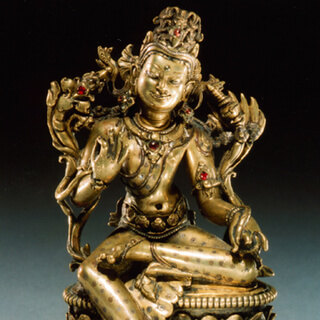
Including an image of a related artwork chosen from the Rubin Museum's permanent collection.
And now,
Please enjoy your practice.
My name is Tashi Chodron.
I am the host for Himalayan Heritage,
Which is a monthly program,
And it's always first Wednesday of each month.
And that being said,
For the September,
The first Wednesday falls on the 5th.
And the program always connects with the most recent exhibit or something special in the lunar calendar.
So the September seems to be this very auspicious celebration of Ganesha's birthday,
Which is a very beloved Hindu god,
Elephant-headed god.
And so we're partnering with India Home from Queens and celebrating Ganesha's birthday on the 5th.
So if any of you are free and interested to participate,
Again,
I think I mentioned this last Wednesday or one of the previous meditations.
I'm allowed to give out a secret $5 discount code to the Himalayan Heritage.
And the code is Ganesha.
So it's easy to remember,
Right?
So our program,
Again,
There's a theme.
And so this month's theme is intentionality.
Okay?
So intention,
Again,
I've mentioned in the past how important it is in the Buddhist practice.
Intention,
In fact,
The right intention is considered very,
Very important,
Very,
Very meritorious.
And I was sharing to some of my friends that when you have right intention,
And if you're wondering what is right intention,
Something like when you wake up in the morning,
You give rise to thoughts like,
You know,
Whatever I do today,
May I be of some help to others,
Or may I not say any harmful things to hurt anybody.
You know,
Those are some kind of like intention or motivation.
And when you give right intention,
You'll be habituated.
And then even if somebody says something harmful to you,
Because you've been giving rise to such right intention,
Even that harmful,
You know,
Message that someone gives might turn into a positive thing for yourself,
Because you may not think it's a bad thing that someone is saying.
Otherwise,
You know,
If we have negative thoughts,
Even if someone says,
Oh,
You have two eyes,
We might simply give rise to anger.
Right?
So in which case,
You know,
That's why in the Buddhist teaching where intention plays such an important role.
So this object that we have here,
Again,
We connect to something,
A beautiful painting or a sculpture from the galleries.
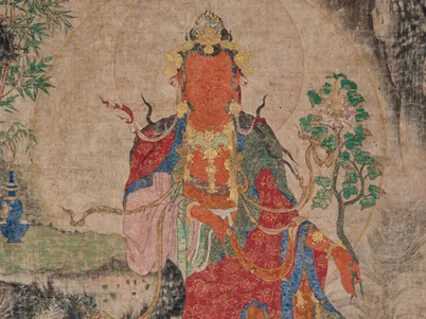
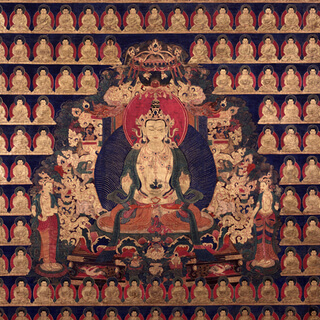
This is a beautiful thangka painting,
A mineral pigment on cloth.
And there's a lot of things going on in this painting.
The central figure of this painting is the Maitreya Buddha.
In Tibetan,
He's often addressed as Je Tsun Champa.
Champa is compassion,
So is the Compassionate Loving Kindness Buddha,
Often referred to as the future Buddha,
Buddha that will appear,
You know,
In the future.
There's a lot more to say to this.
And after the meditation session,
Again,
I will be,
You know,
Helping in Jeremy's position.
So I'll see you up on the gallery.
So today,
We are very,
Very honored to have Kate Johnson.
Looking back,
Kate works at the intersections of spiritual practice,
Social action and creative expression.
Kate teaches mindful yoga in New York City public schools and Buddhist meditation at the Interdependence Project.
Studied BFA in dance from Alvin Alley School,
Fordham University,
And an MA in performance studies from NYU.
Kate trained at Spirit Rock Meditation,
Spirit Rock Meditation Center,
The Interdependence Project,
Laughing Lotus,
Presenting Institute.
She's working on a book about waking up to power and oppression as a spiritual practice to be published by Parallax Press.
Please help me in welcoming Kate Johnson.
It's nice to be here and it's such a fortunate blessing for me to be able to interact with the beautiful art piece.
You should really see it in person if you can because the image here isn't as vivid as it,
You know,
Is in person.
It's just,
It's really stunning.
And I should say,
I'm not Tibetan.
I'm not a Tibetan Buddhist teacher.
My training is in the insight meditation tradition,
More comes out of Thailand,
Burma,
Sri Lanka.
But I feel very honored and blessed to be able to interact with this art piece today and a little bit with the tradition as well.
So Maitreya Buddha,
You know,
There are two things that I really,
Well,
There are several things that I really love about this figure.
One is that Maitreya is most of the time pictured sitting in a chair,
Which I love because people always think that the best meditation seed is if you're sitting on the floor,
You know,
In full lotus or whatever.
But I always say,
You know,
If a chair is good enough for the future Buddha,
It should be good enough for us in terms of our meditation practice.
And the second thing that I really love about Maitreya Buddha is that it's,
Maitreya is the Buddha of the future.
And sometimes,
You know,
We,
Meaning meditation teachers,
Can talk about enlightenment as if it's a thing of the past.
You know,
Certainly if we look at early Buddhist suttas,
It seems like people were getting enlightened.
You know,
The Buddha would hold up a flower and someone would get enlightened,
You know.
It was like,
It would seem to be a little easier back in the day.
But,
You know,
This idea that enlightenment is a present and future possibility is something that I find really inspiring.
Similarly,
You know,
Sometimes people think of or talk of Tibet as if it's like this mythical,
You know,
Kingdom that was passed long ago.
And of course,
We know that Tibet is still here as our,
You know,
Incredible Tibetan people and that there's rich spirituality and political struggle happening now that we,
You know,
If we love this work can all become familiar with,
Right?
So,
So yeah,
The Maitreya Buddha being the Buddha of the future,
And leads us into this theme of this month of intentionality.
You know,
When I think of intentionality,
I think of both a forecasting into the future,
Kind of like setting our,
Like beaming a light or setting our sights on a future possibility.
And then there are also ways in which we can think of the future kind of calling back to us.
So I get this notion from a writer who I really love named Parker Palmer,
Borrowing from another tradition.
He's from the Quaker faith.
And he talks about,
You know,
Finding vocation,
Finding our life's work.
And this question that,
Of course,
Young people ask,
But I'm in a kind of intergenerational women's group,
And there's women in our 20s,
30s,
40s,
50s,
60s,
And beyond.
And all of us are kind of like,
What should we do with our lives,
You know?
So this,
What do I do?
What does the future hold for me is a question that I think many of us ask throughout life.
And Parker Palmer has this beautiful way of kind of turning this question back.
And he says that maybe we're asking the wrong question,
That it's not,
What do I want to be?
Or what do I want out of this life?
But what does this life want from me?
And I love that question.
You know,
What does this life want from me?
What does this life want from us?
So as Tasha mentioned,
Intention is this incredibly important quality within the Buddhist teachings,
And also something that we can come back to throughout the day to help us orient ourselves in a moment to moment way when we're not sure which way to go or when we encounter a conflict or a harsh word.
And it can be sometimes a goal,
Like where we want to get with our spiritual practice or,
You know,
Manifesting in a completely enlightened way.
More often,
I think of intention and use it in my practice as a navigation system.
Like,
If the goal is the destination,
Then intention being like,
How do we recalibrate in a moment?
Like,
What's our orientation?
What's our inner compass that allows us to know,
You know,
Often the path to a goal is not just a straight line.
And so in the inevitable ups and downs and the worldly winds of life,
How is it that we're,
What's the track that we're charting and what are the tools that we're using?
Intention can be a can be a strong tool for that.
And you know,
Another just note about future Buddha before we dive into practice.
There's a beloved Vietnamese and Buddhist teacher named Thich Nhat Hanh,
Who many of you probably know,
He was nominated for the Nobel Prize by Dr.
Martin Luther King Jr.
They're buddies,
Which I think is just the coolest.
There's some beautiful pictures of them together.
I think they really loved each other.
And you know,
He suggested that the future Buddha,
Someone asked him,
You know,
About the Buddha of the future.
And he said,
I think the future Buddha will be the Sangha,
Meaning I think the future Buddha will be the spiritual community.
And so yeah,
Just,
You know,
That's kind of going to be the theme of our practice today.
What are the qualities that can help us individually navigate our experience on the path to this future self that we intend to be?
And also,
What are the qualities that this future enlightened community is kind of calling back to us to be in this moment?
So we'll contemplate that a little bit and then see if we can incorporate that into our meditation practice in some way.
That kind of calling back action or image reminds me of another quote that I think is appropriate for meditation practice.
It's Arundhati Roy,
Who's one of my favorite writers.
And she,
Some of you have probably heard this,
She said something like,
Another world is possible and on a quiet day,
I can hear her breathing.
And so,
You know,
In some ways,
I think that's what we can do in meditation practice,
You know,
We create within ourselves a quiet day and then we listen,
You know,
What is this future world and who am I called to be in it?
So we'll start the practice with a little bit of contemplation around intention.
And then we'll go into a more of a mindfulness of breathing practice.
But from time to time,
I'll just remind you to light up that intention almost like,
You know,
We have our touchscreen on our smartphone and sometimes we're not using it,
It gets a little dim and so you just light it back up.
You can do that with your heart's intention,
Right?
You turn your awareness towards it and light it up again.
And you know,
In the process of meditation,
As you know,
Like we start with all this energy and we're sitting up tall and we're like ready to go.
We're here for the breath and we're here for the next breath and then it can kind of like,
It can go south.
It can lose energy and get sleepy and then we have the nodding head situation which is happens,
You know,
Not to shame anybody if that happens,
Sleepiness happens,
Right?
But intention is a way of gathering energy.
You know,
Light up the touchscreen of the heart.
It can also help us when doubt comes in.
Sometimes in the middle of a practice or even in the middle of a long retreat,
Like I remember once I was on a three-month silent retreat in the middle,
I was like,
Wait,
Why am I here?
What am I doing?
It was bad because I was in the middle of Massachusetts.
I didn't have a car,
You know?
So remembering intention,
Right?
Oh,
This is why I'm here.
And that might be a little bit different for all of us and that's okay,
You know.
But the quality of lighting up with the energy of what we're moving towards is something that is a gift for all of us to share.
Does that sound okay?
We'll just work with that a little bit today.
Okay,
Cool.
Great.
So we'll also have time for comments or questions after.
I'm happy to try to comment or respond.
But for now,
Just setting up our meditation posture,
You can,
If it's possible,
Let your feet come in contact with the floor in an even way and just find a comfortable way to sit.
It's fine to use the back support if you like or sometimes I like to sit away from the back of the chair if I'm feeling sleepy just to bring a little more energy.
Allow the body to really register that we are being supported in this moment by the chair and by the floor and by the earth.
And so we can invite the body to rest into this support.
Using any tendency to hold up or brace and just inviting the body to soften if it can.
That might mean letting the shoulders drop even just energetically a bit.
That might mean softening the face,
The skin around the eyes,
The skin around the mouth.
Perhaps we can just,
You know,
While we all have our eyes closed,
Let our bellies just be as big as they want to be.
No one's looking.
I can just let it,
Let it out.
And then of course there's some energy in the meditation posture too.
There's energy in the spine which is lifting up towards the ceiling.
There's openness in the heart space.
There's the brightness of our awareness which is knowing all of these sensations.
I'll just ask you to turn your awareness towards your heart space towards the center of your chest.
And notice that you're breathing and that as you breathe that space moves so you can feel the sensation of expansion and softening that happens with each in-breath and out-breath.
And perhaps you'll notice other sensations in the heart space as well.
Sometimes there's tenderness.
Sometimes there's tightness.
Sometimes expansiveness.
Sometimes changing.
And for today I also suggest that the heart might be a space from which we can listen to this future world that is possible.
And to hear her calling back to us,
You know,
How is it that we are to be in this moment and in each moment to help us navigate our way there?
And so I just want to drop in that question,
You know,
Future enlightened society,
Future enlightened self,
You know,
What is the quality that I can manifest to help me move in that direction?
And to see what comes back if there's a word or phrase or an image.
And patience,
Advocacy,
Bravery,
Gentleness.
And if there is a word or phrase that strikes home for you,
See if you can hold it in your mind and perhaps even if you're a visual person,
Envision it in your heart as if it was a neon sign emblazoned inside your chest and radiating out into your whole body.
Just notice what it's like to hold this intention in your heart.
And then we'll keep in touch with that sensation,
That felt sense of holding intention,
But start to instead shift our awareness towards the feeling of breathing so that we're on a moment to moment way noticing what it feels like to breathe in and breathe out and bringing the experience of breathing into the foreground of the awareness.
["F pandemic is difficult and it's about who helps from whom"] And of course from time to time the mind will wander or ruminate or project or plan.
And that's fine.
And just when you notice that happening,
See if you can come back to,
Okay,
Breathing in and breathing out.
And what does it feel like?
What does each breath feel like?
Letting the felt experience of the breath bring us back into the present moment.
Letting the felt experience bring us back into the present moment.
Letting the felt experience bring us back into the present moment.
Letting the felt experience bring us back into the present moment.
And feeling whatever breath that you're on,
The sensations of the in-breath or the out-breath.
And seeing if you can let the mind follow them as they change.
Attending to that feeling as a way to gather and settle the mind.
Letting the mind follow them as they change.
Letting the mind follow them as they change.
Letting the mind follow them as they change.
And then staying with the feeling of the breath,
Not losing the sensation of it coming and going,
And just light up the intention again by seeking to embody that quality,
Even in our relationship to the breath.
So what would it be like to fully manifest this intention even in this moment in your relationship to yourself and your own breathing?
So that what we're paying attention to is the breath,
But how we're paying attention is informed by our intention.
Breathing in,
Breathing out.
Breathing out.
Breathing out.
Breathing out.
Breathing out.
And again,
Refreshing our attention on the breath,
Really feeling it,
This one that we're on,
And then refreshing also our intention,
How we're relating with this breath.
Breathing out.
Breathing out.
And then as we move into the last few moments of the practice today,
The formal practice,
Perhaps flashing on this wider intention that Tashi offered us at the beginning of the session today,
That our practice might be of benefit,
That helped us to be of service to all beings ever where,
Wherever we can.
And so imagining that possibility and feeling that alive in us,
That wish.
And then in a moment or two,
I'll close the practice with a ring of the bell.
And when I do,
Feel free to lift your gaze,
Stretch your body,
Take some deep breaths,
And close the practice in whatever way feels appropriate for you.
Thank you for your time and attention and generosity of your practice today.
I'll see you next time.
That concludes this week's practice.
If you'd like to attend in person,
Please check out our website,
Rubinmuseum.
Org slash meditation to learn more.
Sessions are free to Rubin Museum members,
Just one of the many benefits of membership.
Thank you for listening.
Have a mindful day.