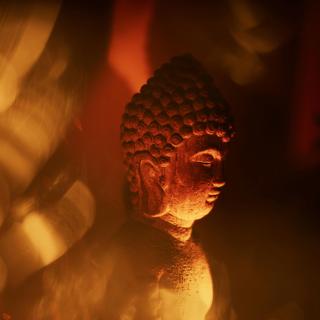
Namaste,
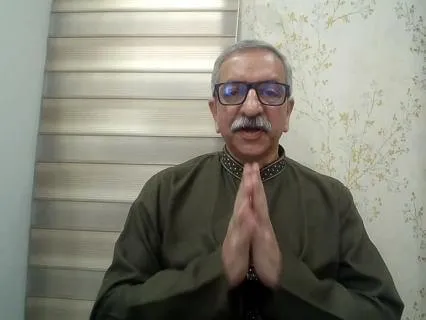
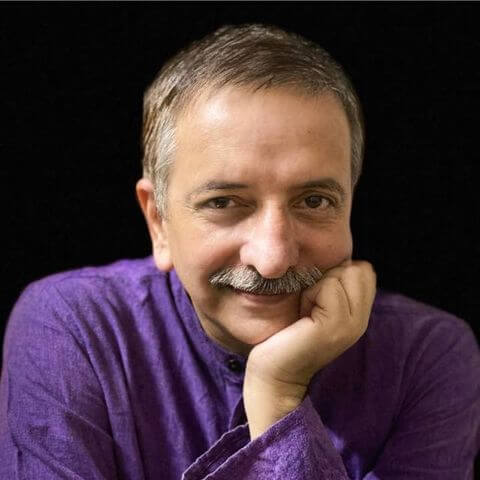
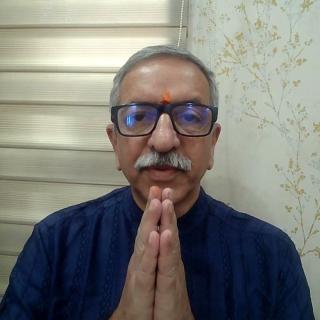
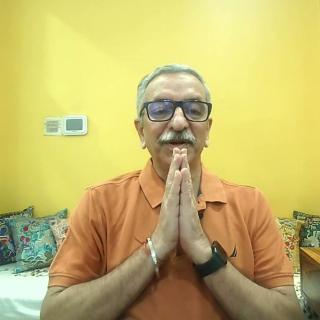
I am Rohit Bhardwaj.
Let me take you to a journey of yoga.
We are celebrating International Yoga Day on 21st and on this occasion,
I would like to share with you the details of Patanjali Yoga Sutra.
India is a civilizational country which has a continuous history of more than 5000 plus years.
And yoga is the single most positive contribution by India to the entire humanity.
It is a preventive way of healing and keeping our body,
Mind and spirit in a healthy state.
The allopathy suppresses the symptoms.
Does not allow the symptoms to come up.
It ensures that there is absence of any disease,
Dis-ease is not there.
What is the aim of yoga?
Aim of yoga is chit vritti nirodh chit is mind vritti are the disturbances and nirodh is calming the disturbances when the body and the mind are disturbance free the health and the healing inside the body erupts like a fountain and it drenches the entire body if you look at the way we all do yoga we are doing a very little part of the actual thing described described in the Patanjali Yoga Sutra.
In Patanjali Yoga Sutra,
Yoga has got eight parts.
It is called Ashtang Yoga.
And in that Ashtang Yog,
Asana that we do is only one part of it.
Let me explain all 8 parts to you very briefly.
The first part is yum.
Yum is.
.
.
Ethical and moral compass of a human being.
Things that one should not be doing.
The second part is Niyam.
Niyam is self-discipline and it is evident in the society.
The third is Asana.
Asana has got three more components.
The first component is physical movement of the body.
The second component is the breath control.
The third component is reciting silently the mantra associated with the asana in the mind.
And the fourth component is generating the associated feeling.
So asana,
After asana it is pranayama.
Pranayama is the science of control of breath.
Various energies are there.
Those energies are balanced by the pranayama.
Then next is pratyahara.
Pratyahara is withdrawal of senses from external objects.
Next is dharana.
Dharana is fixing of mind on one particular object.
Thought,
Object,
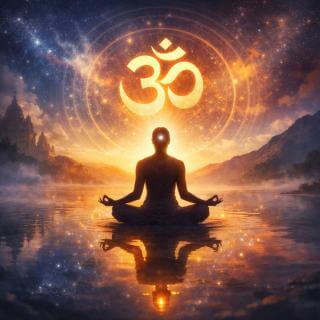
Then is Dhyan,
Which is a continuous meditative process of concentration on the same thought and its cascading child thoughts.
The final is Samadhi where the meditator,
The meditation and the object of meditation all become one.
There is the final conjoining of all things.
That is Samadhi.
I will be conducting a series of videos one after another in which each of these 8 components would be explained in detail.
Namaskar.