Hi,
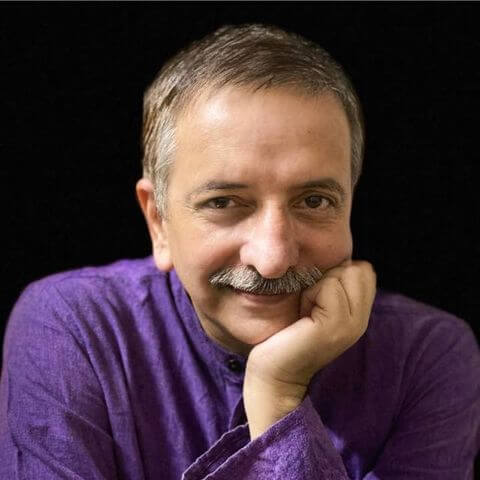
I am Rohit Bhardwaj.
Today we are celebrating India's 80th Independence Day.
While it is occasion of joy and pride for all of us,
Let us use this occasion to get independence from the internal enemies also.
The world outside is merely a mirror.
The actual battle and the real enemies,
They live entirely within us.
As per them,
The human suffering is not caused directly by external events,
But by six primary distortions of the mind known as Shadripu or six enemies.
Unlike the external adversaries,
These enemies do not wear armor or hold weapons.
They operate quietly from within our own psychology,
Shaping how we react,
Make choices,
Make decisions,
Or perceive the reality around us.
Vedant stresses that your core essence,
That is your Atma,
Is inherently peaceful,
Joyful,
Whole Now before we proceed further,
Let us discuss the anatomy of mind as per the Vedantic philosophy.
As per them,
Mind is made up of four elements.
Ego is when we take pride in our own contributions,
In our capabilities Pride is called ego.
But ahankar is I-ness.
This is my body.
This is my mind.
This I-ness is ahankar.
Anxiety.
Let us start from the beginning that it all starts with the desire that is calm.
The first of the of the shudder.
When this is blocked,
Anger rises.
When a desire is not fulfilled,
Something blocks it.
Anger rises to stop that block.
It is called growth.
And when the desire is fulfilled,
Another desire,
Secondary desire arises to have more of what we have.
The greed,
That is the third ripu,
That is lo,
It comes into us.
Then once we are possessing a lot of these resources or things or material things,
Moh develops,
That is our attachment towards these items.
And identification happens with the items.
This is my house.
This is my car.
That this part is moh and then finally comes the ego or the pride that is when I move with sense of absolute pride in what I have that is called mad and finally when what I do not have and others possess the envy that develops in me the jealousy that develops in me is called matsar So the six internal enemies all interlinked are Kaam,
Krodh,
Lobh,
Moh,
Madh,
Matsar or Desire,
Anger,
Greed,
Delusion,
Pride and Envy.
Vedant not only gave the diagnosis of these sufferings but also provided a counter practice to overcome these six enemies.
Let us discuss all of them in sequence.
Expansion towards all the worldly items.
Channelize the desire towards self-realization and growth.
Once your aim is self-realization,
The craving will dissolve.
Let us move to the next krodh,
That is anger.
The unhealthy pattern is emotional outburst.
One loses his shirt,
One shouts,
Yells and creates a scene everywhere.
And what is the Vedantic counter practice to this?
Kshama.
Pause,
Compassion,
Cultivate the inner space between stimulus and response and forgive.
Whatever is causing anger,
That thing also must be having a compelling desire or want or need to not give it to you.
So channelize your growth by adopting the feeling of kshama and pause.
The third is loob,
That is greed.
Greed develops from scarcity mindset.
Have the abundance mindset.
By doing which Vedantic practice?
Daan,
That is generosity,
That is giving away of possessions,
Practicing intentionally giving away and having the feeling of utmost contentment with what you have.
That is called Santosh.
When Santosh is around,
The greed or the lobe dissolves.
Next is Moh.
That is delusion.
That is blind clinging.
The unhealthy thing is blind clinging to things.
And what is the Vedantic counterpractice?
Discrimination.
Use your Vivek.
Use your power to discriminate between good and bad.
Inquire what is real,
What is temporary.
What is temporary for how long will it last?
How long will the joy of watching a movie last?
How long is the process of giving you a joy?
How long is that?
So use your Vivek.
Use your discrimination to get out of the delusion or Moh.
Next is Madh.
That is pride.
Unhealthy pattern is egoic inflation.
You have an inflated ego.
And what is the beautiful Vedantic counter practice?
Adopt humility.
Creates the power to dissolve the anger also and recognize that all talent and resources are borrowed.
You came with empty hands,
You will go with open hands.
Use the vinay,
The humility and all your pride in your physical possessions will dissolve.
And finally,
Matsar,
That is enemy,
Resentment of others accomplishments.
Have the shared joy.
Mudit,
Mudit man.
My mind is full of joy.
Joy which has no reason to be there.
Joy without any outcome,
Joy,
Without any expectation,
Joy,
Without any kind of any encumbrances,
That is mudit,
Celebrate the prosperity of others and celebrate their growth.
So these are the six practices,
Vairagya,
Kshama,
Daan,
Vivek,
Vinay,
And mudit,
To stop the six enemies of Kaam,
Krodh,
Lobh,
Moh,
Madh and Matsar.
When an emotional enemy arises,
Ask who is the feeling?
Who is feeling this anger or envy shift from being actor consumed by the emotion to the witness of observing the emotion.
Finally,
The six inner enemies are not evil.
They are misdirected energies of the mind.
Real Moksha is not absence of external challenges,
But freedom from being held hostage by these external enemies.
This Vedant reminds us that we are not our anger.
We are not our greed.
Neither are anxieties.
We are the conscious observer aware of them.
When you master your inner state,
The external world loses its power to disturb your peace.
And that is your actual internal independence.
Happy Internal Independence Day.
Friends,
Jai Hind.