125,000 therapists use Insight Timer with their clients
Here is some of what they tell us.
Four ways Insight Timer supports therapists
Clinically tagged
First, Do No Harm
Every technique behind our 350,000 practices is tagged with the evidence, how it works, who it suits and when to take care.
Clinically evaluated resources
Each practice is shared with a clear assessment of how it works in the body, who it works for, and evidence from real-world use.
No harmful advertising model
Avoid the toxicity that comes with engagement-based platforms. Clients won’t be led down harmful paths or feel pressure to stay on the app.
A community of real experts, no AI
Every practice on Insight Timer is taught by a real person. People heal people, not machines.
350,000 clinically tagged free resources
Research gathered by the American Psychological Association shows therapy works better when it reflects a client’s own beliefs, faith and culture.1,2 Insight Timer now brings clinical evidence to spiritual practice, so the practice you recommend is clinically safe and, because it fits who your client is, more likely to work. See the science
Altered state and depth
Yoga Nidra
A guided, lying-down meditation that leads into deep relaxation while awareness stays present.
Promising evidence
Good for
Everyday stress and anxious restlessness
Broken or shallow sleep
Raised blood pressure, alongside medical care
Clients who find seated or movement practices hard
Use with caution
Trauma history, PTSD or a tendency to dissociate
Severe anxiety or low mood, where it should sit alongside care
Very low blood pressure, so sit up slowly afterwards
Evidence
22studies
3 meta-analyses, 10 randomised trials, 2 systematic reviews, 4 observational studies and 3 pilots. A meta-analysis of 73 studies found large drops in stress and anxiety1, and trials link it with lower blood pressure2.
Effort
Moderate
Mental effort
Emotional depth
Physical intensity
Prior knowledge
Starting dose
10min, 3 days a week
Shifts the body into rest and recovery. Heart rate, blood pressure and cortisol fall after practice.
Breathwork
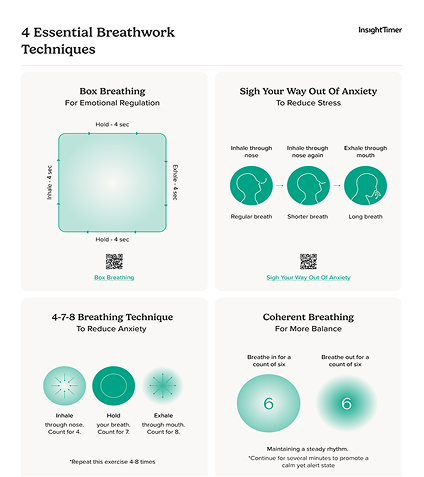
Box breathing
Four equal phases of inhale, hold, exhale and hold, to bring calm and focus.
Indirect evidence
Good for
Settling acute stress
Steadying nerves before a performance
Quieting a racing mind
Use with caution
Lightheadedness or breathlessness during holds
Panic or strong anxiety around breath sensations
Heart or lung conditions, such as COPD or poorly controlled high blood pressure
Pregnancy
Evidence
8studies
3 randomised trials, 4 observational studies and 1 pilot. Findings include better heart rate variability1 and better sleep in older adults2.
Effort
Moderate
Mental effort
Emotional depth
Physical intensity
Prior knowledge
Starting dose
5min, every day
May work by activating the parasympathetic nervous system and anchoring attention.
Psychological and psychotherapy
Loving-kindness (metta)
Silently repeating phrases of goodwill toward yourself and others to build warmth and compassion.
Promising evidence
Good for
Clients short on warmth or connection
Clients who are hard on themselves
A low, flat mood
Use with caution
Early sessions can stir sadness or resistance before warmth arrives
Recent grief or unresolved trauma
A harsh inner critic, where a gentler start helps
Evidence
10studies
1 meta-analysis, 1 randomised trial, 5 observational studies and 3 pilots. A meta-analysis found a moderate drop in depression1, and another linked it to more positive emotions2.
Effort
Moderate
Mental effort
Emotional depth
Physical intensity
Prior knowledge
Starting dose
5min, 3 days a week
Engages the brain’s reward and affiliation circuits, so care registers as safe and rewarding.
Mindfulness
Body scan
Moving attention slowly through the body, noticing each sensation without trying to change it.
Promising evidence
Good for
Feeling more connected to the body
Steadying a busy mind
Building present-moment awareness
Use with caution
Health anxiety, where close attention to sensations can feed worry
Distress that shows up as physical symptoms
Severe anxiety, depression or trauma, alongside care rather than instead of it
Evidence
12studies
1 meta-analysis, 3 randomised trials, 1 systematic review, 3 observational studies and 4 pilots. A meta-analysis of 14 trials found a small rise in mindfulness1, and an 8-week study found better awareness of signals inside the body2.
Effort
Moderate
Mental effort
Emotional depth
Physical intensity
Prior knowledge
Starting dose
10min, 3 days a week
Trains interoception, the sense of signals like breath, tension and warmth inside the body.
Mindfulness
Urge surfing
Watching a craving rise, peak and fade like a wave, without fighting it or acting on it.
Promising evidence
Good for
Cravings during substance use recovery
Cutting down on smoking
Impulsive or emotional eating, though this is less tested
Use with caution
Trauma history or acute emotional distress
Substance use disorder, where clinical support is needed
Staying with a strong urge can feel activating at first
Evidence
10studies
2 systematic reviews and 8 pilots. Students who learned it smoked fewer cigarettes the following week1, and a review of 54 trials found mindfulness programmes reduced addiction symptoms2.
Effort
Hard
Mental effort
Emotional depth
Physical intensity
Prior knowledge
Starting dose
5min, 3 days a week
Helps a craving register as a passing event, so its pull weakens each time it is not acted on.
Most shared by therapists
The audio and worksheets therapists shared with clients most often over the last three months. All free, and ready to send in a tap.
Every week, clinicians share what is working in their sessions, and one session is just for you to pause and reset. Can’t make it live? Register and we’ll send you the recording.
Insight Timer supports the work you do in therapy and does not replace it. It is not a crisis service. Clients in an emergency should contact a crisis line or emergency services, or visit our help resources.