Welcome to Spiritual Psychology.
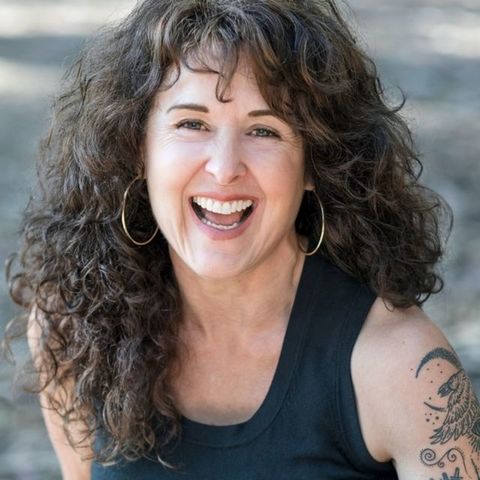
My name is Renee LaValley McKenna,
And I bring my 30-plus years as a recovering addict,
Ex-crazy person turned therapist and shamanic healer,
To bring you snackable teachings on psychology,
Spirituality,
And all things personal growth.
And today I want to talk about the principles underlying the 12 steps and how they can be helpful to everyone.
So the spiritual principles underlying the 12 steps are honesty,
Hope,
Surrender,
Courage,
Integrity,
Willingness,
Humility,
Love,
Responsibility,
Discipline,
Awareness,
And service.
So I'm going to talk about each of these spiritual principles and how they relate to the steps and how they can benefit everyone,
Because spiritual principles are available to all of us as a compass,
As resources,
And as guides.
So the 12 steps were written by a man named Bill Wilson in the 1930s,
One of the co-founders of Alcoholics Anonymous.
And over the last 90 years,
12-step fellowships have spread across the globe,
And the basic formula offered by the 12 steps for recovery from addiction from alcohol has been expanded to apply to about every problem a person could have,
Helping people change their lives with issues from schizophrenia and shopping addiction to gambling,
Overworking,
And dysfunction with sex and relationships.
And the interesting thing about 12-step fellowships is they all use exactly the same 12 steps,
And the only difference between them is step one.
And step one is where you identify or get honest about the specific problem that you're having in your life.
I personally think that the 12 steps are one of the greatest gifts to humanity that came out of the 20th century.
They're a really effective and powerful path of self-transformation.
And each of the 12 steps has a spiritual principle underlying it that can be helpful to anyone if they're willing and interested in applying that principle in their life.
The principle of the first step is honesty.
In order to solve a problem,
We have to know what the problem is and clearly identify it.
And the wording of the first step is,
We admit we were powerless over blank and that our lives had become unmanageable.
And you can fill in the blank with whatever it is that's causing you problems that you have been unable to solve yourself.
Now there's a lot of controversy around this idea of powerlessness.
Western culture is very invested in rugged individualism and using our will for our own individuation.
And certainly the whole rise of scientific materialism,
Which came out of the Enlightenment in the 15 and 1600s,
The Industrial Revolution,
And all of the material progress that we've made points to the ability of humans to direct their will and their energies and to be able to create amazing things.
Cities flying to the moon,
Computers,
Industry.
The quality of life for most people around the globe has risen considerably in the past few hundred years.
At least the quality of life externally,
For many of us our internal experience,
Our hearts,
Our minds,
Our spirits are not experiencing the same prosperity that our lives on the material plane might suggest.
And the 12 steps,
Like all great paths of transformation,
Point us away from the material world and into the world of our own psyches,
Our emotions,
And our spirits.
And each of the spiritual principles underlying each of the 12 steps points to the idea that true joy and fulfillment are not found in the material world.
They are found in healing and optimizing our relationship with God or the universe,
Our relationship with other people,
And our relationship with ourself.
And like most great religious or spiritual traditions,
It's suggested that love and service,
Selflessness and humility are the principles that will bring us what we really seek.
So like I said,
The principle of the first step is honesty and often dissolving the ego and the will to be open to the possibility that things could be different.
So the first step has a fill in the blank.
I'm powerless and my life has become unmanageable.
So if you have what feels like an unresolvable or chronic problem,
A willingness to admit defeat,
I can't figure this out.
All my best thinking and willpower are not bringing me where I want to go.
That may be with your relationship with food,
If you have dysfunction in your relationships,
With money,
And of course,
With drugs and alcohol.
So the principle of the first step is to get honest that I have a problem,
Which rolls into the second step,
Which holds the principle of hope.
And if you don't like the word hope,
We could say the principle of the second step is opening to the possibility that things could be different.
As it's written,
The second step says,
Came to believe that a power greater than ourselves could restore us to sanity,
Which shoots us right into the spiritual realm,
Which is a stop sign for a lot of people,
But it's very open what that idea of higher power is.
It could be your own wisdom for yourself,
Could be God,
Divine mind,
Universal life force,
The spirit of your loving dead grandmother.
The second step offers hope and possibility that change,
Healing,
Power beyond our own limited ego resources is available to be able to help us solve our problem.
So it says,
Came to believe that a power greater than ourselves could restore us to sanity.
And the root of the word sanity is sanos,
Which is about health and wholeness.
So do I believe,
Am I open to the possibility that I could be restored or brought to a place of health and wholeness?
And some would say the only thing one needs to know about higher power at the second step is that it is not the limited ego self.
So the spiritual principle of step three is surrender.
Step three is written to make a decision to turn our will and our life over to the care of God as we understand God.
And the concept of surrender is underrated in our achievement oriented society.
Surrender is frequently tied with defeat in war or in sports like wrestling where you need to tap out.
Surrender as a spiritual principle is about surrendering our small self in service of the larger capital S self to align our will with divine will.
And although our little human ego may feel defeated when it surrenders itself to the larger consciousness system,
Surrender in this way is more about correct alignment and going with the flow.
Step three talks about turning our will and our life over to the care of God.
It's about releasing fear and worry,
Attachment and agitation to how we think things need to be and letting go in service of a higher order than we might be able to imagine.
Basically how one turns one's will and life over is another story.
Will for me is generally about our ideas of how things should be and how they should turn out.
And it's kind of an acknowledgement that I can't see the big picture.
And going back to step two,
That perhaps there's a better way than I could imagine.
The idea that when I bang my head against the wall long enough,
It feels really good when I stop.
And there's an analogy that I use in relation to a strong will being like a team of wild horses.
An untamed,
That herd of wild horses can knock your house down.
But organized,
Focused,
Properly trained,
A strong will can move mountains,
Build cities,
Bring us places we couldn't go on our own if our will were not aligned with higher power.
So the principle of step three is surrender of will and life.
But it's also about alignment for me.
In my late 20s,
I was dating this guy,
Very charming,
Handsome,
Really good in bed.
But he couldn't tell the truth or hold a job.
But I was determined to make the relationship work.
They were tremendous signposts.
And I used every ounce of will I had to try to force my will on that relationship.
And we got married for a brief time.
And that marriage was one of the most painful,
Difficult relationships I've ever been in.
It ended,
Of course,
In divorce and bankruptcy.
And he's dead now.
And I'm less willing to force my will in any situation than ever before.
There's a prayer that goes with step three that says,
God,
I offer myself to thee to build with me and to do with me as you will.
Relieve me of the bondage of self that I may better do your will.
Take away my difficulties that victory over them may be a witness to those I would help of your power,
Your love,
And your way of life.
May I do your will always speaks to the interconnectedness of all things and the benefits of selfless service.
The spiritual principle of step four is courage.
Step four is about facing yourself.
It reads,
To make a searching and fearless moral inventory of ourselves.
It's about self responsibility and recognizing that I have a part in any difficulty in my life.
In 12 step fellowships,
There's particular attention on resentment,
On fear,
And on sexuality.
Because sex,
Fear,
And anger are the places most of us get tripped up.
And in a lot of 12 step recovery,
People actually sit down with pen and paper and write a moral inventory of themselves.
And self examination on this level can be quite illuminating.
Honest self examination is incredibly beneficial.
Certainly one of the things that happens in good therapy room.
And many spiritual and religious traditions talk about self examination as a really important practice.
Over and over in the Bible,
It suggests we examine ourself first,
Like Jesus says in Matthew 7.
First take the log out of your own eye,
And then you will see clearly to take the speck out of your brother's eye.
So although it can be easier and even more fun to see what's wrong with other people,
It's much more beneficial to actually see what's wrong with ourself first.
In fact,
The 12 steps actually came out of a fundamentalist Christian organization called the Oxford Group.
The Oxford Group was a Christian organization also known as the First Century Christian Fellowship.
It was founded in the 1920s by a Lutheran priest who believed that all problems were rooted in fear and selfishness.
And Oxford Group meetings were held in people's homes rather than in churches.
It was very loosely organized,
Much like first century Christians were after Jesus' crucifixion.
Over time,
The Oxford Group came to call itself moral rearmament.
And it still exists as a faith-based organization affecting social change under the name of Initiatives of Change.
At its height in the 30s,
The Oxford Group was worldwide,
About 50 countries.
And it was actually at an Oxford Group meeting that Bill Wilson was introduced to these principles that became later the 12 steps.
So the spiritual principle of step five is integrity.
And step five says we admit to ourselves,
To God,
And to another person the exact nature of our wrongs,
Similar to atonement in Judaism and confession in Catholicism and Christianity.
And the therapeutic experience,
A good life coach or spiritual advisor,
Are all places where we self-reveal.
And self-revealing brings us into integrity.
And integrity for me is when my mind and my heart and my actions are in alignment.
When what I'm thinking and how I'm feeling and what I'm doing line up.
That's integrity.
The principle of step six is willingness.
And step six reads,
We were entirely ready to have God remove all these defects of character.
So after we take our inventory and share it with another person,
We can see where we need correction.
And for me,
This principle of willingness goes very much with the principle of surrender.
What would we be surrendering in step six?
We're surrendering our attachments.
And whether we're aware of it or not,
We are often attached to our own suffering.
We're attached to the narratives we have about ourself,
Limiting self-beliefs,
Taking the past,
Projecting it fearfully into the future.
Just like I was attached to the idea that I wanted that guy to be my husband.
And although I don't think that attachment is the root of all suffering,
I do believe that all suffering is rooted in attachment.
The spiritual principle of step seven is humility.
Again,
A very misunderstood concept.
People often confuse humility with humiliation,
And they're very different.
Step seven reads,
Humbly asked God to remove our shortcomings.
This is another surrender step.
The seventh step prayer says,
My creator,
I am now willing that you should have all of me,
Good and bad.
I pray that you now remove from me every single defect of character,
Which stands in the way of my usefulness to you and my fellows.
Grant me strength as I go out from here to do your bidding.
Amen.
So step six is about becoming willing to let things go.
And step seven is actually letting them go.
Am I willing to be different?
The principle of step eight is love and forgiveness.
Step eight suggests that we make a list of all the people we have harmed and become willing to make amends to them all.
Deep self-responsibility.
This is a karma cleaning step.
You can actually transform your karmic experience by going back to people you have harmed and amending the harm you have done.
Sometimes that might be actually saying,
I'm sorry.
It might be paying off a debt,
Returning something you stole,
Being honest with someone.
Where you had been formally dishonest.
Very powerful to amend our harms.
And so in step eight,
We make a list of the persons that we have harmed.
And in step nine,
We actually go out and make direct amends to those people wherever possible,
Except when to do so would injure them or others.
And intrinsic in these steps of cleaning up our past is the idea that we forgive everyone who ever harmed us as well.
It's not written into the 12 steps,
But perhaps it should be.
If I could add a step,
I think I would add,
And we forgive everyone who ever harmed us.
Now these are principles.
They're tall orders.
They're things to grow into.
They may take a lifetime of practice applying these principles in all areas of our life.
But I think these days we could all grow from some forgiveness,
Some humility,
And taking responsibility in a loving way for where we've been off.
The principle of step 10 is discipline.
In the 12 steps,
10 suggests that we continue to take personal inventory,
And when we're wrong,
We promptly admit it.
This is about clearing our side of the street and keeping it clean.
If something's bothering your conscious,
Take care of it.
Don't carry it around.
And the thing about taking self-responsibility is that it brings with it tremendous empowerment,
Because when we're the victim of other people's actions,
We have no power.
And when I can take responsibility for myself and my behavior,
Then I have power to do and say and take action in ways that will change my life for the better,
And perhaps the lives of those around me.
The principle of step 11 is spiritual awareness or spiritual maturity.
Step 11 suggests that we seek through prayer and meditation to improve our conscious contact with God as we understand God,
Praying only for knowledge of God's will for us and the power to carry that out,
Developing and maintaining a spiritual practice that connects us with power and guidance,
And developing a conscious contact with the spiritual reality that underlies our material experience.
And spiritual principle of step 12 is service.
It suggests that we have a spiritual awakening as the result of all this other work we've done,
And that we carry the message of hope to other sufferers and to practice these principles in all areas of our lives.
And the thing I love about spiritual principles is that they have no dogma,
No religion,
No agenda attached to them.
They call us to the deepest truth and the highest expression of our self.
Spiritual principles ask us to let go,
But they also call us to receive.
And so I encourage you to consider where these spiritual principles might benefit you.
Where can you grow in honesty,
In hope,
In surrendering your will,
In courage to tell the truth,
In the integrity of self-revealing,
In willingness to let go of old ways of being in humility,
To know who and what you really are,
Good and bad,
To grow in love and forgiveness,
Self-responsibility,
Discipline of being clean inside,
Growing in spiritual awareness of the power and the guidance that are available to us if we're willing to put in the time and effort to open to receive it.
And where can we be of service to others?
Because it is in giving that we most deeply receive.
If you like this podcast,
Consider giving it five stars and a positive review.
Deep gratitude to my supporters on Patreon.
And we're preparing to launch our new website,
Digital Courses and Spiritual Community at OpendoorGrowth.
Com.
Blessings on your path.
Until we meet again,
This is Renée LaValley McKenna for Spiritual Psychology.