Welcome,
Welcome to Awakening Torah,
Musar Mindfulness,
This week being Awakening Vayechi,
The last parasha Torah portion of the Hebrew Bible of the section of the Rishit of Genesis,
Known as Vayechi.
And it took place yesterday on Shabbat,
On the Jewish Sabbath,
On Saturday,
January 7th,
2023,
Which was Yud Dalet of Tevit,
Tafshen Pei Gimel of the Hebrew year 5783.
Today is Sunday,
June 8th.
This is our 11th sitting together.
I think it's 11th,
Let me just confirm,
Maybe it's 12th.
1,
2,
3,
5,
6,
7,
8,
9,
10,
11,
Oh it's 12th,
I correct that.
It's our 12th sitting.
There are 12 parashiyot in the Rishit,
In the Book of Genesis.
And before we begin,
I always introduce who I am,
What is the Institute,
What are we doing here,
What is this project,
And we move into our kavana,
Our intention for today's practice.
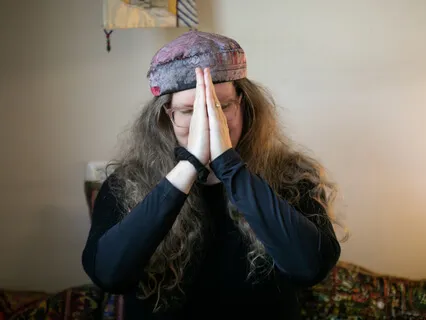
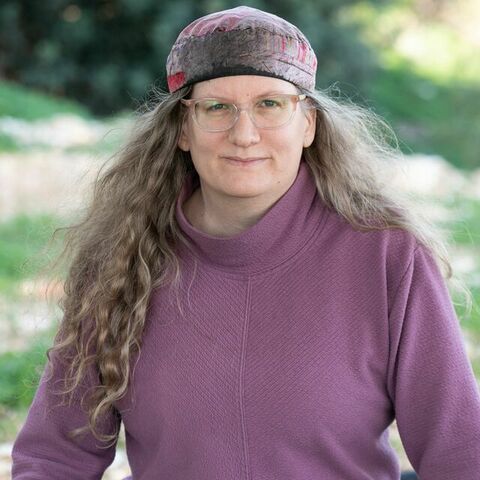
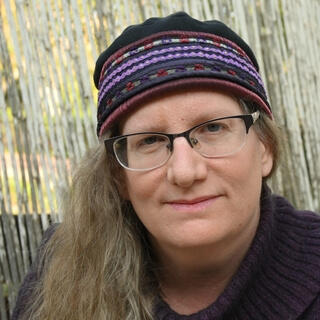
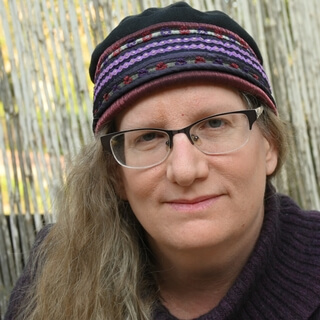
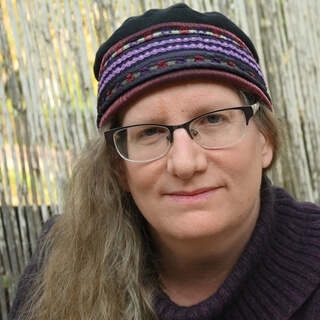
So I am Rabbi Hasia Uriel Steinbauer,
The founder and director of the Institute for Holiness,
Kehillat Musar,
Where we offer three tracks of practice and learning in ancient traditions of Judaism and Theravada Buddhism.
The first track is strictly Judaism in the form of Musar,
Practice in groups called Vadim,
And practicing that lifelong path towards holiness.
The middle path,
The golden mean,
Is the integration of Musar and mindfulness from both ancient traditions,
Where we learn from the insight and wisdom of both in our daily practice.
And the third track is just strictly the Dharma,
Mindfulness and meditation practice in the Sangha,
Where we head that way on taking refuge in the teachings and the practice.
And so all are welcome.
We are based here in Yisrael and Haaretz,
But we offer what we teach and the teachings and the traditions online on Zoom and in groups to the whole world.
So do be in touch with us from the website of Kehillat Musar,
And do subscribe to the newsletter and also our YouTube channel,
Where we are live streaming right now.
You're welcome to join us there,
Also on Facebook,
Twitter and here on Zoom together during this dedicated Be'Erek about 45 minutes together that we dedicate to this time and practice together.
So let's move in into our Kavanah,
Our intention for today's practice,
Which I'm going to pull up and share screen with those of you who are watching video.
Okay,
So you should see before you a beautiful purple-ish document with beautiful flower.
For those of you who are listening on podcasts and audio,
You will hear me read these Kavanah,
These intentions for today's practice.
So we see this practice right now as really doing an act of self-care.
So we say that this is something I am doing I am doing,
This is my Kavanah,
My intention to strengthen my own soul in order to be of benefit to others in the future.
Kind of as our overarching mission statements as Jews and as practitioners of this path of Musar mindfulness,
We follow Rabbi Shimon Schop's insight in what he shares and Shara Yochir where in the introduction where he says that our greatest impulse,
Our greatest desire,
The Ratzon,
The will,
Even the Yitzhar should be that we want to bring God's good to others,
That we want to benefit others.
And so we work on cultivating that and strengthening that in community to be on this path together.
So the second Kavanah,
The second intentions we say because we're doing this all also on behalf of others,
We say this is something I'm doing to strengthen my relationship to others so I can be a better conduit of God's good to others when they need me.
And the third Kavanah,
The third intention for today's practice is to strengthen our relationship with the divine,
However we define the divine,
However we are in relationship with what we call the divine.
We say this is something I'm doing to strengthen my relationship with the creator,
With the one of all being that we are all united so I can be a better conduit of God's good to others when they need me.
So it's really cultivating this deep inner witness and the skills,
The wise discernment and practice to be upright,
To be right on the path,
To really be aware of when I'm needed and how I can be of service.
So may we all right now merit this in today's practice together.
So what is it that we do here at Awakening Torah,
Musar Mindfulness?
We look at the weekly Torah portion from yesterday,
The Zvart Hashem,
God willing,
And we look at it from the lens of Musar Mindfulness.
What can we learn from this?
What do our ancestors want us to get from this?
What can we apply into our daily practice to gain that strength and that insight into being the best version of ourselves?
So this is what we do.
So first I'm going to give a summary of this week's Torah portion,
Vayi'afi,
And then I will delve in to some specific area that we can take and apply.
And then I move us into a guided mindfulness meditation around this for us to then close.
There's always opportunity for question and answer for those of us who join live on Zoom.
So you're always welcome week to week,
Every Sunday,
Excuse me,
At 1230 Eastern Standard Time.
So this week's Parsha.
After 17 years now in Mitsrayim in Egypt,
If you recall our ancestors,
Yaakov and his whole family,
Also known as Yisrael,
Go down to Egypt during a famine to meet Yosef,
Who is second in command in Egypt,
Who is attempting to feed and take care of the whole population in Egypt so that the people can survive a famine.
So his ancestors,
His family,
Leave essentially their ancestral land,
The land of Canaan at the time,
And head south to Egypt,
To Mitsrayim,
To survive the famine.
And they spend 17 years there now,
A long time,
The famine's over and they're still dwelling there.
Yaakov,
The father of Yosef,
Feels that his life is coming to an end.
He's the first person ever recorded in the Torah,
And maybe the only,
Who is described as sick,
As heading towards transition because of illness.
And he,
Essentially his son and grandsons come to him,
Yosef and his sons,
Ifraim and Menashe,
To visit their dying grandfather and father,
And he blesses the two sons.
And Yosef purposely,
If you recall,
Back to blessings and birthright,
Something Yaakov is deeply,
Intimately aware of,
Has experience with.
If you recall,
He's the one that essentially manipulated the sale of the birthright from his brother Asav,
His twin,
And then stole the blessing by dressing up and pretending he was Asav,
Based on his mother's command.
And so he's well aware of being the youngest.
He came out second from the delivery of the twins,
The birthing of the twins.
And it was supposed to be Asav who was to receive the birthright and the blessing.
And here,
Yaakov usurps it,
Based on the command of his mother,
Which obviously in the rabbinic essay Jesus,
Most see that she was a Nevi'ah,
She was a prophet,
She knew that he was to receive this.
She was even told by God that the youngest would essentially,
In some ways,
Receive this blessing and birthright.
So here we come to the scene 17 years later in Egypt,
Where Yosef,
Also who was the youngest before Benjamin came along,
Deeply aware of the strife and hatred and jealousy that develops in families when the youngest is favored by a parent.
And that's how Yaakov treated Yosef in front of all the other brothers from the previous 30-something years.
So Yosef places Menashe at Yaakov's right hand because he's the firstborn and should receive the blessing for the firstborn and Ephraim at Yaakov's left side.
But Yaakov actually crosses his hands and places them opposite.
This disturbs Yosef.
He even says this amazing language that this is not right,
Abba,
This is not what is done.
Someone deeply aware of his moral compass and tries to live by it.
He is an example of someone who deeply practices.
We covered this last week.
So he,
Yaakov,
In his practice of humility,
Acknowledges,
I know,
I know,
In a sense,
Like I know you're right.
I know.
And,
And,
It was an and moment,
Not a but,
An and moment of this is what is to be done.
I'm aware,
In some ways,
The way it gets interpreted by rabbinic tradition,
He is aware that the youngest here is to be greater and to receive the blessing of the firstborn.
So he gives his final message then to,
After he blesses them,
Yaakov,
He gives a final message to all of his sons,
Some of them blessings,
Some of them poetry and statements,
And some of them clearly not blessings,
The opposite,
Where he finally shares,
In some ways,
Grievance that he's carried and felt for many years.
This is a family that,
As you'll recall,
Is dysfunctional,
Does not communicate openly and honestly,
And carries deep trauma and secrets that actually harm them over time.
And so Yaakov shares some of this on his deathbed.
So he goes on to instruct his children to bury him in a ma'ara back up in the ancestral land,
The land of Canaan in the field of Machpelah.
And this is where Leah,
His,
One of his wives is buried,
Including his parents,
As you'll recall,
Of Yitzhak and Avraham,
And grandparents,
Obviously,
They were already buried there.
So Yaakov goes ahead and passes,
Transitions,
To join the ancestors in Hashem.
And his whole family in Egypt mourn for him.
And they bury him just as he asked,
They actually do carry him up to the ancestral land.
And Yosef brothers then face a wake up call after the patriarch,
Who held everything together in silence,
Passes.
So to become deeply aware of the ancient Near East of our ancestors,
The patriarch is the one who determines everything,
So much so that here he even adopts the children of Yosef as if they're his own in order to pass on ancestral land.
And when he passes,
There's a new found awareness among the brothers of the situation that they're in that there is no longer the patriarch who will possibly cause and does cause the pause,
The containment of potential violence between brothers,
Because it wouldn't be permitted or acceptable.
So the brothers suddenly have pahad,
Have fear that Yosef is going to take revenge on them.
And Yosef becomes aware of this because they actually send a messenger.
Again,
This is the family who doesn't communicate directly to one another.
They send a messenger to deliver the message that their their father doesn't want him to treat them that way.
And he calms them down with his words.
He says,
He reminds them that this is part of God's plan that that they all came to Mitsrayim,
In particular him to Egypt,
So that he could save the family from famine.
He doesn't address what happened directly.
He just,
Again,
Guides another way of viewing it and reminding them that that's how he's choosing to live with it,
Instead of being stuck in the reactivity and in the trauma and the potential of revenge,
And holding on to that for another 17 years.
So let's just hold this for a minute that the brothers held that fear and guilt and silence for 17 more years.
And then it's coming to a head now,
Excuse me,
When the patriarch has passed,
When Yaakov Israel has passed.
So this calms them down after Yosef says what he does,
Reminds them of God's plan.
And Yosef goes on to see his great grandchildren.
He then also makes his own family create an oath,
Just like his father that when he passes to take their bone,
To take his bones with them,
When they eventually leave Mitsrayim,
Egypt,
When and then he dies,
He passes,
He goes to the ancestors and to Hashem.
So this is a powerful,
This is the ending of the Yosef story that's held us for four parashiot,
For Torah portions,
The end of Bereshit,
Of the book of Genesis,
The most long and powerful family story of our ancestors,
Of what ends up being the 12 tribes that end up having a Nachalah,
Inheritance in the ancestral land of the land of Canaan,
Which will become the land of Israel.
So we have a lot going on here.
But what I really want to focus on is really the complicated relations between Yaakov and his brothers.
17 years later,
I want you to think in your own personal life,
Do you have difficulty with family,
With siblings,
And years later,
It's still there.
It's like that between that idiom,
That elephant is still in the room.
No one is talking about,
Right?
So earlier,
The brother actually hadn't sought forgiveness.
They never said,
We were wrong.
We shouldn't have thrown you in the pit and not responded to your cries for help.
We shouldn't have had a meal while you were crying in the pits.
We shouldn't have sold you into slavery.
I recognize in rabbinic exegesis,
There's a question if they were the ones who did it or someone else pulled him out of the pit.
But either way,
They are responsible for how they treated him and then lying to their father and hiding this all those years.
And then going down to live with Yosef in Egypt and apparently still not taking responsibility,
Still not admitting what they did.
I can't even imagine that type of silence,
That burden that was carried.
I mean,
Even try to imagine Yaakov coming down and being like,
We thought you were dead.
They brought your beautiful jacket with pasim,
With stripes,
Right?
The katonete,
And it had blood all over it.
We had assumed that you were torn by a beast.
What happened?
There was no question.
What happened?
Yaakov,
Yisrael,
As far as we know,
As far as we know,
Never doesn't even know.
It was never discussed or talked about.
We assume it wasn't Lehefek because when he gave those final statements to each of his sons,
He doesn't even mention what they did.
And we believe in that moment he would have because he mentions Shimon and Levi and their rage and anger and a reminder of how they treated and murdered the people of Shechem,
The men and boys.
So imagine a family,
He comes down,
He doesn't even address how you're still alive.
What happened?
How are you end up here?
Why haven't you come to see the family all these years?
If you've been alive to let me know that you were alive,
Like,
Do you know how much pain I've been living with?
Nothing.
And then the brothers live another 17 years and even Yaakov before he passes,
No taking responsibility,
No having this much needed discussion.
Right?
So they've maintained an unbroken silence.
And this is not in a Musar perspective,
Silence is important.
It's very important.
But it is one that has to be with healthy discernment.
And there are times when one must speak and this is definitely one of them.
So throughout this 17 years that elapsed since the day of I guess we would call it reconciliation,
Not to Shuvah,
Really not repentance.
That this nagging voice of consciousness comes right to us in this Parsha,
Where the brothers now that the death of the patriarch,
Their father has removed the,
You know,
Commanding presence,
The container of the patriarch,
And now family cohesion is at the point of potentially falling apart.
And the brothers anticipate Yosef's revenge for what they committed against him,
And what they actually committed against God and against their father,
Against the whole family.
And not to mention humanity,
Right?
And the animal that they slaughtered and killed in the process to put blood on the jacket.
I mean,
There's just so much that when we commit crimes,
That it has this ripple effect of affecting so many people and the earth and animals and such.
So this is what we're holding today is what happens here.
And what's amazing,
If you'll recall,
Is the key thing I want to point out here that we want to see if this is something that we feel is appropriate to our own practice of most remindfulness is something that we feel is needed in our own life,
Or maybe even still in society.
So when the brothers send a message to Yosef,
They say,
They send this message.
So they essentially say,
Before his death,
Your father left this instruction.
So shall you say to Yosef,
Forgive,
I urge you the offense and guilt of your brothers who treated you so harshly.
Therefore,
Please forgive the offense of the servants of the God of your father.
Okay,
Obviously,
That statement is so much to unpack.
You know,
In some ways,
If we want to practice most are mindful of like,
Say we are someone that actually needs to be seeking forgiveness from our own siblings,
Or family,
We should be sending a message like this to ourselves of the instruction should be that we should seek forgiveness for the offense and guilt of treating someone with harm and suffering,
Not like put the onus on the other person that they are to forgive us,
Right.
So this is the first thing it's amazing after 17 years.
And then the key thing I want you to pay attention to is this language here,
Right?
And just if you're following along,
We're on chapter 50,
Pasuk verse 17.
And he they're very key to say here,
It's very important to say to remind Yosef Yosef,
That forgive the offense of the servants of the God of your father,
Right?
Look at this language here,
Right?
Let's say shah of day low,
Hey,
Aviva,
The VF,
Yosef,
Right?
Okay,
Then he goes on to he's in tears,
He cries,
Right?
Okay,
This is very important.
This idea,
This,
This using God language,
Invoking God,
In order to,
They are projecting,
They have storytelling going on in their heads that he's going to extract revenge on them after 17 years.
And that they use the language of the only thing they think that will stop revenge behavior,
Which is God,
The fear of God,
The in and to remind you,
What is the fear of God mean?
You're really going to delve into this coming into Shemot into Exodus,
The I the idea and the language of when our ancestors said fear of God,
Is this idea,
This really upright inner moral compass that you know right from wrong,
Because you believe in God and believe that you have these shared values and and submission and following to God in and you will not do what's wrong,
Okay.
And so in this case,
It would be wrong to extract revenge on the brothers to murder them,
Essentially.
And so they are using the only thing left that they don't go to any other moral sensibility,
They don't go and invoke the father,
They don't invoke him and his own values,
They evoke God,
Okay.
And this is very strong language,
Okay.
So even a bravanel,
Our wonderful Spanish,
Parshon,
Our commentator,
I believe 15th century,
You have to check.
He and he points out here that the brothers don't evoke invoke a claim of brotherliness,
Like they don't say we're your brother,
Love us,
Forgive us,
Whatever,
They don't invoke a claim of that.
And he believes since because they they've internalized that they forfeited that brotherliness by their own actions.
And then he goes on,
They appeal to the respect and love for his father,
And to the religion that unites them all.
Okay,
This idea,
Once again,
We meet the biblical idea of the consciousness of God of the fear of God,
Right,
As the most important factor,
Controlling human behavior stronger than the ties of kinship.
JPS is also reminding us of this in their wonderful commentary on their sheets on Genesis.
And I want us to hold on to that I want us to hold on to that concept of what is it that is such a strong moral compass for you personally in your practice and on this path towards holiness.
And after 28,
I'm just looking here.
And what is it that essentially stops you from committing heinous crimes or reactivity that causes harm and suffering?
And is it a consciousness of God is it a fear of God?
Is it a love and respect of God?
Or is it something else?
We have to be aware of that.
And then if we do think this is we agree with and understand the our ancestors and this biblical idea of this conscious God consciousness,
Right,
As the most powerful factor that controls our behavior?
Should it do we believe it should be part of society and the people we surround ourselves with stronger than anything else stronger than ties of kinship.
And we have to think in the most horrible instances in human society of war,
War that we're witnessing right now of genocide,
A famine and people not addressing and helping and whatever the instance might be,
Whether it's whether it's ignoring things or actually engaging in real acts of violence.
What is not stopping it?
And what a healthy dose of God consciousness into our practice help what stopped these genocides and things in the past?
Was it that or was it the powerful hand of something like a patriarch?
Are we perpetuating that old system of the patriarch?
He doesn't take a huge,
Powerful nation state that can stand over with horrible weapons that they actually used and dropped on people like the powerful patriarch with that will contain the violence?
Are we still in the same habitual patterns of controlling the Yates or the inclination,
The wolf,
The wolves and the bears within that either can lead us down horrible,
Harmful paths,
Or the path towards good?
We're probably not all that different from our ancestors.
So what is it that we need to cultivate inside to control ourselves to practice self restraint,
To forgive and to seek forgiveness,
To do the opposite of causing harm and suffering to bring God's good to others.
This is our practice.
This is what we're to learn from this week's Parsha.
This is what Yosef with through his tears,
He's crying again,
He's crying for us and with us.
This is what is being taught right now.
Right?
He laid said lied,
Said their anxiety at once.
He has no interest in seeking revenge.
The very idea actually offends him his like personal inner theology,
Right?
He's someone that's so practiced and been on this path so long,
The tears,
Right,
The tears.
So he really he he he just feels that these brothers dare not usurp the prerogative of Hashem of God,
To whom alone belongs the right of punitive vindication.
This is what his words are.
When he even says have no fear of my substitute for God,
He's passing on,
He leaves it to Hashem,
You and what you did and your behavior will be addressed by God.
It's between you and God.
Right?
So,
Um,
He goes on to just really recognize that human actions and their consequences have a far more profound than just human intentions.
The impact is stronger than the intention.
And,
Um,
What Yosef has really internalized as we saw this last week is that God and Hashem used these evil acts,
These evil purposes,
Right?
Of the brothers as instrument for ultimate good instrument to send Yosef down to save lives,
To save their lives.
And also the ultimate to get the whole B'nai Israel,
The whole family,
The whole kinship of the Hebrew people,
The Jews down to Egypt for a much larger plan.
So,
Um,
This is this is what I'm going to leave us with.
And just noticing that we have to be very careful with the language of the Torah and even ourselves of being paying attention to,
Uh,
You know,
He says them,
I will sustain you and your children.
That was what he said 17 years ago.
And,
Um,
This is puzzling to us because the famine ended long ago.
Right?
So,
Um,
If anything,
I think we're picking up a little hint of deterioration of how the Jews Hebrews are being treated in Egypt by this point,
Which is foreshadowing right?
Of what ends up happening to our ancestors.
Now with that,
I invite you to move into your upright posture and internal one that could be in a seated position or on the Zafu on a seating and cushion down on the ground or your seat.
It can be standing,
It can be lying down or one of the four postures of mindfulness meditation of walking,
Not walking anywhere in particular,
But walking for the sake of practice.
So invite your upright posture right now,
Invite a sense of really that dignified pose that you are a child created in the image and likeness of the divine.
And at the same time,
Inviting ease,
Relaxing into the posture.
If you are like me seated in a chair,
I invite you to move towards the front of the chair to not lean back because when we lean back,
We're not in an upright posture and we tend to get sleepy and fall into sloth and torpor.
So do allow yourself to be on your seat bones,
Really sink in and feel held,
Grounded your feet into mother earth,
Holding you between heaven and earth,
Allowing your hands to settle wherever it is comfortable.
I invite you also to put your hands on your chest to really hold you here,
Offer yourself the self-compassion that you may need today.
So what is important today?
What is it that we need in our practice?
So much occurred in this far show,
Right?
First,
We want to tap into any stuck place that we may be feeling.
So first let's recognize the breath,
Inhalation and exhalation,
Inviting presence,
Exhalation,
Inviting ease,
Relaxing into the posture,
Inhalation,
And now allowing with this last exhalation,
Your breath to reside,
To fall to its own natural rhythm.
And as we begin to scan our body from toe to head,
What is here for us?
What is real?
Moving through each section,
Where do you feel any sense of stuckness?
Maybe it's emotions that are feeling lodged into yourself right now,
Feeling the heat or the tightness or difficulty.
Where are we getting caught in difficult emotion or perhaps difficult thoughts?
Is there something that is habitually coming even in response to today's teaching?
Were we triggered at all thinking of our own families?
Are we in need of giving forgiveness or forgiving?
Where are we stuck?
Where are we doing storytelling,
Perhaps about our own families or situations,
Allowing this particular situation in mind,
One that activates a reactive pattern for you.
It's important to select situations that don't set off trauma or emotions that are too intense or overwhelming to deal with in today's practice.
Really using your own inner moral compass and your own intuition,
That soft,
Still voice of God within that allows you to work through this meditation today.
We'll move into a few minutes of silence to really tap into recognizing the primary emotion or emotions activated within us.
For those of you new to meditation,
Simply allow your breath or the sounds around you to be your anchor to which you direct your attention without judgments,
Without reactivity,
Without over-identifying.
Simply attempting to develop the muscle of observing,
Looking at your practice and yourself with curiosity,
The beginner's mind.
And if and when your thoughts wander off,
Which they will,
That is the nature of the mind.
When you become aware of it,
Simply bring yourself back to your anchor,
To the present moment.
Simply begin again.
It's very easy to get entranced in storytelling.
We want to be sure that we just simply observe what is here for us without adding a story to it.
We do this by allowing,
Bringing our full attention to whatever feels most difficult right now in this moment with the Kavanah,
The intention of fully letting it be.
Allowing is the willingness to pause,
To stay present with whatever is here,
Right here and right now,
Just as it is.
Bringing gentleness and a tenderness,
Some helpful phrases to say to ourselves are,
This too,
I can hold this.
Yes,
We are opening to our experience,
Even when we are stuck or even when it is painful.
And then as we investigate our felt sense of this practice right now of our experience,
It is not a cognitive process,
Right?
It's not our stories or our beliefs,
What we may be sharing in our head with thoughts or storytelling.
We keep returning our attention to the body,
To the felt sense and sensations of where we feel vulnerable,
Where we feel stuck.
Bringing a kind,
Kind,
Interested attention.
Some questions that are helpful in your inquiry are,
What is the worst part of this for me?
What most wants my attention?
What is the most painful or difficult thing that I am believing in this moment?
What emotions are arising and where do I feel them?
What do they feel like?
And as we stay connected to this vulnerable experience inside,
We ask for God's help and here and refuge and community together,
This compassionate presence.
If the most vulnerable part of ourselves could communicate,
What would it say right now?
What do I most need in this moment?
Allow yourself to adjust your posture if needed,
Taking your breath consciously,
Inhalation and exhalation in a way that helps you fully contact your most awake experience of your heart,
The awakened heart,
The wise heart,
This higher selves,
Calling on our wisdom and compassionate self,
Offer inwardly and outwardly to everyone who's joining you in this meditation today.
Love,
Acceptance,
Forgiveness,
Compassion.
We will take the next moments in silence to rest in the presence and the heart space of whatever has emerged.
Relax and allow it to fill you.
Even if you feel some new or residual difficulty,
Offer acknowledgement and care.
When you are ready,
You can gently and slowly open your eyes.
Allow yourself an inner bow and a bow to God,
Hashem,
To the teachings,
To the path,
Your teachers,
To everyone who is joining us in this practice right now.
Coming back into this sacred Zoom space,
Live streaming.
Thank you for your practice today.
Thank you for committing to this awakening of Torah through Musar mindfulness.
Again,
I am Rabbi Chassiu Oriel Steinbauer,
Grateful for your sponsorships to allow this awakening to happen every week and for your generous donations.
I'm wishing you all well and look forward to practicing and learning together next week.
Thank you.