Welcoming,
Allow yourself to settle and arrive,
We will begin shortly.
For those of you waiting patiently and settling in,
Making sure that you have your journal and something with which to write,
Perhaps tissue or something to drink.
We are having difficulty moving to live stream for those of you who meet by live stream.
And we are in a new location today as I am on vacation with family in the north in the mountains.
It's quite beautiful as the sun is going down here.
So I'm grateful that you are here and attempting to practice with us as we move.
So I ask for your patience as we are attempting to move into live,
Live streaming,
Which is doesn't seem to be functioning today.
So,
Um,
Thank you for your patience.
Okay.
Okay,
So we are having technical difficulty.
And my apologies for this.
We are going to go ahead with the awakening session.
And we'll be sure to upload this to live stream.
It'll show up as a recorded video on the YouTube channel,
And also recorded on other mediums that that you can watch awakening.
So this is Awakening Torah Musar Mindfulness.
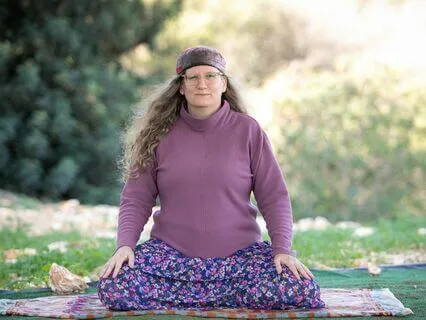
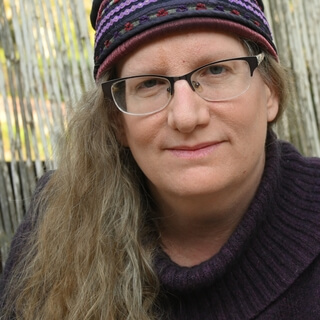
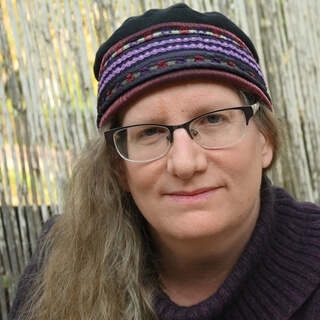
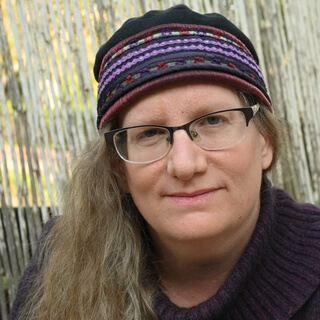
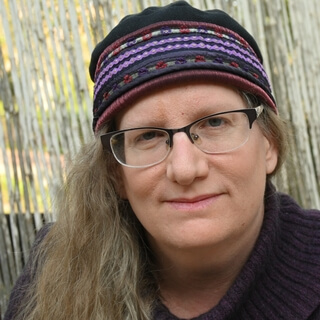
I'm Rabbi Chassio Uriel Steinbauer,
The founder and director of the Institute for Holiness,
Kehillat Musar Mindfulness.
So delightful to have you today on Sunday,
July 30th,
7.
30pm-ish here in Israel.
And just so grateful to be alive and to have another day to be of service and to learn and practice with you.
So thank you for taking the time.
And we are covering the Torah portion from yesterday in the Hebrew Bible,
Known as Ve'et Chanan.
And it comes on what is known as Shabbat Nachamu,
Which means comfort,
Consolation,
Right?
That comes after Tisha B'Av,
The national day of mourning.
Not only for the Chorbam,
The fall of the Second Temple and First,
But all the other national catastrophes that are known to fall on the ninth of Av.
So we are covering what we learned and heard,
Read in synagogues across the world.
And in Minyanim from yesterday,
July 29th,
2023,
Which was Yud Aleph of the month,
The Hebrew month of Av.
In the year Tafshan Pei Gimel,
5783.
So before we begin,
We always share and look at our Kavanot,
Our intentions for today's session,
Which are very important to the practice.
It's how we can be fully present with each other.
So it also allows us to have not only an intention to our practice,
But that we can pray and practice towards having the merit to fulfill these.
OK,
So these are the same as they are every other week.
If you have vision or you're watching by video,
You will have them before you on the screen.
Excuse me.
If you are listening by audio on podcasts or other means or you don't have vision,
You will hear me read these.
So we say before doing acts of caring for the self,
We see this time together,
This 45 minutes during awakening as an act of radical self-care that we're practicing and strengthening ourselves on this path towards holiness and towards wisdom.
So we say this is something I'm doing to strengthen my own soul in order to be a benefit to others in the future.
That is the key to this path of Musa mindfulness,
That it is other oriented.
It's also obviously a radical self-care that we have to be simultaneously caring for ourselves in order to care for others.
The second Kavanot,
The second intention for today is that we see this as doing an act for others.
We say this is something I'm doing to strengthen my relationship to others so I can be a better conduit of God's good to others when they need me.
And finally,
We see this as the threefold caring for the self,
Caring for others in our relationship with the divine,
That we say this is an act to strengthen my,
This is a practice to strengthen my relationship with the divine.
This is something I'm doing to strengthen that relationship so I can be a better conduit of God's good to others when they need me.
So we just have that intention to fulfill these today.
May we merit so bringing less harm and suffering to the world.
And I'm going to stop sharing screen for those of you who are watching.
So I'm going to give a summary like I usually do of this Torah portion and then we're going to move into what we want to address today that is particular to our practice.
As you're probably aware,
We are in the middle of this 37 day speech of Moshe Rabbeinu,
Our beloved teacher and ancestor who he's on his way to return to the ancestors soon to die,
To be gathered.
And he really wants to impart certain things to our ancestors before he passes.
So this is part of it.
So just as a summary,
He continues his speech to Bnei Israel,
The children of Israel.
He talks about how he actually begged God to let him enter the land of Israel,
The land of Canaan.
And God said he could not because he was going to die.
But God allowed him to see the land from a distance.
Then Moshe Rabbeinu gives Moses gives a strong encouragement to his people to follow the Torah,
The whole teaching.
And warns that they could be kicked out of the land of Israel,
The land of Israel,
If they worship idols.
However,
Moshe Rabbeinu promises that God will never forget the breath,
The covenant that God made with our ancestors.
And Bnei Israel can always return to God.
And finally,
God's revelation at Har Sinai was really an awe inspiring experience,
One that was terrifying to many of our ancestors.
And Moshe Rabbeinu reminds the people how powerful it felt.
And he actually goes through and reviews what is known as the Aser HaTadibrot,
The 10 utterances known in the West as the 10 commandments.
And then he also goes through the verses that form the first paragraph of the Shema,
The central prayer in Judaism of recognizing God as our God and God as one.
And so this first paragraph,
These words,
They emphasize that we must love God and keep the words of the Torah close by.
And Bnei Israel finally are told,
Commanded that they must destroy the idols of the nations,
Particularly the seven nations that are living in Eretz Canaan and the land of Canaan.
And they are not to marry people from these nations.
So immediately you might be thinking,
What do they all have to do with one another?
But if you think closely through these,
I'll give a brief summary of what I think is behind a lot of this.
So obviously in ancient Near East,
Ancient Israel,
To worship idols means that you don't love God,
That you have chosen another God,
Another path,
Another relationship.
It also shows that you're not keeping the Torah.
Excuse me.
So one of the big kind of central theological questions that arise from this parasha is why should we love God no matter what God does to us?
And I think it's so funny because I asked my 10 year old this and he instinctively had he immediately had an answer for this.
And what I loved about it is there was no filter.
There was no no storytelling,
No narrative that comes with life experience that we put up in order to have a defense of why we really only want to,
For instance,
Worship a God that only does good things to us or for us,
Which is really not God,
The God of the Torah.
Right.
Who we are in relationship with.
And he said,
He turned to me,
He said,
Well,
God created us and God carried us and God took us out of slavery as the people and carried us through the desert and brought us to the land.
For him,
It was just obvious.
It doesn't matter that we suffer sometimes from the hand of God.
For him,
That what mattered in the end was what that experience,
Right?
That actually direct experience was the basis of faith and understanding that we might not understand completely what God provides to us,
Does for us,
Provides our curriculum.
That there is a real deep trust in God that maybe long term,
This will be for the good,
That whole concept of Gamzul,
This too will be for the good.
But he didn't even say that.
He was just like,
This is it.
And it reminds me often,
Too,
Of,
You know,
Some of the Judaism's response to why we honor our parents when some of us come from unhealthy relationships,
Especially as adults with our parents.
And,
You know,
It's saying that they gave us life and they maintained us despite whatever else.
And this is obviously difficult and controversial.
And every person has to practice around this,
Obviously without the judgment of others.
And so we have to be careful of that self-judgment also.
Like if there's a voice of knocking down ourselves or our experience,
If it is challenging to what I'm saying right now or the tradition.
But I think what's important,
If we bring in the element of the Dharma and mindfulness to this,
Is the Dharma would say perhaps befriending and loving the inarguables,
What is often known as dukkha,
That which is suffering or really uncomfortable or difficult or unwanted.
And that everyone has to struggle with and practice around.
Right.
There are certain inarguables that we're born,
That we will get sick,
That we will die,
Among other things that fall under dukkha.
So this is like perhaps a Dharma formulated response to why should we love God no matter what God does to us?
Well,
It's like,
Why should we love life and be on the path and embrace it when we're going to encounter pain and suffering?
Well,
I think the Dharma's response would be because that's the path and it's really one of expansiveness and joy to move us in that direction instead of being stuck in reactivity towards the inarguables,
What happens in life.
So we'll hold it at that.
So what I think is very profound and what I want to focus on in this Torah portion,
Excuse me,
Is two things,
Just briefly.
One is this,
There's this concept brought here in this Torah portion that you're not supposed to add to or decrease from the laws.
And this is obviously perplexing for many rabbis and many people because not all the cases of life and law are present in the Torah.
And so we have to rely upon other verses to get through this.
So let me just touch briefly on this because I think it's important to say,
Especially for those who maybe are more hard liners of like,
Oh,
You do have to follow exactly what the Torah says.
And our tradition will outright say that's impossible,
Right?
It's just there's too much that we can't address.
Okay.
I want to share this text with you in a little bit,
But first I want to share from JPS about what's so significant about this,
Right?
So let me just find my text of what I wanted to cover.
Thank you for your patience.
Okay.
Okay.
So this is coming from the Jewish Publications Society and their Torah Commentary on Deuteronomy and Devarim in chapter 4,
Verse 2 and page 43.
And it says the laws of Deuteronomy and Devarim,
Like those of the Torah as a whole,
Are not a complete code and that could suffice to govern all areas of human life.
So many important subjects such as commerce,
Civil damages,
Marriage,
They are not covered either at all or insufficiently.
And so further laws are needed in every generation.
Now,
Judaism knows this,
Right?
We have lots of teshuvot,
Lots of people over 2,
500 years writing to their local rabbi or visiting with cases,
Case law,
And how we should apply the Torah.
This is rabbinic Judaism at its heart,
Right?
So in order to prevent paralysis and leave room for necessary legal innovations,
Which a lot of people won't like that word because they'll see it as that you're changing the Torah,
It's new.
But that is clearly what's going on.
They'll try to root it and know it was there at Harsinai and the Oral Law and Torah Shabal Pei all along.
But here we say Jewish legal exegesis had to subject this verse to very narrow interpretation.
The verse that told us we're not supposed to add to or take away from the Torah to the fact that no prophet may add laws claiming they are the Torah or that God had instructed him or her to do so.
I'm adding her.
Nor may private individuals add or subtract details of any commandments,
Nor may the total number of commandments recognized as biblical be changed.
This is what was restricted to by restricting the scope of this verse of number two,
Which is right here.
I will read it to you.
Okay.
Okay,
So you should not add anything when I command you or take anything away,
But keep the commandments of the Lord,
Your God,
That I enjoin you upon you today.
Okay,
So by our amazing rabbinic tradition and sages limiting this scope of this verse,
Which is a practice.
This is part of the spiritual practice,
Right?
How am I going to live this path and this path to holiness and apply it?
One that can be life affirming to those on the path and practicing.
It has to be addressed for every generation.
Right.
So by limiting the scope of this verse,
These interpretation left wide parameters for legislation and innovated interpretation.
Okay.
So I want to start off by saying that and then understand that what some of our sages did and what is really so beautiful is these other verses.
For instance,
You shall be holy.
Right.
We know this and do that,
Which is upright and good in the eyes of the Lord.
Those verses get used in order for us to form law.
This in order to really understand that something else is behind the Torah,
Giving us strength with courage and our relationship with the divine and our ancestors in order to be expansive,
In order to do that,
Which is upright.
So here this lovely rabbi,
Right?
Rabbi Yishai Shapiro.
He was known as the rabbi,
The rabbi.
He died in 1942.
He lived as a farmer,
Actually,
In Eretz Israel,
In the land of Israel,
Where I am.
And he says this injunction of you shall be holy implies that the letter of the law must not be strictly adhered to.
But as the Rambam phrases it,
One should follow the intention of the Torah.
And he goes on to say,
Right,
That anyone who wants to achieve perfect observance of the Torah,
We can't rest content with a hearing just to explicit rulings.
Now,
This is the same for the Dharma.
Over 2,
500 years ago,
600 years ago,
All the teachings of the Buddha and the lists and then generations later that were finally first,
It was oral tradition,
Very similar to the Torah.
And then it was written down.
But those need to be expanded and applied and questioned in every generation if they're going to really follow the intention of the Buddha and the path and to be on this path towards wisdom.
Right.
So.
He goes on to say that one must penetrate deeper in order to arrive at the ultimate aim of the rulings.
Same thing when you're studying with great teachers,
Right,
Of the Dharma and thinking of wonderful teachers from Bodhi College and other places,
Right,
Who will help you penetrate deeper into what is the ultimate aim of this practice.
Right.
And being on the path.
He goes on to say that one must not only think which is good and upright in one's own eyes,
But that which is good and upright in the eyes of the Lord.
Now,
This is the challenge of the Jew.
This is quite beautiful because it moves us away from the arrogance and the selfishness of what's only good and right in my eyes.
What is good and right in the eyes of the Lord?
Right.
And I think this is quite beautiful for us to keep in mind.
He said there are many things which are permitted by the letter of the law.
Right.
I mean,
This is also true of all the lists that come out of the Dharma.
Right.
That may be worded in the negative.
Right.
Instead of saying,
Why speech?
You know,
You're told not to have harmful speech.
Right.
Well,
What is harmful speech?
That has to be questioned and teased out in every generation is also very cultural and institutional based.
So the same thing here that someone could apply live by the letter of law.
Right.
But would be forbidden from the point of view that what is good and upright in the eyes of the Lord.
And so we learn from applying these two verses that we should be holy and we should do what's upright and good in the eyes of the Lord,
Which is really for us to say in the end that Judaism,
Just like the Dharma.
Right.
Does not rest content with limiting.
Active evil,
That which causes harm and suffering,
That's not enough.
That's really not the end of the path.
That's really the beginning.
But it aspires to bring God's good to others,
Bring that which is good or do that which is wise,
Right,
Wholesome,
Upright.
So when we when we when we list,
For instance,
The eight factors,
Right,
Of the of the path towards nobleness or of the of the nobles.
Right.
And then,
Of course,
In Judaism,
We aspire to eradicate potential evil.
That gets a hara.
Right.
So that which is known as the Mara in the in the Dharma,
With potential evil from the soul right of us,
That it's not constricting us,
It's not taking over,
That we are able to not cling to the dukkha,
Right,
Cling to the inarguables.
So I will close with saying that,
Yes,
That that as you are on this path and if you're new to it,
Then I understand.
I understand the the desire and the push to want to know exactly what to do to be clear about things.
You know,
Just tell me how to practice,
How to rule,
What's what's there.
And with this comes a bit of practice of trust.
Trust in God,
Trust in yourself,
Trust in the potential of the path that with maturity and time and experience,
One will come to see that it is.
One will have the courage and the vulnerability to trust more in that soft,
Still voice within and in our teachers and taking refuge in community and the path together one day at a time.
So I hope this teaching from the Etchanan strengthens you.
If it causes a bit of anxiety for our new practitioners out there,
It's OK.
This is why we follow teachers that we love and trust and that we do it in communities.
This is why we practice in a Moussa Arvad and with Havruta learning partners and may practice in a sangha and those who are on the meditative path and practice.
So sending you strength right now.
Let's move to our mindfulness meditation practice.
And so find yourself in one of the four postures for me.
I'm going to be in the seated position.
I come to the edge of my chair so that I'm not slumping back and getting tired or weak,
Right,
That I will sit upright,
But also at ease.
So it may seem like a paradox,
But it's it's really not.
And really ground your feet in the ground,
Whether you are walking,
Standing or sitting.
If you're lying down,
Then feel yourself grounded by all the touch points that are touching the couch or the bed or the floor.
For me,
It's in the sit bones.
If you are seated like me and in your feet.
And so I welcome you to close your eyes if you have vision and you feel safe enough.
Otherwise,
Just lower your gaze to a quiet area in front of you so that we limit any visual stimulation.
And we'll begin with a deep cleansing and a breath,
Even raising the shoulders,
Inhalation and exhalation.
The gift of arriving,
Invite your whole self to be present here.
Notice whatever you came before this session,
If it's still here with you.
Notice if there's any planning for after the session together,
Inviting yourself to arrive,
Even inviting comfort and ease.
As you know,
From this past Shabbat,
The Shabbat of comfort and consolation after the ninth of Av,
We were comforted by God and we comfort ourselves in the practice.
It's mutually enforcing and helps us reach our vulnerability together and strengthening each other.
So allowing that to be present.
How can you comfort yourself in this moment?
I may suggest putting your hand on your chest or on your stomach.
Again,
Grounding yourself,
Feeling fully embodied,
Full body breathing,
Exhalation.
Maybe you felt those shoulders relaxed a little bit more.
That can bring some joy and a smile to one's face.
Of course,
Not forced.
If it's there for you,
Allow it to be.
The gift and the blessing that we are here and the sacred Zoom screen or an audio together on the podcast.
What a gift for you to practice this self care in this moment,
This self comforting.
So needed during the month of Av.
Coming out.
We're all given another day.
So we need to really practice and question.
What is needed right now in this moment?
How can I be of service to God and others?
What is an appropriate response?
So we can think about even our ancestors went through a similar questioning process.
Knowing full well they fully believe that God is the author of the Torah and provided the laws and the text.
And God is saying do not add to or take away from these laws.
So immediately they question what is needed in this moment?
What is an appropriate response?
What is a reactivity that arises?
And they question.
They took refuge in community and they question this.
And they supported one another.
How are we going to understand this?
Obviously this can't be the case.
Not everything is here.
That God wanted us to have this framework from which to launch.
To really embody and practice and live out these laws.
Similar to the dhamma of that being taught by the Buddha and passed down through oral tradition and finally written.
These lists,
The lists are not everything,
Right?
How do we live them?
How do we apply them?
So important to have that moral courage and that trust.
That trust in God and trust in ourselves and trust in our community that we will address this question together.
What is an appropriate response?
What is wholesome?
What is wise?
What is right and upright and life affirming?
What is expansive?
So our ancestors and their moral courage decided that it required for a contraction of that actual pursuit of that verse.
Chapter four,
Verse two,
Deuteronomy to contract and limit the scope of that verse so that they can live fully and apply the laws to innovate.
There's that word.
Notice if there's any triggering or any reactivity from the word innovation.
Understand that innovation is so deeply rooted in the Torah,
The text and our love and devotion and experience of Hashem,
The divine and our ancestors.
So today,
Personally with you right here and right now in this last minutes of this meditation.
What's going on with you personally in your life?
Where do you need some moral courage and trust?
Trust in the past,
Trust in the potential,
Trust in God.
What can you rely on right here and right now as we practice together?
What kind of comfort and consolation can you give to yourself and others right here and right now?
And after this practice,
We practice to be fully awake to be in the here and the now because this is the only place that we really are alive.
This is the only place that we can really serve God.
So provide that gift to yourself.
Find the space between the match and the fuse,
Between the stimuli and our response.
What is needed at this moment?
What is an appropriate response?
We'll move to silent meditation and I will gently guide you out when ready.
For those of you new to meditation or have only been practicing for a short time.
It is healthy and completely normative for the mind to wander.
So if your thoughts wandered off,
And you suddenly became awake to that.
Just gently bring yourself to this present moment.
To the full body breathing.
If death is difficult for you then another anchor perhaps how it feels in the body.
And you simply begin again,
And the words of my teacher Joseph Goldstein.
We will continue in silence.
Without judgment.
Without the judging mind.
Without aversion and trying to push anything away or over identifying with your experience right here and right now.
Meet this moment with compassion.
With kindness,
With curiosity.
That's what we call a beginner's mind.
Allow yourself to give a bow to God and to your practice.
To your community here.
The Institute for Holiness.
Your Vaad and Sangha.
Allowing your eyes to gently open if they were closed when you are ready.
Thank you for joining us back in this sacred Zoom space or live streaming on our YouTube channel.
Or on any of the social media that you're meeting us.
Hello again,
I'm Rebbe Chassi Oriel Steinbauer,
The founder and director of the Institute for Holiness.
So grateful that you took time out of your day to practice this radical self care.
For us to be together to learn from the Etchanan.
And we will continue with Moshe's speech.
Next Sunday.
So please do read and practice and move forward into Ekev.
The next Torah portion in the Torah and the Hebrew Bible.
And we will meet again.
God willing,
Same time next Sunday.
730 p.
M.