Welcome to Awakening Torah,
Musar,
Mindfulness.
The Institute for Holiness,
Kehilat Musar,
Mindfulness is a wonderful weekly public offering where we look at the weekly Torah Hebrew Bible portion,
Our Or Double Parsha,
Where we look at it from the lenses of Musar and also mindfulness coming from the dharma of Theravada Buddhism and Musar coming from Judaism.
Spiritual disciplines,
Paths of wisdom,
Paths towards holiness that give us insights and wholesomeness and skills in which to be on this path and live this life as best as we can in service of others as we serve God.
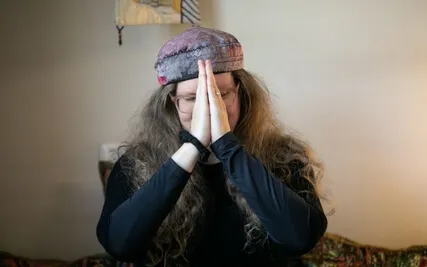
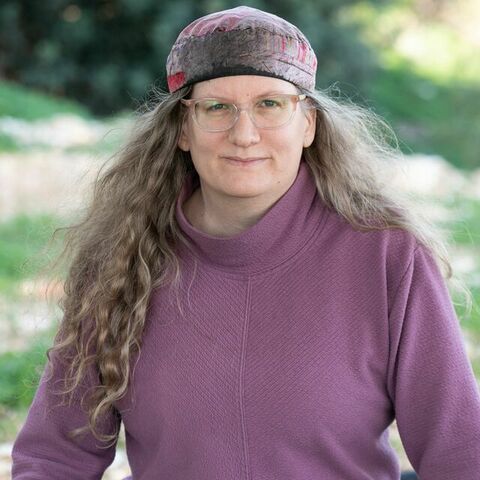
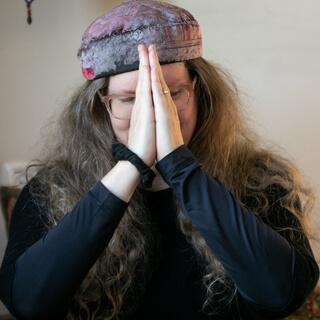
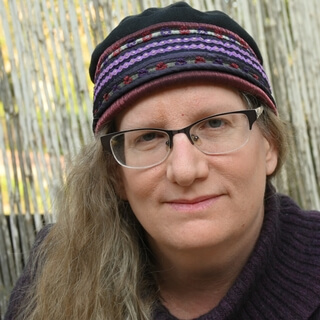
I am Rabbi Chassio Uriel Steinbauer,
Founder and director of the Institute for Holiness,
Hamahon LeKedusha.
Delighted to have you as we get to see the ending of our day here in Israel.
Our prayers are with everyone who are really experiencing much harm and suffering,
Both internal and external,
At this awful warfare that continues to go on between Israel and Gaza.
So holding everyone in our hearts and minds today.
It also is a special day for all of our followers and viewers in the United States who observe a day called Mother's Day,
Yom Imah,
Imahot.
We don't observe this here in Israel,
But I want to wish you all the mothers out there or mothers-to-be who wish they were mothers or anyone who used to be a mother,
Just sending you our love and strength and whatever you need today.
So it is Sunday,
May 14th,
2023,
At 7.
30pm Israeli time,
12.
30pm Eastern Standard Time.
As you see here,
We have one of our guests in the house here.
This is Mitzi.
You can say hello.
And today we will be covering the Torah portion from yesterday,
From Etmol on Shabbat.
And the date then was May 13th,
2023.
It was the Taf Bet,
The 22nd of E-R,
The Hebrew month of E-R,
And Taf Shen Pei Gemo,
The month,
The year,
The Hebrew year of 5783.
We had a double parasha,
It was actually my son's birthday,
Double parashiot,
Bahar Bechukotai,
And we combined them.
And these are the end of the Sidra,
The Sefer Vayikra of Leviticus.
It brings the whole book of Leviticus to close.
And of course,
As tradition,
If you aren't aware of it,
At the closing of this parasha,
It is tradition to stand up in synagogue and to say,
Chazak,
Chazak,
V'nit chazek,
May we return to you in learning and in strength to continue our learning as we do in the yearly cycle every Shabbat.
So before we begin,
We always share our Kavanot,
Our intentions for today's practice,
Which is very important.
We begin all of our spiritual discipline,
Our practice with intentions,
Intentions with Kavanot,
Because they actually help hone our a-tension,
Known in Hebrew as Teshumat Lev.
I know some people feel and have from either a Beraita or somewhere in the Babylonian Gemara that Kavanot can mean both intention and a-tension.
But for the sake in Buddhist practice and mindfulness,
They're two different things,
And they simultaneously rise and fall together.
So today,
May we merit really bringing these intentions right here to really hone our intention and our learning and practice today.
So we say that before doing acts of caring for the self,
For caring for acts of for others on behalf of others,
And to strengthen our relationship with the divine,
We see this as a triangle threefold,
The strength of which we're taking refuge,
Of course,
In God and the Buddha's teachings,
And also in the Torah and the teachings,
Of course,
Of the Dharma and Musa,
And then of course,
The Vahd,
The Sangha community,
The Kahila,
The Kahal together here all over the world,
Strengthening each other.
We see this as a this practice together today,
Right now,
As an act of radical self-care.
And that care in turns allows us to have the centeredness and the skills and the wisdom to be able to be there for others.
And that's how we serve God.
So we say,
This is something I'm doing to strengthen my own soul in order to be of benefits to others in the future.
And this is something I'm doing to strengthen my relationship to others,
So I can be a better conduit of God's good to others when they need me.
And finally,
This is something I'm doing to strengthen my relationship with the creator,
So I can be a better conduit of God's good to others when they need me.
So let's really take in those covenant,
Those intentions,
Maybe merit to filling them on behalf of all beings.
So for those of you who aren't watching on video,
You heard me read those covenant notes for the podcast,
Wherever you're joining us right now,
Live streaming on our YouTube channel,
Please subscribe.
Do follow our blog on the website.
Join us here on Zoom,
Especially if you want to come with your own questions that we'll have time for at the end about your practice,
Anything you need support around and your practice and learning of Musar mindfulness.
And of course,
Do subscribe to our newsletter off of the website of Kehillat Musar and do consider becoming a member to become a part of this amazing community so we can continue to support one another and grow.
All right,
Let's jump in.
Obviously,
It's a double Parsha.
We're not going to get to everything.
We don't even get to everything in one.
But let's give a quick summary.
And then I'll get to share with you quite a delight that happened to me while preparing for this session today.
So in Eretz Israel,
In the land of Israel,
Which is where I live and where I'm dwelling right now,
Shemitah,
The year of release happens every seven years in our Torah portion.
And during the seventh year,
No one can work the land and crops,
It becomes public property.
Technically,
It kind of always was public property in the sense that it was always God's land,
But it's even more so in that seventh year,
Anyone can come and eat.
There's also covered in the store portion,
The you vet the yo veils,
Excuse me,
Is in the 50th year.
And this is when the rules of Shemitah apply continue to apply as they as they as they do in the 49th year.
Plus,
All the land gets returned to its original owners to its original clan who own that particular parcel or land.
It's also when slaves are released from slavery.
And even before the veil,
If your relative actually has the financial means,
A and is able to help another relative who's actually in financial trouble,
That had to sell their land and that person that relative with the financial means is actually an obligated to try to help them buy back that land.
It's almost like an obligation of pay it forward.
God had given you a financial means that year and you should use it to use it to redeem your relative,
Redeem the land for them.
It is a process called geula,
Which means redemption.
There's also a mitzvah not to overcharge for a sale,
A sale that's happening,
A transaction of land between people.
If someone's in debt to you,
You are to treat them with compassion.
This is all covered in these two parshiyot,
Two Torah portions.
God promises many brachot,
Blessings,
That B'nai Yisrael follow the mitzvot and actually some frightening punishments if they don't in a section known as tochecha,
Which means rebuke.
God will remember God's promises to our ancestors and God will never punish the people too much.
Meaning there's an expectation that sin will happen,
Which is in some ways the nature of the human being.
Nature of human beings also to experience suffering,
Which we might say is a little bit about sin.
It's not living the wise,
Fulsome path.
The concept is that God will cause consequence and the ability of the people to recognize that they've done wrong and to return to do t'shuvah.
There's always an opening,
Always a pet talk to return.
This is stated here.
Finally,
Sefer Vayikra,
Leviticus closes with the discussion of donations to the mishkan,
The sanctuary in the desert.
One of those donations is known as maaser,
Giving a one tenth of your harvest or newborn animals.
That's essentially what's covered in our Torah portion for this week.
I think I want to say a few more summary words here.
For instance,
Chapter 25,
Which really covers the sabbatical year and the Jubilee,
Which is the yovel and the shmita,
Is the only code of practice on the subject of land tonor in ancient Israel.
That is actually preserved in the Torah.
This unique collection of laws and commandments,
It actually governs the permanent rights of landowners and the legalities of sale and mortgaging the land,
Essentially.
Then there's laws,
Obviously,
Regarding indebtedness and indenture,
A system of repaying debts through one's labor.
Finally,
The sabbatical year when the fields are to lie fallow is known as the sabbatical year in English.
It's after a cycle of seven sabbatical years,
Even every half century is to be the Jubilee year.
That's that summary.
I want to see if there was anything else I wanted to say to you before I delve in.
What are we going to pay attention to here?
I want immediately when you go into this text,
You should be noticing that there are laws about land and land ownership and selling.
Then immediately you should question,
What does the society,
What do our ancestors pay attention to?
What's important to God and our ancestors?
What's really behind these laws and practices?
You might have thought,
God says,
This is my land.
You are simply like a ger mitl shav.
You're simply a stranger and a permanent resident.
You're a resident of the land.
You're not the owner.
It is God's land.
I definitely would have assumed this,
That if I'm going to read about any treatment of how you're supposed to treat the land or of relationship and connection guarding these laws and the way of being in this a in this system and even in the world today,
You would think that it's all about our relationship to God,
How we're going to treat God,
How we are to serve God.
There's a surprising shift.
It's not so surprising if you've been following along.
What do I mean by that?
We started obviously with Bereshit and Shemot with this concept of fear of God.
Our ancestors,
Particularly Avraham,
Avram also before he became Avraham,
The midwives,
Shifra and Pua and others noticing there's no fear of God in this land.
I think even Yitzhak uses that language.
It's this knowledgement that the society in which there's no fear of God is one that has no rule of law.
There's no moral compass.
There's no understanding right from wrong.
If there is an understanding,
There's no respect for it and no living by it.
You're kind of is like every human to their own,
Like that,
But to be on every man for himself,
This sense of like,
I have to watch my back.
I have to lie.
I have to manipulate.
I have to work to survive because there is no fear of God here.
We leave these individual stories to all sudden have law,
A rule of law given by God through the Torah that suddenly there's going to be rule of law.
There's going to be a knowledge of right and wrong,
Of pure of impure,
Of evil and good,
Of consequence,
Of punishment,
Of reward and punishment.
These are very ancient from ancient Israel themes,
Right?
That's going to all be encompassed in this community and how they're supposed to live.
It's basically taking the concept of fear of law,
A fear of God,
Excuse me,
And applying it on a communal and global level,
In a sense.
Okay.
What happens in this Torah portion is all sudden you have these rules of land and how people are going to dwell on the land that belongs to God and how they're going to make sure that nobody ends up in a system of poverty,
Of intergenerational,
Transgenerational trauma of poverty that's institutionalized,
That no one will ever get out.
That's what would happen if you didn't have the yovan,
That someone's land would never be returned to them.
You would essentially have a class of people who are always indentured servants or slaves.
We know societies like this.
We've know them either from history books or some people still live in those types of societies or they exist.
So the Torah has this huge shift that you are going to be human.
You're going to live with laws and lands.
Some of it's going to be messy and difficult,
But there's going to be this overarching,
Right,
Wholesome,
Right,
Moral and ethical,
Thoughtful,
Skillful,
Wise way of living in this rule of law,
This fear of God that gets institutionalized and law of how you're going to treat your neighbor,
Your family,
Your clan,
Your people,
And onward,
The people who aren't your people who happen to be dwelling with you.
So there's a real deep concern with the other.
How are you going to treat one another and then make sure that it is upright and moral and ethical?
Okay.
It's surprising in some ways,
Because you could have imagined the laws could have been just about how you take care of the land because it's God's land,
How you take care of God and how you respond.
But it shifts and God shifts that on purpose in order for you to understand your intent,
Your intention,
Your covenant,
And your attention,
Your to to show my to live,
Need to be on the person in front of you is created in the image and the likeness of the divine,
On the community,
Then when which you live on the people in which you share nation and land with,
That is our our responsibility.
So let's look here.
This is really intense.
Okay,
I have to share with you,
I normally don't share things like this.
They don't come to me often.
I had a moment of Neviut of prophecy,
I really believe it.
I don't normally say things like this.
So forgive me if it sounds in it,
Not at all like a litvach like a Musa at all.
But I had a moment of grace.
I call it grace lesson prophecy.
From Hashem.
I was studying this text.
And I said,
What are you what are you getting at?
What are you trying to teach us?
What's really behind this?
Right?
I really talked to God when I'm learning these texts.
What's really going on here.
And then it hit me hit me it came down like that.
Immediately.
Listen to this.
Listen,
The land show keep a Sabbath to the Lord,
Okay,
Should be so Shabbat laddo nine,
Right?
Either you're speaking to the children of Israel,
Say to them when you come to the land,
Which I give you,
You should keep a Sabbath to the Lord.
Right?
And that you should know that it's the earth is really the Lord's with his Hashem's.
And that what's behind it,
The Torah so intelligent in the sense that it really understands the nature of the human being is to,
To attach or to have a version,
Right,
The hindrances,
The veiling factors were,
Were drawn to them.
And so we're possessed by strong feelings of a proprietorship of ownership of holding on,
Right.
And in this sensation that in mind is always like fraught with the danger,
Whether it's real in the head,
A real out in the streets or in the farm,
Or it's in our head,
Right.
And so to counter it,
The Torah emphasizes the land is a gift from God to Israel,
Right?
In order to remind us human beings that the power and the might of our hand,
Right,
Is really a gift from God.
Now,
Let's go back.
This is where the gift from Hashem came.
I realized this text is in these laws are all a tikkun,
A repair for Kayan's murder of his brother Hevel.
Now,
What do I,
What do I mean by that?
Let's look,
Let's go back to that case.
We have our first brothers,
First brothers recorded in the Torah and history,
Right,
Who come and are going to tell one's going to tell the land one's going to take care of animals,
Right?
They're,
They're,
They're out there.
They're in the world.
They can't be in God,
Ain't in any more consequences of having a dominant father as parents.
We all have to live with the consequences of our parents.
That's one of the kind of universal laws that we all have to work on accepting.
And in Kayan,
His offering is simply the fruit of the land,
Right?
The fruit of the land.
That's it.
Not the not the,
Not the choices fruit,
Not the first fruits,
Not the best fruits,
Just the fruit of the land.
It's a beautiful thing.
He has intention that he wants to give a mincha,
An offering to Hashem.
Okay.
Let's,
Let's hold it for him at his intention.
Then you have Hevel,
Right?
He comes with a,
The firstling,
The,
The choices of the animal.
Okay.
He,
He,
With covenant and attention picks the,
The best of it,
The best that Hashem had given him because it actually wasn't his to,
To even to even to begin with,
He takes the best that Hashem gave him of the animal and goes and and goes and offer it.
And his offering is accepted where Kayan's is not.
And people are perplexed by this.
A lots of people try to like,
What really happened?
Is it simply that he didn't bring the best in the first of the fruits?
What's really going on?
And suddenly we realize what's really going on is tied to the Shemitah year.
It's tied to the Yovel.
It's tied to this concept that the earth at that moment,
When Kayan kills his brother,
The earth was forced to drink human blood for the first time,
According to our narrative and the Torah,
The earth,
Which belongs to Hashem had to cry out and take the blood of a human being,
Which it never meant to,
Or wanted to.
And the earth itself from that moment forward has never had a rest from humans,
Toiling on it and murdering other humans and spilling blood from that moment forward,
All the way until this moment of giving the law of the Torah,
But Harsinai at Harsinai,
There's the earth had no rest.
And all of a sudden we are to observe this,
We are to observe and be reminded that that earth,
That earth has that earth is God's,
That earth was never meant to swallow human blood spilled in murder.
That earth was never to be toiled and toiled and toiled and toiled and never given rest Shabbat to Adonai to God.
And then what does he say when he murders his brother?
He says,
I am not my brother's keeper.
What really?
That's actually your whole reason why you exist,
Kayin.
That's your whole purpose.
And that's our whole purpose.
Don't get lost along this path of everything that can distract us in this world.
This is what these laws of the Shemitah and the Yovel are teaching us that not only is it God's land,
That we are remembered to that,
Remember that humility,
Right?
But that we are our brother's keeper.
We are to make sure that our brother doesn't sell the land or sister,
Unless they absolutely have to.
And even if they have to,
That it gets released back to them after the Yovel,
That they never end up in a system of poverty,
That they can never have their ancestral clan land,
Right?
We are our brother's keeper.
We are to be aware that there isn't lifelong,
Endless cycles of slavery where they never get out,
Right?
And they thank God we don't have slavery right now,
But there are places where slavery exists.
But the concept is not just locked in ideas of clan ownership of land that might've existed a while ago,
Or,
Or,
You know,
Letting slaves go.
It's the equivalent today.
Where are we locking?
Where are we allowing institutional systems that are keeping people locked in a cycle of generation after generation of poverty and indentured servitude as a form of slavery?
Where are we not waking up that we are our brother's keeper and we should not be allowing this to happen.
We should be releasing them.
We should be releasing them because God wants us to release them because the land is God.
The land needs to rest people who have to,
You know,
In some ways be enslaved to working multiple jobs forever,
Also need a rest,
Need a shift,
Need to know that they're going to be taken care of.
And I realized that this whole set of laws is really the anti-Cain,
The anti-Cain.
If we're talking about in English,
Cain and Abel,
Cain and Hevel,
It is the anti-Cain story.
And it's very important that we realize that,
That we are doing a tikkun.
We are saying we're not,
We're not Cain.
We're not going to stand idly by and murder our brother by never releasing them from slavery or by never releasing them from indentured servitude or never releasing them to so they can never own land again.
Right?
We're not going to be that system and turn away while the earth is crying out.
Okay.
And this is very,
Very important.
There's a couple of more points I wanted to touch on here with you.
It says right here,
Right?
Pesuk 17 and chapter 25.
Right?
Let me see here.
Do not wrong one another.
Don't even set out.
Don't even allow laws and traditions and practices to happen that are not skillful,
Wise,
And wholesome that harm others.
Right?
That set out to do wrong.
Do not wrong one another,
But fear your Lord.
Now fear here is from Yirra.
We've touched upon this verb.
There's no English equivalent.
Yirra is really here in fear and awe,
This reverence,
This combination of the two.
And it's essentially saying,
Remember your moral compass.
Remember the rule of law.
It's like God as a verb,
God as a state,
God is energy,
Right?
God is consequence.
God is the path towards holiness.
You live this upright.
You live this ways,
Right?
It is this really living out this energy of fear of God is a positive,
More upright path.
And it really keeps us away from harm and suffering of wronging each other.
All right?
So that's very important.
Now,
This idea,
It repeats over and over again in the Torah with emphasis,
And it's really characteristic,
Excuse me,
Of the holiness code of that we find in Leviticus as we're saying goodbye to Leviticus.
It's to really extort our ancestors,
Israeli people to act out of an ethical obligation,
A moral obligation,
This internal moral compass we call fear of God,
Right?
Especially in matters that don't lend themselves easily to enforcement.
And if we're going to see this as like,
Okay,
Obviously in the ancient Israel and the Torah,
There's real this concept of reward and punishment.
But if we want to see it from the lens of Musa mindfulness today,
This is the gift that God has given us to be able to have more insight and see things.
We realized that this,
This idea that,
That God sees all,
Which is karma,
It's consequences for our behavior.
There's the law of cause and effect,
Right?
God sees all,
And therefore will punish even secret secret transgressions,
Right?
It's,
It's this idea back in for my answers that we resist this temptation to get away from sin and from other crime.
Well,
Today we know this,
We don't even need this idea of reward and punishment.
We live it out and we see it when we are not living the path.
We know the consequences of our behavior.
We cause harm and suffering to ourselves.
We cause harm and suffering to others.
It is the law of cause and effect of karma of consequence.
Right?
And that is enough as we begin to mature and develop and practice this path of mindfulness,
We wake up to this and we internalize this and accept it.
I don't longer,
I no longer need to head down that same path with the whole and,
And fall in it.
I know.
And,
And we call that here in Torah and Musa are God,
Right?
We call that God,
We call that a consequence.
We call that punishment.
We call it a deep awareness and alignment with the universe that we know what is sin and we stay away from it.
We run away from it.
Right.
Um,
So let me conclude this part by just saying that,
Um,
Yeah,
Um,
Just want to see if there's anything I wanted to add to you that to understand what our ancestors have been trying to impart from us is this concept that the presence,
Two things,
The presence and nearness of God,
Right?
Of Hashem is the vital concern and it's contingent upon the behavior of our ancestors and upon us.
So today we might say the presence and nearness of the divine within of that,
Which is upright and moral,
What we want to be living,
What we want to be sharing in society with each other,
Right?
That is contingent upon,
Or it's,
It's not,
It's like it's contingent might even not to be strong enough of a word.
It's so dependent on how we behave.
And that might've been the surprising thing because you might've thought that this is all going to be about God and how we're going to either sin or wrong God or not wrong God.
And God keeps bringing it back to it's how you behave with each other.
It's how you behave with the other human being.
It's so important.
And it's,
It's really profound what God keeps trying to teach us over and over again.
So I'm going to close with one last thought and we'll move into our mindfulness meditation.
And that,
That these very two important beats vote,
The land of a sabbatical year,
Every seventh year and declaring the old veil,
The Jubilee every 50 years that that it really is a Shabbat night.
It is a Shabbat to God.
As I said earlier,
A stopping,
Right?
It's a stopping in creation and pre productivity.
And a lot of people see it tied to the meter,
Mida in Musa practice of bits of horn of trust in God,
Right?
That you're going to trust in God,
That,
That everything's going to be taken care of.
If you follow these rules and law,
I think it's something so much more profound than just trust.
Okay.
We take it back to the Cayenne story,
Right?
That Cayenne is the,
The,
The extreme,
The hyperbole example of how we are not to be.
It's someone who even might have operator,
Right intention that wants connection with the divine,
But sees the,
The land as his own,
Brings whatever the land produces,
Right?
That he produced some,
Some type of fruit,
Not the choices,
Not the first and,
And,
And offers it.
And then is surprised that God doesn't accept it.
Doesn't want it as a gift.
It's a Mincha doesn't want it as a gift,
Right?
God is saying,
You forgot that it's my lands.
You forgot that what I helped you produce and allowed you to produce from the land,
The fruit is mine.
And you come with the simple fruit,
Right?
The gift is,
Is,
Is rejected.
And,
And,
Um,
What's really important about,
About what's seeing this from a meter perspective is one it's about on the VA about proper humility of really knowing your place in the universe,
Really internalizing that with deep intention that row,
This really isn't my land.
This is all a gift it's here and can be taken away.
It's here today can be,
And probably will be gone tomorrow or in the future because of the nature of impermanence,
Which is one of the laws of the universe and way of being.
If we have the laws of the universe of cause and effect of consequence of karma,
You have impermanence.
All that is will eventually be ephemeral,
Right?
It is here and it will be gone including us human beings right here.
So it's really tied to this deep alignment with the universe,
With the almighty,
With God,
That we are one that there's this concept of non-self right.
In the sense of deep humility,
Really an alignment of knowing our place and,
And,
And also of of recognizing the good gratitude,
Right?
The deep gratitude that we can be here,
That we can trust that we're going to be taken care of by our clan and family.
May we all experience and feel that and have that.
This is what the Torah teaches.
This is the model and that if we don't have that,
Because God forbid some of us don't have that,
Then there will be a system of law in place based on the fear of God that will release it so that we and our children and grandchildren can return to the lands,
Right?
And if you think of back to what I said,
The human beings inclination,
Right?
Sometimes our,
Our fear-based self,
Our lower self,
Our lower soul can be really inclined to grasping,
To clinging,
A sense of separation and disconnection,
That we tend to take up more space than we're supposed to.
It's too little humility.
It leans towards arrogance.
We say it's our land.
It's my fruit.
Maybe that was even going on with Kayin.
I'm going to give some fruit,
But I'm not going to give the best and all of it or the first.
That's for me.
Who knows?
Who knows what his drive and inclination was?
All we know is there was a lot of reactivity on his part when it wasn't accepted as a gift.
It's like,
It's,
And talk about arrogance there.
He expected simply because he was giving a gift that it should be accepted.
And there's something really profound there,
Really kind of actually scary and dominating.
It's a red flag.
It's a sign that this person's not in alignment.
So honestly,
If we look at the middot that are involved and that really trigger us,
The awareness point,
The nekodah bechira,
What we call in Musa our choice point,
This awareness point needs to really have us reflect on these parashiot and say,
Where am I really being triggered here?
And what is my responsibility to others?
So I've touched a little bit on the middot.
I think that are particularly here,
Really having that profound balance,
Humility to be in alignment.
And then what's expected of us,
Betachon,
Trust in God is there obviously to a real awakening to the good really helps us good really helps us stay in the present moment with our attention so that we can live out our intention.
So this real middot of gratitude is it gets translated in English.
It's really recognizing the good awakening to God's good in this world.
And so to really internalize both the worldviews of Musa and mindfulness,
This real understanding that we are essentially the gerim,
The toshavim,
These strangers and temporary residents of God's we're just passing through.
We are impermanent,
Right?
This beautiful energy that we are here,
We give,
Here we give,
And we give to our children and grandchildren and move on.
And so may it be so.
So take this time this week to practice waking up to the good seeing where you can bring more of this sense of justice and care to your immediate family,
Extended family and community,
And really trying to live out this,
This heart of Torah that I think is quite beautiful and important to us.
And really just tapping into and internalizing this unfolding process of life,
Which is so so unfolding of our relationship with God.
Right?
So continue,
Obviously,
With your daily meditation practice to be awake to the real embodied felt sense of what's going on here.
Developing those spiritual muscles of savlanot,
Of patience and gavura,
This really inner strength to maintain our boundaries,
So that we're not clinging and we're not also aversion,
Pushing away,
Not being veiled with the hindrances.
And so that's my sharing today.
I hope this really was an alignment with bringing God's good to others.
Let's move into our mindfulness meditation now so that we can begin practicing together.
Always remember there are four positions,
Postures in mindfulness meditation.
And that one is not more privileged or better than the other.
It's not as if sitting has some monopoly or gets more points.
You can have your sitting meditation,
You can have standing meditation,
You can have walking,
Literally,
Just back and forth,
We're not walking to somewhere,
Or lying down,
All of them are valid and important.
And needed.
I encourage you to practice all four and to try them right and to really move forward with those practices.
And you want to assume an upright posture dignified,
Because you are created in the image and likeness of the divine.
You have that divine spark within,
You can just put your hand there to feel deep in the soul.
We'll begin by closing our eyes if you feel safe.
If not,
Just keep your eyes open,
Lower your gaze.
We'll begin with three deep cleansing breaths,
Inhalation and exhalation.
This time inviting full awareness into this present moment into the full sense and felt sense of the body.
Inhalation,
Even raising the shoulders and exhalation,
Exhalation,
Letting them fall,
Let a smile emerge if it's natural to you.
Inhalation.
So good to be alive and to be here right now together in this moment,
Sharing the oxygen that God has provided us.
What a gift to be alive,
Awaken to the good and give thanks.
So let's tap into that.
Let's tap into that shafa,
That amazing chen,
That grace coming to us from God flowing through the world through us and out us.
We are vessels to pass on God's good to others.
So allow yourself to feel that flow from the top of your head,
The oxygen entering,
Flowing down your head,
Down your throat,
Down your chest,
Down your torso to your sit bones,
Down your legs,
Really feeling that oxygen flows through the body,
Knowing that there is a body down your calves and your shins to the toes and even out the toes,
Bringing your full attention to this moment,
Breathing in the body,
Breathing out the body,
Allowing your breath to settle to settle to its own natural rhythm,
Following the following phrases of gratitude,
Of humility.
I'm created in the image and likeness of the divine.
My purpose is to bring God's good to others.
I am capable.
I am holy and worthy simply because I am a child of God.
I have those gifts to give others.
I will not be clouded by the distractions in life.
I will not be thrown off the path with the hindrances.
I will practice.
I will make wholesome choices.
I am capable of wise,
Skillful choices.
I am capable of having space between the match and the fuse.
I respond.
I do not react.
And if I do react,
If I do cause harm and suffering,
God forbid,
I return.
I practice to Shubha.
I take responsibility.
Repeat these phrases throughout your practice,
Following the meditation.
Now we turn these gifts to others.
May you know that you are capable.
May you know that you're created in the image and likeness of the divine.
May you know that you have gifts to give others.
May you know that you have space between the match and the fuse.
May you know that you can respond and not react.
May you know that you are loved.
May you know that you are a child of God.
May you know that when you fall off the path,
When you sin,
When you cause harm and suffering,
That I will be here waiting for your return.
May you know you can practice to Shubha,
Repentance and return.
That God has built this into the universe for all of us.
This is our birthright.
This path towards holiness,
This practice,
Removes our mindfulness,
Our connection with the divine,
And our ability to always return.
We sit in a minute of silence together,
And I will ring the bells to finish our practice today.
If you had your eyes closed,
Please gently and slowly open them,
Taking the time to let the light naturally filter in so it's not so alarming to be soft and slow and gentle,
The way that we are to treat our soul and each other.
Thank you to God.
Thank you for you and your practice.
Thank you for all of our practices,
Taking refuge here together.
Such a gift.
So grateful for all of you and your support and your sponsorship.
Please give your donations today through our website,
Through PayPal,
Reach out if you don't know how.
So grateful to be able to offer this public offering on behalf of all beings.
Stay strong,
Sending strength to strength.
Thank you for today.