Welcome to awakening to our mindfulness.
This is the beginning of the hookah tie our partial parasha this week.
Welcome and allow yourself to settle and arrive.
If you're just joining us now.
And we are just read this partial last Shabbat yesterday here in Israel,
For those outside of Israel will read it this coming Shabbat so this gives you an opportunity to jump in and study this grateful to have you I am Rabbi Hasi Oriel Steinbauer,
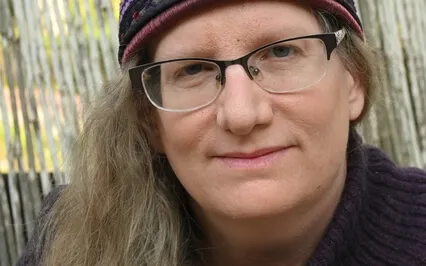
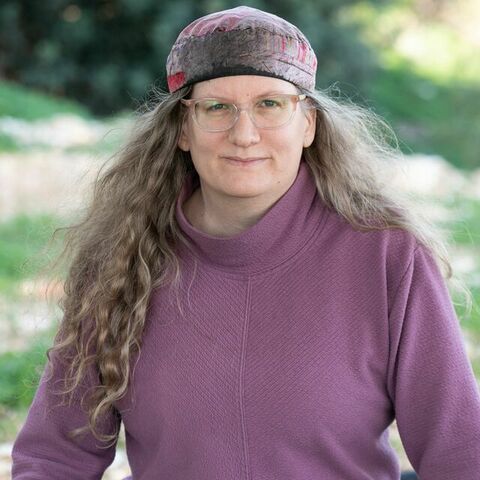
Founder and director of the Institute for holiness Hamachon LeKadusha Kehilat Musar.
This is our weekly offering to the community where we delve in to the weekly parasha to encounter the text and tradition as a launching pad and from the perspective from the lens of Musar mindfulness,
And it allows us to practice to have us grow in our own wise temperament and compassion.
So before we begin,
As we do every week as you are beginning to allow yourselves to settle and arrive,
Whether you're here on zoom Welcome Mark,
Good to see you.
And before if you are joining us live streaming on Facebook,
And our YouTube channel on LinkedIn or Twitter.
And as we sit here and for those of you listening on audio and can't see the visual.
We say before doing acts of caring for the self,
We say,
This is something I am doing to strengthen my own soul,
In order to be a benefit to others in the future.
And our second covenant our second practice of intention is the last one listed at the bottom.
Before doing acts to strengthen our relationship with the divine however we define that we say to ourselves and out loud This is something I am doing to strengthen my relationship with the Creator.
So I can be a better conduit of God's good to others when they need me.
So we take that and we,
We move forward with our practice.
With today's learning and talk,
And then moving into a guided mindfulness meditation I asked that we hold off on questions comments.
That section until the end of the session.
And so I'm going to start off by saying this is our 34th sitting that's kind of amazing together we've started at the Rashid together,
The very first of Genesis and have moved through this cycle together.
And we offer it every Sunday,
The Zorat Hashem God willing at 3pm Eastern Standard Time 10pm here in Israel.
And it's a beautiful thing to be able to dedicate this time to our practice to be in community together taking that refuge,
So that we can do the work that's needed so badly in the world.
And so,
May this strengthen us as we move forward.
I'm going to start off by saying,
I'll give a brief overview of this Tarshah,
And then I'm going to give what I give as a disclaimer before what I would I perceive,
And what I interpret and encounter in the text is a very challenging difficult texts,
Not to say that there aren't others there are and I've done this before,
But we'll see why in a bit if you haven't had a chance.
So,
In this week's parasha basically what happens is.
There is this starting off with if you do X mean if you follow my laws,
God saying this,
And then you'll experience many blessings,
And it goes through the blessings enjoying rain at the right time,
Why rain well if you know anything about the land in Israel.
It only rains in the winter,
If it doesn't rain the proper amount,
The proper type,
The proper timing and length,
Then it can land can be subject to famine.
And so it's very important that rain is like the livelihood so people prayed our ancestors prayed for rain and saw it based on their behavior affected if God was going to provide this blessing.
So rain at the right time healthy crops safety and peace and God will live among them.
Now,
After the blessings come many curses.
If they do not follow the laws it's even more than not following it's like if they rebel against the laws and we'll we'll look at the at the language to clarify this,
They will be punished so we're dealing with a biblical system of reward and punishment,
Something that is not only foreign often to modern practitioners but sometimes distasteful might not even thought might have a strong reaction to this system.
So we'll see what arises for us.
Their land will stop producing food,
Meaning the obviously the rains will not come at the proper time,
Enemy armies will take over and Beni Israel be scattered among the nations.
That is the punishment or consequence of rebelling against God's laws.
Then it goes on in this partial the God will remember God's promises to the ancestors,
And will never punish the people too much safer by equal this is the last tour portion in this book of the five books of Moshe and the Torah.
It closes with a discussion of donations to the Mishkan to the sanctuary for God in the universe in the wilderness excuse me in the meat bar,
And a person could donate a amount of silver associated to themselves according to the mountains recorded in the Torah.
Finally,
One 10th of the harvest and newborn animals are considered gods,
And this is called a ma'asera tithing.
So,
That is a brief a kind of summary of what we're looking at.
This parasha is popular popularly known as tocha means reproof.
It means someone kind of telling you what it what's wrong with you and your behavior.
So,
I want to say that this this partial and all its curses if you haven't had a chance to read it or engage with it.
It's very hard to read very hard to encounter.
There can be very strong rejection of us almost aversion and the sense of rejecting the idea of a god who would do this rejection of curses in general.
And so,
See for what see for yourself as you study this or if you haven't yet or even being here now,
What arises for you okay see what your reaction is if any.
I want to just acknowledge that like for instance for me.
It's very hard.
And I,
I want to say our people's responses.
Okay,
So our ancestors responses to this difficult text.
They also had difficulty with it.
So you're not alone you're in good company.
And we basically traditionally do three,
Three things and in response to this text.
The first is,
We don't break up the aliyah when we're reading it from the Torah we read all 37 verses in a row because we don't want to have to keep reading this.
And finally,
The third part is that traditionally it is a long standing tradition for thousands of years to whisper this to read this softly and quickly.
And so our ancestors,
Try to live both with this tradition as a people who either believe that this was their God and God actually did say this in the Torah and that they would be punished if they rebelled against God laws,
Or they were just part of a tradition that believes still in the tradition of reading this text not rejecting it wholeheartedly,
And having the tradition being read out loud and encountering the difficulty of this when we come across this weekly partial.
So,
What did our ancestors learn out from a safer vayikra.
It's very interesting what is done with this.
Basically you have here where Ravi Akiva classically in the sifra kadushim parak four.
He says that the claugadol,
The big master rule of learning from Torah is from this partial and from safer vayikra but particularly this one.
He says that it's their hafta,
Their re'echa kamocha,
That you are to love your neighbor your friend like yourself.
This is what he learns from these laws.
The Talmud and Shabbat 31a tells a story of how Hillel,
The famous Hillel and Shammai these famous H'vruhta learning partners.
He takes Ravi Akiva's claugadol his big understanding and concept.
He paraphrases this p'suk,
And he says if something is hateful to you.
When it's done to you.
Don't do it to someone else.
He goes on to say this is basically the entire point of the Torah coming in especially coming out of vayikra and the hukotai and that the rest is commentary go and learn.
So let's take from this and establish these two ideas so I want to bring in here.
Some of the wisdom from the Buddha from Buddhist tradition and Theravada Vipassana in this concept of right understanding and how it ties to the Dharma and in particular karma and what that has to do with our parasha.
So,
In the Dharma there's this idea of you have right understanding,
It's in you're in harmony with the Dharma with the teachings of the path,
And that without it without this kind of right wise understanding that you will experience alienation and unease.
Now I want you to remember that because in the curses that are in our weekly Torah portion this week.
That is definitely what the people are told that they will experience as punishment or consequence that there will be alienation and unease.
So let's just talk about this a little bit.
So in the Buddhist traditions we learn from the Buddha that basically they are wholesome and unwholesome actions,
And that they bring about their respected results.
So each one of our acts has power,
Our body,
The deeds that we do,
Our speech,
And our thoughts they bring about results.
And in the Buddha's teaching,
There is an understanding that the law of karma is understood that in some ways it's the foundation of the entire Dharma.
This concept that when you act with intention and awareness and you act in unwholesome ways when you act it causing harm and suffering to others,
That there are results for this there are consequences for this behavior.
And there's two kinds of concepts there's a concept of present karma,
Meaning you will feel the effects immediately in the present moment you'll either be an embodied experience,
You'll be aware of it you'll experience it or on some level or how you feel,
Or perhaps you'll witness it and how the other feels around you based on the behavior.
And there's also this long range awareness that you might not experience something immediately in the present moment and the sense of consequences for your immediate behavior but there will be something long term.
And so I want to tie this to our blessings and punishments,
As that is the foundation obviously of the biblical religion and for Leviticus for Vayikra and what he lails basically teaching that what is hateful to you do not do to someone else is really the source of peace and prosperity in our blessings,
It's similar to the source of happiness and liberation in the Dharma and the Buddhist teaching.
So,
Understanding that our motives,
Our intention are really a determining factor in both traditions both traditions really highlight free will,
That we are responsible for our actions and behavior and that there are consequences for them.
And so what leads to happiness or in the case of B'nai Israel of our ancestors of peace and prosperity is following the laws that are commanded to them.
And what leads to suffering is rebelling against these laws that are laid out for them.
So,
We pay attention to our motives and how we live.
And obviously when one has remorse,
As we even witness in this parasha when there's great remorse,
It is a purifying process in both traditions.
So,
I just want to say that even Akiva's love,
Love of your neighbor or your friend as yourself is really also a part of the Buddha's liberation of the heart,
Which is love.
It's through the four Brahma Vahras,
This Kneta,
This Khlesed,
This loving friendship,
This gentle friendship,
Which is what Ravi Akiva is learning out from the Torah.
And also Rachhahbim,
This great compassion,
This response to suffering.
And then Sinhah,
This joy,
This sympathetic joy to someone else's portion.
And finally the Munukhata Nefesh,
This equanimity,
The spaciousness and stillness of the mind when one is living in alignment with the path.
And so now is where I'm going to share with you where you find this kind of stunning language in our parasha.
It's really helpful to learn from this other ancient tradition and how it can highlight for us what's going on in the Torah.
So if you look in the first Pasuk in the B'chukotay,
Let's see here,
It says right here,
Im B'chukotay telekhu.
Okay,
Meaning it gets translated as if you follow my laws,
But what it really means is if you walk in my laws,
Meaning God's laws and commandments in the Torah are a right path,
A right path of life.
And it's a frequent theme in biblical literature.
And that's similar to like the noble eightfold path,
You follow this wise path,
This wise way of living in alignment,
Then there are,
Of course,
More wholesome consequences,
Right?
More wholesome way of being.
So I just want to venture and say that our ancestors really,
Really,
You might even want to question to ourselves right now,
Like,
Why do we have this text?
Why do we have to read something so painful every year?
You know,
There's those voices in our communities,
In our tradition that would like necessarily to get rid of these texts,
Maybe not read them,
Maybe not study them.
And although I have great compassion and understand the impulse to not experience that discomfort,
And obviously someone has more something traumatic going on any harm or suffering.
But I want to say that I think that what our ancestors are teaching us by one having this text,
And that they really believed it in a way that we might not today I don't think we believe that there's a God that is going to punish us if we don't follow the laws or rebel against them.
But our ancestors did at one point and and what's behind that I think what we could pull from that teaching is their total awareness that they believe their behavior had consequences,
Meaning there was an effect.
And that's not so popular in modern culture today.
There's a big impulse in Western society,
For instance,
To one not necessarily think that we're responsible for our actions or that there's consequences to them,
Either immediate or long term.
And I,
I will close with one cute,
Not cute,
Important story.
Before we get to the curses,
I just want to point out the language if I can find it quickly here.
Yes.
Okay,
So I want to be sure that people understand this is not if somebody just by accident doesn't observe the laws like they're not doing it with in Kavanagh with intention.
It's not it's not something that someone does by mistake.
There's always a room for what we call to shuvah returning and coming back into alignment with wise behavior.
But instead,
It's basically these these these verbs that are used right say low tissue,
Not only so you're not listening,
You're not following you're not obeying right.
The law to sue and you're not observing you're not doing it cold meets fold.
Okay,
You're not doing the commandments and then get ready.
It's stronger than that.
The in the whole cook tie team.
So you reject the laws.
The aim at me.
Miss but I take out,
Okay,
You are actually spurning the rules.
It's not as long as if you're just making a mistake.
Okay,
This is someone who in the society decides a different path that one that the society feels is causing harm and suffering.
And I want to learn from that,
That there are beautiful laws and ways of being that we've actually witnessed in our community and our tradition.
For instance,
I'm thinking of the yoga and the shimmy the year that we learned recently,
You know,
Really trying to address human suffering and make inequality as much as they could in an ancient culture entrenched.
So,
I think we're really what we can take from this as a positive thing and learn from it.
Excuse me,
I just went to a different page is that there's something really beautiful to learn here that in being in through wise and sermons through a path that we dedicate ourselves to not cause harm and suffering to love our neighbor to love ourselves to really be practicing compassion.
And that's how we can even do a T kun of repair of this text and be like,
I understand what you were trying to teach our ancestors and if you believe that God offered this text that may be out of fear tactic or punishment.
But this is my relationship now to you and I'm not I'm not gonna,
I don't have to or don't need to buy or hold all of it but there is something that I can still learn and engage with and so that's the project here so I close with a story about how much our people learn that kindness is the cloud Godot is the the master rule of the Torah,
And so in time meet,
Which is coming from the Babylonian Talmud classic rabbinic texts over the past 2015 100 years ago and tiny 24,
A round has one of the classic rabbis in the tax Rob comes to a place where there hasn't been enough rain.
And he immediately declares a fast.
Now that's one of our ancestors and even in some communities still a response to with the community sees as a problem as needing God's mercy God,
God to provide rain so they Rob requests,
A fast from the community to in order to try to spurn God to provide rain and no rain came.
So also then this prayer leader comes and starts leading services in the community.
And he actually acknowledges God,
And two of the prayers that we still say today as the one who brings both wind and the one who brings rain.
And usually those are said separately.
One is machine for walk,
Who causes the wind to blow.
We say that it will they can come together machine for welcome Maria Gisham they go together cause the,
The wind to blow in the rain to fall we say that we pray for that all winter here in Israel we say it everywhere across the world but really we're praying for rain here.
So the prayer leader goes and says this and rain starts to fall and Rob totally bewildered goes up to this prayer leader and says to him,
Who are you and what do you do,
Because you know Rob praise praise this prayer daily and you know no rain came down.
And the man responds,
The shiliyach sibor the prayer leader responds,
I teach Torah to children,
Rich and poor.
And I never take money from somebody who cannot afford to pay.
And so I want us to sit with that,
That that is for back then that one someone had to be mindful of its student of his students,
Mindful of their financial situation and their parents and their and their livelihood and their parents house mindful that he had to be available to everyone in the community.
And it's an act of great kindness and compassion,
It's it's recognizing that sometimes there are those in our communities that have to be treated differently in order to accommodate and have all of us be in community together and so through this man's compassion and kindness rain falls.
And so,
With that,
In our guided meditation today,
I think it's very important that we look at Mecca,
At Chesed,
At loving kindness,
Particularly for the south because the cloud Godot of the world,
The world that he learns out for all the Torah from safer vyecra is this sense that you have to love yourself and you and art and love your neighbor like yourself.
And many of us don't love ourselves,
It's very challenging and hard.
And so it's requires a daily meta chesed a loving kindness meditation to infuse that love and compassion and that way we can also have it for others to be able to be in alignment with this Torah rule that we want to live in alignment with the path that we are walking on.
So,
I want all of us to come to whatever position one goes in for their meditation for most of us it'll be seated on a chair or a zafu a meditation could cushion for others you're welcome to stand if you need to just have a chair near you to hold you.
You're welcome to lie down,
Please keep your eyes open so you will remain awake and alert.
I want you to grind ground your feet in Mother Earth so that you feel held if you're sitting in a chair.
Allow your hands to rest on your lap.
Come to an upright dignified position created in the image and the likeness of the divine.
And we will begin with three deep cleansing breath in breath,
The gift of oxygen.
We begin to settle and arrive on the exhalation.
You may shut your eyes or lower your gaze in breath,
Bringing in that mindfulness and awareness,
Exhaling anything you need to let go of from the day.
In breath,
Awakening to the good being here together refuge and community and exhaling.
Arriving settling to stillness,
Allowing yourself to be awake and alert to my voice as I guide you.
From time to time you may hear me go silence for you to practice in silence.
You may use your breath as your anchor or sounds around you or even sensations in the body.
Thoughts will carry you away from time to time.
That is the practice.
Simply begin again.
Notice whatever is here for you right here and right now,
Anything calling for your loving attention.
Perhaps there's strong sensations in the body.
Maybe you're having an emotional response,
Particularly to the text or the talk.
Maybe you're thinking about something in the past or planning something for the future.
Whatever it might be,
Just honor it,
Almost give it an internal bow and say gently as part of mental noting that you will visit it later.
Bringing yourself here,
Allowing yourself to settle.
Relaxing the body and the mind.
We are not trying to make anything happen.
Starting by bringing your attention to your chest,
To your physical heart or wherever you feel kindness and connection in the body.
If you do feel it,
If you don't feel it,
That is okay.
There's no need to judge.
For most people,
That feeling of kindness and connection in the body is the heart,
But it can also be the belly or some other place.
Notice if your heart feels open or closed right now or anything in between.
Checking in,
Not in order to change anything but in order to just know and be present with it.
For this practice,
We work with intention,
The intention to cultivate an open heart,
A friendlier stance towards ourselves so that we may be friendlier to ourselves and others.
This practice right now,
We are developing what is known as rah alev,
A soft heart.
It's actually quite something radical we are doing right now because in this Torah portion in B'chu Ko Ta'i,
It is among the curses that says,
I will cast a faintness into their hearts,
Meaning a softness,
A rah.
It's that unease,
An alienation that the Buddha discussed.
And even in Deuteronomy later on in Chapter 20,
Verse 8,
The ones who decide that they are unfit for the military service are called rah alev,
Soft of heart.
And although the Torah doesn't take a position against them or for them,
Later tradition considers it cowardly.
So we in our radical reinterpretation take rah alev,
This softening of the heart,
As a positive,
Life-affirming,
Wise path,
Wise way of being.
It may feel fake or contrived to you as you start out,
And that is okay.
We will begin by starting to send beautiful,
Loving kindness,
Metta,
Friendly wishes to ourselves.
You may repeat them silently to yourself.
May I be safe and protected from internal and external harm.
May I be safe and protected,
Free from internal demons and external threats,
Like those listed in the curses.
May I be truly happy and deeply peaceful.
May I experience moments of peace and happiness.
May I respond to the challenges of life with equanimity,
With an openness,
With ease.
May I be healthy and strong.
When that is not possible,
May I accept my limitations with grace.
If you find that it is difficult to send this loving kindness,
This metta and chesed to you as an adult today,
It might be easier to imagine it to a younger version of yourself,
Connecting to what it is you like about yourself or a good deed you have done.
If nothing comes to mind right now in this moment,
Connect to your genuine wish to be happy,
To be free,
To be healthy,
To be safe,
A wish that you could even share with everyone.
And even in those moments where we are deep in our darkness and our aversion or even attachment,
Calling upon that which can look at us with love.
It might be a religious figure or a god,
A parent,
A spouse,
Or a deep,
Close friend.
For some of us,
It may be our puppy's eyes,
Whoever you can see looking at you with love and compassion.
As we move through the next phrases,
May I be filled with loving kindness.
May I be held in loving kindness.
May I accept myself just as I am.
May I know the joy of being alive.
May I find true refuge in my community and God and the teachings of most our mindfulness and refuge within my own being.
Allow yourself to sit quietly for a few moments and notice whatever sensations or feelings arise in your body and heart.
Is there a new sense of space and tenderness?
Do you feel more at home in your own being?
The more you can walk with intention on the path,
Remembering to regard yourself with kindness.
The more you will readily find a sense of connectedness and freedom and to be able to offer this to others.
It is fine to understand if you are in the grip of fear or shame or confusion.
At times,
We may even highlight how undeserving and bad we feel about ourselves.
Without judgments,
We include this reactivity in our practice.
May this too be held in loving kindness.
I will ring the bell when we are to come out and join each other back in this sacred circle.
We'll move into silent meditation right now.
Thank you for listening.
We're coming awake and alert if you have traveled off to other islands with your thoughts or sensations in the body or emotions,
Bringing your attention back to the present moment.
What is real for you right here and right now?
Okay.
If they are closed,
If they've been lowered in a gaze,
Just gently bring them up back to the screen,
Which can be a little daunting.
Thank you for your practice and being here.
Delighted to have you.
We'll move into a short Q&A,
Question,
Answer,
Comment as desired.
We have Mark with us here.
Welcome again.
Wonderful to have you.
Is there anything that you would like to ask or comment on?
You're on mute if you could unmute yourself.
Yes.
Thank you,
Rabbi Chachia.
Thank you very much for your for your teaching and meditation.
I find this as one of the most troubling partials in the Torah.
And it brings up something that as a person who's experiencing life and not just wishful thinking,
But who experiences what's happening in life.
And and and God says that he will I'll give you the reins and you and you'll get the crops and all these promises.
You'll you'll dwell securely in your land,
Which means no invasion if you follow my my laws.
So which comes first?
The chicken or the in it?
In other words,
Does God have to give us all of this first?
Before we'll do what he says or do we do what he says and then he'll give us all of it.
In other words,
Does one follow another?
Does cause follow effect?
In other words.
That becomes the problem.
And as I think as we know,
You don't always get.
You don't always get crops.
You don't always get all of these promises.
And so to to a people and biblical times,
They're probably not as aware of the changes that happen in life.
And they have their version of what Hashem is supposed to be doing.
And but it doesn't happen.
And so what do you do?
You're you're you're not an educated people.
All you know is if it's promised and it doesn't happen,
They're not keeping their word.
And so what do you what do you do?
So it's like if I was back then and and I'm like one of them,
I'm thinking,
Hey,
God's not performing his promises.
And do what he says,
Then why should I follow Hashem?
And so,
Of course,
What we know always happens chapter after chapter after chapter,
They go back to idols.
The real God,
The real God doesn't perform.
Oh,
Let's second best.
Let's go back to the idols and try.
Oh,
If you're going back to the idols and you're going to be punished for that.
And so with all of the curses that come in,
It's always this.
The.
Does is the word being kept?
And if if the words being kept,
Yes,
I'll worship Hashem.
But if the word but if it doesn't keep his word,
Then why should I follow Hashem?
You know,
It is hypocrisy or is it is the reality and it's like making promises that you can't keep.
And it's very problematic because we wish it would be so that that we wouldn't be invaded by the invader,
But they're not maybe listening to him or maybe that's Hashem.
If Hashem is achad,
Adonai achad,
Then it's all God.
Everything is God.
There isn't anything that isn't God.
I hear you.
Yeah.
All right.
So I'm going to come to an end here and let you fill in all the my,
You know,
Overcome my ignorance here.
No,
There's there's no overcoming because you're putting out some of everything you're sharing is legitimate.
And I hear you're suffering might be too strong a word,
But I hear the difficulty and the pain and reading this and carrying this and having to struggle with it.
So would you like to say anything else before I comment?
No.
Okay.
So what I think is quite beautiful and amazing about our ancestors and tradition,
Which is a little bit opposite of what you're saying,
Of course,
There were those who said God is not following through.
So I'm going to go to the idol.
And you definitely had that in our tradition.
You had people who went ahead and reacted and responded that way.
I think people went to idol worship even when they felt God was following through there.
That's it.
That's another story of like why one goes to more of a physical manifestation of the divine and not but that's that's another discussion.
But what I think is so amazing about our tradition are those voices.
And you and as I said,
You see this also in the Buddhist teachings are the voices that actually say,
They look at themselves,
They look at themselves,
And they believe that they must have done something wrong in order to cause God to have caused this.
And it's not the voice that says,
God,
You're bad.
You didn't follow through.
I'm,
I'm right.
There's nothing wrong with me.
There's nothing wrong with my behavior.
You didn't follow through.
Instead,
It's a total twist around and what can't,
Like,
I must be responsible on some level,
I must have sinned,
I must have been off the mark,
I must not have been living the path.
And that's quite incredible.
I'm not saying that we have to do that with everything,
But there's something to learn from that.
To really look at our own behavior and intention,
And how if if and how we're causing harm and suffering to ourselves and others.
And so,
Obviously,
You're right,
There are times where there's going to be famine.
And it's not,
We know now today,
Obviously it's not necessarily based on people's immoral behavior or not living in alignment but there's also something to be said about not letting the earth lay shallow for a year like for instance in the Shmita year and taking,
Taking advantage of all the resources of the earth and not letting it rest,
But that we are causing some of this famine and some of this lack of other things to happen,
Based on our behavior so it's complicated.
And I think what's the beauty of this mark to be honest with you is like where can we look at our own responsibility,
Even if it's too uncomfortable and difficult to look at.
I don't agree with you,
Like obviously you read those curses over and over and over again.
And it just feels like a dictator who wants to punish.
And it's not healthy.
It's not how we want to be in relationship with ourselves or others.
It's also not how we want to be in relationship with God.
And so there's recently been like almost a radical,
You know,
This is a new voice in our tradition to be honest with you until recently our ancestors would look at,
We must be responsible in some way for us for instance being in the diaspora and exile for those of you outside of Israel like there was there was less turning to God and blaming God and finding something wrong with God that's that's a new post Holocaust response and behavior,
And understandably so,
But I think we have to try to wrestle with and carry both so I'm,
I am with that I do have to call it a draw for today but I'm so grateful for what you brought and shared and again your vulnerability and your honesty that you never have to hide what you dislike or your problems or challenges with a tradition and text I'm grateful for your voice and for bringing that.
And so for all of you is sitting with us today or listening later.
Thank you for joining the Institute for holding this.
We welcome your donations and sponsorships to be able to offer this weekly,
Please visit our website at KehilatMussar.
Com to see our offerings and how you can join us more and different classes and groups and retreats.
And as I said,
I'm so grateful that you're here today on Sunday,
May 22,
Where are we now in the Omer,
Do you remember Mark I just counted it with my children and I already forgot.
So we're in Israel we are on the 37th day of the Omer outside,
It's still the 36 day.
And thank you and we have moved into the 22nd day of ER it's still the 21st for those of you on the west section of the planet.
With that,
I thank you.
Thank you for joining Mark and everyone else,
And I look forward to seeing you next week.
Take care.