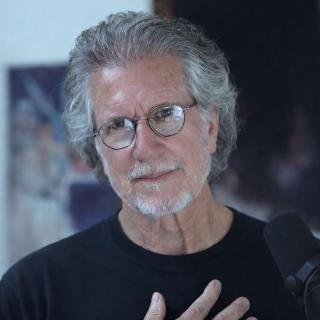
What gets in the way of change is the bondage of self and the illusion that we're trapped in a small ego-based,
Fear-based little personality that feels permanent.
People stood up,
There were tears in people's eyes,
And it was just amazing.
And I had completely forgotten that I had coached her a little bit.
I didn't even know what coaching was back then.
Actually,
It was Janis Joplin who coached her.
Somewhere along the way,
And I think our society teaches this,
We got a belief in there that our primary job to survive in society is to please people and win their approval.
I was automatically believing every thought that had me be timid or scared or nervous or fearful.
And my work began in my recovery from addiction.
That's where I saw such amazing changes.
Hello,
Steve.
Hi,
Paul.
Hey,
Good to see you.
Good to see you.
I'd like to start with the third step prayer.
Are you up for that?
Oh,
Absolutely.
Cool.
So God,
I offer myself to thee to build with me and do with me as thou wilt.
Lead me of the bondage of self that I may better do thy will.
Take away my difficulties that victory over them may bear witness to those I would help love thy power and thy love and may way of life may I do what I will always have men.
Amen.
So should we jump in?
Sure.
Sure.
Today,
We get to experience the presence of a guy who's authored more than 30 books,
Including bestsellers Time Warrior,
How to get clients reinventing yourself,
Prosperous coach and 100 ways to motivate yourself.
He's the founder and primary teacher at the internationally celebrated Coaching Prosperity School.
He has degrees from the University of Arizona in English and political science,
A degree in Russian from the Defense Language Institute,
And an honorary degree from the University of Santa Monica in spiritual psychology.
He's just published a new book,
The very best of Steve Chandler.
So Steve,
This is a compilation of 10 of your books.
And you write in the introduction that you discovered in the process of bringing together these bits and pieces,
That there was a common theme and that is that people can change.
So what gets in the way of people changing?
Well,
I don't know if the prayer you and I did is going to be part of this.
I don't know.
Well,
It'll make what I have to say make more sense.
Cool.
Okay.
Because I think what gets in the way of change is the bondage of self.
And the illusion that we're trapped in a small ego-based,
Fear-based little personality,
And that our behavior,
Rather than caused by habit and repetition,
Is caused by certain parts of our identity that feel permanent,
But aren't.
So I grew up thinking you were pretty fully formed personality-wise by,
Some people said,
The age of seven or the age of five or by the age of 12 before you go into adolescence.
And you're kind of stuck with it.
And it makes individuals like I was very discouraged about ever having a great life,
Given,
Quote,
What I'm like.
And so,
As I look back,
And I chose along with my editor,
Little bits from the various books that I think would be most helpful to the reader,
Have the most impact.
I really saw the common theme was change.
People are afraid to change.
People are unaware of profound change that can occur in someone's life,
Just unaware.
At the end of that introductory chapter,
You write about your coach,
Steve Hardison.
You say,
Hardison was a master at connecting me and all of his clients to the divine creativity that lives in all of us.
Anytime he led me to the brink of another major change in who I was being in the world,
Then I shared my fears,
He would point to his head,
And he'd say,
It looks harder up here than it really is out there.
In other words,
We get scared by what we think,
Not by what we do.
Steve He was right.
It wasn't easy finding out because I was automatically believing every thought that had me be timid or scared or nervous or fearful,
Discouraged.
I just automatically,
I can't do that.
I can't do this.
I'm not good at that.
I don't know how to connect with people very well.
And so those thoughts were just automatically believed.
In my work with him and other work along the way,
It began in my recovery from addiction.
That's where I saw experientially,
Not only in my life,
But all the people I met with and worked with and got supported by.
I saw such amazing changes in how they were living,
Level of self-esteem,
Love of life,
Which was almost always absent by people who first walked in those rooms wanting to lose their addiction.
Just remarkable changes.
The common theme there was leave your ego at the door.
You don't have to be religious.
We call it conscious contact with higher power.
All that has to mean to you if you have an aversion to religion,
Spirituality,
Is power greater than your own little ego that you can tap into and over time embrace and finally even identify with.
In my experience,
The most powerful part of that first few days in 12-step was the level of truth-telling and authenticity that was on display.
It was intoxicating.
And it was instantly something I wanted.
But had fear around.
Me too.
There's a level of vulnerability about being that authentic.
Here I am-ness.
Yes.
We don't see much of that in our normal exchanges in life.
It's all covered up and role-played.
You think that's why we value experiencing artists who go there?
Yes.
That's one of the main attractions.
I really saw it through art and music more profoundly than I saw it in spirituality and philosophy at the beginning.
And later I warmed up to spiritual teachers.
But at the beginning,
People like Bob Dylan coming out during the civil rights era and putting the objection to racism and prejudice in the most powerfully beautiful poetic language.
Things that people just couldn't forget.
And blowing in the wind and times are changing and songs like that that just woke people up by their power and beauty.
So you have a beautiful story in here about your daughter and her wanting to sing something or a school presentation of some sort.
And you were coaching her.
Can you tell that story?
It's such a beautiful story.
Yeah.
Both my daughters had talent shows coming up.
One of them had a vocal part in the group.
That was Margie and Stephanie had an entire solo of her own,
Of a Mariah Carey song.
And they were rehearsing them around the house.
And they would say,
Dad,
Stephanie would say,
What do you think?
And she would sing it.
And it would be sweet.
And she had a pretty voice.
And she'd be on the notes.
And it was,
Yeah,
It's good.
But it was lacking enthusiasm.
It was lacking heart.
And so I wondered,
What can I do?
I don't want to just tell her.
She doesn't want to hear it from her father.
Sing with more heart if you can.
She probably wouldn't know what I meant.
So I showed her a clip of Janis Joplin at the Monterey Pop Festival.
It was a festival that I myself had attended.
I was in the Army in Monterey at the time that festival went on.
And Janis sang Ball and Chain.
It's a famous moment in the history of concerts.
You can see it on YouTube.
And it is so unbound and free.
And there is no self-consciousness in Janis.
The song is just coming through her to the world in this unedited,
But at the same time,
Musically great performance.
So I put it up on the screen,
Turned it up.
I said,
Now look at this and see how she's doing her song.
And so Stephanie watched it a few times.
She was really mesmerized.
And she rehearsed again and again.
And I kind of forgot about it.
And we went to the talent show at the junior high school.
And Stephanie was up there.
And she started to sing the song.
And it was nice.
It was like she rehearsed it at the beginning.
Everyone was thinking,
Oh,
How sweet.
That's a nice little song.
And all of a sudden,
She stomped her foot,
Which was a real Janis move,
And just became someone else on the spot.
That song started coming out with just this total abandon and high volume.
And the people in the crowd were like,
Whoa.
And when she finished,
People stood up.
There were tears in people's eyes.
And it was just amazing.
And I had completely forgotten that I had coached her a little bit.
I didn't even know what coaching was.
But actually,
It was Janis Joplin who coached her.
Show someone an example rather than telling them what to do.
Anyway,
It was an amazing moment.
Unforgettable.
And you called it ownership spirit.
Yeah.
There's owning your own spirit.
Not having,
I'm in low spirits because something's,
You know,
Some situation or I'm in pretty good spirits because some situation outside of me or some people are treating me a certain way.
It was just,
No,
I own it.
It's all mine.
It has nothing to do with anything around me.
And I just saw that,
Boy,
She owned it.
And so I called it ownership spirit.
So you write in that chapter,
You just finished watching Janis Joplin.
While I was putting the tape away,
I told Stephanie,
There are times in life when you know you have a chance to really go for it.
Which in my coaching experience,
Wanting to go for it is what often brings people in.
Yeah.
I want to go for something.
I want to go for something.
Yeah.
But I'm scared.
Right.
I mean,
Fear comes back to thoughts.
What am I thinking?
Right?
Exactly.
I'm thinking about what other people will think.
Right.
Right.
So somewhere along the way,
And I think our society teaches this,
We got a belief in there that our primary job to survive in society is to please people and win their approval.
You know,
Parents in a grocery store will say,
You were really good in the grocery store today,
By which they mean,
You're passive.
You were like a little zombie.
You didn't embarrass me.
They don't mean you were courageous.
You were compassionate.
You were fully alive.
No,
They mean you didn't embarrass me.
You collapsed inside yourself like a little robot child and that's what you have to learn to do.
And that's called good,
Being good.
What a good boy you were.
Yes.
Yeah.
My mother used to tell me how nice I was growing up and cooperative.
I bet you probably were.
I'm sure I was.
I know I was.
You learned.
Yeah.
It then became something that I had to scrutinize as an adult and figure out where it was getting it.
Yeah.
Where it was holding me back.
You quote George Pransky at one point here in chapter 80.
By the way,
For those watching,
This book consists of 180 chapters,
Most of them are a page or two.
And this book,
Like essentially all of your books that I've experienced so far,
Can open up anywhere and get a nugget of joy and wisdom.
So in chapter 80,
Looking for love in all the wrong places,
You quote George Pransky.
He said,
When anyone has even the slightest inkling of an understanding of the role of thought in creating perception,
As soon as you begin to understand that,
It has a calming effect.
Yeah.
Which then opens you up to a life of more options and more possibilities.
We normally assume,
As I did for decades,
That thought is truth.
Most thoughts arise from the ego,
Which is an illusory,
Fear-based belief of who I am.
I am this little personality trapped in a little brain.
This is bad news.
I'll never get through this.
I'm not capable of dealing with something like this.
So you get into fatalism,
Pessimism,
Nihilism,
And you see it even in really high IQ psychologists,
Philosophers,
Political writers,
Just a premise of pessimism.
What George is talking about,
And he's an amazingly brilliant teacher of how the mind works,
That if I become aware that a thought is only a thought,
Not a premonition or the truth about life or reality put into words,
It's only a thought.
Yeah,
Something that I'm particularly struggling with nowadays is wanting to stay informed about what's happening in this country,
But recognizing that so much of it is like a big magnet toward pessimism and a future of catastrophe.
And I have to consciously,
Every day,
Make choices about what am I going to bathe in.
Yeah,
Andrew Weil,
Who's an MD and a naturopath as well,
Very,
Very progressive doctor.
He would put his patients or his clients on a newsfast.
They would come to him for anxiety and things like that.
And he said,
Okay,
First,
We're going to have,
You're going to do a newsfast.
You're going to find out that if anything really important is going on,
You'll find out.
Like,
Tornado is coming or whatever,
So you don't need to be locked into the 24-7 news cycle.
And that'll be step one in working with your depression,
Anxiety,
And then there are wonderful herbs and tinctures and breathing exercise,
All the things Dr.
Weil prescribes.
But the newsfast was primary.
And I used to work in journalism.
And I saw firsthand that if a story wasn't alarming,
We couldn't run with it.
There was no real interest.
But we were searching around and somebody would yell across the room,
This is the old days of newspapers and things coming over the wire,
Ticker tape.
Oh,
There's a serial killer loose in California.
And he's just claimed his 11th victim and he's taunting the newspaper.
I remember hearing the editors yelling,
We got something,
You know,
And everybody's happy.
Like,
Oh boy,
That's page one.
Yeah.
That'll sell papers.
Yeah.
And even media,
The ratings go up when there's something alarming to report.
And when there isn't something alarming to report or something negative,
Something you need to be careful about or need to be afraid of,
Ratings go down.
So they're in the business,
They can't survive without ratings.
I don't think they do it consciously.
But there was one comedian who said they shouldn't call it the news.
They should call it what's wrong.
And that's what they're trying to find and gather for you.
And report to you.
Yeah.
It's more dramatic content than what's right.
We'll get more viewers.
So one of the results of getting drawn into the drama is that I am no longer present.
Yes.
And so you write about presence a lot.
Talk about presence and love,
The connection of being in love and the experience of presence in that.
Yeah.
And in love,
You're really in the now.
And every little breeze seems to whisper to Louise.
It's an old song from the 30s.
And I think Tiny Tim did a version of it in the 50s or 60s.
Marie Chevalier,
I think.
Oh,
Did he?
I think so.
Yeah.
And it seems to whisper to Louise.
I put that in one of my books once and I had a young editor at the publishing company.
She circled it and sent it back to me and said,
No previous reference to Louise in your book.
Right.
And so she didn't know the reference that I was referring to that song.
And she said,
So you got to establish Louise before you do this quote.
I said,
Please just leave it.
Some people won't get it.
I don't care.
The people who get it,
That's what I'm writing for.
Yeah,
Love and being in the now.
Creativity and being in the now.
Yeah,
Creativity,
Being present.
In the present moment,
Letting what comes to you from the divine unknowing.
I remember Ron Hulnick,
Dr.
Hulnick at University of Santa Monica,
Used to refer to the divine unknowing.
Yeah,
Yeah.
Well,
That goes against what we want to know.
We think knowing is the best thing.
Why is it so divine to float around in unknowing?
But creative people say that's when they get their best ideas.
Comes out of nowhere.
Bob Dylan was interviewed once.
He was talking about,
I don't know where some of those songs came from.
I can't,
Ed Bradley was interviewing him.
He said,
How do you think of all those colorful metaphors and images?
And he said,
I don't,
I have no idea where that came from.
I sat down to the typewriter and just fell into the divine unknowing and my hands started moving.
So there's intelligence that's higher and more complex and beautiful than what we think of as our intellect.
We just don't know it.
We think the intellect,
The left brain figuring stuff out is the ultimate.
So if I'm not using my brain,
If I'm not analyzing and understanding what the heck is going on,
If I'm in this place of divine unknowing,
How do I remain feeling okay about it?
What do I hang on to?
Well,
Through practice and trust,
When you're really relaxed into the present moment,
There's McCartney's song,
Oh That Magic Feeling.
Magic feeling,
Nowhere to go.
Nothing to do.
And when you're truly there,
You're not worried about how you're feeling.
It's true.
You know,
That's the separate activity of the brain.
It's an ultimate experience of presence.
Yeah,
That's right.
It's a total,
It's a full experience.
You're familiar with that.
I see,
You know,
All the creative things you do.
I see the keyboard there.
Yeah.
Sometimes when you're stuck,
Something just comes.
It does.
It does.
And it's only a problem when that other voice speaks up and judges it as wrong.
Are you sure you want to put the paint there?
Yes,
Exactly.
Or Jesus Christ,
This is really taking a long time to come up with a melody.
And I've gotten into the habit at this point of saying to that voice,
Look,
I'm just,
I'm in a relationship with something else that's,
So if you have an issue,
Take it up with my muse.
Because I'm right.
Yeah,
That's a beautiful example of learning not to take thought seriously.
Yeah.
I guess what I was fishing after was this concept of faith.
You know,
The sense of faith that it's okay to be in the divine unknowing.
It's okay not knowing what the future holds for me.
There's,
There's a growing evolving sense of faith about my life and the way it has played out.
And I imagine will continue to in a positive,
Loving,
Creative way.
Any thoughts about that from your experience?
Do you?
Yeah.
This thing called faith?
Are you talking about it as if everything is preordained and we don't have any part of how the dance is going to go?
Not necessarily preordained,
But it's going to work out okay.
Oh,
Yeah.
And the only way to ever see that is to be willing to look at your own experience.
Is it not true that many of,
If not most,
Would meet all of the toughest,
Worst,
Most either tragic or problematic things turned out in the long run to be beneficial?
Right.
And were never as bad as I imagined they would be ever.
Yeah.
And I always had capabilities that I didn't even know I had that rose to the occasion one way or another.
So if that keeps happening,
I'm going to trust that this current problem,
I want to look for this could be a positively life changing event.
Yeah.
An opportunity.
Yeah,
Exactly.
It could be.
It's hard to see it that way.
I have clients who go through divorce and they're talking about this upcoming divorce and I've got a bitter divorce coming up,
Contentious,
All of that.
And so my work is to help them see what if you played a part to the best of your skill and creativity in having this divorce not be so bitter,
Have it be based on love,
Collaboration,
Agreement,
Moving forward with our lives,
Forgiveness,
So that all people concerned,
Especially if there are children concerned,
Are not scared out of their wits by how freaked out the adults are getting over this,
How angry,
How vengeful,
How unmoored and lost these formerly reliable adults who are my source of strength and role model are just freaking out.
Yeah.
Yeah.
So,
Yeah,
It becomes over time a trust built on experience,
Not built on fervent hoping.
Comes back to this word acceptance.
Yeah.
Which is,
Which I looked up finally,
And the definition is just so rich.
It's the action of consenting to receive.
Yeah.
In other words,
You're doing something and you may,
There may be something you're going to get out of this.
Right.
You make the choice to say,
Okay,
This has happened.
Let's see what's next,
You know?
Yeah.
You had a life changing experience in becoming a solo dad to your kids.
Yeah.
Every time I think about that,
I,
Oh my God.
How challenging that must have felt at the time.
Fortunately at the time,
I had been through recovery.
So I had a spiritual program in my life.
I had four children.
Their mother was institutionalized with a brain disorder.
And okay,
It's me and the four kids.
Let's go.
And when I talk about the situation,
Most people,
Wow,
What a wonderful person.
What a heroic dad.
You raised those kids on your own.
But at the time it didn't feel like an overwhelming,
It actually felt like an adventure.
No,
It was very challenging.
I don't want to say it was,
Oh,
It was a piece of cake.
It was like having the Nelson boys or leave it to Beaver family or something.
It was not like that at all.
It was not a sitcom.
No.
Well,
Yeah.
I mean,
It might be today's sitcom.
It was like Animal House.
But yeah,
It was challenging.
But my kids rose to the occasion.
And again,
It was a little bit like with Janis Joplin.
They were watching a movie that they loved and I loved.
You know how kids like to watch a movie over and over?
Over and over,
Yeah.
They were watching Meatballs with Bill Murray.
And so in the movie,
Bill Murray is the camp counselor for all these poor,
Disadvantaged,
Ragtag kids.
And across the lake were all the rich kids.
And they were big and strong.
And they had this Olympics between the two camps with all these little events,
The three-legged race,
The egg talks,
The running races and all that.
And at halftime,
Bill's camp was way behind.
And he gave this pep talk called It Just Doesn't Matter.
And he said,
Listen,
Here's what you got to get.
They've got all the money.
They've got every advantage in the world.
They are winning by an insurmountable amount.
But the thing you're not seeing,
Because I can see how down you look,
It just doesn't matter.
And so he started screaming,
It just doesn't matter.
And then pretty soon all the kids were yelling,
It just doesn't matter.
And when my children's mother was finally taken away,
They came and put her in what used to be called a straitjacket and put her in the back of a police vehicle and took her to a psychiatric institution where she was.
And so now it's just all of us.
And one morning I heard my four kids.
I was still in bed.
And one of them had a wooden spoon and a pot.
And they were marching.
We had this house in Tucson that was one story and it was really long.
They were marching all around the house.
And one of the kids would yell out,
We don't have a mother anymore.
And the others would say,
No,
We've lost our mother,
But it just doesn't matter.
And they would just say,
It just doesn't matter.
And then the line I always remembered was,
We like our dad,
But he doesn't know what he's doing.
But it just doesn't matter.
It just doesn't matter.
And they were just cheerful.
They were just like,
Hey,
Come on.
They had gotten so much from that movie.
And they were right.
Didn't matter.
They're all grown up.
They're grown now.
All the children are grown.
And they have so many fond memories of just how awkward that was,
The mistakes I made,
The meals I tried to cook,
And all that stuff.
And they just love talking about it.
They don't talk in terms of,
Oh,
We had a really difficult,
Disadvantaged childhood.
So when I think back,
I have a lot of joy in remembering me and those four kids just waking up and saying,
We're going to keep going.
We're not going to let this thing get us down.
It's not going to matter.
Right.
Right.
So you write about humor and how important it is,
How important laughter is in self-improvement.
How does humor play a role in self-improvement?
Alan Watts used to say,
The angels are,
I think it was Chesterton who said,
The angels fly.
They can only fly because they take themselves lightly.
And there's something about humor that opens people up.
And when you're open and you're not being so serious and worried and clinging to your imaginary negative future,
You're more creative,
You're more thoughtful,
You're more forgiving,
You're more energetic,
You're more playful.
And in that spirit,
Things get created that don't get created when we're locked down,
Brooding about a serious problem.
So that's the way in which I see humor opening people up.
Sometimes when I've got some big talk to give or I'm intimidated by the kind of audience it is,
I'll watch some of my favorite comedians in preparation just to get myself to reconnect to the fun of life.
When I do that,
I just get ideas and a lightness about it and things go better.
Yeah,
You mentioned in your book,
Suggesting if you're working with a coach,
Suggesting to your coach that you deal with,
If you're dealing with some issue that you do it by having fun with it.
Yeah.
So a client has a problem.
This is a really terrible problem.
I'm trying to make money and this one company that was going to work with me and was going to provide most of my income,
They just went out of business.
And so I will say,
Are you open to having some fun playing around with who we can replace that business with?
And not like some horrific need that's pressing upon us.
Well,
Let's play.
Let's have some fun.
And let's just throw ideas up on the whiteboard and they don't have to be rational.
They don't have to be well thought out.
Just first thing that comes to your mind.
Yeah.
No.
Let's take it out of the catastrophe category.
That's right.
Just for starters.
Yeah.
And play it like a game.
You know,
People love to play games and chess problems and all kinds of gamers have nothing but problems,
But they don't see them as problems.
They see them as challenges to their skills and are really fun.
Why not do life that way?
Yeah.
And it improves creativity by a great deal.
It's really a childlike experience,
Isn't it?
Yeah.
Rolling with whatever life is throwing at you and getting creative with it seems to be a thing that kids do naturally.
Yes.
Because they don't have this exaggerated fear of judgment yet.
So my little grandson,
Can you paint?
I'll go over to the piano and he'll walk over and start playing on the hierarchy.
I can do that.
His mother is cooking.
He pulls up a chair and let me cook some of this or he'll turn the dials on the stove.
You know,
Like,
And it's not like,
Am I qualified to do that?
And when they first learn to walk,
When they stumble,
When they fall,
They don't say,
Oh,
How embarrassing.
They just kind of giggle and stand up again because there's not this exaggerated fear of being judged that gets conditioned in there over the years.
So the same kid who is painting and singing and dancing,
When you put on music,
They just dance.
Yeah.
When you look at them when they're 30,
How many of you can paint?
A room full of 40 people,
Maybe three people raise their hand.
How many of you can really sing?
Two people.
How many can dance fairly well?
Three people.
And what happened?
You know,
Because when you were five,
You'd say all hands would be up.
When you were four,
I can paint,
I can dance,
I can sing.
So something happened.
Why could you do it then and not now?
And the answer is we started comparing ourselves to others and,
Oh,
That person,
That's good singing.
Oh,
That person's an artist.
I can't do that.
So I shouldn't even try.
Right.
Limiting,
But limiting beliefs,
They call this in spiritual psychology.
Limiting beliefs that the ego thinks are keeping us safe.
Right.
Is there a connection between overcoming limiting beliefs and evolving spiritually?
Yes,
In my experience,
Absolute connection.
Because limiting beliefs are ego thoughts based on my personality and my wanting to succeed and achieve in the material world and win praise and approval and validation from other human beings.
And so limiting beliefs,
I better not try that.
I better not speak up at this meeting.
I better not go for that position in the company.
I better not sing at a gathering.
Those limiting beliefs are all created in ego defense.
As someone's spiritual path evolves,
Beliefs and thoughts that are egoic and place other human beings' opinions as the highest power in the universe,
All that becomes nonsense.
All that becomes,
That's not significant anymore.
And what's really significant is the big picture,
Which is spiritual path gets you more and more acquainted with and into and experiencing.
And then you start coming from more of that.
And the limiting beliefs,
When they're identified by yourself or your coach or your spiritual teacher or your therapist or your friend,
They look ridiculous when you look at them.
And so yes,
The spiritual path and the limiting beliefs,
They're very related to each other,
I think.
Yeah.
And is it your experience that you've had to walk toward fear in order to overcome,
Recognize,
Heal these limiting beliefs,
That it's a process of,
Okay,
I'm afraid of that.
That's an indicator of where I have to go.
Yeah,
There are occasions when I'm not really walking toward,
That's a neutral thing out there.
Like when I had to give my first talks,
I had horrible stage fright,
Crippling stage fright.
I would lose my ability to breathe properly.
My hands were shaking.
I couldn't think of what I was going to say.
But the fear wasn't there on the stage.
The fear was inside me.
So there have been times when I had to do something,
Even though I was carrying fear inside me.
And if you do that enough times,
You really realize fear is not the end of the world.
And if you don't run from it or over resist it,
Try to get it out of your system before you do anything,
It'll dissipate on its own.
So fear isn't something to worry about like I thought it was.
I thought it was the biggest problem in my whole life.
And it turned out to be over time kind of a non-issue.
Fascinating.
So who's inspiring you these days?
Well my coach always inspires me,
Steve Hardison.
He came out,
His wife and another writer wrote a book about his coaching and it's a great book.
The Ultimate Coach is called The Ultimate Coach.
And then spiritual teachers like Alan Watts and Rupert Spira and the old Christian mystics,
Meister,
Eckhart,
GK Chesterton.
I'm inspired all the time because I make sure,
And I call it deliberate inspiration.
So for years and with most of the people,
My clients and friends,
Inspiration is something that they think is serendipitous and only happens once in a while.
Yeah and they think,
Well I read this book many years ago,
The Road Less Traveled or Think and Go Rich or The Four Agreements or whatever.
And I was so inspired.
I haven't been that inspired for years.
Well where's the book?
Read it again.
Did you Google what books are similar?
Did you Google who else loves the book and see what other books they recommend?
Because if you Google any book and see people commenting,
Even on Amazon,
They'll say if you like this book,
You're going to love the book that George Fransky wrote or that Byron Cady wrote.
If you like this,
You're going to love that.
So boy,
That might be inspiring.
I'm going to go get it.
So I want to make sure that my being inspired is not left to chance.
I hope I see a movie that inspires me.
I hope another Rocky comes along or another Moulin Rouge or something that I really got.
I hope it comes along.
I haven't seen one in 10 years.
Go watch the movie again.
You know,
Let it be part of your life.
You're not at the mercy of chance when it comes to inspiration.
Now,
Paul,
I say these things as if they ought to be obvious to everybody and that they're so obvious to me.
But for decades and decades,
I was the poster child for being ignorant of the things I see or write about today.
I was more ignorant,
More lost,
More fear-based than anybody I work with.
So that gives,
You know,
People come to me with their dire circumstances and their low self-esteem and I'm just saying that's nothing.
That's nothing.
Let's go to work.
I can testify that one of the most beautiful things about you is your authenticity and your vulnerability and your heart and your willingness to tell your story.
And as you have in this last hour,
It's so much part of your power.
So thank you.
Thank you for being one of my teachers.
Thank you for inspiring me,
Steve.
You're very welcome.
I'm inspired by you and the work you do as well.
So I'm very honored to have been in this conversation today.
Thank you.
For the people watching,
Get this book,
The Very Best of Steve Chandler.
It's just,
It is inspiring.
Thank you.
Bless you.
Be well,
My friend.
You too.
Thank you.