Okay,
Well,
Welcome to another session of What Is Now.
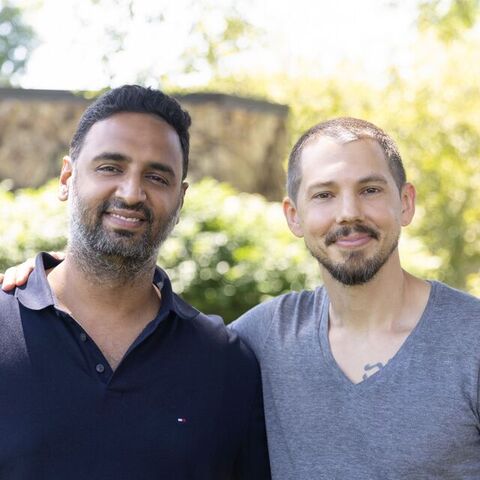
And I'm Charles and this is my good friend Sakib.
Hi Charles.
Hello to listeners,
It's my pleasure to join today and let's see what comes up in our discussion today.
Yeah,
It's great to be here with you again.
As usual,
Our mode of operating here is to sit in silence for one minute together.
And then we just simply see what comes up,
Because a lot of the work that Sakib and I do is based on the present moment and understanding what the present moment is and what it has to offer us and how to experience it more fully.
So that's sort of the essence of what this podcast is.
We go into silence together for a minute and then we just kind of see what manifests for the rest of our time together.
And then often Sakib is gracious enough to guide us through meditative practice at the end of it based on whatever themes unfold.
So we'll do that now.
We'll start with a minute of just sitting in silence.
So whatever you're doing right now,
You might just become aware of how you're sitting or you're standing or even moving around.
Your eyes don't have to be closed,
But they can be.
And we'll start a bell for a minute of just sitting together in silence and just coming back to being really aware of what's happening right now in this moment,
However you would like to engage with that.
Okay.
So we can go ahead and start that now.
Okay.
That's a minute.
So how was today's silence for you?
It went very quickly for me today.
And I was noticing a self-consciousness today,
Both in when I was beginning to speak and also within that minute period.
It was just interesting to sort of be aware of that feeling of self-consciousness and my awareness maybe of other people of you and also listeners perspective looking at or hearing me maybe some like element of judgment that there might be on the other end.
I was just noticing the feeling of that.
A judgment regarding?
Maybe how I'm sounding or if I'm making sense or things like that,
Which I think it kind of taps on something that has historically been there for me,
Which is a self-consciousness about speaking or public speaking and a fear of judgment,
Which has in the past kind of made me be very quiet and for the fear of expressing something and being judged.
And so it was interesting.
I was noticing a feeling there that was very familiar,
But also kind of old,
Something that I don't feel as much,
But it was,
I was noticing the feeling of it sort of bubbling up.
Yeah,
I think it happens to all of us because we have this persona that we present to the world.
And I think being truly vulnerable requires a lot of task,
Work on our inner selves,
Just be in the moment and not think about how we are presenting ourselves to the world.
It happened to me as well.
So I think this is something I can resonate with totally.
How do you or did you notice that?
For me it was,
I think the idea of just being in the moment and because we are doing these podcasts with the idea that we just want to be in the moment and see what comes up.
So now there is,
I think in my mind there is a kind of a paradox there in which I have this idea of being in this moment,
But again that is coming from,
This is an idea,
This is a thought,
And maybe this is also coming from presenting myself in a certain way to the world that I am someone who just is in the moment and is talking from the moment rather than having thoughts or preconceived notions regarding that.
I do have this innate desire to be in the present moment and talk about things which are coming from my intuition maybe more than rather than my rational thoughts.
But I can sense that again there is some rationality there and again there is some persona that I'm presenting.
Yeah.
I guess what I'm hearing there is like you almost inevitably have to play some persona role by saying or doing anything.
What we're doing is attempting here to be fully here and just here and to let go of intention or our maybe ego or thinking mind or this notion of who I am supposed to be or want to be perceived as and then being something else that is beyond all of that which is just real or authentic or vulnerable.
But maybe at the same time to take that just present moment-ness and turn it into something that is words or is an action.
It's almost like it needs to become something that is no longer really that pure expression.
Yeah,
I think it has to eventually come into a form of a language which I think then we involve our brain to bring that language to what we feel deeply within.
So I think I'm not sure when we are speaking are we always speaking from the moment in the moment or there is some sort of rationality involved in that as well.
How do you get a sense of if what you're saying is like is real or authentic versus if what you're saying feels like less authentic or less real or less present?
It's probably not an easy question to answer.
No,
That's yeah,
That's that's a very good question actually because it's it is also important to know what is that you know we do talk about speaking from our intuition but what is that actually when does that happen asking these questions.
So I think when there is a certain sense of not maybe not getting my thoughts inward,
Not thinking about what I'm speaking and let's say for example I'm conducting a workshop or you know delivering a speech to someone and when I'm thinking about this thing that what did I say just now and you know maybe how can I improve that or maybe the kind of vocabulary that I can use if I'm thinking those things then that is not my true self but when when I don't even remember what I just said when it just flows through me when I don't even I think when I don't put that filter to my words then I think it is more of intuitive.
How is it for you?
It feels like that takes a lot of like trust.
Yeah.
That that what is going to come up will be okay.
Yeah.
It was just making me think of I don't know if this is related but I had a vision of I was at this it's called a it was called the mindfulness research summit that I was at a few summers ago and so it was there for like a week with all of these different people that are researchers in the realm of mindfulness was really cool thing and each day there were a bunch of like talks and lectures and guided practices and things like that and typically the chairs were set up in rows and then one day one of the speakers had us do it like an exercise where we all move the chairs to be a big circle and as opposed to the rows and having the speaker up in front of us all us all looking at the speaker and then the speaker was in the middle and we were in a circle and then the speaker was asking people how does this feel different for you from like from what it was like before and what people were saying was were all these really positive things like I feel so much more connected now I feel so much more alive now it feels like it's all these really positive things and I was noticing maybe a different feeling which was something kind of uncomfortable about it like it was cool but it was also this like kind of rawness now I'm now exposed sort of to the group and so and this was also this is something that I would have never done in the past but I've become more prone to taking risks and saying things in these situations because I realized that it's a payoff for me or at least learn something about myself by saying something so then I raised my hand to say something different which was like it makes me feel like kind of uncomfortable and vulnerable here and what you were just describing made me think of that like to just trust that I'm going to talk now and that these words are going to come up and express clearly and accurately whatever it is that I'm meaning to say it's this vulnerable thing because I feel so much more exposed relative to if I'm like kind of having this dual narrative in my mind of like a filter of okay let's let's say that thing and that thing let's use this word and remember that anecdote you got to share that and like all this kind of stuff there's a there's a protective sort of mechanism of that but if I'm just like open it's like I feel like my belly sort of is exposed in this Yeah,
Totally naked in that Yeah Yeah,
No I can totally resonate because and it is challenging you know that I'm thinking about it and I'm thinking about the situations when I usually speak you know in front of an audience and it in that moment I think it is very challenging to just be because there is this idea of maybe not hurting someone's sentiments there is this idea of using the correct words this idea of you know being socially correct so either you give you give that up either you just say whatever you want to say whatever comes through you or you are considerate of others feelings emotions sentiments you know so I'm not able to understand that right now what do you think is something that can be that we can do in the moment but still maybe consider that fact that there is an audience they have certain sentiments I wonder if for this deeper purpose that we're both like really engaged in in like being experiencing the present moment and saying what is true maybe you can never really say what's true but you can get close to what is true maybe part of that vulnerability is the risk of hurting someone or offending someone or saying something that will be received in a way that is not good or that makes them think something negatively about you that's something I've thought of in the past I've historically kind of been I think known as like a quiet and conservative and just really go with the flow kind of person and I am that way but there are also times when I disagree with other people and and I think there's historically maybe been some I'll never say anything like that because I wouldn't want them to think something negative about me because I don't think something negative about them but by me saying this it might make them think that I think that yeah and so then there's this whole limiting filter of what to say and what not to say and but I guess my deepest motivation is to be completely honest and that to me is a real expression of kindness because I'm not saying that this person can't take what I am going to say and I want them to know how I really feel and if there is a disagreement that's great too because I want to stay with them and understand where it is that they're coming from what what it is that they mean and and maybe I have a misconception and and it would be awesome for me to gain clarity on that so and but especially in a group that's a really challenging one because you don't know what's going to come back and then you're sort of supposed to be in control of this and then if you like lose your place what do you do?
Yeah that's right and yeah it is I can think of the challenges that you're displaying right now because you know there are there have been times when I wanted to say certain things and there were times when maybe I just wanted to be vulnerable when I wanted to share something about my past experiences regarding religion regarding relationships regarding nationality and my beliefs on these things but then there is a whole crowd and then you are in a setting where you want to take care of you know the emotions and sentiments of others so you I stop myself from doing that.
So is that stopping?
Now there's one more question I have here me not being able to saying that and I want to understand your perspective on this me not being able to say that is that my fear or is that something which is required or is it coming out of fear?
It's a good question I mean it sounds like it might be both and then an important next question is who is saying what is required there and where is where is that authority coming from?
Yeah I mean my guess for me is that it is it is based out of fear to some extent but maybe that fear is is valid.
I myself am really pulled towards trying as best as I can to to not hold something back yeah and to try to share because I really am trusting that I have the best intention and that I'm spending expending quite a bit of daily effort to understand myself really clearly and that I should be able to share things with people without the fear of how they may or may not come across but and I think this is also really challenging in the area that we're describing and talking about here this area of presence and then you have terms like God and you know all of these things that have so much context involved and people have their own histories of these things and things that if you bring in like Buddhism or Hinduism or Daoism and those things could sound very esoteric or mystical and but you lose so much control of what those things mean to people and then you could lose your connection yeah you lose the underlying message what you really want to say which is beyond all of these things yeah yeah and we try to generalize things you know we let's say if there is if there is a Buddhist concept or if there is a Taoist concept that I want to convey then what I will do is I will think about the audience and maybe there is someone who does not you know does not follow Buddhism or who is not interested in knowing about Buddhism and is only interested in knowing about general consciousness spirituality meditation then I would frame my sentence in a certain way which will lose its value you know that religious it will lose that religious connotation and I will try to generalize it so that it fits into general universal spirituality so yes it is actually this is something which and it becomes sort of a watered down version of the more direct and maybe more impactful message yeah yeah that's right so I'm always in this confusion and I think I'm so glad that we brought this up today because this has been my confusion since a long time that do I just say things you know because that will help me to just be in this moment if I am not thinking about any filter if I'm not thinking about anybody else yeah I'm channeling through me it will it will help me be myself in the moment and then I will say anything I want to say but when there is this consideration of an audience you know what is socially correct then I'm losing that present moment then I'm getting into my rational thinking and yeah being myself totally yeah yeah so how do you feel about that here in this context because it's just you and me here but then there is this potential audience of people listening I wonder if you've felt so far in our meetings together like any hesitation or holding back of saying things in a particular way there has been in time like there has I think for this conversation mostly it's not and I think that is something I really enjoy about this conversation but there are certain times where you know there is something that comes from my background that if I have that intention or desire to share that but to me because it has a religious angle to it or maybe it has an angle to it which does not fit with the beliefs of the general population or the masses maybe that in in that particular moment maybe if it is a language which is not you know which we don't usually use in podcasts right so we refrain from using that language so yeah I would say that if I talk in terms of percentage then about 70 to 80 percent it is just being in the moment and sharing what comes through but then there is this 20 percent filter which is all sure how how would you feel about sharing those things like in the future it was and I want to hear your response it also is making me think of like so you used the term namaste in the last meeting and then we came back and and I asked you about the use of that word and that to me is really interesting to to we can maybe be a vessel for getting a shared understanding of what these various words mean regardless of what tradition or language they come from because I and I also think it's really useful to have different perspectives and then use these two different ways of talking about the same thing and you can gain this more clarified vision of what is the meaning that underlies both of them or what is your own personal version of that meaning because I personally and maybe selfishly I would want I'd be really interested to hear about your particular experiences yeah yeah I think there's a lot of underlings we are there in that 20 percent filter that I'm talking about now there can be two possibilities either that fear is valid or that fear is coming from my own you know past experiences insecurities or things that have so the fear of not saying everything that you want to say because maybe we are brought up in that way in which we are told that you cannot say everything you know you cannot just be totally vulnerable and even if you talk about things like anger you know this concept of not showing your anger and not displaying your anger just just coming from a place of compassion and not saying anything you want to say that brings that 20 percent filter no I think my job will be to understand that what is this filter that I have created is it coming out of my own issues own fears is it something really valid or is it something that that is you know that is yeah as I said it is something really valid because as you talked about authority that who is deciding this this you know code which we have to use in the society the way we have to present ourselves who is deciding who is deciding that we cannot share certain words that we want to share who is deciding that you know we cannot talk about religion and we cannot maybe let's say hurt the religious sentiments of someone or maybe I so what is that you know what is that authority who is deciding that I think if we deconstruct this idea this entire idea of this filter that we use I might be able to improve it by 10 so eventually 10 would be left this is what I'm anticipating it's a really interesting notion and it feels so loaded and it's probably so different for different people based on their experiences in life that element of authority that is sort of oppressive where some people may experience much less of one and that authority feels much less real and it might be easier to like let go of it versus people who have experiences where that authority is like very kind of really oppressive and it would be hard to transcend this notion of that authority figure that is making you try to fit into something or be different than you are or be criticized for who you are the way that you look could imagine that element being much more difficult to let go of and maybe internalized in a much more kind of insidious and ingrained way than someone for example like me who is who is a white guy and has maybe had less of these insidious experiences and it's maybe a bit easier for me to think there well there is no authority and I don't have to answer to anyone really I can say and speak and act in whatever way that feels true to me but that might feel a little bit less of a real possibility for someone else.
Yeah,
It's absolutely because the culture that I come from we were always told that you cannot just say anything you want you know you have to now it changed for me eventually because I worked on it and I realized that I need to speak my truth I need to be vulnerable even if my voice is shaking I have to speak my truth but I think still there is you know there are traces of that and still there are a lot of things that we can work on and maybe question that what is morally so-called morally correct to share and you know not morally correct to share how is it for you in your experience how what does what goes on inside you when you are speaking to a public is it that there are certain things that you would want to share and you know you refrain from doing that?
Probably there probably is I generally I probably don't I don't express I think too many strong opinions because maybe I don't I don't really have them and that maybe it's a protective factor against that I feel like my strongest opinion is like the lack of strong opinions or that or that it's it's unhelpful to have strong opinions so it sort of creates this stance where I'm hoping to express that I'm really open to wherever anyone is coming from and I think I generally have a caveat in any sort of speaking thing in like live sessions on insight timer for example that like yes I'm delivering a message to you here yes I'm like delivering some sort of concept but my hope is really for us to not get too caught up in the logistics of the concept and just like be here with each other and notice our resistance to just being here with each other so it's almost like I have to use this concept as a vessel for connection but at the same time let's let's not get too caught up in in in the vessel and like and you tell me if you disagree with something and I'm so interested to know where it is that we don't match up but I wonder if some people are maybe actually not that interested in like getting to the underlying thing or if it might feel better to have a disagreement or to hear something and say oh no that's not me this isn't for me and I'm gonna I'm gonna pull away.
I don't know what how does that answer your question?
Yeah I think it's interesting what you mentioned about like opinion having a strong opinion because I can totally see that a lot of our speech comes from like opinions about something you know and we wanting this may become this comes from an ego that we want to share this opinion of ours and you know maybe I want to present that my opinion is something which is really valuable but I was also thinking about some situations and maybe you don't have an opinion still you want to present it so let's you know let me take an example here and an example would be what we were discussing in one of the previous sessions about religion and spirituality so maybe even presenting this possibility of to someone of questioning the religion you know there are certain cultures and religions which are even against the idea of questioning the religion so when you don't have an opinion in that maybe you don't right now believe that there is you know the or religion is right or spirituality is right you don't have any opinion in that but then again you are putting a possibility of questioning it so even that possibility of questioning it which is without any opinion that also you know can hurt someone's sentiments what do you do in those cases that is that that is something I really yeah sometimes struggle with actually yeah right just by expressing that even at all you're exerting an opinion to some extent that could really go very directly in the face of what someone maybe holds very personally true or meaningful it was making me think of you said something about not maybe too long ago or several years ago having the experience of like you have to how you described it as speak your truth and I think this is also something that I've felt more of a strong pull toward over the past several years of feeling like in any moment it's not only like a choice but I feel like I have to express something genuinely and not just say something because that's what I'm supposed to say and that that feels just really essential and important to me it's played out in my family a lot which has been both awesome and really like challenging and difficult because I think maybe in lots of families you develop these particular patterns of interaction that may or may not feel really authentic but they just kind of keep things going but they might keep dynamics going that are kind of painful or or maybe dynamics that make it so your family members don't really know who you actually are because maybe you have a sense that they don't really want to know who you really are or they've been giving you subliminal messages that they don't want to know who you really are or they can't take who you really are they they don't like who you really are and you know whether that is or is not what they intend to to send and that's could be from me toward a family member or from a family member toward me but it's that's become one particular channel where I've been able to like act on this stuff quite a bit and take any opportunity where it feels like we're not on the same page and say hey this is how I'm feeling when you say that and I don't know if you mean to express that or not but like this is my experience of it and I want you to know how I really feel that's my deepest underlying intention here and but then that can lead to this like if it's been covered up for so long and maybe this is a representative of like society at large things that get covered up for so long it could maybe feel like it's so hard to engage with that because then it's like to to blow up the whole thing and all of these like the lies and secrets that have been held underneath for so long but that's been a part for me where I've been like I just have to share these things and I think maybe it's a part of like the the practice of presence and of like existential realization of that like death is real and I will only have these people in my life for a short period of time and what's the point of maintaining something that isn't really like true or withholding something from them out of fear of how they might respond or how they might be hurt by that because deeply like what's the point of of of keeping it hidden and like maybe holding out for some future time that doesn't exist and you don't know if you're gonna have it.
Yeah yeah no totally and also the idea of I would like to add to that and maybe also the idea of how you say things you know because sometimes yes there is a truth and especially in families there is something that we want to convey but there is an emotion attached to it and if that emotion is of anger that emotion is of rage then that communication can be destructive but if you say the same thing with a different emotion maybe with compassion and maybe with this idea as you said that you know how long are we together and tomorrow we all have to die but when we come from that place of compassion then maybe if we say the same thing that then the other person will take it in a different way.
The point of how we say things but that also brings me to a question which I always have in my mind is that is it okay to express anger or not?
Is it okay to express anger because I have seen two conflicting ideas in this so maybe in a tradition like Buddhism which talks about compassion and you know Buddha has that quote that anger is something like a hot coal and when someone throws at you you have a choice whether you want to take it or not and if you take it you will burn yourself.
So this idea of anger and if I talk in terms of Buddhism then I have tried to refrain from being angry and just trying to come from a place of compassion but then I have heard people who would say that this is repression.
This is you know repression of your feelings and you have to just let it out you just have to say in the way you want to say it.
So what is your idea of that?
Yeah that's such a tough one.
I guess my feeling is that if you don't say it or express it and don't have any other way of expressing it then it is what you might call repression and then it just stays inside of you and you might on the surface be thinking okay just be compassionate,
Be compassionate,
Be like force compassion but to me that's not doing anyone any favors yourself or this other person that you're interacting with.
For me it's like essential to express that in some way because it's a feeling and my belief is that all feelings have a genuine and valid source and that it's something that is expressible but maybe in some way you've been taught or we've been taught that like it's not okay to express that feeling.
It reminds me of like an ongoing conversation I had with one of my mentors in my going through my doctoral program and we would go back and forth on trying to describe our work with in like individual work with people in the most like basic simple way as possible like what is it that we're really doing with these people that we're working with and he described it one time in this way that I think is really beautiful as any sort of frustration or anger or sadness or feeling overwhelming feeling or any kind of feeling that we have that is like uncomfortable that we might go to individual work to work on is a manifestation of something being inside that has yet to be expressed and articulated and understood outside of you.
So my job is to help the person get what's inside outside and I think that's so simple and beautiful and so maybe in that dynamic the person has a place to express it and they might not need to bring it up with that other figure that person that is the real object of it but they have someone they're working on with one on one where they can like have the opportunity to express this feeling and you might even have them role play with that person like hey like I'm so fucking mad at you and like just extreme and because that stuff is there and needs to be expressed.
And usually you come up with a lot of anger and rage?
It's a good question and maybe there are different ways of expressing it but I think one thing for me is I think that you can maybe express anger and it still be okay like even expressing I am angry with you and then my hope is that the two people can stay with it or just say that and say like I can't I'm so angry that I can't articulate myself right now and I don't know that if I'm right and you're wrong but I can just tell you how I really feel and I'm so angry and that to me feels like something really valuable to express and for the other person to hopefully not shut it off and to say oh don't feel that way or like don't be angry because it's a real feeling.
So to answer your question in a really long winded form to me it feels like there's no problem with expressing that I mean maybe there's a problem if it turns into like physical violence but I don't think there's any issue with expressing it directly with that person maybe as long as there is that underlying thing of like and I want you to know how I how I really feel there's this other side of like I actually want to connect with you here and like get this across to you and at the same time I'm really angry and like here's why I don't know what do you what do you think about all that?
Yeah I think it's a very interesting idea because what usually happened I never thought it thought of it in this way usually what happens is that either and I'm just taking my own example and seeing how do I react so either earlier my earlier version of you know when I was I didn't get into meditation and I had this rage and I'm really excited and I would just express it and I would tell my family that you know this is my right to express my anger and it's my right to say anything I want because I'm angry but now it's totally the opposite and now I will just maybe when I'm feeling that anger I will just stay quiet and you know maybe I'll just take my time off and go for a walk in nature sort out my thoughts and then come back and then speak with compassion but I think what you are saying is this kind of a middle way in which we do tell them that we have we yes we are experiencing anger right now and maybe not then take that further and start saying things to the other person which can hurt them maybe just taking your time off so I'm thinking that is it good to take that time because in that particular moment there is there is so much you want to say right there is so much you want to express and there is so much you want to tell the other person and that how you are hurt and how you are right and they are wrong and all those things so is it a good idea to take your time away from that person and sort that or is it then maybe okay to go further and once you tell them that you are feeling angry is it okay to go further in that conversation what do you think yeah I have a thing I'm thinking of is like maybe this is where like a self-awareness practice is really important so you kind of you're constantly becoming aware of your feelings and why is it that I'm feeling this way right now and you might have more access to that to be able to articulate it in a clear way in the moment with someone because I think oftentimes it could elicit an anger that maybe isn't fully connected to this person but it's connecting to an this feeling that is attached to maybe many experiences in your life that have that angry feeling like connected to them and then it just explodes and it comes out at this person and you kind of regret the things that you said but if you're really maybe clear on what it is about what this person is saying or doing that is making you angry and you're able to express that in a way that is not taking out your experiences with other people or other things on them but you're able to say hey that thing that you say or do is hurting me because of this and it makes me like angry and I feel like really negative towards you when you do that that might feel really hard to have access to in the moment when you just want to be like maybe shouting at someone and maybe that is where it is valuable to and also I don't know what the right answer is but maybe that is where it is valuable to say hey I'm out of control so I do need to just kind of remove myself from this and then come back my hope is that you still make time to address it with that person and maybe there's a difference between if it's a constant pattern versus if it's just something that happened one time then maybe remove yourself there but if it keeps happening with this person then it's just going to continue to keep happening if it's unaddressed so then you might just keep removing yourself and coming back and I wonder if that like anger thing is just building up under the surface the whole time and I my deepest belief is that the real act of kindness there is to share with the person what they're doing that's hurting me because I know for me that I would so want to know that if another person was having that feeling about something that I'm doing that may or may not be the case for the other person but for me that's what I would want.
Yeah and I think as you were speaking about this I was also thinking about one thing that at that time when we are angry we are our focus is on entirely on us you know when we are just looking at us and what we feel bad about what we feel bad about but sometimes there is no mindfulness and presence of what the other person is feeling and what the other person is experiencing right now so maybe the other person said something which is which is which hurt you but beyond that there is something else maybe you know let's say they have tears in their eyes or maybe they are themselves feeling very hurt so this again is my question and I get a lot of such doubts because I have like there is so many of thought experiments in my mind regarding anger but there is still a lot of things that I need to be clear on is that in that moment do you keep your awareness onto yourself or is there a possibility of looking at the other person and because you know there is the saying that 86% of your communication is non-verbal it is what you are feeling and how you what is your body language how you are presenting yourself so do I focus on the words of the other person or in that moment do I look also look at the other person who is saying those things maybe because sometimes what happens is if the other person starts crying we will immediately melt down and you start feeling compassion but just because that person hasn't cried yet maybe we have not observed their internal turmoil that they are going through what is your idea regarding that yeah I was just having the image of like something triggers a protective mechanism in you and then you just go internal and you are like you know closed and you are all defensive and that makes you blind to their whole experience which is so nuanced in this moment but you have become this very limited version of yourself that has like all systems are up and the arsenal is in effect so you cannot become aware of the fullness of who they are in this moment they become a very like this tiny version of themselves that is kind of how I am seeing it and maybe there is a possibility of like using that as a trigger for shifting back at least for a little bit of time into this interested curious standpoint and I wonder on a non-verbal level like you were saying how much the other person might also become aware in that moment that you are interested in like how they feel and it might as opposed to and this is the way I see it like you become really defensive and then of course that elicits their defense because they need to be defensive if you are if this if we are in this conflict state but if they notice that you have like taken off the armor for a moment and you are like even like a look where they can sense oh he is actually interested in how I feel also they might also be non-verbally open to something new there or like to be able to share with you something that you did not actually know is at the source of this thing because you played out this back and forth so many times that it has just become this thing that happens but you are not actually communicating about the like the deeper issue and I wonder if you like shift into that open standpoint and interested then you might actually get to something that is beneath it and I wonder if maybe there is even another emotion there that is it could be even more maybe painful to get there which is why we might maintain like the anger place sometimes.
Yeah and that reminds me of a wonderful thing that some someone said and they said that whenever you are having such kind of a conversation in your mind try to mute the words of the other person so when you move the words of the other person you look at something beyond that which is maybe their body language their emotions or they are experiencing it but because we are so much focused on the words of the other person we totally blank out other aspects of their being in that moment so I think that is that is something that it really clicked with me and what I do is whenever I have we get into such a situation with someone where there is an argument or you know where there is a display of anger I would try to look at something beyond their words maybe look into their eyes look at how they are speaking how they are feeling in that moment and that is something that has helped me because I in that moment I can see that this person needs love you know this person there is this place of fear there is this fear inside this person right now and that fear needs to be addressed and there is this love that this person is actually asking for now this might be saying hurtful things but actually this person is asking for love and I think this is very true in case of romantic relationships it has really helped me what do you think about that yeah I think that's awesome I was having this vision of like something happens and like you press a button internally and there's this this sort of ball that goes around you and you're sort of like frozen in this moment the other person is on the other side like shouting or something but you don't hear anything and you're just kind of coming back into this this present experience in the midst of conflict and all you're doing is just like really clearly looking directly at the person which might then re-initiate the maybe all the stuff that we are cultivating with a practice of like a meditation or that stuff that maybe is kind of hard to access sometimes when the old triggers occur where like anger comes up and then that can maybe allow you to re-engage and notice your defenses that have started and it'll be like wait a second wait a second wait a second like okay this is what I'm hearing this is what I'm saying that I don't really mean and let me can I reset here and just like ask you if this is what it is that you're saying to me because this is what I'm hearing and I don't know that was a cool visual idea that your description kind of elicited for me that I think it will be interesting to try whenever the moment arises yeah I think it's wonderful and even if we I think if we look at a lot of our arguments with with our with the people especially who are close to us we will see that and if we in in our mind try to visualize that situation and I can think of many situations right now where I was argument with someone and they were displaying that anger but because I was so focused on their words I could not see beyond that I could not see maybe into their eyes I could not see how they are feeling in that particular moment and maybe in meditation we just go to those situations and just look at their expression beyond words if we look at the other aspects we might be able to see love there what do you think?
I would have to think so at the source of it.
What about trying this in meditation?
Like trying it now?
Right now?
Yeah I think so it seems feels like a good spot.
Yeah let's do that.
Sounds good.
Great so okay so now we will go into the meditation and for this meditation you can gradually get into your comfortable relaxed posture where your back is straight but is relaxed at the same time and you can gradually close your eyes.
And as you close your eyes bring your awareness to your breath.
Breathe in.
Breathe in and breathe out and as you do so let your awareness follow the flow of your breath.
Breathe in and breathe out.
And now in your mind's eye,
Remember and visualize a situation when you were in an argument with someone,
Someone close to you,
Maybe someone from your family,
Maybe your partner,
Maybe a friend.
And just remember the situation.
See that person in front of you.
And see that person in an argument with you.
Now just observe this person.
Go beyond their words.
Look at this person in this moment.
Look at their eyes.
Look at their body language.
Look at the emotion and sense the emotion that they are expressing.
And check if there is any hurt in that emotion.
Check if there is any fear in that emotion.
Just try to sense what their fears or hurt might be.
What is it that they are craving for?
Just observe every aspect of their being.
What is that deep hurt in them?
What are those fears?
How are they expressing that?
Take a minute and just observe them.
What is that deep hurt in them?
What is that deep hurt in them?
Now you can bring your awareness back to your body.
You can feel your body wiggle your toes,
Move your fingers.
And gradually in your own time you can come out of the meditation.
Thanks for that.
My pleasure.
How was that for you?
That was great.
I had a very recent experience that was at the center of that visualization.
So it was nice to see it.
I was also proud of how I engaged with it.
And felt that I sort of engaged with it in this way that we are describing.
It was nice to see that and also just to take some extra time to feel and look for the hurt that other person is feeling.
And there's other people involved or feeling in their own different ways.
So it was nice.
Thanks.
It's pretty awesome.
I think for you to be able to just do that,
You know,
Off the cuff based on what we're just talking about.
I know this is something that you do.
And so it's something you work on and you have developed skill in.
But it's like really,
Really cool thing from my perspective to be able to just do that.
Thank you so much for that.
I think I'm inspired by you because this podcast being in the now has enabled me to do such meditations.
This question of what is now makes me just get into the moment and see what is it really that we need to work on right now.
So that is helpful.
Awesome.
I was just noticing related to what you said earlier about kind of speaking.
And if you're speaking from the present moment,
You sort of lose track of and don't even really remember necessarily what you said.
And I was just noticing kind of that feeling for myself here in for our past time together.
It's felt really alive with you here.
And so maybe we've been on that wavelength to some degree.
Yeah,
Absolutely.
Loved it.
And I loved how the conversation shaped.
And I think we started from expressing ourselves to when we moved on to anger.
It's really interesting because expressing ourselves in during having that anger and then expressing ourselves.
I think that is something which is quite challenging for many of us and working on that.
Yeah,
I look forward to seeing what comes up next time.
Yes,
Absolutely.
All right.
Have a good day.
You too.
Bye.