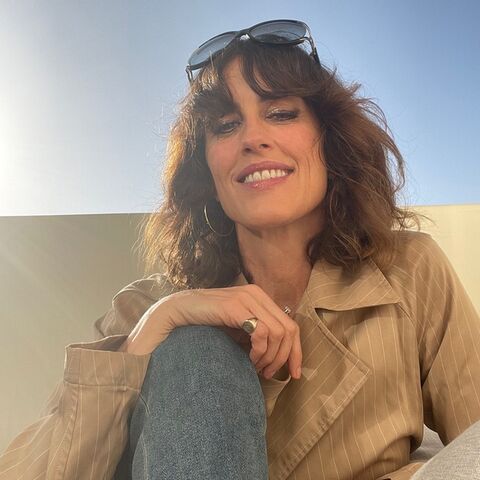
You are listening to Designed to Be Awake with Mick Kubiak.
The episode that I'm sharing today called Big Feelings is about,
I had seen a couple of parents that day.
Both parents have children who are highly sensitive,
Highly emotional,
And in both cases when the kid suddenly has anger and is expressing it,
There's this like,
Should I be making it stop?
Should I be telling them not to?
And no,
You should actually be saying,
You're really angry.
That makes sense.
Your feelings make sense.
You are allowed to feel your feeling and you will feel it all the way through.
And when the emotion peaks and then it comes back down,
That's when you can start talking about other ways of coping and just really working through those things without shaming emotion.
Hello,
Hello,
My beauties.
And welcome to another episode of Designed to Be Awake.
This episode is about emotions.
And one of the things that just sits with me a lot or that fascinates me about the work I do as a psychotherapist,
Also as a coach,
Is how many of us arrive in adulthood with such a difficult relationship to our own emotions.
Many people,
Many of us,
I include myself in this wholeheartedly,
Showed up with the sense of like,
Oh no,
Feeling something better,
Like press it down.
God forbid I should actually feel it,
Especially in the presence of other people.
Sadness cannot be expressed in front of other people.
Anger cannot be expressed in front of other people.
If you have a feeling,
Press it down.
And then maybe in the privacy of your own journal,
You will work through it.
And this isn't necessarily a bad thing,
The working through it before you just,
You know,
Give in to it.
Being reactive is not a better alternative to what I'm talking about.
There are just kind of two problematic responses to emotion.
One is just get it out and start yelling at everybody.
We've seen that.
We have probably all experienced that.
I grew up with that and have witnessed it in the workplace and in families and everywhere.
And then the other one is stoic.
But I say that with deep respect for stoic philosophy,
Which I don't believe is saying anything like suppress your emotions.
It's not.
It's just promoting a way of being that's so balanced and so internally referential that you just don't shoot off at the mouth.
You just don't.
There's a space around the emotions for them.
There is nothing that is not OK to feel.
And the great irony,
I guess,
Is that once you feel it,
It really doesn't,
It's not that big a deal.
Like you're over it.
You're on the other side of it because you were allowed to feel it fully.
And now you're done.
And now your head clears and you're like,
Oh,
OK,
I see.
And yeah,
It's just much healthier than I think what a lot of people experienced when they were kids with being told it's not OK.
It's not OK to cry.
It's not OK to be mad.
It's not OK to feel what you feel.
So let's stop that.
Let's not do that to our children.
Let's not do that to ourselves.
Let's just know that we were designed to have these emotions and that these emotions are beautiful and they serve a purpose.
So I have sort of two branches of my work in this world of my practice.
One is working with high functioning neurotics like myself,
As I like to say.
And the other is working with parents.
And I've been doing both of those things for over a decade now.
And working with parents is something I never would have chosen.
I always like to say it's so ironic that I became a family therapist because I hate families.
And,
You know,
That's because of the family that I was raised in.
It was like a hostage crisis,
Like a prolonged hostage crisis was what my childhood felt like to me.
That was my felt experience of it.
I just,
For the most part,
Really,
Really wanted out.
And I know a lot of people can relate to that.
People who,
Yeah,
Just didn't have a glorious childhood.
So,
Again,
Ironically,
I started working with families very early in my career.
And this was because there was a requirement.
I had to have a certain number of hours of working with children and or families in order to take the licensing exam and get licensed.
So I started working with a group that was actually a national group,
Although they had a branch in Los Angeles.
And I started working with them way back in,
I'm going to say,
2009.
And it has been amazing to just sit with parents,
Be with parents,
Work with parents.
And it's become something I've loved so much.
So I just say all that to just share with you more about who I am and what I do and how long I've been doing it and what I understand about life from it.
So today I was speaking with two parents and there were a lot of things that came up,
But I will focus on emotions.
So these parents have been blessed with more than one child who has very big feelings is what we used to call it when my daughter was in preschool.
The preschool staff would call it that,
You know,
Some kid would be absolutely spiraling and losing their shit.
And it would be like,
Oh,
Yeah,
Jason's having some big feelings today.
And they would say that to the children.
And then we would say that to the children when we got home because we were learning too.
And it was sort of wonderfully nonspecific and just forgiving,
You know?
Oh,
Yeah.
Big feelings.
Right.
And they do feel so big in our bodies.
Right.
Even now,
As an adult,
Sometimes I will feel something and it's like,
Oof.
And you see little kids dealing with it and they're just in these tiny bodies and they don't have all of their reasoning faculties on board and they just need to be helped.
And supported through having that feeling and held with the confident knowing on the part of the adults that feelings are good.
They're a process.
They have a clear beginning,
Middle and end.
And it is safe to feel it because you know that.
If you start crying,
You can guarantee you will eventually stop,
Probably within three to five minutes,
Like at most.
If you let yourself feel your anger,
It will rise up and it will feel hot and scary and then it will peak and it will fall.
So learning to trust that process and not resist it and not fear it in ourselves and in our children.
And there was also this kind of calm that I am sure you have to develop over time if you work with preschool age children where you're like,
Yeah,
She's totally melting down,
But it's not your kid,
Which makes it easier.
And it's just so normal.
You just see it all day long with all these kids having big feelings and you just learn how to gently support the process.
Nonjudgmental,
Peaceful support of this unfolding experience.
And over and over,
I think what we feel as parents a lot of times when our kids are having big feelings,
And this is when they're babies,
When they're toddlers,
When they're teenagers,
Probably for sure when they're adults.
I don't have one of those yet,
But I will.
And I know for me generally,
I'm immediately can feel like my blood pressure shoots up and I'm like,
I have got to do something about this.
It's not conscious.
It's not true.
You know,
It's some kind of programming that I am always trying to undo and chill out around and most importantly,
Catch.
So I try to catch it in process and be like,
All right,
She's crying.
And now I'm in a panic imagining that that's a problem as opposed to being like,
Oh,
Yeah,
Tears.
Good.
Big feelings.
Go with it to either give her the space that she needs,
You know,
Depending on how old your kid is and kind of like what level of intensity they're going through in their bodies.
You might need to keep them safe in some way.
But once they're old enough,
They can usually tell you,
I need space.
They will take what they need.
I need a hug.
I just need to yell.
They'll just do it.
And all you have to do is hold steady.
Just relax.
One of the things that I tell my parents is in moments like that to imagine your kids on a roller coaster ride and that you're just waiting at the bottom of the roller coaster and it's just going to take time.
The roller coaster is going to take,
What,
Six and a half minutes.
I'm going to chill out here while they're on that ride.
Now,
You're not just relaxing.
I mean,
What's most powerful is if you could actually be fully present without reacting and just sitting with what's unfolding in front of you and to really see it as a natural,
Organic process.
Emotions are so honestly beautiful.
And valuable in the way of normalizing the fact that we act as if that's not true,
Right?
There's something to be controlled and stopped and managed.
This is an unfortunate trend in humanity that we think that that's the way to deal with feelings in ourselves and others.
And we really need to undo it.
We've got to grow up here and learn how to be like,
Oh,
I feel deeply sad right now.
I'm going to hold space for myself to feel sad.
I'm going to cry.
And then after I've cried,
Wow,
You know when you have a really good cry and you're like,
Oh my God,
It feels so cleansed and clear.
And sometimes you're just like,
Oh,
I'm exhausted and I'm going to sleep now.
But it's the most beautiful sleep.
Sometimes I feel really liberated and energized and I'm like,
Great,
Now I can just get back to living because whatever I needed to flush out in that great storm of tears,
It's gone.
Yay.
So you can really do that for your kids instead of being like,
Oh my God,
She's spiraling.
We have to stop the spiral.
Like,
Just take a deep breath and sit with it and be really present with her.
It's great if you can do this work with your kids when they're little because then by the time they get to be teenagers,
They already know the deal.
They know they can trust their feelings.
They know they have the skills.
And it really is just having a body and accepting your emotions.
That's the skill.
So we all have it.
You just have a body.
You let your body feel what it's feeling.
When this emotion comes,
You let your body lead you about what needs to happen.
Do I need to cry?
Do I need to go run around the block 14 times?
Do I need to just sit still and feel the intensity of this visceral,
Emotional experience?
Any one of those things works.
So again,
It's not a big deal.
You don't have to do a training in it.
You just start to imagine that you can accept your feelings and that you have the bandwidth to feel your way through them.
And of course,
If you don't feel that,
If you're like,
Nope,
I feel really clear,
That's not a good idea.
And so I'm not going to let myself start crying.
Then trust that wisdom too.
On top of that,
Or in response to that wisdom,
I would suggest seeing a therapist or a healer or a coach.
Any number of avenues you could explore.
I used to know this woman,
This friend who,
She just had this ability at a very young age.
I mean,
She was like 20 something and she was just known in this entire group of people that she was friends with in college as the person you would go to when you needed to get big emotions out.
And she just did this.
You know,
She wasn't a therapist.
She didn't later become a therapist.
She just had this capacity and other people knew it and they went to her.
So you might have someone like that in your community.
You might be someone like that.
Thank you for your service if you are.
Some of us have those friendships where we can go,
We can take it there.
Sometimes we don't,
But I highly recommend finding a way to orient your body to the experience that it's safe to have your feelings.
And again,
Therapy,
Healing,
Massage.
There are all kinds of ways.
There's so many ways.
So finding one of those to support yourself,
Because honestly,
When we don't have access to our emotions,
We don't get that cleansing and we don't get that clarity.
Like one of my favorite things about anger is that it's showing you something.
It's showing you something important.
Now,
When we're actually in the throes of anger,
It's really important not to speak or act most of the time.
There are some exceptions to that,
But mostly what you need to do is listen,
Feel it with your body and sit and hold it and let yourself speak out loud or write about how angry you are and why and at home and like let it move through you.
And when you do,
You will start to identify actually what the real problem is.
And once you do that,
Your anger will subside because that's what it's there for.
It's letting you know something is not OK,
Something's not right.
And anger is wild and it doesn't always know what it is.
Or I guess it's not anger that's so wild.
But if we are unconscious or we haven't,
Again,
Really explored the issue,
We might act out at the wrong person.
We might go too far in what we're saying.
I know for myself,
I had a lot of anger all through my life and it took many times of me looking back and being like,
Oh,
My God,
How desperately I wish I had not spoken at that moment.
I really,
Really do.
The beauty of those experiences is that they're real motivation.
It's a real motivating force for me anyway,
To realize I've hurt someone unnecessarily,
To realize that I lashed out at the wrong person.
I lost my temper at the wrong time.
And it really inspired me to do the work.
And for me with anger,
A lot of it was just being like,
All right,
I'm angry.
I know I'm angry and I know that therefore the thing to do is to get myself somewhere safe and private where I can feel this out all the way through.
If I had someone I could trust,
I would call and be like,
Can I just express this?
I just need to talk.
And it's going to be like probably 20 minutes of me talking and I don't need you to do anything except listen.
And oftentimes I didn't even want them to reflect to me what they think the anger is about or not about because it would be so clear once I got all of that out and let the anger move all the way through and just burn through me.
And you're left with some clarity where you're like,
I know what it is.
I just needed to go home at 10.
And instead of asserting myself that I wanted to go home at 10,
I got dragged along on this other person's or this group of people's journey or plan and I didn't speak up for myself.
So it's not going to benefit me to let them know that.
It's not their problem.
My problem.
So next time I'm going to make sure I come home at 10 and I'm going to be checking in with myself and noticing when do I not speak up for myself?
When do I not use my voice to say what I need and what's going on there?
And what I love about that is that's self-work.
It's about me doing better by myself,
Being a better friend to myself,
Really listening to myself,
Really knowing myself and really speaking up for what I need in the moment.
And I have the gift of anger,
Right?
Thank for that.
I'm very,
Very grateful for it.
There is a fantastic book and she writes a chapter about every emotion and goes into detail about like,
What might the gift of this particular emotion be?
Sadness,
Anger,
Joy,
Right?
I sometimes think we even inhibit that.
It's not OK to be so happy.
It's not OK to be elated.
It's not OK to be delighted by what you're eating.
Like,
Keep it down.
There was a thing that happened with me and a boyfriend and we came to call it the pear tart incident.
There was this incredibly delicious restaurant in Ithaca,
New York in the 90s called Rene's.
And oh,
My goodness,
I dream of it.
I really do.
If I could go back in a time machine,
I would go there.
That would absolutely be on my list of things to do.
But she made a pear tart that was exquisite and we got it one night and I was eating the pear tart and the deliciousness of it,
The pure,
Sensual delight of that food in my mouth moved me to tears.
And I was weeping over the food.
And my boyfriend was like horrified and shocked and kind of like shamed me for it.
And anyway,
We talked about it and it became known as the pear tart incident.
And it really was something that in a way.
It was the death knell of our relationship because I didn't want to be limited and inhibited in terms of how much I was allowed to feel things.
So I know this started out on parenting and children,
And I'll just touch back in on that to say that as far as our kids go and their feelings,
First of all,
I'm so grateful that I had a child and a very emotional child and I messed it up so many times.
I totally got into that thing of like,
This is bad.
I must be a terrible mother.
My child's crying and she can't stop or she won't stop.
Something's very wrong.
I got to figure this out.
And I always want to be clear that sometimes that's true,
Right?
Sometimes your kid is crying and you actually really do need to go to the doctor and get some things checked out and it'll turn out there's something that you weren't able to solve with changing the diaper,
Feeding her,
Burping her,
You know,
All of the home remedies that you do.
There could be something.
So get it checked out.
But probably close to 90 percent of the time,
It's not that.
And it really is just being like,
Oh,
Yeah,
It's hard being a baby.
They're so cute when they're cute,
Like during the times when they're adorable.
But I've gotten to where I find them all so cute.
Like even when I hear babies crying,
I'm like,
Oh,
My God,
It's hard being a baby.
You're suddenly like thrust out into this bright,
Noisy ass world and you're trying to take all of it in and understand it.
And it's just not always easy.
And you're a baby.
So you have no power to serve yourself except your voice.
You're getting the attention of your caregivers.
Help me solve this problem.
Comfort me.
Do something.
And yeah,
As a caregiver,
Knowing that sometimes the something that you do is just make it as comfortable for them as you can while they experience their emotions.
And definitely don't panic and be like,
You need to stop crying.
I can't say I can't say that there was never a moment where I was like,
Oh,
My God,
This needs to stop.
Like,
I can't anymore.
But so much of that was not the actual crying.
It wasn't the baby.
It was me.
It was the story I had running in my head that something was wrong.
But crying is just a natural response to living on earth.
And that holds true for us and it holds true for our babies.
And it's just a good thing to remember.
And it serves a purpose.
It serves a purpose.
That's the other beautiful thing.
Again,
Crying,
It just clears things out.
It cleanses your body.
It cleanses you.
And I heard somewhere,
And I do not have the science on this,
But that you actually release more toxins through tears than through sweat.
Your feelings.
It's OK.
Your body is designed for this.
It is designed for it.
And it's only because we've been taught incorrectly that our emotions are dangerous,
Wrong by people who really did feel that way because they were taught to feel that way.
Again,
This is just teaching on down the line.
And now we're at a point where we can change it.
We don't have to do that anymore.
We can be like,
Oh,
Yeah,
We're having feelings.
Got it.
I know how to do that.
My body knows how to do that.
I can trust my body and I can feel my feelings.
And all of these feelings have a clear beginning,
Middle and end.
When they end,
Everything will become clear.
I will make sense of things then.
I do not need to make sense of things while I'm in it.
I just need to drop all that sense making and feel my feelings in my body all the way through.
They're like weather.
I always like to think about it that way.
Like I imagine myself as a like maybe a field and this rain sweeps through and it storms and rages and it's intense and then it eventually stops raining.
And it dies down and everything comes out.
Things turn green.
Flowers bloom.
You know what I mean?
It's this beautiful process.
Our emotions are moving through us like weather and clearing us out for something new.
Anger is like a fire that burns through and lights everything up.
And once it's lit up,
You have so much more clarity.
And that is it for today's episode.
Thank you so much for tuning in and I will see you next time.
Thank you so much for listening today.
This episode and every episode would be impossible without my amazing team,
The brilliant Chase Coughlin,
Who not only edits every episode,
But also composed the music for the show.
As well as Maya Young.
If you enjoyed listening,
Please leave us a review.
Thank you so much for listening and I will see you next time.