You're listening to the Meditation and Mindfulness podcast.
This podcast aims to motivate and inspire you in your practice.
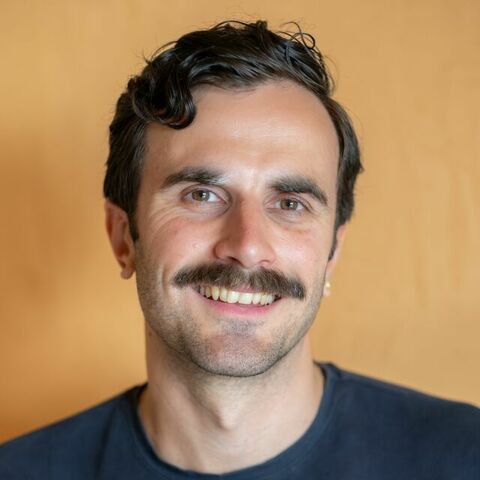
My name is Christian Netesen and a few years back I stumbled on meditation and it has completely changed my life.
I'm sitting down with other meditators to talk about their practice,
The lessons they have learned and what they want the world to know.
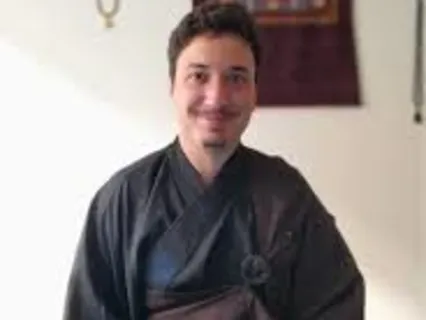
On this episode of the podcast I talk with Mark Gillinson,
A Novus Chan priest,
About his practice and his past in meditation.
Welcome Mark to the fifth episode of this podcast.
Thank you Christian for having me.
We've known each other a little bit from a practice side and also the meditation discord,
But for the people who don't know you yet,
Who are you and what do you do in life?
Okay,
So my name is Mark Gillinson and I'm a novice Zen priest and I'm also a musician.
I'm a double bass player.
So professionally I play in orchestras,
I play classical music and I teach music education and music and on the religious side of things I run the body and bass hermitage.
Body is in B-O-D-H-I,
Bodhi.
And therein I share the Buddhist teachings to the best of my ability.
I do that in written form,
In podcast form and I try to help through the discord server,
Through the meditation groups that I run in Basel,
Switzerland.
And that's more or less it.
Now I wonder how did you get into touch with Buddhism or even meditation?
Was there a certain point in your life where it just happened like that or how did that happen?
At some point around the time I was in the middle of my military service in Israel,
Which is the country I'm from,
I was having a tough time,
Not because of the military.
I had a very cushy job,
But just some general dissatisfaction with life and a breakup from a girl.
Not even particularly interesting problems.
I was just having very mundane problems,
But feeling quite dissatisfied at the usual solutions presented by life.
And a friend of mine who saw me,
A friend from the orchestra I was playing in at the time,
Suggested that I go with him to a vipassana retreat,
To a 10-day silent retreat.
And well,
I wouldn't advise it to a beginner now as somebody who gives advice to beginners,
But at the time I didn't know any better.
So I went right for it.
And after six days of hellish agony,
Suddenly there was a moment where I realized that the sound of my own thoughts is pretty much a broken record of the same thing repeating again and again.
Then I sort of developed a kind of sense of humor about it.
And for the next four days,
I spent the time in a very sort of calm and joyful state,
Which I never experienced before.
And the rest,
As they say,
Is history.
Right.
And so from the vipassana retreat to the Suyun lineage,
The Chinese Buddhism,
Chan Buddhism part,
Like,
Was that an easy flow from one to the other?
Or was it a little bit more complicated than that?
Well,
It was a bit more complicated than that.
Because first of all,
When you go to a vipassana retreat in the style of S.
N.
Goenka,
Usually they don't like to talk too much or to give too much theory or background or they're very much into just practicing,
Right?
So they give you some practice instructions and tell you to sit for a lot of time.
You sit and sit and sit and sit.
And after coming back home,
I did this for a few months.
I spent a few months just sitting and sitting and sitting and sitting and sitting.
But at some point,
The sort of high that you get from,
Let's say,
Blissing out,
From enjoying the silence for the first time in your life,
This,
Of course,
Runs out because these experiences always have,
You know,
One of the insights into reality that the Buddha had was that everything is impermanent.
All conditioned phenomena are impermanent and any experience as such is also impermanent.
So unfortunately,
I had to face the fact that my experience was also impermanent.
And then I started seeking inspiration.
So I went to read different Buddhist teachers.
And pretty quickly I ended up with Thich Nhat Hanh,
Who is very,
Very good at making extremely complicated sounding technical Buddhist jargon,
Very available for just normal lay people who don't have a big background in all the technical language.
I don't know if you have this experience,
But that's one of the beautiful things that I find Thich Nhat Hanh can do.
And so I practiced in a sitting group of his lineage for a while.
And at some point,
I stopped feeling very comfortable there,
Or not really comfortable,
I just stopped getting the benefit that I felt I could be getting.
So at that point,
I somehow stumbled on a book called The Ocean of Definitive Meaning.
And then I kept reading more books by Trungur Rinpoche.
And I found at some point retreats where he was teaching.
And then I studied with him,
Although not,
Not in a very personal relationship,
Because there were tons of students there.
But I studied in this lineage for a few years.
And when I felt that I need a close relationship with a teacher,
And also that I'm getting tired of sectarian attitudes,
Which means the attitude that teachers have,
Even if it's a very slight attitude,
But an attitude that their school is superior to a different school.
I was kind of getting tired of that attitude.
So that led me to finding,
Simply by the magic of Google,
Finding the teachings of Zen master Shu Yun.
And he revived three out of the five houses of Chan of Chinese Zen,
Which also disappeared.
And his writings are distinctly non-sectarian.
And you also feel this in the spirit of Chinese Buddhism,
Where in one monastery,
You can find people practicing a great number of different schools of Buddhism,
Which is surprising to other people,
Because usually there's sort of contests.
Shu Yun took a very smart attitude that there are 84,
000 teachings for 84,
000 types of people.
So these different ways of expressing the truth are simply adapted to the different capabilities and necessities of different beings.
And I liked this attitude very much.
And I found a teacher in this lineage.
And that's where I am right now.
That's amazing.
It's amazing how you went through different teachings and teachers.
But it seems that from the beginning on,
Or very early on,
You were drawn to Buddhism,
Was very specific for you,
Buddhism,
Is there a specific reason for that?
Or is that just how it went?
Yeah,
Well,
First of all,
It was quite natural,
Because I started in Vipassana.
But if you,
Like me,
Have sort of a grasp of the concept of karma,
Then you don't think that these things happen completely by chance,
But that there are sort of different affinities that lead you on certain paths.
And I can feel a very,
Very strong affinity for Buddhism.
I don't know why I can't explain it.
But I can give a sort of intellectual reason,
Because much easier for me as an Israeli would have been to go to Judaism.
And I did try for a while,
But I never had teachers in Judaism who explained anything that made any sort of sense to me.
And all I could see is that people through their religious practice,
Not to say anything about Judaism,
But just to say about the practice of the people I was observing at the time,
They seemed,
And I think I can safely say this about most Westerners who practice religion,
It seems like their practice is a process of giving structure and meaning and safety and stability to their life.
You know what I mean?
Like putting everything into neat boxes,
The stuff that cannot be organized is put into a structure which can be organized to make sense of the world.
However,
Buddhism is the exact opposite.
Buddhism and Zen in particular,
But all of Buddhism really,
Is a process of tearing down any structure.
It's a process of uncovering the basic chaos and vulnerability of life.
It's a process of making friends with this underlying reality by sort of peeling the layers of the onion off,
Not constructing more and more layers.
You know what I mean?
Yes.
Yeah,
I know what you mean.
You've talked a bit about how meditation changed your life in terms of,
Yeah,
You went from,
I suppose,
A more chaotic mind to a more still mind or at least clear mind.
And your current state,
Where you at,
How would you say meditation developed your life after you did it?
Because the initial step was very clear from doing no meditation to vipassana to suddenly experiencing calmness and peace.
But then you also pointed out that this calmness and peace sort of seemed to wear down or,
Well,
It changed.
And right now,
As you developed your practice,
What would you say is still the effect of meditation on your life right now?
Well,
That's actually a good question.
But at some point when you do something for long enough and often enough,
You no longer know if it has an effect or not.
Right.
You know what I mean?
Yeah,
I definitely know.
I don't know,
I have to stop meditating in order to know what effect it has on my life.
But I'm not going to attempt that because the few times that I did in the past never ended up going well for me.
Right.
But what's important to me to say is that Buddhist practice consists of much more than just meditation.
And principally,
If we divide it,
Divide the whole path into a very basic division into three folds,
What is called the threefold training.
We're talking about,
Well,
In Sanskrit,
They're called sila,
Samadhi and prajna.
But in English,
We can say virtue or morality,
Which is the first fold,
Samadhi,
Which is meditation,
And prajna,
Which is transcendental wisdom,
Or perfect wisdom.
And if you take away one of the legs of the tripod,
You are left with a chair that cannot stand.
And that's sort of what happens if we put too much faith in only meditating.
Because if you develop the skills of meditation to a very,
Very high level,
But you don't have the support of morality,
And of wisdom,
Then you can end up being,
For example,
A very mindful burglar or a very mindful assassin.
And this,
Of course,
Wouldn't lead to very much happiness in life,
It would get you concentrated,
You're going to be a very,
Let's say,
Calm on some level person,
But you're not necessarily going to be very happy.
And I'm not really striving for being calm,
I'm striving for the uprooting of suffering.
So meditation plays a significant role,
But it's only part of my practice.
And really,
Making my whole life my practice is what I'm doing.
Right.
So,
So to say,
You emphasize that not only doing meditation,
But also understanding the principles of morality and wisdom is important for your happiness,
And ultimately the happiness of others.
Is that correct?
Absolutely.
That's a very,
That's exactly it.
Thanks a lot for the conversation and that advice.
And thanks for joining.
My great pleasure.
Thanks for having me.
If you'd like to know more about our community or are looking for a community about meditation and mindfulness,
Check out the link in the podcast itself and make sure to check out the mindful course.
Com where we have a free course on access concentration.
Thank you for listening.