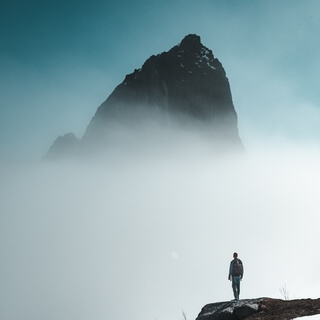
In this episode of the Project Mindfulness Podcast,
You will hear about Taoism,
Tai Chi,
And traveling to China.
Honest and open to all religions,
All traditions,
All ages,
And all levels of experience.
Radically accessible,
Pragmatic,
And eye-opening.
Simply for everyone.
Welcome to the Project Mindfulness Podcast.
We'll take you on a journey across the globe and talk with other meditators about their practice,
The lessons they have learned,
And what they want the world to know.
Good day and welcome.
This is episode 15 and I am Christian Nethersund.
Thank you for joining us.
Today,
I talk with George Thompson about his six months' travel to China.
In the Wudang Mountains,
He studied Taoism and Tai Chi with Master Gu.
We talk about his experiences in China,
His journey towards it,
And how it changed his life.
I'm sure his journey and his insights will motivate and inspire you in your practice.
George,
Welcome to the podcast.
It's great to have you here.
Pleasure.
Thanks for having me.
Awesome.
So,
George,
For the listeners who might not know you yet,
Even though I wonder if they haven't heard of you by now,
Tell us a bit about yourself.
Who are you and what do you do in life?
So,
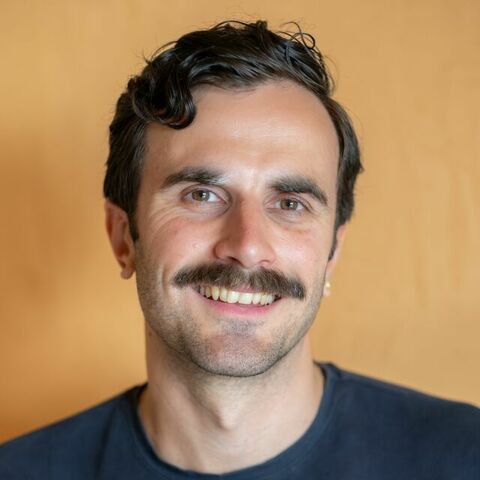
My name is George.
I am from Bristol in England.
And yeah,
It's hard to define myself.
I guess I am a YouTuber.
I guess that's still a part-time hobby of mine,
But certainly something that's growing.
And what I have,
What I focus on is Tai Chi and Taoism,
Mainly,
But ideas that can help us live easier.
So I just,
I'm struck by the variety of ways that human beings do the dance of life,
Cultures,
Philosophies,
Practices.
And the YouTube channel tracks my journey and trying to learn more about myself and how to function in the world.
And I come across these practices,
These inspiring people,
Inspiring ideas,
And I share what difference these ideas make to me.
So,
Most people know me from China.
So I last year went out to China to try and find peace in my mind after getting confused about what to do with my life.
As I imagine,
Quite a lot of people have a similar kind of experience when you reach a turning point in your life.
And the kind of decision paralysis is quite hard to deal with.
So I was like,
Right,
I'm going to go out to China,
Try and understand what's going on in my head,
Because I just found it quite tough to just be alone with my thoughts.
And yeah,
That unlocked an incredible journey into the heart of the mountains and right in the middle of China,
Where I discovered Tai Chi and Taoism.
And yeah,
Since I've been sharing these ideas that kind of changed the way that I treat myself.
Right.
Because that's where I know you from.
I know you from these videos where we as a viewer get to learn a little bit more about Chinese culture and about Taoism.
And you've been there for six months,
If I'm correct,
Around six months,
And you've been even formally accepted as a disciple of Master Gu.
And when you went to China,
Is that the first time you learned about meditation?
Or did you already explore a little bit about that when you were back in England?
So I've done Headspace.
I imagine your audience will know about Headspace.
I did it a little bit,
But I've always kind of been open to these ideas.
I have quite a scientific mindset,
But also just a dumbfounded appreciation of how incredible the world is.
And so I'm quite open to these ideas that kind of help me learn more about it,
Which isn't just in a totally rational,
Clinical sense and kind of appreciating the mystery of the world.
And so mindfulness and meditation is something that I did know about,
But I never properly put time into it.
I kind of always took it as a second,
Something nice to do,
Not something that I necessarily should put much time into it.
So certainly when I came to China,
It was when you're sitting down on a rock for an hour or two hours with your thoughts,
After kind of struggling with your thoughts previously,
It was definitely a shock to the system.
I can imagine.
And you did that every day for six months,
Is that correct?
Not quite that much.
So the practice that we did,
You'd wake up and you'd go for mindfulness walking.
And so that is either trying to fully be present in the world around you.
So appreciating all the trees,
The birds that are just waking up like you are and being present in the world.
Or it is concentrated mindfulness walking that is often focusing on your feet and kind of getting into the breathing rhythm and being quite concentrated in your focus.
So we would do that for 25 minutes to 35 minutes.
And then we'd do Tai Chi,
Which of course is a moving style of meditation.
It's all about synchronizing your breath with your movement and having that kind of chi flow.
It's all about that kind of presence into your body and into the earth.
And then in the afternoon,
After lunch,
We'd do another session of 30 to 40 minutes.
And then before bed as well,
You'd do.
.
.
You'd repeat a mantra and then fall asleep within five minutes.
And sometimes I'd have to share a room with Master Gu,
You know,
If there's lots of students at the school.
And just immediately I can hear him breathing deeply as I'm there for about 40 minutes before going to bed.
But yeah,
That's another form of meditation that we did.
Right.
And so you took that home with you.
Is that something you still do every day or did you pick up another practice while at home?
Yeah,
It's a good question.
So I do consulting now.
So it's kind of a very different lifestyle.
So it's I'm currently doing social work down in the southwest of Britain and kind of bringing together loads of different organizations that traditionally haven't worked together.
So very complex and very far away from my life in China.
But I try and capture that.
You know,
The point of me going to China wasn't to kind of escape the complexities of relationships and the modern lives that we necessarily live in.
But it's to try and find that tranquility within.
So despite the stresses of everyday life.
So each morning I wake up,
I do standing meditation and Tai Chi.
And then that just sets me up perfectly.
And it's a great reminder that actually,
You know,
The stresses of the day and the day is stressful.
Sometimes I can choose to feel that stress or I can just kind of accept it.
And doing that morning mindfulness practice is a really good way to just reset and remember to remember that you're OK.
Right.
And it keeps you centered,
I imagine.
Or it keeps the Chi flowing,
So to say.
Yeah,
It's essential.
Nice.
Yeah.
So you talked a little bit also about your schedule in the Wudang Mountains.
I imagine the first few weeks it was tough to get up earlier or at least to get up early and immediately get out there and start moving.
Because our bodies and minds are,
I don't know,
For me at least,
It feels very disconnected when we go to work,
We go to an office,
We sit down.
Our body is like a sort of vehicle that drives us somewhere,
But it's nothing more.
And you experience the sort of more of a unity,
Right,
Of the body and the mind and how they can cooperate to make you a happy human being and others happy.
Yeah.
Yeah.
Yeah.
So,
Yeah,
Kind of two thoughts come from that.
So yeah,
Definitely starting off the schedule was difficult.
I traditionally would never go to bed before 11.
30 and never get up before 7.
30.
So getting up at 5.
30 in the winter when it's freezing cold and still dark,
Minus 10,
There's no heating.
And so you're kind of like in bed with two covers on and you're just like so warm and snuggly and there's like no way in hell am I leaving this?
And then,
You know,
Mastagoo knocks on like George,
Come on.
And like,
No.
But over time,
You kind of when you go out and eventually you wake up and you wake up when the birds wake up.
And there's something really special about that early time in the morning when things are quiet.
And even today,
You know,
I now wake up at 5.
30.
I still today just because that's such a special time of day.
The second part with a connection of the mind and the body,
Tai Chi very much illustrates this.
And it's this amazing feeling that when you first start Tai Chi,
It's quite a conscious process.
You have to use your brain to position your hands in the right places and can feel force.
It's like learning any skill.
It takes some sort of like concentration.
But after a while,
This amazing thing happens.
You concentrate on your breath.
And then you're just you're noticing that your hands are gliding past you.
And it's just like it doesn't feel like you're controlling that.
It's doing it by itself.
But it's not just kind of doing that one movement.
It's doing an eight minute long form that took you two months to learn.
And then suddenly and it often is like a clicked moment and you just notice your hands gliding past you.
And it's this incredible visual representation of just how powerful our body is.
And if you just let go of your mind,
Then it can be effortlessly effective without you having to constantly trying to force things.
Right.
Yeah,
That's amazing.
And you also learned a lot,
I imagine,
About Taoism from Ma Sigu and from your time in China.
So what is the Tao?
What does it represent for you in your life?
What is the Tao?
That is the question.
It's a tough question.
If anyone who's read into Taoism will know that's like,
You know,
That's the first question that you ask.
So the Tao literally translates as the way or the path.
But what it actually is trying to refer to is the underlying order of the universe.
It's everything in the universe,
But also the mechanism by which things are produced in the universe.
So an understanding of the Tao is an understanding of the way and it's an understanding of how we work as human beings,
How nature works,
How the world works.
So an understanding of the Tao is a mastery of the world.
But the issue is,
Is that the Tao is indefinable because and Alan Watts has some great examples of the Hindus talk about this,
Where you ask God one day,
You finally get to chat to God like,
God,
How did you make the mountains?
The mountains are so big and incredible.
Like,
What?
Tell me what was the process?
I'm so fascinated.
And God was like,
Well,
I don't know.
I just did it.
And it wasn't a conscious process.
You know,
If God did exist,
He made the world without having to do the finite calculations of plate tectonics and the way that chemistry works and bonds different atoms.
It just happened.
And so another example is why that we open and close our hands.
So we open and close our hands.
We know how to do it.
We physically can do it.
But can we explain in words how we do it?
So both these examples illustrate the existence of knowledge that exists on a non intellectual and non rational plane.
And it and the Tao is everything.
And so therefore,
The Tao is kind of the science that we know about the world.
It's this amazing understanding of the world that we have through physics.
But it's also everything beyond that.
So we can never fully understand the Tao with our intellect.
But the Tao,
Therefore,
Is like an appreciation or learning of the Tao,
A following of the Tao is to recognize the mystery of life.
It is to try and recognize that we are these complex beings that cannot be fully understood with the intellect alone.
And so therefore,
All the shit that we give ourselves,
I don't know if I'm allowed to swear with the audience.
Yeah,
Yeah,
Yeah,
Go ahead.
Sure.
All the kind of stories and pain that we give ourselves in our brain,
Habitually,
Often without even noticing it,
Is a consequence of trying to trying to find certainty in our lives.
Because uncertainty implies that there is the potential that our survival could be at risk.
And an appreciation of the Tao is an appreciation that we can't know everything,
We can't have everything sorted out and therefore sit with that uncertainty and to accept it.
And that is an incredibly powerful lesson that none of us can fully learn because we're hardwired to try and crave certainty.
But an exploration of the Tao can massively help you with the way that you treat yourself.
So it's a conscious effort to understand that not everything is a conscious effort.
It's like,
For me,
When diving into the Chan teachings and also Taoist teachings,
There's a lot of seeming paradoxical things.
Even though,
Well,
They seem paradoxical,
As I said,
They're not really contradicting themselves,
But they seem like it because it just doesn't work necessarily on the layer of logic,
Even though it is fairly logic,
If you know the principles behind it.
And you've been also to a Chan monastery or Zen monastery there.
I remember seeing a video of you going to one and I think you asked the master something there,
But I don't remember exactly why you asked.
What happened there exactly?
I'll go to that.
I just want to pick up on your last point because it is interesting.
A lot of these ideas seem paradoxical or nonsensical and operate in the world of things,
Objects and judgments.
Chapter two of the Tao Te Ching goes something along these lines.
Under heaven,
All know beauty as beauty only because there is ugliness,
All know good as good only because there is evil.
Being and non-being produce each other.
The high is defined by the low,
The short by the long.
For this reason,
The sage acts with apparent duality and paradoxical unity.
He acts without effort,
Teaches without words,
Nurtures without possessing,
Competes but not for results,
Because he does not contend he is beyond reproach.
So it's beautiful.
The sage acts with apparent duality and paradoxical unity.
So that is exactly illustrating what you just said.
It seems paradoxical because we habitually live in the world of judgments and things,
But actually,
And the yin yang describes this.
You have the yin and yang judgments of good and bad,
But actually the unity is the circle.
The Tao contains these judgments and is beyond that.
So that's why actually these ideas can be logical and you can be a Taoist and be hyper rational and be a physicist,
But then still appreciate that mystery beyond the realm of science.
So Chan monastery.
So Taoism,
I didn't actually really know anything about Taoism before going to China.
I was like,
Right,
Buddhism is much more popular.
Therefore,
Taoism,
I don't know,
Didn't really read much about it,
But because it's so much smaller,
It can't be as good.
And then I was like,
I'll check out the Wudei mountains and then happened to fall in love with Taoism,
Which really resonated with me as a philosophy.
But my original intention was to try and learn about Chan or Zen Buddhism.
And I heard on the grapevine that there's a Kung Fu monastery in the south of China that takes foreign students.
And I went and visited there.
And really all I asked,
I'll paint the scene for you.
So it's this incredible collection of temples that are kind of nestled in a mountain,
Kind of,
Yeah,
Up five kilometers up this mountain overlooking this massive valley with a lake down below and kind of civilized in the background.
Kind of civilization and Chinese agriculture,
But hidden away is this little temple.
And you kind of walk into the temple and there's two demons bearing down on you with knives and protecting the temple from from gods,
Well,
Protecting them from demons,
I guess,
I don't know what they are then they are protectors of the temple and you run through.
And they're waiting for you.
Genuinely like out of the film is the master meditating underneath this beautiful tree in the courtyard of the temple.
And it's just mind blowing.
So it's this incredible opportunity to live,
Eat,
Train with these Kung Fu monks.
And now I was running the YouTube channel.
And,
You know,
There's always always this contradiction in me between trying to learn these things and go on my own spiritual journey.
But then also,
These are such amazing ideas that I'm like,
Why,
Like,
That was and why am I not taught taught this at school?
Why do I have to go to China to find out these things?
So given the impact has had on my life,
And I feel some obligation and great joy and sharing these things.
So it's like,
Hey,
Master,
Can I film you and we explore some of these Buddhist ideas together.
Now,
Unfortunately,
He is and Zen Buddhism in general,
They're very secretive,
But also,
They believe that destiny needs to take you physically to that place for you to be ready to hear these ideas.
Yeah.
And I believe that I kind of question whether mindfulness teachings,
They make massive difference in schools,
But often I feel there has to be a pull towards these ideas rather than a push,
You know,
Like there needs to be something inside you that wants to seek out these ideas.
And the Buddhists Zen Buddhists believe that kind of in a more extreme form that you physically have to go to the temple to actually learn any of these ideas.
I think that's too far.
I think that's elitist.
Because actually,
You know,
If you don't have enough time,
Or if you don't have enough money to go to China,
Then,
You know,
These ideas could help you,
But you can't physically go there.
Yeah.
So that was the answer.
I failed in that quest.
And yeah,
I got rejected.
You couldn't slip a coin in there or get something more from him.
Like a mysterious saying or anything.
Yeah,
I tried.
Yeah,
A few times,
But no luck,
Unfortunately.
Wow.
So talking about your journey in China and the culture there.
What was the biggest culture shock you experienced?
Like what what took you a long time to get adjusted to that was really normal there.
I imagine there are a few things.
Hmm.
Yeah.
Besides the language.
Yeah,
The language is an interesting one.
It's a beautiful language.
The characters are fascinating.
To be honest,
It wasn't that bad.
There are lots of little things that,
You know,
Are different.
The kind of the traditions of manners and being polite,
Queuing,
Not spitting on the ground,
Not shoveling food into your face.
There's kind of stuff like that that is kind of semi normal in China.
I mean,
It's changing with the younger generation.
Great example that there's a Inner Mongolian Chinese man came to Master Gu's place and we're sitting having dinner.
He lights up a cigarette and then just flicks it on the ground when he was done with it.
And surely you must have some conception of who was literally me,
Him and Master Gu.
There's just three of us.
And he flicks it on the ground.
Who do you think is going to clear up the cigarette?
And of course,
I just like I didn't say anything.
I just did it myself later in the night when he'd gone.
But it's just like,
You know,
It's little things like that.
It's just like the Western brain.
I guess we're all very polite to each other.
And we've been socialized and conditioned to be polite.
But it's little things like that that manifest themselves.
Yeah.
But overall,
I mean,
Maybe it'd be a different story 30 years ago.
China is vastly increasing its wealth,
You know,
Averages of 8 percent growth for decades,
Taking millions of people out of poverty.
You've got high rise buildings,
You've got Shenzhen,
You've got Guangzhou,
You've got Chengdu,
Which have these Shanghai,
These ridiculous skyscrapers and massive wealth billionaires.
There's more Teslas in Shanghai than there are in London.
And that feeds down into the kind of the town below the Wudang Mountains as well.
So that is a rural town.
It's much poorer.
But nonetheless,
There's roads,
There's buses,
There's restaurants and there's a lot of the amenities that we would find in the West.
So it's not as much of a culture shock as people imagine.
The people in China are very generous and very warm hearted and welcoming.
Wow.
Well,
That's that's cool.
I mean,
It's sort of cool.
It's also I don't know if it's sad,
But it has something like these faraway places where there's a little bit of an ancient culture still living there.
And but you got in the good part,
Right?
The Wudang Mountains is basically still very secluded,
Still very much in nature and.
Yeah,
Yeah,
Yeah,
It's this incredible collection of temples,
Monasteries,
Kung fu schools,
Tai Chi schools,
All in this kind of enclosed,
Expansive park right on top of a mountain with absolutely clean air.
And,
You know,
You go for a walk and there's a monk just like standing on one leg chanting.
And that's just like I'm just like off on a walk just chatting to myself.
And there's just like a monk just there.
I'm like,
Ni Hao,
Samme Yang.
How are you doing?
I mean,
If he's chanting,
I probably would do that.
But,
You know,
You see that regularly.
Yeah.
So,
Yeah,
You make a good point.
And the Wudang Mountains has this incredible culture,
An ancient culture that's absolutely still alive and draws people in kind of a genuine sense.
And that is juxtaposed to the capitalist commercial instincts of the Chinese government that is all about expansion.
And,
You know,
It's brought millions of people out of subsistence farming.
And,
You know,
That that is a very tough way of life.
You know,
There's a flood in the Yellow River and it kills millions of people.
And it was a regular event caused by the ancestors being unhappy.
That's how the Chinese used to think about it.
And today,
You know,
They have social protection so that,
You know,
If that does happen,
Then people's lives aren't ruined.
Although,
You know,
They may be ruined in other ways.
Yeah.
Yeah.
It's it's difficult.
It's definitely important that these cultures are kept alive.
There's definitely motivation to do so.
Yeah,
Because that's that's something that comes up for me.
Like,
I personally practice Chan Buddhism and my teacher lives in Taiwan.
He speaks English.
So we actually like we are doing now.
We every Saturday we do a webinar and and I learn about Chan Buddhism.
And I've also looked in a lot of like the Taoist texts and what always it's still striking me as very bizarre is if you look at China now and the government now and you look at the teachings of the Taoism and it's just mind blowing.
It's was there like did you notice anything from Master Gu or other people in the monastery that that they were concerned about this or they felt like,
Oh,
It's clashing or was there really no like did you feel did did you feel the conflict that I'm feeling this this it's almost a duality,
Right?
Communism,
How it is now in China and Taoism.
It's yeah.
Yeah,
Absolutely.
You know,
There's the factory factory owner will happily pollute the river so long as he makes enough money and the government official will happily take the bribe and everyone downstream will have dirty water.
And that is just,
You know,
One example of thousands of the way that nature.
It used to be seen as part of us,
You know,
This this unity of man and nature just different manifestations of the energy of the world.
So there was a profound respect for nature,
Whereas kind of the communist modern government sees it as just a resource something to be extracted and not something to be nurtured or looked after.
There's no sense of stewardship.
It's a profound change like a qualitative change.
And yeah,
And it happens in relatively short amount of time and recommend a book to anyone who's interested on China by Henry Kissinger,
And it goes into some of the philosophy of the politics of how China was and the kind of different manifestations of philosophy today,
As well as tracking all the kind of political events.
And,
Yeah,
It's an interesting question of China was as old as history itself China existed before written records.
So,
In our history,
It was the balance of powers different warring states you have France versus Britain,
France versus Germany,
Whatever.
There was no kind of domination or assumption that that Britain was everything you know the French King thought that he was divinely appointed as all the kings did,
But it was very,
Very much more powerful in China where China was older than history itself.
So China had always existed,
And there was no competing states there was just China,
They call themselves Tianxia,
All under heaven.
And then there were the tributary states which is Japan,
Vietnam,
And then there were the barbarians which included Britain,
We were known as the West Sea barbarians,
Which given the record of our ancestors is probably accurate description.
So,
The philosophy also represents this so the yin yang shows the kind of constant interplay between good and bad times order and chaos.
And when an emperor was was abdicated and there was war,
The people of China,
Supposedly,
Were kind of nonchalant they knew that a new order would be resumed,
It would just take a matter of time.
So there was chaos but of course the good times have come again,
But the consistent thing throughout all of that is China itself.
Right.
And the interesting thing is that,
And it's kind of playing out in the world stage or like the way that the Chinese government thinks about itself is that the communist government and the Chinese people see the success of China returning to the world,
Dominant stage position is just that reincarnation of that battle between chaos and order.
So,
You know,
The early 1900s,
We China just delved into chaos and now it's coming back the other side.
But then the interesting question is that is the China today.
What China was then like is it,
Is it that old system resurfacing or can you even say that the communist government today is what the glory of the Imperial Chinese were.
Yeah.
Yeah,
Exactly.
And it's also the.
I find it fascinating that there is still a space for these monasteries and this culture to exist I imagine that.
I mean it's,
It's hard to imagine they respect the culture but it's still.
It's a peaceful place in the middle of nature and I just fascinating but as you said,
It's,
Yeah.
Yeah,
Just on that I mean the Chinese government did their very best to eradicate that culture you know the reason that your master is in Taiwan,
Most likely is because his father or himself fled there in the Cultural Revolution and thousands of years of history were very almost extinguished in a period of five years is unbelievable.
You know so like the Shaolin temple that had 2000 monks practicing today they have 14 now it's just a tourist trap,
Even the temple that the Zen Buddhist temple that I visited shut down turned into a housing place for it was an insane asylum and thousands of books burned and in the in the Rue de mountains temples were burnt,
And a lot of the Taoist practices were destroyed as well.
So there's someone who a French guy who was living close to master goose place who lived there as a hermit he'd been living there for six years,
Studying and trying to translate these Taoist arts about like breathing and kind of the the master applications of a lot of these Taoist ideas to try and save them.
Right.
His story is fascinating,
Because he came to the Rue de mountains 10 years ago and kind of was shocked that actually a lot of the Taoist practices that he had heard about weren't actually being practiced there.
And he went to Shanghai,
Where he heard that there were just two elders who were about to go into retirement or die,
Who still have these secrets.
So he trained under those elders in Shanghai,
For four years,
Before then trying to come back and restart some of these ideas being practiced in the Rue de mountains.
And,
You know,
This is the year 2000.
These ideas have,
They,
You know,
They were,
They were alive and being practiced and mastered for 1000s of years.
And in the period of five years,
And the subsequent kind of suppression of this culture means that a French person from France has to come in to try and revive these ideas.
That's kind of just how destructive that time was.
And that policy was for these ancient cultures.
That's mind blowing.
I didn't know that.
I'm learning a lot this episode.
It's really cool.
Awesome.
Yeah.
So you in one of your videos,
You talk about the underminer as sort of idea of these thoughts that well literally undermine whatever plan you have,
Whatever thing you want to do.
And that was something that was really strong when,
When you finished your university.
And I imagine actually that is a time for many people where you you finish this sort of,
I don't know what it is all these education and schools and you grow like grow up from,
From very young age till,
I don't know,
21 22 depending on your education and and then the world is wide open.
And it's,
It's,
It's exciting and it's,
And it's scary.
And I,
I,
I wonder now that you've,
You've been to China is that was a part of your education.
That's my first one.
And I'm pretty sure you will answer yes to that.
But still,
I feel that does the underminer still play a big part in what you do right now.
And what is the difference from the George before going on a trip and the George now?
Yeah.
Yeah.
So the underminer is the voice in our head that brings us down.
It's the voice in our head that gives us pain.
And it's for me,
It was just another kind of more accurate description.
What I felt like that power was of the pain body that Eckhart told,
Can't ever pronounce his name.
Yeah,
It's totally perennially get that wrong.
Yeah.
So he talks about the pain body.
It's part of us.
And I believe it's like I was saying earlier,
The part of our consciousness that is trying.
Now our brain is like a radar and a ship.
It's constantly analyzing the world,
Identifying problems and then coming up with solutions.
But if you only identify with that part of the world,
Then you're perennially going to be anxious and,
And worried because the world is so complicated that you can't have everything sorted out.
So there's always going to be these potential problems.
You know,
Like you have a conversation with a partner,
A business partner,
And there's just inherent uncertainty about that interaction because you can't see what or understand what they're thinking.
That's something that we can't perceive.
And,
You know,
That's why people get social anxiety.
It's just like people don't know what others are thinking about them.
And so then shut down in order to try and protect themselves.
The under minor is this powerful force that is in all of our lives.
It's the part of us that kind of dismisses of our capabilities and unforgiving of our mistakes.
And before coming out to China,
You know,
I put a lot of pressure on myself to be this successful person.
And yeah,
A lot of pressure on myself.
And when you're in the kind of structure of education,
That's okay,
Because it's like you know what to focus on.
It's just like,
Yeah,
I work hard,
Get these exams done.
And but the problem with education and the way that our society is set up is that you get out the other side and society is like,
There you go.
There's 15 years of education.
Enjoy.
You're left on the other side and actually everything that you learn,
You don't know how to apply that into the working world.
There's not a job in,
You know,
Like,
I don't know,
Politics beyond being a politics professor,
You know,
This is like university often just supports future academics.
And so it's difficult.
You get out on the other side and you don't really know what to do.
And so then for the first time when you don't have this structure to support you,
You don't know where to focus your energies.
And then that's when the undermine and starts playing up.
It's like,
Well,
You're obviously not good enough.
Like you're obviously a piece of shit for not like being able to do this.
Come on,
Like you need to be better.
You need to be better.
And so I would just kind of be like sitting in this energy of just like,
I didn't know what to do and just kind of really giving myself a hard time.
And so that was the motivation for going out to China today.
You know,
Absolutely.
You know,
Still have thoughts where I am harsh to myself.
And and often,
You know,
It's the thing that you think in a cycle and then you notice that pattern and then you've got to just remember to breathe.
And so the big thing and it's kind of three stages that I try and interact with my undermine it,
Which is to one breathe breathing just brings you back into the real world.
It's just a chance just to break that intensity of your thought pattern.
And sure,
You can go back into that.
But often it's just creating that space just gives you that understanding that,
Hey,
I actually am in control,
Even if I tell myself that I'm not,
I can choose to follow these thoughts.
Yeah.
The second part is is to.
Challenge these thoughts in the sense that are they accurate?
So this is where Dows and really helps.
So it's just like,
Am I really supposed to know what I'm doing right now?
I mean,
I don't even know how I open and close my hands.
How the hell am I going to know what to do in life?
And yet we put ourselves under this ridiculous pressure,
This unattainable goals.
Because we think that we should have everything sorted out.
And so Dows and talks about many ideas about like judging yourself,
Judging others,
Dealing with uncertainty and appreciating that we are these beautiful,
Incredible miracles,
Thinking,
Breathing,
Living,
Vibrant beings.
And you see animals in the wild,
You see your dog sitting with your cat that you just picked up.
You look at this cat,
It's like this is an incredible thing.
And just like what a beautiful,
Vibrant expression of the energy of the world.
And yet when we look at ourselves in the mirror and everything,
Oh,
You know,
I'm getting fatter or why am I not more handsome?
Come on,
Why don't you work harder or whatever pain that we give ourselves?
And the Taoist was just like,
Look,
OK,
Yes,
We our brain is hardwired to do that in certain regards.
But beautiful thing about being human and conscious is that we have the power to choose our response to challenge these thoughts.
We are these incredible beings.
So just recognize that.
So when the negative thought pops up,
Breathe,
Give yourself a bit of space and then question,
Is this thought accurate?
And then the third part is the key part,
Which is that you're not going to ever get rid of the underminer.
It's part of the way that we're built.
And that's OK.
It's not about fighting this energy.
It's about accepting it.
It's OK to actually.
Well,
OK,
So yeah,
Except these these thoughts,
I was going to say something else,
But yeah,
Except these thoughts.
And if you're constantly trying to fight this energy,
Then it's just going to wear you out and you're just going to feel exhausted.
You've got to be able to love yourself for the parts that you don't like as well.
And that's right.
That's the that's the unity beyond the yin yang.
It's like the judgments that you call these things that you don't like about yourself is bad.
But that are only bad because you call them bad.
If you actually love yourself for these things that you don't like,
Then suddenly these aren't things that you don't like.
They are just things,
Their expressions of who you are as a person.
Yeah,
It makes a lot of sense.
I think what I also connect with is,
As you said,
Accepting,
But also.
I don't know a proper word for it,
Maybe transmuting.
It's that sometimes you have this energy or you have this.
I don't know what it is.
It could be anger.
It could be anxiety.
And more and more,
I discovered that even these these upwards of emotions or these these energy,
They can be used in a beneficial way.
We just I also feel that,
You know,
When we just don't learn how to change or or or use things for our benefit sometimes and just make it more and more destructive until,
As you say,
This underminer.
For some people,
It even becomes like a real person.
Like it's just a voice in their head,
As Eckhart Tolle also talks about.
And I think,
As you said,
It's like learning to to detach from that.
But I also find that it's also the accepting,
As you said,
You know,
It's also the realizing like,
Yeah,
But OK,
I get angry at myself.
But what is the reason?
And how can I also,
You know,
Make sure that I don't get angry at myself?
And it's almost like you're you're in a relationship literally with yourself and you're you're trying to make the best of of what it is.
So,
You know,
It's it's definitely not this fighting.
It's not like stopping what if you want to call it the pain body,
The ego.
It's learning to give it a place because it has a place,
But not as big as some people like to believe and as we learn to to to make it like some sort of huge.
I don't know.
Some people some people are so dominated by,
You know,
They they're grumpy the whole day.
And man,
I just feel I just feel bad for them.
I feel like,
Hey,
Man,
It doesn't have to be like that.
It's OK.
Yeah,
Transmuting.
That's yeah,
Absolutely the right word.
You know,
There's a there's a good Chinese story that I don't know well enough to do it justice,
But basically goes along the lines of some Chinese shopkeeper.
He has a conflict with one of his customers or someone in the village and he kind of storms out of the shop and then runs home and then runs around his garden three times.
And he did this for his whole life.
And,
You know,
The people around him like this,
This guy's crazy.
Like,
What is he doing?
It's just like every time you get into an argument,
You just run out and just run around the garden three times.
And over the years,
It turned out that he was an incredibly successful shopkeeper.
And soon enough,
The garden got bigger and bigger.
And soon enough,
He had children and grandchildren.
And he was running around again one day and his grandson was just like,
Grandpa,
Why do you run around so much?
And the grandpa and the grandpa replies,
Well,
This is actually the secret of my success.
You see,
Every time I get angry rather than allowing this destructive energy to cause destruction,
I change it.
I transmute it into something more useful.
So when I get angry,
I channel this energy into determination.
I focus on I run around the garden and I determine to myself that I don't need to be angry.
There's some line that is very beautiful.
But,
You know,
It's like changing this this energy into something that you use,
Something that's constructive.
And I'll revise that one next time.
I'll give you examples of Tai Chi,
For example.
So Tai Chi and a lot of like,
Yeah,
Like pushing hands in Tai Chi,
A lot of these martial applications.
The way that you overcome an opponent isn't by brute force about being like big Mike Tyson star.
It's about using their their energy to overcome them.
So pushing hands is this very fascinating interplay between two players.
So this is the opponent.
This is me.
And we're kind of going around in a circle.
And the idea is that to them,
It feels like there's nothing when they're pushing on your hand and then you push back on them with with enough force so that if they give too much this way,
Then you can pull them to the side using their own kind of force of moving forward to try and follow you that you then topple them.
And so,
Again,
That is transmuting a form of energy and attack that could damage you into actually becoming the downfall of that person.
And it's interesting,
Again,
Of our anxiety,
The trouble that we give ourselves.
We are always striving to to try and get rid of it.
But actually,
It's teaching us a lot about life.
You know,
It's just it's if if we were constantly happy,
We wouldn't know we were happy.
It's just like,
Yeah,
It's the fight between light and darkness in Christianity.
If we ever actually extinguished the darkness,
We'd never know that we were in the light.
And actually,
These darker times that we have that are a consequence of our life complex occasions that happen to us and we have no choice about them.
You know,
Life gets tough.
That's just the reality of living.
And we can feel sorry for ourselves and feel down about how tough life is.
Or we can just see this as like,
Yeah,
Things are crap right now.
But what can I learn from this?
And you take that energy and you become stronger from it.
Awesome.
Yeah.
Amazing.
That that was such a big lesson for me to learn in my life.
And that's some like very central to Taoism for me in the yin yang.
It's like this just understanding that it's all just part of this whole and I shouldn't treat it as separate things.
In any case,
I'm actually wondering what book is besides your bed?
What are you reading right now?
What am I reading right now?
Not reading anything Taoist at the moment.
No,
It's all good.
What's something interesting I've read recently?
I've been reading lots of interesting stuff.
Well,
Book recommendations.
Let's just go with that.
So there's what I've actually been talking to him,
Which I feel incredibly blessed about,
Which is Derek Lin.
Do you know Derek Lin?
No,
No,
I don't.
He's like one of the foremost Taoist translators,
Contemporary Taoist translators.
And,
You know,
Prolific.
He's got one of the best selling Taoist translations.
And he also wrote this book called The Tao of Success,
Which that story that I butchered is one of those stories.
And so the premise of the book is often the ideas of Wu Wei,
Which we can get on to,
But of Taoism in general,
Of kind of being a bit easy on yourself,
Being kind to yourself,
Can often be seen as an excuse for inaction,
For not doing anything,
For kind of escaping from life and,
Yeah,
Kind of not putting effort into things.
But this book is kind of saying,
Actually,
That isn't the case.
If you take Master Gu,
A Tai Chi master or a Kung Fu master,
It takes decades of dedication,
Determination,
Discipline to become a master in these things.
And yet they're Taoists as well.
So being a Taoist isn't about not doing things.
It's about doing them in a way that is in keeping with the Tao.
It's holding the paradox of trying and not trying.
It's about effort and not effort.
So,
You know,
You can put effort into things that you love because why not?
We're alive.
Let's see what we can do.
But it's not going too far the other side of suddenly stressing yourself out about not achieving a certain outcome or being attached to goals or stressing yourself out in the process.
It's about doing without those negative effects.
And there's all these beautiful stories from ancient China that have different lessons for us of how we can act and hold ourselves to be effective.
But in a way that's keeping with the Tao.
That's a good recommendation.
I might start reading that,
Actually.
Yeah.
You can just take it story by story and that's fun if you can try and remember them to the good campfire things to share.
Yeah,
Exactly.
Yeah,
I love that about these stories in general.
They're really funny at times,
Too.
Like the Zhuangzi,
If I pronounced it right.
There's such funny stories in there and it's written with such good humor.
Yeah,
So the Taoist understood intuitively that we are.
We don't remember facts and figures.
You watch the news.
You remember the story.
But do you remember the facts and figures?
Rarely.
We are emotional creatures.
And the Taoists,
The way that they taught this profound life changing wisdom is through humorous stories,
Paradoxical poetry,
These kind of mind bending,
Challenging ideas that stick.
And they weren't so caught up in their own magnificence that they couldn't have a bit of fun,
A bit of self deprecating humor.
And the funny thing is,
Is that by being self deprecating and having humor in their stories,
In terms of psychology actually sticks in our brains more effectively.
And they understood that intuitively.
Yeah,
Amazing.
There's so much to learn.
George,
I want to ask you one last question.
And that is going to be what would you give as an advice to our listeners?
What is something you took from this whole journey that you feel is essential?
Just anything you'd like to share really on anyone on the path of mindfulness and meditation,
Trying to.
Yeah,
Trying to,
Well,
Get everything in place in peace and rest a little bit.
Yeah.
Yeah.
Well,
You know,
You're never going to find absolute peace,
You know,
So long as you're searching for peace,
You by definition are not at peace.
So give up that journey.
Try and learn about yourself and the world because it's fun.
You know,
The more you learn,
The more you see,
The more that you perceive.
The main thing that I would say is we are stuck with ourselves,
Whether or not we like it for our whole lives.
So you can choose to hate yourself and not love things about yourself and not accept things about yourself.
Or you can just accept these things,
Warts and all.
And,
You know,
It's easy to say that often we just need reminding that we are these beautiful miracles.
Just like so when you look in the mirror,
This is what I like to do is try and see a yin gang in your eye or try and just pull out this incredible jewel that we all have,
This amazing piece of jewelry.
And yet we habitually look at the mirror and look for our flaws.
And so if you're struggling with loving yourself and appreciating yourself,
Just do that.
Look in the mirror and doesn't matter how fat,
Thin,
Ugly,
Beautiful you are,
Everyone,
Every single one of us has this incredible complex thing in our eyes,
Our eyes themselves that anyone can appreciate.
So love yourself a bit more.
Give yourself a break.
You know,
You're only you're making life hard.
Life is complicated already.
Right.
Yeah,
Makes a lot of sense.
Well,
Thank you for that advice and and really for the whole talk.
But it has been very interesting.
I've learned a lot and I'm just very happy you you came on a podcast.
Thank you.
It's a pleasure.
And yeah,
It's great to hear about what you're doing.
And I hope that this community continues to grow and support each other.
So thanks for having me.
Yeah,
Thanks man.
Make sure to follow the journey of George on YouTube if you feel inspired by his story.
The link will be in the description.
Don't forget to subscribe to this podcast if you enjoyed this talk.
And thank you for listening.
Have a great day.