So,
I've been talking this last week and then also this coming week on this article that you can find on our website or you get it if you're on the weekly email list.
And it's by Joko Back,
Charlotte Joko Back.
She's one of our,
Was one of our senior Western Dharma teachers.
She is in the Zen tradition.
She died a couple years ago,
Maybe five years now ago.
A really powerful teacher and she has a chapter in one of her books called The Icy Couch,
One of my favorite chapters in one of my favorite Dharma books.
You might want to track it down.
I'm sure both of her books are still in print.
And you can read this article because we have it up on our website.
Look under Dharma blog under the resources or you can find it in the weekly email where they talk about this weekly practice group.
There's a link to the article there.
And the point that Joko Back is making in this short article,
It's just five pages or so,
Is that as I try to guide us in our meditation today,
You know,
When we settle into our experience,
You know,
We might use the ordinary sensations of the breath and the ordinary sensations of the body sitting like the buttocks on the chair or the cushion.
We start with something really simple and ordinary.
But to the degree that the mind body settles down,
Then we start to get a sense.
I'm sure many of you at least have tasted what Joko Back means by the icy couch.
Another teacher that Joko Back mentions in this article talks about it as a hard stone that's perfectly molded to our life.
That we learn with persistent dedicated practice,
We learn how to rest on that smooth perfectly molded stone or that icy couch or that yucky feeling that's at the core.
And the thing is,
You know,
We are conditioned to avoid that work,
That spiritual work at all costs,
Right?
What's our biggest neurotic defense system?
We're staying busy,
Thinking about this,
Worrying about that.
Even if we're thinking about Buddhist awareness practice,
Right,
We can spend months sitting.
You can go on the longest Buddhist meditation retreat you can find and you can spend most of your time spinning,
Thinking about Buddhist meditation practice and avoiding doing the one thing that the practice is all about,
Which is just feeling what we feel.
What's the feeling here when the mind isn't distracted by its thoughts about things?
And you don't have to make it your project to get rid of your thoughts about things because that's just another way of avoiding feeling what we feel,
Feeling what's here.
Dropping in,
Tuning in,
Opening up,
Relaxing with,
Trusting.
I mean,
We have probably 10,
000 ways of,
You know,
Teachers have talked about this basic spiritual move.
Like if there actually is a problem,
Spiritual problem,
Existential problem,
It can only be one place,
Right?
Here.
It couldn't be anywhere else.
Where else could it be,
Our spiritual problem?
But we practice as if I'll get to it later,
When I get my posture together or when I,
You know,
Learn to calm down or when I really understand what the Buddha was talking about,
Then I'll do the spiritual work that needs to be done.
But actually it's always here waiting for us.
And the doorway to doing that work that's waiting for us,
The doorway is always that willingness to feel.
And we use that term as a way of,
Kind of as a challenge to our tendency to go to our thoughts about what the problem is,
Or our thoughts about what the resolution to the problem of our life is.
Because our thinking about our problem,
Our existential problem,
Or our thinking about the resolution of our problems or our problem,
Is actually a defense system to keep us from doing the healing work that's available in this moment.
I came upon an article that Ayamendanandi wrote,
Chisabukuni,
A westerner and fully ordained Buddhist nun,
Not a lot of them in the west or the east,
But she's one of the better known western teachers and she is the abbess of a monastery north of Ottawa,
So in the real cold.
I don't know if you know where that is.
You have your Canadian geography still there.
I think we're losing our mental picture of how things are laid out because of our dependence on our computers.
But anyway,
So Ottawa is pretty far north in Ontario and she has her monastery north of that and she wrote an article,
The Dharma of Snow.
And one of the sisters that are with her sister,
Ahimsa,
Brother is a geophysicist.
And another one of the nuns at the monastery sort of wrote her brother,
This geophysicist,
About how much snow they had.
This is just a couple years ago.
And there in April still,
Just feet of snow down on the ground,
Thinking it was never going to go away,
Even though the temperature had been warming up.
And then all of a sudden,
In a matter of a couple days,
All this amazing quantity of snow just disappeared.
She was sort of shocked by that and mentioned this to her brother.
And being a geophysicist,
He had some kind of explanation about how melting is a non-linear process.
And it's really about,
So he went,
I'm not going to read what he wrote back to his sister who's the nun,
But really about these feedback systems,
Which we've been hearing a little bit more about lately in terms of global warming.
There's any number of tipping points like about Arctic and Antarctic ice or the ice mass on Greenland.
And is there a tipping point where the melting is going to happen really fast or the tundra and the peat underneath the tundra in the northern latitudes,
That when that thaws,
A lot of methane will be released.
And there's any number of other tipping points that I probably don't even know about,
But that people are beginning to talk about.
And it's not just in terms of natural wild systems,
But this wild system too.
We have our own tipping points both for good and for bad in the sense of becoming a wiser,
More released,
More kind,
More engaged human being or becoming a more neurotic,
Closed down,
Hateful,
Unskillful human being.
Because this is how natural systems operate.
There's a lot of ground work,
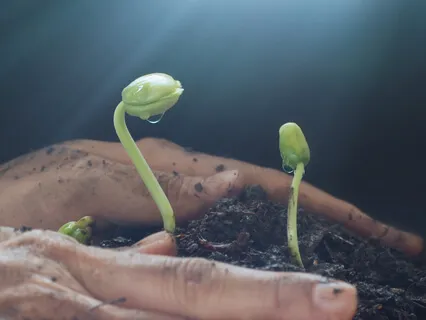
A lot of seeds that are getting planted,
Getting nurtured,
Getting watered.
When we're completely and clearly aware of the kind of gardening we've been doing for the last 10 years,
It's already too light.
I mean,
Not complete.
It's never too light in a sense,
But there's a lot of karma,
A lot of karmic fruit,
A lot of momentum that's already been set in motion.
Because we've been strategically or unconsciously unconscious,
You know,
Like sometimes that's a defense.
I just don't want to know.
I just don't want to know what I'm setting in motion.
Don't tell me about plastic bags.
Don't tell me about this or that.
We can kind of get that way.
There's all kinds of pushback,
Understandably so,
Where people might consider it politically,
Kind of toxic political correctness or something like that.
We don't want to be told about this or about that,
About what we're not seeing.
We just prefer to stay in the dark,
Stay unaware.
Just this,
So much of what we're doing in spiritual life is we're cultivating a taste for the icy couch.
We're cultivating a taste for awareness,
To feel what it feels like to be in our life,
To be in this world,
To be in the complexity and the complicity of being in our life,
Being in this world with a mind that's conditioned in this way.
And you see why we avoid it.
This is very unpleasant for most of us most of the time,
Not always,
But often.
It's unpleasant to be real.
And it's temporarily enough pleasant to be distracted,
To be in denial,
To be in our fantasies,
To be in our disconnected ways.
We don't notice how stressful it is to keep running from reality,
From things as they are.
And so we kind of keep going.
But then we're not aware of the seeds we're planting,
What's getting set in motion.
So using that image of the snow,
You know,
The two or three feet of snow there in late spring with the sun warming it up.
He says,
This geophysicist says,
That the snow can even for a while be warmer than freezing,
But still be there.
But at some point it just like collapses.
And then as it's collapsing,
The melting of course just exponentially increases the rate of melting.
And then as soon as any of the ground is exposed,
That amplifies,
Exponentially increases the melting.
So that's why it can go from being several feet to very little snow in a matter of a couple days.
And that's true with becoming more deluded,
And it's also true with the awakening process.
And it's just a matter of,
Instead of unconsciously planting and nourishing seeds,
Consciously planting and nourishing seeds.
So what kind of seeds are we wanting to plant and nourish?
Well,
Seeds of being intimate.
Because we have the advantage of having the Buddhas pointing out instructions.
He did his difficult work,
And others have done it since his time,
And probably folks did it before the time of the Buddha too.
But the Buddha not only did his work,
But he articulated what he did in his own heart and mind in a way that some 2600 years later,
That articulation and the many,
Many re-articulations by the women and men and other practitioners before us,
We have these pointing out instructions now.
And so in terms of like,
What are the wholesome seeds to be planting and nourishing so that this awakening,
This liberating,
Releasing process can happen in our hearts and then in our communities?
Well,
The analysis from the Buddha on down is,
Well,
The problem is human beings mistakenly get on this trajectory or this path of using denial and distraction and superficiality and the misperceptions that come from the denial and the distraction and the superficiality as a strategy for survival,
For psychic or psychological survival getting by.
And we see this,
Right?
I mean,
Is there anybody that hopefully each of us,
We can point out how we use denial and distraction and superficiality to get through the day,
To get through difficulty.
I mean,
Just think about our interests in sports or interests in movies or whatever,
Things that ultimately we know aren't going to change our life in any positive way,
Aren't going to be that meaningful ultimately,
Yet we can spend hours doing this,
Doing that,
Sleeping too much.
I've noticed this last January that it's like a new pastime.
It's like a side effect.
My mind can just,
In that semi-sleepy,
Trancey state,
Can just keep inventing dramas to keep me in trance.
And now I can squeeze in a couple more hours.
And then it's like there's all this press about how more sleep is good and prevents Alzheimer's.
But I'm pretty sure I'm just spinning my wheels and planting seeds of being disconnected.
That's the thing.
In terms of our awakening practice,
Indulging in sleep is not,
Meaning getting more sleep than your body and mind actually,
That's actually healthy for your body and mind,
Is just the same as watching movies and TV and reading things that we don't need to read.
We're kind of filling up the space.
And there's consequences.
Even if the stuff is somewhat neutral or not toxic in some way,
But the habit of avoiding the icy couch,
We don't want to strengthen that habit.
We want to strengthen the habit of being right in the middle,
Not afraid to feel what we're feeling.
So that's why we have this formal practice.
That's why we have places like Common Ground.
Because the place,
I mean people often say,
Well,
You know,
Common Ground,
Yeah,
I like it,
But nobody's laughs there or nobody talks and,
You know,
They're just quiet,
They look so serious.
Because partly the place exists as a symbol of this practice of like being real with what we're feeling.
So we need,
Like as a kindergarten for that practice,
We need a place where there aren't obvious distractions.
So that's why we're not laughing so much or,
You know,
Shooting the breeze,
Talking about the timber wolf or the,
I'm trying to remember the name of the women's basketball team.
Lynx,
Thanks,
Sorry.
Yeah,
So,
So we want to create a ritual.
We want to really honor,
We want friends that also honor this practice of feeling into our lives.
And if we're going to laugh,
It will be when we're talking to these friends about the icy couch,
About that smooth and hard rock,
Icy rock,
Hard place,
That entanglement,
Right,
That existential,
Uneasy,
Entangled,
Heavy,
Cold,
Flat,
Desert-like feeling,
Right?
I mean it could be any number of ways that inner feeling,
But the question is,
Do we trust it?
Do we somehow sense that being close to that,
Staying close to that,
Fearlessly staying close to that is the way?
And you know how easy it is,
It's like we touch into it and then it's like we want to talk about it,
We want to think about it.
We don't just want to rest in that non-dualistic way,
That non-cognitive way.
Oh yeah,
It feels like this.
But that,
The image that Ayamendanandi,
This well-known nun,
Teacher,
Buddhist teacher,
Says,
It's like that's the metaphor for our practice because a lot of times in our practice as we're doing really good work,
It might get more and more wild,
More and more difficult.
It may seem on the surface like we're going backwards,
That the amount of irritation,
The amount of,
Excuse me,
Delusion,
Negativity,
Tightness,
It might seem amplified,
But it may be that we're actually just getting really comfortable in that icy,
Hard place at the center of things.
We're learning to be real.
We're learning to see things as they actually are like.
This is the fruit of however many decades of being disconnected,
Complicit,
In denial,
Negative.
This is what that feels like.
And it's so easy to mistrust this work.
Because one of my early mentor's teachers way back in the middle of the 80s,
He was an interesting guy.
This is with Swami Satchidananda's organization.
He was a well-known Indian teacher,
Famous kind of guru,
Typee.
If you saw the film on Woodstock,
He was the yogi who gave the peace invocation at Woodstock way back in the 60s,
Kind of famous among celebrities.
Carol King was a big devotee of Swami Satchidananda,
And they still have a place called Yogaville in southern Virginia back in the 80s.
He used to spend some time there.
But anyway,
Jagannath,
This person,
This teacher of mine,
Was a really big guy,
Huge guy.
In this practice,
We did a lot of meditation,
Chanting,
And breathing practice,
And a lot of hatha yoga.
So it was sort of interesting having this really oversized person being one of the main teachers leaders.
It was like kind of made you step back.
But he was a wise,
Wonderful person.
And I remember once he said this,
And Ayamendanandi says something similar in her article,
The Dharma of Snow,
About as we're making the effort to be on the icy couch and just feel,
Connect,
Start over,
Not second guess what we're feeling,
It's like something is happening behind the scenes.
That's what that geophysicist was talking about.
Like our presence is like the seasonal change,
The more radiant sunshine,
The warmer temperatures,
Right?
And something's happening,
But we're unaware,
Right?
It still feels like a mess,
Feeling into that space.
It feels like death.
As Ayamendanandi and many people say,
It's exactly the feeling we don't want to feel.
That's actually a useful instruction.
Open to what you don't want to open to.
Relax with what you don't want to relax with.
Trust what doesn't feel trustworthy.
Be interested in what doesn't seem interesting.
It's really good advice.
Because we can't trust our habit energies.
Our habit energies are going to want to go to the surface,
To more thinking about it,
To our endless speculation about it.
But then we stop doing the work.
We're doing some other work.
The work of avoidance.
We're getting better at that stressful work of avoidance.
We're putting down more snow basically.
But when we're right there with it,
It's that soft radiance,
Right?
Something's happening behind the scenes.
I mean this is really the essence of my practice.
Like if someone asks me if they seem like they really want to know how I do my meditation practice,
I generally will deflect,
Deflect.
But if I get a sense that they have some sense of their own heart and they really want a sincere more nuanced answer to the question,
How are you practicing these days,
Mark?
I might say,
Well my theme for a long time is suffering and the end of suffering,
But it's not philosophical at all.
It's direct and immediate.
I'm actually interested in suffering and the releasing of that suffering in real time,
Moment to moment,
Not conceptually.
So it starts.
That's why there's such a strong emphasis on whole body awareness because that's such a powerful gateway,
That experience of embodiment to this more subtle,
Energetic place of the icy couch,
Holding and releasing,
Right?
And learning to be in this subtle place and learning to trust that this willingness to be intimate,
This willingness to relax and even to feel that I belong here,
Even though there's so much humility required because the experience isn't conceptual.
I can't grasp it with an idea.
It doesn't make sense cognitively.
So when I'm practicing,
Well I don't bother to try to explain the practice to myself.
I just learn to trust hanging out there,
Being aware there.
And when I'm really there,
Intimate,
Then I glimpse the freedom that's there,
The sort of releasing of the mass of snow.
Like we sense,
Maybe a better word is we intuit what's happening there.
That is mostly,
Mostly we're unaware of,
Unconscious of.
We taste the freedom that's already here.
Because there's a natural process that's already afoot,
Already in motion that we can sense.
But that really arises when the mind,
When the heart's willing to persist in the letting go,
Letting go into the feeling,
Into the being in the middle of it.
Not struggling,
Not being in a hurry,
Not being a clever Dharma practitioner with my Dharma moves.
It's really letting all of that stuff die.
And that's our practice.
Now it doesn't mean we don't need those clever Dharma practices to get to that.
Like she mentions in this article,
Like we might need to name the thoughts.
Oh yeah,
That's just that thought.
Oh yeah,
That's just thinking,
That's just planning,
That's just trying to be a clever Dharma practitioner.
Just to help settle into that initial experience of just feeling the body on the chair,
On the cushion.
Oh yeah.
And this is the beginning of that icy couch.
Can I get relaxed here?
Can I learn to trust this molded stone?
Oh yeah,
It does,
This feeling,
This inner feeling,
It does in a way feel perfectly formed,
Like I belong here.
And you know how I know I belong here?
Because every instinct is saying,
Run.
You know,
It's like that makes me really curious.
There's a lot of potency there,
Like this is like a new spiritual intuition where we're trusting places that aren't familiar.
And we're doing the opposite,
We don't trust,
We don't see value in places that are very familiar.
Because the only reason they could be very familiar is their own construction.
The conceptual thinking mind,
It's constructed that,
And so then of course it's familiar.
We feel like on the surface we feel cozy there,
But with some sensitivity we realize we feel cozy because we made it up.
Do you get this sometimes,
Like I was talking about earlier in our dreams,
Especially a little later in the morning if we're oversleeping,
Sleeping more than the body and the mind needs,
The dreams are a little forced and you can kind of sense them,
Taste them a little bit more.
And you kind of,
They're not as satisfying,
Right?
Because you know the mind is working overtime to keep the mind entranced,
Lost in the dream,
Right?
It doesn't really work as well.
Because the mind somehow realizes,
As interesting as the dream might be on the surface,
It's a little forced.
It's a little like,
I feel this way like with TV shows and movies sometimes,
Novels,
Like the artists,
The people behind the book or the show,
They're working too hard,
Trying too hard to make you like it or to pull on your heartstrings or to manipulate your emotions and it doesn't really work,
Right?
Even musicians,
You can kind of get that way,
Like it's not real enough,
They're not coming from a real place,
Coming from a forced place.
So hopefully you tracked down the article,
The Icy Couch.
Like I said,
It's not too long.
I think you might enjoy it and there's a lot more,
Even though it's only a few pages,
A lot more than I could bring up this morning.
But the children will probably be here in a couple minutes,
But we might have time for one person to share a little bit,
What thoughts have come up or questions have come up from my comments this morning.
Anything that someone would like to share with the group?
Yeah,
Julia,
You start us off.
Hi,
Julia.
I guess I want to make a comment about this because you talk sometimes about the drain pipe when you get down,
Something like this,
You get down the drain pipe and you can't go back up again with the practice or.
.
.
Like a porcupine down a drain pipe.
Yeah.
Can't go backwards.
Can't go backwards.
And that there should be a warning out in the lobby,
Like beware if you enter here,
There's no going back or something like that.
And I want to bring it up because it did happen to me in a really difficult way.
And I appreciate you talking about it this way as sowing the seeds and staying with the discomfort because it was a year after I started coming here and I had just finished the practice intensive in the summer.
And I won't go into the details of it,
But it was a quite difficult time.
And I was very sensitive.
And to me,
I felt very overly sensitive to everything and there was a lot of suffering and we talked and the way out that you advised me was to get creative with my practice because I was having a hard time sitting and yeah,
There was just a lot of discomfort,
Some depression.
It was a hard time.
And so I did get creative with the way I was practicing.
And the most helpful,
I think at that time in that creativeness was to go to a place of compassion,
To really practice with even talking out loud to myself,
You know,
As I was practicing and it kind of got me through that.
So I just,
And a little bit relates to what Shelley was talking about last week around what does this body need at this particular moment.
And often when I ask that question to myself,
It is compassion,
It's self-compassion.
So I just wanted to mention that because it's real.
Yeah,
Thanks Julia.
And that's the flavor of being with the icy couch.
There's no way to approach the icy couch without compassion.
Otherwise it will be,
You know,
Will come from this idea that I'm going to fix this and it will win.
Yeah,
Thanks Julia.