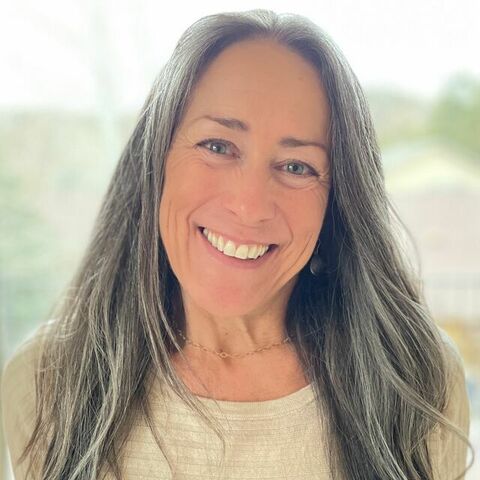
So today I would like to talk a little bit about loving kindness known as metta and more particularly its predecessor for me which is forgiveness.
You could say that metta practice is a way of opening the heart or unbinding the heart.
Mindfulness is often taught in a way where it's a personal and individual practice but metta practice or the practices are very much about our relationships with our family with our friends and society.
Kind of the understanding that we're all in this together.
When I first came to this practice this meditation practice I was a Zen student and most of my teachers didn't teach on loving kindness or equanimity or joy.
It was mostly mindfulness practice.
It was on a vipassana retreat when I first was introduced to the loving kindness practice and at first it was like what is this?
I mistrusted it.
I thought it was kind of an artificial thing.
How could you do a practice that generates or makes happen a particular feeling or attitude of kindness or love?
Those things just kind of happen spontaneously right?
So to manufacture them or call them forth seems just kind of artificial to me.
So in my early training when the teacher would guide us in loving kindness I would often tune the teacher out.
I'm not going to do that part.
I'm just going to continue with my mindfulness practice.
It just felt like mindfulness and the four noble truths were all I needed and I didn't want to say may I be anything.
I just wanted to see the truth.
In part like in my reflection back self-love felt like a doubtful love for me.
So the remarkable thing that happens over time was that the mindfulness practice it develops and matures and naturally what occurs is the heart starts to soften.
The natural goodness and the natural friendliness towards others begins to shine out on its own and as I've said metta is this sort of exploration of the heart and when we start to do practice sometimes we find that some belief or some conditioning is at play and the heart is protected.
It's closed.
So when we deepen our practice when we start to examine through mindfulness what's here we really get a chance to know our heart and to get to know it pretty well.
Where are the blocks and if what we see is the heart is not experiencing metta is not experiencing loving kindness.
If what we see is ill will or if what we see is some kind of attached love great we're learning what I learned about my heart after some time was that I had to forgive myself for the harm that I caused in my life.
I had to forgive the harm that was caused to me.
So the forgiveness practice was what was the predecessor to the metta practice for me and the first step in forgiving yourself or forgiving others is to let yourself feel the fullness of the pain that you're in like the fullness of the pain that's in you.
So at first you know the first stages of forgiveness it doesn't feel good and nobody likes to feel pain right.
It's really natural to distract ourselves from feeling pain.
It's really natural to try to avoid it and one of the ways we avoid pain like a smokescreen to pain is we focus on blaming.
So when you focus on blaming the situation or the blockage on something or someone you don't have to notice like the full force and the full weight of your suffering.
You're distracted by blame.
So forgiveness begins with allowing ourselves to drop blame and actually feel the pain of what has happened or what is happening and that's not easy to do.
So this is why sometimes meditation practice isn't so peaceful.
You know if you practice with opening to what's arising all the unfinished business of your heart eventually comes.
And so this is in a way meditation practice kind of brings us towards this sense of forgiveness.
It leads us to it.
And if we can begin to recognize what's happening we can begin to use our wisdom to stop the blame or the self beating ourselves up and we can start to bring healing by simply acknowledging what's there to forgive ourselves.
It seems to be the hardest form of forgiveness.
In Zen practice simply allowing yourself to be yourself just as you are is considered to be the mark of awakening.
And I really appreciate this understanding,
This view.
In a way it makes forgiveness a daily practice.
Allowing ourselves to be ourselves exactly as we are.
It's really intimate.
It's an intimate act and we can't really be close to others if we are turned against ourselves in any way.
Have you noticed that?
Sometimes what I've experienced is my mind feels so compressed and so contracted and because my mind has this nature towards aversion,
I know that metta is the antidote but it doesn't work.
So what my teachers have suggested during those times where I'm really contracted is to switch to compassion practice for myself or forgiveness practice.
And I feel like I can do that.
So as a practice suggestion,
You know,
Noticing,
Like notice when something arises that's not metta and keep going.
Keep going with it.
Knowing that's how it kind of works and then maybe shift to forgiveness practice or to mindfulness practice or compassion practice.
It's really hard for me to imagine life without forgiveness.
Without forgiveness it means we can't let go.
And I feel like we need to find a way to let go of those betrayals and those sufferings that we've experienced.
Some part of us,
Probably the part that got us to come to practice in the first place really has this longing to be free.
We come to practice to be free.
And that's also freedom from those things that have somehow imprinted on us and defined us to some extent.
So we forgive to free our own hearts because there's something in us.
I believe that there's something in us that knows that when we push anyone out of our hearts we're not free.
So let's just practice this for a few minutes.
Feeling yourself sitting,
Arriving here with these reflections on forgiveness and compassion.
Realizing your body,
Softening and taking in a few breaths.
Just inviting,
Inviting whatever wants attention.
Approaching our life as a process.
It's not just one little meditation.
Noticing where you're at war with yourself.
And maybe you're not and that's great.
Just sensing your intention to stop the war within yourself.
That's the wish.
Regarding aspects of your personality,
Your way of being,
The conditioning with some compassion.
With a forgiving heart.
Realizing how you're on your own case in your life where it's not so healthy.
It might be how you treat others.
You might be down on yourself for something to do with your relationships.
Maybe obsessive thinking or judgment.
Just seeing the behavior,
The way that you express yourself.
Feel what it's like to be turning against yourself.
What's that like when you're turning against yourself?
Really connect with your breath here.
And you might want to send in the words,
Forgiven,
Forgiven.
Or some other words that release blame or shame or the conditioning.
Forgiven,
Forgiven.
And if there's resistance,
Forgiven to the resistance.
And if there's numbness,
Forgiven to the numbness.
Unconditional self-compassion.
My beloved child.
Break your heart no longer.
Each time you judge yourself,
You break your heart.
You push away from the love that is the wellspring of your vitality.
But now the time has come for your time to live and to trust the goodness that you are.
There is no evil,
No wrong in you.
Your true essence is pure awareness,
Aliveness,
Love.
Let no one,
No idea or ideal obscure this truth.
If one comes,
Forgive it for its unknowing.
Just let go and breathe into the goodness that you are.