Today,
I want to share a little teaching on letting go and on trusting letting go.
Having faith so that when we let go,
We have faith that we're carried in this practice.
We won't lose anything when we let go.
So many people hold on to life,
I'm going to just use this little striker as an example,
Like this closed fisted like a fist.
So many people hold on to life this way.
I would say the majority of human beings and how we let go is we slowly simply open the closed fist.
A lot of people have this idea in their mind that when you're holding on to something like you have this idea that if I let go of this striker,
It's going to drop and I'll lose it.
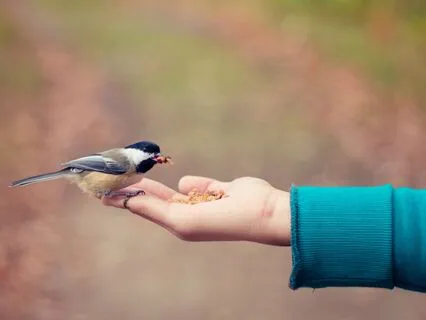
But the reality is if I just open my hand,
The striker is sitting in the palm of my hand with all kinds of space.
The object of my clinging is here with space around it.
So the imagery of holding on and when I let go,
It drops away.
It's not a very helpful imaging for this practice.
It doesn't help us.
It doesn't make it easier.
It doesn't support letting go.
The teaching of letting go is just this,
Again,
This opening where we're no longer clinging to our attachments.
I'd like to try an experiment with you right now.
So make a tight fist with one of your hands and close your eyes so you can really feel this and don't let up.
Make a tight fist and don't let up.
If anything,
Hold on tight.
Imagine that you're holding on to a lifeline.
This is your lifeline.
Hold on tight.
Now keeping the eyes closed,
Slowly release your grip and let your hand unfold,
Feeling the space around the palm,
In between the fingers,
The space of an open hand.
So you can open your eyes and popcorn style,
Just throw out one word to describe this experience.
What was that like for you?
Release.
Release.
Okay.
Ah,
Yeah.
Nice.
Thank you.
Anybody else?
What was that?
Release.
Ah.
Stretch.
Stretch.
Relax.
Relax.
Yeah.
Smile.
Smile.
Yeah.
So letting go is like this,
What you just said.
All of these descriptions.
Can we learn?
I think we're learning to hold our attachments,
Our loved ones,
Our objects,
Our trips,
Our family members.
Can we hold them in an open palm?
With space around it.
Can we trust it?
Can we trust that?
In Pali,
Which is the language of the Buddha,
Faith literally translates to to placing your heart upon.
Where do you place your heart upon?
That's faith.
To place the heart upon.
So what do you place your heart upon?
Where do you trust?
Some people trust their anger.
We're seeing a lot of that,
Right?
Some people trust their fear.
Some people trust that if they manage all the details in their life,
The daily presentations,
They will minimize their risk and feel safe.
Safe ultimately from death.
If I just get it all organized,
It won't get me.
So from my perspective,
Living with trust is living without fear or living.
Fear can be there,
But it's not the only thing that's there.
It can be there,
But it's not running the show.
I don't have to be afraid.
I can have fear.
I can have anger.
I can have a desire to control,
And I don't have to act from it.
I can see it.
I don't.
It's this capacity that we're developing together.
This is what we're developing together.
The capacity to be safe,
Even in the face of fear.
So in my own experience,
I feel like I have to offer up a disclaimer a little bit.
Although I've been practicing for over half my life,
The first half of life did not provide a lot of opportunities to trust.
I didn't trust my parents.
I didn't trust people in my life.
I was told,
The message that I was told as a kid,
The conditioning,
Was don't trust anybody.
Don't trust anybody.
If you're vulnerable,
You will be prey to those people who will take advantage of you.
This was the story that I was given,
And this was the early message,
And so I took that on.
I didn't trust anybody.
So trust has come very slowly for me,
And because I know that about myself,
That it was a slow process,
I also really appreciate that it comes slowly for so many people.
I would say some of you in this room,
Work with trust.
Slow trust.
And for me,
The most important aspect of leading meditation practice,
Of facilitating this practice,
Is to feel safe.
Each of you here is safe in this moment of time.
We are safe for each other.
You can bring your messy self,
And I can bring my messy self,
And together our messy selves are safe to be as they are.
That's the objective.
That's the intent,
To be safe.
To be safe for each other.
So I'm curious,
And I want you to kind of contemplate this.
We'll talk about this after the talk,
But I just want you to,
I'm going to draw your attention in a question.
Where do you put your trust?
Like honestly,
You know?
What do you trust?
Where do you put your trust?
What do you put your trust in?
Like what do you put your trust in?
So many put their faith in their money,
And their bank accounts,
Or in their social standing,
Or in their intellect,
Or their survival skills,
Or their relationship,
Or their home.
What is it for you?
Weird,
And sometimes it's more than one of those things that you put your trust in.
On this path,
It's not a matter of having faith in something,
Like your money,
Or your status,
Or your house,
But trusting and having faith with something.
So basically,
Having faith is kind of an accompanies us.
Having faith accompanies us on our path.
It supports us on our journey.
And I think that because you've all been practicing for a little while,
You understand that it's not like having faith in the content of our thoughts,
Our changing thoughts and feelings.
That's not a reliable place for us to put our faith in,
And our thoughts,
And our fleeting feelings.
These are thoughts and feelings are constantly changing.
They're unreliable.
So when we talk about having trust in ourselves,
We're not talking about these fleeting things.
We're talking about having trust in our awareness,
To see,
Oh,
I've been putting my trust in my money,
Or,
Oh,
I've been putting my trust in my relationship,
Or I've been trusting that I can manage my whole life,
And then I can avoid any illness,
Sickness,
And death.
Trusting that awareness to see where you've been putting your trust.
This is the practice,
Because when we see it,
We're less likely to act on it.
Having trust in our own awareness really speaks to how we're relating to whatever is happening in our life.
So what arises in the mind is totally out of control most of the time.
What naturally arises,
It's out of control,
But how we relate to it is the turning point,
Right in the moment.
It's a choice.
If I'm relating to the world with lack,
Then everything that I see will be empty,
It won't be full,
It won't be spacious,
It'll lack something.
That's how powerful how we relate is.
It's a choice between suffering and freedom,
Really,
Freedom and acceptance.
We don't have to give in to our overwhelming anxiety.
I think that there's a lot to be anxious of right now in our culture.
We don't have to give in to that.
We don't have to give in to being defeatist.
That attitude that may be part of what we're experiencing with difficult challenges that we have.
Everything depends on how we are relating to what's arising.
Everything.
And I know that I'm like a broken record on that,
But it's a reminder that I have to tell myself how am I relating to what's happening in my body,
In my mind,
In the world?
What am I trusting?
The whole idea of progress on this path of practice rests completely on how we're relating to what's going on.
The more that we can see how we're relating to something and have a choice in the matter,
The deeper the practice is cultivated and developed.
And if what you're experiencing is painful,
It doesn't mean that it's bad.
It doesn't mean that it's wrong.
We can trust that our painful experiences held in awareness,
Which is like an open hand,
Is enough for us not to get too involved with the content of what is causing the fear or the anxiety.
In the classic teachings of Buddhism,
The emphasis is really on that while we're meditating and while we're sitting,
We begin to see the mind in a deeper way.
So if you're sitting in the past 30 minutes when we sat and your mind was just planning and planning and planning or remembering or making your plans for lunch or what are you going to make for dinner or you have to change the laundry,
Whatever's going on,
This is the mind just creating thought.
And if we're seeing that,
Like,
Oh,
Coming back and being like,
Oh,
Lost again,
Up,
Planning again,
Planning again,
Remembering again,
Remembering again,
Seeing this over and over and over again,
What is driving us?
What is driving us?
And we hold it up and we see it.
The practice of just seeing what is driving us actually loosens the grip.
Quite naturally,
We don't have to do anything.
We don't have to forcibly open the hand or pry it open.
It just,
Once we see that the mind is distracted,
It's no longer distracted.
It's aware.
You know,
I think that in part,
I can share these thoughts I have about faith and trusting practice,
But that confidence comes from your own direct experience.
I can't offer this to you.
You have to experience it for yourself.
The direct experience of trusting your wisdom and your awareness.
There's this great Zen story.
I think I've shared it with this group before,
But it's worth sharing again.
There's a man on a horse and the horse is just galloping through a field really fast.
And another man is standing alongside of the road and yells at him,
Where are you going?
And the man on the horse yells back,
I don't know,
Ask the horse.
You know,
I kind of think that's our situation.
We're riding a horse that we cannot control.
And seeing clearly and repeatedly that everything,
Like,
Don't know what's happening.
Everything is always changing.
The nature is always changing.
Our experience is always changing.
It just deconditions the,
I guess,
The habit pattern of clinging.
And the more we see it,
The more that we're right in the experience,
The mind begins to let go without much effort at all.
It begins to trust.
And so much of the time,
It's like closed fist,
Open hand,
Closed fist,
Open hand,
Closed fist,
Open hand.
Just like coming back to the breath.
You know how we come back to the breath or our object of awareness when we're practicing meditation.
In life,
We go from clinging to open,
Clinging to open.
And we notice that.
We start to notice that,
Oh,
Here I go again.
And we can start to begin to have trust with that.
You know,
This practice that we do coming together with an interest in developing ourselves and to honor this,
This precious life that we have.
Something brought you to practice those many years ago.
So many causes and conditions happened that you're in the seat today,
Practicing meditation.
Kind of choosing to go against the stream,
The current of our world and carving out time to sit quietly and get to know the content of your mind.
You're turning away from the superficiality of the world,
From the mechanical nature of the world.
And that turning and coming to sit,
That's the hardest part.
That's the hardest part.
But when we do,
Everything that follows from just carving out time to sit is a product of our effort,
Our steadiness.
And all it takes,
The hardest part is that turning and we keep turning towards it.
Close hand,
Open hand,
Fist open,
Fist open.
So thank you.
Thank you for your attention and listening.
And I like to open it up for comments or questions,
Whatever's arising.