Welcome to the Breakdown to Breakthrough Podcast.
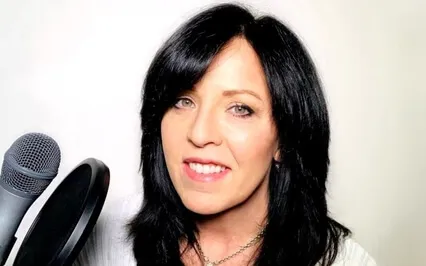
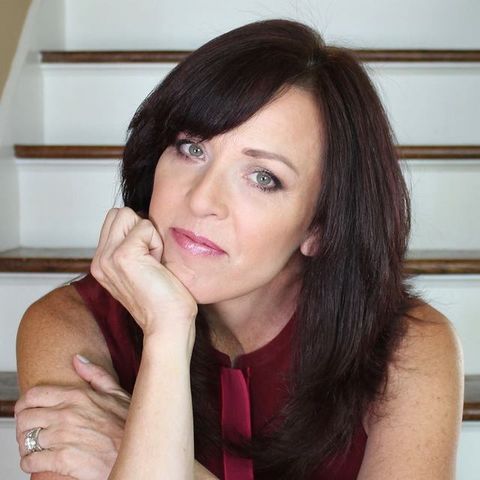
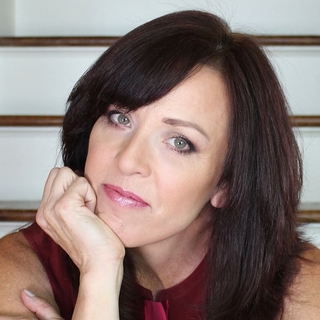
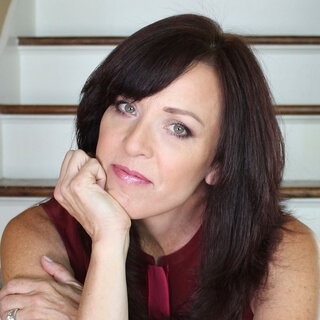
My name is Lisa A.
Romano.
I am a life coach,
Bestselling author,
YouTube vlogger,
Meditation teacher,
And expert in the field of codependency and narcissistic abuse.
I am a believer in the power of an organized mind.
My aim is to help people learn what it means to live above the veil of consciousness rather than living a reactive life.
May your heart feel blessed,
Your mind feel expanded,
And your spirit find hope as you spend time with me here at the Breakdown to Breakthrough Podcast.
We're going to be talking about why it might be really difficult for you to have really healthy,
Authentic relationships.
When you struggle with codependency,
Most oftentimes you don't know it.
People don't normally think about codependency as a program.
Codependency is a subconscious program that your mind is literally built before the age of seven to behave a certain way and to react to certain situations and certain triggers a certain way.
We don't usually consider how being codependent is tied to our childhoods.
What did you observe in childhood?
What kind of mom did you have?
Did you have a mom who was a people pleaser?
Did you have a dad who was highly narcissistic or vice versa?
Did you grow up with parents who were not emotionally regulated?
Did you grow up feeling invisible?
Did you grow up feeling not good enough?
Did you grow up in this paradigm that made you feel like you were subordinate to other people,
That you didn't have a right to a self?
Now when you grow up in this type of a situation,
You're not anchored to the self.
You don't become self-actualized.
You don't become self-individualized.
How could you?
In order to become self-actualized and self-individualized,
You would have needed a healthy parent,
A healthy authority figure outside of you that was able to make you feel like whatever was going on inside of you was enough.
Now when you grow up in a home where you feel invisible,
You have to understand that you're part of a certain system.
You're part of a particular paradigm.
And this paradigm can be completely corrupt.
Everybody can be running amok.
You could be reacting to dad.
Dad could be reacting to mom.
Your sister could be highly emotional.
Everybody's trying to manage and control your sister.
Your brother might be drinking.
Your sister might be a heroin addict.
There can be so many things going on in your family,
And no one's paying attention to how people feel on an authentic level,
How you feel on an authentic level.
Everybody's like a bunch of atoms or molecules that have been heated up,
And they're bouncing off of each other.
No one's calm.
No one's serene.
There's no stillness.
In order to develop a self,
You need stillness.
You need peace.
You need time for your mind to understand and connect with your emotional body.
Who am I?
What am I?
What is this I?
Right?
When everybody,
Mom and dad,
Your sister,
Your brother,
Aunts,
Uncles,
Or everyone's reacting to someone else's behavior,
Where is the I?
There's just reactivity.
You don't realize that when you come from a home like that,
You're really taught to not have an I.
Codependency is really a loss of selfhood.
You have no I.
You do,
But it hasn't been fully developed.
You haven't hit certain milestones in your life.
Codependency is really a journey of becoming your own I.
How you become your own I is you have to break through the program.
You have to break through the family system.
You have to break through the hologram that is running your life that so many of us are running and we don't even recognize that we're running it.
It was a huge aha moment in my life when I was told by my therapist that you are,
In fact,
Codependent and the way you were raised in childhood is the reason you are codependent.
At the time,
I had no idea what that meant.
What I did was I set myself out on a journey to read everything I could about codependency.
What I found that I was missing was,
Well,
How do I fix it?
How do I fix it?
Then I realized that the only way to fix it was to really get inside my subconscious mind and recognize the patterns that were running around in my head,
The behaviors that were habitual,
My triggers,
The way that I responded to people,
My emotional set point.
I talk about the emotional set point in Quantum Tools to Help You Heal Your Life Now.
It's a book I wrote about the law of attraction and how we are all living out a paradigm.
Until you awaken to the paradigm like the movie The Matrix,
You will stay subordinate.
You will expect someone else to come around and to save you.
I think what happens to a lot of us as children,
If we have this mother wound,
If we suffer this,
And most of us do,
Come on,
Come on.
Growing up is difficult.
Being abandoned and being expected to go have all the answers to all of your problems is it's a difficult thing to accept full responsibility for yourself and not make someone else your savior,
Which is what codependents do.
I'm waiting.
If I do this for this person,
Then this person will love me.
If I do this,
Then I am enough.
It's sort of like someone else is my God.
The Bible says,
Don't put false gods before me.
You can't have a false god before you.
You can't.
You have to really merge with yourself and merge with your own personal God,
The God that created you.
You have to do what you can to make sure that you're running your life based on what feels authentic for you.
Ultimately,
What feels authentic for everybody,
In my humble opinion,
Is love.
If we can return to love of ourself,
Then we will become natural repellents for narcissists because a narcissist needs a people pleaser.
A narcissist needs somebody who has high empathy.
A narcissist needs somebody who is going to forego their own experience for the sake of pleasing this other person so that this other person will love them and take care of them and make them feel enough.
Healing from codependency,
If you're struggling with codependency and this is your mindset,
This is your default setting,
Like I talk about in The Road Back to Me,
If this is your default,
If this is what you've been programmed to do,
You're not going to be able to have healthy,
Authentic relationships.
It's an impossibility because to have an authentic relationship with another,
You have to have an authentic relationship with yourself.
Now,
To have a healthy relationship,
Which I am so grateful that I was able to go from a codependent mindset to an interdependent mindset.
When I was codependent,
I really did lean on my ex-husband and he did lean on me.
It was like if he fell,
I fell,
Or if I fell,
He fell.
We were leaning on one another.
It was not healthy.
It was enmeshed.
In The Road Back to Me,
I talk about how there was this moment of accountability when I was reading Melody Beatty's book,
Codependent No More,
Where I recognized I am in this triangle experience where I am not taking care of myself.
I am taking care of his needs and I'm expecting him to take care of my needs.
I was not taking care of myself in that experience.
Then when he did not read my mind or he didn't do what I expected him to do,
I felt wounded.
I felt like I had a right to feel wounded,
Which peeling back and recognizing that cycle,
It was a dysfunctional cycle.
When I saw it,
When I was like,
Oh,
That's what this thing is?
That's why I'm so unhappy?
That's why I'm never going to be happy because I essentially married someone who told me to my face,
I never think about your feelings.
I was abandoning me and I married somebody who was emotionally avoidant,
Who lacked empathy and who felt entitled to call me names,
Especially when I wanted to address a particular situation that we were having in our family.
I was burning the candle at both ends and that's what codependents do.
They abandon themselves and then they manifest partners that are incapable of seeing them.
At the end of the day,
It's going to come down to you stopping the cycle,
Which is scary because part of healing from codependency is like what Melody Beatty writes about,
There's no rescue boat coming.
It's all on you,
Sweetheart.
You can stomp your feet and you can be angry,
But until there's some aha moment,
The second part of my coaching program is accountability.
We talk about how a codependent person who,
Yes,
Has been wounded and has been sucked into this matrix that was in play long before you ever got to planet earth,
Dear one,
And now you're in this family system that's dysfunctional.
Now you're in a family system,
You're in a dysfunctional societal system,
And so many of your friends are in the same system and everyone thinks they're doing everything right,
But no one's happy.
Now unhappiness becomes the norm.
Who's looking within?
You usually have to suffer so much pain and you go through so many narcissistically abusive relationships to the point where you realize,
I have nowhere else to go but up.
I am the common denominator.
That's really difficult because to have a healthy relationship with another person,
You must have some sense of accountability like,
What have I done?
Where do I fit in all of this?
Without this aha moment,
This moment of accountability,
Of clarity,
Have I been giving my power over to someone?
Like some people will struggle because they'll say,
Lisa,
You're blaming the victim.
I'm trying to liberate somebody who has been a victim of narcissistic abuse.
I am trying to help someone and some people will hear it and some people won't,
But I'm trying to help that person who grew up in a dysfunctional family system.
Your family was dysfunctional.
Your family was dysfunctional.
You may have been affected by alcoholism.
You may have been affected by narcissism.
Unconsciousness,
Living a subconscious life.
Your grandparents could have been the most abusive people in the world and now your parents are living out that paradigm,
Right?
Bouncing off of each other,
Trying to get their needs met with one another,
Angry,
Irritable,
Resentful,
Hypersensitive to criticism,
Right?
Then they have children who have needs and they resent the children who have needs.
You're the third generation of this nonsense and you're stuck.
What do you do?
You've never learned to honor yourself.
Why?
Because your dad did not honor themselves.
They were never honored and they never taught you.
You are enough.
You were born enough and you have the right to break through this matrix,
Break through this subconscious pattern and live an authentic life.
You have that right.
To do that is difficult,
Right?
When I was at my dining room table and I got to that section of Melody Beatty's book,
I slammed it shut.
I was like,
This moment where it was like,
You're part of this.
It's not your fault that you're part of it.
You've been sucked into this paradigm,
But only you can get yourself out.
That's why I think a big piece of codependent recovery that's missing,
At least when I was in therapy,
I went to four or five therapists before I found one psychotherapist that said,
You're a codependent.
Even then it was like,
Okay,
What do I do to fix it?
It was through my own work,
Through learning about psychology,
Learning about hypnosis,
Learning about quantum mechanics.
It's not me,
It's my programming.
I have to fix my programming and if I can fix my programming,
I can naturally align with me.
The question is,
How do I reverse engineer and get back to my true self,
Which is what the 12-week online class,
The breakthrough class that I offer is all about,
Is returning people back to the self.
How do I get there?
You cannot,
And I hope people hear this because in order to have an authentic relationship with another person,
You can't escape accountability.
You have to be responsible for your own feeling.
It gets messy because if I have to accept my own feelings,
I have to give up on this fantasy that Prince Charming is going to ride in on the white horse and save me.
I think this comes from,
Yes,
Growing up,
So many of us growing up watching things like Walt Disney and little boys want to be the prince that rescues the girl that has all these problems and little girls want to be rescued by the prince that's strong and has this white horse.
I think that that fantasy is really reinforced if you have been abandoned by mommy,
If you have been abandoned by daddy.
If there is this abandonment,
This moment of why have you forsaken me,
And that doesn't get healed,
That doesn't get resolved.
You're always seeking this savior,
Which is mom.
Mom was supposed to save you,
Or dad was supposed to save you.
This external person was supposed to save you.
You entered this world connected to your mother on an umbilical cord and then they cut it.
There you go,
Kid.
Welcome to planet Earth and all its dysfunctional crap.
That's what happens.
Really?
Oh my God,
Everybody's asleep.
Everybody's asleep.
Everyone's trying to read everybody else's mind and everybody wants someone else to make them feel better.
Lions and tigers and bears are mine.
I'm not allowed to feel my feelings.
I might get judged for feeling my feelings.
I might experience more abandonment.
I don't want to do that.
What's the answer?
Don't feel.
Don't feel.
Don't feel.
Don't feel your feelings.
Pretend,
Fawn,
People please.
Become a chameleon.
Become what you think people want you to be.
Never ever,
Ever say no.
It's this fear of additional abandonment.
What is metaphorically,
What do little girls and little boys do?
They fantasize about being the rescuer of somebody who has all these problems that's so nice,
Or they fantasize about being rescued.
Then guess what?
Nothing works,
Dear ones.
You are on planet Earth.
You go through your 20s,
Your 30s,
Your 40s,
Your 50s.
I coach people who are in their 70s.
I one time coached somebody who was in their 80s.
You go through life.
No one ever tells you,
Or it doesn't hit,
It doesn't land,
That,
Oh,
There's this thing called codependency and you might be subconscious.
You might be living out a subconscious pattern.
You may be attracting people in your life that mirror the experiences that you had in childhood.
Those childhood experiences you loathed,
That you loathed,
That have made this energetic imprint on your being are exactly what you manifest.
Isn't that interesting?
Isn't that interesting?
That's why with my online coaching class and my books,
The Codependency Manifesto was just released.
I talk about you have to awaken.
This is a real thing.
This is a subconscious pattern.
If you want to have an authentic relationship with someone else,
You are deserving of that,
But you cannot do it if you're still part of the old matrix,
The old paradigm,
Which is your dysfunctional family and your dysfunctional family's family and so on and so on.
Life is a hologram,
Dear ones,
And karma is real.
Karma is not about punishing you.
It's the law of cause and effect.
There is a wheel and it's churning.
And the only way to have an authentic relationship with anyone else is to begin waking up.
And part of the awakening process is accountability.
And then you can experience ascension.
That's essentially my online classes,
The awakening phase,
Accountability and ascension.
And this is the way that we free ourselves from this codependent matrix.
Now accountability is a big,
Big issue for some people because that means I have to look at myself.
That means I have to give up all of these fawning behaviors.
I have to give up people pleasing.
Who am I without this people pleasing?
What happens when I say no?
People are going to get pissy and they're going to walk away.
Then what?
Then you're experiencing the exact thing you never wanted to experience,
Which is being abandoned.
And so you're triggered again,
Right?
So healing from codependency is really getting into that nitty gritty space and recognizing that is a natural occurrence.
Your brain is wired to fear this abandonment.
But if you stick with it,
If you learn how to process your emotions,
If you learn how to stay in your body,
In my class,
I talk about Amy the amygdala and Harry the hippocampus.
You've got to learn to observe these experiences in your brain that are natural,
That are going to trigger a limbic response.
That's where the nitty gritty is.
Some people talk about doing yoga.
Some people talk about mindfulness.
It's all helpful.
Healing allows you to stay in your body while you're experiencing the CPTSD response to rejection and that's why people people please,
Right?
That's why people fall in.
We have to recognize that is manipulative.
It is controlling.
So if I do what you want me to do and I don't want to do it,
So I dishonor myself,
Right?
And if you haven't read the works of Nathaniel Brandon,
I do suggest you do it.
Honor the self or honoring the self,
Right?
It's an amazing,
Amazing book.
So if I cater to you and I do something that you want me to do,
Even though I don't want to do it,
What am I doing?
You become my God.
Now why am I making you my God?
I'm making you my God because I don't want you to reject me.
I want to be in your good graces.
Keep going.
Why is that?
Because I'm afraid you'll abandon me.
Because I'm afraid I will be alone and if I'm alone,
What does that mean?
Lions and tigers and bears.
It means everything's my responsibility.
So if I sink,
I sink.
If I swim,
I swim.
Now it is going to be harder for some people versus other people to heal from codependency.
That is just a fact.
And that is not,
Oh,
You know,
Saying that,
You know,
Saying that,
Oh,
Some people have a right to stay stuck versus other people.
It's not about a right.
It's just a fact.
You know,
In my coaching class,
We have run through various types of abuse and trauma and it is a lot when people start opening up and they start explaining why they are codependent,
Why they are afraid to confront people,
Why they are afraid to say no.
Oh my word.
It is horrendous what has happened in people's lives.
And so I think it's really,
Really important that we do recognize that it's going to be harder for some people to like,
You know,
Wake up and like,
OK,
What do I need to do here?
Are you kidding me?
You're a mom.
You have four children.
You're in a narcissistically abusive relationship.
You are financially dependent on this person who has isolated you from friends and family.
You have and this has happened,
This brainwashing has happened over time.
Your mind is no longer your own.
Your life is run by fear.
Right.
You may have experienced horrific abuse.
Your children may begin now have emotional problems or behavioral issues.
And you know,
The matrix is thick.
Lots of muck and mire and lots of patterns.
Right.
Get escaping that is not going to be easy.
So I think it's important,
You know,
When we're talking about codependent recovery,
That if you're somebody who is in a dire,
Dire experience,
You know,
Recognize,
Recognize that number one,
It's not your fault you're in that experience.
It's not your fault that you were born into this matrix that is mostly subconscious.
It's not your fault.
You're born into a family that is subconscious.
It's not your fault that below the age of seven,
You're in a hypnotic brainwave state,
And you're being taught this stuff.
It's not your fault that,
You know,
You went out into the world at 12,
13,
14,
Looking to be rescued.
That's not your fault.
That's what everybody does.
Everybody wants to be rescued by someone else until you recognize that it doesn't work.
That when you are someone who wants to be rescued and the illusion is that if I rescue you,
Then I'm good enough.
But I think it's a little bit deeper than that.
I think it's if I rescue you somehow in that I'm rescued by the rescuing of you,
Which means I'm still not rescuing myself on a very deep level.
And so this journey towards having an authentic relationship with someone else is going to be more difficult for some people than others.
That is just a fact,
Right?
That means what does that mean?
That means it might take you longer to heal from codependency,
To change your subconscious programming.
You're talking about neural wiring,
Right?
I did an interview with Bruce Lipton years ago,
And he confirmed what I'm saying.
I did an interview with Dr.
Bruce Perry who said that the first year of life is so critical because that's when the brain is wiring itself for socialization,
For the ability to trust people.
And so it's not your fault if you are suffering with codependency and you continue to attract people who take advantage of your emotions.
But until you awaken and you realize where the power is,
The power is within you to begin at least slowly shifting it.
And step one is awakening.
Step one,
Just awaken.
Awaken like this is my issue.
This is what I'm doing.
If you're someone who gets stuck in anger because you do for other people and they're not doing in return for you,
You have to see that because as long as you're angry,
You're attached.
And as long as you're angry,
You're in resistance.
And as long as you're in resistance,
You're actually reinforcing this reality with the matrix.
So guess what's going to happen?
More people show up that make you angry.
So anger is a valid emotion,
But we have to learn to process it and move it out of your body.
Resentment,
Normal emotion.
If you are doing something that you've always done and you think people should respond to you a certain way,
It's the meaning that you give to that doing.
It's the meaning that you give to fawning.
It's the meaning that you give to enabling.
Well,
I did that for her.
I paid her rent.
She should want to cat sit for me.
I paid her rent or I rescued her a couple of years ago from this catastrophic relationship that she had.
Like she should answer the phone if I call her at 1 a.
M.
And 2 a.
M.
And 3 a.
M.
Or whatever.
It's this expectation that a lot of us carry as codependents who don't realize that we're saying,
Please take care of me.
I took care of you.
Please take care of me in return.
So there's this need for us to become self-actualized,
Which is a very grown up thing to do,
Which is very scary.
And I don't think it's our fault.
I really don't because we're taught that we need other people just to get through life.
We're taught to rely.
We're taught to need.
We're taught to put our faith into other people and other things.
And God forbid we go against the grain and we actually are individuals with their own thought process.
God forbid we have an individual thought.
You're persecuted.
So if you don't go along with this faith,
Then someone else comes along and says you're no good.
Or if you don't go along with that fashion trend,
Then people look down at you.
We're all conditioned to have these types of experiences.
And the only thing that's going to help us is if we awaken.
And so if you're having this moment like I did at my dining room table where it's just like,
Wow,
I do this thing.
I do this thing.
I didn't realize I did this thing.
And I'm recognizing it was a subconscious pattern.
But my power lies in being able to break through this thing,
Break through this programming,
To see,
To really take the blinders off and see how my childhood affected me.
Am I struggling with CPTSD?
Is this fawning and people pleasing and enabling and rescuing and catering and fixing?
Is it so I don't experience more pain?
Am I in my adult life continuing this experience that I had with my mother,
With my father,
With my sister,
With my coaches,
With my teachers,
This please don't hurt me experience?
Please,
Please,
You have the final say over whether or not I am worth it.
No.
Dear one,
You're enough.
You are worthy just as you are.
But you can't awaken from that until you see that you might be doing that.
So in order to have an authentic relationship with someone else,
You have to have an authentic relationship with yourself.
And having an authentic relationship with yourself means becoming accountable for yourself.
So it's slowly learning how to love yourself.
You're not waiting for someone else to love you anymore.
It's slowly replacing negative talk with positive talk.
You're not waiting for the postman to say,
Wow,
Lisa,
You got your hair done.
You look great.
You're not.
.
.
No,
You are affirming yourself.
You're not waiting for your best friend to say,
Oh,
You just got that promotion at work.
That's awesome.
Right?
You're not begging someone see me,
Someone see me anymore.
No,
You're not two anymore.
You're not three anymore.
You have a right to affirm yourself.
So it really is a dissolution of these psychic chords,
Right,
To dysfunctional patterns.
It really is coming face to face with these dysfunctional attachments to the matrix that is running your life.
And you don't even realize that you're running it.
It is everything.
Why do you wear the clothes that you wear?
Is it because you think someone in the matrix is going to think you're more important?
Are you trying to tell people,
Look,
I have this bag or I wear these shoes and it's because I want you,
Which is you trying to control someone else's perception of you,
Which is you really not taking responsibility.
Listen,
You want to go buy an expensive bag because you can.
That's awesome.
And it's great quality and it's amazing.
But don't make buying that bag about someone else because that's you attaching to the matrix.
That's you acting in a codependent way,
Right?
If you want to get a new job because you just want to get a new job and it's going to bring in more money and you want your children to take piano lessons,
That's awesome.
But you don't do that because doing that says you believe that it says in your culture that means that you're doing good or that you're good or you're better than.
Again,
It's codependency.
That's making other people your God.
Your worth is coming from other people.
So it's important that you recognize that.
Am I people pleasing?
Am I fawning?
Am I wearing this red dress to dinner because I want this person to say,
Wow,
That's a beautiful red dress?
Or am I wearing this red dress because it pleases me?
We have to return back to the I.
We have to return back to accountability.
And when we do that,
When we take responsibility for ourselves and we end up at a place where we're loving ourselves,
That's when we can be more authentically loving with other people.
That's when the need to judge people and the need to fear people begins to dissolve.
And it doesn't happen over time.
It does not happen over time.
What happens over time is that as you begin to trust yourself,
As you begin to affirm yourself,
As you begin to ask yourself,
What do I think?
What do I feel?
What do I need?
How do I feel about what this person said?
Rather than going into a fawning response or a people pleasing response or an agreeable disposition,
When someone says something to me that makes me think that I've done something wrong and guilt has been triggered in me,
Rather than go into making sure that this person still loves me,
Responds.
Rather than that,
Maybe ask myself how I feel about what this person said and how I feel about feeling this guilt.
Can I just sit with this fear?
Can I just sit with the guilt?
Can I not react to the guilt?
The other day,
My husband wanted to have steak for breakfast.
He has some irritable bowel issues.
It's really not that important.
The issue is that I put the steak,
When he went shopping,
In the freezer and he woke up and he wanted to have the steak for breakfast.
He's on a protein diet.
I said,
Oh,
I put the steak in the freezer.
The look in his eyes was,
Oh,
Now I have to defrost it.
It crushed me and it shouldn't.
The program is still active inside of me.
The thing that's different with me now is that I'm aware of it.
What happens is,
I love him and I appreciate him.
I see him as an autonomous being with his own sets of needs and values.
However,
What happens is when I love someone and I sense that there's anything that I've done,
If I've had the slightest part in it and this person is disappointed,
Then I still feel the guilt in me is still triggered.
Why?
Because as a little girl,
I was guilted for everything.
I was made to feel like I was insignificant.
With my mom,
I was treated with indifference.
I felt my father loved me to a certain point,
But my father didn't protect me and shield me from what was happening within my mother.
At least I felt like,
Oh,
At least daddy loves me.
But still,
I'm 55 and I work on this stuff every single day because I know it is everywhere.
This pattern is everywhere.
This subconscious reality is everywhere.
You talk to people and you'll start to realize,
Uh-oh,
They're asleep.
That's not judging.
That's discerning.
You're like,
Oh,
I made my husband a wonderful dinner and he came home late and he didn't even acknowledge that I trimmed the rosebush in the front of the house.
He didn't acknowledge that I threw away the flowers that were in the bedroom because they started to get musty.
There's this,
I'm doing all these things in the matrix and you are not acknowledging them and it's your fault that I feel this sense of self-alienation.
Lions and tigers and bears,
Oh my.
This is good intentions gone awry or someone would argue,
Are they really good intentions?
Because if you're doing something for someone because you expect them to fill you up,
Is that really a good intention?
It's difficult when you're struggling with codependency.
When you get to this point where like,
Oh,
I took my daughter or I gave my daughter,
I talked about this in the codependency manifesto,
So you throw your 16 year old or your 17 year old,
A huge pool party and all the friends go home and your kid's tired and she goes to sleep and the whole time you're seething and you're seething because you didn't get enough pictures with your daughter on Instagram or she didn't praise you enough.
That is dysfunctional,
Right?
So that is feeling like a victim,
Feeling like a martyr.
It was your response.
You threw this party that cost you five grand.
You made that decision.
And so we have to learn as people to do things because we authentically want to,
Not because we want something in return.
Anytime you do something and you want something in return,
You are addicted to that thing,
That return.
You don't want to be addicted to that return.
Codependency is about being addicted to something outside of the self.
Codependency is about relying and depending on something outside of the self to act like the rescue boat,
Which is what Melody Beatty talks about.
There is no rescue boat coming,
Dear one.
And that is frightening.
When I realized there was no rescue boat coming,
I was deep,
Knee deep.
I was waisty.
I was chest deep in this relationship,
Right?
I quit nursing school.
My ex-husband sold our business.
I lived in a house that him and his family built.
His mother lived around the corner.
His two brothers lived across the street.
His sister lived around the corner.
I was surrounded.
I was enmeshed in this matrix of dysfunction.
And I had three little kids,
11,
9,
3.
And I had to get us out.
That was terrifying.
I can see why people go,
No,
I'm not looking at this.
No,
No,
I'm not looking at this.
I am not looking at this.
I am not going through what I have to go through to extract myself from this paradigm.
And it literally is a paradigm shift.
And the shift first happens in your head.
And you begin to realize that you were living one paradigm that was a subconscious paradigm.
And then as the shift begins to happen in your head,
You begin to slowly string together if you stay on the path with codependent recovery.
You begin to string together a new paradigm.
It might take you longer than some people to string together that new paradigm.
I made my life,
Well,
I can't say it made it worse.
While I was making my life better,
I still fell.
Because at the time of my awakening,
It was like a false awakening.
Because I was like,
Oh,
I'm codependent.
Melody Beatty says I'm codependent.
My therapist says I'm codependent.
Okay,
I must be codependent.
Codependent no more says I'm codependent.
Yep,
That's me.
But I didn't realize that the codependency in me was my subconscious programming.
I thought my relationship with my ex-husband was codependent.
I thought that he was more avoidant.
I was the more I was,
You know,
I'm talking Pia-Melody language now.
I thought that he was more avoidant and I was more the pursuer.
I realize now it's much deeper.
So in terms of the spectrum between codependency and narcissism,
I was more codependent and he was more on the narcissistic spectrum.
But neither of us were freaking healthy.
That's unhealthy.
You want out of that spectrum.
You know,
You want interdependence,
You want independence,
You want self-reliance,
Self-accountability,
You know,
Self-responsibility.
You want to be completely in control over how you think and what you feel and what you do.
You want to extract yourself.
The thing is though,
While you're in the two paradigms,
That meantime is where you're going to need a lot of tools.
And I do recommend the work of Codependent No More,
Melody Beatty.
I do recommend Love Addiction or Facing Love Addiction by Pia-Melody.
I do recommend the work of Nathaniel Brandon,
Honoring the Self.
I do recommend that.
And if anyone's really,
Really want to investigate the program that I put together,
It's codependent recovery.
And it's all about rewiring your subconscious mind so you can break through.
And we go from having this experience of being seriously codependent and childlike in our relationships.
And you know what?
You can be a lawyer,
A doctor,
You can be the most successful business person in the world and still be codependent.
So you have to understand this happens to anybody and everybody.
And to really free ourselves from the societal codependent program,
Which I've been talking about this for years,
That we're asleep.
And until you're talking to someone,
It's like The Matrix.
Bruce Lipton says The Matrix was actually a documentary.
It's not fiction.
It's real.
When you start to awaken from codependency,
You see codependency everywhere.
You see subconscious programs everywhere.
You begin to see this subordinate relationship with fauners and people pleasers and codependents and more narcissistic people,
This giving my rights over to this other person.
You start to see it everywhere.
You start to see it everywhere.
And it's mind boggling.
And it can be frightening,
Which is why I think people who understand this coming together,
Even if it is online with a support system,
People that understand your new language.
That's why CODA is so powerful.
My first CODA meeting,
I walked out of there like I was flying high.
I was like,
These people get me.
They get my language.
They understand it.
When I went to a few AA meetings with my uncle,
Who was sober for many,
Many years,
And he asked us to go to a couple of meetings with him,
I was like,
I get this language.
People are taking accountability.
They're recognizing that they were part of this.
And there are skills here to learn.
And so to have an authentic relationship with someone else,
Dear one,
I know it sounds so cliche,
You have to have an authentic relationship with yourself.
You cannot have a healthy body unless you eat healthy.
You cannot have a healthy mind unless you consume healthy information.
You cannot have a clean house unless you clean your house.
You cannot have a car that runs well.
One of the things that I've insisted on my children,
And I'm so happy,
It's a little thing,
But it's a huge thing.
I've told my children,
You have to get an oil change every 3,
000 miles.
You want your car to last?
You get an oil change every 3,
000 miles.
You make sure that you take care of your car.
That is self-accountability,
Self-responsibility.
You want to have an organized mind,
Jordan Peterson says,
Make your bed.
It starts with making your bed.
So I think codependency,
If you want to have a healthy relationship that is not a codependent relationship,
There has to be some shift in your head where you understand like,
Maybe it's not my fault that I'm here because of the way the world is structured.
It's a paradigm.
It's a subconscious paradigm.
Karma is real.
The Bible says the sins of the father fall on the son.
It's not your fault if your father was an alcoholic,
If your mother was a narcissist or a rageaholic and you grew up fawning as a way to actually survive your circumstances and now it's become a pattern of behavior.
Because the brain is more subconscious than it is conscious,
It's not your fault that you're in a terrible,
Terrible relationship today.
It's not your fault.
But once you can get past this,
Okay,
It's not my fault,
That's going to help any shame trigger.
I think that there have been plenty of people who shame people with codependency and I'm not an advocate of shaming anyone for being what they are.
And even narcissism,
It was a huge,
Huge awakening moment when I finally realized that my father was the way he was because he was a victim of narcissistic abuse.
That doesn't mean that I excuse narcissistic abuse.
It just means that there's a level of clarity around my dad that I have now that I didn't have before.
And when I didn't have it before,
I was stuck in anger and resentment like,
Why are you this way?
And then when I began to pull back and I did enlightenment work and mindfulness training,
I was like,
Okay,
This is a matrix and this is a paradigm.
And it's not for me to decide when he awakens.
It's for me to use this experience to kick myself out of this paradigm with him and learning to become nonresistant.
Because at the end of the day,
If we're talking law of attraction,
You want to be nonresistant because things that you are in resistance to persist in your life,
Which is really difficult,
Which means that there has to be some ego training,
Ego managing in order to have a more authentic relationship with yourself because your ego is going to tell you things should be this way.
And when things are not this way,
You're going to suffer.
And when you say,
Well,
Things are this way,
I need to accept that things are this way because I can't control the thing that is this way.
Then you will suffer less.
But we also need to get over this thing because I think a lot of us think that human beings shouldn't suffer or that there's no reason that you should suffer.
You're born,
You're going to suffer.
People are going to get sick.
People are going to die.
You're going to get sick or you could get sick.
It can happen to any of us.
Look what just happened with COVID.
People get into car accidents.
People cheat.
They abandon you.
Your parents get older.
You watch them die.
Anything your pets die.
Loss is a part of life.
We need to embrace this as a natural process.
But the ego,
When we think about death and dying and people dying,
It kicks up survival stuff in us,
Right?
The root chakra gets activated.
We don't want to experience the suffering.
We don't want to,
Which is the ego.
No,
I'm not going.
I'm not doing it.
I'm not doing it.
I'm not taking the castor oil.
I don't want the penicillin.
It hurts.
It hurts.
The ego doesn't want to experience that.
So that's why some higher self,
Some awareness,
Some expansion in consciousness must be a part of the recovery process so that you can speak to the ego.
You can speak to the younger self and say,
It's okay.
This is a natural process.
I watched a story about a woman last night who was shot nine times by her husband who then turned the gun on his children and who then shot himself.
And this woman has had a rebirth and she's looking forward to the second part of her life.
She's grieved for many years and now she's looking forward to,
She's found a new relationship and she actually wants to have more children.
I mean,
This is amazing,
But this is a woman that had to go through a rebirth of non-resistance to what was so that she can experience joy in the rest of her life,
Which is her taking accountability for how she felt,
Not taking accountability for what her husband did,
But taking accountability for what was in her as a result of what this other person did.
That is resiliency.
That is accountability.
And again,
This doesn't happen overnight.
So if you want to have a more authentic relationship,
I would like to offer you a couple of things.
Number one,
You have to recognize the codependent patterns in you,
Right?
You have to see,
Am I codependent?
Where am I subordinate to other people?
Where do I people please?
Where do I fawn?
Where do I give up my right to feel what I feel?
Where am I afraid to set a boundary?
That's very,
Very important.
So identify the patterns in your life.
Look in your childhood.
What did my parents model for me?
Very,
Very important because you are a product of your environment,
Right?
So there might be some biological stuff going on,
But in my humble opinion,
Our programs are really mostly the result of environmental factors.
What were you taught?
Were you taught that your feelings weren't important?
Did your mother,
Was she subordinate to your father?
Did your mother leave you alone and your father leave you alone for many,
Many hours?
And when they came home,
Did they treat you with indifference?
Were you taken to the doctor when you needed medical care or were your feelings completely just irrelevant?
Were you adopted?
Were you adopted into a kind family or an unkind family?
Were you in foster care?
Were you bounced around a lot?
Did you experience childhood trauma?
What type of trauma?
Was there anyone there to help you process the trauma?
Did people ignore the trauma?
So look in your past for these types of patterns because these types of experiences are going to lend themselves to being a people pleaser or being someone who's afraid to feel their feelings,
Right?
Which in order to experience an authentic relationship,
You've got to be able to feel your feelings because you need boundaries with other people.
Your feelings tell you where you are in relationship to someone else.
And if you don't know,
If you don't have the confidence and the resiliency and the trust in yourself,
And again,
This is a process.
That's why I take people through a 12 week process in my class.
This does not happen overnight because you have to learn how to do this.
You have to change your patterns and programs in order to come through this in a healthy way,
Right?
So you're recognizing these patterns in yourself.
You're looking at childhood.
You're connecting the dots,
Right?
Number two,
Start seeing yourself as your own rescuer.
You higher self is going to rescue you.
You are going to reparent yourself.
You are going to be the mother you always deserve,
The father you always deserve.
You're going to nurture yourself and you're going to protect yourself,
Not in a defiant way,
But in a beautiful,
Loving way.
You don't need to go accuse people of being narcissist and go after them on social media and persecute them.
You don't need to do that because that keeps you stuck in the matrix.
The more resentful,
The more frustrated you are.
And there's a time,
There's a season for being frustrated that helps you identify your eye and create a boundary.
But it's really important that anybody,
Anybody,
Hear me,
Anybody that wants to be free of this matrix,
Then moving past resentment and anger and persecution and all that is the goal.
Because if it's not the goal,
You stay tethered to this karmic wheel.
It just is what it is.
It's the paradigm we're all born into.
But through awakening,
Through breaking through the paradigm,
That's where your personal power resides.
That's where you can change everything in your life.
So start saving yourself,
Right?
So ask yourself,
Am I rescuing this person and why?
Is this my responsibility to take care of this person's drug issue?
Is it my responsibility to rescue this person from their third DUI?
Is it my responsibility to pay this person's rent?
Is it my responsibility to cover for this employee who was out all night and wants me to lie to the boss?
Is that my responsibility?
This is really difficult stuff because guess what?
When you start saying no,
All of these attachments start to turn on you,
Right?
That's why you need skills.
But these,
For the sake of this conversation,
I want to give you some tools to work on.
Start rescuing yourself.
The third thing is that you can do is stop seeking external validation.
Be really,
Really honest with yourself.
Where am I seeking validation?
I've always talked about the subconscious,
The subliminal hypnotism that takes place with advertisers.
These people hire therapists,
Psychiatrists,
And psychologists to understand what triggers human survival,
Right?
So if I increase my level of attractiveness,
Am I increasing my worth versus someone else's worth?
And if I am,
Where the hell did that paradigm come from?
I'm just asking people to think about why we're doing this.
Where did this thing come from that makes me feel like being more attractive?
And who says?
By whose ruler is someone more attractive than someone else?
This gets really,
Really prickly when you start to think about why and you pull yourself,
You extricate yourself from the paradigm that the beauty industry has created,
Right?
When you extract yourself from the paradigm,
Then it's like,
Why am I doing this,
Right?
What I'm trying to do is expand people's level of awareness so that whatever you're doing,
You're doing because you want to do it.
But know why you're doing it,
Right?
Know why you're doing it,
Right?
So it's important that we dig really,
Really deep and we ask ourselves.
This is a rabbit hole.
This is a rabbit hole of us changing the actual world we live in.
This is us as individuals breaking through the matrix.
This is us saying,
I don't think I want to be a part of that anymore.
I want to be a part of this new earth that Eckhart Tolle talks about.
I want to be part of a new paradigm.
And so I'm going to eat well and I'm going to exercise because I love every cell in my body,
Not because I want Joe at the gym to say,
Hey,
Your abs look great.
I want to do it for me.
So I want to be a loving human being and love myself so that I am a conduit of love so I can be more loving to other people.
I want to not judge myself for who I am so that I no longer have to wrestle with these feelings of not good enough.
And as I'm able to do that within myself,
I become less judgmental of other people.
Again,
I'm returning back to this love and this peace.
So it is a rabbit hole,
But we have to start somewhere because if we stay unconscious,
And I do believe that this is what all the people that we know in this field,
The Eckhart Tolle's,
The Wayne Dyer's,
The Louise Hayes,
The Deepak Chopra's,
The Joe Dispenza's,
And the people that we turn to to help us figure out what is happening,
Essentially what we're trying to do is become less codependent and become more self-actualized and more self-responsible and more accountable so that we can eventually return to the love that we are.
Because if you're struggling in your relationships and they aren't authentic and they're painful and you tend to attract narcissistic people,
You may not recognize how you are giving up your power to an authority.
You're making someone else your authority.
And in the giving up of your authority,
You have to ask yourself,
Why am I doing this?
Is it because you are afraid to feel your feelings?
Which in my case,
When I went down that rabbit hole,
I realized that I was afraid to feel the unworthiness of childhood.
I was afraid to feel the abandonment of not good enough.
That's what I was really afraid of.
I was afraid to face all of the feelings that I stuffed as a child when my mother raged at me or my mother called me a bad girl or she called me selfish.
That pang of I am not good enough.
I didn't want to feel that.
And I thought that if I rescued,
If I catered,
If I nodded my head,
If I people pleased,
And I had this phone response when people were upset with me or I thought I was upset with me,
I was avoiding all of that.
And it wasn't until I reverse engineered,
And that's what I teach in the 12-week class,
The 12-week Breakthrough Coaching Program.
It wasn't until I reverse engineered that I was able to break through that matrix,
Break through the subconscious programming,
And become more accountable for myself.
And the amazing thing happened was that I let people off the hook.
You weren't responsible for making me happy anymore.
You weren't responsible for whether or not my business did well or did not do well.
You weren't responsible anymore for my weight or how unhappy I was.
I was learning to take responsibility for that.
Now what happens a lot of times is when you make that shift,
When you have that paradigm shift in your mind,
The people that you're involved with don't like it.
They want you to fawn.
They want you to rescue.
They want you picking up the phone.
They want you saying yes,
Even though you mean no.
They want you taking care of the kids.
They want you lending them money.
They want you to allow them to rage at you.
They want you to allow them to cheat on you.
They want you to allow them to mess with your mind,
Get you to doubt your reality.
They want you to.
And that's where I think we need the most tools in that space where,
Uh-oh,
It's happening.
I'm feeling this stuff like it would be so much easier if I just fawn.
Someone that I love very much in my family is in a 30-year relationship that is all about the fawning response,
The getting rejected and the thinking I'm going to leave and then being afraid of leaving and what does that mean and going right back into the cycle of fawning people pleasing and denial and this unhappiness cycle.
I'm not judging.
I'm just explaining.
I discern.
I'm very grateful that I was able to kick myself out of that paradigm.
So I think that we need tools in that space and it's not easy.
And if you're somebody who has been trying to have an authentic relationship and you've been trying to not be codependent,
Please understand that this is not a conscious journey.
This is a journey that must take place in the subconscious realm.
That's why my class includes meditations,
Healing theta brain web meditation,
At least 13 of them.
That's why there are 12 video lessons and that's why if you take the active class,
Then the active live class includes 12 live streams with me.
And those are weekly live streams in addition to impromptu live streams and online support with my life coaches.
So if you take the evergreen class,
Then there is no live support,
But you still get the 12 meditations,
13 meditations actually.
You still get the 12 videos.
You still get all of the information,
The PDFs,
The journaling prompts and the homework assignments.
You still get all of that.
This is not a conscious journey.
You need your conscious mind to activate.
That's where your free will comes in.
Will you make this choice to be codependent no more?
Will you do what needs to get done to confront in yourself what needs to get confronted?
That really is the question.
Think about Shakespeare,
To be or not to be.
That is the question.
Are you going to thrash against what's happening inside of you or are you going to confront it?
Are you going to learn how to sit with it?
Are you going to allow the true self to become individualized and self actualized in spite of other people rejecting you?
Are you going to stop being subordinate?
Are you going to be the true self and emerge the true self and be the Sphinx that rises out of the ashes?
Because that is the potential of every human being,
If you can have a more authentic relationship with yourself.