Welcome to the Breakdown to Breakthrough podcast.
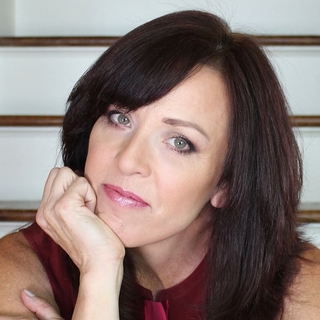
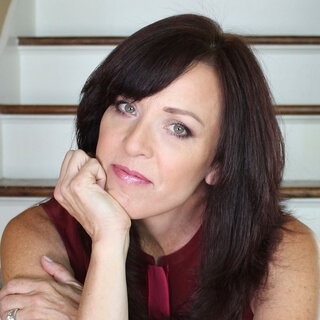
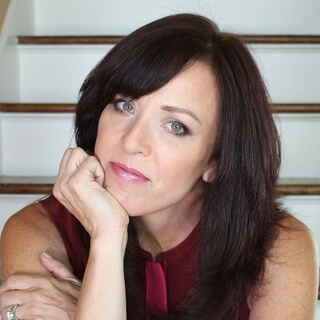
My name is Lisa A.
Romano.
I am a life coach,
Bestselling author,
YouTube vlogger,
Meditation teacher,
And expert in the field of codependency and narcissistic abuse.
I am a believer in the power of an organized mind.
My aim is to help people learn what it means to live above the veil of consciousness rather than living a reactive life.
May your heart feel blessed,
Your mind feel expanded,
And your spirit find hope as you spend time with me here at the Breakdown to Breakthrough podcast.
So today,
We're going to be talking about how denial in a family system causes childhood emotional trauma.
So today we're talking about emotional trauma related to childhood issues.
We will be addressing what it means to grow up in a family that's full of denial,
Specifically as it relates to having a parent who has alcoholism or some type of a drug addiction or even a mental health issue like narcissism or borderline personality.
We're talking about what happens to a child when there is no authenticity in the home,
When no one is telling the truth,
Where and when a child is forced to adapt to crazy making situations,
When a child is forced to abandon their inner reality for the sake of a family system.
What happens to a child born into a family system that they need in order to survive?
What happens to a child inside a family system that is toxic,
That is sick,
And the child has no way of understanding that what is wrong is outside of them?
How does a child adapt to the craziness of alcoholism?
When parents are erratic,
When they constantly rationalize poor behavior,
When they are doing things that hurt themselves and hurt the children,
When there is no one to rely on,
When a home is unpredictable,
When meals are not set,
When schoolwork is getting ignored,
When people are fighting and arguing and fights are happening in front of the children and the needs of the children are not being tended to.
What happens to a child whose family system is so toxic and yet no one is acknowledging that this child is in a toxic home?
If you grew up like this,
First of all,
That's not your fault.
It's not you.
It's what happened to you.
If you grew up in a home like this,
Then you need to know that you are forced to adapt and to cope to situations and experiences you never should have.
You need to know that all children are afraid of abandonment and all children have no other choice but to acclimate to the toxicity of a childhood home.
The problem that this creates in our lives is that all of us are born asleep.
All of us are born subconscious.
All of us have the default mode network operational in the brain and outside of conscious awareness,
We hear our mind saying things.
We feel our body experiencing things and we don't realize that we are not the mind and we are not our emotions.
Most people are responding to what they think,
They think,
And to what they feel.
Most people don't realize that they can think about the way that they think and they can think about the way that they feel.
So the bad news is that if you come from a home like this and you are forced to cope and you are forced to adapt to crazy making situations,
You are forced to actually distort reality in order to survive the reality.
You might still be doing that today.
Your mind still might be doing what it did when you were a child,
Disowning your feelings,
Disowning your reality,
Trying to gain approval,
Trying to stay out of the hairs of the toxicity,
Which means that you might be someone who subjugates their needs for the sake of others.
You might be a peacekeeper.
You might seek out people to fix and to rescue because as a child,
In order for you to survive your alcoholic home or your toxic home,
You found and discovered that it was safer to be a rescuer,
To be a fixer.
It was safer for you to have absolutely no needs at all.
And this is a true,
True tragedy and this is happening across the world and across the globe right here and right now.
And I don't think enough people are talking about it enough.
And there are so many layers to this.
There is the layer of being born unconscious,
Being born in a toxic environment,
Having family members that distort reality and then absolutely because of their own denial,
Force you to distort reality in order to survive the toxic reality.
We have that.
And then we have this idea that until we awaken and we see our truth,
We hear ourselves thinking and feeling things that are backwards,
That are irrational,
But we don't know it.
It becomes our illogical logic.
And healthy people seem abnormal to us.
People who want to be kind to us,
It doesn't make sense.
We push them away.
We tend to be people who feel a lot more familiar with toxicity and chaos.
And therefore we gravitate towards relationships and situations that tend to be turbulent.
Or we can be the people that bring the turbulence into relationships because peace just doesn't make sense to us.
It doesn't fit.
It's not part of our schema.
It's not part of our internal dialogue.
There has to be something wrong all the time and there has to be something that I need to fix.
Otherwise I don't feel normal.
That's a problem.
We come into this world unaware that we're unaware.
We're born to people who live in denial.
As children we're forced to abandon our own reality for the sake of the sick family system.
We're born asleep so we don't know that we've been downloaded and programmed and indoctrinated and domesticated into thinking things that are illogical in order to survive.
We become adults who are highly insecure,
Who fear abandonment,
Who fear rejection,
And who also live in denial.
More often than not we become people who have eating disorders.
We have trouble with alcohol.
We smoke way too much weed.
We do everything to the extreme.
We could be adrenaline junkies,
People that take risks,
People that have unprotected sex,
People that don't think anything about exchanging sacred sexual energy with just about anybody who will have us.
So we're risk takers.
We're not thinking clearly.
We don't know how to value the self.
We've never been taught and modeled,
You matter.
What do you think?
What do you feel?
It matters.
Your parents were erratic.
They were involved in their own drama,
In their own trauma,
And they failed.
They failed miserably in being able to honor you.
There is a time for forgiveness.
There is a time for healing.
However,
Before that time you,
Dear one,
Have to figure out what happened to you.
You have to come to terms with how you felt as a child.
You have to embrace the times in your life and the feeling that you have that makes you feel unworthy,
That has caused you to feel and fear abandonment.
You must embrace it because it's not your fault.
The inner child inside of you is carrying these wounds and they're valid.
And the only way to access them is by surrendering to them,
By accepting them,
By not being in denial of them.
For as long as I could remember,
I was in denial of what happened to me and how I felt as a child.
And I lived with people who thought they were doing the right thing.
And to their credit,
They were much better parents than their own parents.
My parents are both adult children of alcoholics who had terribly chaotic childhoods.
And to their credit,
My parents did not drink,
Well,
Not to excess,
At least not in front of me.
My dad did get drunk a couple of times in front of us,
But it was very rare.
It wasn't an ongoing process.
What I'm trying to say is this was an alcohol was not a daily issue in our family or even a weekly or a monthly issue.
But when my father drank to excess,
It could get out of hand.
So to their credit,
They did much better than their parents.
They stayed together.
They built a home.
My father had his own business.
My mother stayed home.
She cooked three meals a day.
We all went to private school.
The house was clean.
The bills were paid,
Which was a much different situation than what my parents grew up in.
However,
Denial was still a factor in our lives.
There was emotional abuse.
There was verbal abuse.
There were moments of physical abuse.
There was indifference.
There was constant hostility.
There was anxiety.
There was stress.
None of it ever got spoken about.
We weren't allowed to feel our feelings.
If we cried,
We were banished from the kitchen.
We were told to go upstairs into our bedrooms,
Or we were told if we wanted something to cry about,
My father would give us something to cry about.
We were shamed.
We were mocked.
We were put down.
We were made fun of.
We were humiliated.
And all of these things were the norm in our home,
And it was on a daily basis.
So it was a pretty rough place to grow up in,
Although everything looked perfect on the outside.
And this is something that many adult children of alcoholics have to suffer through,
Children who have parents who have mental health issues that are not addressed,
Children who grow up in abusive homes where trauma is happening on the daily.
You are forced to forego your inner reality for the sake of being part of this family that is actually hurting you.
So I wanted to go into a little bit of depth about what happens when you come from a home where denial is the cornerstone of the way that your family functions.
And if you relate to this,
This is something that you can really heal from as you recognize the truth.
The truth does set you free,
But that doesn't mean the truth isn't painful.
That doesn't mean the truth isn't going to open you up and you're not going to feel this flood of emotions that have been trapped within you that have really been preventing you from living a fulfilled,
Authentic life.
I think it was Virginia Woolf who said,
It's not what happens to children.
It's the denying of what happened to children and or the inability for a child to express what happened to them.
When children are afforded the opportunity to talk and to feel witnessed and to feel acknowledged and to feel validated,
When someone has empathy for a child,
Then a child has the ability to process this experience and move it forward and to clear it.
But when you are the adult child from a home that has forced you to deny your wounds,
You are blocked.
You have energy blocks.
You have gastrointestinal issues.
You might have fertility issues.
You might have diverticulitis.
You might have heart palpitations.
I've had clients who have said that because of my mother's rejection,
I truly believe that I got breast cancer from that type of rejection.
I did not feel love flow from my mother to me.
Our house was chaotic.
The best thing that I could have done was stay out of my mother's way.
That made me feel safe,
Which is so sad when you think about it because your relationship with your mom and your dad or your parents is really the foundation for every other relationship that you're going to have in your life.
When your mother makes you feel like you're not good enough,
You take that with you.
And it can turn into codependency where,
Well,
If my mother didn't love me,
Then maybe if I convinced my partner or my friend or my boss or my coworker that I have value,
Then maybe they'll love me.
So if I turn myself into a pretzel and figure out what it is someone else wants,
Maybe I can get the love that I always needed and crave from my mother from this other.
And isn't it interesting that the word mother is other?
In other words,
Take the M off the word mother and you have other.
Take the word parent and turn the letters around and you have the word partner.
It's just very interesting to me when we look at the language and we see these similarities or these parallels.
So how I am treated by my mother defines my other,
Which is very interesting.
So let's get to talking about denial.
So what is denial all about in a sick family system?
Let's say alcoholism.
Well,
There is this fear that other people will find out that mom's an alcoholic.
There is a fear that people will find out that dad's an alcoholic.
There's a fear that other people will find out that the house is going to be lost because the mortgage hasn't been paid.
So the family secrets are really what children are afraid will get out.
So the children have to distort reality.
They have to live in denial that this is really happening.
They have to go to school and they have to pretend that mommy fed them breakfast or they have to pretend that daddy came home last night.
So they get this idea of what normal is and what should be,
But children who are lost in this space,
They are forced to deny what's happening at home because the family system is sick and the family is rooted in denial.
The next thing is that we have to understand that denial becomes a defense mechanism.
It becomes a way of life.
So if I'm in pain,
I deny it.
If my bills aren't paid and I don't have enough to pay my bills,
I deny it.
If I am suffering from an eating disorder,
Which I had as a child,
Well actually well into my twenties,
I deny it.
So when I'm suffering,
I'm forced to deny it.
If I marry someone who is a narcissist or who is an alcoholic,
I deny it.
I pretend because this is my defense mechanism.
It becomes my coping mechanism.
So denial is the way that I cope.
Oh no,
That's not happening.
Oh no,
Everything's okay.
So I am coping with stress and painful situations by denying that they exist.
You live in a home where the people who are in charge distorted reality.
So you say,
Mom,
Dad's drunk.
Mom says,
No,
Dad's not drunk.
It is the most obvious thing in the world to you as a child,
But mom is distorting reality.
That affects the way you rationalize,
That affects the way you begin to look at situations where you will then begin to distort reality.
So you're forced to deny the obvious.
What ends up happening later on in life is that you can't trust your instincts.
So you say to mom very innocently,
Dad's drunk,
And mom says,
No,
Dad's not drunk.
She's just distorted reality.
Now mom is someone you need.
So you don't have the ability to go up against mom and challenge mom.
You psychologically know you need mom.
So when you come from a family that is built on denial,
Then what ends up happening is you're not allowed to feel your feelings.
You're not allowed to have your own reality.
You're not allowed to have your perception.
And what happens when you are repeatedly told that what you see,
You're not seeing,
Or that what you're feeling and what you're perceiving,
What you're experiencing,
Isn't quite right?
What happens inside of you?
You end up developing denial patterns too.
It becomes part of your coping mechanism for life.
And so when someone is being abusive,
You might tell yourself that that just really isn't happening.
Or if one of your children come to you and they tell you that this terrible thing is happening,
You might default to a denial pattern.
And so the consequences of coming from a family that is built on denial are vast and they're long.
Children are forced to accept the reality of the people who are in denial,
Which forces them to abandon their own reality.
And in addition,
When you go against the grain,
When you go against the family,
You're risking being turned away.
So if you come from this type of a home,
One of the things that you will eventually begin to experience on your healing journey is anger.
You're going to learn that what you went through was inappropriate.
You're going to have to face the many ways in which you were forced to deny your own reality.
You're going to experience anger.
You're going to experience pain.
You're going to have to face the fact that the way you were raised was not right.
It was toxic.
It was dysfunctional and it was rooted in denial.
You're also going to have to face the many ways in which this denial pattern has shown up in your own life.
How often have you denied your right to feel a feeling?
How often have you denied your right to see things just as they are?
How often do you tend to go into denial or you really don't want to talk about that thing because of the way that you were raised?
What is the consequence of being raised this way?
And on the healing journey,
If you're like most people,
You will develop some level of anger.
And in my opinion,
That anger is appropriate and it needs to be processed.
Find yourself angry about the erratic behavior of your parents.
You'll find yourself angry about any codependency.
So if mom sheltered dad or dad sheltered mom,
You're going to start to feel the anger about that.
And again,
This is appropriate.
We don't want to get stuck there,
But these are some of the things that you'll be angry about.
You may end up feeling angry about the fact that you experience yourself as being compliant.
You might find yourself asking yourself things like,
Why did I put up with that?
Why did I tolerate that?
Why do I still put up with this?
Why did I tolerate this all those years?
And why didn't I say something?
Why didn't I speak up?
And you really have to be very compassionate for yourself and you have to recognize and remember that you were just a little boy or you were just a little girl when you were involved in this family and you had no other choice but to acclimate to what was happening in your family.
It is not your fault if denial is part of the way that you think and the way that you process information.
It is not your fault if you disown your own inner reality,
Which is what gaslighting is all about.
It's not your fault if you came from a home like this and you have manifested narcissistic relationships in your life in which the crazy making communication still happens in your life.
It's not your fault.
So anger is definitely going to be part of the healing journey.
And again,
It's not where you want to get stuck,
But it's a place where you say,
There I am.
When you're able to recognize that you were a victim,
When you're able to recognize that you have a right to be angry about the way that you were treated as a child,
That's a very sacred space.
It's a very healing space,
But it's not a space that we want to get stuck in.
It's a space that allows us to develop a healthy sense of ego.
When you are compliant to erratic parents,
You don't have a healthy ego.
You are giving your right to feel what you feel and experience what you experience over to this toxic situation.
And as you heal,
You regain that power.
You start to take your power back.
And this is definitely part of the recovery journey.
So if you come from a home where there was alcoholism,
Where there was narcissism,
Where there was emotional neglect,
Please know it is not your fault if your family was rooted in denial and you have adopted some of those denial patterns yourself.
And if you have a difficult time recognizing what you feel and what you think and what you want in your life.
This is all par for the course.
Dear one,
It could be no other way.
But the great news is that as you awaken and as you begin to tell yourself the truth,
As you begin to honor your story,
The truth begins to set you free.
You find yourself on the healing journey.
You may have to set boundaries and most likely you will.
Not everybody's going to be happy about that.
Set the boundaries anyway.
Prepare yourself for the long haul.
There'll be people who absolutely want,
Will be angry that you set a boundary.
You'll have cultural differences.
You'll have people tell you that in your culture you have no right in the world to set a boundary with your parents.
You may even have friends who don't understand what you're going through.
There might be a lot of pressure placed on you to backpedal and to make you say that or to get you to say that your reality is false.
Like you're making things up from childhood.
These are the types of things that happen when we begin to awaken and we stop drinking our toxic family's Kool-Aid.
So try to keep in mind that the truth sets you free.
Try to keep in mind that it could be no other way and it's not your fault.
So please offer yourself self-compassion.
Try to keep in mind that anger is healthy and appropriate in this situation,
Although we don't want to get stuck there.
And we don't want anger to control us.
We want to be able to control our emotions.
It's never good when our emotions are controlling us.
That's the whole point of evolving as a human being.
We're trying to gain control over what's happening in our mind.
We're trying to gain control over what's happening with our emotions and we certainly want to be in control of our behaviors.
So know that this is all par for the course.
Anger is par for the course.
And as you begin to honor yourself and tell your story and tell your truth,
And as you stay close to the recovery path,
You shall heal and you shall learn to live in your reality.
You'll learn to integrate the past.
You'll learn to live in the now so that you can live an abundant future.
And quite frankly,
Until we learn how to do that,
The past hijacks the now,
Which affects the future.
And as divine human beings,
It doesn't have to be that way.
We don't have to allow the past to dictate our fate.
Namaste,
Everybody.
Until next time.
Bye for now.