Welcome back to the Inner Compass Masterclass,
Session 2.
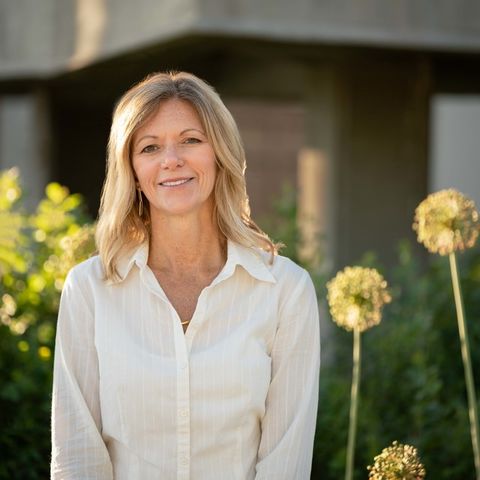
I'm Michelle Walter with Life from the Summit,
And I'm so glad to have you back here again.
Yesterday,
We explored Part 1 of the three-part framework for finding your inner compass,
Which was finding your direction.
Hopefully you got some clarity around your core values,
What deeply,
Deeply matters to you.
And if you haven't listened to Part 1 yet,
Please go back and do that before you go ahead and listen to Part 2.
So today,
We're exploring the second part of this framework,
Seeing the fork.
And once again,
I invite you to find a quiet,
Comfortable place,
Maybe grab some paper and something to write with,
Because we'll have some prompts for reflection.
For most of our lives,
Many of us have wandered down the paths that other people have created for us,
Or wandered down the paths that we just thought we were supposed to take.
And a lot of times we've never really given it much thought.
We just,
Quote,
Stay the course,
Keep moving down the path.
And in doing that,
We might have forgotten to ask,
Or maybe never even realized that we could ask,
About what's deeply important to us.
Never asked,
Is this the path I'm actually supposed to be on?
Is this my path?
Along the way,
We've probably come across some forks in the path,
These little signs or nudges that invited us to go a different direction or follow a new path.
But because of our deep conditioning,
Or fear or uncertainty,
We just kept walking past that fork,
Sticking to the well-worn path in front of us.
Maybe that fork in the road wasn't completely cleared.
Maybe we didn't want to do the work to bushwhack down that path.
Or maybe that fork looked too scary,
Or dark,
Or uncertain.
Whatever it was,
We ignored that fork in the path.
And what I am here to tell you is that the fork in that path,
That little nudge or sign that kept calling to you,
That was the path toward your core values,
Toward what is deeply important to you.
In order to have the courage to take that fork,
We have to first see the path that we've been on.
We have to know the path that we've already been on so that we know when we actually see a fork in that path.
The path that we traditionally have been on has been the path of what I call our non-core values.
Now,
True,
Maybe the path that we've been on has also been a path that's led to some of our core values.
What I want to open up the possibility for is that the path that you may currently be on may not be the path that is entirely of your own core values.
It could be a path of what I call these non-core values.
And these non-core values are what have gotten in the way of you having the energy,
The space,
And capacity,
And awareness to honor your core values.
Most of us spend a lot of time engaging in activities and following paths that don't honor our core values.
We've been spending so much time,
Often unconsciously,
Trying to stay on a path that honors things that in reality aren't really that important to us.
We've just thought that they should be important to us.
For example,
Maybe you've been told all your life that success looks like having a big house and two kids,
Two cars,
And a vacation home in the mountains.
Maybe you've been conditioned to believe that your self-worth and your value is wrapped up in your job and how much you work.
Maybe the dominant white culture in America has caused you to believe that there are certain standards of,
Quote,
Normalcy,
Or,
Quote,
Beauty,
Or accomplishment that you have to uphold.
Whatever it is,
They are unconscious beliefs,
Habits,
Ways of thinking that you don't even know have formed the path that you're on.
And these unconscious beliefs,
Habits,
And ways of thinking actually get in the way of more consciously choosing how to live in alignment with your core values and with what's really important to you.
But the good news is that we can shine the light on that unconscious path we've been walking.
And we do that by looking at the ways that you spend time and energy honoring the things that really aren't that important to you,
Your non-core values.
These are the things that you spend a lot of time and energy honoring but never really questioned whether you wanted to,
Or even why.
Never questioned whether they were the values that you actually chose for yourself,
As opposed to having been chosen for you by family or society.
These are usually the values that are embedded within us by society,
Family,
Culture,
Church,
News,
Advertisements,
You name it.
For example,
Let's take perfectionism.
That is a huge non-core value that I used to hold and I'm still trying not to hold,
Especially as a straight-A student turned attorney.
And it's a value that a lot of attorneys I know and linear thinkers,
Especially in America,
It's a value that a lot of us hold.
So I believed from a very young age that there was no room for error,
That mistakes and failures meant that I was less of a person,
That I wasn't good enough,
And that the only way I could prove my worth was to never fail,
Never make mistakes.
So I placed a really high value on quality work and output,
On obsessing over little details,
Comparing myself and my quote,
Flaws to others so that I could keep improving.
And it was exhausting.
It took such a toll on me to live my life trying to honor this value of perfectionism that I didn't even really know I had and that is so rooted in the dominant white culture of America.
So we're going to reflect on the non-core values that you've been honoring in your life,
The ones that you've kept on the quote,
Right path for,
That path of meeting these external expectations,
The non-core values that have gotten in the way of seeing and taking the fork in the path toward your core values.
So again,
I invite you to pause the audio when you need to reflect and jot down the prompts for reflection.
So reflect on these questions.
What are some beliefs,
Stories,
Mindsets,
Etc.
That you've adopted from family,
Society,
Culture without even thinking about it and that you don't feel like are really yours?
I'll say that again.
What are some beliefs,
Stories,
Mindsets that you've adopted from family,
Society,
Culture without even thinking about it and that you don't really feel like are yours?
And the second prompt for reflection is when or where in life do you find yourself saying something like,
I have to do X or I should do X or I'm afraid if I don't do X then something bad will happen?
When or where do you find yourself saying,
I have to do X,
I should do X,
Or I'm afraid if I don't do X then something bad will happen?
Take some time to reflect on those questions.
And once you've given yourself that time,
Then let's move on because now based on those reflections,
I want you to write down one to three words,
Maybe more if you want to,
But one to three words that represent the beliefs,
Stories,
Or mindsets that you've adopted from others and that you spend a lot of time and energy on because you feel like that you quote,
Have to or quote,
Should.
What are one to three words that represent those beliefs and stories that you feel like you have to do,
Have to uphold,
Should do,
Should honor?
These are your non-core values and if you have more than three that's okay.
Now as we did in session one,
Let's pick just one of those non-core values to work with for now as we go through this process.
You can come back to the other ones later with that rinse and repeat process that we're going to go through.
And take some time to reflect on these questions.
How do you define this non-core value?
From where did you get the messages,
Stories,
Or beliefs about that non-core value?
And on a scale of one to ten,
With one being none and ten being a hundred percent,
How much time and energy do you spend honoring that non-core value on an average basis?
On a scale of one to ten,
How much time and energy do you spend honoring that non-core value on an average basis?
When you're done with those reflections,
Come back.
Awesome work by the way.
And again I invite you to resist the urge to push your way through this process.
Let it breathe for a while.
Give it a little space.
Come back to it when you feel more capacity,
More focus,
More presence.
Becoming aware of these unconscious beliefs can be really unsettling,
So I want to normalize that for you.
If you're feeling unsettled or challenged by this process,
That's perfectly normal and okay.
I invite you to show yourself some compassion and step away from this work for a while.
Come back when you feel more resourced.
And please send me a message if you need more support or guidance.
And that's it for today's lesson.
Please join me in part three next time as we explore the third part of the intercompass framework,
Take One Step.
Again,
I want to really honor you for taking this time for yourself to do this really important work.
And I invite you to message me if you have any questions or reflections that you'd like to share.
Until next time,
May you stay safe and well.