The Anahata Chakra which is known as the Heart Chakra and the Anahata Chakra is also known as the Heart Center.
The word Anahata,
This is the Sanskrit word and this word translates to,
It means unstuck or unhurt and it refers to the sound that comes without two things colliding.
It's a symbol of something that exists before you have that experience.
The location of this chakra,
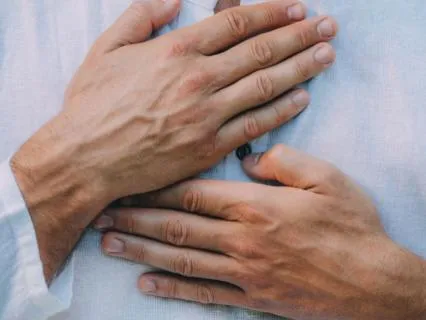
It's in the center of the chest behind the sternum and it kind of corresponds with the physical heart and the lungs.
The Anahata,
The Heart Chakra,
It's like the midpoint of the chakra system.
You've got three chakras above and you've got three chakras below.
The element that is represented by this chakra is air because air represents movement,
Circulation,
Breath,
Prana,
Relationship,
Exchange.
Its color is green and its symbol is a 12th petal lotus where each of the petals corresponds to a certain quality of the heart like love or compassion or patience or forgiveness.
When you think about the Anahata Chakra,
You can imagine walking into a room where the windows have been shut for years.
Nothing is broken,
The furniture is intact but the air in that room,
It feels heavy,
It feels stale,
It almost feels difficult to breathe.
And what does this room need?
It does not need new furniture.
It does not need to be renovated.
It just needs air.
It needs air to move.
And this is how the heart functions in modern life.
In our modern life,
There's nothing wrong with our heart.
It's just that the windows have been closed for too long.
So in yoga,
The heart chakra is called Anahata which means unstuck or unhurt.
And this points to something profound.
Beneath experience,
Beneath memory,
There's a part of the heart that has never been damaged.
Anahata sits at the center of the chakra system.
It acts like a bridge.
Below Anahata,
All the chakra centers are concerned with survival or with pleasure or with will.
Above the Anahata Chakra,
All the chakras are concerned with expression or insight or surrender.
So the heart,
It translates our instinct into relationship and intention into care.
The quality of this chakra is air,
Vayu.
And it's not because the heart is fragile,
But more because air is supposed to move in the same way your heart is supposed to move.
And you can think about what happens when air is trapped.
It becomes stale,
It becomes heavy,
It becomes uncomfortable.
And the same thing happens emotionally.
Heart imbalance,
It is really about not having enough love.
It's about stuck circulation.
And we kind of see this in our everyday life.
There's that person who says that I don't need anyone.
But still,
They feel lonely and they feel lonely quietly.
Then there's that person who gives endlessly,
Yet they feel unseen or they feel depleted.
Then there are those people who avoid closeness,
Avoid close relationships because it feels overwhelming.
And there are those of us who just keep busy so that we don't have the time to feel.
And these are not heart failures.
These are simply protective strategies.
And at some point,
These strategies were intelligent.
They served us.
Now,
Most of us were taught how to protect our hearts.
Most of us were taught how to protect our hearts,
How to stay composed,
How to stay capable,
How to stay functional.
But very few of us were taught how to keep the heart moving.
Because when we protect,
When we protect,
It creates stillness in the sense of stagnation.
And this stillness over time,
It becomes rigidity.
And this rigidity,
It doesn't look dramatic.
This rigidity,
It often looks like being emotionally neutral or keeping the tension in relationships very low grade or having that difficulty receiving support or that sense of being touched too easily by others' needs.
The heart hasn't closed.
It simply stopped circulating.
The element of the heart chakra,
Air,
Air teaches us something essential.
Air doesn't cling.
Air doesn't collapse.
Air responds.
In the same way,
A balanced heart can say yes without obligation.
It can say no without guilt.
And it can stay present without self-erasure.
And this is not emotional intensity.
It's emotional mobility.
Anahata is about being endlessly or rather anahata is not about being endlessly loving.
It's about being available to what is.
So rather than asking,
How do I open my heart?
Because that's sometimes the intention we come in,
Right?
We want to open our heart.
So rather than asking,
How do I open my heart?
A more helpful question.
Where has my heart stopped moving?
Where has my heart stopped moving?
And what would allow that movement to return?
Because the heart doesn't need fixing.
It's like the like the room we talked about.
All it needs is for someone to open a window and just let the air in.
Thank you for listening.