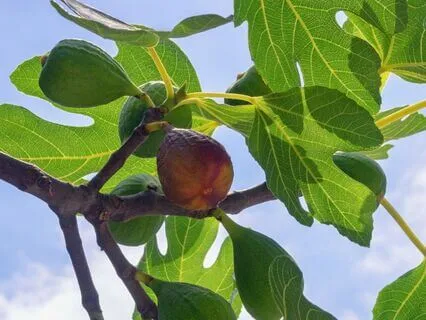
The Parable of the Fig Tree He also spoke this parable.
A certain man had a fig tree planted in his vineyard.
And he came seeking fruit on it and found none.
Then he said to the keeper of his vineyard,
Look,
For three years I have come seeking fruit on this fig tree and find none.
Cut it down.
Why does it use up the ground?
But he answered and said to him,
Sir,
Let it alone this year also,
Until I dig around it and fertilize it,
And if it bears fruit,
Well,
But if not,
After that you can cut it down.
And that's the parable of the fig tree.
A very short parable,
But it's really packed with a lot of meaning,
A lot of meaning for us.
And looking at the central themes or the central identities that pop up in this parable.
Firstly,
There's the fig tree.
And the fig tree simply represents us.
It represents our lives,
Our actions,
Our spiritual growth.
And a fruitless tree can symbolize areas in our life where we feel stagnant,
Where we feel unproductive or maybe we feel disconnected.
Then there's the owner of the vineyard.
And the owner of the vineyard simply represents the way the world works or it can represent the laws of the universe,
Natural consequences because of inaction or neglect.
Then we have the gardener.
And the gardener represents grace,
It represents patience,
It represents nurturing forces in our lives,
Our mentors,
Our practices,
Our faith.
The gardener offers care and the gardener offers a chance for renewal.
Then there's the vineyard.
And the vineyard simply represents the world,
Represents our personal environment.
It represents the space we are given to grow,
The space we are given to thrive.
We will now go into a line-by-line interpretation of the parable simply to unpack what meaning it has for us and how we can use it in our daily life.
And the parable starts with a certain man had a fig tree planted in his vineyard and he came seeking fruit on it and found none.
And the fig tree represents an area or maybe areas in our life.
Our life is essentially made up of different areas.
We have our physical health and nutrition,
We have our relationships,
We have our career,
The work that we do,
We have our hobbies,
Our recreation,
We have our spiritual pursuits.
And the fig tree can represent many areas or a specific area in your life where you hope to see progress,
Where you hope to see some results.
The fruit simply symbolizes the outcomes that you desire.
Maybe you desire the outcome to be personal growth,
Maybe the outcome you desire is fulfillment,
Maybe the outcome you desire is loving relationships,
Maybe the outcome you desire is finding that serenity in your spiritual work.
In which areas of your life do you feel unproductive or unfulfilled?
For some it may be health,
For some it may be relationships,
For some it may be their careers or their education.
Which area in your life do you feel unfulfilled?
And the question that we could ask ourselves is are we truly nurturing those areas or are we expecting results to come in without adequate care and attention?
Then he said to the keeper of his vineyard,
Look,
For three years I have come seeking fruit on this fig tree and find none.
Cut it down.
Why does it use up the ground?
The frustration of the owner,
The frustration of the landlord,
It highlights how easy it is to lose patience with ourselves or patience with others when progress isn't immediately visible.
How many of us have started these exercise routines and after 3-4 days we don't see those results so we just stop doing it?
How many of us go on a diet and by the third or the fourth day we expect something magical to happen but nothing happens and we simply stop doing that and we go back to our old ways?
How many of us have sat for meditation and found that after a week,
After two weeks there seems to be nothing happening so we just stop doing it?
In today's world,
In today's fast-paced world a lot of us look for immediate gratification,
Instant gratification.
It is easier to sit in front of the television watching a Netflix series for 8 hours than spend those 8 hours doing meaningful work.
So it's very easy for us to lose patience when we don't see immediate results.
So in our daily lives,
Try to be aware,
Try to recognize impatience,
Try to recognize self-criticism.
Instead of giving up on a goal or a habit or a relationship,
Try to consider whether the lack of progress might be due to a need for better care or a need for resources or maybe a need for a shift in perspective.
And this particular sentence of the parable,
There are two ways to essentially look at this.
One way to look at this is I am investing my time and I am investing my effort doing something and if it is not giving me fruit do I need to hold on to what I am doing or do I need to let it go?
Two ways to look at this.
One is I am doing something,
I am investing my time,
I am investing my resources into a certain activity but I am not seeing the fruit.
Do I need to continue doing this or do I need to let it go?
And another way of looking at the same sentence is I am investing my time doing something that has some meaning for me but I am not seeing any fruit.
Is there something I am doing wrong?
Is there something I need to look at from a different perspective?
Do I need to bring more resources in?
Do I need to bring more ideas in?
So two ways to look at the same sentence.
But he answered and said to him Sir,
Let it alone this year also until I dig around it and fertilize it.
And this is the gardener's response.
The gardener's response teaches us the value of grace,
The value of patience,
The value of active nurturing.
Growth takes time.
Sometimes growth takes a lot of time,
Growth takes a lot of patience,
Growth takes a lot of perseverance and growth takes a lot of discipline.
Often we need to tend more carefully to the soil.
The soil is simply or the soil could be our environment,
The soil could be our habits,
The soil could be our mindset,
The soil could be our routine.
As we start tending to the soil,
As we start maintaining discipline in our life,
As we start sticking to our routines,
As we adapt or change our environment and to be conducive to the work that we want to do,
We start to then see results.
So in our daily life,
What fertilizer does your goals need?
And the beginning of the year,
We are in this goal setting process.
We have set some goals for the previous year and maybe and some goals we have achieved,
Some goals we haven't.
You could spend some time reflecting on what fertilizer was missing and for the goals that you are going to set for this year,
What fertilizer does your goals need?
Maybe the fertilizer is a new routine,
Maybe the fertilizer is a small daily practice,
Maybe you need to create space by letting go of distractions,
Letting go of clutter.
So you could commit to giving yourself one more year to see what is possible,
What is possible to be achieved with a renewed sense of effort,
With a renewed sense of care.
And if it bears fruit,
Very well,
But if not,
After that you can cut it down.
And the gardener leaves room for acceptance.
Because sometimes,
Even with the best efforts,
Certain paths may not bear fruit.
Even with the best efforts,
Certain paths may not bear fruit.
This does not mean failure.
It is simply an opportunity to redirect your energy to an area that will flourish.
So when things don't seem to be working out,
Even after a lot of effort that has been put,
Don't consider it as a failure.
Consider it as an opportunity to redirect your efforts,
To redirect your attention.
Practice self-compassion.
It's okay to let things go.
It's okay to not do things that do not align with your journey.
So when you feel things are failing,
Look at it as an opportunity,
An opportunity to learn,
An opportunity to focus on what aligns more naturally with your purpose,
What aligns more naturally with your potential.
And that is essentially the parable of the fig tree.
A short parable,
Every sentence,
A lot of meaning,
A lot of application in our daily lives and very specifically at this time of the year where we reflect on the goals of the previous year and we try to set goals for the coming year.
So overall daily practice that's inspired by this parable.
Assess your fig trees.
Take inventory of areas in your life where you see growth.
Whether it's your health,
Whether it's your relationships,
Whether it's your career,
The work that you do,
Whether it's your finances,
Whether it's your hobbies and your recreation,
Your community or your spirituality.
Take inventory.
Take inventory especially of the areas where you're seeking growth in.
Be honest about whether you've been neglecting a certain area or whether you've been overburdening a certain area.
Secondly,
Create space.
Create space and nurture.
Enrich the soil around your goals.
Try to identify and add practices,
Tools,
Habits that support your growth.
Thirdly,
Practice patience.
In this age of immediate gratification,
Try to practice patience because growth is gradual.
Trust the process and resist the urge to judge your efforts too soon.
Fourthly,
Allow for grace.
Forgive yourself and others when progress isn't immediate.
Let grace guide your action.
And finally,
Let go when necessary.
If a goal,
If a pursuit doesn't yield results after genuine effort,
Release it.
Release it with peace.
Release it with gratitude.
Release it knowing that it has taught you something valuable.
So we'll now go into a guided reflective meditation based on the parable of the fig tree.
So today we will journey into the heart of this parable and we'll connect the teachings to the soil of our own life.
If you are sitting,
Feel yourself relax in your chair or the space that you are seated in.
If you are sleeping,
Feel the surface that you are sleeping on support you.
And if you are moving around,
Simply bring your mind to yourself.
If it is safe to do so,
You can close your eyes.
If you are not comfortable closing your eyes,
You can simply lower your gaze towards the flow.
Bring your attention to your breath.
The normal flow of your breath.
Don't force it.
Simply become aware that you are breathing.
Become aware of your breath as it enters your body.
And as it leaves your body.
As you inhale,
Fill your lungs with fresh air.
And as you exhale,
Imagine that you are releasing any tension,
Releasing any worry,
Releasing any distractions,
Simply letting them drift away.
Inhale fresh air.
And release as you exhale.
And bring your awareness to your body.
Feel the weight of your presence.
Feel the weight of your presence steady like the trunk of a tree.
Picture yourself standing in a lush vineyard.
You are surrounded by those and rows of flourishing plants.
The air is warm.
And the scent of the earth fills your senses.
This is your vineyard.
This is the garden of your life.
As you start to walk through the vineyard,
You come upon a fig tree.
Pause to observe it closely.
Notice its roots anchored deeply in the soil.
Notice its sturdy trunk.
And observe its branches reaching toward the sky.
Look at the tree more closely.
Does it bear fruit?
Perhaps you see ripe abundant figs,
A sign of productivity and growth.
Or perhaps the branches are bare,
Signaling a season of waiting or a time of neglect.
Take a moment to reflect.
If this tree represents an area of your life,
Your relationships,
Your work,
Your health,
Or your spiritual journey,
What does it show you?
What thoughts or emotions arise as you gaze at this tree?
Now imagine the vineyard owner standing beside you.
They look at the tree with care.
Yet,
There is concern inside in their voice.
For years,
They say,
I have hoped for fruit,
But I see none.
Perhaps it's time to cut it down.
Pause and consider.
Are there areas of your life where you felt frustration,
Impatience,
Or the urge to give up?
Where have you been expecting fruit,
But finding none?
Before you this pond,
Another voice speaks.
The gardener steps forward.
A calm presence filled with hope and faith.
Let it be for one more year,
They say.
I will tend to it.
I will dig around its roots and feed it.
If it bears fruit,
Then it will have been worth the effort.
Now imagine the gardener speaking about you.
They are offering you grace.
They are offering you patience.
They are offering you the chance to nurture what feels stagnant or barren.
What would it look like for you to dig around the roots of your own life?
What nourishment do you need to give yourself?
What practices,
Relationships,
Or actions could help you grow,
Could help you flourish?
Feel the gardener's confidence and care filling your heart.
Now in your mind's eye,
Picture yourself tending to this fig tree.
Visualize clearing the soil around its roots,
Making space for air,
Water,
And light.
Imagine adding a rich,
Life-giving fertilizer.
Kindness,
Gratitude,
Intention.
See yourself watering it with steady,
Loving attention.
As you tend to this tree,
It begins to transform.
New buds emerge,
Blossoms unfold,
And soon,
Vibrant fruit appears.
This fruit represents the potential within you.
This fruit represents your unlimited potential,
Your dreams,
Your contributions,
Your joy.
Feel the satisfaction of seeing this tree flourish,
Knowing that your efforts and patience made it possible.
Take a deep breath in,
And as you exhale,
Let a sense of peace and renewal settle over you.
Place your hands over your heart,
And silently repeat these affirmations,
Or you can repeat them out loud.
I am patient with my own growth.
I am patient with my own growth.
I nurture the areas of my life that need care and attention.
I nurture the areas of my life that need care and attention.
I trust in the process of renewal and transformation.
I trust in the process of renewal and transformation.
And bring your focus now back to your breath.
Become aware of the rhythm of your natural breath.
You can start to wiggle your fingers,
Wiggle your toes,
Bringing yourself back to this present moment.
And when you are ready,
You can open your eyes and carry the image of the flourishing fig tree.
The flourishing fig tree as a symbol of hope,
A symbol of grace,
The promise of a fruitful season,
A fruitful year ahead.
And that was a meditation based on the parable of the fig tree.
So,
We can listen and we can meditate and we can feel good,
But the magic,
Or as I like to say nowadays,
The miracle happens when we start to take action.
There is a famous saying,
Faith without works is dead.
So,
Action.
The action based on the parable is nurture your inner garden.
The parable reminds us that growth is a process.
Like the fig tree,
Areas in our life may feel barren or unfulfilled.
But the gardener shows that there is power in patience,
There is power in care,
There is power in intention,
There is magic in nurturing.
So,
As you step into the new year,
I invite you to identify your fig trees.
Identify the areas of your life that feel unproductive,
That are in need of growth,
Whether it's your career,
Whether it's your relationships,
Your health,
Your spiritual practice.
Identify these areas.
Try to notice where you might be feeling frustrated,
Where you might be feeling impatient.
Could there be parts of your life that you have neglected or you have written them off as being barren?
So,
Identify your fig trees.
Nourish with intention.
In the same way,
The gardener tended to the tree,
Ask yourself,
What do I need to nourish in my own life?
And you can begin today.
You can begin today by cultivating one small practice,
One small habit that supports your growth.
And this could be something or this could be done through practicing gratitude.
This could be done through positive affirmations.
This could be done through daily deflection,
Journaling,
Or learning something new.
Start small,
Be consistent.
Thirdly,
Embrace patience and grace.
Commit to patience in your growth process.
Trust that transformation takes time.
Instead of expecting instant results,
Focus on nurturing the roots of your life with love and care.
Because with consistent effort in the right direction,
Growth will come,
Growth always comes.
Fourthly,
Let go of what no longer serves you.
In the same way,
As the owner of the vineyard was willing to let go of a tree that was not bearing fruit,
Give yourself permission to release thoughts,
Release beliefs,
Release habits that are not serving your highest good.
It's in releasing the old that we make room for the new.
And finally,
As you move forward,
Affirm your growth.
Affirm that you are a living expression of growth and potential.
A simple affirmation,
I am a living expression of growth and potential.
I trust in my ability to transform and bear fruit in my own time.
In my own time.
So today,
Take one small step towards nurturing an area of your life that feels barren or that feels neglected.
And this could be a simple action like setting aside a few minutes for meditation or having that difficult conversation or starting a new habit or letting go of an old habit.
And let this small action,
Let this one action symbolize your commitment to growth and transformation.
Let it symbolize your commitment to growth and transformation as you step into this new year.
So,
What is that one thing you are going to do today?
Anything,
One thing.
Maybe you need to forgive someone.
Maybe you need to forgive yourself.
Maybe you need to make that phone call.
Maybe you need to put on your exercise shoes and exercise.
Maybe you need to not eat that sweet dish tonight.
You decide.
So thank you everyone for being here and may you find joy and purpose in your journey.
Love,
Light,
Blessings.
Namaste.