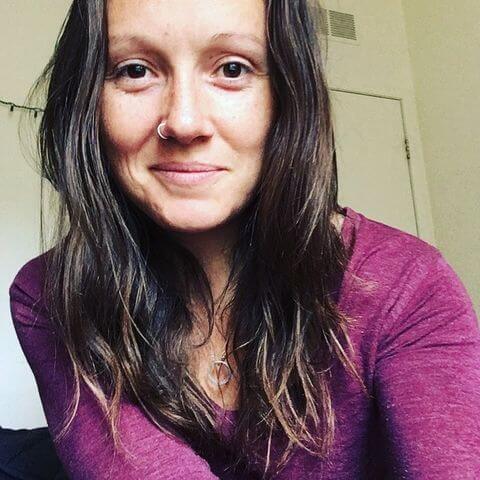
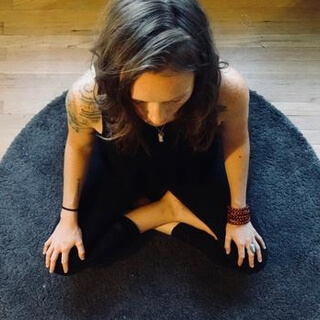
I am Kimberly.
If you haven't been here before,
Welcome.
And if you have returned,
Uh,
My deep,
Deep,
Deep bows to you.
Um,
Today we're going to talk about in Buddhism,
It's called skillful speech or wholesome speech,
Which really is also wholesome thought and skillful thought.
And we're going to talk about mostly the thoughts that then can oftentimes turn into speech.
And today I'm going to just tell a short story.
This is going to be a pretty short podcast,
But I'm hoping that it will be thought provoking.
So a huge part of Buddhism is this idea that everything kind of starts in the mind.
And so I want to start by reading a quote.
This quote is by Lao Cha,
Which I probably pronounced that wrong,
But I really listened to it on YouTube a few times before.
So please forgive me if I pronounced it wrong.
Um,
Okay.
So this is the quote,
Watch your thoughts.
They become your words.
Watch your words.
They become your actions.
Watch your actions.
They become your habits.
Watch your habits.
They become your character.
Watch your character.
It becomes your destiny.
And so you'll notice that the quote starts with watch your thoughts.
And in the Eightfold Path of Buddhism,
One of the,
One of the kind of like spokes to the wheel is skillful speech.
And to me,
Skillful speech starts with skillful thought.
And so a huge part of learning to be skillful in our speech is a learning to be skillful in our thought and in our thoughts.
And so a huge part of that is just recognizing when unwholesome and I'll define that for you.
Unwholesome thoughts are any thoughts that create separation or division between you and any other thing.
So when we have wholesome thoughts,
Wholesome thoughts,
At least in Buddhism,
Are known as like compassionate thoughts,
Loving thoughts,
Loving friendly thoughts,
Thoughts that bring us closer to something.
And then unwholesome thoughts are the thoughts that keep us divided,
That keep up the delusion of separateness.
And so unskillful thoughts would be any thought that is full of ill will or hatred toward another,
Any thought that is full of greed,
And any thought that is full of delusion,
Which is the delusion of separateness,
The delusion of that there is a you and there is a me and we are separate.
And therefore,
How I treat you doesn't matter,
Because it doesn't affect me.
And the truth is,
Is that how we treat others fully affects us.
And this is kind of the delusion that we're trying to,
In some way,
We're trying to drop the smokescreen in our life and reconnect to the truth that we are all connected.
And that we're all in this together.
There's a beautiful line and Khalil Gibran poem,
I'm not sure which one but the line is something to the effect of,
We are only as good as we are.
We are only as good as our lowest member.
And I really believe that it's like we a lot of times think that we're better than others.
Or,
You know,
We're the ones that are good and these other people are bad.
And I want to suggest that maybe our job is to raise everyone up and that we can only be as good as our lowest member.
And so with this thought of skillful speech and skillful thought,
Today I had an experience.
So I was driving and I live in a very rural area and there's like,
I don't even know what the population is.
It's very low.
And there are a lot of people who drive big trucks and a lot of people that drive big trucks that like have flags and stuff on the back.
And it's funny because I really work with trying to just like,
You know,
Really understand that we all have different perspectives and we all are valid in our perspectives.
We all have different perspectives for very good reason,
Mostly because of our past conditioning,
Where we grew up,
Our family beliefs and values or viewpoints.
You know,
It's like people don't just all of a sudden have a viewpoint.
It's like their viewpoint is very,
Very much attached to the life that they have been living and that they were born into.
And so when I see stuff that like maybe I wouldn't do,
Like I wouldn't,
I would have a truck,
But I wouldn't have like a big truck that's really raised with like a bunch of flags,
Right?
But there are people that do do that,
And I genuinely want to see them as a part of my family.
And so I've been working with just like,
You know,
Quick judgments,
My quick biases and all of that kind of stuff.
And today I was driving and I saw one of those big trucks and automatically I noticed I don't even know the exact wording,
But I noticed this kind of judgmental energy,
Kind of this,
Like I saw the truck and I was like it was almost like I rolled my eyes and I'm getting quicker at catching it,
Which is to me the most exciting part is just how quickly can I catch myself separating?
How quickly can I catch myself in delusion?
How quickly can I catch myself in judgment or in ill will or hatred toward another?
And I caught it really,
Really quickly and I automatically was like,
Okay,
That was an unskillful thought.
And then I just held whoever was driving.
I couldn't I didn't even see the person driving.
I held them in my heart and I literally was just like,
May you know strength,
May you know love,
May you know peace,
May you know joy,
May you know ease,
May you be free.
And I just really started sending them meta or loving kindness and practicing compassion.
And it felt so good to catch it and then to just be able to send that person genuine feelings of loving kindness.
And it's funny because and this is,
You know,
What I have found in relationship with anyone is that it's easy to hate people you don't know.
But when you really get to know somebody like really get to know them and spend a lot of time with them,
You find that that person is very much like you.
That they have,
You know,
As the Buddha says 10,
000 joys in their life and they have 10,
000 sorrows in their life.
And they have fear like you and they want to be liked and accepted like you.
And they might feel unworthy like you and that we actually all have the same,
The same desires and the same fears.
And we really can get to know that when we get to know people.
And I personally think,
You know,
Changing our viewpoints and beliefs is hard in this lifetime because we're really just judging people based on not knowing them.
Like we're judging people based on one thing that we hear them say or like them driving a truck with a big flag or somebody with a Trump sign or Biden sign.
Like,
You know,
We judge based on these very,
Very surface kind of like representations,
These surface costumes.
And we don't really actually get to know people or get to know about situations.
And so when we don't actually know anything about the depths of this being,
The struggles of this being,
Then it's super easy to just hold hate.
And that's why we have to really,
Really be diligent with our minds.
Because remember,
The mind doesn't like different.
And if we really look at this in the world,
Like this is one of the biggest,
In my opinion,
Challenges of our time is that people are very uncomfortable with different.
And instead of us being able to appreciate differences or move closer to differences,
We just want to push differences away.
And we want to think negatively about differences,
And we want to judge differences.
And the second that you see a truck with a flag and you notice yourself having judgment,
You have a moment,
That awareness of,
Oh,
That's a negative thought.
Interesting.
I don't even know that person.
Like,
I don't know.
I don't know anything about that person.
It is not fair to me or him or her,
Whoever was in the truck.
It's not actually fair for me to just hold this quick judgment.
And the truth is,
I'm not sure who says this quote either,
But resentment or hatred is the poison that you drink.
When you hate somebody or you have resentment towards somebody,
That's the poison you drink.
That person in that truck,
They have no even idea.
They have no idea about me or my thoughts.
It's the poison I drink.
So if I want to be healthy,
I have to be very conscious of my thoughts.
It is your thoughts that make you sick.
Your thoughts don't make somebody else sick.
It might affect how you,
You know,
Your words and your actions and your character and your destiny,
Like the quote said.
And then people are going to respond to those things.
But your thoughts create your sickness.
And so we have to be diligent with our thoughts.
We have to be diligent with our thoughts.
What we think matters.
And the more that we can cultivate compassionate thoughts,
Loving kindness thoughts,
The more that we can really try to expand our thinking,
Like asking questions like,
Okay,
What is good about this person?
What is something I like about this person?
What is something good going on in my life?
What's right with my life?
These kind of expanding questions that bring us into wholesome thinking and take us out of unwholesome thinking.
And the really the key is beginning to catch ourselves and just labeling it without judging ourselves.
You don't have to judge yourself that you're judging somebody.
You're going to judge somebody.
You're going to judge somebody like just we have to get over that.
Like we're going to have negative thoughts.
We're going to have unpleasant thoughts.
We're going to judge people.
That's not the point.
So we don't need to cause extra suffering to our already suffering.
But what we can do is we can catch ourselves.
We can say,
Oh,
There's a negative thought.
Okay,
No problem.
And what is a more wholesome thought that I can replace that thought with?
And oftentimes I go to Metta because since I don't know that person,
You know,
Another like a wholesome thought could also just be a reality thought.
That's a white truck.
That's an American flag.
It doesn't mean anything more than that,
Right?
Like I can just begin to state reality.
That would be more wholesome than judgment.
But I love going to Metta and just sending people goodwill.
Because I want people to send me goodwill.
Like I'm sure I do something and people find it weird or,
You know,
People want to judge me.
And I would much rather like I love the thought of thinking like every time I mess up or every time I do something that somebody doesn't understand or every time I do something that's different and somebody wants to judge me,
That their response would be to send me well wishes.
That feels like it makes my heart want to break open.
And I want to have my heart break open to all people,
Not because they're the same as me.
The world does not need seven point whatever billion people we are,
Kimberly's.
Dear God.
Like,
No,
The world needs difference and difference is what makes the world so beautiful.
And I think even though there's,
You know,
External differences,
We also have to recognize the sameness that is hidden within the costume that everyone is like putting on so that they'll be not rejected,
So that they'll be liked.
And so as maybe you walk through this week,
Maybe just take on the commitment that you'll be diligent about noticing your thoughts.
And when you notice that a thought is unskillful,
Maybe you're judging yourself,
Maybe you're judging someone else,
Maybe you're judging a situation that you pause and you just acknowledge,
Okay,
This is a negative thought,
No problem.
And what is a more wholesome thought?
I really hope this situation works itself out.
I'm going to be a stand and a,
You know,
A presence of love and care as the situation changes or may that person know peace and love and care or putting your hand on your own heart and whispering loving words to yourself like you are safe.
I love you.
I am here with you.
It's okay.
And having your responses to negative thinking be the cultivation of skillful thought,
Of connective thought,
Of loving thought,
And just begin to notice what happens.
And an easy way to kind of put this into your day-to-day life is to get your friends involved,
Get your partners involved,
Saying like,
Hey,
For one week,
If we have a negative thought,
Let's try to think more positively.
Let's try to think of a thought that's loving and caring and giving.
Let's try to think of a thought that we would want people to think about us.
Get your family involved.
Get the people you love involved because this practice will not only then change you and change your heart and break your heart open,
But it will begin to seep into the people that you love the most.
Hmm.
Okay.
You guys are amazing.
Have a beautiful rest of your week.
I look forward to talking to you soon.
Bye.
Bye.