Welcome to the future of wellness,
Exploring self-transformation and holistic healing to unlock your inner potential.
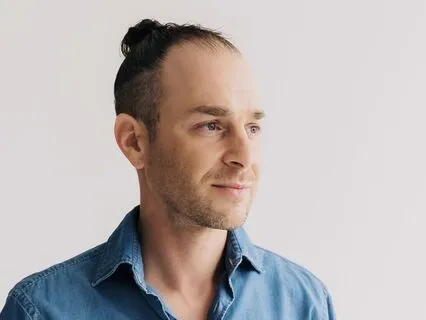
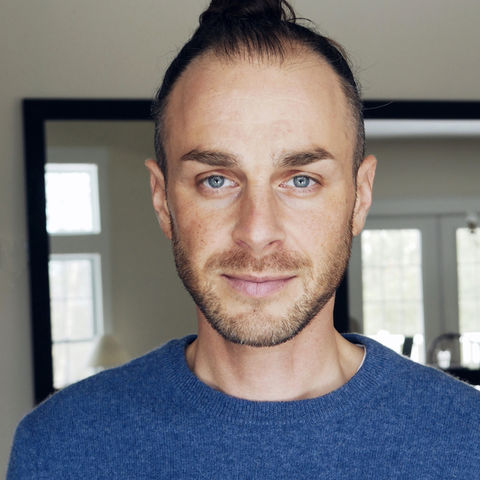
Hosted by Christabel Armstrong and Keith Parker.
Hello and welcome back to the future of wellness.
Today we're turning the tables and host Keith Parker is stepping into the guest seat to talk about his new book,
Radical Reality.
As many of you will know,
Keith is a teacher,
Author and healing practitioner with expertise in the human energy field,
Contemplative science and the healing arts.
Initially Keith used meditation as a vehicle to understand and refine subtle states of consciousness.
Over the following decade,
He studied movement,
Breath work,
Body work,
Energy work,
And other disparate disciplines.
During this intensive period,
Keith had a series of breakthrough experiences,
Which enabled him to see the aura with remarkable clarity.
Keith founded Field Dynamics in 2018 to help individuals with their personal growth and as a platform to exemplify the potential of energy healing.
His first book,
Radical Reality,
How Seeing the Aura Reveals Who and What We Are,
Has just been published and is an exploration of how the human energy field informs our understanding of the mind-body connection,
Consciousness and reality itself.
Welcome Keith,
It's a pleasure to have you in the guest seat today.
I am very excited to be here.
Congratulations on the publishing of your book.
The book dives into some really powerful ideas about consciousness,
Perception and the nature of healing.
Let's start at the beginning.
What inspired you to write Radical Reality?
Did you always intend to write a book and to tell your story?
Okay,
Truth be told,
I don't think that I ever was so excited about writing a book in the sense that I have never seen myself as an author.
Although this format,
Writing long form content is the way in which I felt obligated,
That it was my duty,
That it was really important that I put myself out there in this transparent way and told my story because my story is an unusual one.
It kind of meanders down the pathway of inner work,
Seeking,
Et cetera,
And wound up bringing me into contact with many things that were extremely surprising to me,
Which resulted in why the aura,
For instance,
Is so central to the book,
Kind of seeing into reality maybe more deeply than I ever would have imagined.
And I wanted to share that story so that people could,
You know,
Spend a few hours,
Three and a half hours or whatever it takes to read the thing,
To spend time hearing about an individual's journey and then also to have a kind of conceptual framework couched in spiritual tradition and scientific language to make sense of it.
So it's fair to say the book blends insights,
Concepts and interwoven in that is your personal experience.
Yeah,
That's so that's the format of the book.
It's kind of part A,
Part B,
Part A,
Part B.
And what I do is I tell a story.
That's the memoir part.
And then all along the way,
At certain points,
I ask certain questions.
So deep dive into things about like the role of beliefs and then what is the scientific paradigm and things like what is what are advanced states of meditation?
What is a craniosacral therapy?
Different things that related to the different kind of progressions as my story moved along.
So the title itself is compelling,
Radical reality.
Can you break down what you what you mean by that?
There are a lot of features that everything kind of builds like a crescendo in a sense,
Because,
You know,
The personal story,
There's a trajectory that has a crescendo,
If you will,
But also the insights also do.
And I try and kind of piece together this model of reality that's quite radically different than the one we presume it to be.
So I'll mention three primary ideas in it,
And maybe we'll wind up going into them more later on.
One is this idea of multidimensionality,
Multidimensionality,
Meaning lots of dimensions.
It doesn't mean,
You know,
You're really funny and kind kind of dimensions.
It means literally how reality is structured.
And multidimensionality is something that's very fascinating.
It has been documented and talked about through the ancient traditions like the yogis that chakras are really an insight into different dimensions.
And then what we see in contemporary scientific language is that we're discovering that cutting edge neuroscience is proving that the brain doesn't interface or map onto just three dimensions of length,
Width and height.
But in fact,
Our brains are working in these different higher dimensional geometric interfaces or templates.
And that's really,
Really interesting.
But they're talking about the same thing.
And I piece those together in that to paint a picture of this multidimensional reality we're living in.
And in a certain sense,
That has to do with bridging from physical into energetic domains into these higher dimensions.
Another key thing is interconnectivity.
So interconnectivity is something that we can think about,
Like how are we connected?
But once you kind of get into the world of the aura and how energy healing works,
For example,
We see that how we're connected is not limited by space.
We're actually much more deeply connected and the universe itself is constructed in a much more profound and hyper connected way than we tend to think.
And this is a real paradigm shift.
It's a radical re-envisioning of our connectivity.
In science,
You can pull up ideas like holographic reality and things to start to consider these principles.
And then there's one other one I'll mention now,
Which is the centrality of consciousness.
What role does consciousness play in reality?
So we have a materialist reductionist paradigm at the moment that says everything is just physical.
And in that model,
Consciousness is an after effect of physical stuff,
My own direct experience.
And I'm kind of just confirming or validating my opinion in concert with really all the great spiritual traditions of the world in that it seems as though actually consciousness is the singularity,
Is the unifying feature of all of reality.
And that actually is the substrate from which mind and body and time and space and everything we see actually emerges.
I think one of the important things about this book is that it highlights how you yourself started as a skeptic,
If you will.
And I'd love you to share a little more on that,
Because I think this relates to who might be interested in reading this book,
Given what you've just outlined.
Yeah,
That is really important.
So,
You know,
I grew up really interested in consciousness,
But I wasn't interested in spirituality or religion or anything like that.
I just didn't.
Those words are actually a little bit off-putting to me.
And up through my 20s,
Up until my late 20s,
I was very interested in studying evolutionary biology.
I was very much kind of an adherent to the scientific paradigm and materialism.
And I really thought that what science was or is,
Is the truth and that science could answer everything and that that was the replacement for the religious and spiritual traditions in the world in the long run.
Science would replace those things.
And that was a very naive viewpoint.
And what happened is because of my own suffering,
My own discontent with the life that I was living,
More not on paper,
But more so like internally,
My emotions,
My sense of self was what drove me to do this inner journey.
I started to meditate all the time.
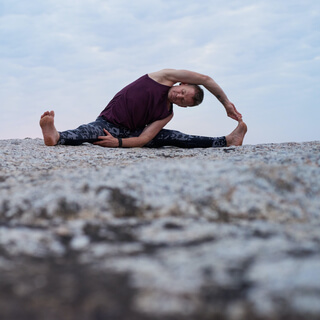
I started to practice yoga all the time.
I became really kind of obsessed and fixated on enlightenment and understanding who and what I was.
And in doing so,
All of these different insights started to come,
All these different experiences,
Which accrues knowledge,
Started to show me that reality is really different than I thought it was.
Science didn't have a good model of reality.
And a big reason that I wrote the book,
Aside from these things regarding telling my story and making things transparent,
Is also that I put a big question mark and posit a big kind of question that we all need to be asking ourselves,
Which is what is the value of us actually getting an accurate model of what reality is?
This is like a concern,
In a sense,
I have.
I'm not like worried,
But we're a civilization,
We're a world,
And we get kind of pulled by the dominant belief system.
And the dominant belief system at the moment says that consciousness is after the body.
The body grows consciousness and mind.
My experience is that's just not true.
And all spiritual traditions,
Again,
More or less,
When you at least read between the lines and or read it explicitly,
Says that's not true.
It's consciousness versus a consciousness based universe and reality.
And that's a different paradigm.
That's a radical shift in thinking.
And I really try and give people this intimate journey in which I discovered that myself and then try and put that back to them and say,
What do you think about this question?
One of the core themes in the book is shifting our perception of reality.
And can you talk a little about why you feel our perception is so limited and how we might begin to expand it?
There's a lot of ways of thinking about it.
It's interesting because,
You know,
People ask me so many questions about my my sensing abilities because it's it's foreign to them.
And understandably so,
People are kind of intrigued and wonder about it.
So there are different ways of talking about it.
One way of thinking about it is that the way in which we're set up by default is that there is a kind of projection screen and there's a bunch of frames that are being put on the screen moment by moment.
And yet those frames have a gap in between them.
And when we start to actually become still and meditate and start to watch what is happening in each moment,
We start to we start to see more nuance,
More subtlety and even potentially start to see those gaps between one frame and the next.
And notice how it is that this experience of mind and body are taking place.
How is it that we're experiencing ourself?
That's one way in which we can start to expand our perception into other interesting and very important domains.
Another way of thinking about it is like frequency ranges.
A lot of people like this.
So,
You know,
Like a dog whistle can be blown by somebody and you won't hear it,
But the dog hears it.
So what if it's as simple as all of these different kinds of psychic skills and extrasensory perceptions and where the aura,
For instance,
The perception of the aura exists in one way or another can be described as simply an expanded frequency range perception.
So if we kind of go in and we said,
Well,
We have a biological constraint,
A way in which we as humans tend to perceive.
What if by going in and doing inner work,
By doing healing work,
By what this word awakening and enlightenment means is that what we're doing is we're actually expanding into deeper levels of what's going on.
And that expansion means literally broadening the frequency range of the perception of what's happening in each and every moment,
You know,
And that's a really straightforward way of thinking about it.
Let's talk for a moment about that,
That vision,
That unusual vision that you that you've referenced.
We mentioned there in the bio that you're able to to see the aura with remarkable clarity.
Let's get a little bit clearer on what that what that means.
What's your experience in terms of your extrasensory perception?
Sure.
So and I do give like a stepwise explanation of how all of this revealed itself in the book.
So it's important to know there are lots of different experiences and very important kind of transformational passages which yielded what I'm describing.
A lot of the time people tend to think of,
You know,
Seeing the aura as this kind of kind of cliche thing where there's a person and then superimposed over them is this blob of like light and it's multicolored and maybe they see objects in it or something.
But most of the time it's kind of like those like aura imaging like at carnival machines,
You know,
And it's like a person has blue light and yellow light around them and all this stuff.
Now,
That is a that is a way of seeing the aura in a certain sense.
There is there is a kind of level of resolution in which the aura can be seen as a kind of a field that has these kind of blobby colors kind of moving around.
And that is actually the most common way people see auras.
And that's like the level of what we call the astral.
You know,
We do this at Field Dynamics,
As you know very well,
But it's a certain kind of level of perception as we're talking about expanding the frequency range.
It's like the first level past the physical.
So you can see in that way.
And that's what initially happened to me.
I had kind of this breakthrough experience that I go through in the book that has to do with Kundalini.
And in doing so,
Basically in that moment,
In that one evening,
This transition occurred in which energy was something faintly perceivable to me,
To something that all of a sudden,
Oh,
I was seeing my aura and like high definition circulating around my body,
Through my body,
Et cetera.
So that's a certain level of vision.
But in the in the years after that,
I did a lot more inner work and I kind of cleaned that up,
You might say.
You know,
I did a lot of healing work there.
And what started to reveal itself was the next layer past that,
Like the scaffolding that underlied that.
And that has to do more with these higher dimensions in general,
Has to do with sacred geometry,
Has to do with what sometimes in many traditions is called like the light body.
But it's a different kind of level of perception in which the field is very mathy,
Dare I say.
And,
You know,
What at all times what I can do is just if I if I close my eyes,
What I'm seeing immediately is a kind of a black backdrop and then superimposed on that black backdrop is a kind of a dynamic field of energy that has an interplay.
So it's moving.
It's always flowing.
And the organizing feature is geometry,
Meaning the kind of the connective tissue is geometry when you look at it closely.
But then there is this there is a color field that represents or is demarcating the dominant frequency range that is circulating in the field.
It's like what is the frequency range that your system is operating on at the moment is what is seen.
Now,
Sometimes it's multiband,
But usually it's one band at a time.
And things are moving.
Things are flowing and changing very rapidly.
And so this is what I see all the time.
It is a particular level of perception of the field.
I'm not alone.
People have talked about this a bunch of times in history.
Certainly again,
This is definitely where what the yogis were seeing in order to create these maps of chakras that we know of now.
This is the kind of thing I'm talking about.
And importantly,
Just to mention,
Is that what is making this field of energy move in a particular way is our thoughts,
Our emotions and our kind of present moment stillness and centeredness.
And that's that's the that's the big insight that's applicable to everybody.
Let's say you were to close your eyes and observe a person with an emotion such as anger moving through them.
How would that overlay or read to you with this particular vision through the subtle anatomy?
Right.
So there'll be multiple kind of sensory channels open to me when I'm interacting with somebody.
The vision is the thing that is most unusual and like rare and also pronounced in my experience.
So that's why I kind of lead with that.
So it's important to highlight that.
So let's say somebody,
Like you said,
Is having an emotion of anger.
We're doing a session or I'm interacting with them in a very clear way.
If I was looking at that at a field level,
What would be happening is there would be an entrainment or an interaction between my field and theirs.
And what would be happening is I would get some kind of a readout or a reflection or an interaction from their system to mine,
Which if I read that,
I can actually in a certain sense ascertain what is the dynamic between us and particularly in a facilitator's role because of the nature of being a space holder.
I can very clearly,
Let's say,
Read what is happening in their system and I can pick up where is this dominant in their field,
Like what level of the field we might say,
What chakra is this most associated with,
But also what kind of content is it associated with?
Now,
That's purely from a visual standpoint.
And of course,
Again,
I'm managing to a degree or facilitating the flow of that energy.
So anger and all kinds of emotions are a contractive kind of energy.
They kind of pull inward.
They don't want to flow.
Everybody knows this when we're in emotional states,
You know,
We're kind of contracted,
It's like not an open state.
So the idea of,
Of course,
Facilitation is to help things that are contracted to open up.
So the idea is to help that move,
Right?
And concurrent to the vision,
I'm going to be very likely empathically picking up on the anger.
So I'm feeling things through my body all the time.
I'm seeing the field and I'm also picking up on on the emotional tonality.
I'd certainly say that the the book is asking people to challenge their assumption about themselves.
Can you share a key experience or insight that you detail in the book that might surprise people?
The thing that comes to mind is a story that I tell about having a first experience of astral projection.
So I was just meditating one evening,
About a year and a half into meditating,
And I all of a sudden found myself up and behind my body,
Kind of floating above my body in the back of the room.
And when I looked down at my physical body,
I was very,
Very confused.
I didn't know what happened.
I didn't initiate this thing.
It was spontaneous,
Which I have asked people forever for years,
You know,
Who has had spontaneous astral projections.
And it seems to me that at least around 10 percent of the population has had this happen.
Of course,
It's documented in many different places.
Nonetheless,
What this experience initially showed me was that I wasn't just physical.
Now,
Again,
This materialist paradigm of we're just physical.
And here I was a year and a half into meditation thinking I definitely was just physical and that,
You know,
Science has all the answers and that the model is correct.
That was a very pivotal experience for me directly to show me I wasn't just my physical body because you couldn't possibly be floating up and behind your physical body and seeing it with something non-physical like that.
That's important,
Right?
How was I seeing my body?
I didn't have that that thing that was floating behind the body wasn't a brain.
It wasn't a physical body.
It was something else.
And it has to do with astral projection and that whole world and community.
So one of the things you're clear about,
Not only in the book,
But very often on this podcast and through our trainings,
Is that you're very passionate about exploring the intersection of science and spirituality,
Two worlds that are often or at least historically seen as separate.
Why do you think this is important to examine at this particular moment in time?
So I said this in one way earlier,
How I just feel this is so incredibly important that we have an accurate model of what this actually is.
What is this reality we're existing in?
And I feel as though what's happening is that currently we don't take the sage is the way I put it in the book.
We don't take the sage's perspective seriously.
All we do is we tend to say a scientist is the person in our society who we say gets to figure out the truth and say what's true.
And if we went back a couple of thousand years ago,
There were no scientists,
But there were a lot of sages and they were the ones who were saying,
What is reality?
They were literally asking the same question,
But they didn't have all this.
They didn't have mathematics and fancy instrumentation and things that are able to kind of test the physical world.
So what they did is they looked in the inner world.
They led through the lens of their subjective experience and tried to answer the same questions.
And they came up with verifiable answers in the sense that one generation did it after another generation and so on and so forth for a long time in many different cultures across time.
And then you can do that yourself and validate that yourself.
And so my perspective is that we really,
Really need to level the playing field and invite the sages,
Invite the meditators,
Invite those type of characters,
Give them a seat at the table in terms of how our society is led in terms of this truth seeking endeavor.
How is it that we're discovering what is real,
What is not real?
What is our true nature?
How are we connected?
These things,
It's really important that we,
In a certain sense,
Validate the insight that can come through our own direct experience.
And doing so,
Of course,
We're asking to bridge the big gap,
Which is really the the C word of consciousness.
Yes,
I make a joke in the book that says you can't say the C word in in science and that C word is consciousness because the scientific model cannot account for consciousness in any particularly helpful or useful way.
It's called sometimes like a hard problem.
We have,
You know,
Had many very amazing and accomplished scientists on the podcast over the past couple of years.
And we always ask them that question.
Can science answer these questions?
And most of them say no,
It actually like can't really within its own search parameters,
Within its own testing parameters,
Account for consciousness.
It's like an issue.
It's an it's internally incongruent,
The scientific method for answering the question of consciousness.
And yet this is the most important question we can ask.
This is the most important question we can ask.
And we don't we just don't have an answer at the moment.
And I think that we should be more interested in it.
So,
Keith,
As we're turning the tables today and this is one of your favorite questions I know to ask of our guests,
How would you define consciousness?
I start the book off with on the very first page,
A very short parable that I've heard elsewhere.
It's not I didn't write this.
It's very,
Very short.
It's just two fish,
Two young fish are swimming in the water and an old fish,
An elder sage fish,
A wise fish passes them and says,
Hey,
How's the water?
And they look at each other and they say,
What's water?
And the idea is very simple.
The water is the thing which we're in.
We're immersed within that,
If you will.
Everything about our environment,
Our life,
Our existence is predicated upon the water.
And that is the analogy for consciousness.
So consciousness is the substrate of everything.
All things arise from consciousness.
Everything we see as body and mind is within consciousness.
And everything we see as time and space in this universe is within consciousness.
And a useful way of thinking about it as well is what is the infinite versus the finite?
And so finite things begin and end.
So we know,
You know,
This universe began at a certain point.
Then it'll end at a certain point.
You know that you were born at a certain point.
You're going to die at a certain point.
These are finite things.
And so in certain ways,
Consciousness is the infinite aspect of existence rather than the finite.
I've been privy to the process of you writing this book over a number of years and some of the triumphs and challenges.
One of these challenges relates to a topic you've spoken about a little previously in terms of how you've had difficulty seeing big ideas through to completion right in your life experience.
I know you've worked with this theme in relation to the idea of birth trauma.
And I think it could be really interesting for our listeners to hear something of this and how our birthing process can intimately relate to our creativity and our capacity to bring or birth things into existence in life.
Yeah,
That's an interesting question.
So there is this whole world of therapeutic community around a birth trauma.
A lot of people are not familiar with this,
Like pre and perinatal trauma healing.
And that is just what happens when from the moment of conception to birth.
So it's,
You know,
Generally speaking,
The nine months of getting conceived through to out of the womb.
And this has very significant effects on us.
And there's kind of like you can think of it as the pattern that is put into play in that process often has a certain kind of imprinting or memory within our overall construction that often plays itself out,
Often recapitulates in our life after being born.
And so for me,
I had a very tough birth.
It was an emergency C-section.
So you can imagine,
You know,
Mom's water breaks and it's time to go out the birth canal.
And that's a very challenging passage for everyone when they do that.
I don't realize this,
But it's quite the it's quite the dramatic experience.
You know,
You're in this water environment and all of a sudden you're you're making your way down a tunnel towards the light.
So what happened to me is that was a very prolonged experience and I was actually pushed back in and then taken out through the belly.
And so that idea,
Of course,
That that psychologically and even somatically,
There's something imprinted in me that kind of gave this message that when you when you're trying to do big things,
It's like maybe the beginning goes as planned,
But it's really hard to see it through to completion.
And so my own psychological profile throughout my life,
Particularly before I started doing inner work and kind of starting to improve upon this significantly,
Was that I had lots of big ideas and lots of projects started creatively.
But it was very hard for me to see them through to completion in general,
Especially the bigger the project,
The more intense the aversion was to actually going from the birth of it to the completion of it.
So I I had this definitely with writing the book.
I started it once about five years ago,
As you well know,
And wrote for,
You know,
About a month and a half and then put it down for a couple of years and then started from the beginning and then really,
Really was able to get through it in a few months.
But I was I probably could have we could have had this published a year earlier than now easily.
Had I simply taken steps two and three right away rather than kind of waiting six months and then waiting six months.
And there is some level of that me working through this kind of creative manifestation,
You could say,
Process within myself.
That is a reflection,
In some ways,
At least a reflection of that birth process you asked about.
Yeah.
Thanks for sharing.
I appreciate that.
That's a challenge there that I've identified.
What's been the biggest shift or realization for you writing this book?
Well,
Kind of on the back of what we just discussed,
I certainly now feel comfortable knowing that I can write a book and that I actually feel it far less intimidating to get on track with another one.
And also,
I feel like I challenged myself to find out if I could make something that I would find enjoyable.
So the writing of it was pretty enjoyable.
And as I see how it came out and the initial feedback we're getting from people who have read it,
Is that it does seem to be something that people are enjoying reading.
And I tried to do that.
I tried to make it conversational and intimate and very like we're sitting next to one another and I'm telling you a story rather than an overly formal book,
Something that is something that you can really kind of get into a character.
And I don't know,
I feel like there's more to come because of the success.
How do you feel that your work with Field Dynamics in the last five years might have shaped the insights shared in Radical Reality?
We've been honored to teach over a dozen plus long term trainings in the last five years,
Doing incredibly powerful,
In-depth work with some incredible,
Very committed individuals.
The fact that we have been facilitating for five years and doing as much work with as many people has helped incredibly in being able to make this book possible,
Because putting language to these things is very challenging.
That was the dilemma that you and I had in particular amongst others.
But one of the primary things we said at the very birth of Field Dynamics was,
How do we communicate this to people?
Because we understand the the principles.
We understand how it works and why it works and that it works well.
But how do you then like communicate that to the public?
This is one of the main things that's lacking in the public discourse is a clear language,
Especially a grounded language about how energy healing works,
The aura,
All these kinds of big principles that we're discussing today.
So all of that time over these last five years,
With all the material that we developed and all the teaching and all the iteration has really helped to kind of create a language set and a way of explaining challenging or complex concepts that land with people that make sense to people and provide a really rational,
Again,
Scientifically aligned framework.
Is there a particular experience you can share in how the ideas you've explored in radical reality have shown up in this real world setting of energy healing with a client or in your in your own personal practice?
Yeah,
So I think what comes to mind is to share actually like a little story from the book and how it reflects into how clients sometimes experience change and or the the way in which energy healing has an effect at different levels.
So I had this kind of bulge,
If you will,
In my inguinal area,
Kind of my left hip down to my left groin going back many,
Many years ago.
And I had been practicing yoga for many years,
And it was always like this strain in that area.
And I tried to massage it out.
I tried to stretch it out.
I tried to do things in this little bulge like didn't go anywhere.
And it wasn't a hernia.
But I was concerned,
You know,
It was some abnormal tissue thing.
So when I got into my energy healing practice within months,
I was able to really notice that when I would find areas of blockage and by blockage,
I mean,
You know,
Emotional tension,
Physical tension,
Psychological tension at a subtle level.
When I would find those things at an energetic level,
They would track into other things.
So,
For instance,
In this particular experience of this bulge in my left hip,
Which is a physical tissue thing,
What I found that was during a session,
I kind of found this emotional blockage.
Right.
And as I leaned into that emotional discomfort and noticed where it led me,
It led me into the bulge in my hip.
And in that particular session and that experience,
I worked through that emotion.
And by working through,
I mean I felt it.
I let it move through my body.
I faced it,
You know,
Effectively kind of healing it or bringing up much more awareness to it.
The next day,
The bulge went down.
And the day after that,
It went almost to zero.
It was quite a significant and rapid effect that showed me that blockage in the energy field.
And in this case,
It was emotion,
Which is what stood out,
That in working through that emotion and like discharging that emotion from my field,
What happened is,
Is my physical body responded by by healing itself very rapidly.
And I'm not suggesting that that's how all healing works,
And nor am I saying that all physical issues people have are energetic in nature.
I'm not saying that.
But what it showed me is this connection between subtle energy,
Emotion and how the physical body can take on certain distortion of its own,
Whose root is actually at a psychoemotional level.
I'm interested to hear if you have a favorite passage in the book.
There's so many sort of intimate moments,
As it were,
In terms of your own journey over the years of your your seeking.
Yeah,
I'd love to hear that if there's something that stands out to you and why you'd choose that.
OK,
I'm not going to take the low hanging fruit and talk about the Kundalini experience.
So I'm going to if people want to hear about that,
Which is the most kind of explosive and transform transformative one,
Then read the book.
But I'll mention this other thing.
I've talked about Kundalini too many times.
I had this experience where I went to a retreat center in Sri Lanka,
And it was this very pivotal period of time.
It was really incredible.
It was about two and a half years into meditating and doing asana for,
You know,
Six,
Eight hours a day.
For three years,
I had sustained it two and a half,
Three years.
I had sustained that.
So it really was building up and all of these things were happening where the kind of the deeper places I was getting in meditation were kind of spontaneously showing up in just waking state all the time.
And it was really surprising to me.
And I and what that did is it created like all this kind of joy in me.
I had like an immense amount of joy for quite a sustained period.
And I went to this retreat to do a long term silent meditation.
I was actually going to I was like,
I'm going to do three or four weeks.
I'm going to do the longest time I've ever done before.
It wasn't a set amount of time.
You just show up at the center and then you can leave when you want to leave.
And it was this famous one at the top of a mountain in Sri Lanka.
And I showed up and we started to,
You know,
Get into the daily routine,
Wake up early in the morning,
What have you.
And I immediately realized that meditation like sitting quiet all day was just completely the opposite of the mode that I was in at the moment.
And so what I did is I decided on my own accord to be rather active for about a week.
So I woke up early and instead of going to the meditation hall,
Which was optional,
They wanted you to meditate in your room.
I maintained like a four hour yoga practice in my room in the morning.
And then instead of sitting in the meditation hall afternoon,
I went to their amazing library and I found I discovered for the first time Osho's teachings.
And I had never actually read any Osho.
But for anybody who's ever been a backpacker in India,
When you go into bookshops,
They'll literally be three or four shelves within a bookstore that all say Osho on it.
And you're like,
Who's this guy?
I've heard of him.
I never read anything Osho before,
Despite having spent almost six months already in India over a couple of trips.
So I'm going through this library,
This ancient,
You know,
Meditation center library that had such an incredible array of books.
And I see this commentary on the yoga sutras of Patanjali.
And that's like the kind of the Bible of yoga,
As you might call it.
And I said,
OK,
Let me read that.
And it was by somebody named Sri Bhagwan Rajneesh.
And I didn't know who that was.
And I started reading it and I was I was amazed at how good it was.
And I saw the picture and I said,
That is a familiar face.
And the next day or a couple of days later,
Whatever it was,
I went back to the library and I said,
Maybe I can get another book by this author.
And when I went to the bookshelf,
Lo and behold,
It was actually Osho.
There were other books called like,
You know,
With his newer name because he changed his name to Osho later on in his teaching career.
And I realized that I had discovered the teachings of Osho.
And I loved,
Loved Osho at this time because he's very much this mode of what I'm describing,
Which is be joyous,
Participate in the world and be ecstatic,
Find your bliss and move,
Laugh,
Smile,
Humor.
And what I did is I devoured about four Osho books.
I must have read five,
Six thousand pages of Osho in about a week.
And it was an amazing,
Amazing experience.
And then I left the I left the retreat early,
Only about a week and went on to to go and teach some yoga to people in Sri Lanka.
That's that's that's all in the book.
Something that you explored in the book quite,
Quite intimately is your own experience of making sense of transpersonal experience.
And I just wonder if you could share something on on that in terms of this phenomena that's quite contentious to some people of past lives.
Right.
So after a kind of big opening,
The Kundalini event,
Which is kind of in the center of the book,
In a sense,
What that did is that that's when I really opened up into these these energetic domains and just a really intense way where it was no it wasn't like philosophy anymore.
It was just what things were.
And I started to have these spontaneous memories of being other people in other times and places.
And they were kind of past life memories.
And I document about three of these in the book.
And they're very intriguing,
Particularly the first one,
For example,
Where I saw myself as like a medieval like a knight or something along those lines.
And I was being kind of tortured and I was actually decapitated and all this stuff.
And but when I came out of the kind of the memory,
Which happened spontaneously in a meditation,
This was not something I was trying to remember.
When I came out of it,
I sensed a kind of a presence or some interaction taking place.
And I asked what the name of this being was.
And I was given a name that I had never heard before.
And then I looked it up.
And it turns out that it's a it's like a it's an angel from the Egyptian tradition,
The angel of death,
In fact.
And it's very,
Very bizarre experience that has lots of other pieces to it.
Point is this.
There's something very accurate and real taking place in these kinds of memories.
And when it happened to me,
I was not only stunned,
But I was very confused.
How is it that reality is constructed such that this is possible?
Right.
So what I did is I wound up studying a lot of different schools of thought and even went and did some training as well in regression therapy to understand this thing,
These things more.
And the simple way to think about it is this transpersonal memory is very real,
Right,
Meaning memory that's beyond your personhood and outside really of an ancestral genetic lineage.
And it's been documented forever in different traditions.
It's also been documented in contemporary times,
Tens of thousands of case studies by lots of doctors,
Psychiatrists and psychologists in particular.
And when you work in these in these domains with people,
You usually get very fantastic therapeutic effects.
So people say,
OK,
Past lives aren't real,
Blah,
Blah,
Blah.
But actually,
No,
The phenomenology is 100 percent real.
There's no denying that.
So then you have to make sense of it,
Like what to do with that.
Well,
You don't have to believe in past lives,
Right?
So one version is it's true.
You there are past lives in which you you're born in one life.
You die and then you get reborn.
Like maybe this life is a continuation of others.
That's a version.
Reincarnation,
Transmigration,
The journey of the soul,
That kind of thing.
That's so it's classically couched,
Right?
That's a version.
Another one is something interesting that's also literal,
But different.
It's something more like the idea of the collective unconscious.
So maybe all the memory of humanity is stored,
Right?
Nonphysically.
And that at any given time,
You can tap into any memory of any person that's ever lived on this planet,
Right?
An unconscious collective memory.
Jung called the collective unconscious.
He wasn't referring to it in this way,
But it's a good term to use as reference.
So that's also literal.
Another version is that it's just dream or allegory.
It's like metaphor,
Like,
You know,
You see yourself as a different person because the psyche can't resolve or move through some kind of thing.
It's trying to do without the substitution of the personality self for somebody else.
Like that's a version.
And yet one more that I do go through this in the book.
Yet one more interesting version is genetics,
That it's all stored in our genetic code somehow.
Now,
That may imply like ancestry of sorts or lineage.
So in that sense,
It is like a mechanical passing on from generation to generation.
But genetics may hold way more information than we could possibly fathom.
And that is a real potential of genetic code.
But yeah,
Those are some ways of thinking about the transpersonal.
People get excited about this topic that,
You know,
Because it is it is fascinating.
I was absolutely fixated on this for a couple of years because of how crazy the experiences were to me.
Honestly,
They were crazy.
And again,
I describe a number of those passages in the book.
Speaking of transformation or deep impressions,
What is it that in writing this book you hope that readers will will walk away with after after reading and experiencing your narrative and these insights alongside you?
Well,
I definitely want to inspire people to take that inner journey.
Having that inner exploration is really half of life in a way.
Just,
You know,
As a beginning point,
At minimum,
You have the external and the internal world.
And very few of us and honestly,
Very few of us really spend a lot of time in the internal world really reflecting.
This is what people who are doing a lot of inner work are doing.
Certainly what meditation gives you a lot of insight about,
But all different ways in which you can navigate your inner landscape.
You know,
The world looks big out there and it is reasonably large.
But your inner world is at least as as big,
If not considerably bigger.
You could say it's infinite to go inward.
And so I hope to inspire people to take that journey if they're compelled at all themselves.
And I also am hoping to provide a map to the interested,
The curious,
The skeptical out there to say,
What is reality?
How might I consider it?
How do we find out the truth?
And my story with all these different scientific and spiritual frameworks that kind of build that map over time gives a person one way of thinking about it that may help them to open up to other ways of thinking about things or how things are.
I'm not hoping to come to conclusions in the book.
I'm hoping to have questions opened up.
That's that's more,
You know,
Inquiry is more important to me than conclusion.
So it feels feels apt to take this opportunity for us to speak a little about a joint venture,
And you mentioned possible future publications,
Whereas founders of Field Dynamics,
We're looking to explore a textbook for the contemporary energy healer,
A Bible,
If you will,
To our way of mapping and working with the human energy field,
The subtle anatomy,
Energy healing as a powerful technique.
What is it you'd like to share about that?
We have built up like must be three hundred and fifty pages of,
You know,
Work in the EHT program and with the extended material over 400 pages of material.
We have the the core to make a like an industry standard textbook is the way we've been talking about it for a couple of years now.
We refer people in our courses to Barbara Brennan's book,
The Hands of Light,
And that was a really seminal book.
In the world of energy healing.
And the thing is,
Is it remains to be so.
It's been out since around around 1990.
I think first publication might have actually been late 80s or early 90s.
It's been around for quite a while,
And it still really is the best reference for the structure of the aura and energy healing in general.
We have taken our own or created,
Let's say,
A model based on many,
Many models.
And of course,
Our own experience is the primary.
And we think that there is an opportunity to really advance the dialogue and understanding of the human aura and how energy healing works in this kind of textbook level book that you're describing that we know will be a big endeavor to take on.
But I think seems like the next project,
Don't you think?
It seems like the next project,
Indeed.
Yeah,
1987 Hands of Light was first published.
That's something I grew up with on the bookshelves at home.
In fact,
I was fortunate enough for that to be the case.
And it's a very exciting project,
An opportunity to take some of what,
As you said,
We've identified through the field dynamics training manuals and through our explorations over this past seven years together and to really try and put something out there at the forefront of this in a clear,
Precise language that I think,
As you shared with your intentions for radical reality,
Allows us to have a working model and framework,
Something that opens the doors,
More doors open rather than reaching conclusions,
So much as to present exciting possible frameworks and dynamics to really help engender and bring along this conversation,
This dialogue around frameworks of reality and what this human energy field and subtle anatomy system is all about and how that has implications for us in day to day life,
Right?
Relationships,
Health,
Well-being,
Energetic communication and all of all of the encompassing factors of living,
Living a healthy and vibrant life.
One of the big potential places of insight,
Advancement and understanding that humanity has available is actually to understand what the aura is,
Because auras are real.
Again,
This is not like a scientific thing at the moment,
Even though we talk to enough people in science and they can measure and validate all these effects from different healing modalities and energy potentials related to the aura.
They know that it exists in a scientifically measurable or scientifically significant way.
But the complete picture is just not there yet.
It's really not.
And for various reasons,
And I go into that in the book,
Reasons that I think are stumbling blocks to understand this more fully.
It's because it's very,
Very complex and multilayered.
But if we were to be able to understand this more and to utilize its potential to be able to,
Like,
Work with it more,
Even manipulate it,
If that doesn't sound like a weird word,
Then we might be talking about a major advancement in human health relationships.
And and just,
Again,
Understanding that our framework of reality would be significantly upgraded and more accurate.
Right.
I think that's fair to say that for us,
That that is the the future of wellness as we see it.
Absolutely.
What a paradigm shift if we were to be able to start working with vibrational medicine more.
You know,
The idea,
The principle,
Of course,
In holistic medicine is always that the root and cause of disease fundamentally is something psychoemotional and not physical.
And that doesn't mean each and every single time.
But when you work with holistic medicine and the person says,
Oh,
My hip hurts.
Right.
The question isn't only,
Well,
Show me where it is physically and let's just attend to it physically.
It's what's happening emotionally,
What's happening psychologically,
Et cetera.
And in our case,
We're focusing on the energetic component.
And what we're saying is that the energetic component is what the structure of the psychoemotional stuff is.
So we're getting to something more concrete about what mind and emotion is.
And potentially,
If we understood this more and could manipulate it,
Like we're,
You know,
Again,
Using that word softly,
Maybe these things that are happening physically can be really,
Really different in terms of how we treat them,
How we understand them,
How we attend to them and even how we prevent physical disease and illness happening in the first place.
Really exciting opportunities for the health span,
For longevity.
And most importantly,
I say health span,
This idea of quality of life during years lived.
Thanks,
Keith,
Once again for your time today.
And I look forward to connecting next time.
We'll be seeing who our guest is and you'll be back in the co-host seat.
I'm looking forward to getting back on the other side of the table.
Thanks for your time today.
Thank you.
Thanks,
Everyone.