Welcome.
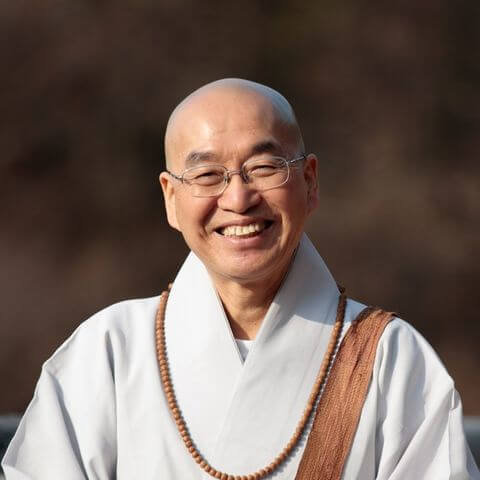
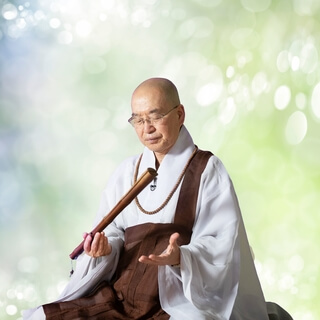
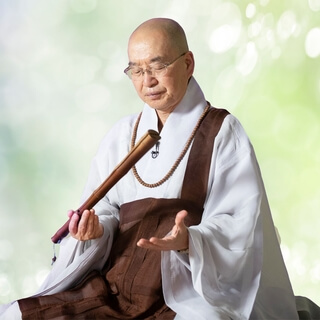
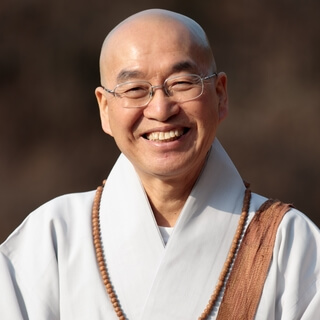
We will begin the online meditation with Venerable Pham Nunsinim shortly.
Before we proceed,
We will meditate for a brief moment to calm our minds.
I am done.
No,
I'm not.
Hello.
We are getting deeper into the fall season.
The day before,
We harvested yams and today we harvested the wild sesame seeds.
Every morning for two hours,
We pick up the chestnuts.
Although we are in the midst of a pandemic,
Since I'm in the countryside,
Living my life farming,
It almost feels like my life has nothing to do with the ongoing pandemic.
Today last year it was almost as if I had crashed off the grass.
So earlier today,
Unfortunately,
A closed acquaintance passed away,
So I had to attend the funeral.
But,
You know,
I was.
.
.
And I found myself then,
You know,
Having to wear a mask in order to attend the funeral.
In the past,
You have been in Korea for a long time,
And you have been in Korea for a long time.
You have been in Korea for a long time,
And you have been in Korea for a long time.
Since Korea has managed to kind of control the second wave of infections,
Now we are at about 50 to 60 cases a day below 100.
So the kind of quarantine measures have been relaxed from level 2 to level 1.
Since Korea has been in the hospital for a long time,
I think it's really due to the pandemic.
I think it's really due to the citizens' willing cooperation with the government policies on social distancing.
I think the coronavirus is a big issue in Korea.
I think the situation in Korea is a big issue in Korea.
I think it's really due to the citizens' willing cooperation with the government policies on social distancing.
I think the situation in Korea is unique to the peninsula.
It was used as a justification to impose some restrictions on people's freedom and privacy.
But recently because the government prohibition against gathering large numbers,
But recently,
Because of the government prohibition against the gathering in large numbers,
Due to the pandemic,
There has been a lively debate that argues that's a violation of people's freedom to gather for people's basic rights and others who argue that it's a necessary measure to prevent the pandemic.
I think that the government's policy is not a violation of the government's rights and others who argue that it's a necessary measure to prevent the pandemic.
So Koreans are familiar with the costs imposed by the national security issues,
But this is the first time it's encountering all the subsequent and secondary impacts of a public health crisis.
Now let's start with questions.
Why do we focus on breathing when meditating?
If you are working to experience mindfulness,
Why shouldn't we be using our mind to solve our problems or make our lives better?
What flowers are they taking into consideration this Duffey and Andre obsessively doing a Look out for yourself and live in a safe space for a woman as hard as you can find her to containDave?
So if you're information is still quite bad,
Or horrordatCon270 or tomorrow is broken,
And then when you think about it,
You'll see it immediately.
So,
When you're thinking,
It's analogous to living… or reinterpreting reality into a virtual reality of your own.
So,
If you are… if we can say that the actual objective realities,
The sensations that come,
The signals that come through your senses,
Whether it's visual,
Smell,
Or a sense of hearing.
But thinking means that you're interpreting that into a kind of your own narrative in virtual reality.
When I was a child,
I was a child of a child.
I was born in the city of Pinanalheta,
Where my mother was born.
I was born in the city of Kumbhna.
I was born in the city of Kumbhna.
For example,
If somebody criticized me negatively and I feel bad about it,
But once that exchange is over,
That sensation should go away,
That feeling.
I was born in the city of Kumbhna.
I was born in the city of Marisok.
I was born in the city of Sanghakhamen.
I was born in the city of Kumbhna.
I was born in the city of Marisok.
I was born in the city of Kumbhna.
However,
We tend to kind of record that in our mental video and loop that video over and over again,
Although the actual incident is far long gone.
And we,
By looping that video,
We continue to suffer the same feeling that we got in the original incident.
So almost 90% of our suffering is caused by us insisting on looping the videos of the past.
So in that sense,
That's why we suffer a lot more than animals.
We are not able to live in the city of Marisok without any help or any help.
Also,
There's another source of suffering for us is we think about the future and there's anxiety,
There's concern,
There's worry involved in thinking about the future.
So in order to attain peace and get away from this suffering,
You have to be awake to here and now.
So in other words,
Stop the thinking process and be just mindful awake to what's happening right now.
So what you're suggesting,
Thinking your way out of this problem,
When thinking itself is the source of the problem,
You know,
Is contradictory.
However,
Just because we wish our thinking to stop,
It doesn't stop.
That's why we sit and try to minimize the stimulus or signals coming in from the outside and try to stop the kind of constant thinking process that's occurring inside us.
And to do that,
We are using the focus on the breath to allow us to enable that.
And if we have to move as we move,
We observe how we move.
So all these are different tools and methods to really pause and seize your thought and allow yourself to be awake to here and now.
And if you can maintain your mindfulness to the here and now,
And be awake to the objective reality of here and now,
Then you can stop and seize those thoughts.
And as a first step,
As a beginner or two,
You know,
If you could just close your eyes and focus on the breath,
You'll realize that the only thing that's happening in the here and now is you breathing.
That's why we focus on the breath.
Second question.
How can I experience a deeper joy?
I tried other kinds of Buddhist meditation and it was easier to feel this joy.
Although I feel free,
I can't really be deeply happy.
And if that was what you like more,
That experience,
Then you're free to choose that experience.
Because this meditation,
The objective of this meditation is not to feel joy.
So I've life,
Our life's purpose.
We've been conditioned to accumulate things.
You know,
Accumulate money.
Accumulate knowledge.
Accumulate joy.
And accumulate pleasure.
And we think accumulate more of these things allow us to be rich and happy.
So compared to,
You know,
Earlier generation,
We have accumulated a lot more of a lot more things.
But has that made us happier?
That's not so.
Actually,
Our suffering,
Our distractions have increased in direct proportion to the things that we have accumulated.
So the objective of meditation is to get rid of all these accumulations that are causing our suffering.
And to train ourselves not to accumulate more that causes our suffering in the future.
So an important end state of meditation is to get rid of the underlying cause of suffering currently and try to prevent future suffering.
So when we say nirvana or nirvana,
That's a state where suffering doesn't exist.
So it's not a state where you are accumulating joy.
Because karma or reincarnation,
You know,
The concept of reincarnation is all about saying that the more you accumulate joy,
Consequently,
The more you accumulate causes of suffering.
No,
So you're not allowed,
You're not able to escape from this cycle of birth and rebirth.
In other words,
You're not allowing the cause of suffering to expire completely,
To be extinguished.
So trying to accumulate joy is not the pathway that's taught by Buddha.
Next question.
I notice my breath changing when meditating.
Inhales are a bit longer,
And there is a little pause after exhaling.
Exhales are longer,
And there is a pause before inhaling.
The pauses are longer than when I'm not meditating.
Then all you have to do is just recognize,
Well,
This is happening,
That's it.
And as you meditate,
You know,
Your breath,
When it was rough to begin with,
Then it'll start to calm down,
It'll become much more subtle.
You can't stop any bodily movements,
You're trying to minimize your thought process,
So your metabolism goes down,
Which minimizes the breath,
The air that you need.
And if meditation gets deep enough,
Your breathing is probably going to be quieter and calmer than even when you're sleeping.
So when you're sleeping,
If you dream,
You're actually expending energy.
So it's good to,
It's important to just notice and be aware of the condition of your breath,
Not go into analysis of the wise of the breath.
It's okay to say that in my case,
My breath becomes thus and thus when I meditate,
Because it's difficult to generalize that experience to others.
And you can't really say whether that's good or not.
It's just knowing that,
Oh,
That's what's happening to me.
Then we'll conclude questions with this.
Once again,
The first condition of meditation is to have your body and mind relaxed.
And be kind of spacious and idle with your mind.
Totally relax without tension.
Do not try to do anything.
It's a state of peace.
And second is focusing your mind on the tip of your nose and to realize what's already happening,
Your breath.
At this point,
There are many things that are actually fighting for your attention.
Noises from the outside.
Or pains and aches throughout your body,
Kind of strong sensations.
Drowsiness.
Thoughts of the past,
Thinking about the future.
So all these things are kind of fighting for your attention and preventing you from focusing on the breath.
That's why you lose that focus.
To come back and regain that focus.
To regain that focus on the breath means that you're not being distracted by all these different things that are seeking to fight for your attention.
And you can sustain that concentration on the breath.
In a way,
This is really easy.
Because the moment you can actually enable that focus on the tip of your nose,
You immediately realize that you're breathing.
But you have to be able to sustain this.
Because we have been living with the habit of being distracted,
We allow ourselves to be distracted.
That's why we have to keep telling ourselves and keep pulling our attention back to the breath and try to sustain that as much as possible.
And if you lose it,
Regain it,
Lose it,
Regain it.
So just do that consistently.
Don't be disappointed if you don't do it.
Don't give up.
And don't be too overjoyed just because you were able to do it.
Just do it consistently and constantly.
Then they will allow you to naturally get into deeper meditation.
The meditation doesn't become deeper just because you desire to become deeper.
And do not evaluate your meditation performance per se.
So in a totally relaxed state,
Focus your mind on the tip of your nose and become aware of the breath in and breath out.
If you lose it,
Regain it.
If you do this,
You will automatically deepen your meditation.
Today let's do it for 40 minutes.
Thank you.
You you you you you you you you you you you you you you you you you you you you you you you you you you you you you you you you you you you you you you you you you you you you you you you you you you you you you you you you you you you you you you you you you you you you you you you you you you you you you you you you you you you you please upload your comments in the chat window you you you can I open my eyes during meditation?
To keep them closed maybe opening your eyes could be helpful and try to get away from distracting thoughts and try to stave off sleepiness but there is a reason I won't discuss it today but there is definitely a reason for you to keep your eyes closed during meditation my mind and body feels lighter I was counting numbers that's not a good way to meditate my legs ached a little I was able to concentrate more on the breath than before my legs ached a little more on the breath than before my legs ached a little more on the breath than before my legs ached a little more on the breath than before that's a very natural phenomenon during meditation just don't imbue that with any meaning and allow yourself to follow the thoughts I felt heat radiate out throughout the body and that relieved my fatigue I felt the pressure from the body to the body I felt the pressure from the body to the body it was a cycle between being distracted by thoughts and maintaining focus on the breath well today we'll conclude with that today wish you a good week and I'll see you again the next week do not try to live your life too much intense and under stress but I wish you could live your life with more relaxation and peace I wish I conclude with that thought