Welcome.
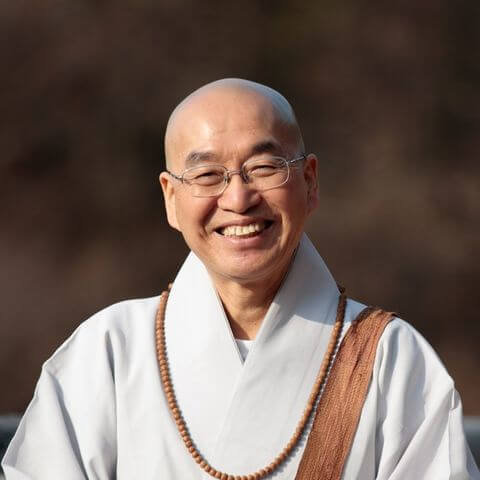
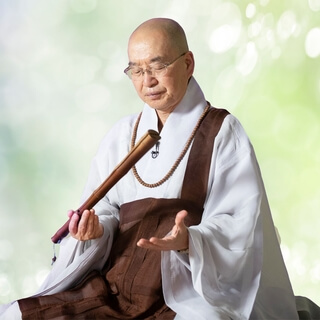
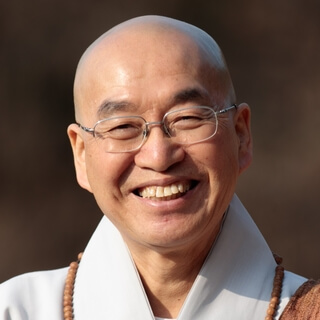
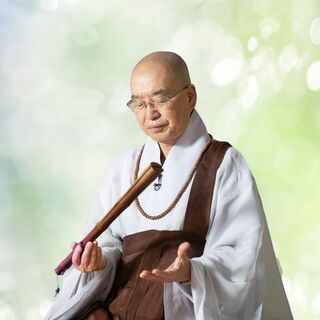
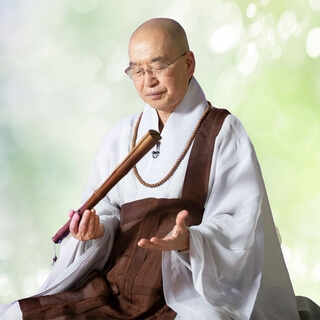
We will begin the online meditation with Venerable Pham Nunsinim shortly.
Before we proceed,
We will meditate for a brief moment to calm our minds.
We will begin the online meditation with Venerable Pham Nunsinim.
We will begin the online meditation with Venerable Pham Nunsinim.
Hello.
Hello.
How did you spend last week?
So yesterday and today,
I actually prepared kimchi for the fermentation.
I prepared kimchi for the fermentation.
I prepared kimchi for the fermentation.
So yesterday,
We had salted down all the cabbages.
Today,
We added the other spices needed to actually allow it to ferment and get that right flavor.
I think that the way to prepare kimchi is to make it more healthy and healthy.
So yesterday,
While salting down the hundreds of cabbages,
Heads of cabbages,
I had four lectures in between,
So I had to go back and forth really quickly between my two different clothes.
I had to prepare kimchi for the fermentation.
But today,
I was able to focus on the kimchi because I did not have other lectures or talks.
I had to prepare kimchi for the fermentation.
But it was so warm today,
During the day,
We were concerned that the kimchi might get spoiled.
So,
Today,
I had to prepare kimchi for the fermentation.
So,
Tonight,
As soon as we got done spacing and packing it in,
We had somebody drive up to Seoul.
I had to prepare kimchi for the fermentation.
So,
As we go through this traditional kind of late fall rituals,
We are approaching the early winter.
Yesterday,
I had a talk with a target audience,
The English speakers,
Non-Korean speakers.
I had a conversation with a Korean speaker,
And he said,
I would like to talk to you about Korean speakers,
And I would like to talk to you about Korean speakers.
So,
Like the Korean speakers,
The English speakers,
Whether it's from work,
From home,
There are a lot of questions,
A lot of conflicts,
A lot of tension.
I would like to talk about the Singaporean culture.
I think that the Korean speakers are very important to us,
And I think that the Korean speakers are very important to us.
So,
One question that still remains with me was from a student who just graduated from junior high in Singapore.
Her question really had to do with,
Should I only hang around with people that I like,
Or if I do that,
Does that limit my exposure to a diverse set of people?
I think that the Korean speakers are very important to us.
And for a high schooler to think in such a way was an amazing thing to watch.
I think that the Korean speakers are very important to us.
So,
I tried to explain by making an analogy to food.
I think that food is a very important thing to watch.
I think that food is a very important thing to watch.
So,
Food itself can neither be tasty nor not tasty,
But it really depends on the appetite,
The personal appetite and preferences of individuals that call it tasty or not.
I think that food is a very important thing to watch.
I think that if you eat food that is not tasty,
You will be able to eat it without any pressure.
But if you only eat the food that you like,
Then you are actually discriminating and limiting the type of food that you eat,
And so it's probably not good for your health.
I think that food is a very important thing to watch.
I think that food is a very important thing to watch.
Because there are a lot of other foods that might not agree with your palate.
However,
They are still nutritious and good for you.
I think that food is a very important thing to watch.
I think that food is a very important thing to watch.
So,
The food might not agree with you in the mouth.
However,
Eating them is probably good for your health and is probably more beneficial for you.
I think that food might not agree with you.
But if you eat food that is not tasty,
You will be able to enjoy it.
I think that if you eat food that is not healthy,
You will be able to eat it.
I think that food is more beneficial for you.
I think that food might not agree with you.
Likewise,
If you only hang around with people you like,
Then you are limiting your exposure to a diverse and wider set of people and opinions.
So,
Even if you don't like somebody,
In the beginning,
If you allow yourself to expose yourself to them,
Then eventually it will probably end up being more beneficial to you.
I think that food is more important than eating food that is not healthy.
The student understood and answered back that she understood and that she will try to be friendly with a wider set of people.
I think that food is more important than eating food that is not healthy.
Just because something is good for you today doesn't necessarily mean it's good for you tomorrow.
I think that food is more important than eating food that is not healthy.
So,
There are a lot of occasions in which,
Because we are so focused on what is good for me today,
That we regret our choices in the future.
I think that food is more important than eating food that is not healthy.
So,
I'm not saying that desire or joy is not necessarily bad,
But if you focus too much on satisfying the desire or enjoying that joy today,
There is potential to cause loss in the future that you might come to regret.
I think that if you focus too much on satisfying the desire or enjoying that joy today,
There is potential to cause loss in the future.
So,
What Buddha said,
Buddha did not teach to deny whatever joy or desire right now,
But what he was teaching was that you should have a clear understanding of what's really good for you now and in the future and make your choices accordingly.
And these are encoded in precepts,
Rules.
That's why if you are a practitioner,
You should adhere to the precepts.
And if you somehow violated them,
Then you should repent and go back to adhering to the precepts.
So,
Meditation is all the rage today.
However,
If you look at people who practice meditation,
There are many who do not actually follow the precepts.
If you are a practitioner,
You should adhere to the precepts.
Meditation as a skill will not lead to enlightenment without being able to suppress or control your desires.
If you are a practitioner,
You should adhere to the precepts.
However,
If you are a practitioner,
You should adhere to the precepts.
However,
If you tell people to control or suppress and modulate their desires,
They will not find popular appeal.
So,
People end up teaching meditation as merely a skill.
So,
All of us also,
You practice meditation,
It's important for you to overcome the obstacles and barriers you encounter during meditation,
Not really always look for the path of least resistance.
With that,
Let's look at the questions that came in.
Venerable Hom Nihon Sunim said that sitting quietly and focusing on one's breath is a necessary condition for meditation but not sufficient.
So,
When I am engaged in this activity,
How can I know if I am meditating or not?
Is this even a useful question to be asking?
Yes.
It is a useful question.
So the purpose of meditation is not to be in a quiet place.
It's to reach a state in which you don't suffer and you don't suffer from distraction.
But in order to arrive at that state without suffering,
You have to be awake to the here and now.
And focus on the breathing is a way to get there.
However,
You can't necessarily say that because you're focusing well on your breath,
You're doing meditation well.
Because if you're tense,
You're still feeling inner conflicts,
You're suppressing and forcing yourself to be patient against something,
Whatever it is,
If you're doing that,
Then you're like a piece of wooden statue.
Here,
Healers openly themselves,
You must feel Skies ofFollow into meaningful Brings of All the trappings of meditation are conditions for us to get to the other place that I mentioned.
They're not sufficient in itself.
When I say,
However,
It's a necessary condition,
What I mean is that to get there,
These are the fundamentals that actually you have to follow.
But the methodology itself,
In itself,
Is not enough to get you there.
Next question.
If at least five days of continuous meditation is required to access our subconscious,
Would it be difficult to see any effect from this Sunday meditation?
I think that the most important thing is to get to the other place that you can see.
Would you be able to see any effect from this Sunday meditation?
If you are an experienced meditation practitioner,
Then even with 10 minutes and 20 minutes,
You are able to focus deep down.
However,
For a beginner,
It's very difficult to arrive at that state within such a short time.
A lot of thoughts.
You feel sleepy.
And your aches and pains throughout the body that distract you.
That's why your consciousness is always debating between what I like and what I don't like.
As if you're sleeping.
That you're totally relaxed.
And your thoughts,
The stream of thoughts,
Are paused.
And like dream,
You have different scraps of thoughts rising.
As long as you have that focus on the breath.
Then those little float-sams of thoughts and abstracts,
You see them coming up from your subconscious.
You are being conscious of the subconscious.
If you are conscious of the subconscious,
You are not feeling the dream.
So if we encounter a mugger in a dream,
We are afraid,
Fearful,
Because we don't realize inside the dream that we are dreaming.
So in that case,
There is no mindfulness.
However,
There are cases where you have lucid dreams,
In which you realize you're dreaming as you're dreaming.
In that sense,
You know you're dreaming,
So you're not afraid of that mugger.
In that sense,
You don't identify with that person in your dream because you realize that this is a dream in which you encounter the mugger.
So there's a distance and you observe the dream.
Nevertheless,
You're not fearful from it because you know it's a dream.
But if you are conscious of the subconscious,
You are not feeling the dream.
In that state,
You realize all these little streams kind of float up from your subconscious and you can observe them.
Yes,
You can observe them,
But you can't see them.
And you realize what kind of traumas you have from your subconscious.
If you are conscious of the subconscious,
You are not feeling the dream.
If you are conscious of the subconscious,
You are not feeling the dream.
And if there are accompanying emotions,
Strong emotions to certain traumas,
Then you realize it's not healed completely yet.
But if there are other incidents that you can observe,
However they're not accompanied by strong emotions,
You realize they're kind of healed.
They're still there as memory,
But they don't trigger emotional responses.
If you are conscious of the subconscious,
You are not feeling the dream,
But you can observe them,
Then you can observe them.
So I'm not saying that you will experience this or you will get to this state just because you did five days of continuous meditation.
But if you do it continuously,
Constantly,
Maybe ten days or whatnot,
You will eventually get there.
You don't think you might get there,
But slowly you will get to that state in which you can observe this.
Yes,
That's what I'm saying.
With that,
Let's conclude the questions.
Today,
Let's meditate for 35 minutes.
Relax your body and mind.
Do not tense.
Relax.
As if you have nothing to do and nowhere to go.
Your mind has to be idle and relaxed.
You're not trying to do something that you don't want to do.
Or you're not trying to do something that you want to do well.
So no intent,
No goal,
And just be relaxed and comfortable.
And focus your mind on the tip of your nose.
And realize that you're breathing.
You feel the breath in and the breath out.
And to be continuously awake to this.
And if you lose that,
Regain that.
Don't regret just because you lost it.
Don't give up.
Don't try to do well.
You're just recognizing the breath.
You're just observing without intent.
You're not trying to do well.
You're not trying to do well.
You're not trying to do well.
In the beginning,
As you start,
It is possible to focus on the breath.
But as time goes,
You get distracted by internal noise and thoughts.
You can't let your mind wander and follow those thoughts.
You can't let your mind wander and follow those thoughts.
So these internal noises that arise,
Those are natural.
However,
Do not allow your focus to wander from your breath to these noises.
Even if these thoughts are about Buddha's teaching itself,
It's just an illusion.
It's just a distraction.
Everything else is a distraction except the breath.
You can do this everywhere.
Because breath always follows you.
Let us begin.
Let us begin.
Let us begin.
Let us begin.
Let us begin.
Let us begin.
Let us begin.
Let us begin.
Let us begin.
Let us begin.
Let us begin.
Let us begin.
Let us begin.
Let us begin.
Let us begin.
Let us begin.
Let us begin.
Let us begin.
Let us begin.
Let us begin.
Let us begin.
Let us begin.
Let us begin.
Let us begin.
Let us begin.
Let us begin.
Let us begin.
Let us begin.
Let us begin.
Let us begin.
Let us begin.
Let us begin.
Let us begin.
Let us begin.
Let us begin.
Let us begin.
Let us begin.
Let us begin.
Let us begin.
Let us begin.
Let us begin.
Let us begin.
Let us begin.
Let us begin.
Let us begin.
Let us begin.
Let us begin.
Let us begin.
Let us begin.
Let us begin.
Let us begin.
Let us begin.
Let us begin.
Let us begin.
Let us begin.
Let us begin.
Let us begin.
Let us begin.
Let us begin.
Let us begin.
Let us begin.
Let us begin.
Let us begin.
Let us begin.
Let us begin.
Let us begin.
After five days of meditation,
You will experience a lot of fatigue that has built up within you.
You will feel a lot of pain and pain,
And you will feel a lot of pain and pain.
Of course,
During meditation itself,
You will experience aches in your lower back,
In your leg,
You will feel drowsy,
But even in the midst of that,
You will be shedding a lot of the fatigue that you have built up.
I have been feeling pain for a long time.
I have been feeling pain for a long time.
I have been feeling pain for a long time.
I have been feeling pain for a long time.
If you recall,
During weekends,
We tend to want to do activities and what not,
And engage in different places,
But most often they end up making us even more tired than before.
You will feel a lot of pain,
And a lot of pain,
And a lot of pain,
And a lot of pain.
We call it rest during the weekend,
But we overeat,
We overdrink,
We overplay,
So it is inevitable that it will lead to more fatigue.
I think that when you are in the mood for a lot of things,
You will feel a lot of pain,
And you will feel a lot of pain,
And you will feel a lot of pain,
And you will feel a lot of pain.
But during meditation,
There is no drink.
We eat little food,
Small amounts of food,
And you sit and kind of rest.
No wonder it becomes a source of rest.
I was able to focus entirely on the breath,
So my body and mind are relaxed.
I feel better now.
Meditation was hard,
But I feel better now.
I felt sleepy.
There was a lot of distraction.
I wanted to sleep.
I felt sleepy.
I felt sleepy.
I felt sleepy.
I felt sleepy.
I felt sleepy.
I felt sleepy.
There was a lot of distraction.
I wanted to relax my legs,
Straighten out my legs,
So I did.
That's when the meditation ended.
I was distracted throughout the whole time I was meditating.
My shoulders were really tense.
So there are those of you who were relaxed,
Focused,
Those of you who were tense,
You were relaxed,
You were relaxed,
You were relaxed,
You were relaxed.
I felt a lot of pain.
I felt a lot of pain.
So there are those of you who were relaxed,
Focused,
Those of you who were tense,
Who were feeling aches and pains.
So everybody's experience is different.
If you're sleepy,
It means you're tired mostly.
Or you lack sleep.
However,
If you continue meditation for one or two days,
You tend to catch up on your sleep and you're resting in effect.
So the sleep doesn't really become an issue anymore.
The pains in your lower back and your legs,
That's something that you have to get through because it takes a while for your body to adjust to that new position.
If your body tenses up without you knowing,
If you can focus and realize that your body is tensing up,
They'll allow you to relax again.
So the practice that we have to really engage in is to let go of any conscious intent in our activities and just be there.
Am I allowed to say call out to the Buddha?
Basically engage in a mantra chanting while I'm meditating.
Why chant for the Buddha when I say you have to let go of any goals or intent?
Chanting is also part of the religious habit that you've been engaged in.
It's part of your habit.
What I'm saying is we're practicing this so that we can be conscious and let go of all those habits.
When you let go of the intent and just sit and observe yourself in the current state,
That's why you're allowing your current state to surface itself.
And that's the starting point.
You go one or two steps from there forward.
With that,
Let's conclude today's session.
I'll see you again next week.
I wish you a good,
Relaxing week.
As we live our everyday lives,
There are many things we encounter.
As we get colder,
The temperature drops.
A lot of happenings in politics.
A lot of conflicts and tensions in the home as well as at work.
But the things we encounter are not the same.
So whatever happens,
Whether this happens or that happens,
You have to be able to be relaxed and missed.
There are many things we encounter.
And if there are things to be solved,
Then go ahead and solve it.
If it takes a while for you to solve it,
Then take that time.
If something happens that you have no control over,
You have to accept it.
Even in the midst of all that maelstrom,
Your life has to be happy.
If you're happy,
You'll have no cause to be happy.
And if you say,
I'm not happy unless that happens,
I'm not happy because this is happening.
If you take all that,
Then you'll have no cause to be happy ever.
If you're happy,
You'll have no cause to be happy.
Do you think that nothing,
I wish nothing would happen to me?
But life itself consists of all these things happening to you.
And we all live our individual lives in the midst of all these things happening to us.
So will you live a life of happiness or of suffering?
And that's your choice.
Let's conclude.