Does it have to be the breathing sensation at the tip of the nose?
As for me,
It's easier and more natural to observe the flow of the breath and its sensations in my stomach area when I meditate.
Yes,
It is true that you can actually sense the breath not just at the tip of your nose but inside your nostrils through different organs and also as you said your stomach.
In a way,
The easiest place for you to observe and feel the breath could be your stomach.
Because the biggest motion associated with the breath is probably your diaphragms and your ribcage expanding outwards and inwards.
Since it's the largest motion,
Probably easiest to sense it.
And it is true there are other places that teaches the observation of the belly methodology as a way to observe your breath.
And if your sole objective is to focus on the breath,
Be aware of the breath and be focused on the breath,
Then this methodology works fine.
However,
Our objective is through our concentration awareness of breath,
We also want to be mindful of our own emotions.
Because if we sit like this and we are comfortable and relaxed,
Our breath becomes very subtle.
And to be able to be mindful of that subtle sensation,
You have to really heighten your senses.
So to be aware of that subtle breath,
Really means you have to be aware of that subtle sensation.
미세한 감각을 알아차리게 되면 우리는 미세한 느낌을 알아차릴 수가 있습니다.
물론 호흡을 통해서 알아차리는 미세한 감각은 촉각입니다.
감각은 촉각만 있는 것이 아니라 시각도 있고 청각도 있고 후각도 있고 미각도 있고 생각도 있습니다.
감각이 일어날 때는 반드시 느낌이 함께 일어납니다.
But when a sensation happens,
It accompanies always with a certain emotion.
That's why in everyday life when we see something,
Smell,
Taste,
Touch or even think about something,
It's accompanied by a certain emotion.
마음이 일어납니다.
그래서 우리가 느낌과 마음을 알아차리는 것이 사실은 이 수행의 더 본질적인 문제입니다.
조금 전에 말씀드렸다시피 우리들의 괴로움의 원인은 집착입니다.
집착의 원인은 욕망이라든지 감정이라든지 또는 시비심입니다.
그것의 원인이 이런 느낌과 마음입니다.
그것을 우리가 느낌과 마음을 알아차려야 합니다.
그것의 어떤 수단으로 우리가 호흡을 알아차리는 것을 하고 있습니다.
And our breath work is a methodology to allow us to grow that capacity.
In that sense the methodology of the breath is easier for us to approach that capacity.
그 구멍 끝에서 미세한 호흡을 알아차려라 이렇게 호흡 수행해서 가리키는 것입니다.
자세도 마찬가지입니다.
우리가 걸으면서 수행할 수 있고 서서도 할 수 있고 누워서도 할 수 있습니다.
그러나 앉아서 할 때 제일 집중이 높습니다.
물론 충분히 훈련이 된다면 움직일 때도 가능합니다.
앉아서 할 때가 비교적 집중이 잘 되기 때문에 우리가 좌선을 하는 것입니다.
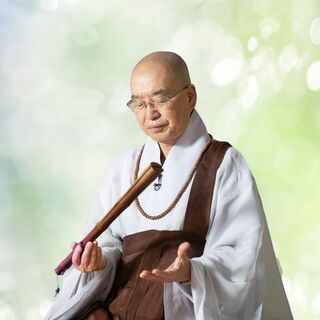
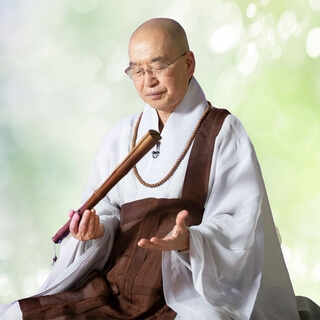
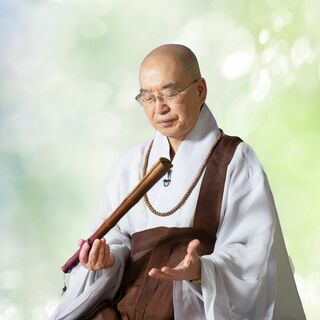
But the reason we are sitting in this lotus position is that it facilitates concentration.
And likewise we are focusing on the breath and the sensation of the breath at the tip of your nose to facilitate your practice of Vipassana meditation.