Hi,
I'm Jenna,
Owner of the Yogi Nest.
We offer alternative and holistic healing through mindful movement and mindset coaching in Los Angeles and online.
Today we're going to be doing a slightly more advanced version of the 478 breathing exercise developed by Dr.
Andrew Weil,
Which will consist of eight rounds.
If you're new to this exercise,
It's suggested that you do no more than four rounds at a time,
One to two times per day,
For at least a month.
After that,
You can increase to eight rounds,
But more than eight rounds in one sitting is not advised.
I have this meditation in four rounds if you'd like to build your practice there first.
This technique consists of inhaling for four counts,
Holding your breath for seven counts,
And exhaling for eight counts.
I'll be guiding you every step of the way.
Breath work can help you get grounded,
Centered,
And bring the body back into balance by regulating the fight or flight response.
The combined benefits of counting,
Which refocuses your attention and brings you back into the present moment,
And deep rhythmic breathing can help your body find a state of deep relaxation and relief from stress,
Anxiety,
Insomnia,
And so much more.
A gentle word of caution before we get started.
It can be a bit scary to hold your breath.
It may even feel somewhat claustrophobic or triggering,
So be patient with yourself.
This technique will get easier and more comfortable the longer you practice,
And the benefits are so worth it.
Meet yourself wherever you are today and know that you can take breaks,
Keep your eyes open,
Or stop the meditation altogether and come back another day.
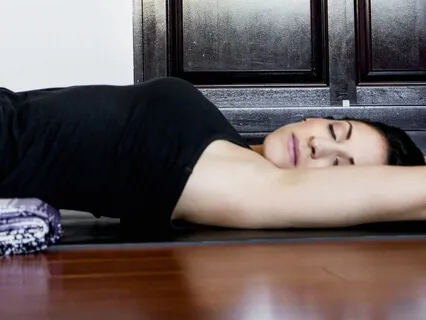
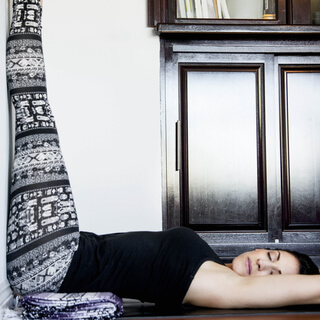
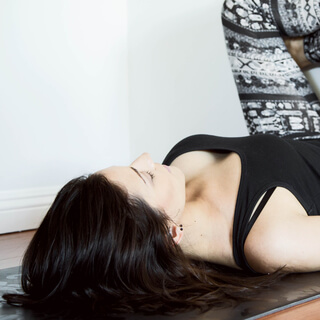
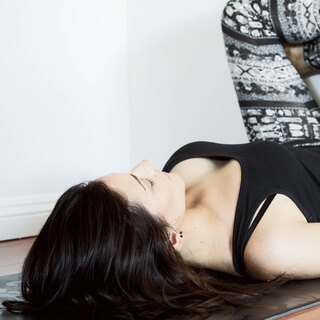
Let's get started by finding a comfortable place to sit or lie down with little to no distractions.
Whether you're sitting or lying down,
Make sure your spine is straight,
Allowing for air to easily flow in and out of your lungs.
You may close your eyes if that feels comfortable.
If not,
Try gazing down at the tip of your nose or focus on a fixed spot on a wall,
Floor,
Or even the palms of your hands.
Draw your shoulders down away from your ears.
Allow your face,
Eyes,
And jaw to release and relax.
Notice the points of contact between your body and the support beneath you.
Knowing that it's there,
See if you can allow your body to release and relax,
Melting into that support.
Now shift your focus to your breath.
Continue to breathe normally and naturally through your nose.
Notice without judgment or trying to change anything,
Where in your body you're breathing today.
Is your breath in your upper chest,
Middle chest,
Or lower belly?
What is the quality of your breath today?
Is it fast and short,
Or long and slow?
Stress and anxiety can cause our breath to get trapped in our upper chest,
And that breath will tend to be fast,
Short,
And shallow.
Can you allow your breath to be slow and long,
Filling the whole space between your belly button and collarbones?
Try placing one hand on your lower belly and one on your upper chest,
And breathe into the palms of your hands.
Feel the rise and fall,
Connecting more deeply to the healing rhythm and energy of your breath.
If you find yourself feeling lightheaded or dizzy during today's exercise,
Slow your breath down,
Or even temporarily come back to your normal breathing pattern until it passes,
Then come back to the sound of my voice and breathe as I count once again.
During this exercise,
You'll be quietly inhaling through your nose and exhaling forcefully through the mouth,
Pursing the lips and making a whoosh sound.
You'll hear me do it in a second.
We're going to begin by taking one deep breath together in order to fully empty the lungs,
Inhaling through the nose and exhaling through the mouth.
The first round of 4-7-8 will start immediately after.
Begin your inhale now.
Inhale the air through your lungs.
Inhale 2.
.
.
3.
.
.
4.
.
.
Hold 2.
.
.
3.
.
.
4.
.
.
5.
.
.
6.
.
.
7.
.
.
Inhale 2,
3,
4,
5,
6,
7,
8.
Inhale 2,
3,
4,
Hold 2,
3,
4,
5,
6,
7.
Exhale 2,
3,
4,
5,
6,
7,
8.
Inhale 2,
3,
4,
Hold 2,
3,
4,
5,
6,
7.
Exhale 2,
3,
4,
5,
6,
7,
8.
Inhale 2,
3,
4,
Hold 2,
3,
4,
5,
6,
7.
Exhale 2,
3,
4,
5,
6,
7,
8.
Inhale 2,
3,
4,
Hold 2,
3,
4,
5,
6,
7.
Exhale 2,
3,
4,
5,
6,
7,
8.
Inhale 2,
3,
4,
Hold 2,
3,
4,
5,
6,
7.
Exhale 2,
3,
4,
5,
6,
7,
8.
Inhale 2,
3,
4,
Hold 2,
3,
4,
5,
6,
7.
Exhale 2,
3,
4,
5,
6,
7,
8.
Inhale 2,
3,
4,
Hold 2,
3,
4,
5,
6,
7.
Exhale 2,
3,
4,
5,
6,
7,
8.
Good.
Now return to normal breathing,
Inhaling and exhaling through your nose.
I call this recovery breath.
Let's take a moment now to scan our bodies from the top of the head all the way down to the toes.
This is a moment of deep personal reflection.
Take note of how different you feel both physically and mentally than you did when you first started this meditation.
Does it feel like a weight has been lifted?
Do you feel a great sense of calm and deep relaxation?
Do you feel like you have more control over whatever brought you to this meditation today?
Take some time to observe the shift in your thoughts,
Feelings,
Emotions and sensations.
You can begin to bring some small movements back into your fingers and toes and when you're ready,
You can open your eyes or drift off to sleep.
Please know that you can always come back to this meditation and your breath anytime you're experiencing stress,
Anxiety,
Anger,
Insomnia,
Pain,
Whatever it might be.
This practice is powerful,
Time and cost effective,
Making it one of the most accessible healing tools out there.
All you have to do is breathe nice and slow and follow your inhales and exhales until you start to feel relief.
I'd love to know how this meditation went for you and I'm here to answer any questions that came up for you during this practice.
I also welcome meditation requests that you think might be helpful for you.
Take care.