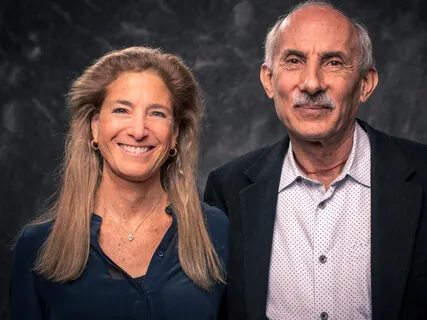
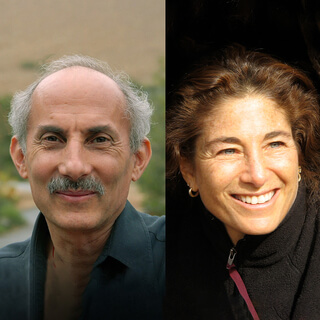
Many of you know that tonight was to be a question-answer period and we've been collecting questions for the last four weeks that we'd kind of explore tonight and some of them were really tough so I asked for backup.
And Jack Kornfield just happened to say,
Sure,
He'd come.
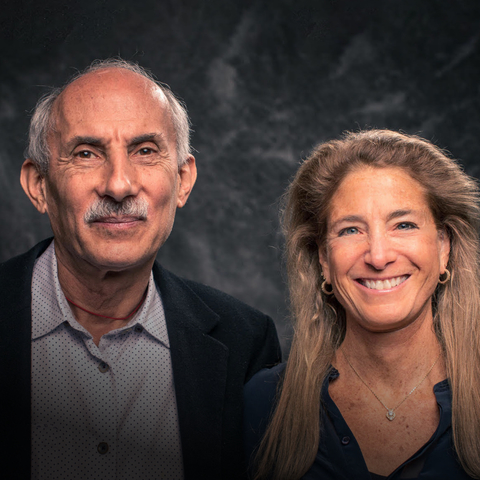
And so I'd like to introduce you to Jack Kornfield and welcome you and thank you.
And just say a couple of words,
Many of you know Jack from his works from Path with Heart or maybe The Wise Heart which came out more recently.
And Jack was the co-founder of Insight Meditation Society on the East Coast and Spirit Rock on the West Coast and is so active I could barely recount all that he's into.
He's going to tell you a little bit of what he's into coming up.
And in addition,
Jack is a really,
Really dear friend and a mentor of immense value.
He's my main imprint in terms of teaching and was the teacher I did my teacher training with and is a tremendous inspiration so I feel like it's been one of my great,
Great fantasies to have him be here with our sangha and I'm really,
Really happy that it happened.
So thank you.
Yeah,
Thank you Tara.
I'm very happy to be here and I've been hearing stories of IMCW and of this place as well for a dozen years and it's a great treat to be here this evening and a beautiful spring evening in Washington with Tara and all of you.
So thank you.
So we have some questions and they're interesting ones and we'll kind of begin with some of them but then we put out the mic stands because it feels like we'll have enough time to just hear what might be on your minds in the room.
Do you want to pose them or read them out loud?
Sure,
Just like one at a time.
Yeah.
Yeah,
I'm not going to go through them all.
I don't know.
I'll just juggle them or something like that.
Let's see.
Okay.
Question numero uno.
In psychology the ego is important.
It's our sense of self.
Those suffering from ego fragility are insecure and in danger of being enmeshed or engulfed by others.
How to reconcile this Buddhist concept that there is no ego?
We need our sense of self to maneuver the world in a safe way.
So who's going to go first?
How to reconcile the Buddhist concept there's no ego?
That's actually a bad translation.
Interest and errors are some of the easiest things to answer.
There really wasn't the word ego at the time of the Buddha although I'm sure people had them but what actually is important to understand is in the teachings of Buddhism where it speaks about selflessness or no self that's one of the central teachings that there are actually two different dimensions of development,
Of spiritual development that you can feel or sense in yourself.
One is letting go of the sense of self.
That is we have a separate sense of self that's sometimes called the small sense of self or the body of fear that separates us from one another that feels frightened and threatened and so forth and yet we also have moments when we drop that and we're just in communion with another person or our lives centered open.
So learning how to let go of that aspect of ourselves some of the time is really one of the gifts of meditation.
The other side is that we do need a functioning self and so there are lots of Buddhist practices to develop patience,
Dedication,
Compassion,
Loving kindness,
Honesty and so forth which you could say are the development of a healthy sense of self and the interesting thing is that to become wise you have to be able to hold a paradox which is that you need to remember your Buddha nature,
This kind of eternal and untarnished goodness that's there within you that's not limited to your worries and fears,
Not the small sense of self but something that's beautiful and luminous in every child that's born.
You need to remember your Buddha nature and you also have to remember your social security number basically as long as we still have it anyway or your zip code or whatever it is.
So that paradox of developing both a healthy sense of self but one that's flexible and transparent rather than frightened or rigid is really what meditation invites one to do.
So I think the phrase is praise Allah and don't forget to tie your camel to the post.
It's like do it be it all.
The thing that the metaphor that helps me a lot is to sense that we are meant to develop what I sometimes think of as a space suit,
That we are in a challenging environment and we each develop our strategies to get through and where the suffering comes is that when we get identified with the space suit,
When we think this ego,
This striving,
This proving,
This maneuvering is me and forget who is looking through,
Who is looking through the mask,
So who is really listening right now,
Who is looking through.
We forget the beingness and we get identified with the doing self.
And so a lot of spiritual practice is just recognizing all those strategies and in that recognizing there is a re-arriving in the awareness that knows that that doesn't define us.
Is that okay?
I don't know.
Ask them.
They ask the question,
Not me.
Is that all right you guys?
You know I am going to add something for the fun of it.
When you look in the mirror you notice you've gotten older,
Right?
I mean we won't go there very far but anyway.
But the weird thing is that you don't feel older necessarily.
You know that experience as well?
And that's because when you look in the mirror what's gotten older is your body.
And there's some part of us I think,
My teacher Ajahn Chah used to speak of it as the one who knows or the pure knowing or consciousness that recognizes,
Oh you know it's losing its hair in my case and getting wrinkled and getting older and so forth.
But that's not all of who we are.
That's a vehicle or a vessel and not in some theoretical way but in some profound understanding so that we can engage in life and live it in a full way.
But there's a whole other understanding of freedom that comes when we see that that's not… those limitations are not really fundamentally who we are.
It's like one of those game… we're doing one of those game shows,
Right,
Where you take the next question for three hundred dollars,
Right?
This one for three hundred dollars just came in a few days ago.
I am struggling with self-compassion.
I have a deep-seated sense of self-blame when I am hurt.
I am African-American and female and culturally my family and friends value focusing on what you can control and not using isms such as racism and sexism as a crutch.
I believe this is where my self-blame comes from.
So the question is how can I develop self-compassion in the midst of a coping mechanism that has helped my family survive poverty,
Racism and sexism?
In other words self-blame has both… been both empowering and a large source of suffering.
And then the follow-up question is how can I better sit through the pain of social injustice?
Do you want me to start?
I really loved this question.
I mean I really… I thought it was a really powerful question.
It has a wisdom in it that recognizes what I sometimes call false refuge that we can in blaming,
Blaming the culture,
Blaming those that are representatives and leaders in the culture,
Are blaming ourselves.
There is a kind of temporary sense that that is how we can control things.
So there is a temporary kind of sense of power or coping by blaming.
And so there is kind of a recognition in that.
And yet not blaming doesn't mean passivity.
So the inquiry to me is how to not blame myself and not blame the culture and yet really open with compassion to the pain that is here.
And so the first step that seems for all of us… And it doesn't… You know this is one particular circumstance.
And for any of us where we have in some way turned it inward like I am bad,
I am failing,
I am wrong,
The first real piece of this is to pause and open to the actual vulnerability of that to where that feels really terrible.
And it takes a lot of forgiveness and a lot of courage.
There is… If I have it here… I brought Srinar Sargadatta here because I just wanted to… this whole thing of turning on ourselves with self-blame.
He says,
All you need is already within you.
Only you must approach yourself with reverence and love.
Self-condemnation and self-distrust are grievous errors.
Your constant flight from pain and search for pleasure is a sign of love you bear for yourself.
All I plead with you is this.
Make love of yourself perfect.
Make love of yourself perfect.
Deny yourself nothing.
Give yourself infinity and eternity.
And discover that you do not need them.
You are beyond.
So how to move from blame – and in this case self-blame – to make love of yourself perfect,
Meaning love of this life just as it is in this moment.
Because when we open to how it is in this moment,
However it is,
Then we can respond from a place of empowerment.
And similarly,
Take the reality.
We are in a culture that has generations really of violence,
Generations of cruelty and of oppression to people of color and to other minorities.
How do we take that and instead of being in a verse of blame have what's called wise discrimination and get it,
This is real.
And yet if we really get this is real and we don't go into a more narrow blaming mode then it's possible to respond with the full wisdom and compassion that can actually bring about change rather than fueling the cycles of blame and reactivity.
So that's a very… It's like I feel like I've just tried to nutshell something that feels really,
Really important,
How to step out of the false refuge of blame and acknowledge the actuality and the horror of the actuality and in that acknowledging from a really deep place of compassion then act in this world and do what we can to bring some healing.
So to add to that,
Much of the suffering that we cause to one another individually or collectively is because we haven't learned how to be with our particular measure of sorrows and difficulties.
James Baldwin wrote,
I imagine one of the reasons people cling to their hate and ignorance so stubbornly is because they sense that once hate is gone they will be forced to deal with their own pain.
And so whether we place it on another race or gender or orientation or culture as we do in many ways it's because we haven't learned that it's possible to be with the 10,
000 joys and sorrows that make up our human life.
We haven't somehow discovered the Buddha nature within ourselves,
The great heart of compassion and wisdom that is our birthright.
When we do discover it then we become more like Nelson Mandela walking out of Robben Island prison after 27 years with such dignity and magnanimity and graciousness and wakefulness that he became luminous,
Transformative energy for Africa and the world.
Or Aung San Suu Kyi,
I just got back from Burma.
And here she is,
This little woman who's just about my age and small and under house arrest for 17 years.
And she could leave Burma anytime she wanted.
She could have been there when her husband died or her children graduated college.
But they say if you leave,
The general said then you can't come back.
And so she's refused to leave.
She's done two things.
She refused to leave and she refused to hate them.
And because she stays there willingly and present for what's there,
Refusing to leave and refusing to hate them,
This one person carries a kind of lamp of illumination for 50 million Burmese people.
And I was riding in a taxi in Rangoon a couple months ago.
And you don't dare talk politics there because you could put people in danger very quickly.
But this guy had an Obama bumper sticker on his sun visor so I thought maybe it's cool,
You know.
So I said can we talk about politics?
He looked around.
I mean it's just us in the taxi.
Okay.
And we talked a little bit and then I mentioned Aung San Suu Kyi.
I said do people still remember her?
You know,
Do people care about her?
And his eyes got very wide as if he were frightened.
Even to hear her name said out loud because there are spies everywhere.
And then he said put his hands across his lips.
We never say her name.
Never.
But always hear.
And he put his hand on her heart.
And what does it mean that someone can carry that kind of flame for us?
But more importantly,
What would it mean for us to carry dignity through the difficulties that are given to us and through the horrors at times of the world to find that in ourselves that is beautiful and noble,
Which is your birth?
The Buddha says you who are the sons and daughters of the Buddhist,
Oh noble beings,
Remember who you are.
And in some way to meditate is to reclaim or remember that this is possible in the midst of yes,
All the difficult and sometimes terrible circumstances.
And no one can take that from you.
And it doesn't mean that it feels good or that you don't have fear and blame and so we have all that stuff.
But underneath there is a deep knowing that that's not what the most important thing is.
And I think that's why I love this question because I could feel the wisdom that knows that any blame,
Whether it's directed inward or to others,
Divides us.
Any blame.
So there's this real… It's part of the commitment on the spiritual path to know that it matters more to have our hearts awaken than the way James Baldwin put it,
It's easier to stay in our anger and our blame.
Okay.
If fear is a biologically based survival tool,
Doesn't practicing meditation leave us vulnerable in a world that thrives on fear?
Is it safe to take off the mask and peel away layers of conditioning?
You should be so lucky.
Oh my God,
I'm not going to have any fear anymore.
Please raise your hand if that's happened to you.
I just want to kind of check this out.
But what does happen and what's terribly important is that the practice of mindfulness and compassion begins to shift the identity or the sense of space around the fear.
The image from the Buddha is that you can take a spoonful of salt and put it in a cup and drink it and the water tastes very salty or put that same spoonful of salt in a lake and the water tastes still pure and clear.
In the same way,
As you begin to practice,
Especially those of you who have come newer,
Fear arises and the point isn't,
Oh I shouldn't be afraid and judging yourself.
You just… Oh that's the judging mind and that's the fear.
And after it comes 10 or 20 or 50 or 100 times,
It comes again and you go,
Oh fear,
I know you,
And it's still sometimes biologically the right thing.
You're driving a car swerves in front of you,
Your body has a fear response and it's completely healthy and it gets you out of the way.
But then you start re-worrying and okay,
The financial crisis and what am I going to do and you know how you can not only take the current fear but you have a whole drama department.
You can choreograph an opera,
Right,
With fear and so forth.
There comes a knowledge of what fear is,
Of its value to wake you up and also the sense of spaciousness that says,
Oh this is fear and you don't have to be so lost or reactive in it.
There is a mindfulness and a care and compassion that's bigger than any of these energies that arise and it gives you a sense of freedom.
It's interesting in meditating with fear how we have been given the teaching of just be with it and watch it and feel it and so on and how there is that bargaining mind of I'll be with it but we still want it to go away,
You know,
And how I know for myself the message of fear is something is wrong and in experiencing fear there is some sense that there is something wrong that even the fear is there,
That I am not really at home in my meditation until I have managed to meditate it away.
So it's really interesting to watch our attitudes towards it and also to know that… Because I think this question really has some… like how much do we take the risk to be vulnerable and that the more,
As Jack described it,
The more we sense the fear coming and going and it doesn't feel so personal,
The more we trust and I like this… the languaging of if you trust you're the ocean,
You're not so afraid of the waves,
The less it feels like we're risking a self and the more it feels like it's part of our opening to reveal that which is a little bit uncomfortable.
It actually deepens our sense of belonging.
It frees us more from the fear.
And often if you're meditating not so much again those circumstances where you might,
You know,
In the car or something where you might have some biological imperative but various emotions and memories and things that are scary come up and sometimes fear is like a membrane between what you know or can tolerate and something new.
It's almost like a little light comes on that says about to grow,
You know,
Basically some.
And if you can make the space and say,
Ah yes,
This is a part of it.
One other little thing to add and that is that… and I know it very well for myself.
We live in a culture that is supposed to know things,
You know,
And know all kinds of things and if you don't know it then you Google it,
Right,
And you get the answer.
And so forth.
But there's a lot of things that are really uncertain.
And my teacher,
Ajahn Chai,
Used to love the word uncertainty.
He would say it's uncertain,
Isn't it?
You'd ask him all these questions and he'd laugh and he'd say it's uncertain.
How about enlightenment?
He'd say it's uncertain,
Isn't it?
You know,
Or what's… and it's called the wisdom of uncertainty or the wisdom of insecurity.
Somerset Maum wrote a couple of lines and said there are three rules for writing the great American novel.
Unfortunately no one knows what they are.
And we would like to have the playbook and the rule book.
One of the things that meditation and mindfulness does and compassion is the other wing,
Is it gives us the capacity to be present for uncertainty,
Which is the truth,
That we don't know what's going to happen tomorrow,
And to come to some rest or some relaxation or even more a better word is trust.
I think that there's a kind of beautiful trust that comes as you practice and as you learn to be mindful for pain and for pleasure and for fear coming,
Oh this is what fear is like and judgment as Tara was talking about or blame,
Oh this is blame.
I don't have to react and take it so seriously or get so caught up by it.
And there comes a sense of a kind of spaciousness of heart that's possible to live in a different way with the wisdom of uncertainty rather than being identified with you're supposed to know and therefore you don't and therefore there's a problem.
Some are very deep trust.
And to learn to trust is a beautiful thing.
Trust isn't foolish.
It doesn't mean trusting in foolish ways.
It means really trusting your heart and trusting the capacity to stay present for your life.
And as you go through all of its vicissitudes it's a beautiful thing.
So this might be a bit of an extension.
I live with anxiety and an extremely critical worried mind.
I'm struggling living in the present always worried about the future.
I was wondering what I should do to live more in the now when I feel that it's so hard to be happy.
One of our family lines was about Jewish mom who sends her son a telegram,
Start worrying,
Details to follow.
And we're designed with a nervous system that's nervous.
You know those in terms of evolution I watch where I live all these skittering little creatures and I realize our brains skitter like that because they're anticipating danger.
That in a way those that could worry,
That could anticipate danger are the ones that rule the earth,
That's us.
So it's like we're really rigged to be not only worried but to look for what's wrong.
One of my friends puts it that we're Velcro for what's dangerous and bad and Teflon for the good.
And so it's like we're rigged that way.
So Jack talked about the two wings and it feels to me very much whether it's criticalness of ourselves and others or other forms of fear that there's these two wings of attention that allow us to come home in the midst.
And one is just plain seeing it,
Just recognize.
You can't stop yourself from worrying.
You can't say I shouldn't worry so much or I shouldn't judge so much.
I shared with the group on Monday how I was really trying to meditate myself out of judgment and I finally hit this kind of almost despair because I just couldn't make it stop.
And the same thing with worrying.
You can't stop it.
But awareness can notice it more and more.
So there's more and more of a pause where there's,
Oh,
Okay,
The mind is anticipating what's going to go wrong again.
And in that pause there's a coming home to a more full sense of what we are,
That we're belonging more to awareness.
The other wing is love.
For me it's become more and more clear that when fear is strong it's the trance of separation and that the most direct way to begin to be able to even be with the fear is some taste of our belonging with each other.
Some taste of our belonging to the earth.
And that often when people come and they're in some more traumatic place I won't tell them,
Okay,
Just open up and feel the fear.
I'll first explore with them where do you feel some sense of safety or love or belonging in your life.
And let them begin to connect with that sense of what's true,
Where they belong,
And that creates a space that makes it possible to begin to befriend and be with the fear.
Just want to say something in addition about trauma because it feels a little bit connected to this question.
And one of the things that happens as we sit and meditate and get quiet is that as we start to quiet down the unfinished business that we carry in ourselves will arise.
So if you've been keeping yourself busy and running around and you start to sit quietly and you notice the tears start to come it may be because there's a grief that needs to be honored or felt that hasn't had time in your life.
My friend Maledoma Somme who's a West African medicine man,
He said you live in a culture of the ungreaved dead because you're so busy and there's so many losses that haven't been tended to.
Or other kinds of trauma that we may have experienced.
And I've been also doing a little bit of work,
Just started to in Israel and Palestine.
And one of my friends is a woman whose specialty is in training and releasing trauma.
And she's been working in Israel and Palestine primarily with journalists.
She's working with the military and with teachers.
But what happens with journalists is they will go and witness some terrible thing,
A suicide bombing,
A fight where people kill one another.
And they get traumatized as you would in seeing that and we hold it in our bodies.
And then we're on alarm,
Our anxiety goes up.
And the next time they go to report on something because that trauma is still carried it's as if what they write not only has that circumstance but all the other suffering they've seen gets kind of leaks out into the news or the press and so forth.
And it keeps the cycle going.
It keeps everybody on alarm.
Now that's kind of on a cultural level.
But in some way as Tara was saying we actually have to find some way both to make space or to find an inner resource that allows us to release trauma,
To return to ground,
To let go.
Some of it's just community and just coming to sit together.
If you're really anxious to sit with other,
Go out in nature is a good thing,
Sit with other people.
My friend Annie Lamott writes,
My mind is like a bad neighborhood.
I try not to go there alone.
So there's a certain kind of,
That's why people meditate together,
Right?
But the process of looking for that which supports the,
You call it vulnerability,
The space of wisdom in yourself,
The heart of compassion,
Whether it's with friends,
Whether it's in nature,
Whether it involves releasing what you carry.
Sometimes a practice can be to take a paper and put on the top of it anxiety and then write all the things you're afraid of,
You know,
And almost get them out.
And when you have,
Okay,
Three papers,
Five pages,
It doesn't matter.
It's okay.
It has an end actually.
It's finite.
And then other things start to get seen because you've actually let yourself sense it and feel it.
And then others,
Okay,
Here's anxiety.
Thank you for your opinion.
I understand.
But the space of knowing and the heart grows bigger because of it.
So all of those things.
How can I let go and be with my anger and frustration when my three-year-old is having an uncooperative tantrum and fueling my anger?
How can I be with such strong and unpleasant emotions?
My experience as a parent was that I actually relived and reworked my childhood with my kid.
You know what I mean?
That you go back there and they have the tantrum and then you remember your own tantrum.
And then you realize,
I'm not three anymore.
I actually have learned a few things and you kind of get to feel all that stuff.
So kids,
You could not hire a live-in Zen master that was better.
I'll tell you,
If we were to send you over to the toughest Zen monastery in Japan or the most intense training in some ashram somewhere,
Where better could you be trained for patience and steadiness and compassion and open-heartedness and all these things?
They came and they said,
Here we are,
Your teacher.
And of course you get thrown off by your kids.
That's not a problem.
They're watching you a lot and either sometimes they get really overwhelmed,
As in this,
Like having a temper tantrum,
And you get the chance either to get lost in it or say,
Okay,
This scares me because that's really what it sounds like.
I get overwhelmed myself from the overwhelm of my children.
And then you,
Okay,
What helps you to regulate yourself?
Because they're waiting to see,
Is there somebody around here that knows how to regulate their energy?
And they are,
Basically.
And it might be that you take breaths.
It might be that you get down on the floor with them,
Even in the market or whatever,
And sit down and kind of look and say,
Pretty wild down here,
Isn't it?
Come on,
This is not the place to do this.
But you can actually learn how to enter into the moment,
Pay attention to what's going on,
Make some space.
A lot of that question,
And it's a really important one,
How we raise our children,
Is can we deal with the intensity of their aliveness and not have it take us over?
And we can.
And your meditation practice is a way to actually help you do that.
Not to be quiet in the room next door while they're having a tantrum,
But to say,
This is the place of meditation.
This is the place,
All right,
Let me get really big and say,
All right,
Here is the Buddha seated.
And this child is doing this wild tantrum dance.
So interesting,
You know?
But everybody is watching,
And I'm so embarrassed that my child is doing that in public,
Or we're at home and,
Oh,
I'm afraid that he's still going to be doing that at 21 in college or something like that.
But your capacity to not identify so much with it,
To not be so afraid of it,
It's really about fear and say,
Okay,
This is a very strong energy.
Is this what you got?
Let me see it.
And to stay present is really the gift you give your child.
So I think the most difficult part of parenting is that we inevitably do it imperfectly,
And then we get down on ourselves for it.
I mean,
That's where I spent more time paying attention.
So it's not that the child's having a tantrum,
And even that this is coming up in me,
But I'm doing this wrong in some way.
And I see that especially when children become adolescents,
Because it's impossible to do it right.
It's just impossible.
It doesn't happen.
So then the question is how to be without anxiety about imperfection,
That there's this dance going on.
And Jack just named it really beautifully,
That as you just say,
Oh,
This is what's happening,
And let it play out and just allow it to be there.
And I think for me one of the important things when working with myself or other parents is to sense what needs come up in you.
In other words,
When the child's acting out and it gets you afraid,
Then the need is in some way to feel,
Oh,
There's some water that's possible,
Or,
Oh,
I'm doing it okay,
Or,
Oh,
This child's not going to end up becoming whatever our fantasy is.
So there's some way of pausing and sensing what unmet need we have,
Because if we can do that,
We can then pay better attention to the unmet need the child's having when there's a tantrum.
When a child's having a tantrum,
They're not having a good time.
There's some unmet need.
So there's some sort of a pausing.
And rather than going into the syndrome of failure,
I'm failing,
Sensing,
Oh,
What's going on inside me and what's going on inside you.
And I mean,
Children in many cases,
In most cases,
Really are also mirroring the stress that they find.
Yeah.
And our kids,
Early on,
Are experiencing a lot of stress given the way that we live.
So there's something quite important to pay attention to in that dimension.
And then there's this passage from Florida Scott Maxwell,
Who writes,
No matter how old a mother is,
She watches her middle-aged children for signs of improvement.
So there's still,
You know,
There's also something archetypal about this worry,
You know,
Whether it's the mom or the dad and so forth.
We have this fantasy spinning machine,
Oh,
Okay,
You know,
This is going to mean that.
And often it doesn't.
Often it actually is just what it is.
It's that intense energy.
That's what wants to be paid attention to.
In following this practice,
How does one take care of oneself when faced with hostility and adversity rather than mindfulness?
It seems that the practice can make one hold back inappropriately.
Hold back inappropriately.
In other words,
In a situation where others are being hostile,
How does one,
If you're being mindful,
Doesn't that mean maybe you'd be setting yourself up to be hurt?
Does it?
Well,
I actually think it's a great question because that's the situation a whole lot.
We're in circumstances a lot where others are in their own suffering aggressive and blaming.
And then the question is,
Do we jump into the dance and blame back and react back?
I had one person in an interview at the retreat,
We just had a week-long retreat,
Who described there's so much stress in the culture now around work.
There's so many people being fired and it's not played out in a pretty way.
There's a lot of disrespect and a lot of antagonism and self-protection that comes out being really hurtful.
So for him,
He was in a situation where others were not including him in on certain things and he could see the possibility of losing his job.
And he was being treated in a way he felt really disrespected,
Discriminated against,
And was in a rage.
And he kept acting.
So there was a cycle.
He kept acting out also.
And at the retreat he started meditating on it and sensing how the aggression was coming at him and how could he just be with that and he'd feel it coming at him.
And then what he got,
What came up in him,
Was the words,
It's not fair.
So that was the story.
And when he could just,
Rather than reacting,
Say,
Okay,
It's not fair and feel that in his body,
There was kind of this sense of powerlessness and this grief about living in a situation where he didn't feel seen.
And there was a really powerful moment for him when he realized,
Okay,
It's not fair,
Not feeling seen,
And he was holding a space for his own experience,
He was seeing what was going on within himself.
So he was beginning to address the very thing he most needed.
He wasn't going to get it from them.
And that was the realization.
It was like this moment of truth.
It's not fair.
It's not going to change.
They're not going to be different.
This collapse,
This grief,
And then a capacity to be with that.
And that,
In a sense,
Gave him the space that he felt much more of this potential to be able to respond in vivo in a way that wasn't part of the dance of the war.
So it takes a lot.
It's like often on the spot we can't do it,
But we can have the intention within ourselves to pause enough to come home to what's actually happening so we don't have to be part of this spiral of making war.
Yeah.
Working with the aggression of others is really difficult.
And no matter whether you've been meditating for a while or not,
It sets off all kinds of alarms in you.
Something you might say,
Well,
It's like martial arts that you practice with it for perhaps a long time.
I sometimes take it back when I think about just working with the energy of anger in myself.
I notice that if I really pay attention,
If I look,
For example,
In my marriage when I've had a fight with my wife,
Which never happens,
But just in case it ever happened.
If I really pay attention,
I notice that when I get angry,
Most often underneath it,
I'm either feeling hurt or I'm feeling afraid.
And if I let it out as anger,
You did this and so forth,
The conversation usually doesn't go very well.
It kind of escalates.
But if I can take a breath or take a pause,
As Tara says,
And feel what's there in myself and recognize,
Oh,
I'm frightened about something going to happen,
Or I'm hurt,
And so forth,
And can express that,
Then we open a dialogue that can be really meaningful between us and so she's more willing to listen.
In the same way,
When somebody is getting angry at you,
There may be,
Again,
They may be frightened,
They may be hurt,
They may be deluded and ignorant in some profound way.
But if you're able to pause,
It also can be helpful to try and sense what's going on.
Are they frightened?
What is it that's fueling that?
So that's on their side.
And then on your own side,
To step back,
To take a pause,
To find your deepest intention.
What would be the most noble or at least the wisest intention that I can find?
And with practice,
It gets better.
There's a story that I love that's come from a fellow who's on death row in San Quentin named Jarvis Masters.
And I worked in the San Quentin Prison Project for some years.
And Jarvis is a Buddhist practitioner.
He took refuge with Therunga Rinpoche,
With this Tibetan Lama,
A number of years ago,
And took Bodhisattva vows.
And quite,
You know,
Kind of determined practitioner.
And he writes about one day he was out in the San Quentin Yard in the winter.
And San Quentin Yard is a really strange place because there's the concertina wire and all the,
You know,
Guards with their automatic weapons and these crazy prisons we have in this country.
You've got locked up so many people.
It's insane.
But anyway,
This huge prison yard.
And then just past the fence,
You see the San Francisco Bay and sailboats and,
You know,
Mount Tamalpais and this beautiful vista with guns.
You know,
It's this kind of strange juxtaposition.
So Jarvis was out in the yard and it had rained.
It was the winter and there was big puddles.
And in one of these puddles,
A seagull had flown down and was kind of splashing around in the puddle.
And he was sitting out there and a young guy picked up a big stone and was going to throw it at the seagull.
The way young men are,
You know,
They shoot things and throw things and stuff.
It's just what we do.
It's anyway.
It is.
Anyway,
And without thinking,
Partly because he'd taken that vow,
He put his arm out and stopped him.
Like,
Don't kill that bird,
You know,
Or whatever.
Stopped him without saying anything.
And the guy got really angry because you don't mess with people's personal space in prison and not in that way.
And he started to yell,
And what do you think you're doing?
The whole yard gets quiet like some violence is going to come down,
Really,
You know,
Between these guys.
And Jarvis turns to him,
Looks at him,
And says,
That bird got my wings.
And the guy kind of puts his rock down and says,
That bird got my wings.
What do you mean,
Jarvis?
You know,
If you're really in a difficult situation,
Say something completely strange and weird,
Right?
And for two weeks after that,
People in the prison would meet up with Jarvis and say,
Jarvis,
What did you mean when you said that bird got my wings?
Like a co-on.
And he never answered.
But you know exactly what he meant.
What he meant,
You know,
Is so important that it doesn't matter what circumstance you find yourself in.
And at times,
They will be really difficult circumstances,
In work or losing your job,
And so forth.
The last and greatest of your freedom is the freedom to choose your spirit,
No matter what that circumstance.
And so here's Jarvis,
And he said,
That bird got my wings.
And you have those wings.
And so there's some way in which it's hard and you work with those circumstances,
And then you step back,
You feel their fear,
Their confusion,
And so forth,
And realize that there is a bigger palette of options than you might have learned when you were in your family of origin or something like that.
You're now part of the family of all the Buddhas and awakened ones of the world.
And there's a possibility of responding with wisdom that is there in you.
I'm wondering if maybe we'll take some… Sure.
Yeah.
And so the invitation is,
If you'd like to ask a question,
Just stand behind one of the mics.
Here we have time for a few,
Not so many,
Right?
We've got about 10 minutes.
Okay,
Good.
Great.
I'll first tell you guys a joke I heard about the whole parenting issue.
Some of you may have heard this one.
What's the difference between a toddler and a terrorist?
Between a toddler and a parent?
A toddler and a terrorist.
A toddler and a terrorist,
Okay.
You can bargain with a terrorist.
How does Buddhism deal with the problem of hawks and doves?
By that way,
If you're not familiar with the terms,
Hawks are people who believe that we should prepare eternally for war because mankind is inherently nasty and vicious and looking to smite each other.
Plenty of evidence of that.
And the hawks are people who work for peace and believe that we should.
.
.
Doves.
I'm sorry.
Sorry.
The doves are people who work for peace.
Thank you.
And believe that we should work for disarmament and so forth.
And everyone here knows that we came very close in this country to World War III,
And we could just as easily vote in two more mad men a few years from now who could create total annihilation around the globe.
And we want them to develop a Buddha mindset,
And they want us to accept Jesus and continue stockpiling nuclear weapons.
And I hate to sound very us and them about this,
But it is a reality that they see things in their way.
And there's even neuropsychological evidence that people are programmed to see things in this fashion.
And Buddhism was developed before we had these nuclear weapons.
How would Buddhism deal with this issue of hawks versus doves?
So the first thing.
.
.
Thank you,
Because it's a very compelling question.
The first thing I want to say is something in support of Jesus,
Because I believe Jesus would be also concerned with that very question that you raised.
How does one actually bring a peaceful heart to the kind of conflicts that come in the world?
The second is that.
.
.
And you can see it.
I don't want to be philosophical,
So this is a tough question.
But you can see that we're really interconnected.
And so if you send to say those people over there and us people over here,
And we have to somehow separate them out or change them or fix them and so forth,
I deeply believe because I know things are interconnected that we start changing the things that we're able to,
And that begins to affect everything else.
And it does.
It does it in the way that Thich Nhat Hanh says first in a small way that when the crowded Vietnamese refugee boats met with storms or pirates,
If everyone panicked,
All would be lost.
But if even one person on the boat stayed calm,
It was enough often.
It showed the way for others or everyone to survive.
And so the first thing is to start with your own heart and your own experience to see how much you make war in your heart,
How much you contribute to that battle,
Or how much you can actually make your own life in your heart an expression of peace because that ripples out.
It has an enormous effect.
A second thing is to say archetypally you're right,
Just like praise and blame and gain and loss and birth and death.
So there's always going to be conflict,
And people will have different responses to it,
And we can't make it go away.
But one thing is really clear,
That no amount of technology,
No amount of weaponry,
No amount of military spending,
No amount of computers and new scientific things will stop continuing racism and warfare and conflict and environmental destruction.
It doesn't start there,
And it won't end there.
It really ends in the heart.
And so what we both individually and collectively need is a new way to see ourselves as interconnected.
And the more of us that can see that,
Not as a philosophy,
But actually know it and live from it,
It does affect others,
And it does spread.
I don't want to take up all this time,
But I will tell you one more story that's tangential but important.
I was living in,
Traveling in India with my wife years ago,
And we were up in the mountains studying with a wonderful woman,
Vimla Thakkar,
This great yogi.
And at one point in meditation,
My wife had this very deep vision that came of someone in her family dying and of death and so forth.
And I tried to reassure her and said,
You know,
When you sit in meditation,
You face these great issues of peace and war,
Of birth and death,
And those things will come to you,
And it's all right.
Unfortunately I was wrong.
And ten days later we got a telegram,
And it said,
Your brother Paul has died.
And then we looked closely at the telegram,
And it turned out that her brother Paul had died on the day that she'd had that vision,
And in the way that she had seen that he had died.
And it's not the first time one's heard those stories.
You hear them other times and places because it's true.
It's not just an artifact to say that we're connected.
We are literally connected.
And the transformation of hearts in us,
In every way,
From the mirror neurons of modern neurobiology to others,
Actually begins to also transform the collective.
And I don't mean that it's easy or in some simplistic way,
But where else can we start?
If it's done not just with the inner transformation,
But also with compassion and love,
It really begins,
Love is pretty potent stuff.
It also begins to ripple out and change and transform the world in ways that are pretty surprising.
So,
I mean,
I share the concern,
And I think that it puts the responsibility back to ourselves.
Well first of all,
Thank you very much.
It's been helpful to me to have you share your insights,
So thank you.
I'm particularly interested in tools for young people.
Children and teenagers and the ones in my community are under stresses,
I think,
Too soft a word to talk about what they're dealing with.
And nobody's sending psychiatrists or grief counselors or anything.
And many of them think that it's quite normal what they're going through.
And I was just wondering what tools,
Because I want to be clear about the parameters in which they have to deal with what is in terms of violence,
But also in terms of what's seen in is natural exuberance and regular behavior in white children.
When it's a black teenager,
It's thug behavior,
And that's the world that they're dealing with.
And as parents,
As I am,
You have to,
On some level,
Constrain without breaking the child so that your child won't get snatched up or be killed because they made the wrong move.
So I was wondering what tools you have to offer.
Thank you.
First I just want to sit with the poignancy of the question and the grief of it that you should have to constrain your children,
And I know you do,
Because you're afraid that they will get snatched up by the prison system or the police or something just for their own life energy and for being the way any other teenager might be.
That is a pretty awful thing.
I don't have simple answers for you,
But I've been working for some years with some wonderful colleagues and we've done work with kids coming out of gangs in Chicago and Oakland and Los Angeles and so forth.
And my colleagues,
Luis Rodriguez,
Melodoma Somae,
Michael Meade,
Folks that we work with,
Often will ask for the kids that are the most difficult.
Who are the ones that you can't reach,
That won't talk to you,
That are so,
Basically so injured by what's happened?
And part of the work we do is to give them a voice in a structured way to make a place where they actually can tell their story,
Because they hear the story of others and they hear that somebody is interested and wants to know their story.
And the simplest way we often begin is with some very simple rituals.
And I'll give you an example.
One retreat,
Men's retreat,
With a number of young men who'd come with us who were sitting in the back saying,
Yeah,
Right,
Meditation,
Poetry,
Like,
You know,
What do you have to say to me?
And then we made an altar,
Just a table with some candles,
And said,
Please go down to the little stream that's there and bring back a stone for anyone that you know personally who's been killed or anyone that you know that's personally in danger.
And some of these kids came back with a handful of stones.
And the minute they put them on the altar,
The room changed.
And it became a sacred space,
Because somebody was really concerned about the things that touched their soul in some way.
So I don't have any answer for you.
But I know that if we are to support these kids beside,
You know,
Yes,
Having good places for them to make music and have their voices heard and,
You know,
Write their stories and,
You know,
Learn the things that they need to,
They may also need a place where the anguish that they carry,
That the culture has dumped in them,
And the difficulty can somehow be respectfully and ritually heard the same way it would in any wise culture,
You know,
Where you would have rituals of mentoring and rituals of initiation and transformation.
So that's the first little piece that I would say.
I don't know.
I know we're near the end if Tara has something to add.
Well,
I had the same response of really wanting to give space just to acknowledge the tragedy and the pain of it.
And my sense is that whenever anybody can start telling their stories,
That begins the healing.
And the other piece is the times I've seen young people that have most been caught in something and most come out is when somebody is able to see their goodness,
Their beauty,
Their being,
Their spirit and mirror that.
And it's not always there,
That mirroring.
But when it can be there,
When somehow you can see through them,
Behind the mask,
Whether it's arrogant or defend or whatever and just see the being that's there,
That mirroring calls another out.
It just calls them out.
So there's something about that.
This is… I'm speaking to you but I'm speaking to all of us.
If we can offer that to anyone,
That's the invitation for them to come home and trust who they are.
So it really comes back to trusting again.
But I thank you for the depth of the question.
Yeah.
I have one announcement to make,
I'd like to and that is that I just led this very wonderful trip to Burma which was a kind of fundraiser for projects that I've been involved in that was backpack medics,
Clinics,
Building schools in villages and places where the cyclone hit and so forth.
And it was quite a wonderful thing,
A small group.
And my dear colleague and friend Sylvie Boerstein and I are leading a trip to Israel and Palestine this winter of the same kind for 12 or so.
It's expensive.
I mean,
We'd love for you to come along but you have to,
Among other things,
Make a $20,
000 donation to the work and we're going to visit some of the best peace groups that we know.
There's lots of them but the bereaved mothers,
The former combatants for peace,
The Gandhi center in Palestine that's been doing stuff throughout the Middle East with Gandhian principles and so forth,
Amazing things.
So there's flyers out in the center table there if there's anyone that would like to join us.
And also going to,
We're going to go with various sheikhs and rabbis and ministers and various people to the holy sites.
I think it's going to be quite extraordinary.
So we're looking for people who would like to be part of a very small group and support this kind of work.
And other than that,
I just want to say to you Tara,
What a pleasure it is to be here and see your IMCW group family,
At least for this night.
And also an honor to hear the sincerity of your questions.
I don't know about the answers but the questions had a lot of heart and were beautiful.
So we'll just take a moment as we often do just to pause,
Just let your attention go inward.
Let's see if it's possible to relax a little more in the body and just to notice your experience right now,
Right here.
I'd like to share a closing poem that feels very much in the spirit of many of the questions by Dorothy Hunt.
Do you think peace requires an end to war?
Are tigers eating only vegetables?
Does peace require an absence from your boss,
Your spouse,
Yourself?
Do you think peace will come some other place than here,
Some other time than now,
In some other heart than yours?
Peace is this moment without judgment.
That is all.
This moment in the heart-space where everything that is,
Is welcome.
Peace is this moment without thinking that it should be some other way,
That you should feel some other thing,
That your life should unfold according to your plans.
Peace is this moment without judgment.
This moment in the heart-space where everything that is,
Is welcome.
Namaste.
And thank you,
Jack.
Thank you.
Thank you for being here.
We want to take this brief space opportunity to introduce Dr.
Tr曼 claude who is a lovely