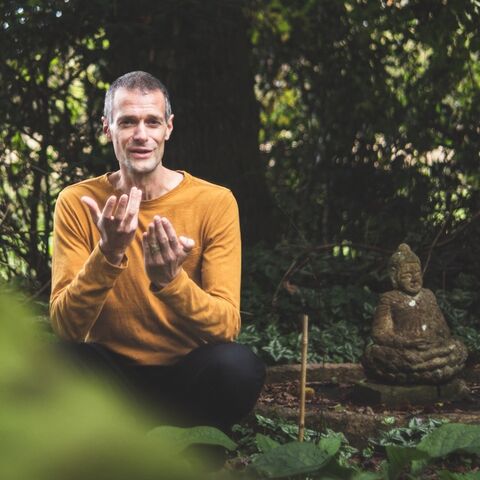
And I've got Wendy Nash back with me today.
Wendy,
How's it going?
Good,
Thanks.
I'm calling from Gabby Gabby Country in Queensland.
Here we are today and we're talking about,
We've titled this World Wide Wise Speech.
So wise speech,
What comes to mind when we say wise speech?
What is that all about?
I'll just have my co-host here.
What does that mean to you,
Wendy?
What is wise speech?
You know,
I had never really figured it out.
I think,
I think it's a really difficult,
It's actually not straightforward.
It's a really nuanced thing because it's so culturally dependent and like not just say American or Australian,
But I was on the train one time and there was a guy,
A couple of years older than me and he used to teach English.
And these two teenagers arrived and they were,
I mean,
Using language and that would be completely not allowed on even probably explicit,
You know,
Apple podcasts.
It was really,
You know,
Derogatory terms for women's genitalia,
But that referred to a person and they just use that.
That's like,
You know,
A guy,
But they were using this word,
C word,
As a person,
A description for just,
Oh,
You know,
That guy.
And he was just,
This fellow sitting next to me,
He was completely confronted by that,
The use of the word.
And I said,
You know,
But sociologically,
That is not an offensive term.
They just came from a poor end of town and an area where it's just people have other things to deal with than care for kids and,
You know,
Loss of drug,
Alcohol,
Jail,
That they would have come out of that demographic.
So,
So I didn't find it offensive when they were using it because it wasn't offensive,
But it was,
I mean,
Different sociology.
So I find that really nuanced.
So here where I am,
It's quite poor and people effing blind all the time.
But so here,
You know,
I went to a meeting yesterday and a senior staffer at council at the municipality,
She's using those words.
She heads up a very important team at council.
So it was interesting.
And she said,
Oh,
That's very vernacular,
Isn't it?
She kind of caught herself in that,
But it's sort of what,
It's nothing exceptional here.
Now,
I used to work at the University of Oxford and there in the team,
You could swear and you could effing blind,
But I came back to Australia and I was working in a job and one of the senior managers spoke about people as an mother F.
And I was like,
I can tell I don't work at the University of Oxford anymore because no one used that term.
That was deemed way,
Way too offensive.
So it's so new,
Like just swearing is nuanced.
And I haven't even talked about.
.
.
So to me,
I don't find swearing such a problem.
I'm much more interested in when I was working at Oxford,
People were very offended very,
Very easily.
And they said horrible things to me,
But because they all worked in one language,
One culture,
It meant whatever.
They actually didn't realise how offensive they were when speaking to me.
They took what I said offensively,
But then they were saying so many horrible things and there was no swearing in that language.
So I think it's such a complex thing.
Now,
You're living in Denmark and everyone speaks English and you haven't yet developed much language skill in Danish,
I think,
Is that right?
Yeah,
Little by little.
Little by little.
Yeah,
It takes time.
You've got to do it,
But yeah,
It takes time.
So you haven't learned the nuance.
And what I always found interesting,
Living in Sweden,
Living in France,
There is this thing where not only do you translate the words,
But actually what I thought was so interesting is that my politics changed and they became less or more conservative according to which language I was in and which language I had learnt that terminology and those language skills.
Because my ex-husband's family,
Which are French,
They're quite conservative.
So they use language and it's only now when I speak French with somebody and I go,
Oh,
That's a derogatory term,
I think.
But I didn't know that because it's a word and they used it,
You know,
Fine.
And I go,
Oh,
Okay,
I was wrong.
But as a foreigner,
You don't know all that.
So it's very complicated.
It is,
And this touches on a lot of things and this is a good place to start digging into this,
Especially with,
I love this curse word thing,
Just to dive in here.
And I mean,
For me as a male,
Ideally,
I don't wanna be having a potty mouth around,
Maybe I'm old-fashioned,
But women and children.
When I'm with other guys of like mind and there's no one around that we can offend,
Then we can speak more freely or whatever kind of obscenities wanna come out of the mouth.
I don't do that as much anymore.
I used to,
My dad cusses like a sailor because he was a sailor.
So he was in the Navy.
So I grew up with that even as a youngster all around.
And yeah,
To me,
It also touches on this kind of,
I don't know what to call it,
Being offended culture.
I mean,
People are very easily offended.
I think there's an agenda pushing that,
That people don't wanna get offended and don't wanna offend,
Which I think there's a huge wisdom in that.
I think maybe it's gone almost to the extreme now where people lead with I'm offended before they even hear anybody's words almost.
Maybe I'm exaggerating a little bit.
But the way I look at this,
And we've maybe mentioned this before,
And it's really gained a lot of clarity when I heard this,
Is when I say something,
I'm 100% responsible for the intent I have behind the words,
What I intend behind that.
Now,
The outcome is different.
Now,
About half of it is my responsibility,
But I can't control how the other person receives what I say,
Even though they're not totally responsible for it,
But I'm not totally responsible for how someone lands.
And so then it becomes,
The intention becomes fairly important,
Right?
Because out of 200%,
Let's say 150% of that is my responsibility,
And vice versa.
I don't know if the math makes sense there,
But right?
Like what I bring,
The intent,
The reason behind I'm saying what I'm saying,
I'm responsible for that.
There's nobody else to do that.
But then how it lands,
Again,
Is not all my responsibility.
So now,
Are there universal qualities that are helpful,
That go across all that aren't culturally dependent?
And I would say maybe there is,
I would say one thing is non-harming or kindness.
And by kindness,
I mean a lack of ill will.
And I think that,
And you could just say dignity,
Right?
And just,
And then what,
Perception plays a huge role in this too,
Right?
How we perceive things and how other things are perceived,
I think a good gauge is how it lands in the heart.
How does it feel in the heart?
When I hear these words,
When I speak these words,
You know,
That,
And,
You know,
I'll come back to the offensive thing later.
I mean,
Other than just say,
I wonder if people are holding back things they need to say because they're too afraid of potentially offending someone else.
I get the respect,
But I wonder the amount of self-censorship in this too.
Now,
There's sometimes when we know we shouldn't say something and we say it anyway,
Come on people,
That's,
I mean,
I'm still,
You know,
I still do that plenty,
You're right.
You know,
Cause I feel either indignant or,
You know,
Righteous and I,
Or entitled to say that,
Right?
But there's the other end too.
There's the other end where I know I need to say something,
But for whatever reasons,
I don't say it.
Maybe I perceive the outcome's going to be too inconvenient or I,
You know,
I don't want to cause,
You know,
It's going to be,
You know,
For whatever reasons,
I don't say it when I know I should say it.
So I think that's enough to go on for now.
I was,
As you were speaking,
I was thinking about a couple of recent interactions.
So I'm,
I do Toastmasters,
Which is a public speaking program.
And I do that because I'm in a new town,
I want to make friends and hey,
It's good for my self-confidence and it's good for my public speaking.
I have a community group and I need to speak on behalf of that.
So it's really helpful for that or all that.
For people that don't know,
Can you explain like what a Toastmaster meeting is really briefly?
So Toastmasters meeting is just,
You go along and you meet other people in your town and you learn about giving a speech.
That's it.
So that,
You know,
Say you've got,
You're in a work culture and you're giving a presentation,
You've got your PowerPoint slides up and you want to speak and you've been,
Or you've been given this job to speak about whatever your work is and you need to present to a group,
The CEO or whoever.
And you might be nervous as all hell.
There you are,
There's my swear word.
And it's just very helpful for that.
But there's a whole lot of other stuff you're supposed to take on roles like secretary and,
You know,
All the things.
And I'm in a really small one,
So we'll have to do it.
And,
You know,
I dragged my partner along because I'm like,
You've got to do it because we need the numbers.
And so he's not really interested in any of the extra things.
He does it because whatever.
But one of the women,
She thinks Toastmasters is the be all and end all of everything.
She just loves it.
And she gets very self-righteous.
And she came up to me the other day at the end of a meeting and she said,
Oh,
That word you sent out in that email to all the members,
That's not,
You know,
You shouldn't have done that because that didn't comply with corporate guidelines on,
You know,
You can't use word games when you're introducing about an evening.
I mean,
It's Toastmasters about public speaking and things.
Word games is actually,
I would have thought,
Who doesn't like to have a bit of fun,
You know?
But no,
She thought that was not right.
It's about leadership.
She was really highly strung about it.
And there were a few things where she got pretty shut.
And it's the thing that was difficult isn't that she wanted it different or whatever.
It's not what you say,
But how you say it.
And there is a whole thing.
So I,
You know,
My training is in psychology.
So there's some researchers called the Gottmans.
I can't remember their names,
But the Gottman Institute.
And they have a thing where if you want to say anything bad,
You have to say 19 positive,
You need to have 19 genuinely positive interactions before you say anything a bit crappy.
Swear word number two.
So,
And,
But think about that.
So it means you have to say,
Hi,
How are you?
Pause,
Listen to the answer,
Engage with your reality.
Ah,
That sounds bad,
You know,
Dah,
Dah,
Dah.
Ah yeah,
Let me tell you about my day.
That's the second one now.
And then you respond to me.
It means saying,
Thanks for doing the dishes.
It means,
You know,
Doing the lawn.
It means whatever,
You know,
All doing the grocery shopping,
19 positive interactions.
And then,
You know,
And you have to say sorry and all this sort of stuff.
So,
And then the way you begin a conversation is the way you end a conversation.
So if you go up to somebody abruptly,
Hey,
You need to do it differently.
Well,
What you get off,
What you get at the end is,
As I did,
Sort of in my head,
Well,
Sod you.
If you want to do it,
I mean,
If you don't like it,
You can do it.
But of course they can't.
So I did pretty much tell her that after the,
I think the fourth complaint in four conversations,
I just went,
That's enough now.
So I wasn't rude,
It,
Too much,
But I did make it clear that you've crossed a boundary and excuse me,
We are volunteers and you don't speak to people like that.
So yeah,
So you need to have very clear boundaries.
So it's not,
It's very straightforward.
So I'm in the process of giving a speech about giving feedback so that she gets it in a way that everybody can learn from it without her knowing,
Without anybody else in the room knowing,
I'm just giving her sort of instructions on how she could do better.
So yeah,
So that was one indirect,
You know,
So I think the thing that we're both talking about is it's not what you say,
But how you say it.
So I'm going to give you two more,
I'm going to give you another example.
Yesterday,
I was at this meeting and the woman who was swearing before was very senior.
Another woman came and I've met her once at a sort of a weekend workshop and then I bumped into her at another one of these networking things,
Different environment,
And I'm not very good at recognizing people's faces.
And I said,
Oh,
Yes,
I recognize you.
And she said,
Yeah,
I won the competition.
And I was like,
Oh my goodness.
She was like,
Ah.
So,
And then after that,
And I was so taken aback,
She so slighted me,
You know,
And she cut me down.
And I was speaking with somebody else probably a bit too loudly and going,
Wow,
I just had this really intense kind of conversation.
And then yesterday when I bumped into her again,
I saw her and she just didn't look at me,
Didn't look at me.
And she went up to this head of department lady that I was speaking with,
And she said,
Oh,
Hi,
And it's so lovely to see you.
Yeah,
Got to go,
Big hugs,
And wouldn't even acknowledge me.
So why speech comes there?
And I have,
And this is a message to our listener.
If you have the guts,
And if this is your bugbear,
Like it is with me,
I want someone,
You,
Listener,
To start a group called Don't Be That Gal,
To train women,
Girls and women,
Basic skills.
So guys have this thing,
Don't be that guy.
You know,
If I said to you,
Don't be that guy,
You know what that means,
Don't you?
Yeah,
Absolutely,
Yeah.
Women don't have an equivalent,
And we really need it.
So I just thought I'd talk about speaking,
But also intentionally not speaking.
So there you go.
So there's my little.
.
.
Beautiful,
Wendy,
And I love these real life examples.
I need to bring more of these into when I speak,
Because I know people really can resonate with that.
And I see that too with,
I mean,
With women,
This kind of almost a sleight of hand,
You know?
And it's actually my fiance who said this,
What I thought was really brilliant,
And it tied a lot of things together.
Why do so many people say one thing,
Mean another,
And yet act an entirely different way?
And that's a classic example of what you just said there.
She said that,
And she really didn't mean that at all.
I mean,
She meant actually something else.
The reason behind that seemed like it's not that she was just wanting to give hugs and say hi,
You know?
There was other motivations behind what she did and how she said it,
And then how she acted.
So yeah,
This is really good.
And so I wanna ask you for the suggestions about that.
What do you think the answer and solutions is to this?
And before you answer that,
And you can maybe ponder a little bit,
You know,
I'll just throw these out here.
Maybe these are cliche at this point,
But I find these very helpful,
The Buddha's guidelines for wise speech.
And it is not speaking falsehoods.
That's the biggest thing,
Right?
We say things honestly and not deliberately lie,
You know,
Tell deliberate falsehoods.
The other thing we're talking about is kindness,
You know?
And I would just say a speech that doesn't cause harm,
You know,
And some people take this the other way where they have this fake niceness,
Is it,
Oh,
You know,
And it's not genuine authentic,
And it's actually the inverted way of kindness,
You know,
This fake kindness,
It's actually kind of like a dagger sometimes.
And then,
So is it spoken at the right time?
You know,
Are we saying it at the right time?
Sometimes it's just not appropriate to say certain things in certain situations,
Instances.
Does it create concord or does it create division?
You know,
Will it bring people together?
And this is the one I have challenges with a lot,
Especially from being in the United States,
Probably more like the divided states,
Right?
You know,
How can we cause concord?
Because it's a divide and conquer tactic.
If people are divided amongst themselves,
Well,
Then they're easier to rule over because they're not responsible enough for their own actions.
And then I'm missing one more here,
But maybe if I remember it,
I'll come back to it.
But yeah,
So,
Mm-hmm.
So a couple of things,
Just,
I actually was rude yesterday.
I know I've seen M.
Reid has said a couple of yeps.
So I want to know,
M.
Reid,
What you're responding to.
So please sort of put in a bit more comment about where,
What is clearly something resonating for you.
And yeah,
Maybe you have an experience.
So here's my experience from yesterday.
So I was sitting around meeting all these new people networking thing.
And one of the women there,
So it's two things,
I think.
And one of the women there,
And she said,
I said,
Oh,
What do you do?
And she said,
Well-being and mindset.
And I kind of went,
Oh no,
I actually went,
Oh no,
Really?
Like everybody does that.
Yeah,
But I've been doing it a long time.
And I was like,
Oh,
It's really rude.
What did I miss?
What did she say she did?
I'm sorry,
I missed it.
Well-being and mindset,
Well-being and mindset.
Okay.
And I'm just like,
Oh,
Who doesn't do well-being and mindset?
And I have,
My company thing,
I have a whole tagline,
Which is,
I work on the mind,
Not the mindset.
It's not just overcoming your limiting beliefs.
So as soon as she said mindset,
I just went,
Oh,
Gafoor,
Don't get,
You can get over yourself.
I was just,
I was really rude,
So.
However,
It was authentic though.
And you weren't trying to hide and pretend something otherwise.
So in a way,
It was a kind of kindness.
Maybe it wasn't loving kindness,
But it was authentic.
Now,
Right,
How do we temper that to make it more palpable sometimes,
Though,
Right?
So here's another one that's contemporary.
So you know I'm doing this meditation teacher training at the moment,
And there's a huge thing.
And it was one of the reasons I really wanted to do this one was because it has a huge racial awareness that I just think is fantastic.
You know,
I'm in Australia,
And our former prime minister last year or the year before said,
Australia never had slavery.
You go,
I don't know,
Like,
That's the prime minister.
It was just,
Oh my God.
So,
You know,
And there's huge amounts of racism.
We haven't even begun that conversation yet,
Not even close to beginning that conversation.
So,
But there's a whole thing on her,
Her,
Him,
Him,
Her,
Him,
Him,
Her,
Him,
Gender pronoun,
Them,
They.
And I was talking with a good friend of mine who does psychotherapy work.
We did a psychotherapy training together.
And he had heard this line,
Which was,
As long as it makes the other person feel welcome and included,
Then use the correct language.
But there is something about the progressive left,
And it's starting to come through,
Which is very,
This condescending thing.
So I read this book called White Fragility by Robin DiAngelo,
As I'm trying to learn about white racism and supremacy and all that.
And she said,
She quoted this sort of Texan guy.
And he said,
Yeah,
My black,
My,
He's white.
And he said,
Yeah,
My best friend is black.
And he was living up in Massachusetts or somewhere like that at that point.
And the professor said,
Well,
Isn't that neat?
And so there's a condescension by the progressive left.
You'd be a good girl there and say exactly what,
It's sort of got this maternal,
Patronizing,
Condescending flavor to it.
That,
You know,
The poor,
The heathens,
The poor people.
And what was very interesting in my,
As I listened to that is actually the left progressive communities,
Physical geographical communities,
Are less racially diverse in the US.
And I would say probably in Sydney,
Here it's very,
Very white,
Just for lots of complicated reasons.
But actually it's probably less white than some of the wealthy areas in Sydney.
So,
But they,
All the progressive left,
They live in these very white,
Homogenous communities compared to areas which are more racially diverse and right-wing conservative,
I would call it.
Absolutely,
Yep.
So I think there is something about when you become overly inclusive,
Like I listened to one of these videos on the training and I love this training,
But it's like,
And we welcome people who are,
You know,
Women and men and any gender and transgender and any body shape and any color.
And I'm not against that,
But there is something which is,
And if there's anybody we've forgotten,
Then we welcome you too.
You know,
It was just like,
It becomes,
It sort of becomes meaningless and kind of cloying or something.
So I think it's really important to be polite and have good manners and respectful.
So I'm definitely not saying we want to go back to the seventies where people were hideously racist and still are,
And I'm in a very racist area.
So,
But I don't know that I like this new flavor of it either.
Well,
I'm glad you're kind of becoming enlightened,
So to speak to this,
Because yeah,
It has gone a little bit overboard,
I think.
And it's almost,
I wonder,
And this is just a wondering,
If there's any kind of,
If they're,
Not ironically is the right word,
But if they're doing this as a kind of protection for themselves,
Right?
Because if they live in these huge exclusive opulent white neighborhoods and they don't give this face or this appearance of being inclusive and kind of pandering to,
I don't know,
Pandering,
That's a strong word,
But maybe placating,
That's another strong word,
But to what they think they need to say and appear as for their own safety.
So maybe this is a somewhat racist statement,
But if,
Just let's forget demographics,
Except rich and poor.
If they're not putting on a face to poor people,
Let's just say are people that don't have as much money.
And then day after day,
A lot of people that aren't well off pass by this neighborhood and they say,
Well,
Why are these people like have all this opulence and I don't?
So,
But if someone is in this protected opulent neighborhood then they can give the appearance that they're for the working man,
The common man,
The poor man,
And that way they stay protected from any kind of retaliation or trouble or problems or anything,
Or people just asking questions or saying things and speaking things.
So I wonder if that has anything to do with this.
Yeah,
And I mean,
We're talking about wise speech here,
Like sort of kind speech,
Basically.
We're talking about what is kind speech.
And I have friends in the progressive left and one friend of mine,
I was talking about the equivalent of a Republican.
And I said,
Oh yeah,
He's actually a really lovely guy.
And he has,
I go to his events and cause they have networking events,
But I go,
I'm on the progressive left and I go and he's lovely.
And he's warm.
And she's just like,
Oh yeah,
But you know,
And said,
Yeah,
Well,
He's so racist and misogynistic.
And I said,
Well,
I actually can't speak to that.
I don't know if he's like that.
I know the person who heads it up,
That's my opinion of that guy.
But the guy who's at my,
Who's my local,
That's not what I see.
I don't not see that,
But I,
You know,
I've never,
He's a politician,
He's going to be lovely.
Yeah,
So,
But this automatic assumption judgment that is anybody who's Christian is going to be homophobic,
Who's going to be in a conservative church,
Is going to be homophobic,
Who's going to be racist,
Who's going to be whatever.
But now that I say that,
I wonder if actually it's a latent,
How do you say this?
You know,
Like their own shadow projected on.
It very well could be.
And,
You know,
This is,
The other thing I want to add to the last point was,
It's also can be,
You know,
Feeling better about themselves too,
You know,
Because I have all this,
This,
I mean,
But then I don't want to get into the privilege thing because that is a thing and that can be overdone too.
But,
You know,
Just because they have a nice comfort zone and they might feel there's a thing called white guilt too.
People are feeling guilty for,
You know,
Even though they didn't do anything,
There's just seems to be this push.
Oh,
You should feel guilty about who you are and what you are because that's popular right now.
Basically that's a lot of times it comes to that.
But so staying in this comfort zone and also doing what other people say,
If it's the zeitgeist,
Then people want to fit into that or they could become an outcast.
They don't want to speak anything different than what's being pushed,
You know,
In academia and these things right now.
But to speak to your thing,
This is the easiest way I find and the least maddening way that I know of is just we connect with people heart to heart.
You know,
I do it well individually.
I know life doesn't unfold all the time individual to individual,
But when we're talking to people,
Can we just be present and strip away all our ideas and,
You know,
Stereotypes and agendas and projections and even,
I don't know,
You know,
What this person might look like and reminds me of someone else,
You know,
And what they did and what they said and who they were.
Is it possible to meet someone afresh and stripping all that?
Because what I find really damaging a lot is that these ideas we already have in place.
And when we start applying these ideas and especially beliefs are even more dangerous a lot of times to something that we don't even know anything about.
We haven't even,
Like you're saying,
We haven't even spoken to a certain person,
But we have all these kinds of assumptions and deductions and inferences based on either past experiences or ideologies and belief systems and what we think we know about something.
But the thing is we haven't even interacted.
Now I'm balancing this too with our own intuition,
Right?
We pay attention deeply to the heart and if the heart is telling us a message,
You know,
That's deeply felt,
Then that's something to really pay attention to.
But,
You know,
The mind has no shame about what it will say and do and trick and overlay and all these types of things,
Yeah.
Yeah,
I mean,
I guess it's such a tricky path and I was meditating the other day and I was thinking about how I get hurt very readily.
So when this person at Toastmasters comes up to me and says,
You didn't,
You know,
You shouldn't do it like that,
You should do it this way.
I feel totally offended and hurt and criticized,
You know,
And I'm too,
I think I'm too tender.
I take it too much to heart.
I think some people can manage to separate that,
But I just,
I always take it super to heart because I'm trying to do my best and they're going,
No,
What you did is rubbish.
So what was I going to say?
Just about feeling,
So I was meditating,
Feeling sort of a bit hurt by this experience and then I thought,
Actually,
People speak from hurt.
It's like this pinball machine,
You know,
That goes from one hurt to another person's hurt to another person's hurt to another person's hurt to another person's hurt.
And it goes bing,
Bing,
Bing,
Bing,
Bing,
Bing,
Bing,
Bing,
Bing,
Bing,
Bing,
Bing,
Bing,
Bing,
Bing,
Until one person just lets it go and then it passes.
But this,
Yeah.
Yeah,
But that sort of speech is really what it's,
Yeah.
It's really important and so yeah,
Let's talk about this in a meditative context,
In formal meditation.
I know,
Yeah,
This is,
Well,
What you said first though is this people speaking from hurt and I see that a lot.
You know,
There's so many people have gone through trauma and we've talked about trauma again and again,
You know,
And so these questions of,
You know,
How do I,
How does this land,
You know,
If I was the other person,
How would this feel,
This being said in hurt?
And,
You know,
How can we speak more healing words and words that are gonna be of encouragement and upliftment and still be authentic without having to put on rose colored glasses all the time and our heart's not really in it.
And I think this is where compassion can come in,
You know,
Just how much can we open to this or how many boundaries do we need to maintain,
You know?
So all this stuff is,
It takes discernment and wisdom to know when to reinforce boundaries,
When to open up and just be courageous and let it deeply touch the heart and be moved by it and have the heart quiver and balance that out with not having a bleeding heart about everything all the time either,
You know?
And so one thing in formal sitting practice with this is I know years ago,
And this is probably frowned upon in meditation circles a lot,
But,
You know,
I was just having this,
Well,
This is really common in just everyday life,
Right?
Is we rehearse these conversations we might have with people or it's replayed over and over.
Oh,
They said that,
Okay.
You know,
I said that,
Oh,
If I could only have said it this way and,
Or I can't believe they said it that way,
You know?
And they didn't even realize that they said this the other time and who do they think that da,
Da,
Da,
Da,
Da but then also this strategy,
This strategizing I used to have is,
Okay,
Well,
If they say this,
Then I'll say that.
But if they say this,
Then I'll say that.
And then how am I gonna combine these if they both say that and then where am I gonna,
It's just,
It can be almost maddening after a while.
And this is just what the mind will do if it's left to its own devices.
And I think to overcome that or to another way around that is just to have this deep sense of trust that,
You know,
I am doing the best I can.
If I could do better,
I would.
And to just bring,
Make an effort,
Extra effort to bring mindfulness into speaking and basically where it's coming from,
The intentions and the heart behind it,
You know?
Yeah,
So M Reid,
Our listener,
It says,
We speak from where we are at,
At the moment.
So M Reid,
Do you feel that when we're at our best,
Because my sense is we speak so often from the past,
But in this moment.
So I was just thinking about,
You know,
The woman at Toastmasters who comes up to me and she's got her agenda and all the rest,
But I,
In my reaction,
No,
She's new.
And I'm a five-year-old,
You know?
Or,
You know,
So I feel,
I'm not in the past,
I'm not in the present.
I'm so got this wounding from early life,
Which is,
You're wrong,
You're wrong,
You're wrong.
You don't know how you,
So that was that.
But I think,
Yeah,
So do let me know,
Do let us know,
M Reid,
What you,
Just to expand on that and where you feel that might be from.
Yeah,
I think we're both talking about,
And I was interested in what you said there about how do we keep it uplifted?
And I'm not sure our role is to keep it uplifted.
I don't know that we should be doing that because if you focus on uplifting people,
Then you're not listening because that's your agenda that you're then putting onto the other person.
So it's sort of,
I want to say,
A very subtle form of cruelty.
I guess what that was informed by was that when encountering people that,
You know,
The type of people,
Including myself,
That will just jump to what's going wrong all the time.
This is going wrong.
They did this,
This happened.
Can you believe this?
Why is this always happened to me?
On and on and on and on.
Now you can have the other end where it's toxic positivity.
Oh,
It's a beautiful day.
Everything's going great.
Oh,
Just smiling great.
Oh no,
Don't pay attention to that.
Let's just,
You know.
So that's the other opposite.
And as far as polarity goes,
There's the other one of,
You know,
Deeply being affected by what someone says.
And it really kind of hurting,
Harming,
Or the other end going to exuberance and joy and over,
You know,
Almost overwhelm of how beautiful things are.
That deep sensitivity,
That's one end of it.
The other end is this kind of this cold,
Hard callousness where I'll just say whatever I want.
And you're a snowflake and you,
You know,
Who cares if you have feelings or anything like that?
This is just the way it is.
Bam,
Bam,
Bam,
Bam,
Bam,
Bam.
And so these,
This unbalance of these two extremes,
I feel,
But I think there's a time and place for both of,
You know,
Towards one end or the other.
But,
You know,
The discernment again to know when's the right time to say something and how.
It really comes back to how we say this.
And I would,
The only thing I would disagree with that,
Wendy,
Is in the context of if someone comes looking to us for encouragement and upliftment and empowerment and asks specifically how to do that,
Then I feel,
Yes,
That's called for.
But you really have a good point that,
Yeah,
If I'm just gonna be,
What do they call it?
Pollyannish all the time,
That's not very wise either,
Right?
And you're right.
It is kind of like stepping on someone's journey to just go in there and artificially try to lift them up if they didn't really ask for it.
And then again,
It's so hard to see people just continuously wallow in the mud and fall and trip in that mud pit again and again and again.
And we walk by it every day and we see them splashing around in their muddy hole,
You know?
So,
Yeah,
You know,
It's a tough one.
I mean,
What I guess I could do is say,
Hey,
Do you,
Just let me know if you ever want me to throw your rope down there.
You know,
I'm here,
I can do it just to say the word.
Is there anything else I can get you while you're down there?
You know,
Would you like a bowl of cereal?
Or,
You know,
I don't know,
Is there,
But I just like this compassion action.
Is there anything I can do?
Can I help in any way?
Is there anything I can do?
That way it shows a willingness for me,
But it's not me imposing what I think the other person needs to do to become better,
Right?
Then they can say,
Yeah,
What I mean.
All right,
I'm gonna give you an example.
So,
From my street.
So,
Across the road is a woman and her daughter is unwell.
And so,
I've just sort of been,
You know,
I gave her some hints and tips and they're always lovely.
They wave at me when I'm in the garden and everything.
And then I went over there and the mother said,
Oh yes,
She's just got exactly the same thing that I have.
I had when,
You know,
I had some genetic thing and I just,
It's a dental thing.
So,
I'm going,
Oh,
Well,
That sounds quite concerning.
Now,
We have private,
We have a public healthcare system here,
Universal Healthcare,
But it doesn't include dentistry.
So,
I said,
Okay,
Well,
Maybe if it's a dental thing and she's really not well,
You know,
Just go to the dentist.
Oh no,
No,
No,
I'll go to the doctor and I'll get a voucher to go to the dentist and I'll book an appointment in sort of,
You know,
I'll go there and I'll get that.
And there was something about,
Oh,
Everything is terrible and it's really hard and we're all wallowing in it,
As you say.
And this,
And then there was this massive amount of agency when it came to getting the entitlement benefit,
The entitled benefits.
It was like,
Oh no,
I'll do it that way.
And she also was sitting there with a cigarette in her mouth so it leads to this,
Well,
I feel pretty judgy actually.
You know,
I can hear that I'm quite judgy and sort of thing but I'm going,
Well,
Why don't you just get it sorted?
You know,
I'm sort of middle-class aspirational kind of type and I've got a problem and I go,
Yeah,
You know what?
I'm going to sort it out.
But she was like,
Well,
I've got a problem but they ought to be fixing me.
And that's,
It rubs up against me and my sense of,
You know,
To me,
I just found myself really not liking her and not wanting to support her because it just is a bottomless pit of entitlement as far as I could see.
Yeah,
I totally see that,
Wendy.
And you know,
This is a different mindset because if it comes from care,
Then you're going to,
Why hasn't this happened already?
You know,
In her instance,
That's what I'm wondering.
And your statement,
It came from care,
You know?
And actually hers probably did too,
But in my out view,
In my look,
It was misguided.
She thinks that the care means that someone needs to see her,
Acknowledge her,
And then come and offer her care.
The thing is though,
That,
You know,
Maybe or maybe not the government's going to do that,
But do you expect that?
I mean,
Who is the government?
It's like this nameless,
Faceless thing.
Are there going to be people going door to door every day,
You know,
Checking up and seeing if you're okay and if you need anything?
As far as I know,
It doesn't work like that.
You know,
You have to reach out in order to ask for help and things like that,
Right?
But to me,
What's really going on there,
Or what I'm sensing,
I could be completely wrong,
Is that she hasn't been seen or heard or met and that she wants someone to do that for her,
You know,
Or see the pain and suffering she's in.
And she can't give that to herself.
She doesn't know how.
I could be completely wrong there.
And this also entitlement I feel sometimes is people feel their uniqueness isn't being acknowledged too.
And so they feel entitled that people should pay attention to them.
And,
You know,
I don't know.
I don't know how this works exactly,
But really entitled to whatever because of how they feel about themselves and how they feel they're not being seen or met or heard.
Or,
And then I'm sure a lot of trauma comes in.
But again,
I'm getting off track here because I'm guessing I don't know the woman and I shouldn't probably shouldn't say this.
And it's not that helpful.
I mean- They both come from care,
Right?
It's just like they're different approaches,
I think.
Yeah.
Yeah.
Yeah.
But it's the sort of part that I feel quite judgy towards her.
And I don't want to,
I don't wanna care.
I don't,
I kind of lost my sense of care for her because I felt that I,
Because of what she said.
Now we're talking about wise.
Now we have a new person here called Ali Saleh.
Hello,
Ali.
If you have a question,
Please feel welcome to post that.
And Wendy,
You know,
That's right.
This is where equanimity because we can't make their choices for them,
Right?
You care deeply.
And just because even the fact that you think that you might be judgmental,
That's caring too.
Because that shows a lot of thoughtfulness.
A lot of people wouldn't even give a second thought to that.
So that shows a lot of thoughtfulness and that comes from care,
You know?
Even though,
Yeah,
You think you might be judging and maybe you are,
But the thing is that you would even consider that shows the care,
You know?
Yeah,
Yeah.
Hey,
We're coming up to our last 10 minutes.
So what do you think would be,
Well,
Or we can ask Ali Saleh and M Reid,
If you want a question,
Please feel free.
Aha,
Ali has a question.
Sure.
Says,
I have a question.
Why do you try to understand the individual?
Care,
Not care.
Why don't you just treat them as they treat themselves?
Interesting,
Huh?
Well,
It depends on how well I know them.
What if I just meet someone,
I don't really know how they treat themselves,
Right?
And I wonder if it will just flow naturally too,
Because the golden rule or,
You know,
Treat others how we would want to be treated.
And I think that might be a better rubric to go on because unless I really know how that person treats themselves,
But what if that person treats themselves like dog crap?
And,
You know,
I don't want to treat them like dog crap because when I treat someone like dog crap,
Then I feel like dog crap.
So I think that might be my answer to that.
I would ask,
Yeah,
No,
No,
I think that's enough for me.
Go ahead,
Wendy.
I was thinking about that,
Because I,
You know,
Why do I try to understand the individual?
Because Ali,
I'm trying to understand you.
So that's why,
Because when we try to understand the individual,
And I think what I have been more engaged with is this idea that listening to what the person cares about.
And I think what I found difficult by my neighbor was she seems to care more about getting her entitlements than getting a solution for her pain.
Yeah.
So,
And I think that's where I just went burnout.
So that's that.
So I think it's,
What does this person care about?
Now,
Emery says,
If we are hurt or in pain,
And when we talk to people,
Person,
Interaction,
Lets the other person know where we are at.
So therefore being authentic.
So maybe you hear everyone doing mindset,
Et cetera.
So I think that was a comment on,
About what I was saying before about mindset.
So,
And then she says,
Or he says,
I don't think,
So Emery,
I don't think you are being rude.
This is about the person,
Ali,
Where I met this lady and she's very lovely actually.
And I said,
What do you do?
And she said,
I do wellbeing and mindset.
And my kind of went,
Oh God,
Everyone does that.
So Emery has put in a comment here.
I don't think you were being rude,
But yes,
Maybe responding from present moment and not from past experience,
Et cetera.
Aha.
So,
Sorry,
Doing treadmill walk while listening.
Hope I'm explaining enough.
You go Emery,
You do your treadmill.
I love that.
I'm on the treadmill.
Why speech?
On the treadmill.
And then- Multidasking,
Yeah.
That's fantastic.
Why speech?
And she's going,
I hope,
Or he,
I hope I'm explaining enough.
I think that's funny.
So I got a smiley face there.
Okay.
But I think for me,
The real thing is trying to listen for the thing that I care about and for the thing that they care about.
But I can't,
I don't feel I want to care about their sense of entitlement.
So there you are.
Aha.
You're a woman.
Okay.
Emery is a woman.
It's entitlement.
I mean,
No,
It's a core wound,
Actually.
I think it's one of the core wounds.
Okay.
It doesn't have to be from a government agency.
It just feels I'm entitled to this person treating me this way.
And if they don't treat me that way,
Well then screw them because I'm entitled to have everything exactly the way I want it,
Exactly,
All the time.
And if anybody else violates that,
Well then I can do anything I want to them to get back at them or whatever.
I mean,
That's the extreme of this entitlement.
It's a wound.
It is a core wound,
I feel.
You know,
One of the- So let's go there.
We've only got a couple of minutes and if we don't get far enough today,
We can pick it up in our next conversation.
So,
But because there is a lot of sort of,
So I work in community advocacy to improve the non-car travel options.
So I see these,
They're guys,
And I'm going to classify them as the hunt and shoot and fish and guys.
And they have these huge trucks and now they're so huge,
They make adults look tiny.
They only,
And a fully grown adult standing next to the car is tiny next to this car.
So I,
Isn't that arrogance?
Yeah,
Maybe it is arrogance.
So- It's overcompensation too.
They're compensating for something.
Right,
But I feel that my heart shuts down when people are entitled.
Now,
I find it very difficult to hear entitlement.
So,
Yeah.
And maybe that's because I have such a strong sense of my own.
Well,
I'm entitled to be treated by with respect.
If I don't get it,
Then I'm going to storm up like a four-year-old,
You know?
Well,
No,
But that's a good point too.
So we're not talking about dignity here.
I mean,
Every,
You don't need to be entitled to dignity.
That's like a human,
You know,
That's just a natural human way of being in that everybody's worthy of giving and receiving dignity.
And that's,
Yeah,
That's not exactly what we're talking about here,
Right?
But no,
I know what you mean,
Right?
I mean,
We can't demand other people respect us either.
I know what you mean,
Right?
As much as I want it,
You know,
I can't say,
Well,
Wait a second,
You have to respect me or I'm going to turn you into the police or something,
You know?
That's- Well,
Yeah,
But I think there is that mentality.
Oh,
Sure.
Currently,
And I come across it,
But just going to these big guys,
These guys in these huge,
Great big trucks,
And they're going,
Yeah,
I demand to be able to drive everywhere.
And pedestrian deaths are on the increase.
They're terrible for the environment.
Fossil fuel companies are making a fortune out of them and they're absolutely taking them for a ride,
But they've kind of,
The fossil fuel companies and the car companies have just absolutely sucked their ego to kind of go,
Yeah,
Look,
You are the dominant one.
And they're completely taken for a ride,
Which is kind of a pun,
But anyway.
Sure.
But we're at the end of time.
And I also see that though,
Wendy,
As they,
It's a false sense of empowerment.
They feel belittled by the world around them.
They feel powerless and helpless.
And they think this is going to give them some kind of sense of power and agency and autonomy in the world.
And because I have my big truck,
Then I'm bigger and stronger and powerful.
And I feel strong.
And so this is kind of a false way of going about that.
So if this is a masculine thing,
Then men,
There's other ways to empower yourself that aren't like this,
That aren't confrontational and intimidating for really no reason other than for you to feel strong and good about yourself.
That to me,
It's actually,
There's not much courage there or honor.
So,
That's just the way I look at it.
But I feel for them because they have been emasculated and depowered by things around them too.
I just don't feel this is the way to go with it.
So reach out to me and we can talk man to man or about things like this too,
So.
Let's have a conversation about men's speech,
Actually.
So Emery,
The woman says,
Some don't know any better.
And I think this is what we're dealing with.
We are saying,
Actually,
We don't know any better when we speak unwisely.
So it's still like- Education,
Education,
Education is the solution to this,
You know?
Thank you guys for joining us.
And we're going to wrap this up.
Wendy,
It's been fun.
And we're going to do this again at the end of the month.
Check the website and check things for the exact times and whatnot,
But.
Emery has said,
No,
I think she doesn't want us to go.
Or she said,
Yes.
Or,
Hey,
Just join us next time.
We'll be at this time in a couple of,
Do you know what the date is,
Josh?
I can look it up really quick.
Let's look it up before we jump off.
We should have this ready.
Super professional and smooth.
Right,
Yeah.
You can check it out later,
But just for those that are just listening,
It's going to be the 31st at the same time.
So 8 a.
M.
Central European time.
So wherever you are,
Emery and Ali Saleh,
You are welcome to join us at this time on the 31st.
So here,
That's 4 p.
M.
On the 31st,
Brisbane time,
Wherever you are.
So,
And Josh,
You're in Denmark,
And it was,
What time did you say?
8 a.
M.
Central,
That's Central European time.
That's right.
Okay,
8 a.
M.
In Denmark time.
So Emery says,
Thumbs up.
Well,
We've had,
It's been great having you guys on.
So just do come back,
And we look forward to catching up with you then.
Bye now.
Bye.