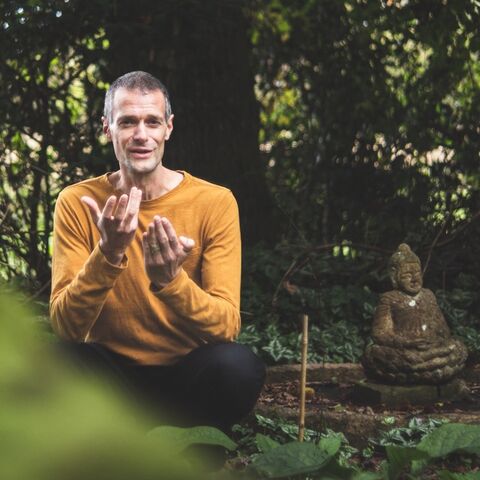
Hey Wholeness,
Welcome.
This is Josh,
Integrating Presence and joined again by the lovely Wendy Nash.
Wendy,
What's happening today?
Well,
I'm here on Gabi Gabi country in Queensland in Caboolture.
And since we're in Queensland,
It's bound to be a little bit tropical and we have a tropical storm.
And I've been thinking Josh has evaporated.
Where does he go?
I changed the view.
I was trying to get a more of a full screen,
But this is okay.
Technical issues.
This is our way.
First thing.
So The I've been thinking actually about anger and what is anger and I know we're not going to go there because we're on sloth,
Torpor,
Doubt,
All the many other things.
But since it's fresh in my mind,
I've been thinking about it.
Is that okay?
Let's do it because the sloth and torpor and restlessness are five hindrances and actually anger is another one,
Right?
Or ill will or dosa is the Pali word which includes anger.
So yeah,
It's definitely on theme.
Okay,
Well,
Let's not go there for long because we talk about it a lot.
Yeah,
Absolutely.
Or we'll get too angry about it.
Well,
Okay,
So here's where I've been thinking about it.
So I have,
You know,
Always had a pretty,
Pretty feisty character and I can get pretty,
You know,
Arced up about stuff.
So I kind of wonder what is it,
You know?
Excuse me.
And I have come to the conclusion that when I am angry I actually feel disempowered in some way.
So I was speaking with a colleague the other day,
And he said,
Oh,
Sorry,
My pen doesn't work.
I push on it because I'm never sure whether it'll work.
And I thought,
Yeah,
He feels disempowered by his.
.
.
Like,
In that mood.
It's very,
Very subtle.
There are many forms of it.
I think about you know,
Situations where people have done things and I feel disempowered about the way that they have treated me or what they have done.
So yeah,
What do you think?
Absolutely.
It's right on cue.
The way I view it now is I flip it just a little bit,
But it still retains the core feeling.
I think that's coming and your experience and your insight on it.
I look at anger as a false empowerment or a last ditch effort for protection.
You know what I mean?
So yes,
That's one way I look at it.
The only danger or one of the main danger I see with this is if there's hostility present.
Okay.
So actually,
Anger can serve a purpose in some instances,
It's not the It's not the best choice all the time,
Obviously,
We know.
But in certain situations when there's not enough resources available and harm is being done,
It's like a safety mechanism that can be like a protective mechanism to kind of arouse us out of complacency or heedlessness and say,
Wait a second,
Something's going on here that's not right or potentially not right.
And so it motivates one to act or take action or to say something in order to have some kind of sense of agency or empowerment.
Yeah.
However,
I think there's way better solutions,
But in a way it's a last ditch effort.
As long as we're not hostile when there's anger present,
Then I think it can be a protective mechanism.
So it can be a really nuanced,
Complex issue.
I would say there's also the training to do other ways that are more wholesome and skillful to be empowered,
Right?
But at least it's there to recognize that there does seem some kind of powerlessness involved.
But even powerlessness itself is another whole topic and can go into subtle areas too.
But yes,
I want to hear what you have to say.
I would say that actually just feeling disempowered and noticing it.
So this morning,
My door's closed,
So it's okay,
My partner's in the next room working,
He didn't know that I thought this.
Couldn't hear it.
I heard the truck drive by,
But I couldn't hear that,
So.
Okay.
And he was doing something,
He was cooking breakfast.
And I thought,
Oh,
He's not doing what I thought he was going to do.
And I was going,
Oh,
Would you like me to help it out?
And I just went,
Oh,
If I do that,
He will feel disempowered.
And then get angry with me.
It was very interesting.
I have never sort of thought that my kind of Uh,
Assistance?
Actually can be used as a form of disempowerment.
I became very aware of that and why people get angry.
With that this is very interesting and then the other day i was um sort of bit miffed or whatever it was and I thought I feel disempowered this is what is going on.
So to feel disempowered is not the same as to be disempowered.
And so when you just acknowledging that that's what you feel is all you kind of need to do once you've done that.
Then you can have choice.
Like,
What are your options here?
But for as long as you're just sort of sitting in the anger and not really knowing what to do.
And kind of like in embedded in it.
Like sometimes it's hard to get off that because it touches something so deep in us and we can be enraged for several days and like really hot with it because it can be really livid.
But But nonetheless,
I think when I think about those situations,
It was because something was going on and I felt disempowered.
In the manipulation,
For instance,
This particular thing I'm thinking about,
Where people connived to oust me.
And they weren't clean about that,
And I felt very disempowered.
And in fact,
Those people,
I've sort of really quite lost contact with them.
They are key people in my life,
But I don't have anything to do with them.
I said,
OK,
That's it.
That's how you are.
But I thought it was just an interesting way.
So it's not about saying,
How do we react?
It's like saying,
This is what I feel.
Exactly.
Yeah.
Very,
Very important.
There's,
There's a few,
A few things to touch on here.
You know,
One that some people feel disempowered if someone tries to do something for them,
But there's also the vice versa where they feel overwhelmed and they need help and they feel even more disempowered if they don't get help from someone else,
You know?
So that's one dynamic.
The other one is a really complex thing that you're talking about that as really gets my goat as well.
Sometimes is when we feel that people are conspiring against us.
And that does happen,
You know,
But the danger with that is sometimes there's a little bit of paranoia And it's not actually happening,
You know,
But that's that that's the nuance that people Tend to do it not openly and straightforwardly and kind of in secret and subtly and to make it deliberately vague in order To not kind of expose themselves and to do it more deceptively and then that way try to hide what's really going on and so try to get out of the consequences of it so Yeah,
We could just say backbiting too,
You know what I mean?
So yeah,
And then trying to pull the wool over someone's eyes and not be straightforward and direct and honest with them and meet them and say what they mean.
So yeah,
All these complex human dynamics and how that,
What you're talking about,
That protective mechanism,
Because that can help,
Wait a second,
Something's going on here,
I don't know what it is,
Why am I getting kind of upset or angry about this?
Happen right but sometimes I also misinterpret it so that's why communication is really helpful being honest is so helpful because and then if you catch someone in a lie and they can't get out of it well then then then we're in the clear but there's also a skill about doing that where it doesn't escalate the situation so all these beautiful and also messy complex dynamics and and how we view it and how we interact with people how we avoid people you know that we should that should be avoided and and not associated And then the other thing you mentioned around this,
I find is really helpful,
Is not identifying with it though,
Too,
Because this power dynamic,
When we can,
I mean,
It's okay to do,
But in the long run,
There is really nothing ultimately in our control in some sense.
We seem to have some greater sense of agency in certain situations,
But one of the times that can get really emotionally charged and sticky is when I grab this,
I'm saying,
They're doing this to me.
You know what I mean?
That you know,
This is not right and in some senses,
Maybe it's not but the more I identify with the defilements that are that are involved and Not want to let go of them and have them really sticky the worse it is So I find if I can separate a me from the behavior and the activity and what's going on?
Then it's not there's not as much chance to entangle.
It's easier said than done One of the reasons it gets so sticky and charged is that it's a me and a them,
Instead of,
Okay,
This is the action,
The behavior that's happening,
And it's not skillful and wholesome,
And I'm over-identifying with it sometimes.
Yeah so I don't want to sort of stay on this for too long but I was watching a TED talk on lying.
And she said.
.
.
Basically,
She said,
You cannot be lied to unless you want to believe in the lie.
And I think,
Yeah,
Like.
.
.
Let those who want to be fooled be fooled.
Well,
But we're all,
You know,
Every conversation is full of lies.
You know,
We're all always lying with each other,
You know,
Lying to each other.
We just.
.
.
I don't know,
I gotta be careful about that.
I mean,
Yes,
That does happen,
But I think there's a danger in normalizing that and saying,
Oh,
Then it's no big deal,
Then I can get away with it,
Because it's so common,
Who cares?
I say it's a training,
It's a training.
Okay,
This is the way it is now.
I see the value in honesty,
And it's more helpful than being dishonest.
And maybe I won't be 100% good on it,
But I want to value this and train in this because it is skillful,
Wholesome,
And has great benefits.
And results for me and other people.
I'm not perfect.
It's a training.
Sorry.
Let's do an episode on this because I think this is a whole thing about the expectations.
We should always be honest.
And that's not appropriate sometimes to say everything.
But sometimes we withhold when that's not good either.
Sometimes we don't want to have kind of a difficult conversation,
A conflict conversation,
Which we need to have.
Absolutely.
We can have we can meet things and risk conflict,
You know,
And work it out in the thing.
But that's right.
Not being avoidant,
But also not.
I would say,
Yes,
It is OK to withhold things at times.
But I really think when we think that we need to to to not tell the truth,
I really feel that that's just a lack of creativity because it's so much easier just to tell a little white lie.
To think,
I don't have to come up with something and,
You know,
Okay,
I'm going to be truthful,
But I'm also going to be protective and not reveal certain things if I don't have to because they can then use that information to harm people.
But it's usually just a lack of creativity and a lack of practice.
It is possible.
Let's do an episode on this.
Let's do an episode.
So our key topic today is,
Now let me just look at the chat because maybe someone's here.
No,
Nobody's here.
No,
I've got actually,
I figured out how to display the chat on the screen.
So it should automatically pop up without a filter now.
Okay.
If we get a comment.
So maybe that's why it's actually keeping people from commenting.
No,
I don't know.
Okay.
So let me read the canned intro here,
Or part of it anyway.
All right,
That's cool.
In this 47th installment of the ongoing live series with Wendy Nash,
We continue our inquiry into meditation practice both on and off the cushion,
This time primarily with two of the five hindrances.
Of one,
Restlessness,
And two,
Sloth and torpor.
Unlike the tricky subtleness of doubt,
The grosser hindrances of sensual desire and ill will,
Restlessness and sloth and torpor are particularly noticeable during formal meditation.
At least for me sometimes.
So yeah,
I'm not going to go through all these bullets.
Well,
Maybe I should.
Some possible ways we may address these all mixed together here.
So actually,
Maybe not.
Maybe I could not go and read all those.
But what I also want to do here is read that.
Furthermore,
Insight Timer reached out to its teachers with topics that meditators and app users were requesting,
And yet guidance for these on Insight Timer is lacking.
And since some of these are somewhat similar and are related,
We may or may not also address nervous system dysregulation.
These are kind of big psychological terms now.
Hyper arousal,
Hypo arousal,
Flight,
Flight freeze.
And there's also fawn and another F word,
But maybe we won't mention those.
Then window of tolerance,
Okay.
We're talking about hypoarousal in this.
It's when you kind of like.
.
.
Yeah,
That would be sloth and torpor,
I think,
Right?
And then hyperarousal would be restlessness.
And also with restlessness that a lot of people don't mention is called restlessness and remorse.
So yeah,
That comes along with restlessness a lot of times.
Sometimes I don't think so much,
But yes.
So these antiquated words,
Sloth and torpor.
So I think most people are familiar with what a sloth is.
It's this really interesting weird looking creature.
You have a lot of weird critters in Australia too.
And a torpor is actually this other weird critter or a torpene or I forget the exact name of this other that I'm not as familiar with.
But one is more physically based,
And one is more mentally based.
But if you ever watch a video of a sloth,
It is incredible how slow they can actually move.
And still be alive and as big as they are.
It's really bizarre to me.
So this off the more common words are drowsiness you know the common Zen nods sitting in formal meditation and then drifting off and then Waking waking up like that And go ahead.
Yep,
So I'm just looking here on my little AI and the word for sloth is tina,
Mental sluggishness,
Inertia or lack of energy.
It refers to a mind that has become stiff,
Dull or unwilling to engage.
Mida is torpor,
Heaviness,
Drowsiness,
Or lethargy.
It refers to a sinking or unwieldy quality of mind,
Often accompanied by fear.
Sleepiness and I can,
Oh,
The rain is really pouring down.
How about that?
Right outside my window.
Wow.
So the distinction is that tīnā concerns the mind's lack of energy and responsiveness,
While middā concerns the heaviness and dullness that makes sustained attention difficult.
So Some contemporary words might be.
.
.
Mental sluggishness.
Yeah,
So some contemporary combinations might be mental sluggishness and drowsiness.
Inertia and mental fog.
Disengagement and dullness,
Low energy and reduced alertness.
Inertia and dullness is quite good.
Inertia captures the mind's reluctance to engage,
While dullness captures the loss of clarity and alertness.
Yes,
And one of my things I've been told about this is that it's often a lack of clarity on what the meditation object is.
So we're unclear on what we're doing in meditation.
This has a chance to come in and or continue.
So other times,
You know,
We just need to sleep that it's it is just sleepiness.
So if you go and then get the proper sleep and then come back to meditation and you're still do it,
Then it's a sloth and torpor.
So that's,
That's how,
You know,
Um,
That's one of the ways we know,
Especially if you go on retreat,
Once you get to catch up on the adequate sleep and this goes away,
Then that's all it is.
But if it still remains,
Then,
Then we need to look further into,
Um,
Or can look further into this,
A sloth and torpor.
Yeah,
One of the other ways it manifests for me is,
Yeah,
Just losing the object,
The mind,
Just the sinking feeling.
Really this sinking mental,
Sometimes it's more physical too,
Where the body just doesn't seem like it has any energy.
It's just lethargic and like a rock.
Pods.
Yeah.
Have you experienced this when you're doing formal practice,
Wendy,
Sothentorper?
And what was your take on it?
Well,
I don't know if it,
So I used to,
And boredom was another one.
I don't know if that counts.
Yeah,
I think it's very,
Very similar.
Okay.
So I remember I did a 26-day retreat very,
Very early on.
I wouldn't do that now.
I mean,
I would do it now if I had the time,
But I don't have time for that.
And I would say that,
And I got to day 12 and I went,
I'm really bored.
Really really bored and I thought hold on a minute day 11 I was not bored but and I wasn't bored the previous days but for some reason I was really,
Really bored on day 12,
And I did not want to be there.
And I just wanted to disengage,
Actually.
It was very interesting.
And I realized it was because I was avoiding something.
So I think that's one thing when it's like.
It's like as the mind deepens,
There are things that kind of arise that we don't want to know about ourselves and our life.
That kind of,
You know,
The ego is protective.
So it's looking at that.
So you just kind of have to wait and kind of allow it to arrive.
So I've had that.
And I've had a kind of.
.
.
Dullness.
Where I could feel.
.
.
The sparkle of life and the sparkle of the mind.
Was was kind of lost and it just felt very dull.
There's no other way of putting it.
So I thought that was very interesting and then.
.
.
I got really bored another time.
In meditation and I just went.
Oh,
I'm avoiding something here.
Oh,
Fantastic.
I love boredom.
I love boredom.
It's great,
Because then I know some really great insight is going to come.
And of course,
Now I never get bored,
Because the mind just goes,
Yeah,
I can't use that game anymore.
So I just go,
OK,
All right.
Well,
There you go.
That's what we're going to do.
So that's me.
How about you?
No,
That's amazing,
If I can just follow up on that.
First heard this is that boredom is a choice.
I'm like,
What are you talking about?
Boredom is a choice.
But if you look into it,
Yeah,
It there's kind of choosing to be bored that you can always choose to do all these other things,
Especially like internally,
And mentally and what we want to do and pay attention to and how we want to feel.
Not all the time,
Not all the time that doesn't seem to be available.
But yeah,
It's it's really impossible to get bored.
It's hard for me to even choose to be bored anymore.
But that's not necessarily a good thing.
Because I have all these things I want to do and project and it's too much busyness a lot of times.
Yeah,
It's proliferation,
But I'm talking about something else,
Which is really just recognizing that boredom is a tool of the mind to hide things from being known.
Oh,
You go and do something else.
Oh,
I'm bored.
Go and do something else.
You know,
My childhood,
You know children do that,
Don't they?
They go and they go,
I'm bored.
Yeah,
Yeah,
Yeah,
Yeah,
Yeah.
No,
It really is.
I think my temperament is a little bit different because A lot of times I want to root out the blockages and what's in the way,
But I'm either not ready for them or I can't see them.
And so I have to start digging and investigating because they're blocked from my access a lot of times.
And a lot of them are really silly and subtle.
You know what I mean?
Now,
Early on,
The big ones just came in waves and I almost wish they didn't because they were almost overwhelming and too much to deal with.
You know what I mean?
But like you're saying,
Is that protective mechanism?
I've noticed a little bit myself,
But in others too,
Where,
Yeah,
Because things can be painful and,
And,
You know,
Some things could,
We don't want to,
Or we're not ready to deal with,
You know,
And we don't want to come up now.
Maybe in the future we could deal with them,
But not now.
You know,
It's too much right now.
I don't,
Or I don't,
I don't want to see that or deal with that now.
So the,
Yeah,
The ego has very many different mechanisms and strategies for protection.
Right.
And the,
And that is,
That is one of them.
Yeah.
Other thing you mentioned,
So I was thinking that What?
When I'm bored.
I think actually the mind is ready.
But we need to be sit and wait if you dig.
You'll end up in trouble.
But I think there's something about.
.
.
Sort of inviting it without digging.
So the question,
You know,
I'm quite an experienced meditator by now,
You know,
Not,
You know,
Not super amazing,
But,
You know,
And.
.
.
And I find this sentence works,
Or this question,
What needs to be known here?
And just allowing the answer to arise.
And it might,
It might be in the moment,
Like I've got something in the day,
You know,
I suddenly felt very,
Very flat and kind of like,
Oh,
This is like really down and dispirited.
I was talking about kind of an article in a magazine and I was going oh this is quite complex and I don't understand what this terminology means.
And my partner was talking about it,
And he was getting it,
And I'm going,
I don't get it.
And I said,
I think I felt a bit stupid,
You know,
This sort of dull,
This ache.
Now,
I don't know what that is,
But I keep asking every day,
What is it that feels?
And I'm just,
I'm just waiting.
And I find that is really useful.
Just ask every day when the mind wanders off.
Then,
Then ask the question again,
What needs to be known here?
What needs to be known here?
What needs to be known here?
And that is actually It just means that I'm not.
.
.
Kind of creating rubbish.
I can,
I feel a sense of integrity because you can make up any old rubbish.
You can,
But your intuition can also be very accurate as well.
But that's why discernment's needed.
Am I making this up or is this coming from a deep place of intuition that goes beyond the thinking mind,
You know,
Wisdom beyond,
You know,
Cognitive processes.
And it's coming through and I don't have to know how it arrives or how that information,
But somehow it's somewhat useful and accurate.
But you're right.
This is a way more skillful way to approach it than what I was talking And the way I mentioned was early on where I didn't have any really instructions because yeah,
You can get into a lot of trouble by pushing and yeah,
Like you said fabricating things and you know being too forceful and Impatient so that patience you're talking about is really super important and it's an allowing like you're talking about not forcing and Allowing it to naturally surface and that requirement of being needed is really important,
Too Because if I it's that there's difference between that and oh,
I just want to know I want to know I want to be nosy and find out you know So yeah,
It's it's a really a beautiful and amazing technique you talked about there,
And it doesn't rush it and it Fosters patience with this which is a pair of me.
You know one of these perfections that we need to cultivate in order to To progress on the path well,
We can just say now you also mentioned a dullness you know And that is a really common one too.
I had this,
I like to like a murkiness as well when there's just not a lot of light,
There's not a lot of enthusiasm or motivation.
Everything's kind of flat too.
I mean,
Maybe these are some synonyms.
And we just know that that's going to happen.
That's part of part of the practice and will pass.
And I don't need to really figure it out.
And my job is just to stay within with meditation as well as I can during that period.
Now,
There are some other tactics and techniques we can use that I've listed if we want to use those too.
So one of the ways is just to not use these antidotes and just to stay with it and know that it will pass and just constantly remind yourself the object.
But at some point,
Sometimes there'll be extended periods where that won't just that won't work.
And then we need to take some and do something different.
And so we can go through some of these too.
Maybe I can ask when that dullness comes around,
You know?
Because if we're talking about just the breath,
Compared to all the flashy worldly things that we could be doing and interested in and looking into,
The breath is pretty darn dull and uninteresting to a lot of people,
You know,
Including me a lot of times.
So,
Yeah,
If that's the case,
Do you have any ideas about that?
I have a confession,
John.
I never do,
I never do breath meditation.
Well,
I shouldn't say never,
You've done it before,
But yeah,
Yeah.
Oh,
Have I?
I mean,
You know,
But I find it kind of weird.
Know that you've,
Anytime you know that you've breathed,
Then that's a type of meditation because your attention's on it.
But I mean,
It's not,
You know,
Like I've done it,
I've done it a little bit,
But I kind of find it pointless and.
Maybe now I might be more inclined to engage with it.
Because it can kind of create a lot of curiosity.
Really,
Tell me more about that because I find it really challenging and I actually was doing it for years and finally switched meditation objects.
I'll have to go back to it,
But I don't feel I'm that qualified to talk about it.
However,
Yeah,
I'd like to hear why you think it's unimportant and what did you say,
You find it does what?
Well,
I don't do it,
You know,
I'm very focused on insight.
So I would rather spend my time just sort of trying to sort out kind of issues in my life,
You know,
Like,
What is going on?
Why?
Why do I get angry?
What is anger anyway?
Why do I feel flat?
And you know,
Sort of checks and balances on my relationship.
And I just sort of,
Some of this stuff about breathing and body.
I think that's fine when you're on retreat.
I guess if you're really focused on the breath.
It's like,
Well,
How do you think of yourself?
Maybe I just don't think.
The body's that interesting.
And so I disengaged.
But,
You know,
I was thinking also one time I went on retreat and I felt like everything was fine and I could just feel myself bypass.
So that's another form of dullness,
I think,
That can emerge.
Is bypassing,
Yeah.
But yeah,
I'm not one for like doing the kind of proper meditation.
You said everything is fine,
And so you're saying that it might not have been,
But you convinced yourself that it was in order to bypass.
I'm unaffected by this,
And oh,
Look at those people over there.
I see,
Kind of like,
Oh,
I'm a quantumist,
You know,
This isn't affecting me,
Right?
Exactly.
In order to not have to admit to myself that,
Oh wait a second,
It's actually not like that and maybe something's going on here.
Exactly.
So you raised some really good points here,
Wendy,
And I would say What you're talking about is very valuable.
And for years I did that and it helped my life so much because I could see what was going on in my life and with others and the challenges I was going through way more clearly because the mind settled down to some degree and there was extra clarity.
And then I could see things in new perspectives and new lights in ways that I couldn't before.
So it was really helpful.
So I don't want to discourage that.
I want to say but that to me now is a.
Ideally not all the time practically because I do go into that quite a bit still I would say it happens it just arises sometimes and that goes in but that's more of a contemplative and reflective and investigative and a Self not self therapy.
I don't know what else to call it.
You know what?
I mean a very helpful container for all kinds of different tools and things to happen for Wellness and betterment,
You know what I mean?
Now,
I guess I've become more more strict or more mainline Theravada.
So the other thing is just the meditation and nothing else.
So especially if we're doing like loving kindness or breath meditation and not doing more Vipassana insight type things,
Which some people,
You know,
That's when we need to have a more active mind and like you're talking about in a sense,
But other people would say,
But if we're just doing a standard meditation,
Then the more of a Samatha thing,
Then to me,
It's really important to just,
If that arises,
To just set it aside,
Keep setting aside and go.
The reason for that,
And some people might think,
Well,
That's ignoring it.
That's important stuff that you need to deal with,
Right?
And yes,
It is.
However,
If I'm constantly dealing with all that in the meditation instead of meditating,
Then it doesn't really become meditating.
It becomes something else,
But it's still important.
But the reason why it's also important to let that go aside temporarily and just do one thing is because the mind and heart then becomes very strong and powerful and bright and in the chance for wisdom to be cultivated is then once that's built up and that strength is very pure,
Very singular,
Very unobstructed,
Even more clear.
So then when that's cultivated,
Maybe the outcome or the skill set or the strength of that training can then be applied later to even make,
You know,
What we were what I was talking about before,
Even more strong,
Can see it,
Even see all these challenges and things even more clearly,
More deeply,
With more wisdom.
So it's a little bit not totally apparent because we think,
OK,
Here's the things we need to deal with them.
But sometimes we actually need to sit them aside,
Do a different type of training,
And then come back to them later.
Easier said than done,
Because,
You know,
It Did that make any sense,
What I was mentioning there?
Sure.
So I guess,
You know,
They sort of divide meditations roughly into tranquility practices and insight practices.
So shamatha is the tranquility and counting the breath is one of those or observing the breath.
Sure.
Noticing the breath,
That is one.
And insight vipassana,
That's another one.
And I guess I'm more interested in insight.
Because it's made me funnier.
And more humble.
And I find when I do sort of those breath counting things,
I can go a bit up my backside and kind of think,
Oh yes,
I'm all calm and zen.
And really,
I'm just ignoring stuff.
And I find that Yeah,
I,
You know,
If I,
I guess if I was on long retreats,
Doing that would actually be really beneficial.
But because I'm just,
You know,
I get half an hour every morning,
One Saturday a month,
I might be able to do something.
But yeah,
That's,
That's,
I don't really have time to go deep,
I suppose.
It's a good point,
Wendy.
And we need both of these,
Ideally.
It can be incorporated to,
You know,
We can spend a few minutes doing a formal loving kindness practice,
Or a few minutes doing just just breath and then go to what you're talking about the more insight practices I feel.
But yeah,
Ideally,
We do both of these.
But yeah,
I think it's totally okay.
It's better than than nothing at all.
And,
You know,
So it's all about skillfulness and skillful means,
You know,
So if this is whatever we're doing is helpful,
Especially in the long term,
Find it,
Then it's worthwhile to continue with it.
Yeah.
If there's another thing that we can pick up and incorporate and it's helpful,
Then I think that it feels that that's good too.
This is important why it's,
I think it's important to have teachers too,
And they can help guide us.
So to just take what I say with a grain of salt and,
And,
You know,
Just one other little data point there.
Yeah.
So I've got Shamatha.
I was going,
What did the Buddha's early teachings say?
So rather than kind of going with this formal metta practice,
It said,
Mindfulness of breathing,
Knowing the breath,
Experiencing the whole body and calming bodily activity.
It's like,
It's actually not counting the breath.
It's knowing the breath.
Experiencing the whole body,
That's actually a very different experience.
From what you just said should be paying attention to.
So it's just a technique.
If it doesn't work,
Drop it right away.
If it's helpful,
Use it until you can drop it.
But if it doesn't work at all,
Drop it right away.
And Vipassana means clear seeing or seeing distinctly.
There you go.
So the early discourses describe insight as understanding how experience arises,
Changes and ceases.
So not getting,
Not about the content and the sort of emotional capacity to it.
But which is where I go.
But actually what exactly arises.
That's so it says um Recognizing the changing and unstable nature of conditioned experience.
Understanding why clinging and changing experiences produces suffering.
Recognizing that experiences cannot reliably be regarded as permanent self or something fully under our control.
And investigating the conditions through which suffering arises and ceases.
So then it's got Meta,
Because they were the three that I looked at.
So goodwill or benevolence,
And it says,
Cultivating goodwill towards oneself and others,
Extending goodwill in every direction without limiting it to particular people,
Developing a mind free from hostility and resentment,
Cultivating goodwill as one of the four Brahmaviharas,
One of the divine abodes.
Key ways of experiencing you know relating and relating to others in the world yeah and ourselves yeah so compassion appreciative joy you are so that's medita and equanimity So an important distinction from some contemporary metapractice is that the early discourses emphasize the development of an expansive mental attitude.
The familiar sequence of directing phrases towards oneself,
A friend,
A neutral person,
And a difficult person is more clearly elaborated in later meditation manuals.
So.
.
.
It just says steps one to four,
Body and breathing.
Steps five to eight,
Feelings.
So joy,
Pleasure,
Calming,
Mental activity.
Steps nine to 12 is the mind,
Knowing,
Gladdening.
Collecting and releasing the mind and 13 to 16 is mental phenomena.
Impermanence,
Fading of attachment,
Cessation,
And relinquishment.
So.
.
.
That's that's I think that's sort of interesting to to look at that and see what did actually what were the early discourses what were the early practices yeah yeah absolutely yeah this is a common discussion within Theravada too and so this goes on a more surface level and it can go very very deep vast and profound on a micro scale deconstructed to ultimate reality level especially when you're talking about the Vipassana stage,
Also known as like a special seeing,
You know,
Because it's not our standard everyday way of seeing and knowing the world through concepts,
But can go very,
Very deep and profound.
But we don't have,
We don't have,
We don't,
Most of us don't start there because our wisdom is not that developed,
Including mine.
So we start where we can and we get the training that we can,
That's useful.
And,
The results are seeable and noble here and now.
Sanditika,
Right?
So yeah,
Really good points here.
Now,
I think maybe we can move on to restlessness.
But before we do,
I actually have more experience with the sloth and torpor.
Let me go through some of these classic antidotes to these.
I think for both of these hindrances,
Kind of equanimity can be useful sometimes when it's available by observing and watching whatever's happening pass,
Including these hindrances,
Without getting involved.
Seeing their nature as temporary and impermanent.
Um.
.
.
So let's see.
Specifically for sloth and torpor,
Changing objects.
Sometimes we talked about sometimes you just can't stay with the meditation.
So you need to change the meditation object.
This is one strategy.
So if you're doing a metta and getting really sleepy and tired,
Maybe you need to change to mindfulness of breathing or another brahmavihara or some other meditation object,
Like the four protective meditations on the Buddha,
Death and dying,
You know,
Loving kindness,
And repulsiveness,
That's an interesting one too.
Just sometimes they say just to open the eyes,
Because yeah,
Usually a lot of us sleep with our eyes closed.
So that can simulate the sleep.
So if you open your eyes or just bring to mind light,
It's harder to go to sleep in bright situations.
Just a few more here.
Let's see.
So I mentioned knowing the object more clearly and distinctly.
Sometimes pulling your ears,
Hardly anybody would think of that,
But that works sometimes.
Rub your limbs.
Get out in the open air.
Go for walking.
Do walking meditation.
Splash water in your face.
Some people do chanting and reading,
Uplifting,
Or energizing text,
Too.
One monk said,
One monk said,
Sit next to the well.
Because if you fall asleep,
Then you might fall in.
So that's very good practice.
Isn't it?
Yeah.
There was a one in the Zen story I heard.
Why can't I go back to my.
.
.
Are you still there?
I'm here.
Okay.
Oh,
My thing was locked up.
It put a matchbox on his head.
So an empty matchbox with like a pebble in it.
And then as soon as the posture got balanced,
It would slide off his head.
And then you'd have to catch it or make a loud sound and get him in trouble for nodding off.
Yeah.
So I think that's good enough for now.
I mean,
I have a story around Sloth and Topper,
But maybe I won't tell it now.
Is it one of yours?
Your own experience?
Do it when you're drowsy at the end of the metta sutta.
You're not supposed to do it when you're drowsy.
And the Buddha used the power of metta.
He was able to even put down a drunken war elephant to just have it sit down and be relaxed.
You know,
People have talked about being protected by wild animals.
I mean,
Advanced practitioners meditating in the forest.
It has helped them not be eaten by animals and things like this,
Practicing metta.
I hear these incredible stories.
But what I thought is usually,
You know,
Usually it's giving metta to someone.
So when I,
One of the things when I get sleepy in meditation,
It feels really good.
I just want to doze off and fall into sleep.
Oh,
It's so relaxing.
It feels good.
So receiving metta and love sometimes from people kind of feels similar.
So I thought instead of me wanting to fall into this sleep,
What if I flip the perception and think,
Oh,
I'm going to fall asleep.
Thought,
Oh,
All the people practicing meta,
I'm just gonna think instead of sleepiness,
I'm going to perceive this is all these people practicing meta,
And I'm just getting all the good meta energy.
And now it's benefiting me instead of making me fall asleep.
And I thought,
And actually,
In my experience,
Is almost like a corner turned,
And then I quit nodding off so much.
So I told him about my experience.
And he and I was expecting,
Oh,
Wow,
That's amazing.
You know,
Wow,
Yeah,
Why didn't I think of that first you know or but what I was met with really surprised me And it seems it really made me think and contemplate don't do that You don't know what that is or where it's coming from you know I mean not quite in this way,
But that's the way I received it,
And I was like what oh wow I never even thought of that that there's I mean this gets a little bit woo-woo and in different spiritual realms,
But not Not everything what I'm perceiving is that could be that and it could be something else that I'm not aware of you know what I mean,
So be careful what you're letting in and reinterpreting or maybe Misinterpreting and it really it gave me pause for thought and you know shook me out of my kind of spiritual ego there,
You know Just just one comment on that.
What I used to do with the metta bhavna in when I was actually in the meditation hall and I'd have you know I'd find somebody in the room I liked and then somebody I didn't like I didn't know and then somebody else who I didn't like and then everybody in the room and then I turned it around and I was like so that my friend is sending it to me the neutral person is sending it to me and then my enemy is sending it to me it's like and it was just a really good way for me to go I don't want that it was really kind of cool to sort of see that so but but it was entirely my projection to test kind of how I was being lazy with meta and it just triggered me to be a bit more Um,
Whatever.
Yeah.
I don't,
Yeah.
It's really good.
You know,
Usually we're taught to,
To send it in,
But like,
What about the other people sending it?
Are they sending it to me?
There's lots of people sending mental beings.
What about the receiving end?
You know,
So we don't usually get instructions or a lot of people talking about that aspect of it,
Which I'm kind of curious about why,
You know,
Why we don't or why we shouldn't.
And yeah,
It,
I like your little experiment there,
How you flipped it and yeah,
It does,
Um,
Give a different mentioned an aspect to consider that,
Doesn't it?
Yeah.
Someone to try this retreat when your next retreat.
Could be.
Yeah,
Yeah,
Yeah.
I can definitely even ask teachers about this too and see what they say about it.
Yeah,
Yeah,
Yeah.
Okay.
Restlessness.
Why don't I just throw it over to Wendy to say something about restlessness.
All right,
So I've got udahaka,
Which is restlessness,
Agitation,
Mental turbulence,
Or an unsettled mind.
The mind jumps between thoughts and struggles to settle.
And kukucha,
Remorse,
Regret,
Worry,
Or uneasiness about things done or left undone.
In contemporary language,
It might be agitation and regret or restlessness and worry.
The distinction matters because Udaka describes an unsettled quality of mind while it's Kukucha.
Describes the distress associated with reflecting on past actions or omissions.
It's already happened.
It's happened,
And I've done it,
And I'm like,
No!
Remorse,
You know,
It's like,
Eh.
So in mindfulness practice,
The antidotes include tranquility,
Pasidhi,
Pasadhi,
And Collectiveness Samadhi and Equanimity Upeka.
Restlessness and sloth and torpor can be understood as opposite tendencies.
One involves excessive agitation while the other involves insufficient mental energy or alertness.
Okay,
Over to you Josh.
Yeah,
Real early on in my practice when I first started waking up and doing it seriously,
There was a lot of Remorse over things I said and did to people That I completely forgot about that I wrote off as an unimportant and they were all coming back,
You know And boy,
It was painful to go through that but it was so helpful And it felt so good to finally see that it forgive myself forgive them,
You know and then make a determination to not do that again because I could see how hurtful that was,
And unbeneficial,
And unnecessary even.
That it didn't have to be that.
Going forward,
I don't have to be like that anymore.
And it's going to be helpful.
So yeah,
That would definitely qualify to my practice early on too.
I would say quite significant to maybe even extreme amounts.
But however,
It's good to see these things and work with them,
You know,
On and off the cushion to the appropriate degree as well,
Because it,
And then it really shows the importance of our ethics,
You know,
How we treat ourselves,
How we treat other people and has consequences.
And I just didn't see that my actions and speech and even thoughts had the consequences.
I thought I wrote it off as,
That's no big deal.
What does it matter?
That doesn't.
So yeah.
So like what they say,
Self-knowledge is rarely good news.
So yeah.
So some of the,
Go ahead.
Yeah.
I was going to say,
So I found in my,
What I tell people is in the beginning,
It's like,
It's really great.
You sort out stuff and you're kind of having a lovely time and you're going,
Oh,
You know,
It's like this,
This,
This,
This,
This.
And then you go through this really bad phase where it's like,
Oh my goodness.
Oh my goodness.
And it's just like awful and you see yourself and you hear yourself and you're going,
Oh man,
This is really,
Really terrible.
And I'm a horrible,
Horrible,
Horrible person.
And then that passes,
And then it's like,
Oh yeah,
Okay,
Well sometimes we,
And it sort of adds to the humility,
Because you recognize,
I recognized anyway,
Kind of how stupid I am a lot of the time.
Don't talk about my friend like that,
By the way.
Well,
You know,
I am kind of stupid,
You know?
I do.
The behavior sometimes is not helpful.
Yeah.
Yeah,
Sure.
But that's not you.
But you're responsible for it,
You know.
Yeah,
But I mean,
You know,
It's things like I put something down and then I don't,
I go,
Where have I put it?
Or I write something.
Welcome to old age,
Wendy,
Yes.
Or I write something and I'm going,
Ah,
That was a bit of a stupid way of phrasing it or whatever.
But um.
.
.
Yeah it's it's or you know whatever but usually it's something really mundane like I've,
I.
.
.
I mean,
Sometimes I feel really stupid,
Like reading this article and it's quite intellectual,
It's on liberalism.
Sorry,
I just give you an idea.
Usually I just say,
Usually to my defense,
It's not important.
Yeah,
I'm not stupid.
It's just not important.
But maybe I am.
But I wanted to try and understand what liberalism was.
And it's quite tricky because it's nebulous,
You know,
And this is actually what the article was about.
So I was sort of struggling more.
What is liberalism?
It's been redefined so many times,
Too.
And so many people have different ideas about it.
And that's it,
You know.
But this person kind of really did qualify the nature of it.
It's a very interesting article,
Actually.
And um and I.
.
.
And as I was talking about it with my partner,
I just felt really stupid.
And I actually think it's to do with some,
Whatever,
Horrible experience of my childhood.
But and that one is like oh that's good to kind of land and just go oh that touched something and then I can contemplate it whereas You know,
When I'm in the kitchen.
And I'm going,
I've only put in one teaspoon of tea in the teapot,
Which needs two teaspoons.
Or I've done something really stupid where I've put the tea in the coffee pot.
It's in the morning,
You know.
And I'm going.
Oh,
Suddenly my partner has tea flavored coffee.
So it's,
It's that sort of stuff,
Stupid stuff.
It's like morning stuff.
That's all.
Yeah.
No,
No,
It's,
It's really important.
And,
Uh,
Because,
Uh,
I had a degree of perfectionism,
Right?
Like then I would beat myself up,
But that's not helpful.
Yeah.
It's an interesting thing between doing our best and,
Uh,
You know,
Being sufficient and helpful.
And useful,
Feeling worthwhile and worthy,
And also not falling into the extreme of beating myself up and thinking I'm a bad person,
An idiot,
And irredeemable,
And that I can never allow myself to make mistakes.
So it is really a balancing act to be kind to ourselves and be patient to ourselves,
And yet still hold ourselves accountable,
And correct,
Make a proper correction needs to be.
Yeah.
So the tendency for me would be to fall in one of these extremes or the other.
I think this is what we've mentioned.
Patience is so important because we are going to screw up a lot.
You know,
It's just part of human nature,
Especially as we age.
And,
You know,
There's the thing of dementia in my family as well.
I can see my mom losing a lot of faculties now,
Too.
And it really tests my patience and my kindness as well.
It really shows where I still have work to do.
Because I get easily frustrated and my patience runs out.
And I'm operating on a lot of assumptions.
When you get somebody with dementia,
We are aging and we know,
We just expect everybody to operate in certain ways.
And I'm not even aware that I have all these expectations until something like that happens.
I'm like,
Wait,
What?
I just told you that,
Like,
You know,
Or why would you,
How could you be like that or say that or do that?
All these unseen ways we just assume that people are going to behave and respond and do this,
I don't even know how many,
It's just so many of those are operating.
And it actually takes,
It's a really blatant thing if you have somebody that's losing faculties like that to point those out to us.
Just how many assumptions and expectations we're operating on.
So I was at a transport conference the other day and I bumped into a colleague and she just said,
How do you have so much energy?
I said,
I never think about the outcome.
I just give it a go and if it works,
Great,
If it doesn't,
I just let it slide,
Doesn't matter.
I just don't worry about the outcome.
Because I don't know what the outcome is going to be.
When something went exactly as you planned.
And the answer was never.
And it's always never.
So I go,
Yeah,
I don't get caught in that sort of stuff.
And I think that there is a.
.
.
And I think this desire for perfection is actually that we seek to have an outcome.
That this is who I am now.
And so I,
I think so.
And I also think that we didn't touch restlessness.
Well,
What do we call it?
We call agitation and regret.
So we didn't really talk about it.
So I think let's bring that to next time.
And we can,
And we can talk about whatever it was that I suggested before.
Yeah,
Why don't we do,
Why don't we just pick up on these hindrances,
So we can continue with that one.
We touched on a little bit,
And then we can get into anger as well.
But then maybe it will be another show where we do the truthfulness and honesty as well,
Because that's a big one.
But maybe we can continue on restlessness,
Because this is important.
I'm looking for a particular result,
Like it has to be an outcome like this,
Or I have to be like this after the outcome.
But the thing is,
Even if it doesn't work,
Gets fulfilled.
It doesn't end.
Then I have the next expectation,
The next expectation.
So even if it does work,
It's still not successful.
You know what I mean?
Because it never ends,
Really.
And what do the Tibetans say?
Many expectations,
Many disappointments.
Yeah.
We're in time,
Josh.
The time has flown.
It has been very fun,
Beneficial,
I feel,
This conversation.
And that sounds awkward saying,
But it's true.
So all right,
With that,
I think bid everyone adieu.
I don't know what that means,
But be well,
Practice well,
And rouse yourself out of your sloth and torpor in a wholesome,
Skillful way.
I'll tell you what adieu means.
It means to God,
But it means goodbye.
There you go.
Ah,
Thank you.
Yeah.
Very good.
And something to reflect on what is our God,
You know.
To us.
All right.
Okay.
That's probably the most awkward ending,
But that's okay.
Enjoy.