Wholeness.
Welcome.
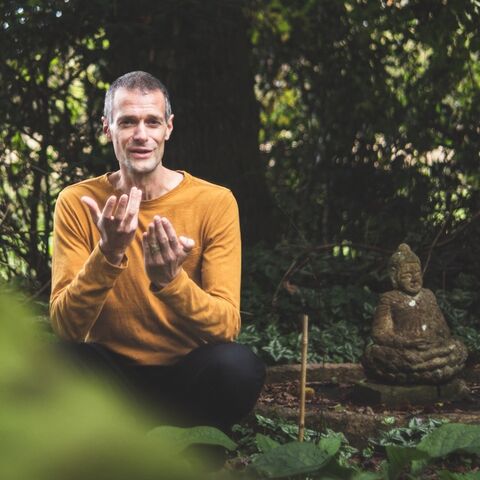
This is Josh of Integrating Presence,
And today I have Madhu.
Is that right?
And tell us your whole spiritual name as well,
And this is kind of our first time speaking,
And the standard question is,
Who is Madhu,
And what does he do?
Sure.
Well,
The short version of that is Madhu,
Which literally means sweet in Sanskrit.
And for those of you who are watching this,
It's like,
Don't touch Madhu,
Touching my hair here.
It's a simple way to pronounce it.
And the full name that I was gifted as a monk,
Becoming an ordained priest in India per se,
Is Madhuripura Das,
And Das means servant,
The whole idea being that trying not to live for being a taker,
But try to be a contributor and actually be of service in this life.
And functionally,
What I do is try to share the amazing gifts that my teachers have shared with me in terms of holistic health and improving our overall quality of life through primarily the mindset,
Learning how to actually make the only thing in your control,
Which is the mind,
Work with you instead of working against you in order to improve your health,
Improve your wealth,
Especially how to monetize your purpose,
And then overall how to just live a life that's satisfying and feel successful.
Well,
Beautiful.
I'm sure you probably get this all the time,
But a monk so early coming from the United States,
What led up to that?
How did that happen?
And then what's the monastery life like and the traditions you're involved in?
Certainly.
Well,
You're telling me most 18-year-olds on their birthday,
They don't decide to shave their head and become celibate.
I had been reading different aspects of philosophy and theology for years.
Even growing up,
I always had big questions that I couldn't seem to get any good answers to.
And I would get a lot of,
Stop asking those questions,
Or you should just have faith,
Or various answers to these questions I had,
But nothing that was really satisfying.
When I was 16 years old,
My father actually said,
I'll give you $100 to read a book called the Bhagavad Gita,
Which is a book that is several thousands of years old,
Teaching the fundamentals of yoga,
Not just from the physical,
Postural,
Gymnastic approach,
Which is also fantastic,
But from yoga,
Which really means uniting with divinity through different types of sacred practices.
And after studying from the East,
Which I had an aversion to,
Thinking,
Oh,
This is stuff's woo-woo,
Or whatever the case might be.
After I actually read that book,
I went,
Okay,
There's something in this.
There's something in this stuff that people have been doing for thousands of years.
And that really opened me up to studying philosophy and theology from Eastern cultures,
Especially from the Vedas,
The oldest written literatures that we know of in the world.
And before I knew it,
When I was 17,
I fully drank the Kool-Aid in terms of holistic practices,
And started to see the benefit in my life.
Had somebody who was diagnosed with ADHD my whole life,
And ADD first,
And all different types of names people give me.
I was,
For the first time,
Actually able to focus,
And actually able to think,
And actually be able to feel satisfaction.
And so,
Inevitably,
I kept going down that journey.
And when I was 17,
I wanted to become a monk,
Because I went to temples and ashrams throughout the US.
I would visit in the summertime.
And I was like,
I want to do this.
But they were like,
Hey,
You're a minor,
You've got to wait until you're an adult.
And so on my 18th birthday,
That's when I decided,
Let me try this,
Because the alternative was,
Go work a job I didn't want to do.
To live a life I didn't really want to live,
To live in a box I didn't want to live in.
And so,
I thought,
I can always come back to that if I change my mind.
But while I have this opportunity,
Now let me go live a monastic lifestyle,
Which is quite militant in many ways.
You wake up at about 3.
34 in the morning,
Do several hours of both individual as well as collective meditations,
You study for many hours,
And then you spend your day serving.
And that's everything from teaching meditation at universities,
To cooking for the residents there,
To leading programs around musical meditation.
I mean,
There's tons of different things you would do,
Depending on one's unique psychophysical nature.
And I've spent about five years doing that.
And since graduating the monastery,
Now I'm becoming a normal person,
If that's what you want to call it.
Well,
You're way ahead of the game,
For sure.
I've actually lived in Buddhist monasteries,
Not quite that long,
But in the UK,
Just visited in retreats a couple in the United States.
But yeah,
These traditions,
They're similar,
I guess,
In a little ways,
But significantly different.
But yeah,
It's pretty wild to think that you got so inspired and did that.
And what about India?
How is India?
And before we jump into a little more depth here.
Well,
India itself is a fascinating country in many,
Many ways,
Especially if you come from the West.
It's like talking about culture shock.
The primary place that I stayed in India were quite oasis,
Means,
You know,
There were villages.
Of course,
I would travel to the main cities,
But that was never so much my style.
Even in America,
I'm trying to travel to main cities unless I have to.
But we would stay in different types of villages where sometimes there were many of us studying the monastic life.
And the particular tradition we come from is called Bhakti Yoga.
Literally means yoga.
We have the same word cognate in English,
Which is to yoke,
Means to connect or to unite,
To link up.
And then Bhakti means through love and devotion.
So how to link up to our highest nature and to divinity through love and devotion.
And so there's many thousands and thousands,
In some cases,
Tens of thousands of us practicing together at different ashrams,
Different communities in India.
And I would spend six months a year there.
And then they kick me out for visa purposes and come back and spend the other six months in mostly North America.
But I would travel throughout Europe as well and different other monasteries to try to get a different flavors per se.
Because as many can understand,
Living a very simple life where you just wear robes and you don't have to worry about your hairdo,
And you're spending most of your days meditating or serving,
There's some people whose nature,
They can sit in one place,
Do it in one place for a long time.
But for me,
I knew,
Especially as a young man,
I knew it was important to at least try to get out and about and get different experiences,
Keep it somewhat fresh so as to make sure I could maintain,
In my case,
Five years of an actual celibate student monk life.
Well,
Tell us a little bit about how you,
By us,
I mean the audience,
Right?
So how you transitioned from that lifestyle?
Did you go into it for five years and then I'm going to leave?
And then also,
What kind of lessons did you learn?
I'm sure there's tons of specialized knowledge,
But I mean,
You're welcome to go as deep as you want and also just as broad as you want.
What stands out in that transition period too?
Absolutely.
Well,
In terms of becoming a monk,
Typically you do under the guidance of those who are experienced with many decades within ashram life or monastery living.
And so it's a little different than,
Say,
If you're going to go get a degree where it's like,
Okay,
Two years for your associates and four years for the bachelors,
Et cetera.
It's more or less,
You are under guidance and usually commit to a certain amount of time and then you reassess.
So in my case,
It was like,
Okay,
Become a monk for a year,
Then we'll reassess.
And then I did that and then it was like,
I want to go for two more years and then did one more year.
And then what happens is under the guidance,
It gets to a point where it's like,
Hey,
I think it's time to integrate.
Because when you graduate the monastery,
The whole idea is you learn as much as you can.
So when you become a quote unquote normal person,
You can actually live in this world as a contributor to society instead of a taker and actually create a type of character that you can really help others,
Like actually be of service,
Actually be a contribution.
And so after about four years,
That's when I remember my teachers were like,
Hey,
I think you think it's time to maybe start to,
And I was like,
Oh,
Not yet.
And then about four and a half years,
Like,
Yeah,
Okay,
I'm feeling,
I'm feeling the pull to maybe not sleep on the ground anymore.
Actually honestly,
I prefer a simple life even still today,
My wife often has to coax me into like comfortable things because I really do,
There's a,
There is a taste in simplicity and when life is very simple in that way,
But there was a desire to actually experience this world,
Actually grow hair.
No,
But you know,
There's an idea of just getting back into society.
And so in my case,
It was about five years,
But for some people,
There'll be a student monk for one year,
Some people 15 years,
Whatever the case might be.
And it's usually under guidance,
But as to your question of what we learned,
How long do you have?
To oversimplify it,
We could say you learn how to serve.
And that really means,
Again,
Happiness comes from service.
The mistake people make in modern society is there's this idea that if I,
The more I get,
Then I'll be happy.
If I just get that thing,
I'll be happy.
But the people who have all those things,
They're unhappy and they'll say,
Stop trying to get those things.
It doesn't make you happy.
And if people don't have those things to think,
But no,
Maybe,
Maybe not everyone else.
I'm the exception.
It'll make me happy.
And really,
If we can create a life where we're improving our quality of life while simultaneously improving the quality of the lives of others,
That's where real contentment and purpose and satisfaction comes from.
A sense of actually living a life that feels successful.
And success isn't a place that's achieved.
It's not when I get the thing,
It's rather when my perfect day looks like most of my days.
That's success.
When I do what I want on a daily basis in a way that,
Again,
Contributes.
And so that's the fundamental principle.
And there's various sciences and technologies that you learn in how to do that.
So everything from Ayurveda,
Which was my particular focus in terms of how to literally become healthier through your diet and through your lifestyle from the ancient holistic practice.
Ayurveda literally means the science of improving the quality of life.
To say kirtan and mantra meditation,
Different types of music.
For those of you who can see,
We've got a couple of musical instruments here and I've always been into music myself.
So I always liked musical meditation,
Engaging the mind with mantras accompanied by music,
Which makes the mantras a little bit tastier,
At least more accessible for the mind.
And so I had different,
I mean,
There's many more I could share,
But there's different focuses according to one's nature that you study deeper into.
But the whole idea is how can we take one's unique nature and one's unique gifts and then figure out a way to amplify consciousness or amplify the ability for others to experience quality of life.
So let's jump into some of this stuff.
What do people need to know about Ayurveda?
I mean,
Maybe someone that is not that familiar with it,
And I'm actually not that familiar with kirtan.
Let's see,
Is it Krishnadas that's real popular?
And so I listen to so much music in my 20s,
But right now I listen to mostly instrumental,
So I don't listen to a lot of this.
And my nature is not that devotional in particular.
I have a meditation practice that I'm devotional to,
But it is very inspiring to see people very devotional towards something that actually matters in life.
I mean,
Something that's going to bring contributions to one's welfare and happiness and to that of others,
And especially in the long term.
And talk about some service work through Ayurveda,
Kirtan,
And just anything that just really comes to mind about serving and promoting well-being for yourself,
For others,
On whatever scale you'd like to discuss.
Yeah.
Well,
In terms of the fundamentals,
I always like to start with the basics.
The basics are the best part of any practice.
You find somebody who's phenomenal at a practice,
You'll know that they mastered the basics.
If we look at what anyone could do today immediately to start to improve the quality of life,
Which again is literally the practice of Ayurveda,
It's a completely holistic approach,
Not to disregard modern science.
Big fan.
If I get in a car accident,
I'm going to the doctor.
But if I have a digestive issue,
I'm going to typically want to take a holistic route.
It's not that one's good,
One's bad,
It's a matter of knowing what science and where to go for what you're looking for.
When it comes to the basics,
The fundamentals,
We're really looking at diet and lifestyle.
There's five elements that I always like to share that if somebody simply improves these five areas of their life,
There's no chance you can't feel better.
There's 100% guarantee you will start to notice some difference in terms of,
Again,
Your mental clarity,
Feeling comfortable in the body,
Building some strength,
Et cetera.
Of those five,
Number one is sleep.
Some of these might seem simplistic,
But there's a reason things are cliches,
There's a reason things are impressed upon so much.
Just because it's simple doesn't necessarily mean we should look past it.
But improving our sleep quality,
It's really essential because the easiest way to become a psycho is just don't sleep.
Anyone,
If you're interested in becoming a psycho,
You don't have to take a course,
You could just don't sleep for a little while.
Before you know it,
It'll happen.
You have to sleep,
And you have to sleep enough,
And that's going to look different depending on one's body type.
But in general,
You must sleep,
And the way you'll know if you slept properly is you wake up feeling well rested.
It's really just that simple.
And well,
There's a little bit of nuance to it,
Don't get me wrong,
But you have to improve the sleep quality.
Number two is hydration,
And this is where,
Say,
Unique aspects of Ayurveda come in because hydration isn't just a quantity.
And usually,
Say,
If you're using the pound system,
You take half your body weight and drink that many ounces of water a day.
As long as you drink more than that,
You should be fine.
But there's also the quality of the water.
Actually drinking alkaline water,
Especially if you can get natural spring water.
Water that's not dead,
That's still alive,
That's energized.
And as well as the temperature.
The temperature of the water that you're drinking.
An example is if you're drinking cold water,
Your body actually has to warm that water up to properly assimilate it.
So closer to body temperature,
You're going to absorb more.
People drink,
Chug cold water,
And they wonder,
Why did I pee,
And always feel dehydrated.
Whatever the case might be.
So you've got to hydrate properly.
You've got to move every day.
The third one is exercise.
You've got to move every single day and get the body sweating and actually increase the heart rate on a regular basis.
Number four is diet.
You have to eat a diet that's nourishing.
And just as we can oversimplify to say,
If you wake up feeling well-rested,
You know you slept well.
Similarly,
If you feel energized after your meal,
Great.
We know that you assimilated and digested that meal at least decently,
If not properly.
So you have to eat a diet that's actually nourishing,
And you are what you eat.
So eat foods that are actually going to create the life that you want.
People eat food that's very heavy and degrading for the digestive system,
And they wonder why their consciousness gets heavy or degraded.
Or they take very stimulating things,
And they wonder why they can't ever sit down and shut up the mind,
Or whatever it might be.
Or they eat food based out of violence,
And they wonder,
Why do I have all this rage in me?
Whatever the case might be.
And so we have to eat a diet that's going to be nourishing.
And then the fifth element is,
You have to get sunlight in the eyes.
Don't try not to look so much at the sun directly,
Depending on the time of the day.
Most time of the day at least.
But you have to get outside,
And you have to get fresh air into the lungs.
You have to actually get sunlight into the eyes.
Earlier in the day is better,
Certainly.
But in a simple way,
Like I say,
Try to watch the sunrise and the sunset.
If that's all you do,
It's a win.
But actually getting outside and getting sun into the eyes.
If somebody does just those five,
It improves their sleep quality,
Which for most people probably means sleeping a little bit more.
Number two is hydration.
Actually drinking not enough water,
But quality water,
And making sure that it's actually assimilatable temperature wise.
Number three in terms of exercise,
Just move every day,
And ideally sweat and get the heart rate up every day.
And then number four is diet.
Eat something nourishing,
So after you finish eating,
You feel ready to go.
If you feel sluggish,
Womp womp,
Uh-oh,
It's an indication your body didn't do super well with that meal.
And then number five is get outside and make sure you get some sun in the eyes.
Those are fundamentals.
I mean,
Certainly we can go into many other practices,
But if you do those,
You'll feel better.
100% of people feel better,
And no one can perfect those.
It's something everyone can continue to improve.
If you're like,
Yeah,
I'm already doing it,
Great.
Improve them a little bit more,
And you're still going to feel better.
And then from there,
We can start to individualize it depending on one's unique body constitution.
In Ayurveda,
Things aren't good or bad.
It's what does your body need that's going to be pacifying for your situation or aggravating for your situation.
In modern science,
There's this idea of spinach is a superfood.
Everyone needs to eat spinach.
And then another study comes out,
It's like,
No,
Spinach is a neurotoxin.
No one eats spinach.
And another one comes out,
It's like,
Actually,
Spinach is good,
But you've got to cook it.
And it's constantly changing,
Whereas in Ayurveda,
Depending on one's body constitution,
You say,
Okay,
This person,
You eat raw spinach.
This person,
You should cook spinach,
And for this person,
Avoid spinach.
It really depends on what the need of the individual body is.
That's Ayurveda in a nutshell.
Well,
That's beautiful.
I couldn't echo all that more.
The type of water is so important.
The diet,
You can't pin it down.
And what about the people that say,
Oh,
I've got to have my sunglasses.
I got to look cool with my sunglasses.
It's one thing I just got away from a lot in being up here so far north,
Especially during the wintertime,
There's not as much light up here.
So sometimes I take vitamin D supplements,
But just kind of drinking and when the sun feels healthy,
Especially.
And for those who know about sun gazing,
From what I understand,
You should do it with your eyes closed,
Or at least right around sunrise and sunset,
Like you're saying too.
So yeah,
Yeah,
Beautiful.
Yeah,
I don't know if you want to pick up with some of that and where to go from here.
Tell me a little bit about kirtan then.
I've seen some pictures on your site and what is that all about?
Sorry,
I'm just a complete beginner on pretty much on this.
I love it.
I'm a big fan of always considering myself a beginner.
Even if I think I know something,
The only way I can learn is feeling like a beginner.
You find people who are phenomenal at what they do,
They still treat themselves like a beginner.
So I myself,
My friend,
Am also a beginner.
As far as kirtan goes,
It's fairly simple and straightforward in concept.
There's just a few prefaces there that helps the mind grasp on to say potentially new perspectives of life.
What kirtan is literally comes from the Sanskrit word to chant.
What we're doing is we're chanting sound vibrations that are not only healing,
But that are yoga-ing,
That actually unite us to our supreme consciousness within.
And really what that looks like is we're chanting sound vibrations that are not only just controlling the mind,
Which happens automatically,
Which is good to improve our focus.
It not only calms our central nervous system in such a way to help us feel better.
It not only heals us on a cellular level,
But those are all secondary approaches.
The primary thing it's doing is giving us a type of divine communion.
What we do is we chant sound vibrations that are calling out to divinity.
Now divinity,
The cool thing with divinity is the unlimited has how many names?
Is it five?
Is it 10?
Oh,
That's right.
Unlimited.
When we're calling out to divinity,
Which by the way,
For anyone listening,
If any terms that we give,
There's sensitivity.
That's okay.
I have words that I'm sensitive to as well.
What we're talking about is there's of course powers higher than us.
And if you don't believe me,
Just go spend a little time in that sun we were talking about.
It only takes a certain amount of time in the sun to go,
Okay,
There's definitely powers higher than me.
So if we can understand there's a hierarchy of powers,
We can understand there's a highest of all high powers.
And in terms of what our mental capacity can understand,
If we try to conceive of the highest of all high powers,
We can understand that it's a force that is fully powerful,
But also fully compassionate,
Fully loving,
And then also omniscient.
So we're talking about a force that not only can do anything,
But wants to do everything for your individual benefit and knows exactly what would be beneficial for you given your situation.
We call this a triple OG,
Omnibenevolent,
Omnipotent,
And then omnibenevolent.
This triple OG conception,
This is divinity,
What we're referring to,
It's just the highest of all high powers.
When we call out to unlimited names of divinity,
And especially from the ancient yoga tradition,
We talk about calling out with sweet names instead of,
You know,
Almost powerful.
It's like hail friend,
Almost beloved,
Almost dear.
There's a sense of like,
Instead of just creating a type of power differential,
The practice of bhakti yoga,
We understand that there's a friendship,
There's actually a deep intimate connection with divinity,
With the real self,
The soul,
The unit of consciousness that's the real you that's driving around the biomechanical robot,
Aka human body,
The real you that witnesses the mind and witnesses the body changing.
Every seven years,
Every cell in the body is completely regenerated.
So every seven years,
We're reincarnating,
Taking on new karni,
New flesh,
New cells,
New bones,
Etc.
You can't even look in the mirror.
You can't look at the same face in the mirror twice.
You close your eyes and you open them again,
You're looking at a different face because the cells are changing every second here.
So we can understand that the body's changing,
The mind also changes,
Because you can observe the mind and you can actually change the mind.
So I'm not my body.
I'm not my mind.
I'm something divine.
I'm a spirit.
I'm a soul.
I'm a unit of consciousness.
Choose whatever vernacular we so desire.
So I,
As a unit of consciousness,
Have a unique connection with divinity.
And one of the most effective ways of bringing about that connection is through association.
Just like any relationship you want to cultivate,
The best way to cultivate a relationship is you spend time with the person.
There's hardly few better ways to get to know someone than spending time with them.
You read about them all day,
But you got to spend quality time.
And so the way you spend quality time with divinity,
One of the many ways at least,
That's considered to be the most effective is kirtan,
Or chanting divine sound,
Where you're actually divinely invoking the presence of this triple OG,
The love supreme,
However you want to refer to this highest of all high powers.
And the idea is that I am limited by time and space,
Which means when you say Madhu,
I cannot show up.
Now,
If I say Josh,
Because you've got some powers,
I wouldn't be surprised if you manifested over here.
Most of us were bound by time and space.
But divinity isn't,
Fortunately.
What a relief.
And so that means when I chant divine names,
I actually welcome the presence of divinity,
Where I can spend quality time and actually build a relationship with the person most dear to us.
In the heart,
There's us,
The soul,
And then there's divinity,
And we can in this way start to cultivate that relationship.
So kirtan is one of the many and considered the most potent ways of having divine connection.
There's more I could say about that,
But again,
That's an oversimplification of the practice of kirtan.
Well,
Really cool.
You know,
In the Buddhist tradition,
Some of these are called the Brahma Viharas,
The dwelling place of Brahma,
The sublime abidings,
You know,
And it's an energetic thing as well as a feeling.
I mean,
It's not as musical in that,
But I think it's similar in the fact of the beautiful qualities of heart,
Of compassion,
Of kindness,
Metta,
Loving kindness,
Actually,
And then rejoicing.
That's kind of more like kirtan,
Being happy for other people's happiness,
You know?
And this notion of equanimity,
This kind of grandparently love that we know that we want to help so many people,
But sometimes we just have to let them live their own lives.
We can't make their choices for them.
We can be there.
We can be their guidance and advisor and help them in so many ways,
But at the end of the day,
They have to live their own choices and take responsibility for their own lives.
And yeah,
They're boundless qualities too.
So there is no limit,
Like no reaches that they cannot reach.
And this is whether you're on like a Buddhist path or more of a divinity path,
These qualities I find are just so amazing.
They're just so helpful.
And anyone that practices for any amount of time,
They can also be a purifying thing too,
Because we go to do some of these practices.
Sometimes the opposite thing comes up,
But that's kind of things that have been hidden coming to the surface to be seen and healed and released,
I feel too.
At least that's when I started these practices early on,
A lot of that happened to me.
And heart opening as well,
Oh my goodness,
Yeah.
And healing,
Heart healing as well.
Yeah,
I really value that point.
I think of that phrase,
You can lead a horse to water,
But you can't make him drink.
You can bring him into wisdom,
But you can't make him think.
And to your point,
It's always giving people the opportunity to make change,
But never trying to expect it.
Because if divinity won't even mess with our free will,
Then who do I think I am to try to control someone or force them?
It just doesn't work.
And I really like this approach that you mentioned.
With Buddhism,
It's such a beautiful practice,
Especially some of the more traditional approaches,
Buddhism,
Which comes from also India.
So when I lived in India,
I studied quite in depth,
I mean,
Buddha from India,
Of course.
And nowadays,
Mostly what we consider with Buddhism is Mayana Buddhism,
Which is a particular type of practice,
Which kind of migrated more north.
But Buddhism is an ancient Indian practice.
And so I got to study it quite in depth.
And it's really fascinating how a lot of these things are mentioned in the ancient yoga literatures,
Which predate even any modern religion.
Whether we're talking about Hinduism or Buddhism or Jainism,
Or whether you're going to more Abrahamic religions like Judaism,
Christianity,
Islam,
Etc.
,
You understand that there's certain fundamentals that anyone can relate to.
To your point,
No matter what designation you are,
No matter what religion,
No matter what race,
No matter what color,
No matter what gender,
All these things are external.
But the one thing that isn't external,
The self,
The soul,
That's the area we can actually relate on.
And that's why I always resonated with yoga practices.
It's non-sectarian,
And it means wherever you're at,
You can add these practices into your life,
Which will improve the quality of life and also help you to connect with other souls,
Other living entities in a much more deep and intimate way,
As opposed to creating these type of divides.
I'm a this,
I'm a that.
And then rather saying,
Okay,
I might be this or that,
But ultimately I'm a soul and you're a soul too.
And that's where we're actually equal.
In our constitution,
It says we're created equal,
But no one looks like me,
I don't look like anyone else.
So how are we actually equal?
It's obviously on the level of the self or the soul.
And so to your point,
It's just so nice.
Nice isn't the word.
It's so relieving and comforting to have these practices that any human being can go back to and actually feel some deep purpose and satisfaction from.
Well,
Sure.
Absolutely.
You know,
And going back to the Buddhist things,
It was said,
You know,
The yoga practices,
They were around a long time before him and went to learn the jhanas,
The absorptions,
I think they're called dhyanas in those and offering a job and leaving those,
But go on to do his own thing.
But yeah,
This notion of interconnectivity,
I think it's a really important point.
And some people that I've heard on the divinity path,
Some teachers,
That everything is an expression of divinity.
And it makes sense because how could it not be?
I mean,
If there's a divine,
Then just everything would be an expression of divinity.
And,
You know,
I don't want to get into like religious things here.
There's a few really tough,
You know,
Religious questions and things like,
Well,
Why would the divine express themselves in this way and that?
And of course,
I hear different explanations,
But I want to focus more on the interconnectivity of kind of all things.
Nothing really exists in a vacuum,
Right?
We can't be separate from anything.
We're interdependent,
Interconnected on everything around us and our environment,
From the food we get,
The clothes we wear,
The shelter we have,
All the people and all the causes and conditions that went into having these things that we,
A lot of times,
At least I know for me,
Take for granted every day,
You know,
And how gratitude for these things are just a simple acknowledgement of the things we overlook and helps with our awareness practices as well by just acknowledging mundane things that are there to potentially support us or at least become aware of as well.
So and then knowing,
Of course,
Where we only have so much time,
Where to focus our attention on things that are going to bring about the greatest happiness for ourselves and others on run.
Yeah.
You only got one attention.
You can only place it in one place at a time.
Even multitasking is just the practice of going back and bringing your attention back and forth.
And so,
Yeah,
What a sanguine point that because where we put our attention is where we go and where,
As they say,
Where attention goes,
Energy flows.
And so actually finding valuable places to place our attention and to situate our attention that's not only going to provide you happiness and satisfaction,
But really,
Like you mentioned,
That sense of deeper purpose,
Not just like,
Oh,
I'm happy,
No,
I'm sad,
But actually deep contentment.
And yeah,
I love some of the points that you're making,
Too,
Because,
Yeah,
Religion aside,
There's so much value in these teachings,
Like whether one might have a gut trigger reaction to say something in Buddhism,
Which is,
It's OK,
I'm triggered by things,
Too.
But first step is like,
Oh,
Yeah,
Wait,
Problem's probably not that.
The problem's probably me.
If I'm getting upset by it,
That's probably like,
What do I got going on internally here?
Some of these points that Buddha makes,
In Sanskrit,
We have,
Nindas yajna-videra-hahasra-dvijatam sadhaya-hrdaya-darshita-bhashugatam that when Buddha comes,
Because actually Buddha was mentioned in the Vedic literatures that he'd become in about 2,
000 years,
And many of these great personalities are actually mentioned.
And what he really does is establish peace,
Ahimsa,
Nonviolence,
A sense of really accessing,
Is the word,
A sense of purpose,
Which really means gratitude,
As you mentioned here,
Because gratitude is the master of all emotions,
Is the mother of all emotions.
It's like gratitude actually allows us to see things realistically.
When we look at life and we really consider everything that we have in life as a gift,
That means we're just seeing life realistically,
We're seeing it in truth,
To the extent we're not feeling grateful,
We're in an illusion.
And real gratitude,
Or let's say real happiness comes from real gratitude,
Which means seeing things as a gift,
Because just to become a human is phenomenal.
I don't think,
I know I didn't think enough about the chances of becoming a human versus not becoming a human.
You know,
I mean,
At the risk of saying something like mind-twisting,
Is it takes so much physical energy in a male body to make blood,
And then it takes many drops of blood to create vital fluid,
Which then impregnates the egg in a woman to create a human form of life.
And out of all of those opportunities for life of the vital force,
How many of them actually will ever create a human?
A very,
Very infinitesimal amount.
And out of how many of those eggs,
How many actually grow to become humans that live?
Like if we actually look at the astronomical chances of becoming human,
It's just,
It blows our mind.
And so human life alone is a gift.
What to speak of being in a place where some of your basic needs of life are met so that you can access the amazing gift of human life,
Which is the prefrontal cortex,
We could actually ask questions and say,
What is the purpose of life?
What am I actually meant to be doing here?
I mean,
Talk about a gift.
We can't conceive of a better gift in our perception.
Just the fact that we're making mouth noises and we understand each other.
That's so crazy in a way,
But the metaphor I use a lot of times is you can go get a five-gallon bucket full of rich,
Dense soil,
And there's probably more life forms in that than human beings on the face of the earth.
The classic metaphor that's used is it's a blind sea turtle that comes up every,
I don't know how often,
And would happen to poke its head through a hole in a piece of ocean driftwood.
That's how rare a human birth is,
And how many of us take it for granted?
And one of the most profound things we can do,
Once I heard this,
I was like,
Is this right,
Really?
Is speak to another human being,
And it is really a thing that we take for granted in today's society.
But what all this points back to me,
Too,
Is another thing of generosity.
Being generous is just so incredibly,
And it's not just our money.
It's our attention,
How many billions upon trillions of advertising dollars are spent.
Our expertise,
Just our presence,
To be there with someone,
Just to offer,
Hey,
Is everything okay?
Is there anything I can do?
How can I help in any way?
What can I do?
You know,
This notion of generosity is where I feel that anybody that's not even in this game yet,
Which I feel is the only game in town,
You know,
Generosity is where it all starts.
And that's what it's about,
Beginning off,
For sure.
And generous to ourselves,
Too.
Yeah,
I mean,
I couldn't say it better myself.
And the cool thing is,
This is objective and verifiable.
I like things that are objective and verifiable myself.
Not that I can just empirically perceive,
Because the mind can only experience so much.
I mean,
The eyes themselves,
I'm grateful for them,
But they can't perceive so much.
You can't even see the closest thing to your eyes,
Which is your eyelids.
There's only so much the eyes can see,
But still,
It's important to do our due diligence.
And so when it comes to generosity,
We can see people who claim happiness always,
Always give it to generosity and towards service.
Because contribution is really where happiness comes from.
At least it's situated happiness.
And again,
If you don't believe me,
Just ask somebody with all the things you think you want and say,
Does this make you happy?
They say,
Absolutely not.
And if they're happy,
Clarify what's making you happy,
Because they're not going to say it's these things.
I mean,
They make my being comfortable.
I'm grateful.
Don't get me wrong.
I like to live a comfortable,
Like we get all the highest quality foods.
I love living in a house in Southern California.
I love being near the beach.
Like,
Don't get me wrong.
Do what you want to do and know that that's separate than happiness.
And so service,
Actually giving,
Not only does it create an experience internally where you feel good,
But it's actually where happiness comes from because relationships are the most important things to us.
That's why if I said,
Here's,
I'll give you a trillion dollars right now today,
And I'll give you the biggest house you ever conceived of,
But you can't ever see another living entity again.
No human,
No animals,
Et cetera,
You're alone.
No one's taken that.
And even if they do,
They'll regret it in a few days and change their mind because nothing is more important.
We'll give up even our health to have a quality relationship in our life.
And that in itself is just quite indicative of the most important place to put our attention is cultivating high quality relationships.
Because what we do know is that we are witnessing things that are changing around us.
Like again,
The mind or the body and matter around us,
But we know that we're still perceiving it.
And so the two options is that either we go into nothingness when we die,
Or we don't go into nothing.
And we don't know,
We won't know one way or the other.
I mean,
Cool,
If you want to,
Anyone wants to go into rabbit holes of reincarnation nowadays on YouTube,
It's definitely enough verifiable proof that the soul does go on.
But even if you didn't have the proof,
It's like,
If we had to choose one or the other,
I'm definitely going to choose the idea of the soul continues on instead of goes into somethingness and goes into nothingness,
Whatever the case.
And so being that we likely can carry on even past when this body is done.
The one thing that the only other thing we can really carry is relationship with other souls.
And cultivating that now is,
There's hardly more valuable places to put our attention.
That's for sure.
Totally agree.
You know,
The,
And we can test this in our own experience too.
We start with the intent to be generous.
And then when we're giving a gift,
We pay attention to how we feel and the thoughts in the mind,
The emotions,
The feelings in our body before we give,
While we're giving the gift and then afterwards.
And we,
And it's a practice and we can see how this affects our experience.
Yes.
Now,
Yeah,
The,
The,
The,
The,
The rebirth or you're,
You're calling it reincarnation,
You know,
It's just,
Yeah,
Exactly.
I think that's for a YouTube rabbit hole and it's a little bit beyond my pay grade,
At least to know how to speak about it.
But yeah,
You know,
It's,
The nice thing about these is these practices,
They're beneficial here.
And if there,
If,
And when there is beyond,
Well then more than likely,
You know,
Since skillful actions have skillful results,
Wise actions have wise results.
There we are.
Well,
Madhu,
How about we start wrapping this up and leave folks,
Leave listeners with a message here.
What would you give people some kind of food for thought,
Food for the heart on going out here?
Certainly.
Yeah.
I mean,
I think when it comes out to the meditation,
One meditation that will bring satisfaction to the points you were so well,
So nicely bringing up that we're talking about is ask yourself this question.
How may I serve?
How may I serve?
Because not only is that going to put you in a situation psychologically where you're,
You're not going to be looking,
How can I exploit,
How can I get things from others and from life?
But it's going to put one in a mindset of like,
Oh yeah,
How can I,
How can I actually be a contributor?
Because again,
Where attention goes to energy flows,
If we're focusing on like,
How can I actually be a contributor?
Not only are you going to be happy as a,
As a by-product,
That's just,
What's just going to happen naturally,
But you're,
You will inevitably live a life that you will look back and go,
Dang,
I'm happy I did that.
Like,
Wow,
What?
I'm so stoked about how many people's lives I improved by doing seemingly small things or large things.
And so the question is,
How can I be of service and always meditating?
How can I be of service?
How can I be of service?
How can I be of service?
And if you do that,
You will be successful in life.
Your days will feel successful,
Your life will feel successful,
And then ultimately the life you're looking for will become attainable.
Beautiful Madhu,
And may all beings everywhere realize their highest service for the benefit of themselves and for other beings.
And may all beings everywhere realize awakening,
Be free.