Good morning,
Good afternoon,
Good evening,
Wherever you are.
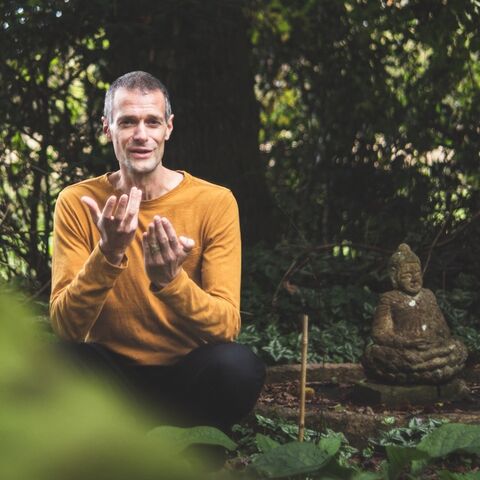
Welcome to another episode of AUA.
This time we have three co-hosts.
We have Lydia,
We have Josh,
And we have Denny.
Let me go around and good afternoon,
Lydia.
How are you?
Good.
I'm doing great today.
Excellent,
Excellent.
And Josh?
Doing well,
Juggling some technical stuff here.
So welcome to anybody on different platforms that we have today.
I know I have a few myself.
I'm watching you,
Watching us.
So I want to go back to our last conversation,
Lydia.
There was one thing that really struck me was you were describing how,
I think if I remember correctly,
You're describing how someone wanted to hug you or wanted to touch you or something.
It was out of what he could perceive to be compassion.
And you actually felt that you didn't feel comfortable.
Maybe I don't want to put words in your mouth,
But I just want to bring us back to that conversation.
Do you remember that at all?
Yeah.
So one of the things that came up in our last conversation was I was talking about,
Which is the title of today,
Impact over intention.
And it was actually more of a hypothetical.
It wasn't a specific situation,
But I was talking about like,
I have gone through trauma in my life.
And hypothetically,
If someone came up to me to give me a hug,
When I was closer to that trauma,
They might think they're doing it out of good intention to like show care or whatever,
But my body might be interpreting it as danger.
Not okay.
I don't want that.
And then I'm suddenly put in some sort of uncomfortable situation where socially it's weird to refuse a hug,
But they weren't tuning in to the fact that I might not respond well to it because who doesn't want to hug?
You know what I mean?
So it was kind of to bring up this idea of just because our intention might be good doesn't mean it's always translated in that way to other people.
And part of like personal development is also noticing the impact we have on others,
Even when we had good intention,
When it's like not translated that way to someone else,
The way they're receiving it.
So that was kind of,
I think from what I remember,
What I was moving into in that conversation.
Yeah.
I want to just say something to kind of support that.
My son is here with us for the holiday and he brought with him his pets,
A dog and a candidate and a dog is an old dog that got from the pound.
And obviously a dog with that history has a lot of trauma.
And I think this is a very good example.
And probably an example that a lot of people have firsthand experience with,
Which is the dogs who have for any kind of beings who have so much trauma in their past,
They have a difficulty opening up.
If you're not aware of that you could actually have the wrong impact,
Even if you have the right.
And I,
I mean,
I,
I see that happen.
I've noticed that happen in my own life in,
In like just regular interpersonal conflict where someone is like that you were so insulting when you said that to me.
And I was like,
What?
I didn't mean to hurt you,
You know,
Of like,
I've noticed that sometimes we meaning sometimes I've done this,
We can hide behind taking responsibility for the impact we've had over people because the response wasn't what we were expecting.
And it almost keeps us from seeing,
You know what?
My tone was a little aggressive there,
Huh?
I need to be careful about that or,
You know,
Opening up,
Not to just say,
Just because someone has some sort of impact that's negative.
It doesn't automatically mean we're responsible for it because sometimes the receiver is just,
That's it.
But there's,
I've noticed sometimes we can hide behind,
Well,
Because I didn't mean it,
Sorry,
It's your fault that you were affected by me,
You know,
Instead of like,
Oh,
Let me tune in.
Was there anything in my field of awareness that I can maybe look into a little deeper?
Doesn't all that come back to listening?
That if you,
One has to ask oneself whether or not you're truly listening to the other person,
Because if you,
I believe if you're truly listening,
Then the intent and the impact is much more aligned,
Right?
And I'm trying to remember if I use that example,
I'm sure I did.
There's an example that I use,
Which is my dad who suffered from dementia.
He's already at that stage where it's not so much dementia,
It is just bedridden,
You know,
So lying very peacefully requires 24-7 care.
And I have to be super careful actually,
And I think last time,
And I have to remind all my siblings and my mom to be super careful because we don't know if my dad recognized us as we are.
He recognized us as who provides care,
And he is very appreciative of that.
But that doesn't automatically mean that he recognizes us as his son or his wife,
And kind of be super sensitive to that and establish boundary.
And so the example I use is that I had to hug him and it actually frightens him.
And I realized,
Oh,
I'm not who I think I am.
So in your everyday encounter in your teaching,
How do you bring that point to your students?
It's interesting because I recently had a session with a client and I appreciate you said it requires presence and listening.
And I want to bring up the concept of listening.
I think it was our last conversation we talked about it.
Where are you listening from?
Are you listening to the words?
Are you listening to the meaning behind the words?
Are you listening to their body language?
Are you listening with hunched forward shoulders in a defensive posture?
Are you listening with a more open chest posture?
First of all,
How are you listening?
Where is your nervous system when you're listening?
Because that's going to filter what you tune into.
And then what are you actually listening to in them?
Are you listening to as they talk,
Their shoulders are turning away from you in a protective stance because they're feeling vulnerable?
Are you,
You know what I mean?
Like there's so many aspects we can listen to.
And in a recent session with a client,
We talked about this idea,
It's called bidding for connection.
I forget if it was the Hendrix or some couple that researches relationship.
And they talk about this idea of bidding for connection,
Meaning throughout the day,
We're constantly on a subconscious level,
Creating opportunities and almost open loops to connect with other people that we're not even aware of.
As simple as like now with technology,
Sending a meme to someone,
You know,
Or like if you're,
I gave an example to the client of like,
Like the old timey example of like a husband sitting down reading a newspaper while the wife is like working in the kitchen or whatever,
Like in the morning drinking tea or coffee.
And then the husband's like,
Hmm,
While he's reading.
And it's,
It's almost like a little bit of a bid for connection.
That's a subconscious way to like engage the wife being like,
What was,
Is there something you want to tell me or like standing in a room and there's other people and you're like,
Wow,
It's such a sunny day today.
You say it out loud.
And there's a part of you,
The person might not even realize they're saying it out loud to get connection.
But it's these,
Our most biggest desire as humans is connection because connection allows us to survive by,
You know,
Evolutionarily and all that.
And so it's these ideas where we taught,
We process this with the client of like,
What are,
What are your bids for connection when you're around people,
When you're around people that you care about?
How do you bid for connection and do you know the bids for connection from other people and how do you engage with them?
When someone's telling you a story,
Do you pick up your phone and start scrolling or check a text saying like,
No,
I'm still listening and then split your attention,
You know?
And cause it's all,
It's in so many of these little tiny things that we barely noticed through the day that can sometimes build up into a conflict of you never listen.
You're not present when I tell you stuff.
I don't feel like,
You know,
Like where'd you go?
You're in the room,
But you're not here,
You know?
And it can lead into a cumulative effect where our nervous system is reading these signals where we're either missing the bid or we're engaging.
And when we can come into this subtlety of noticing,
Then we can actually start creating more emotional safety in our relationships with ourselves and others just by meeting those bids or noticing if it matters,
You know?
And so that would be an ex like a recent example of how I brought in this concept of listening and very simple ways that you can start noticing how to nurture interpersonal connection.
And you don't even have to bring it up into conversation.
You can just start noticing how does my partner,
How does my friend,
How does my sister or family member bid for connection just on a regular basis?
And do I actually engage or do I think it's not important or do I,
The answer with huh,
Or like,
Uh huh,
When I'm not really fully engaged myself,
You know,
Like it's a whole nother level of tuning in.
That's more subtle,
But can have big effect in our lives.
Yeah.
So,
So right before the show,
I,
We,
We talk about,
Uh,
Taking that Han and,
Uh,
The,
Uh,
Vietnamese monk way,
Uh,
In the last week.
And so obviously we,
All three of us have,
Uh,
Was to his teaching and I did a memorial,
Uh,
On,
Uh,
The last,
Uh,
On the Saturday practice,
Uh,
Dedication more like.
And um,
So I find myself having to go back to the speeches,
The hate interviews that he did to kind of,
Even though I have seen it before,
But I,
And it's interesting that,
Um,
For example,
When he was doing the interview opera,
Oprah and Oprah asked questions,
I'm thinking,
And as a layman,
You know,
The things that,
Uh,
Tate would say,
It seemed very profound,
But in reality is that it just normal day,
Daily,
Day by day,
Buddhist teaching.
For example,
When Oprah asked,
Hey,
Um,
How do you,
How do you,
You know,
How can you be,
Um,
How do you deal with,
You know,
All the suffering and emotions?
And he said,
Well,
I just pay attention to my breathing.
And so this goes back to,
I just want to pick up on the two words that you said.
One was presence and the other one,
Um,
So,
So let me focus on the presence first.
And so that's,
That's exactly the,
What that they use as well,
Which is if you,
If you truly care about someone,
And this is especially true,
If you're a caregiver that if you're there to,
Or if you're a spouse of your friend,
You know,
If you are a student or a teacher,
It doesn't matter if you are truly interested in the interaction,
Then you have to be present.
Meaning that,
And in this case,
It's not just about the physical presence,
It's really about the mental presence as well.
So the question is we can understand the physical part.
You know,
If I'm here,
Then I'm here.
If not here,
Then I'm not here.
But just because your body's here,
It doesn't mean that your mind is here.
So the question then is if your body's here,
But your mind is,
Where is,
What is the distraction?
And the distraction can be in a way both physical and spiritual.
Physical means that I am distracted by a thought,
Something that is real,
Something that just happened,
Something about to happen.
You know,
I'm getting ready to prepare a meal for my family.
You know,
I might learn that.
But it could also be something else.
It could also be,
And this is going back to,
I think either last,
Last time before when we talk about letting your body speak,
Which is that actually what dominates the conversation is our trauma experience.
Right?
And that's the problem.
That's the problem is that yes,
I am speaking to you.
Yes,
I'm listening to you.
I hear the words that you use,
But my interpretation have nothing to do with you.
And we have to be present for ourselves to begin with,
Right?
If we can't show up and be present for ourselves.
Yeah.
And that's,
And that's what I mean is that the thing that Thay says at first glance sounds very profound,
But it's just basic Buddhist teaching.
And that's what mindfulness is,
Is making sure you know,
At least where your mind is,
You know?
So that's what,
That's what it means to be present is that if I don't know where my mind is,
Then how could I be present with myself?
And some people would even say,
Well,
What good is that going to do paying attention to your breathing,
Right?
That's the other end of the spectrum.
People will be like,
Well,
What good is that going to do?
Well,
I have,
I have a perfect answer to that.
I have a perfect answer to that because my students are all basically all grandmothers.
You know,
I call them their Martinis speaking grandmothers and often they,
You know,
I,
I anticipate that question.
And my answer is that,
Well,
What good is it?
What does it do when you walk your grandchildren to school and you don't hold a hand?
Yep.
Right.
What good does holding the hands do?
Well,
Holding the hand means keeping them safe,
Holding their hand means preventing them from being kidnapped,
Holding their hands,
Preventing them from being run over by a car.
So paying attention to your breath is like holding the hands of your mind.
It prevents them from being kidnapped by what we call the hindrances.
It prevents them from being drifted away and going to dark places where you're not supposed to be because your number one fault is to care a person in front of you or to even have a true conversation with someone.
The beautiful analogy,
Demi.
And you know,
This,
This whole question of intent and impact,
You know,
Impact,
I think of some kind of like sci-fi movie or,
You know,
The next disaster is going to be some kind of object from outer space causing some kind of impact.
But no,
It's our impact makes it,
It's a huge difference.
But since this is Ask Us Anything,
There's two questions I,
That,
That are at least at the forefront here that I have is.
And I wrote this down because I felt it was important enough to,
To write it down.
You know,
How can we control how one impacts another?
How can one control how one impacts another?
And I'll just,
I,
I,
Maybe I can answer that later,
But then also just,
Just to clear up,
You know,
What is intent?
So when we talk about intent and the Buddhist teachings,
It's you know,
The Four Noble Truth,
The Eightfold Noble Path,
Second one is Samma Sankapa and it's awful,
Often instead of awful,
Or maybe it's awful too,
Depending on what we do with it,
Right?
Intent resolve aspiration,
Motivation,
And I like attitude,
You know?
And in,
In the answers to that are something like,
You know,
Relinquishment,
Letting go,
Freedom from ill will and harmlessness.
And going back to Lydia's thing.
So this is where it all starts for me is the non-harming.
So if somebody goes to give you a hug and they don't even ask you if they can hug,
You know,
Unless you've been doing it,
You know,
For ages and it just,
It's just habit or something.
But if you go to give somebody a hug and don't ask them,
Well then you're encroaching on them without their permission,
Right?
So we're not,
We don't know how we're going to affect others.
You know,
I mean,
It could,
It could change their day and help brighten them,
But it can also trigger a trauma response.
So it's just a common courtesy to ask permission,
Especially the first time with something like that.
Right.
I mean,
Some people don't like shaking hands and that's okay.
Right.
I think the key is,
Is,
Is don't assume.
I mean,
We all said that assume has the ass as the word ass written in it.
And I read an article,
It was actually a very interesting article.
It is,
It's written by someone who's a clinical psychiatrist who happened to be a veteran as well,
And actually had suffered PTSD himself.
And the title of the article was,
You know,
Think before you say thank you for your service.
And what he said is that people don't really understand the trauma,
The suffering that our veterans suffer is,
It's not what you think,
Because what they suffered the most is a sense of betrayal.
They feel betrayal by the senior officers,
They felt betrayal by the military,
They feel betrayal by the government,
Betrayal by even us,
The people.
And by just,
You know,
Without even thinking about it and just,
You know,
If you meet somebody in the street,
Meet somebody on the bus and just say,
Thank you for your service,
It actually trivialized their commitment.
Yeah.
And I mean,
That goes into a whole other conversation into the area potentially of like microaggressions.
Microaggressions are like people that are saying things that it's a form,
It's a small form of aggression that the person,
Like the person who's doing it doesn't notice because culturally they haven't been taught or they're living in ignorance,
Like full on consciously ignoring it,
Or they don't understand that there are certain phrases,
There are certain actions that from one culture to another is really insulting or where,
And,
You know,
Growing up overseas myself,
I've seen that where cultures are very different.
I was been saying the other day that I grew up in West Africa and time,
No one was ever on time to anything,
But that was fine.
And then I moved,
Came back to the States in high school.
And when I was late to something,
It was considered an insult and very rude to the person or to the group of people,
You know?
And it was a big shock as a teenager and still continues to be something that I deal with because I was conditioned to be like,
If we decide to get up and go cool,
But if we show up an hour late,
We've showed up and that's great.
Or if we show up three hours late,
Or if we start two hours late,
Like there wasn't a sense of like time anxiety in a sense.
And it was very hard,
I think,
As like Americans going to West Africa to adjust to,
But then we got adjusted and then it was like hard to come back.
And so it's interesting,
Like when even my intention would never be to be rude to someone or disrespectful,
But if I show up late,
That's what it's considered.
And so I have to consider culturally,
What is my impact?
How do my actions impact this other person in a way that it might,
I might not ever receive that level of impact.
I might not understand if someone did that to me,
It'd be no big deal or whatever.
And so I think it's been a blessing for me to travel,
To be in different cultures,
Which I think is one of the amazing things about travel because you get to really understand that everyone comes from such different perspectives and it has so much to do with their upbringing,
Their culture,
Their family dynamics,
And we're all interpreting the world very differently.
And we get to respect each other through that and we get to then honor,
Is this something that I can respect or is this a boundary that's causing me or someone else I know harm that I have to stand up to or shift or,
You know.
I thought you were going to mention Michael aggression in the context of gender,
In the kind of women interact because it's very different in Africa.
It's definitely very different in Asia and I'm actually the worst offender of men where I come from a more traditional male-dominant society where men is expected to be somewhat aggressive,
Especially for me,
I was a number.
This is,
You know,
We have to carry that responsibility on the show and for me it actually just became worse as I became a professor and entrepreneur and all that and that became my entire persona,
That very aggressive,
Very assertive,
Very certain in the way I speak.
But the society has changed and I haven't changed with it and I often have problems dealing with what is obviously Michael aggression if you look at it from the other hand.
Now this has become a problem when before the pandemic I signed up to volunteer in the prison after the first meeting the leader of the group who happens to be female as we were walking out of the prison he said,
Danny,
Can I speak with you?
I said,
Sure.
And I knew what's going to come.
I said,
Is this going to hurt?
And she said,
Hello,
Just a little.
And she basically says,
Well,
You speak like you lecture.
I said,
Yes.
And she didn't use the word,
But she said is that you are too aggressive.
This is not even,
This is beyond men and women now,
Even though I was the only male of a predominantly female volunteer group,
But the idea of aggressor and what's the opposite of that is something that we want to overcome in the prison system is that the inmates at the prison are so used to being on the receiving end of aggression that we actually have to compensate.
And so it was a shock to me.
It was absolutely a shock to me that someone basically accused me of being a aggressor just by the way I think I was speaking normally just I would make a point,
But it wasn't.
And so she actually said,
No,
Next time you speak,
You use the word I.
This comes back to my question,
Right?
How can I control how I impact another?
You know,
It's very tough.
It's very tough because it comes from the culture.
It comes from it.
It's just so much of that.
You notice I stop.
No more aggression for me.
Because I would say even the way so many times the answers we look for are completely determined by the question we're asking.
So I would say,
What if we change that question instead of how do I control my impact?
How can I understand my influence?
How can I be present enough in the moment and fluid and adaptable enough in my own integrity and ability to be present with someone where I can tune in as quickly as possible to the impact I'm having,
To the influence,
Which gives me that fluidity in the moment.
Because I fully believe that truth is something that evolves as we evolve.
And I heard I think it was in the book Rich Dad,
Poor Dad.
And the author described intelligence.
The definition of intelligence is the ability to make finer and finer distinctions.
And so you could see that in like gender identity moving from binary to much more fluid things on the spectrum.
Neurotypical to going into the neurodivergent spectrum.
Like going from black and white to allowing gray.
Or I call it rainbows.
Why are we thinking gray?
Why don't we think of the rainbows?
All the colors on the spectrum to allow there to be more fluidity in our ability to perceive.
Because so many of us are conditioned and we come at things with like,
This is a belief.
Now confirmation bias.
My life has shown me this is true.
So now I don't have to question it.
I can log it away as an automatic thing.
And then if it's ever triggered or defended against or there's resistance,
There's kind of a resistance that comes up or like you spoke to Denny,
Like an ego hit of like a surprise or shock of like,
What?
That was what,
You know,
Where there's some sort of maybe little harm caused or big harm that we are unaware of because we didn't have any association with a belief or repeated pattern causing harm in the past or noticing or seeing it.
And I think when you said,
How do we control it?
I was like,
I thought of,
I think I've talked in past sessions about this theory called polyvagal theory,
Which is the ability to move fluidly between states in our nervous system.
Lydia,
I ask,
How can we control another's response?
You know,
How,
So the question again is,
How can one control how one impacts another?
So how can I control how I impact you?
Well,
Why would you want to control?
That's what I would ask.
What I'm asking is,
Whatever I say,
I don't have any control of how you,
How anyone's response is.
Let me,
Josh,
If I may,
If I may.
I can't control another,
How another's response is to me,
Right?
How about we don't use the word control over that?
So I also have to allow myself the freedom to be how I am instead of on guard.
This is just for me to be on guard and defensive all the time,
Thinking I'm under constant attack,
Which,
You know,
It may be the case for some people,
But this also for me has to be buffered with non-harming and knowing that I have to correct and adjust myself from the feedback I get,
That if I am causing harm,
Well,
Then that's how I know how to adjust behavior in my speech.
But as far as anybody else receiving what I say,
I can't control how I'm going to be perceived.
And I want to,
I want to say,
I disagree from the perspective of the,
Of the polyvagal theory,
The ability to tune into where we are in our nervous system.
It has a direct impact on someone else's nervous system,
Interpreting us as safe or dangerous,
Threat,
Safe,
Threat safe.
So when we are mostly looking visually without noticing here,
Our expression here is one of the first things we look for according to this theory to notice whether someone's safe or a threat.
Then we're looking at the eyebrows and the expression of the eyes.
Women so many times,
Me included,
Are looking for kind eyes because kind eyes equal safe.
It means open emotionally.
It means the ability to process emotion.
It means the ability to be present with someone.
And that's in the ventral vagal system,
Which is the ability to have a calm resilience in taking in and adapting and engaging to others.
A tilted head is a sign of engaging with someone in conversation.
You see that in dogs all the time.
They tilt their head when you're talking to them.
That's actually a biological sign of I'm listening.
Our middle ear is related to our nervous system and fight or flight response.
So the tones of what the tone of someone,
You know,
That's brought up,
That brings up a lot of conflict in between people,
Your tone,
Right?
And it's because our nervous system is listening to the tone of someone else before the words to notice,
Is this a threatening tone or is this a safe tone?
So there's so many things that we can tune into.
If I'm doing this,
I'm not as open emotionally as when my chest is open,
My shoulders are relaxed.
So I can just tune into,
Am I sending signals of threat or safety to someone or disengaged or present?
We all are responsible for our own response,
Of course.
So we get to,
One of the things I teach clients is you get to first tune into what you're responsible for.
That eventually allows you to distinguish what you're not responsible for.
But until you know what you're responsible for,
You either take on all the blame or you give all the blame.
And I mean,
This is a very like,
Like simplistic way of explaining it.
But as we start to tune into what is my impact?
How am I,
What signals am I putting out non-verbally,
Verbally?
Am I talking really fast?
Am I talking really slow?
You know,
Like noticing that kind of thing.
How am I feeling?
Are my shoulders hunched?
Oh,
I'm noticing.
Am I tired or do I just not really want to be in this conversation right now?
We can tune in to our body and what it's communicating to us.
And that's,
That's the level of influence and control we have.
The way someone else responds to us,
We can use it as a mirror and or it gets to be like,
They're going into a trauma response.
That's not on me.
Now I'm going to put,
Now I'm going to have to put up a boundary or I love you,
But you really need to go to a therapist about that issue.
I can't process that with you.
Or I'm glad you brought that up.
I don't appreciate the way you brought it up.
You know,
Like we get to then have boundaries and like communicate and we each have our own karma and our own process of how we're playing things out.
But we get to notice where's my influence rather than the whole defense of like being feeling like I'm going to be attacked if I act wrong.
That's a fight or flight response.
So that's in some ways a form of dish dysregulation in the body.
That's not necessarily negative.
It's just a state that you get to notice when I'm calm.
I don't care how people react to me when I'm a little bit anxious or off balance.
I am immediately,
I immediately feel like they're responsible for how I should feel subconsciously.
And so I'm dependent on their response for how I feel versus when I'm calm or resilient or strong,
I can hold space and have a really tough conversation.
They can have emotion.
It really doesn't affect me or it might affect me,
But I can communicate very clearly and articulately that was really hurtful without going into like big emotion or escalating,
You know?
So that would be my take of the question where It's interesting,
Lydia,
That I was listening very carefully to what you said.
You put everything in a very clear and analytical way of how to.
Now this is actually how we used to do it in sales.
I used to run my own business and I used to train my salesmen to read the customer.
Now this is many,
Many decades ago.
So typically customers are male and the secretaries are female.
I used to teach my salesmen to read the secretary because male is much harder to read.
Male facial expression is much harder to read.
Female expression is very easy to read.
And so if you want to know how difficult it is to deal with this customer,
Just spend time observing the secretary.
And so I used to teach my salesmen to absolutely focus on the upper part of the customer because this tells you everything.
It's exactly like you said,
Just eyebrow up,
Eyebrow down and little subtleties.
Is the customer listening to you or does he just want to finish lunch and get out?
It's fascinating,
Some people are more visual.
Now let me go back to the title of today's discussion.
If I may,
I give you my interpretation of what I think we like.
Which is even the wording is intention over,
I mean impact over intention.
Now I think we are speaking to a very tiny population of people.
People who actually care about their impact.
Who actually has the best intention.
But for one reason or another,
The impact is not consistent with intention.
These are people who are in the caregiving business,
Who are in the spiritual training business,
Who are spiritual practitioners themselves,
Who care a great deal about our impact.
Who thinks that just because we have the right intention that necessarily leads to the right impact.
And I think what we're trying to say here is that's not always the case.
Everyone has to be super careful so that even just to understand that even you have the best,
The impact might not be consistent.
So I wanted to answer Josh's question in a different way,
Which is I like to replace the word control with facility.
How do I facilitate the interaction so that the impact is consistent?
I want to bring it back to,
Now here we're always talking about one on one,
Eyeball to eyeball type interaction.
Now there's a whole lot of interaction outside of that.
Text messaging,
Email.
Now you notice that,
I'm an old guy so I can remember how internet was invented.
It was invented UCLA,
I was a teacher there.
We were one of the first people who got email.
We used to be able to get URL for free,
As many as you want.
Anyway,
The point is when we started to have email and then later on text messaging,
Things got out of hand.
Things got out of hand because when you put your intention down on paper,
99,
Almost 100 times out of 100,
The intention would be,
That was like,
It was a disaster.
And of course,
We facilitate that by inventing emoji.
Emoji was a facilitator.
Of course,
It has all the shortcoming as well,
But at least if I say thank you and then I put a little heart and you know my intention.
In that case,
The emoji is the facilitator,
The great facilitator between intention and in.
The question is,
What are the facilitators?
Now we are back to the future.
Now we are back to face to face,
Hang on,
Within short distance interaction.
The question I have,
What are the facilitators?
What can be the facilitators?
Of course,
We are not going to put up emoji.
So let me propose two.
This is again from my sales.
This is how I train salesmen again.
In fact,
It's not even training,
It's screening.
If I interview someone and I look for that,
If they don't have two skills,
Most likely I will not hire.
The first skill is how to stop when someone is talking.
And so I would have a conversation with a potential salesman I want to hire,
Maybe even a junior executive or something,
Into the team that is going to be important building block.
And I would have a conversation.
We would go out,
We would have lunch,
And then I would ask the question and the other person would talk.
And then as soon as you talk,
I talk.
I just jump right in and talk.
And so there could be one or three responses.
One is that they keep talking.
They didn't even know that you talked.
Two is that they keep talking anyway because they just want to finish the sentence.
And the one that I'm looking for is that they would stop right away.
As soon as you talk,
They stop.
And I think this is a very important facility that when you are speaking with someone and as soon as the other person talks,
You stop talking.
And then the other person might stop and you can continue.
I'm proposing that.
The only one that I'm proposing that is that your response should always be initially positive.
Even if the other guy is full of shit,
You say,
You know,
You got a point there.
I got that.
Can I add something to this?
And this is a facilitator.
This is a facilitator.
Otherwise the person would say something and then all of a sudden,
I think some of the things you said earlier,
Lydia,
All of a sudden you get into this vicious cycle.
It's all the energy working in the wrong way.
And when I was in business in the beginning,
I had such a difficulty making the transition from academia to business until I finally hired someone who is my name.
He's a great teacher.
And the thing that he said was very simple.
He said,
Danny,
Answer the damn question.
In other words,
A lot of times people ask you a question.
Just answer it already.
Just answer the damn question before you go off and talk about everything else.
Because what happened is that this is the case where intent and impact is in contradiction.
Because you might have the best intent,
But just because you didn't answer the question right away and you keep the other side hanging,
All of a sudden they think that you're respectful.
They have spaces where their minds are going in the wrong place.
And then the impact is not what you expect.
So I'm just suggesting that.
So I guess this interesting approach is there,
Danny.
I still kind of unclear on what we're actually gauging impact on.
Are we just talking about emotions here?
What the emotional response is?
That's okay.
But do we mean.
.
.
So I guess I'm still unclear of what we mean by impact and what we mean by intention.
But let's go back to what Lita said.
If she's calm,
Nothing matters.
So I think we're talking about.
.
.
So do we mean a lot of heroin?
No,
No,
No.
I'm talking about the case where as a facilitator,
As a caregiver,
You're trying to help someone and you have the best intention.
And guess what?
The impact is not what you did.
It may actually be worse.
That's what we're talking about here.
This is why I love investigating our own intent.
Because what is intent?
Why do some people seem to have more agency to affect reality than others?
And so just a simple question from another teacher I have.
So why are you going to the store?
Okay,
Well,
I want to buy groceries.
Well,
Why do you want to buy groceries?
Well,
Because I want to feed myself and my family.
Well,
Why do you want to feed yourself and your family?
Well,
Because I want them to be nourished and fed.
Why do you want them to be nourished and fed?
Well,
Because I care about them.
I want what's best for them.
Why do you care about them?
Why do you want what's best for them?
Because that's what I want for myself.
So you get down to this core question I have is,
What is the heart's deepest intent?
What is the heart of our hearts deepest truest intent?
And I love this is a beautiful question for reflection.
And to me,
It all boils down to not it starts and ends with non-harming.
Because all these other ideas we have,
Some of them are very helpful.
Some of them,
Maybe we might change your mind on them.
But to me,
If I strip things down to core values,
Non-harming is the key.
And even though we might not intend to harm someone because of my level of consciousness,
Might not be there.
So that's why I care about non-harming and committing to it.
So then when I get feedback that something is harmful,
Well,
Then I of course correct and adjust behavior.
I think that's right.
I think,
Josh,
I think that's right.
I think non-harming.
So let me go back to Thich Nhat Hanh again.
And again,
It's because lately I've been just catching up on interviews.
So just now before the show,
I was watching an old one where he was being interviewed at Stanford to interview a very famous medical doctor.
And so,
And he himself is a healer,
Of course.
So he spent quite a few minutes talking about how wonderful it is to have a speaker to then giving all the background.
And then he eventually says,
Well,
I'm sure you guys didn't come here to meet.
So let me turn the table to our guest today.
And so all the attentions when they take and take,
Look at the,
So what's the question?
And I paused and I went to my daughter and I said,
That's Buddha talking.
You know,
Buddha has this thing about how he doesn't give talks on karma uninvited because you could,
You know,
Even if you are Buddha,
You could be,
You could do harm if you answer a question that was never asked.
All right.
So yeah,
And I,
You know,
One of the mantras I have learned in my life is right people,
Right timing.
Yes.
Yes.
So,
So perhaps,
Perhaps the answer,
Perhaps the answer to your question,
Josh,
Is about non-harming is that if,
If deep,
If a deepest intent is non-harming,
Then perhaps we have to build on being invited first.
Oh,
I learned this the hard way,
Doling out wisdom when it wasn't requested.
Oh,
Do not do that.
And you know,
Unharming is,
You know,
As someone who's been on both ends of that given unsolicited advice or receiving it,
Being the receiver,
It,
It,
It kind of feels like an affront because so many times when you're wanting connection to someone and they give you advice,
What it feels like is you need me to be happy again so you can feel better right now.
You need to fix this for you.
And it has nothing to do with me.
So immediately as the receiving end,
Just as this personal experience,
It feels like you're not tuning in.
You're afraid of my emotion in this moment.
You can't just sit here and you feel threatened by the situation.
And now I don't feel safe with you because you somehow don't feel safe or need this to be different.
So I'm not allowed to be who I am right now.
So there's,
There's like these very,
And obviously depending on what the person is feeling has everything to do with the narratives and their belief system or traumas or whatever,
You know what I mean?
Like that spoke to things that I have dealt with insecurities around.
And I wanted to kind of touch on what both of you were saying.
There's a book that I highly recommend,
Though I want to say,
If you're listening to the audio book,
The tone the author comes across as a little bit like ass holy.
If you can get past that the content is very good.
And it's called never split the difference by Chris Voss written by a retired FBI hostage negotiator.
And it's about negotiating in like any area of life.
And one of the things that he learned working in the FBI when it was like not doing anything for the world,
And then they finally started having breakthroughs about how to actually create change in a good way was he had this light bulb moment at some point in his life where the hostage takers or whatever,
The negative people on the other side,
Our main human desire is to be heard and understood.
If we're those,
We don't care if someone agrees with us,
We just want to be heard and seen,
And we want to be understood.
Those are the two greatest facilitators,
You do not have to agree with anyone,
You just get to repeat back and mirror what they said,
You just get to show that you've understood.
And you do not have to agree.
And I learned,
And I even talked to my dad about this recently,
About how somehow we learned and he agreed because he felt like similar.
We somehow learned that empathy meant under meant agreeing with the person.
And so in conflict,
We kind of kept empathy close instead of extending it,
Because it felt like we were invalidating our reality to try to make someone else feel better.
Turns out that's not actually what empathy is.
I'm going to come across the aisle to show you I understand the impact of this on you.
And I'm putting myself in your shoes for a second.
So instead of person to person attack mode,
I'm coming over here standing and looking in the same direction,
Then I'll come back,
We can still have a discussion or conflict or whatever,
But just for a moment,
I'm going to show you I have the ability to come over here and take the same posture,
Look in the same direction,
Tune into the same feelings.
I think that's one of the hardest things we have to do.
And most profoundly rewarding to the point where I even told this one time about this book,
I was like,
Everyone needs to read this book.
And I was like,
One of the things you can do is just repeat the last three words someone says like,
If that's the only capacity you have to like mirror,
You know,
If you don't have a big attention span,
And she said something and then I repeated the last three words and she's like,
Yeah,
You get me and I was like,
See what I just did there?
And she's like,
Oh,
My gosh.
Like I told her I was gonna do it.
I did it.
It immediately worked.
She felt sick.
She like calmed down.
She like felt totally like I was present.
And all I did was like,
Say the last three words to her.
When we hear our own name when we hear our own words spoken back to us.
So obviously,
That book excites me.
I mean,
You know,
You can take those kind of skills and use them for good or bad.
So that's where integrity comes in.
But that when you were both talking,
I was like that has allowed me ways to open doors of non harm when I'm feeling very escalated and want to just push back or stay in the conflict or,
You know,
Like it's a movement of Yeah,
It would never have been amazing.
That was that was absolutely amazing.
In case you in case you're looking to change in a career and you're looking to make 100 million you're making now,
You should try to be a political consultant for next presidential election because what you just said,
Explain why half of our fellow Americans elected the other guy because they felt that they were hurt and they felt that they were stupid.
Not because they were stupid to ourselves.
That is not because they're evil or they're stupid.
It just someone figured out how to actually listen to them,
How to speak the words that they want to speak,
To acknowledge their trauma,
Even though they might not have a solution,
Even though they themselves is actually the polar opposite of who they are.
But just because no one else hear them or bother to.
No one speaks their language.
That's all it is.
That's all it is.
That was that was amazing.
Yeah,
Really,
Really thank you.
Thank you for that.
And now we're going to ask ourselves,
What are the words we always want to hear from other people that we can tell ourselves?
Yeah,
Like,
Like,
I mean,
You talk about sales,
One of the most effective sales tools is saying the person's name to them in a conversation.
Yes,
You know,
As you hear your name,
You feel safer,
You feel recognized,
You feel seen just from hearing your own name spoken to you.
Yes,
That's another trick that I teach my salesman.
I said,
You know,
Have these bins,
These mental bins,
Put all the Bobs in one place,
Put all the Peters in one place.
So as soon as you hear Lydia,
Lydia goes into this bin.
Okay,
So,
So just remember this bin and then now you remember her name.
You have to,
You have to remember people's name,
You have to call people by their name,
You have to look at people in the eyes,
And you have to be totally in tune with the facial expression and not just the expression,
But the orientation.
Absolutely,
Absolutely.
You gotta make them feel that you're listening to them.
And can we make ourselves feel the same way?
You know,
That we don't get outside validation from everybody all the time.
It's great.
It's on the cake.
But how do we validate ourselves and get our own validation,
Making ourselves feel like we're present and showing up for ourselves?
Right?
Yeah.
Here's another trick.
Now this is for someone,
This is,
This is,
Sorry,
Sorry.
Sorry,
Josh.
Go ahead.
Go ahead.
By the way,
Josh,
There's a little bit of lag time sometimes when you're talking.
So if either of us interrupt you,
It's sometimes because it sounds like there was a stop,
You know,
So there's,
And for anyone listening,
There's a tiny bit of tech.
Yeah.
And I think it's because Josh had like 15 different computers running on the dial up line.
I was going to say,
I was going to say if,
If you're,
If your livelihood depend on listening,
If you are actually a salesman,
Carry one of these,
Carry one of these so that when people speak,
You write things down,
Even though you write down nonsense,
Because that is a,
That is the only way that they convince people that you are,
You actually care about what they say.
Well,
And I want to say as,
As an embodiment coach,
I recently found out that I have ADHD,
Which answers a lot of stuff in my life specifically at the time management issue.
And one of the things that I have done when I have a zoom call,
I let the person know,
By the way,
I'm going to be taking voracious notes over here on the side because it allows me to stay in present and intuitive with the person,
But I'm taking notes so that at any point I can glance back and know the information they were talking about,
Go right back to what they said.
And I,
I'm a fast typer,
So I can,
I can type the exact words they're saying sometimes when I'm like,
Ooh,
That's important.
Let me type that in bold it.
And then I bring it back and they're like,
Yeah,
You know,
And there's,
But I wouldn't necessarily have that capacity if I wasn't doing that because I grew up in a family of five kids and not everyone had enough,
Like we didn't all have the same amount of space for attention to be paid on us.
So we were competing for attention all the time with each other,
With our parents.
And so we all very much developed talking over,
Talking through like steamrolling a conversation,
Interrupting constantly and had developed these kind of conditioned responses in our nervous system of if I don't get my words out now,
I'm never going to be heard.
And so there's there even still with certain siblings on the phone,
We still deal with like,
You're interrupting me.
And there has to,
I've noticed for myself,
There has to be a level of,
I don't have to say what I'm about to say,
Even if I forget it.
And I can trust that if it's important enough,
My psyche will bring it back up.
And so it comes back into me tuning into,
I can trust myself to be present rather than this needs to happen.
So it,
You know,
And I've noticed when I'm talking like faster and interrupt a few times and there's a reminder to stop interrupting,
I'm like,
Whoa,
Oh,
Okay.
I'm a little more anxious in my nervous system right now.
Let me just start feeling my feet on the ground,
Wiggling my toes,
Bringing my breath down immediately shifts my intonation,
My cadence.
And the conversation usually is better after that.
And my intention might be the same,
But everything kind of quiets and the other person immediately,
There's like space for them to hear themselves.
There's space for me to hear them.
They're just,
It's like,
There's,
I've,
I've stopped cluttering the air with static energy and I just bring it down,
You know,
So you hear ourselves and we don't need that outside to get things in,
You know,
And that,
Yeah,
Obviously Lydia,
I mean,
She's basically speaking for me right there,
Right.
About me interjecting all the time,
But you know that's it then also,
How do we do this?
Right.
Not really the exact intent or the exact impact,
But how are we bringing forth intent?
How are we going about reaching and doing an impact?
Not so much what,
But how.
That's one of the main questions that clients will ask me in a session.
How do I get through with my sister?
Who's not talking to me.
How do I deal with these,
This indecisiveness?
How,
How,
How?
And I say,
It's actually not about the how it's who do you want to be while you're going through that?
Who's the person dealing with the conflict.
Then you get to embody,
Oh,
You know what?
I'm usually in conflict.
I'm usually acting like an anxious,
Fearful,
Avoidant,
Defensive person.
My values are non-harming,
Compassionate,
Firm,
And integrity.
Okay.
How would I approach dealing with a conflict from a place of calm,
Compassionate integrity rather than anxious defensiveness?
All of a sudden,
The way you're embodying a role totally gives you the how.
Like I don't need to know what to say,
How to say it to the person.
I just need to come into who am I when I'm in conflict with that person.
And is that who I want to be?
And can I show up differently and see what happens and get curious,
You know,
So much of it.
And I noticed the more I ask how to sign,
The more I'm going into anxiety in my nervous system.
And to me that has become like a little red flag of like,
You're going in the wrong direction.
And people have been like,
Stop asking how,
Just what do you want?
And that frustrates me even more.
So I've noticed what helps me is what stops me as a part of me wants to know how.
So I separate myself from the full identity of that question.
And then I go into what else is possible?
So it's like open-ended creative problem solving.
And then where am I and what do I need right now?
And then it helps,
I can directly meet my needs.
Oh,
I need validation.
I'm going to go to the bathroom,
Stand in front of the mirror,
Look in my own eyes and say,
I love you and this is okay.
You know,
Whatever.
The follow up question I would have real quick is can we do all those values without having to have a person involved like this?
Does there need to be a hard,
Fast Josh involved in all this?
Can't there just be action from all those qualities that were just mentioned?
I mean,
I think that's what embodiment is.
Are you wanting to embody a human?
Are you wanting to embody the essence of compassion?
I think that gets to be based on each person's creative intuition of how they want to show up.
Sometimes I'm like,
Am I embodying my soul right now or my traumatized human body?
And does it matter?
And do I want a choice?
Do I want one or the other to be more present?
And that's this teaching of this not self strategy,
Right?
Does there need to be a hard,
Fast me involved in just life unfolding,
You know,
And doing the best we can?
Does it,
Does it have to be,
I'm Josh,
This is the way I am and this is the way I have to do it.
And this is the way I feel best.
You know,
You mean me,
I,
I,
I,
This me,
Mine.
And it's not to,
It's not to tear down us at all.
It's to realize that for me,
Which is kind of counterintuitive,
Ironic,
When I let go of that hard,
Fast me,
Then things aren't taken as personally as much.
I guess that's one way to put it.
I think that's.
.
.
I'm not sure.
I'm not sure I understand Josh.
Are you saying that,
Are you saying that,
Do we,
As a,
As a,
As a practitioner of that,
Is it possible to do all that without being with people?
You're not saying,
Oh,
I'm just interpreting.
I think maybe,
I don't know if maybe I,
If I can understand it.
You're maybe you're kind of going into the,
The questioning you were doing before.
What's underneath this,
What's underneath this,
What's underneath this and like,
What's underneath the ego,
What's underneath my personality.
What if I actually let that go and let that be fluid rather than holding onto a fast,
This is me,
This is Lydia in this conversation.
What if I let go of the concept of Lydia who shows up and is that better or is that similar?
Is that,
Is that what I want?
Kind of like almost getting more curious about the concept of what do I identify with?
You know,
Cause I think what I've noticed from my training and research in somatic and trauma therapies is so many of the parts of our personality we don't like turns out are actually just symptoms of a dysregulated nervous system due to life stress and trauma over time that has been repeated enough that we now associate with our personality or other people have associated with our personality that then we thought we had to take on.
And what's so rewarding because so many people are like,
Is it possible to change?
Can people change?
I don't know.
What's rewarding is as we learn to regulate and come into a space of greater connection to self,
Whatever the word is we want to use,
We start noticing those were just conditions responses and our bodies are constantly shifting and there's neuroplasticity,
There's organ plasticity there.
Our bodies have this amazing ability to shift and let go and reform and reintegrate and you know,
And,
And to me that's exciting because a lot of my life I thought I was doomed because I always interrupted people and that was just part of my personality or whatever,
You know,
Whatever the negative things or I was lazy,
I was leech and now it's like,
Oh,
Okay,
Those are symptoms of something else.
I don't necessarily need to know what they are unless I go that direction.
Is there anything I can do to start creating safety in my body to actually start moving into a level of maybe that might feel uncomfortable that starts shifting the behavior pattern to try something new and see what happens.
Yeah.
Beautiful.
Well,
We should probably it's,
It's,
It's three minutes over over the hour.
How about we just go around the table and kind of give a summary of what we learned.
If it's okay,
I like to go first because I learned a lot.
So back to the title of today's talk,
Which is impact over in the idea is coming again from a caregiver perspective,
Teacher perspective that we have certain intention,
Right?
For example,
Again,
Going back to my dad,
You know,
When he was diabetic,
So I'm trying to change his diet,
Just lifestyle so that we can,
You know,
Get the diabetic situation to control and then they learn dementia.
And again,
You know,
The intention is very clear.
It's just,
This is how,
What I think is good for you.
Okay.
That's an intention.
Now the impact obviously is not the same,
You know,
And,
And I think what I learned today is that is something that in a way it's,
It's,
It's back to my career as a sales executive,
Which customers first,
Whoever that,
Whoever that you're working with,
They come first and what they want is really just someone who can listen to them and who can,
And if you could do that,
Then the impact would be consistent if you cannot do that irrespective of your intention,
Impact you want.
So that's,
That's my take.
Yeah,
Go ahead.
Who wants to go next?
Lydia?
Sure.
I mean,
The two big things I'm taking away is one,
To me,
It was very impactful when you talked about like the salespeople,
Like when I start talking,
Do they stop?
Like I said,
That has been like a family thing that we've conditioned.
That's been one of my challenges in how I interact with people,
Especially when I'm feeling more anxious or,
And it plays out more in close relationship and professional.
I have a little bit more influence in showing up professionally with clients and teaching and all that.
So to me,
I really,
Really liked that because it has distilled down to the easiest.
Most of the time it's like stop interrupting.
And so my brain has this connection to something you're doing it wrong,
Lydia,
You're bad.
But when you're like,
Can you just get quiet?
When some,
As soon as someone stays,
Starts talking,
That's such a neutral thing to practice and observe.
And I know like hands down,
That's going to have a positive impact in my life to,
To tune into it from like that neutral observation perspective and start tuning in.
So that one really,
I appreciate because it's been one of the challenging things that I've dealt with like throughout my life.
And then the other one I forget.
So I'll probably remember when Josh says whatever you're.
Josh?
Oh my goodness.
No,
I'm dead.
It's lovely.
And you know,
Guys,
I'm just gonna,
I guess my excuse here will be in honor of Technon that the master approach that's asking a question here.
So for most of us,
Our final impact is going to be death in the body.
Now there's,
There's a few arguments that are really detailed that I can go into with some people why that might not be the case eventually or something we get,
You know,
But for the most of us,
Our final impact will be shedding off this body.
So how do we intend to use this precious short life we have?
What is the heart steepest intention for this,
This,
This precious life?
Yeah.
My answer to that is what I said before we start to show is drink only the good wine.
And it reminds me now of the other thing I was going to say,
Which is what I,
I really appreciate that you had said,
Josh,
Of the questioning of what's under that,
What's under that,
What's under that,
What's under that,
What's under that.
And just almost as a practice,
Not necessarily to even get to some solution or answer,
But just to,
If I let that question go,
Is there another,
Is there a desire that's deeper?
Is there a desire that's deeper or,
You know,
However we want to associate it.
Because a lot of times we're up here in the static trying to figure out the answers when the answers are like down here.
And we just let that go,
Let that go,
Let that go.
Just start getting deeper,
Deeper into actually deeper states of presence because in the deepest state of presence,
There is no question.
There is no answer,
You know,
It's just being.
So this was a great conversation.
This was great.
Good,
Good.
So with that,
Thanks everyone.
And I'll see you in a month.
Yep.
See you in a month.
Okay.
Bye bye.
Bye bye.