58:26

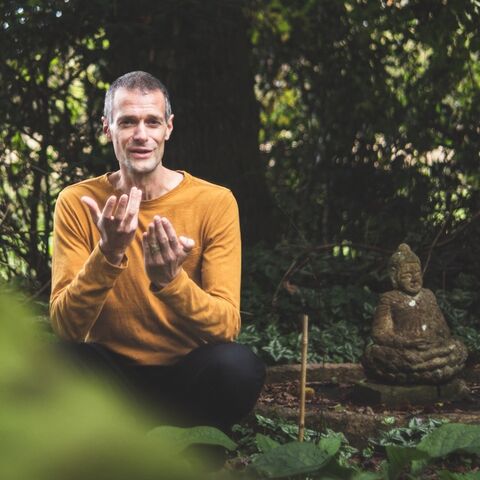
How Time Meditates | Feb 2024 Mindful Q&A W/ Wendy #18

by joshua dippold

Type
talks
Activity
Meditation
Suitable for
Everyone
Plays
2

In this eighteenth installment of the ongoing live series with Wendy Nash inquiring into meditation practice on and off the cushion, we explore how our views, perceptions, and experiences of time influence, colors, and flavors mediation practice and our daily lives.

TimeMeditationPresent MomentStressAwarenessAgencyHabitsTime PerceptionPresent Moment AwarenessCultural TimeMoment AwarenessIntention In MeditationCulturesCyclical ProcessesHabitual ResponsesMeditation RetreatsRetreats

Transcript

Again with another episode back here with Wendy for our Q&A meditation Q&A this is number 18 it says up there that I put right here and we're going to call this one uh well Wendy what's going on?

Well I don't know but I'm in Queensland I am calling from Gabi Gabi country basically it's hot here today and I have as I was saying just before we came on air been a bit flat I have this advocacy movement and I've had this big thing happening and I've suddenly gone oh I'm exhausted and I've been trying to push for something and it's not going anywhere in terms of expecting particular outcomes and it's one thing to say I don't want to have an outcome and then it's another thing to actually go oh gee I've been expecting a lot of outcomes and I realized I can't do it so sometimes in in certainly in the spiritual world you can think no no I'm above it and I'm more than human and then you go no no no I'm truly human definitely it's very hard to deal with no no no no no all the time and if you have a parent like that like certainly I have that and yeah that's how I work and it's good sometimes to go you know what it's not always good to stay in that space you gotta take care of your body and mind so that's short answer that's how I am.

Yeah that's that's I mean this is life right and sometimes it gets really freaking intense and we do need to pull back and do more self-care and stuff and other times it's not like that I mean it's an oversimplification but yeah we do what we can right and meditation helps with that obviously can for me anyway.

Now we're going to call this one how time meditates so I had a description here basically we can explore how our views perceptions and experience of time influence colors and flavors our meditation practice in our everyday lives so Wendy how does does time tie into this would you say any perceptions of time you know here in Denmark I think one of the words for a time is a clock in I don't know if I'm that would be that would be the watch the clock you know right so this whole notion of time in and of itself is kind of like a construct in the mind a social agreement that we all agree upon that this this thing says a certain time and it's all synced up by this nuclear agency somewhere right they have this nuclear clock and they set the exact time and all of our clocks are synced to it and who are these people can I write them a letter don't they know nobody likes daylight savings time and they don't listen to us so I mean I'm being I'm joking a little half serious but I'm half serious here too you know I don't know so it's just this weird notion and then what is the speed of time I'm throwing a lot out here I had I put this to a guy who was into math and he came up with the answer it was one but I don't but I don't know like how do you measure time but to me at the end of the day it's this agreed upon perception I'll go into my own experiences and stuff like that but I want to throw this back to Wendy since I put a lot out there right away so there's so thanks for just kind of hearing me out while I was slightly going oh my goodness I'm like really a bit burnt out so time it's an interesting one I actually listened to a podcast this week and it was I said it was about how do you translate time so you've talked about clocker and then you have tid so there's another word for time as well it's a different thing so one is how much is the hour if you like and then what's your sense of time what is your duration time I guess I think probably that's what it would be in Danish and if I think about it that's what it is in Swedish so but in some languages they don't have any time words they don't have the concept of it and I don't know how that works so in in one of the aboriginal languages here they actually have four times they have past present and future but then they have this eternal time like well we humans will always be walking so that there is a particular conjugation that you use for those types of activities of the constancy of doing the same thing over um millennia so I think that's quite an interesting quite an interesting idea so there's that and yeah I mean it depends on who you ask as to what time means and it depends when and where and yeah you can have so you mathematically it's sort of time is measured according to distance but that's a particular way of looking at time it's not I don't know that I necessarily my perception you know when you're my life flash before my eyes so how I have not had that experience but if you had had that experience what would be the sense of time because are you talking about the life or are you talking about that so anyway that's off topic but something something in there well there there's really so much to this you know um that the flashing before one's eyes people call that a life review that's a really common thing when people before they have near-death experiences and things like that so it seems like one's having memories of their entire life compressed down into a short amount of time so this is uh the relative perception of time right we all know Einstein's thing but uh I don't know because there's this is something we all experience too right sometimes time seems to go by very quickly you know this obvious notion sometimes it drags on and on forever hopefully when you're watching our show here it will go quickly but totally totally totally it's like oh wow weird it's a gripping episode definitely definitely and there's there's all I was this was contemplating on this earlier and there's there's all kinds of other different perceptions of time now where I think it affects our practice or our spiritual practices is this notion of oh there's so many of these FOMO fear of missing out right I don't have enough time I want all these things I got to make sure that I don't miss out because I only have so much time here on earth and I don't want to miss exactly but what I found is we're going to have the experiences we're meant to have anyway it seems like I mean that's another perception another one is oh geez like I just mentioned this is never going to end like it longer stretches in our lives right like I've been trying this how do I get out of this you know it's been this particular challenge or issue has been going on forever I am I then it can lead to all these things oh I'm dumb I'm stupid why haven't I figured this out yet you know this is nothing for so many other people then we start comparison conceit and things like this and that's not helpful either and we know nothing lasts forever right and we can every time if there is a repeating we can get a broader perspective on it I talk about the spiral staircase climbing that up and so we can see a larger area of this some things go by really quick right hey I don't have enough time I really cherish this person and I'm not going to have enough time so I'm constantly thinking oh I want more time I want more time and then I'm not there present fully to done to value the time that we do have together and then there's certain people that we don't like it's just oh god not this person again I'm ready here like 10-15 minutes how do I get out of this you know why is this always happening you know waiting some people have a really hard time waiting for things they get impatience this is with patients and yeah so these are a few practical ones that we deal with every day or you know commonly these perceptions we have yeah so as you were saying that I was thinking I'm one of those people who's like come on come on come on come on I haven't got time I haven't got time and in there's this idea of time being commodified but here we are we're talking about meditation and time and I have I had this experience where I saw time I don't know apparently this is what they're starting to look at in physics this idea of time is you what I saw was that you have a moment and then you have kind of air and then you have another moment and then you have air and then you have another moment and in each of those moments it was sort of digital rather than analog I would say and sort of in each moment that you're doing something you're you you get a new set of options but in each time you do something you have a new set of options so you I might be saying something now and then I've got well what are my options I can unplug the microphone I can scream at you I can you know I don't know the bomb might land whatever and say the bomb lands and then it's like okay well what are my options you know if it yeah if I'm alive if I'm dead whatever so all these things are sort of separate incidents and we can be conscious about how we use our time and conscious about the decisions about how we use time or we can be passive recipients I was this I was in a group one of these coaching groups and somebody said she has bipolar and somebody said the coach said so are you in sort of in charge of what happens or are you being carried by it and you know are you the agent of what happens or are you being carried by the energy of this mania and I think often we think that we are carried by the energy of what of this time thing that it has to be but we're not necessarily realizing that we have agents we have agency in that space and I think when you're in meditation you can start to slow down slow down what happens in the mind to to be less of a passive ride and more of an agentic decision I think that I don't know if that that is a useful way of talking about it this is a really good point I mean I've dipped my toes into the Abhidharma waters you've heard of the that third basket of the the canon and I think Mahayana has a Abhidharma but this is a really vast and complex higher psychological version of the Dhamma that was from what I understand it was added later on and but it's fascinating to me so they talk about these mind moments and there are a ridiculous amount of mind moments like in every second I think that there was some kind of debate where if there's something like do they actually have a measurable like you could put like one 25 thousandths of a second on there or something you know so I'm making that up or is it just like this instant and supposedly these happen so quickly that as meditation practice deepens for some practitioners they can discern more and more of these mind moments and then all the different things that can possibly go with them now and Wendy pointed out these seeming choice points that happen or could potentially happen and the air you call I think some people call bhavanga this this state of resting consciousness as part of a mind anyway I don't know enough about it I know some terminology but until I can see it and know in my own practice then it's just all kind of conjecture from your information but it does seem that way in my experience too that you know moment by moment and that's a whole nother thing too a moment by the time we almost discern what a moment is or when that moment is it's already gone you know and so yes of course because the discernment isn't yeah so the discernment is the separation from what is here and I think we often get caught in the discernment uh view rather than the here here view sorry yeah you are no no that's the it is and so that's kind of a mind f there in a little bit too you know because it then that could leave maybe to the perception that we're always behind if we can't be in each individual moment we're always reflecting on something that just happened I wonder anyway that's uh speculation but going back to my my point here that um so we have these seeming choice points from each moment and you know as our perception expands I know early on in my practice or before practice things seems more like there wasn't a lot of choices right but I think as perception expands that we can see all these different opportunities like for instance just go out and walk on a field with grass it's crazy to think but you could actually go up to almost any individual blade of grass I don't know you know and pick that out I mean that's a lot of choices I mean a little lot of mundane silly choices and you can take up a blade of grass and you can turn it in all these varying degrees and angles and tear it apart in little bitty shreds right so the I mean it's this is one of it's called one of the imponderables in buddhism to um the comma so um are trying to understand all the ins and outs of comma is can be maddening because of all the different now just think when we come into interaction with someone else too if we have all these choices and I I chose one thing but not another oh what would have happened if I would have chose this and this other person would have chose this or did this and then what what led them up to this and it's just there's just almost an incalculable amount of possibilities that could potentially play out and then the probabilities of how likely one thing so it's it will quickly spiral into something that's way not manageable and not worth or sanity to go into to all the full amount of degrees that it can and now when we put a clock on this and time this stuff you know it is kind of like a measuring system now the thing Wendy said too was this sense of agency in it and I will say a sense of agency because this is a whole nother thing that I think science is even talking about now and a lot of people say well there is no free will and I mean free will I'm going to put that aside because that's a little bit murky of a concept I like to just use choice okay so we all seemingly have choices but how much are based on our conditioned habit patterns where we're on autopilot and we just choose based on our habits and all the different things that condition so I think it's important too when we look at choice to how much are things the causes and conditions around these so I'm not on one side of the fence or another sometimes it seems like some people have a lot of agency and some people don't seemingly have none but you know I don't know where that lies now there's um there's something called like uh will and volition too right and then our intention also is another thing in this if we pay attention pay attention to our intention in meditation it's a really powerful thing I mean that's a whole nother topic for almost an entire show but and then this the last thing the active versus passive this is really important I think for the male in particular that when we sit then we realize oh hey there's there's this option of things allowing things to happen to me instead of me being the active agent doing you know that we can't open and receive and notice what's already happening whether we're involved or not or seemingly involved or not yeah a lot of good points here Wendy.

So I've just seen that Ms.

Reid is with us today remind time reminds me of cycles they come and go so they they come and go so being present is a gift uh it's got a heart behind it so I can't actually let me see if I can bring that up a little bit um so yeah I haven't I haven't finished integrate it integrate and implement presence in life so thank you very much Ms.

Reid it's nice to have you back online that's very exciting.

And that's a whole nother notion we haven't mentioned yet is cycles because we look at I mean that's how time was originally measured to begin with the processional cycles of the stars and the moon and the sun and it's all relative based on our I mean if we're viewing it from earth it's different from if we were say on a different planet somewhere else right how they measure time and the rotational bodies and all this stuff seasons seasonal change too yeah yeah so it depends so it it turns out that one of the problems that we have I think in western society is what humans are very poor at being able to discern change in time we've got a very narrow window where we can go okay I see that change has happened and I think change is one of those things that you can observe when you sit still for a long time so if you're rushing around it's very hard to notice change in fact because you're in a state of constant change you don't have enough time to look at the impact what else is changing at the same time as you are so I think there's yeah so we're we're kind of really stupid I think this is where I'm kind of getting to because we think we're really clever but I think we've basically got a huge case of the Dunning-Kruger effect we don't know how stupid we are so we think we're really clever that's this and and I think that's what I learned in meditation about everything I thought I had to be in control and then I can yield this is much better and somebody my one of my lecturers at university she said well it's not that you have choices it's that you have options it's not the same thing so if you're in the supermarket you have different options you don't really have many choices because the supermarket is providing you with a selection so I don't quite know the difference between a choice and an option but I I quite like that as a as a basic guide to understand yeah how to we are co-co-creators of of what happens in our world I don't believe we're tidally passive but I think we often do a lot of unconscious most of our time is making a lot of unconscious decisions about what we do in with our lives in time and we don't realise that we we are always making this decision to go I'm opting out from making a decision you know that the decision to not make a decision is still a decision and so how we use time is one of those ones I don't want to know that tell it to the hand essentially I think we spend a lot of our time not not listening not seeing not noticing not and then and then we just wonder why we don't feel we are connected to where we are we don't feel present we don't feel sort of this abundant sensory world because we're so busy moving to the next thing and one of the things that I thought was very interesting in this talk is they talked about the idea of time this came in into the English language in a really big way think during the Victorian era when you know we sort of so how things yeah getting there getting where all kind of nowhere actually and so this sense of time has pervaded our language that progress and time are the same thing and and even in thoughts in when we're meditating you know we're telling a story a beginning a middle and an end and it goes very quickly but and then you get on to the next story in the next story but but there is a linearity to the storytelling and that's that's how our minds as westerners we're trained we it's our cultural heritage yeah that's enough yeah the uh wow you brought up all kinds of cool stuff here this notion of linearity and in how we view and perceive time yeah it is really a dumbed down notion too and this whole thing of not being present and being busy this speaks to a lot of programs that people are under by that I mean like you know um the standard you know partner house kids work eat sleep repeat program that I mean that's the standard if you have any deviation from that well then you don't you're not really what the world you know I don't know um the there is all kinds of political programs and mainly and then we the other thing we live like in a story of reality not in reality itself because most people do live in a story about reality instead of directly experiencing it most of the times and I don't think there's anything wrong with this and I don't think we can on the ultimate level I don't think we can get out of all these at least right away and there but the thing is which programs are more healthy are are better for us and others in the in this especially in the long term um but time you know it talk about time being uh non-linear or like a spiral mechanism or you know cyclical times um and then you know this notion of the dhamma it's supposed to be timeless you know what does that mean you know that's that's a whole other talk that uh that when I was at the monastery um lumpur sumedho gave a whole talk about timelessness and then we go into this notion of change and not being able to see change usually and this is a big one too but when we do meditate for any significant duration I think or over time with the daily practice it seems quite easy to notice it more and more easy and I think a lot of this has to do with subtleness a lot of us are operating on the external in our everyday world on more of a gross level but as awareness expands or what's in the way of blocking it decreases then our awareness opens up perception expands and then we start noticing more and more things and then on more and more subtle level we can notice just in our breath how no two breaths are exactly the same right if we pay really close attention on finer and subtler levels it's changing all the time now when we go back into um I think a lot of this has to do with mystery too you know one of the reasons that we're not tuned into all this we think we know all this other things that we're not tuning into these mysteries of life they're all around us right there's so many of them that science can't explain that we can't explain and that we just um we write off because oh I don't want to spend well there's a lot of reasons people write it off but there's a lot of stuff we don't know and that's so bizarre and so mysterious um but then again the other extreme is uh we can waste a lot of time you know on that when we need to do practical things too and then the last thing I'll touch on here with this this thread is this notion of self and our choices or options I like that notion of yeah they are just options and we can see more options and sometimes it seems like we can choose something and other times we don't seem to have uh that choice or even if we do have it as a choice we could know that oh I don't want to do that because last time I did something like that it doesn't have this particular outcome so it's it's better off me not choosing that even if I could choose that but this notion of what what is choosing you know um and would I have made the same choices under a different influence uh or when I was younger or when I'm older or when I'm with this group of people how would my choices then or giving this these circumstances uh right or if I had more money or less money so all these different conditions and then who actually is choosing that is it is it a memory or a pattern or a habit uh choosing it you know is it my my likes and dislikes is it my rationality you know is it is it I think I'm making a smart decision you know I think I'm making a heart-based decision you know or oh this is going to be a consciousness expanding thing because of my consciousness is so expanded or oh I'm little me I'm so dumb you know I I need this because I'm so dumb and stupid uh you know or uh I don't give it I don't care I'm just gonna do this anyway throw all my repercussions to the wind or overly cautious I don't want to do anything because you know the consequences seem to be so great all the time everything blows up in my face so I should just sit here and do nothing so anyway so on and on and on right uh but what's actually making those choices or has those options and that's a whole other notion exploring self uh that's that's big in the Buddhist practice as well.

Yeah I mean our episode today is on time so what's the difference so look for how the sense of time is formed in your experience this is the text you put up here on the on today's page what does your mind do when you think of a thought of past or future how do those feel different what is the difference in the qualities of sensations in the way the head and eyes hold themselves in where thoughts occur and in how they feel formally experiment with how a sense of time is created here and now consciously clearly in this space in this immediacy this begins to create some of the frameworks of insight that will be very useful later read that sentence again and see how you immediately perceive the concept of later so read that sentence again so I'm not sure which one that is but I'll take one this begins to create some of the frameworks of insight that will be very useful later so then what do you understand by later so it's it is really like you I think you can get really caught up in being arrogant about not you but anybody that I've got this and I think that's that's the kind of key problem really is that we we I think this is something about I know white people or something it's a real idea that I know what the answer is I know I know what they should do but really like you know no I don't even know what I I think is the right thing for me why would I think it I know what the right thing is for somebody else and and so this idea of time I know how you should spend your time I know what you should do in this moment this is a really good point Wendy and I will just say that yes absolutely that's that's a really good wake-up call especially for me and this notion my fiance and I joke about all the time is this I think it's an American American saying too is oh I got this I got this bro I got this it's so it's so this this kind of false empowerment that but you know what the what it does speak to to though we have there are people that are complete feel helpless all the time and so that's actually helpful for them you know what I mean I can't do this I'm so helpless I'm nobody little me nothing insignificant what what difference do I say what difference does that make you know then I think this little notion of all these bros I got this dude I got this bro you know I think that's could actually be helpful for some people where we can obviously see where it's a detriment for every you know oh you know where we can make like me finding myself mansplaining things and but this notion of how do we really know what what's best for someone and yes the one thing I will say though what this points at in which I when I catch myself doing that uh unfortunately more than I'd like to admit that it's it underneath that though the heart it's there to be helpful right and this is where the masculine steps on its own feet all the time that they're trying to fix everything all the time right but it does come from a lot of times come from a masculine place of wanting to be helpful and caring but not really knowing how and not uh hammer isn't going to be the best tool for everything so one of the best ways for me to be helpful a lot of times and I have to learn this because I'm more practical right it's just be quiet be present and listen and that is so helpful for so many people and I keep forgetting that again and again and again and it comes back and bites me in the butt a lot so this and then going to the um Wendy I feel you want to say something there and then we can go back to this what you read and we can look at this in a meditative I was going to you have some kind of bug there for those yeah I've got a mosquito or something and it's just kind of going here and it goes in my note you know like it's like right here and so I'm a little bit distracted as I am very sorry the whole time yeah well it's like you don't know you know it's like in Australia and I'm in Queensland so in Queensland it's like I've never known so many bugs I've never had so many bites on me it's amazing um no I was thinking I was thinking there about yeah about the idea of what I was thinking is so I have this transport advocacy movement and we have this amazing app on our phones and you can take a photograph of a footpath that's broken or graffiti or a burnt out car or an abandoned shopping trolley you can click on it do a photo it tells where it is and then it goes through to the provider and it says you have to action that and it's fantastic and so I go around the community and I said there's this amazing app if you want to get your footpath fixed this is how you do it and there's this very interesting response that I get and it says well I'm not going to tell anybody I'm not going to tell council,

Council should know that this is a problem I'm going well all that tells I've so now I what I do is all that tells me is you want to be a victim.

Oh I'm here so uh so that that that I think is is a really interesting like I'm quite sharp now because I've I've heard of it so much I'm like well it just tells me you want to be a victim.

So that idea of agency and when we forgo the sense of power and it's not a straightforward line like it's not like I'm going to take my energy it's a sort of a habitual response and I know that as a woman I'll often sort of have to yield to a guy or it feels like I have to yield a lot because it's a guy and I go okay well you know what you're doing I don't and there's a lot of conditioning that comes in that space and and and there is that so I guess the idea of relating to to this to time is that we can we have this idea that you do what something once and that is therefore a decision in that moment but actually you do lots of decisions and it becomes very habitual and this is a lot what we're working with in meditation is the habitual response because you're doing the same sort of similar response in similar circumstances over many many years and decades that actually by the time you get to my age at 57 then it's like well I don't want to do that anymore but now I'm having to retrain the mind to do that to respond differently and that is a sort of that is a big part of meditation practice is changing how we respond due to these long-standing habits just always responding similarly so that is a time mechanism so there you go that's that's the end of my spiel.

It is in well the whole victim mentality this victim victimizer or program it's another program running I feel and another way we can look at it is bully bully victim programming and then hero you know there's the bully the victim and then there's the hero and so these are archetypes that are running in our society quite rampantly yes please.

I have to just put in something here that was one of the weirdest things about watching American sort of social media like happy news is they go he's a hero like he's a hero and and they just I'm going he just went and he's going to help the kid you know like he's not a hero she's not a shero it's like she just did a sort of an ordinary boring civic duty like this is just called the social contract it's not like they're amazing they just decided they would do the right thing by somebody yeah and then it's it's it's it's loaded too so there's so much division and then people use it as a pejorative too oh what a hero that guy was and so it's it's been one of these words that have been watered down and it's not are in overdone overwrought and it's not helpful anymore you know um but there there is a sense that there's a sense of role models responsibility and oh I'm no hero you know and then this kind of defensive modestness that has to then nobody will want to take the the claim or the exact opposite well yeah I am a hero I need more recognition and you know that's me and pump up my ego so there's just so many things that can go wrong and do go wrong around this notion and it's another time to divide people and so yeah this how do we get out of this uh this bully victim hero uh archetype thing that just gets us way off track like we have on you know in our in our in our conversation we've just been talking about here and it's brought brought brought us off track although I would say in our meditations we we do have a fantasy land which says I'm the hero I'm the good guy here they're bad and even if I'm bad actually they just need to know why the context but because I'm basically a good person they just didn't try hard enough to look at how good I am underneath my badness like this is how we do and so this concept so I think that there is a sort of well I think what we're talking about a lot here is the the notion of storytelling and time in meditation practice yeah and that's it that's another thing we can see all these distorted thoughts we have too right the opposite of what Wendy was just talking about oh I can never do anything right why do I always mess up in these situations right um I go this I keep trying and I keep failing I suck I'm a nobody so that's the inferior version of this when we're on the cushion we can see how the mind will will story tell and then this notion of oh okay I'm gonna go talk to this person and then running all these potential conversations in my head they're gonna say this and then I'll say this but then but then if they call me out on this then I'll say this this or this and it's just it can be really maddening or just to sit back and watch the mind have its uh its heyday with things like that but this sense of notion and time I never really thought about it um well going back to an earlier point too um with this in meditation training so one of the classic meditation objects is the breath and so this is a great object for so many reasons one of it is it doesn't have a huge emotional charge there's so that's not always the case not always the case that's right it's a good good point someone that has asthma breathing issues has some kind of trauma or abuse around breath I would just say I would venture to guess for a majority of people though there's not a lot of emotional charge around it right it's not this juicy topic where okay it's done this to me and I need to do this or what can I get from it um you know it's gonna be so great when I get this or how can I get it you know it's it's a fairly neutral so um for a lot of people I know for me it's not very fascinating it's not very lucrative uh it's not very scintillating and so it takes a lot of time and effort and attention to really get into it but then once it hits a groove once that needle gets in the groove then it can be I can really tune in and dial in and get more absorbed and notice subtleties and notice how it feels really good when I when I allow it to feel that way so it gives our attention like a habitual break for all the other um habit patterns and tendencies of the mind and that goes on and and and kind of neutralizes that in a way and creates this container open space in order to see things in a different way and to notice what's there right and also training this muscle that I not everything needs my attention all the time it's okay to just let things happen in the background let them play out and do their thing and not get entangled or involved and jump after them which I constantly do over and over again in meditation and then wake up that I don't I have the choice that I can come back to this object and build continuity around it now when when we talk about a notion of time in that the other thing I want to say about uh when people are practicing jhana meditation it's one of the jhanic masteries is to emerge at a certain time I mean this is these jhana meditators okay I want to come out in exactly one hour from now without any kind of bells or indicators and and they can come out so this this notion that um time is kind of created or arbitrary on a watch is real interesting when compared to something like that how the heck does that happen this is a common thing you talk to really deep practitioners of jhana and this is one of the things they can do they can set this resolve to emerge in an hour exactly almost to the minute or second and they can do it so how does that work you know I've never heard any explanations on this uh so that other than the mind can be a very powerful thing right um yeah so we've just got a new person Radiant Guardians says hi guys with a little bit of a wave so very nice to have you here thank you very much for joining us Radiant Guardians we're now I think a team of four so we've got five people watching now and I think I'm two of them so so very nice to have you nice to have you join us and you know you can think oh well I haven't got very many people but it's just actually so lovely to have people join us it's so beautiful now my husband's just mowing the lawn can can you hear noise at all is that anything problematic no there was a little bit back but they they do um it it filters what I think they have a noise reduction on this it works pretty well so great great uh yeah so M Reid is also very happy to be here and uh and Radiant Guardians says my pleasure with a little love heart and an emoticon with a love heart with eyes and a little face and then I guess is it hands or shoulders like oh shucks I guess so it's very nice to have you both here engaged online that's lovely it really makes a difference actually well it is how much of a difference it makes and I'm thinking about maybe going back to insight timer here but we have to not mention the uh why you term uh on there because they don't allow any mention of any platforms but I think that's a possibility now with this new computer okay so Wendy what is your let's let's sit up and reflect on a meditation session do you even consider time I know I just set a timer usually or I say I'm going to meditate for 40 minutes and then as it gets close but moment by moment this is one variable that I don't really pay much attention to you know um I think it could it comes into place when we measure things right I think time is established in our world to measure distance and the rate of speed right from one point to another like you mentioned earlier so in meditation when we're dealing with uh moment after moment you know that is kind of in relation or opposition or how does it correlate to a meditation uh session duration you know what I mean so if we divide our experience into moment to moment to moment right each moment of the in breath each moment of the out breath each moment of the pause between breaths it's a different experience than saying okay well um that's been two minutes three minutes and just my experience of time I don't really have a sense of time so much either other when other people are involved then and I have to be somewhere then I need to look at a clock or bring a watch or look at the clock to know what time it is in order for them because uh out now that I'm out of the corporate work world and you know and then deadlines I want to talk about deadlines too I know this is a lot but what I really notice is when I'm up against the deadline then we talk about rushing and then we can talk about deadlines and rushing and pressure and things like this or somebody like me that's probably like an old hippie or beach bum now where I just don't really have any kind of obligations probably people think I'm a slacker and you know what's this guy doing I mean he's a bum or whatever so I think that's enough to throw out there too within the meditation session then yeah I was just thinking there's a a guy I know you know he's just a very general acquaintance and a theory is he's he's dementing but you know he's got this wicked sense of humor and he comes out with it and we're not sure how much of it is the dementia and how much of it is him just kind of being a bit dodgy on that one and he says oh you know a deadline I mean the thing about a deadline is how do you deal with that with the council you can't just bury it like it's dead it's alive well how do you bury you can you've got to get permissions from the council you can't just do it anyway it was just fantastic a great way of thinking about deadlines is like what are you going to do with the deadline I mean where do you park where do you freeze do you put in the freezer do you put that's great it's just he's just so sharp he has fantastic ways of looking at it so look I get caught up on that and I was just thinking you know I'm quite tired like not not just today but just generally I feel a bit emotionally drawn out and in a few weeks time I'm going away for a meditation retreat so I'm like holding my breath sort of a little bit for the next few weeks time so that for those days six days I can be there and I can just you know relax and have no sense of time except that I know that when I get there I'm just going to be like okay so what time is the breakfast lunch dinner do I have my timer do I have my like what do I do what do I do and then where am I supposed to be and what if I've got a problem and so I it's not like I go I've got to get there and then I'm there and then what do I do and where am I going to be that we have this huge regulation and it permeates everything permeates the mind to such an extent and you know I do like that saying you know stop the world I want to get off because I often think stop the world I want to get off this is really good that it was there was a point a low point in my life and it's just like I wanted the world to stop right because it was just it was too much and there is no option to do that and it's it's it's to be stuck in that uh perception is really kind of super disempowering right like I can't control anything really um I want it to stop but it's not going to where can I get just a five like five minutes of reprieve from all this because it won't you know it doesn't slow down and then you know that is dukkha to me you know that that right there right and right in the face and wow that's uh it's a really powerful notion and yes people are they talk like a slave to the clock I think this is kind of like a saying in English right this whole notion this big picture perception of time it seems like it's an enemy a lot of the times we're always fighting against it we never have enough you know we can't control it time waits for no man but how can we make a time an ally you know is it possible to look at time as an ally and I see the wisdom in this but I haven't actualized that or realized it yet because there's so much of a habit pattern that you know I'm up against the clock that's another one right racing to beat the clock so this notion of yeah pressure and deadlines and have to get things done at a certain time and you know um and some people take it really seriously and some people don't and there's a clash between that too you know uh like let's say you know when you're in the medical industry and someone's life depends on a certain amount of administering a certain medical procedure in a certain amount of time in a certain way um that's really important right journalists are up against deadlines pretty much all the time you know and they're they're burned out in a mess a lot of times trying to think of someone else that just pretty much operates all on deadlines if you're in a university right you have a paper or an exam and so that's another deadline that most people have dealt with in the schooling system and um because that's the nice thing in meditation we don't have these deadlines right you you can allot a certain amount of time to your meditation even if it's just one minute and it doesn't have to be a huge hard fast deadline unless something else is coming up and how many times have we had on our schedule oh something's over a little bit too early or runs a little bit too late and then it's oh that we have this notion it's gonna throw off my whole day you know and then we you know and then how is the heart and mind with that or that notion or just um uh this this in we we see something's coming like we can see the train wreck coming and we we can't really stop it and we you know and then how are we with it when we can't control it and we can't get our way uh yeah that's a really important spiritual question yeah I was just thinking about I think one of my sort of most best moments in meditation really I was listening a lot to Eckhart Tolle's talk it was an interview with Krista Tippett in I think 2007 or something like that and I had it on repeat so I was listening to it a lot a lot a lot on the spirit of things it was great great um yeah I loved it and he said you know there is no other time there is only this there is not the future there is not the past there is just this I mean it took me about 50 times before I actually got it but yeah this idea that you know I should be done I should be finished this by now when you you can't be finished it before you have finished it you it's not possible to have should have done it by now because you are where you are and things are where they are and there is no this sort of fictitious time that we make things up as if some it's in some separate reality which is non-existent it's like well we may as well say I don't know pink unicorns are in that time because none of it is real sorry to tell you about the pink unicorns I don't mean to be rude but I don't think they're real well not unless you get a dose of acid I guess but a certain type of imaginary land but yeah Wendy it's it go ahead you're you're continue oh no just and then I realized there is nowhere else to go there's nothing else to do and you know I was speaking with my my friend at the gym and and she's she's manages the gym and she's getting all these things done frazzled and exhausted and I've got to get this done that done this done this down and I just said the only place you can be is here there is actually no other place you can be and it really shifted everything now that doesn't mean to say that I don't go I've got to get this done I've got to get that done and but it does mean that every now and again I go there is only this time where I am is where I am there is nowhere else I can possibly be other than just in this moment it was such a fantastic moment of clarity when I finally just got it these perceptions are you know of past present and future uh when when what really drove that home for me is you know um when we're in meditation a lot of times the mind is projecting into the future or in the past remembering the past and what we what come to realize that at least this one perception of viewing things when he's talking about is the past is over and it's it's not coming back you know the way it you know every moment is unique and it's it's it's never going to happen this way again and when we're stuck in the past remembering the past and it seems so real it's still happening right here right now and it's in our mind it's happening here in the mind it might seem like it's in the past but actually that recall that memory recall is happening right here now same way with planning in the future anticipating future things it might seem so real you know we might visualize the future and it might unfold that way due to habit patterns the matter of the fact though right it's actually occurring right here right now a perception or thought consciousness in the mind happening now it hasn't that's that's yet to come the future is not here yet and it's uncertain so this way of viewing time and then then we get down to what is this present moment even and can we even let go of that if we let go of that if that's not even here too you know or how much we cling even to the present moment that's it go ahead go ahead yeah so i don't even how can you cling to the present moment you might try to fix time and say well that was then but you you you aren't in there is no the now there is no the moment there is only just this there's nothing else exactly this so even this is there how much can we even let go of this you know and i don't know but i mean yeah it's like are we clinging even to our experience now you know what i mean of uh of anyway i don't know that's that's kind of more of a deep thing that needs to be looked at in meditation but we can do it next time go possibly when we're going back into our meditation sessions and instead of viewing um our experience by okay i gotta be here at this time this has been this much time what happens moment by moment by moment and as our practice progresses we can notice more moments more moments after more moments right more subtle and subtle things that happen moment by moment in this momentary experience how many more times am i going to say we we can we perceive this time we can perceive experience in this manner instead of major you know necessarily measuring things the way we do in our external world by you know i need to go to the store at five o'clock and then i go home by six o'clock and then we're always going from one destination to the other and just ignoring everything else basically to get from point a to point b and then to point c and then point d and ah but now i need to go you know it never ends and that's the other notion that that's another definition of dukkha nothing is ever completed you know and how okay are we with that you know as you were talking i was thinking about there is this idea that uh you can't possibly have traffic congestion because this is bad because it holds people up and it stops productivity i was like well actually congestion has some benefits in that people drive slowly so you have fewer collisions so therefore you save lives by having actually a a poorer what they call level of service uh so so there is an idea about when you build a road and the reason they make them fast so drivers can go quickly on them is because that is somehow saving time and they put a dollar value on that or danish crown value on that and that's that's how they measure whether a road is going to be viable which is stupid because there's a whole lot of other things that go in it it's a very very narrow framework of a way to look at it and so i think what i notice about whether it's an intrinsic sense of time i am here i am there's nothing else here it's just me here like this or whether it's something that i am feel it feels externally imposed like exam timetables university studies or i've got to get to the shops before it closes or whatever it is that's an external thing so there is a difference there just in those two yeah definitely but we're a time josh that's a good one wendy yes we are and how do you feel about roundabouts maybe that's the answer to all our problems on rose oh no you do you have to be careful about roundabouts because it depends on the design you you don't want it depends it depends it depends on ramps and off ramps i'm sure there's there's things going on with those that are just yeah all right well i think yeah wrap this up um thank you all for listening joining and yeah we'd love to hear comments about your experiences of time wisdom around time you know gripes and complaints if you find out where i can write a letter to the time agency and where i can send my complaints about daylight savings time in the states all this stuff yeah whatever reach out i live in a state i live in a state which doesn't have daylight savings so we never have to worry some rational uh wise people there no they were they were purported at the time so just a heads up i want to say radiant guardians and misery thank you very much for joining us it's so lovely to have you online with us as we are here and if you're still here look we've got four people watching us so i think whoever it is is bumped off has come so that's great and it's uh you guys have a great weekend wherever you are and josh you have a great weekend too well i just can echo that again for you as well wendy so may you all experience the the most best optimal time for the most best optimal reasons

Meet your Teacher

joshua dippoldHemel Hempstead, UK

More from joshua dippold

Loading...

Related Meditations

Loading...

Related Teachers

Loading...
© 2026 joshua dippold. All rights reserved. All copyright in this work remains with the original creator. No part of this material may be reproduced, distributed, or transmitted in any form or by any means, without the prior written permission of the copyright owner.

How can we help?

Sleep better
Reduce stress or anxiety
Meditation
Spirituality
Something else