Wholeness and welcome.
This is Josh Dippold of Integrating Presence,
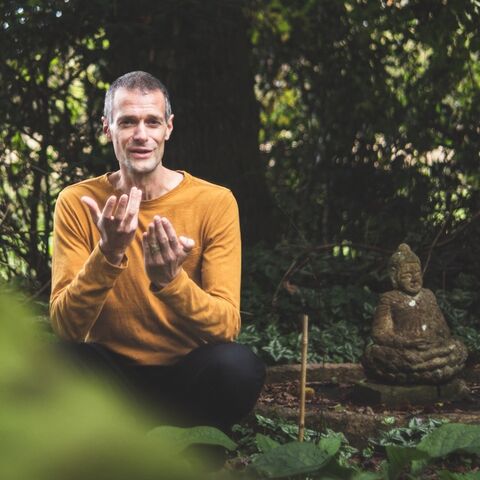
And today I have Colin Kingsmill with me.
Colin,
How's it going?
Going good,
Thank you.
Greetings from Atlantic Canada.
So what I usually do for someone I don't know as well on the podcast here is throw it back to my guest to talk a little bit about themselves,
Say who they are and what they do.
Colin's already cued me in on a little bit of his story here,
But I would just have him jump right back into it here again.
Yeah.
Hey,
Josh.
So like you,
I'm not a big lover of bios.
I'm really terrible about speaking about myself.
You can keep it the abridged version then if you'd like.
So today I do a few things.
I love to podcast and have conversations like this.
So that's becoming a really,
From kind of hobby to much more.
I do private executive coaching with CEOs and entrepreneurs,
And I work with a team that I'm co-founder of called Whole Human Coaching that works with really much more with teams.
And our mission is to create cultural cohesion within companies that are going through a massive transformation,
Right?
The world,
I think,
Has changed dramatically in the last few years and workforces and people and humanity have kind of gone forward.
And I think that the work world is catching up.
So we're helping them bridge that gap.
And I'm also writing a book called Fearless,
Which is designed to really help people cross that bridge from fear to bliss.
And so that's,
Yeah,
That's the abridged version of what I do today.
Well,
Right on.
The big thing about your work now,
Cultural cohesion,
It's a big thing.
Why don't we just jump into that real quick?
Sure,
Yeah.
Like first off,
Just what is,
How would you define that?
And then kind of what's been lacking on it and then what's being done now in general?
Yeah,
I think it's kind of a two-step process,
Right?
If we look at from a sort of a megatrend perspective,
What has happened in the last 20 or 25 years has been such an expansion of novel things,
Right?
That our biology hasn't even caught up to the technological advancements that we've made in the past sort of 15 or 20 years.
So our bodies are still adjusting to that.
Now,
If you think of the workplace and the work culture and the work environment,
Especially post what happened over the last three years,
Which I don't even want to say the word,
But what happened over the last three years really,
I think,
Shifted people's minds,
Right?
And shifted their values.
And people began to think differently and want different things and define success differently,
Or even define how they want to work with the corporation.
We've met a lot of people that are perfectly content not to climb a corporate ladder,
Right?
They're really happy where they are.
They have great life-work-life balance.
They want to stay there and they're really content,
Whereas the pressure is to push them up and push them forward and all those things that we kind of hinted on before.
So the idea of cultural cohesion is,
All right,
Big company or little company,
It doesn't really matter.
Are you aligned?
Is your business mission values,
Brand promise,
Is it aligned to where your human workforce is in their minds,
Right?
And so often it's not.
And so what we do is we work with individuals within the organization to go,
Okay,
Well,
What is your North Star?
What is your kind of leadership toolkit,
Right?
And that's made up of,
For me,
It's like,
What are your values?
What are your needs?
What is the destination that you want to get to?
And what is kind of your personal brand within the organization itself,
Right?
So what we do is we help people understand who they really are,
Right?
And then we work with the leaders and the managers and the C-suite to make sure that the mission,
Vision and values of the company are actually being executed.
Right?
So often,
So often we see in businesses,
You'll have,
You know,
The mission statement on the wall or the motivation statement on the wall,
You have all these sort of statements,
Right?
But are they real?
Are they being executed?
Right?
We hear a lot about,
You know,
People in business saying,
You know,
I'm kind of disillusioned because our mission and vision says this,
And it's a beautiful brand promise.
But ultimately,
I just get told to look at the numbers in the Excel spreadsheet.
So it's really that helping leaders and teams come together with true depth,
Right,
That's required today,
And then helping the individuals in those teams really kind of discover who they are.
And if we can do that,
Then those two should come closer together.
That's the idea.
All right on.
And I'm wondering now,
If sometimes it's just discovered that and agreed to that the individual is just not a good fit anymore,
Or just not a good.
Yeah.
And so how that process goes on,
If that's the case,
I mean,
Not to get into a bummer here,
But I mean,
It can potentially benefit the individual and the company if and how that process works.
Yeah,
Absolutely.
And I'll tell you how that how I'll tell you how that works.
Right.
So,
So if you're in an if you're in an in a in an organization,
And you haven't,
You haven't done the in depth work on who you are,
Right.
So that's why it's this leadership toolkit,
North Star,
Right of what are my what really are my values,
Right?
What are my needs in there?
What what is my personal brand?
Like,
What,
What do I want people to be saying about me?
Right?
And where do I want to be going?
So if if you don't have that kind of structure in place for yourself,
You have the,
There's the possibility that you're going to be bobbing around within an organization,
Right?
So they tell you where to go,
They tell you what to do.
The performance reviews are kind of upward,
Downward sort of waterfall that you might not be ready for.
We're also in cultural cohesion,
We're looking at how to rethink the performance review,
Right?
Because those are very antiquated tools,
We think,
Right?
So,
So,
So this,
This idea,
The idea is,
You're right,
That if you discover who you are,
Right,
And you have a solid kind of toolkit for yourself,
When something comes along in the organization,
Like a new opportunity,
Or,
Or some work,
Or whatever,
You're going to instantly know if it's aligned to who you are,
Right?
And,
And so you can quickly say,
You know what,
I don't think that's for me,
Or yes,
That's for me,
Because it connects with my toolkit.
And if you are,
If you're recognizing that,
Wow,
All these things that are coming my way,
Aren't really fitting me,
Then you know that it's time to move on.
And that's good for you.
And that's good for the organization.
Because if you are,
If you're in an organization,
And you're not living in that sort of integrity of who you are,
Then,
Then you begin to see signs of burnout,
Depression,
Maybe anger management,
Boundary setting,
Saying yes,
When you want to say no.
You know,
There's all the symptoms of not being aligned.
And,
And,
And,
You know,
It could be even social interaction at work,
You don't want to connect with teams,
Or you don't want to connect socially,
Or outside the office,
Etc,
Etc.
So it's really,
Um,
I think you're right,
It could,
It could mean that I need to change.
But hallelujah,
Don't,
Don't,
Wouldn't you rather,
Right?
Exactly.
And this is what have been so helpful for me years and years ago,
When I was still in the corporate world.
And this identifying these core values have been so helpful for me.
And I share this with folks,
Too,
That and then instead of living,
You know,
A goal obsessed lifestyle,
Where you know,
One goal ends,
And then it's just on and on one after the other.
And I'm not saying don't set goals,
Obviously not.
It's just when we can identify these,
I don't know,
Two to four,
You know,
Somewhere around there,
Things that just really make my heart sing,
Make me come alive,
Just kind of know to my bones.
And then every time I can align with them,
Then I live from that place.
And just about every interaction I have can be more satisfying and more fulfilling.
And I can keep myself in check with that,
Too.
I can bounce these off of people I respect and admire and teachers and advisors and get add more wisdom to these as we interact in everyday life,
Too.
So talk about how you maybe just about core values in general and are anything similar to this and how you might lead people through identifying those and living in aligning with those.
Yeah,
So so that's,
I love I love,
I love your point about goal setting.
Because it's obviously very important.
But,
But for me,
As you create that North Star that or that that toolkit for yourself.
When I say,
You know,
What is your destination?
For me,
It's more about what it's more about a picture.
It's almost like,
What,
What,
What,
What do you what would you like your life to look like if it was a painting,
Right?
Or,
Or an abstract or whatever.
And so that the destination is more about a feeling a sense of place,
Right,
A sense of,
Of,
Of where of where you where you feel most centered and most,
Most grounded and most,
And most you so so the destination does not have to be I want to be,
You know,
In New York in a C suite thing at the on the 60th floor,
Managing 20,
000 people,
It could be but but it's more.
It's more about how do you want to feel in the pursuit of your purpose,
Right,
As opposed to,
Again,
A finite sort of checkbox thing that thing that you want to get to,
How do you want to feel?
How do you want to be?
How do you want to be,
You know,
Express that.
So that that being said,
Getting to your values is,
Is a sometimes can be a really challenging exercise.
Because again,
Like I was saying to you before,
We're not taught these things.
We're not,
Especially guys today,
Men today,
Aren't taught how to express their needs.
Right?
What,
What,
What,
What are the what,
What are the values that really drive you?
So I was speaking to somebody just,
Just in this past week,
Where the discovery of your personal values is,
Is diving deep into those instinctual kind of gut feelings that you've got and expressing them.
So that's the exercise in that's the exercise that you have to do.
It's not easy.
This,
It's,
It's not an easy process.
It sometimes,
It brings up a lot of things and people that might bear it might bring up some traumas,
It might bring up,
You know,
A lot of stuff.
So,
So we need to,
We need to,
We need to get to your sort of true value core system.
Sometimes we need to deconstruct the narratives and the stories that you've got in your head,
Right,
To reconstruct new ones around those value systems.
And,
And,
And,
You know,
In that,
In that,
In that process of going deep,
Then you can then you can articulate them.
Some people don't even know what they are.
Don't know what their needs are.
Don't know what nourishes them.
They just,
They just know when their fuel tank is empty,
Right?
These are very important points.
It reminds me of this classic kind of saying,
Philosophical and spiritual saying,
Know thyself.
And once these are identified,
They don't have to be stuck to either.
We can change,
We change and evolve.
What is it?
Muhammad Ali said something like,
If you're still the same man,
You are at 50 that you are at 20,
You've wasted,
What,
30 years of your life.
So it just,
That's what I found helpful is,
Is being open to evolving and progressing towards even once we,
We,
We think we've identified having an open mind and going,
You know,
Yeah,
You know,
Open to changing and revising those two.
And,
And at the same time,
Knowing that what,
Where we once were is,
It was part of our journey as well,
Too.
And there's nothing wrong with that,
That,
That part in past in our time.
Yes.
Absolutely.
I,
I,
You know,
I kind of,
I think I've had three chapters in my life,
And I don't regret any of them.
Right.
But what I,
What the work that I do love to do with people that I think is beneficial is,
Yeah,
Okay,
That was my past.
Let's,
Let's dive,
Let's dive deep into yourself,
Into,
Into you to find,
To discover who,
You know,
Who you really are.
And let's design,
Let's design the next chapter with intention.
Right.
And I'll tell you why.
Because I see a lot of people living life,
Whether it's personally or professionally,
Or both,
With a lot of lenses,
Like opaque lenses that they're looking through.
And the work that I love to do is say,
All right,
Forget about everything you've learned.
Right.
And I don't mean that in,
You know,
Forget about,
You know,
What you learned in mathematics class or how to type or whatever,
But forget about the conditioning that is no longer serving you.
Okay.
And,
And let's,
Let's remove those opaque lenses.
So you can see clearly.
Right.
And once you can see clearly,
Right,
Once you've stopped and said,
Oh,
Okay,
This is who I am.
Right.
And this is my,
This is my,
This is my purpose.
This is my destination,
My,
My toolkit.
Once you've got that,
And you've cleared out the old,
The old stories and the old narratives,
Then I think life can really become unlimited,
You know,
And,
And free.
So,
So my whole thing is,
Is,
Let's,
Let's,
Let's get you to a place of freedom.
Right?
Well,
It really depends on what you mean by that.
I mean,
To me,
There's enough of an externality of freedom that if you really want to,
You can have the opportunity to go within,
Which I find is where you're going to find the real being free.
So I don't want to get into politics so much,
But I think it is an inch,
Mainly an insight job,
You know,
How we view things,
How we perceive things,
And then how we respond to things.
And you can talk a little bit more about identifying these narratives and changing narratives as well.
But I really like your notion of living from intention,
Because,
You know,
Basically all of our actions are driven from an intention,
Even if they're on habit pattern on repeat.
There was an intention some point along the line,
It seems,
That has driven this behavior,
Even if it's from our ancestors.
If they had something,
Encountered something in their lives,
And then they had an intention to do something different and to start this habit pattern,
And then that might have just got passed on through the generations.
And so we might just be repeating something we learned from our parents that we have no idea why they're doing it that way,
You know.
But at one point,
It was driven from intention.
Oh,
100%.
I completely agree with you.
You know,
We,
And when I say,
You know,
When I say things like trauma,
I mean,
I mean,
Small t trauma,
Right?
Conditioning that maybe,
I mean,
You know,
Inside your brother's womb,
Maybe you maybe there was malnutrition,
Maybe there was fear,
Maybe there was financial insecurity.
All of those messages get transmuted into the child,
Right?
And into the body and into the mind and early childhood development.
All of that has a massive impact,
I think.
And I do believe ancestral knowledge can also,
You know,
Does come through.
So I guess the trick for us in this kind of modern society that we live in is to find that awareness,
Right?
And then find that intention,
And find that responsibility,
And make it a daily practice.
Because going back to the point of freedom,
And we don't have to get into politics at all,
I don't think,
But we may be free in Canada or the United States.
But there is,
I think we are up against a massive,
I don't want to say a battle,
But we have to fight every day to have that freedom and that clarity.
And that intention,
Because we are being bombarded by,
You know,
Whether it's social media,
Whether it's food,
Whether it's big pharma,
Whether it's government,
Whether it's mainstream media,
All of those things are bombarding us every day.
And then I love that book by Bret Weinstein about the hunter gatherers guide to the 21st century that says,
We're not ready for this,
Right?
So I say to people that I work with,
First of all,
Be gentle to yourself,
Because it's crazy out there.
And the first thing to do is to start to kind of create some kind of personal kryptonite,
Right?
How do you protect yourself from all of those forces that are taking away your freedom or designed to take away your freedom,
Right?
So just look at pharmaceuticals,
Right?
You know,
You go to the doctor and you say,
You're not quite,
You know,
You're feeling a little bit off.
Well,
They're going to give you,
You know,
Antidepressants or anti-anxiety or antipsychotics or something,
Right?
Instead of asking you about,
You know,
How's your food?
How's your sleep?
How's your nutrition?
How's your spirituality?
What are you reading?
Like,
What are you consuming?
Are you,
You know,
Are you watching the news at 11pm at night?
Are you consuming sort of garbage food?
So I agree.
Freedom,
Yes.
But you got to be a freedom fighter almost,
You know,
I think.
These are really good points.
And we talked earlier about nourishment,
Though.
And what you just spoke to rings true with identifying what nourishes us.
You know,
You might get a quick high from or a quick boost from junk food or,
You know,
A substance or even just kind of spewing out outrage or something like this.
But,
You know,
Taking the time to just seeing what really provides a healthy nutriment.
And you're talking about media diets.
It's the same thing,
Right?
People,
It seems so obvious to me now,
But back in the day,
You know,
It wasn't.
And so it's just like what you eat.
Would you put,
You know,
Crappy food or eat poison basically is what a lot of these media diets are.
And it's kind of ironic here because we're creating some media here.
But I mean,
There are plenty of great media out there still that will,
You know,
Nourish our mind or emotions,
You know,
Our consciousness or feelings.
Yeah,
You know,
And I think I think I think you can categorize media in a couple of into two categories.
Right.
Like the media that I think you and I are creating is in is intentional.
And and I don't think I think we have I think we I think we have good intention behind it.
Right.
Whereas if you just switch on the news,
Right,
And sit down with it,
The intention there is to keep you there so that advertisers can sell you something.
Right.
I mean,
The base intention.
So so it's,
It's a question,
I think,
Of being aware of what you're eating,
Whether it's right and and sitting down on Twitter for an hour.
That's fine.
As long as you know what you're consuming.
And,
You know,
It's like eating a box of chocolates,
Right?
You can sit there and eat one bonbon at a time.
But be aware that that's what you're doing,
I think.
And be select.
So I always say,
I say to people,
Stop watching the news and get informed.
Right?
So,
So stop watching the news,
Which is just,
It's a product,
Right?
But if you want to get informed,
There's 100 ways to do that.
Right.
Today,
Especially.
Seem to just be doing the bidding of their paymasters,
You know,
And intent is not really to inform.
It's to keep you keep you there.
Have you come back to pay for the advertisers?
That's,
It's,
It's really simple.
I mean,
Yeah,
And it gets this,
This dopamine head.
But so I wonder how people get around this,
If they're really addicted to the news,
And this kind of fear porn and doom and gloom.
And,
You know,
Soundbites in this type of thing.
I know,
Usually for me,
It's it's getting off one habit,
It helps to replace it with a healthier habit.
Yeah,
I think maybe just going to other sources and still being informed,
But something that cares more about one's well being than not.
And then let you address that.
And then I'll just jump into another question here.
Like,
Just in general,
What,
What kind of,
I think,
Challenges do you see the most in your work these days?
You know,
Like,
What is kind of the some of the most important things that need addressing,
Either on a societal level,
Or different various organizational levels,
Even individual levels?
Yeah,
Interesting couple things.
I think on a,
On a,
On a societal level,
I think it would be great if we rediscovered our,
Our collective humanity,
Right?
Because,
Because of what has been going on in the last sort of five or 10 years,
With,
You know,
Division and culture wars,
And,
You know,
Everything,
Everything else.
I think we've kind of lost our way.
We've lost our human,
Our common shared humanity.
And people forget that we're on this little rock,
You know,
Spinning on its axis at 1600 kilometers an hour,
Flying through darkness,
Space and the universe.
And I think we forget that.
So from a societal perspective,
I'm like,
Let's remember our collective humanity.
And let's not give everything up to the unhuman corporation or the,
You know,
The the unhuman institution,
Because,
You know,
Stuff that's going on in the world is,
Is tragic,
And it doesn't have to be that way.
From a,
From a,
From a personal perspective,
I see a lot of people still struggling with living in integrity.
And living in integrity,
I mean,
Living with who they really are.
So I see a lot of people with masks.
I see a lot of a lot of people with Stockholm syndrome.
A lot of people whose,
Whose stress levels,
Whose kind of baseline stress levels are so high,
That they're getting sick,
Right?
And Gabor Maté has done a beautiful,
Brilliant new book called The Myth of Normal.
And it's about trauma and healing in a toxic culture,
Toxic society today.
And I think that's kind of spot on with what's,
With what's,
With what's going on.
The way we are living today,
At least in the in the West,
In the United States and Canada is making us all very,
Very sick,
Because we are not connected to that core of who we are.
And living in that sort of in that sort of but living in that integrity.
Right?
So I think those are the two issues,
A disconnect from humanity and a disconnect from ourselves.
So like,
Maybe they're the same thing.
Well,
They're definitely hand in hand,
I feel.
So like,
What's the solution to this,
Then?
Colin,
What do we,
What do folks do about this?
I guess,
If first,
It all starts with ourselves.
And then if they want to reach out and either,
I don't know about help others,
I don't know if that's the right way,
But be of service and contribute.
Yeah,
Even if it just means speaking out or certain things to pay attention to and certain things not to pay attention to.
Design it for you.
You know,
I like,
I also like this sort of the ship,
The ship metaphor.
Where are you navigating to?
What kind of ship are you?
What's your cargo?
What are you bringing?
Who are you bringing it to?
And why are you bringing it?
So,
You know,
Thinking about a much more sort of purpose driven life.
And it,
Again,
You don't have to be going and getting a Nobel Peace Prize,
It could be starting a family and raising,
You know,
A couple of great kids.
But with intention,
With awareness,
Right?
When you go to the store,
You know,
Look at the labels,
What are you buying?
Where's it from?
What's the provenance?
It's just,
It's just wake up people,
Right?
And,
And in terms of what you do about it,
I mean,
I think that's an individual choice.
Right?
I think,
I think everybody needs to decide what they want to do about it.
I know I'm on a,
I'm on a mission to,
You know,
Humanity,
Integrity,
Like,
Fearlessness,
And then freedom,
Right?
Freedom from psychological suffering,
So you can just kind of fly.
And so I think it's,
I think it's one person at a time,
You know,
You're doing what you're doing,
I'm doing what I'm doing.
And I do believe that that creates a ripple effect.
And,
You know,
Even when we're talking about,
About the environment or the climate,
Right?
Fix yourself.
Fix this,
Fix this,
And this,
And this first,
And the rest will follow.
So that's my,
That's my recipe,
If you like.
Beautiful.
Now,
We haven't talked about fearlessness yet.
And I really love this notion of fearlessness,
Because I just have to echo that during these,
What we've gone through the past few years,
I saw it quite early on,
Of how,
On both sides of the issue,
It on,
It was getting to extremes,
And there was fear,
Extreme fear on both camps.
And I just see that when someone is in an extreme state of fear,
Their nervous system suffers,
And their immune system gets run ragged.
And I think that was the biggest thing out of all of this on both sides of it.
So what do you,
What do you have to say about fear and fearlessness?
I know in my own journey,
I went through quite an extreme fear,
I would say,
Years ago.
And so I now have that reference point to be fearless,
And almost to the point where there's probably a few things that I would be better off having a little bit more fear about.
Just in the,
Just in the,
The only way I see that fear is helpful is that if it's fear of wrongdoing,
Right,
Fear of being completely unwholesome,
And unethical,
When we know better,
And know the consequences of it,
The fear of losing one's reputation of dishonoring oneself and one's family and friends,
That,
And I don't wouldn't really call that a fear,
Either.
I would just call that being mindful and respectful and knowing the consequences,
And knowing better.
But,
But as far as general fear,
Yeah,
What do you have to say to it and fearlessness,
Too?
And yes,
Okay,
Great.
Fight or flight,
That's it.
Sorry,
I haven't had enough coffee yet this morning.
So fight or flight,
My god,
Absolutely.
It's,
We need that,
Right.
But when fear begins to dominate the,
You know,
Your,
Your sort of all of your decisions throughout the day.
And,
And,
Yeah,
I'm not gonna,
Don't want to go down the,
You know,
If you're a crazy psychopath,
And you're,
But we'll save that for another conversation.
But,
But fear,
To me,
Is just the most limiting energy around.
And the reason that I like to speak about being fearless is,
Is because I have jumped off the deep end so many times in my life,
After after sort of the 2001 crash,
Right?
It was like,
All right,
How bad can it get?
Try it,
Do it,
Say yes,
Go for it.
Dive into the unknown.
I've done that for the last 25 years.
And it's been,
It's been like this incredible roller coaster ride,
Right?
With the lowest lows and the highest highs.
And,
And here I am,
Right?
So I,
So my message is,
I've survived.
I've done it.
It's been exhilarating.
You can do it too.
Break out of the,
Break out of your,
Your circular loop or the,
The cassette tape that I've dated myself or the,
The,
You know,
The,
The,
The,
The press repeat loop.
Get out,
Go for it,
Break it.
So I'm like,
Smash it,
Right?
Because of the,
Because of the life that I've had.
And what I,
What I tell to people is if you want to be fearless,
You,
These are,
These are kind of my pointers,
Right?
It's like that wall of protection.
So toxicity,
No,
Gone.
Get that,
Get that away.
Whether it's friends,
Family,
News,
Social media,
Whatever it is,
Work,
Get out of there.
Begin to listen to your body.
Another,
Another great Gabor Mate book is when the body says no,
Right?
This,
This thing is telling us stuff all day long.
It's sending us messages,
Right?
But because of our sort of the velocity of our society that we live in,
We don't listen,
Right?
So wall of protection,
Then listen,
Listen to this,
Design the life that you want,
Design it.
I've got my vision boards and my boards,
They're all here.
You know,
I,
I paint a picture of,
Of what the next chapter is going to look like.
And it always works.
So,
So once you,
Once you've got the picture,
Then you break it down into bite size,
You know,
Goals that you can,
That you can,
You know,
Manage.
And you have to,
You have to,
You have to introduce daily rituals to stay on track.
Because again,
We're like being,
Being,
Unless you're somewhere very quiet and spiritual,
But if you're in the modern West,
Like you and I are,
You need to have daily rituals to make sure that you are staying right here,
Right?
Staying within,
Within who,
Who you are.
And then I think I've kind of said this before,
You know,
Forget about what you learned,
You know,
Forget about the conditioning that's not serving you and keep the stuff that is,
But get rid of the stuff that isn't.
And that might involve some trauma therapy,
Some trauma and loss therapy.
It might involve some grief,
Grief therapy.
It might involve,
You know,
Getting onto YouTube and,
You know,
Doing a,
Going down the rabbit hole with,
With,
You know,
Joe Dispensa videos.
It doesn't matter,
But,
But forget it and start reprogramming.
And that's probably,
That's probably it.
Those are kind of the,
The,
The,
The,
The,
The,
You have to take proactive steps to protect yourself from fear because we live in a society in a world that is,
You know,
Driven by it.
It's a big consumer product,
Right?
It totally is.
And it's,
It's almost shocking how many people make decisions out of fear,
You know,
And how many people are just so don't want to leave their comfort zone either.
But then I know the other end of the extreme,
Like they need to find a comfort zone because they're doing so many risky things all the time.
So it's,
It's,
It's,
It's,
It's a balance,
But yeah,
Especially for people that are coming up in past,
You know,
I had to completely get off the train.
I was on,
On in order to get on,
You know,
What I do didn't exist.
I had to create it myself pretty much.
So that's right.
And for me,
It's,
It's,
It's found helpful having this deep trust.
Like you were saying that you survived everything up to this point,
You know,
Trusting that we,
We are doing the best we can.
And if we could do better,
We would.
Well,
We're,
I think we're much more resilient than we think we are.
I think,
You know,
All you have to do is look at the statistics and the data around mental health and health in just in the United States.
And to me,
That's symptomatic of not living in your integrity and,
And being fearful of not changing and getting out of that closed loop.
So what do you want?
Exactly.
And we've,
We,
So many people have built up so many facades and things and the way they relate to people too.
And know that,
Yeah,
Sometimes when those are breaking down,
It's not going to be pleasant and it's not going to look nice a lot of times,
But ultimately in the longterm,
I feel you people will be glad that they have done that,
You know,
And live in integrity and just can feel the benefit in the body.
And like you're,
You're saying that the body won't lie.
Our mind lies so much to ourselves,
Has no shame and will do so much,
But the body doesn't do that,
Does it?
Yeah.
Right.
Right.
Absolutely.
Absolutely.
So,
Um,
Yeah,
I agree.
Colin,
It's,
It's been a pleasure and joy.
Very,
Very helpful and enlightening here too.
Would you like to,
In any final words too of what you want to,
A message you want to leave with folks?
Sure.
Yeah.
So I guess the,
I guess the message that I'd,
That I like to leave people with is,
Is,
Is that it doesn't have to be like this.
If you are in,
In a fearful place or a struggling place or a place of psychological suffering,
Just know that it doesn't have to be this way.
There are ways out.
So reach out,
Not to me necessarily,
But just reach out.
There's,
You know,
There's all sorts of apps and videos and,
You know,
I know you like insight timer.
I like it too.
And there's all sorts of apps and,
And videos and resources available today that there weren't 20 years ago.
Right.
Um,
I guess,
Well,
To us,
Maybe,
I mean,
They've been available for thousands of years,
But there's resources out there.
So go get them.
You don't deserve to,
To,
To,
To be in,
In psychological suffering at all.
Beautiful.
All right,
Colin,
Thanks again for joining and may you all be blessed with the optimal health and life that you wish and desire for your long-term welfare and happiness and for that of all beings everywhere.
May all beings everywhere realize awakening and be free.
Thanks for listening.
Check out integratingpresence.
Com for show notes and similar material.