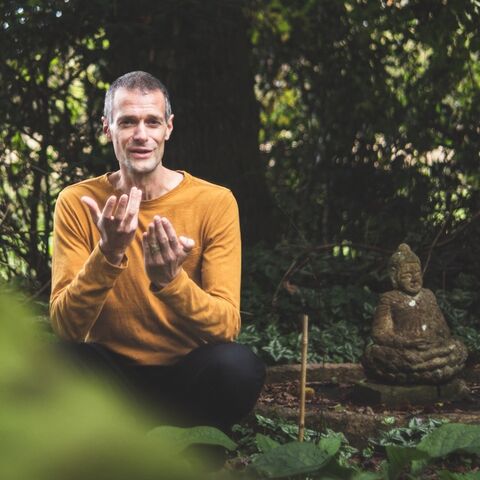
You're listening to another Meditation Q&A with Wendy Nash and Josh DuPont on the Integrating Presence Podcast.
Along with Wendy Nash of KindlyCutTheCrap.
Com,
Wendy,
How's it going?
Yeah,
It's good to be back here.
We've missed a month.
You've been away.
I've been doing other exciting things.
I have been getting used to Queensland weather.
It's freezing.
So it's winter for us,
And normally it's quite.
.
.
I've come from further south,
So it's actually colder there.
I moved up here last year and I thought,
Why does everybody say it gets cold?
And here we are a year later,
And now we're absolutely freezing with thermal underwear and not quite,
But boots and everything,
Thick jumpers,
And I don't know what the temperature is.
I'm from gubby gubby country in Queensland,
So I'm in boots and wearing layers of clothes.
So wild.
So it is technically summertime here in Denmark,
But compared to the states where I'm from,
It feels like a nice spring day or fall day.
It's kind of cool and a little bit sunny.
And yes,
As Wendy was saying,
I'm back from being in the UK for around three months because I had to leave the country as an American tourist here.
And yeah,
I spent some time at Chithurst and Imravati.
These are Thai forest monasteries.
Maybe for another time we can talk about that and did a retreat online.
It's an interesting time and topic too.
But today we're here to talk about this question of.
.
.
Of course,
Unless anyone has any questions,
Please chime in on the chat on YouTube or on Wisdom app.
And I want to say we'll get the chats here in restream,
But I'm not entirely sure.
If anyone is watching this,
Maybe even on Twitter too,
I think it's on,
You can just go to my site,
Integratingpresence.
Com and then the YouTube box will show up there and then you can click on that and put your question in the chat.
But what we're doing is calling this.
.
.
So Wendy and I did a show,
What is meditation?
A pretty simple,
Basic question,
Right?
Start from the beginning.
It's a good place to start.
But now we're going to take it a little step further,
Still kind of on the basics perhaps,
Although it can go really in depth,
Is am I doing this right?
Am I.
.
.
No,
First off,
How do I meditate?
How do I do it?
Once we know what it is,
How do we do it?
And Wendy all you have to do is press mute.
Sorry about that,
I've put it on and I just realized this is last time's,
I was looking for the one from today,
So.
.
.
Oh,
You have to click the live tab.
If you're on the YouTube channel,
You click the live tab.
I don't know where you're at.
Okay.
Okay.
Yes.
Okay.
All right.
I'm in there.
Well,
That's good to know too,
Because it should show up at the very front page of the YouTube channel,
But I guess it's not doing it.
Oh,
Well.
Well,
Anyway.
So yeah,
So like I said,
We touched on what is meditation,
But now we're going to do,
How do I meditate?
And then am I doing it right?
So even that last question implies a lot,
It could imply a lot of stuff,
But let's,
I guess,
Start from the first one here.
How do I meditate?
Wendy,
If clients come to you or they start working with you,
Or just somebody that's interested in meditation comes to you and they say,
Well,
How do I meditate?
How do I do this?
How would you give them instructions?
Or if you wouldn't give them instruction,
What would you refer them to for meditation instructions?
So,
Yeah,
It's a good question because,
You know,
People have this idea they can't meditate because they sit down,
They go on something or they get nap and they try and they try to have this clear mind,
So they think they're doing it wrong and they,
Well,
Clearly they haven't got it.
They don't know how to do it.
Their mind's too busy.
I can't meditate.
So that's pretty stock standard answer to that.
I'm sure you've heard that more than once.
I get that pretty much every time.
Oh,
Yeah.
Yeah.
And so I always recommend an app and there are a few different ones,
Whether or not you want to hear those,
Those ones,
But I always recommend go for a short meditation and test out what works for you.
So there's one I learned,
A new one called Smiling Mind,
Which is an Australian one,
Which is great because I was recommending,
What's it called,
With Sam Harris and they like it,
But they get,
They don't really like the American voice.
So they found an Australian one and they just felt much more at home with that.
So that was good.
That was important to them.
I'm so used to speaking with Americans.
I don't really think about it,
I suppose.
But yeah,
So I always recommend do it and then get a short one.
And then once you get into the hang of it,
Then I recommend to try and do that every day and just keep at,
Just chipping away at trying to remember to do that every day.
It's good to set up same time,
Same place,
All that.
It's not always easy because people have kids,
It's chaotic,
But routine is pretty,
Pretty important in setting up something because otherwise it's,
Yeah,
It's too difficult to get into place as sort of sitting practice.
I mean,
There are standing practices,
Those sorts of things,
Of course,
Lying,
Those sorts of things.
But most people,
You,
Me,
Josh,
We sit down and we meditate for however long it is.
And I think when we talk about meditating,
That's what we're talking about often.
So I think start with sort of five minutes for a nap,
I think is great.
And then after maybe a couple of months,
Maybe a year of just trying different apps and different things,
Then see if you can do the app every single day at the same time.
And just say maybe you might do it,
Well,
I'm going to do it for two weeks every day without fail.
And then if you find that you've been able to do that,
Try another two weeks doing that.
And then if you've been able to do that,
Try and do another two weeks and six weeks.
And basically,
By the time you do six weeks in a day,
Every day,
You're now in a routine.
And then you can start going,
Well,
If I didn't use the app every day,
But instead,
Maybe I used it,
I gave one day a week with just five minutes in silence,
How would that be?
And try that.
And then increase the number of days where there's no app.
So that's what I recommend.
And just do it,
Don't rush,
But just do it regularly.
That's what I would say.
How about you,
Josh?
Oh,
Wow,
You've brought up a lot of good stuff here,
Wendy,
That we're talking about formal meditation here,
Right?
And there's a whole nother thing where people can do it in their daily lives.
Maybe we can come to that in a little while.
The short one that you say,
Starting off with the short one,
The apps,
And building a habit and challenging oneself,
And then getting to without the app.
So I'll just pick up on some of these,
I might as well just kind of start from the apps because we are kind of an app driven culture now,
Like it or not,
For good,
Bad,
Ill,
Otherwise,
Whatever.
So I haven't heard of this Smiling Mind,
That's beautiful,
I'll have to check that out.
Sam Harris,
I'm familiar with him a little bit,
I don't know the name of his app,
Though.
The big ones in the States I know are called Calm,
C-A-L-M.
And there's also Headspace,
And those two have a bunch of startup funding,
From what I,
At least the last time I checked in with them.
So there's,
I think both of those have either introductory or freemium,
But then they charge.
Now the one I'm big on is called Insight Timer,
And Wendy and I were broadcasting live on there for quite some time.
Of course,
I toot my own horn here,
Right,
Establish a quote-unquote teacher on there.
It's also a social media app where you can thank people,
Follow people,
Join groups,
There's guided meditations,
There's courses,
But there's challenges on there too.
So it's a built-in challenge.
So just jumping ahead to app and without app.
So what I do is I do a little bit of both.
I'll have the app just as a timer.
That's how it started off too.
It's just a ding to know when to stop,
And you don't have to interact with the app at all.
You ding and hit done,
And that's it.
That can be the end of the app,
But it does track your progress and things like this.
However,
I will go times when I don't use it and go back in later and log my process,
Having the phone completely off.
I notice I can go even deeper without distractions or any kind of connection,
Electronic connection.
So I like Wendy's thing about short meditation.
So this is important too,
Because the big excuse Wendy talks about is my mind is too crazy.
It's all over the place.
Well,
Hello people.
Everybody's mind is like that.
We just haven't paid attention to it in a serious way before,
But that's common.
If that didn't happen,
It would probably be fairly unusual,
And like Wendy says,
That's not the goal.
The mind will quiet naturally over time,
But yes,
And then building this habit,
And then it's just like your teeth.
You don't even think about it.
You just brush your teeth in just the same way like this.
So Wendy gave some good tips on how to establish a habit through this,
And then the other excuse,
I don't have the time,
Wendy.
I just don't have the time to meditate.
If I had more time,
And what this comes down to,
I think what this was kind of all pointing to,
And maybe we can,
I know Wendy doesn't like why questions,
But how about what is the importance of this?
I mean,
The classic,
Why even do this?
Why is this important?
Or what is this help?
Do we want to frame it of what do we want to get out of this,
Or what's the importance of this?
I guess we can frame it like that,
And maybe that's a whole nother show,
Because that's the fundamental thing too,
Because some people say,
Oh yeah,
It's good for me.
I need to do it,
But X,
Z,
Y excuses why I can't.
And so this is really,
I think,
In contemplation,
Because it had such an immediate effect on me.
It does in everybody else.
So there's so many different health regimens,
And people will say,
Oh,
I need to be doing this.
So one thing I think,
Making it enjoyable,
And Wendy's a big proponent of loving kindness meditation,
And eventually,
Once a lot of slog is cleared,
It feels really good to do this a lot of times,
Especially when a lot of stuff's cleared.
So yeah,
And I want to throw it back to Wendy before I go into these kind of quick classifications of different,
If we want to talk about different specific types of meditations,
But I'm sure Wendy has plenty to say here.
I was just going to say the app with Sam Harris is called Waking Up,
And there's two versions.
One has a 30-day free trial,
And the other one has seven days.
So go for the 30-day free trial,
For sure.
The other thing is,
It's interesting.
So I'm doing the Mindfulness Meditation Teacher Certification Program with Tara Brach and Jack Cornfield.
So they're two very well-regarded teachers in the American Western Insight traditions.
And they used to do breath meditation,
Mindfulness meditation,
Sati meditation,
Historically.
They've been doing that course for several years now.
And this year,
Apparently,
It's different.
We started with loving kindness meditation because they found that people didn't have enough loving kindness to have the foundation to then allow the stillness.
Now,
In Asian cultures,
It's traditional to do the sati,
The mindfulness,
Before you do the loving kindness.
But Asian cultures are very different,
And their family systems are very different.
So they tend to be much more family-oriented and connected with each other,
Whereas we and of responsibilities and obligations to family,
It's less individualistic.
We have a much more individualistic society.
So we just don't have enough relatedness.
And I think loving,
And we struggle to find relationships as sort of kind.
I mean,
Certainly,
That was my experience.
And so I had to learn how to think well of people,
Kindly of people.
The first time I did loving kindness meditation,
I said,
Wow,
I didn't know I hated everyone.
So that was my starting point.
So given that's where I was at,
The idea of sitting down and trying to calm my mind,
I had a whirlwind going on.
That was just not possible.
So loving kindness in whatever form,
Or self-compassion,
Or just looking for joy,
Joy in life,
Acts of kindness,
These are really good.
I mean,
Sharon Salzberg does a great meditation when you're driving,
And she said,
You're at the traffic lights,
Think about all the kind things,
Good stuff happening in your life.
And she said,
After a while,
She realized that she didn't want the light to turn green.
So the traffic light turned green.
So because she was kept wanting more,
You know,
She was more and more positive.
So I think start small,
Start kind.
That's definitely easier.
Definitely.
I hope I answered the question.
Yeah,
This is,
To me,
The loving kindness is important too.
And like Wendy said,
Very humbling,
Right,
When we sit down and realize there's a lot of ill will going on.
And I experienced the same thing when I first started the loving kindness and heart opening things is,
You know,
How I had been treating myself,
How I treated others,
How others had treated me,
Addressing this thing of harming others,
Myself,
And being harmed in a way,
Not maybe physically,
But emotionally,
Kind of psychically,
Especially with words.
I mean,
Ironically,
I hadn't respected the power of words,
And I wrote them off as not having the power that they actually have.
And so that is so humbling when I hear this feedback from some people in my past,
And even unfortunately,
Some people in my current life that,
You know,
When you say this to me,
It makes,
You know,
These feelings come up.
And,
You know,
Even though that's not my intent,
You know,
I have to double check,
Okay,
You know,
What can I do to do the utmost on my part to that these words are meant for kindness and non ill will,
You know,
And all these wonderful things we aspire to,
Like it being helpful,
It being the right time,
It being kind,
Being true,
Causing or leading towards concord instead of division,
You know,
These type of things.
And so I sit down and see all this stuff come up.
And that's another thing people can get bummed out at first with loving kindness,
Because they,
A lot of this stuff surfaces.
And I tell people,
You know,
This is absolutely common,
It's a purification process,
You know,
It's just because we intend something,
Actually,
It's,
If we're having a stronger and stronger intent towards kindness and goodwill,
Well,
Then what we want to do is we want to clean all the stuff out that we're not normally aware of on even on deeper,
Deeper levels.
So these,
These notions of ill will will come up.
And it's not,
I find it helpful not to identify with them.
It's just kind of like,
We're spring cleaning,
We're getting into the nooks and crannies and crevices that are normally overlooked,
And it doesn't feel good to clean that out,
But it feels good afterwards to have that cleaned out.
And I find this happens naturally,
And it's a gradual process.
And yeah,
It's,
So this,
This notion of then focusing and amplifying goodwill too,
Because it is the antidote to ill will,
It's loving kindness.
And again,
This is friendliness,
This is lack of ill will.
This is goodwill,
These practices deliberately bringing this to mind.
And yeah,
I think that's the most important thing to say here.
Wendy,
Did you have anything else before I go into kind of more classifications of different types of meditation?
Yeah,
I think often when it comes to doing,
You know,
Loving kindness,
We think it's actually about we're doing it that to them.
But I'm really,
Really keen on going,
Okay,
So what are acts of kindness,
Gestures,
Moments of care that you're receiving,
That you might have overlooked,
Whether it's somebody who goes,
You know,
Partner goes to the grocery store and buys food that you like,
Or doesn't buy food that you don't like,
Or makes you a meal or makes you a cuppa,
Or,
You know,
A drink in the morning or whatever.
And makes it so it's what you like,
Did they remember that you like it black,
Or that you like it really sweet,
Or,
You know,
These,
This kind of care,
I think a lot of people don't register actually how much other people are attending to our needs.
So for me,
I mean,
That's really my,
My key practice is how to be happier without doing more.
And that's why I run a workshop on that,
You know.
So that's because people are,
We are so keen to look at what isn't working.
And you know,
That's because it jars the body more,
You need 19 good,
Sincere interactions before you have negative,
You know,
19 in order to maintain a harmonious relationship.
That's how much,
That's a lot of saying,
I think you're doing great.
I love what you do.
I love you.
It's so good to be with you.
I mean,
That's a million of those that you have to do all day,
Every day.
So I think that's really important.
And just thinking a little bit like that this morning,
I was meditating,
And I have a family member who's a bit tricky,
Or quite tricky.
And I'm more,
I've always been thinking,
They're the problem.
And this morning,
I went,
Actually,
That person,
I thought I was giving feedback that was useful,
Because they were giving mixed messages,
They said they were good,
They were interested in communication,
A good communicator.
And then I tried to give feedback about that.
And well,
That didn't land so well.
And I did it over successive years,
Because this person is a family member.
So I then realized,
Actually,
What I thought was being kind,
And sharing information the other person might be interested in,
To have better relationships,
Actually,
That person just saw me as being critical,
Nothing but critical.
And so I guess,
I mean,
I've been meditating for 20 years,
And I've been doing loving kindness for most of it.
And I hadn't realized how my relationships with family have been jaded,
Because I was giving information that I thought would be useful,
Or the person was interested in,
And I wasn't picking up the cues that actually they weren't.
So I think it's that meditation,
It's not really meditation,
But I certainly think it's about becoming aware of,
You know,
When you meditate,
You become more aware and sensitive to other people.
So I think that's all I wanted to say.
These are really good points.
The first thing,
Well,
It touched on mainly three things here,
Receiving kindness,
And this positive counterbalance,
And then the feedback perceived as criticism.
So the first one,
Receiving kindness,
I think this,
You're right,
This gets overlooked in metta practice a lot.
You know,
These classic phrases,
You know,
May I be well,
You know,
May I be happy,
May you be well,
And then to different groups and things,
Like it's taught in the Vasudhi Manga.
But what's often overlooked is there's a receiving end of that,
Right?
So if someone's practicing loving kindness towards me,
Well,
How do I receive that?
I know some people have a hard time,
They don't want anything like that,
Or they can't have enough,
They always want it,
You know,
But that's other people,
I don't have any control over them.
For me,
What is my relationship to that?
How do I open and how does it land?
And then how do I see that and respond to it?
Can I just feel it,
You know,
Or even imaginatory,
Instead of me sending out metta,
What about all the people practicing metta at any given moment,
And just kind of bathing in that goodwill,
And how nurturing and caring that can feel?
Or maybe not,
Maybe it feels different,
And then how am I with that?
It says,
Oops,
Seems like one of the connections is,
It's they're retrying one of the connections,
I don't know what that means,
But you can still hear me,
Wendy,
Right?
I'm good.
But one of the things,
Maybe it's me who can't be heard or something,
Because sometimes we have that.
No,
I think it was one of the streams,
But it was just a technical message.
We'll see.
Either way,
It should record.
I just wanted to add something to that,
And I was just,
Because you were talking about receiving kindness,
And you were talking about,
Oh,
So one of the things,
You know,
Here we live in this international landscape,
And at three o'clock in the morning,
We're having an existential crisis,
And we think nobody loves us.
I don't know if that's just me,
But I have certainly had many periods in my life where I felt no one cared about me,
No one was interested in me,
No one,
You know,
It was all awful.
And then I realized that at any time of the day,
Whatever was going on for me,
Actually someone somewhere in the world was practicing metta for all beings everywhere.
And that really made me think,
Oh,
Wow,
Okay,
Actually,
There are millions of people everywhere who are wishing me kindness.
And often in that,
Often when I do the more traditional meditation,
You know,
The Vasudhimagga version where,
You know,
May I be happy,
Then what I'll often do,
And I do this for people who are feeling,
I have a client who's slightly estranged from her children.
She just gets just rare access.
So I say to her,
As we do the meditations together,
And I go,
All right,
Imagine how many women are in this situation,
All over the world who have no access to their children.
And how many children miss their mothers all over the world.
And I just I do a bit of a sweep.
So I'm on the east coast of Australia.
And so I go,
You know,
Up north,
Up through Asia,
And then also in New Zealand,
Across the Pacific,
And then,
And I go across the whole world,
And I do it according to time zone.
And that's a very interesting process to do that.
Because then you get an idea about,
Well,
There are all these people everywhere,
Who are in this situation,
And it stops it feeling so solitary.
So I just wanted to put that in.
Sorry,
Josh.
No,
That's beautiful.
And I mean,
If we're going to get almost crazy about it,
We can extend it to the animal realm,
All the mothers in the animal realm that have something tragic's happened to them,
Or who knows,
Even off the planet,
Or whatever,
You know,
If you're into that kind of thing,
Too.
So you also talked about the positive counterbalance.
Yes,
We do have this term called positive toxicity.
But for people that are just kind of prone to negativity in general,
Or having a bunch of challenges,
I feel this positive counterbalance,
Wendy was talking about,
Is very,
Very,
Very helpful.
And the amount of work it takes in relationship to do this,
It's such a beautiful thing.
It is work,
But it should be ideally rewarding,
And fulfilling,
And nurturing,
And caring for both parties.
But I almost think this feedback perceived as criticism,
This is,
I've been running up against this time and time again,
Especially even,
So I think that might even be a show on its own.
This is really important.
And I just,
I don't want to jump into this now,
But I think maybe that might be a potential future topic.
And so now,
Jumping in,
Just,
So we're running out of time here,
But I just wanted to do these formal categories of,
You know,
What is meditation?
And maybe we'll have to do,
Am I doing it right?
We've covered a little bit of that,
So maybe not,
But,
Oh,
We still have 30 minutes.
Oh,
Yeah,
That's right,
We started at the bottom of the hour,
Oh my goodness,
Wow,
Okay,
So I guess the last time we started.
So I guess I don't have to jump into it,
But maybe I'll,
Maybe I'll do it anyway.
So the,
So there's,
I'll just say them real briefly in their fancy words,
And then we can come back and expound on them maybe,
But we have Samatha practices,
Vipassana,
Open awareness,
And these awareness-based practices themselves,
And I'll just give the cliff notes.
Samatha is this gathering,
Unification,
Calming,
Stabilizing effect that the certain practices have on the mind.
Kindness will fall into the Samatha,
Sometimes people call them concentration,
But I'm not really fond of using that word,
Concentration practices,
But for sake of ease.
Vipassana,
It's,
People get really touchy about what that doesn't mean.
Some people just consider mindfulness Vipassana,
And I don't know how I feel about that.
Some people go really in-depth,
Like Vasudhimanga,
I mean,
Avidhamma,
Like they're getting into ultimate materiality,
Ultimate mentality,
Mind moments,
All these Chittasaka,
And this is just different list upon list upon list,
Mind moments,
Discerning,
All these different things in the individual.
So basically,
If I want to use that,
It would be simplified,
Deep investigation into the nature of reality,
Moment by moment,
On vast,
Profound levels.
But in the service of realizing the characteristics of existence,
Impermanence or changeability,
Stress or suffering,
And anatta,
Which maybe might be not self,
Or I would say maybe helplessness.
So then we have these open awareness,
I like these,
So basically we're just moment by moment the meditation object change by whatever comes into our awareness.
So if it's a thought,
Sound,
Memory,
Sensation,
So moment by moment,
The awareness or attention is shifting to whatever we're being aware of.
And then finally,
The awareness practices is what's actually doing all this knowing,
This perceiving,
This noticing,
This awareness,
What is that,
And how do we investigate that and use that as the kind of investigation itself.
And this is what gets into really profound territory and this very mysterious blessing we have known as awareness that we all have access to on various levels at various times.
So I know a lot in there.
So I guess one of the things we can throw out there too is,
Am I doing this right?
You know,
And that's probably going to open a can of worms and we can sort that can of worms too.
You know,
Wendy,
I've been meditating for years now,
Am I doing this right?
You know,
I think early on,
Really briefly,
It can be a way to beat ourselves up thinking I can never do it right if we're that type of personality.
In other ways,
If we don't ask this question enough,
Then we might be getting too far off the path.
And this is where I think friendship and teachers are very helpful for feedback.
We can talk about feedback here in meditation in the context of student,
Teacher,
Or even wise friendship.
Yeah.
And just going back to some of those meditations.
So there's Samatha or Samatha,
Which I think is also calm abiding.
Is that right?
Is that a calm abiding meditation?
Would you call that?
That's a beautiful,
That's a beautiful translation.
I love that,
Calm abiding,
Yeah.
And there's also Vipassana,
Which is Vipashyana in other traditions,
And that's often translated as insight.
So generally,
When you see in a Western context,
Insight,
That is a sort of an inquiring process.
And I'm probably more at that end than I am at the calm abiding.
I'm just generally not a calm animal.
So the idea of sitting there being calm doesn't really fill me with joy.
You know,
I just get,
What am I doing here?
I want to do something.
You know,
I'm sort of quite outcomes focused,
I suppose.
I want to feel I've done something useful with my time.
So just that,
I think,
Yeah.
What was a question,
Do you think?
Oh,
Yeah.
The other ones are,
We're calling open awareness practice.
But now,
What did you,
You said insight,
Or what was the other translation you used for Vipassana?
Calm abiding?
No,
That was,
But that for Vipassana or Pashana,
You called it insight or something,
Investigation or?
Yeah,
Well,
You used the word investigation.
And I thought inquiry,
You know.
Inquiry.
That's what it was.
Yeah,
I think that's,
I like that.
But it's not a sort of piercing hard,
I think there is something about the Western way,
Which is to disregard the relationality of where we are.
And to think that to be cold,
Or to be sort of hyper focused is somehow better than keeping it loose.
And there is that metaphor,
Which,
You know,
Like guitar,
Where if it's too tight,
You know,
In the work,
Because it's sort of really tight.
And,
You know,
You know that when someone becomes really earnest.
And then,
But you can't,
You know,
If it's not properly strung,
And it's really loose,
Well,
You don't get any melody out of that,
You know,
It's too,
You know,
As Pema Chodron once said,
Mellow,
Very 60s language there.
I'm very mellow.
She said it was hilarious.
And then she talked about another time when she was groovy,
It was just the funniest.
She's a woman of her time.
And,
But there is a,
There is a,
This space where you're holding it.
And it's not tight,
It's not critical,
It's not harsh.
And it's not slack and un,
You're not thinking about everything,
Or you're not caught in everything.
Different people do different things.
I know Jason Siff,
He has a thing where you just follow the thought to its conclusion,
I gather.
But I found it to,
I didn't find him to be a particularly grounded person,
Actually.
And I found myself being quite heady in his space.
And so,
You know,
That's also another thing to really engage with when you're,
When you're meditating and listening to different people and different talks and going into different traditions is,
Well,
How does it feel inside of you,
You know,
Really trusting your instinct about whether it feels right for you.
And that's also being really aware,
You know,
If it may not be the right time for you to meditate,
You know,
If you don't have time,
Maybe,
Maybe now's not the right time for you.
You know,
You,
But I always think you do it once.
It takes about three to five years often before you come back and you're ready.
It takes time before you can be ready,
But just try it once and then come back three years later,
Five years later.
But I think I have digressed.
No,
This is answering the question of,
Am I doing it right?
This is perfect.
And this last one about being ready,
Wow,
That was,
I really let that land because that's really good.
I really love that because that takes so much pressure off.
And actually,
I actually experienced that in my own experience.
When I was first getting kind of more formal meditation instructions from someone at a time and they really didn't have a practice,
They didn't know what they were doing.
They were just kind of reading out of a book.
However,
You know,
Whoever was in that instruction manual,
Their practice was a little bit deeper,
Right?
So I did that for a short time and it was,
I don't know,
Maybe a year or two,
Probably not two years,
But before I actually picked it up again.
And I think that's something I overlooked.
So thanks for pointing that out,
Wendy.
It's really,
It takes the pressure off,
Doesn't it?
You know,
This,
This beating myself,
Oh,
I should meditate.
I should,
Yeah.
Like you said,
Maybe it's not time yet.
You do it once and you can always,
Yeah.
If it's important.
I really think that's important too,
Because I can get a little bit righteous and this,
You got to do this.
This has helped me so much and this is great.
You know,
Nobody wants to hear like a manic street preacher doing that either.
All right.
But I mean,
I'm exaggerating a little bit for effect,
But yeah.
Yeah.
I think that when we,
We really appreciate something,
We can be just a bit too enthusiastic and ingrained.
You know,
Somebody yesterday,
She,
She's got this idea that she,
You know,
To,
It's okay to give feedback.
You know,
It's a,
It's an environment which encourages feedback,
But there's a time and a place and there's not enough internal listening.
So I think what meditation does is it,
Which is probably a digression,
But it's something that happens over time is you start to pay attention to what's going on in your body and your mind and your reactions and you go,
You know,
It's actually not,
Not the right time or place.
You know,
We were talking about this before at the beginning.
Is it kind?
Is it timely?
Is it,
Does it need to be said?
These are really important points too,
Because the,
This,
This,
So you talked about using our intuition too,
To know,
You know,
Vetting teachers.
I did a post on how,
You know,
How to pick a meditation teacher or just how to choose teachers in general.
I think it's a really important thing and yeah,
This internal guidance,
I know at first mine was off,
It was distorted and just know that not everybody has immediate guidance,
But there is under,
I mean,
Immediately accessible,
Fully complete,
Total internal guidance right away.
Some people do.
Some people rely on it too much and it's distorted at first until it's really tuned into and developed maybe,
But I,
But then some people,
They,
You know,
Come up and they ignore it.
And now if I ignore that,
It's usually at my own detriment.
And so it's the right relationship to this,
Learning to trust this internal guidance,
This internal teacher,
This,
And a lot of times we write it off because we think,
Oh,
I'm judging this person,
Right?
I'm judging that shouldn't be judgmental.
Well,
You know,
I,
I remember I mentioned this before.
I think that in that case,
It's,
I don't consider that judging,
You know,
There's a thing about discernment.
Um,
Because if we're concerned enough that we're,
We're judging someone and it might be detrimental,
I don't think that's judgment.
What I think is judgment is,
Oh,
That person sucks.
And now I feel better about myself from,
From criticizing this person.
Now I boost myself up because I'm putting that person down because they're not doing it right.
They're doing this stuff and now I feel better about myself that I think is judgment.
So,
But so what,
You know,
What is this discernment?
You know,
What is this guide and the Buddha gave a thing to the kalapas about his advice on,
You know,
Who to pay attention to and what's important and things like that.
So we can maybe include that in the show notes or,
You know,
What's important.
How do you,
How do you,
We can do that another time.
Yeah.
Sure.
Um,
The,
The relationship you talked about that you talked about the right effort,
The guitar tuning,
That's beautiful too,
Because this,
It can be too slack too.
Like we were talking about,
You know,
Maybe come back in a year or so when you're ready,
But then it can be too slack.
People can just be,
Oh,
Everything's groovy,
Man.
Everything's a meditation,
You know,
Life is all good all the time,
You know?
So that's,
That's this right effort.
Not too much,
Not too little.
And yeah.
Can I just add,
Can I,
Can I just add something on that?
So just about loving kindness meditation,
One teacher I,
I heard about,
Which I thought was really good advice.
They said the,
The student or the new person meditator came up and said,
But I like everybody,
You know,
No one,
You know,
I'm okay with everybody.
Like,
I'm just not.
And the teacher said,
More loving kindness meditation for you,
Because you need to really,
Which speaks to that purification practice,
Which just as a heads up on that,
That's not saying you should be pure.
What that's saying is you're doing this sifting process.
So you start with the big things that make you really angry or hurt,
Or you're working your way through that.
And then you end up with the smaller and smaller pebbles.
So that's,
That's what this is talking about.
Those painful bits in your shoe kind of thing you take out.
First you find out if your shoes are comfortable,
And then you find out,
You know,
If you're getting pebbles,
Getting them out one by one,
Making,
And that's what it's talking about I didn't know that for a long time,
What the purification practices were talking about.
And then I went,
Oh,
Okay,
That's what it is.
All right.
It's not that big a deal.
Exactly.
That's instead of purification,
Because we can get,
Or I know I can get well,
What's one person might think is pure and holy or whatever.
Another person might think,
Oh,
Come on,
Goody two shoes or another,
I can never live up to that.
But this is like a refinement.
I think,
You know,
It's like you start with the course and you go to the fine,
Right?
You clean out,
You have to,
I don't know,
If you have a flood or something,
You have to clean out the mud before we can do a deep cleaning in the corners,
You know,
And make it shine everywhere.
You have,
Yeah.
So that's,
It goes from gross to subtle in a way,
Right?
Another thing I think is helpful,
Am I doing this right,
Is this interview process.
I'm sure when he's done formal retreats before,
And I don't know,
Some people have different opinions about this.
How open are we to share what's going on in our meditation in general?
I mean,
How aware are we of the moment to moment?
And then of course the relationship with all that is just as important as Randy was mentioning our relationship to our meditation.
How willing are we to seek out teachers that will sit down with,
Take the time with us to go through our formal practice as well?
And then how does this relate to daily life?
I think that's really important too,
Integrating this into daily life,
But also friendship,
Spiritual friends,
Quote unquote,
You know,
How are we spending time talking about,
You know,
Our meditation practice from time to time?
I think there's so much other things to talk about in our daily life,
But can we take a few minutes out to just see how it's going,
You know,
Or maybe it's just,
You know.
So yeah,
I think these are some things to consider.
And so maybe,
Yeah,
Willingness to share our process of meditation or how it's going,
And then how do we integrate this into life?
Yeah,
So I think the sharing one,
You know,
Apparently in Zen and,
You know,
Japanese teachers,
Tibetan teachers,
Asian teachers,
They're amazed at how much we talk about ourselves and our emotions.
That's not part of their habit of expression,
Much more internally,
You know,
That's private,
You know,
But we just let it all hang out.
And it's a bit of a surprise for the teachers,
I think.
But I think that,
Yeah,
I guess you do have to respect the teacher's ideas.
I think it's really important also that they are not meditating.
So they may give you advice or ideas or have an interpretation of something.
And it's not true.
It's not what's right for you,
No,
It's not.
There is a saying in Tibetan,
One of the Lojong slogans,
The mind training slogans,
And it says of the two witnesses,
Trust the principal one.
And that means,
Well,
If somebody gives you advice,
Don't just take it as given.
It's you,
You know what is the right thing for you.
So trust your gut in that way.
And that may not be,
In the beginning,
It's not straightforward.
You know,
It takes time before you get the hang of,
Before you get the hang of what does it mean?
Like we were just talking about purification.
Now,
It must have been 10 years before I figured out what that meant,
Was the sifting through process or gaining clarity or lightening the sort of boulders of the mind,
You know.
But I thought that meant I had to be really good.
So I was becoming gooder all the time.
And that definitely wasn't happening.
So I didn't know what was happening at all.
So I didn't understand the term.
So I think that's really true.
And I think it's really important.
I mean,
You know,
I'm an older woman,
So I don't get the advances,
The predation by male teachers.
But keep your wits about you.
I always say keep your wits about you.
And if it feels off,
Then trust that gut.
And maybe it's not entirely right.
Maybe you're the only one seeing that.
But I had a situation where somebody,
I had a bad feeling about a teacher.
I just,
I went into the tent and I just went,
I do not like this.
It was actually Sogyal Rinpoche.
And my partner at the time who,
You know,
His mom was really into Sogyal Rinpoche.
And he was going,
Oh,
It's just you.
You're so funny about authority and you're so funny about,
You know,
Guys and bad,
You know,
Bad vibes.
You're misreading it.
And then,
Five,
Three,
Two,
Three,
Four years later,
Well,
The whole world exploded and it turned out that I was right on the money and my gut was right.
And so I think it's really important.
So I always say to people when they're going into communities,
Just check if there's sort of this elitist vibe,
Shouldn't be any elitism.
And check whether there's favorites.
And just feel,
And in the beginning,
You don't necessarily understand what's going on.
So it's easy to,
A,
Just become too agreeable or B,
Be too disagreeable,
Which is my tendency.
But for me,
I'd rather say no than make the mistake of being too caught up and being taken advantage of.
So I think that,
Yeah,
I think always,
Because at the end of the day,
What we're doing is we are learning about our mind,
Our body,
Our sensations.
That's what meditation is.
Are we doing it right?
Are you paying heed to what's going on in your own landscape?
So that's what I would say.
Did I answer the question?
I hope so.
It is very good,
Wendy.
And I was looking at this from a different position,
But I just wanted to kind of echo here that,
Yeah,
Sometimes I get too technical and talk about kind of things that are removed from daily life and personalities and people and relationships and community,
What you're talking about.
So a lot of my practice has been on my own for the most part.
And so this is a big gap in my practice that I haven't experienced.
I've heard lots of stories,
But I haven't had as much experience in these situations for a lot of these things to happen.
So I just,
I wanted to go back to where I left off and just see where I was coming from because I was kind of a disconnect.
And then I can pick up on the more humanistic side here.
What I was talking about in meditation interviews,
This would be more of a formal kind of insight or mindfulness practice where at least the stories I've heard in some of the interview practices,
It's not about me or myself.
It is the moment by moment reporting of what's going on in the meditation,
Right?
Okay.
The breath,
I'm able to stay with the breath for maybe 50% of the meditation sitting.
The hindrances that are coming up,
I'm nodding off,
Or I can't sit still.
Or if it gets more and more deep,
I notice these changing sensations happening rapidly all over.
The noticings per minute are increasing.
So I'm noticing a lot more things in my meditation now.
And so in a way,
Maybe it's not asking for advice so much as just reporting what it is.
And then maybe the teacher asking questions like,
Oh,
Tell me more about this aspect.
Or if the practitioner is saying,
Well,
How do I deal with this?
Very specific questions that aren't necessarily involve who I am and what I'm doing and about me.
It's about the practice in and of itself in a very formal retreat setting.
I guess that's where I was coming from,
Which is helpful in that context.
But again,
This integration,
How do we take that off the cushion?
Very technical,
Minute details,
Or just generalities,
Too.
And so Wendy talks about the Sangha side of this,
The community side of this.
And we all know just about any kind of group we get into is not perfect.
I mean,
That's kind of an understatement,
Right?
And so there is a real issue in a lot of the more,
I would say,
Patriarchal.
And I hesitantly use that word because I do think it's overused a lot.
But obviously,
It's there for a reason,
You know,
In Buddhism is just kind of in general is that way.
And there's a lot of beautiful things on both the monastic and lay life.
But there is also a tendency for abuse.
And I don't want to single out the Tibetan tradition.
But it seems like I've heard more and more stories.
We talked about this before,
A lot of spiritual communities get drugged down due to sexual misconduct.
It's just,
It seems to happen.
You know,
You don't hear about this as much in the business world.
Maybe it's embezzlement in the business world,
But in spiritual communities,
It tends to be.
Yeah.
And the flip side to people getting shunned,
Right?
You know,
Preferential treatment given towards a certain demographic over other demographics.
And then,
You know,
How that lands in people's hearts.
This notion of really trust,
Though,
And safety,
You know,
Again,
I think a lot of the spiritual path people are on,
This type of thing is to do with safety itself,
You know,
Looking for refuge,
Looking for who do I trust?
How can I trust myself?
But how do I feel safe?
You know,
On many levels,
Down to very,
Very fine and fine,
Fine levels of trust and safety.
And I want to echo Wendy's advice.
If you get an elitist vibe,
Right,
That's not a good sign either,
Can make people feel really important.
I know it's kind of blingy and lucrative for some people,
But it is not a good sign to me.
That's not what the Buddha was about either.
This favoritism and,
You know,
This age preferential treatment due to age or shunning,
I think this is really good.
And I think this is why spiritual friendship is really important too,
Because it kind of counterbalances a lot of this,
You know,
And even if we can't be friends with everybody,
Like Wendy was saying,
Right,
You need more loving kindness,
Right,
I think that's great.
It just cuts right through the BS right there,
Right?
I mean,
Or even if it is,
Even if it is,
Then he should have no problem doing lots more loving kindness because everybody already loves everybody anyway,
And,
You know,
Likes everybody anyway.
So there you're going,
Keep going,
You know,
If that's really the case.
I was just thinking about the interview and what you were saying about a formal interview where people give you very technical advice or asking what is happening.
I'll be honest and say,
I actually haven't done very many of those retreats.
I probably haven't done so much of the insight.
I think that's quite a specific,
Maybe to Western retreats.
It is.
Well,
I think it's a lot of Burmese type stuff.
Burmese,
The Dhamma talks I've heard about it,
The training in Burma,
I think is very,
The Vipassana training,
You know,
This very specific what's going on and just making you notice that you're,
I think Sharon Salzberg talks a little bit about this,
Of just people forgetting about being aware and things and trying to get them to be more and more aware,
Not overloaded,
But noticing all the times during the day we're completely not aware or mindful,
You know.
So I think it's in service to that.
And again,
It's good to preface it,
This is in a specific formal training.
Yeah,
I mean,
I think that just listening to that,
I think that just sort of comes with time.
You know,
You just you just practice it every day,
You do a little bit every day,
You,
You develop your skills with sitting with what arises.
And then the acuity just sort of arises as you go,
I think,
Your sense of what happens and awareness.
And you have,
You know,
These direct experiences or insights about things.
So I mean,
One time I was cleaning the toilet and I was going,
Oh,
There is no other time,
There is no should time,
It was just,
Here I am,
Toilet brush in one hand,
Toilet bowl,
Here we are.
And this is all that's happening in this moment.
And I got that this,
Everything only ever happens in this moment,
When cleaning the toilet bowl.
Now,
I didn't set that up.
And you know,
I had no interest in to,
You know,
I'm not saying,
You know,
Everyone gains enlightenment in a Chinese jail,
Maybe some people do,
But gee,
I'm not going to go to a Chinese jail to discover whether that might happen to me,
Do you know what I mean?
It just,
It just happens as it happens.
You know,
And some people have had amazing insights in a moment.
And they have,
Sometimes they have been Buddhist,
Sometimes they've been in other traditions,
And sometimes they've had none of that,
But they've just got it.
And certainly there are lots of people who take drugs,
You know,
The psychedelics,
Now they're a bit out.
And people have amazing experiences.
And just a heads up,
Because I know we're sort of off topic here,
But I'm going to say that anyway,
That the psychedelics are,
So a friend of mine is in the emergency medicine department.
And I asked him about psychedelics and PTSD.
And he said that,
Well,
If you have PTSD,
And you take a psychedelic,
40% chance,
60% chance,
It might go well,
40% chance,
It might really go badly.
So basically,
50-50,
Might be amazing,
Might be crash and burn,
And you're broken forevermore.
So just a heads up on that,
About all that,
I don't know,
I digress,
But I think it's a really important part of the conversations.
People want to have these woo-woo experiences,
And they think that's what real meditation is,
Getting into the flow,
Getting into the zone,
Being really calm.
But actually,
One of the Lojong slogans I was just looking at yesterday was,
Even when you're distracted,
Something about,
If you can meditate even while distracted,
You are well trained.
And what that means is,
Even when your mind is wild,
You can still hold the space,
Not squish it down,
Not react,
Not get too caught up.
And we all get caught up,
But that's the space,
I guess.
So sorry about that,
I digress there into psychedelics.
There are others,
I'm in Australia,
And psychedelics have just become legalized in a therapeutic way,
It's very limited.
But there are lots of problems with psychedelics,
And I know lots of people who are looking for meditation psychedelics to resolve their PTSD,
So just a heads up on the warning on that.
It's really important,
And before I pick up on that,
Though,
I haven't heard that saying about being enlightened in a Chinese jail,
And that's great,
But a lot of these insights come outside of formal practice,
That's right.
So if you're not getting these profound insights during meditation,
Just realize that it's kind of a gradual training.
And a lot of times,
Right when I emerge from meditation,
At least in the past,
That has been where insights will come.
And yeah,
Just these realizations and things.
A lot of the working meditation I did out at Mid-American Buddhist Association,
Just in the middle of these work projects,
Just deep seeing into things or things occurring that I had never seen before.
But yeah,
The psychedelic thing is,
This is what I tell people usually,
Not in reference to PTSD.
I'm hesitant to go there because I don't have formal trauma training,
And it's a really,
Like you're saying,
It is really rolling the dice here,
Pretty much,
Because my spiritual karate moves,
They don't work on trauma so much.
It's a different animal,
A different beast.
But in general psychedelics,
What I tell people,
Even if they feel really called to do it,
Do a lot of contemplation,
Do a ton of research.
You have to vet the practitioners very hard,
Go and meet them first,
See if they're legit,
Then go back and even do more contemplation before doing all this.
So it's not something to take lightly,
And then make sure there's a huge integration process afterwards.
And I think that is probably even more important than a psychedelic thing.
And I know,
And maybe this is too much of a generalization,
But I think psychiatrists are now getting very eager to jump on this board and start handing these things out.
And for me,
I don't know how I feel about that,
But I see it.
To me,
These things should be done in a very therapeutic,
Earthy setting with practitioners who have been doing it for years,
And it should be a track record,
Too,
Of all this stuff.
And talk to them and see how many people they've treated,
What their experiences are.
Really look deep at this stuff,
Because like Winnie said,
It's not something to take lightly and gamble with.
There are way safer methods and just as effective methods that I see.
Now,
I can't rule them all out,
I'm just saying,
You can't turn this off.
Meditation,
You can get up,
Go walk off the mat,
And then you're done with it.
If you're doing a really heavy,
Intense trip,
There's no off button.
That's it.
You have to ride it out,
And sometimes people never come back from them.
I just wanted to add to that,
There's some new research that's just straight out.
Somebody did go to a correct practitioner,
And she had whatever she had,
And then she took the psychedelics,
So she had some psychological distress.
And there was something fairly innocuous,
But it just landed on her,
And because her mind was so sensitive because of the psychedelics,
Something that might have been,
Did you put the cup over there?
I'm making it up,
But something as innocuous as that can be absolutely misconstrued and taken out of context.
And she spent years in therapy afterwards trying to undo the harm from this almost innocuous comment.
But Josh,
We've run out of time again.
Yes,
We have.
Yeah,
And so this is right,
And people will do these type of things in meditation too.
They have really,
Maybe breaks and things like this.
So yeah,
Psychedelics are a lot.
Most of them are very,
Very powerful medicines or substances,
However you want to classify them.
Yeah,
Yeah,
It's the,
Yeah.
And then look at your sensitivity level.
Wendy,
Is there anything you want to leave folks with here?
I think with meditation,
I was actually speaking with a friend of mine today,
And his girlfriend has schizophrenia,
And I just said,
She must never do meditation.
So maybe,
Maybe it's okay for some people,
But I've seen people go psychotic in that.
And so,
And with that,
I think it's really important to trust yourself.
Maybe you're not ready.
Maybe it's not right.
For some people,
It's not the right thing.
So I was speaking with somebody and his boss is,
You know,
Really busy,
He's busy all day every day.
And he goes,
Well,
You know,
He should take up meditation.
And I said,
When you've been a workaholic all your life,
And you've got stuff in the basement,
You've never looked at because you've been a workaholic,
Keep being a workaholic.
Because actually,
When those people stop,
And if they do meditation,
It can break them,
Because the lid's down.
So just something on that.
But I think that's it.
I think we're good to go,
Josh.
I think it's been fun.
It is.
And that's very wise advice.
Seek out a good teacher that you really resonate with.
And spiritual friendship,
You know,
Very helpful friends that are there for mutual best interest.
And yes,
And in a good way.
Thanks for joining everyone,
Wendy.
It's been a blast as always.
All right.
Bye now.
You've been great,
Josh.
Thanks.
Bye.