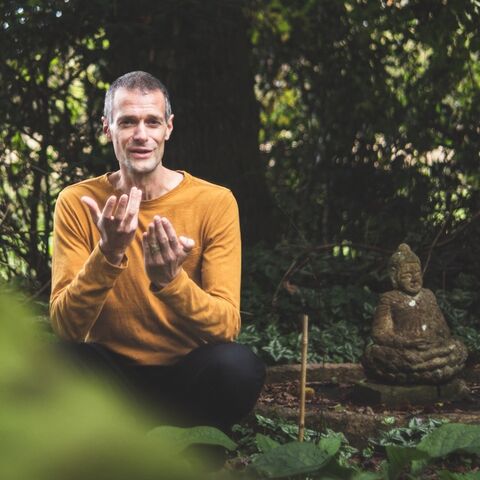
Today I have an old friend with me.
We're going to talk today about lucid dreaming and my friend is a psychologist,
A practicing professional psychologist in the United States and I want to ask,
Just jump right in here right away,
How did you get into lucid dreaming and how does it relate to your work?
And you can tell people a little bit about yourself and your work and then also give a definition of lucid dreaming.
Yeah,
So lucid dreaming,
A lot of people that don't do it or haven't heard of it,
It can be kind of difficult to describe but over the years,
So I got into dreaming,
Remembering my dreams or writing down recording dreams in my like late teens,
Early 20s and I'm 45 now so it's been like years of recording dreams and all this stuff trying to get lucid and what does it really mean is the best way I could describe it is if you reference your state of consciousness now,
Like your level of awareness of where you are,
Who you are and your conscious faculties,
Let's say,
Like your ability to decide and choose what to do and what to say and when you're going to do it,
Just conscious action in your waking life,
You can take that level of conscious action or those conscious faculties into a dream state where you just sort of become aware.
There's different degrees of awareness but for full lucidity,
When you're in a dream state and you're fully aware that it's a dream and you're fully aware of yourself as you know it in waking life,
That's like kind of the epitome of lucid dreaming and I think that's what everybody kind of aims for when they want a lucid dream is how do I become so clear and so conscious and so aware that it's basically like I'm awake inside of a dream and then there's all sorts of things that go on from there.
People choose to do all sorts of things.
It's kind of like a land of imagination and so I kind of got into it because the idea became that it was a fascinating idea.
What got me into it and what I've kind of sort of been poking around online and talking to other people and sort of what gets other people into it is for me particularly,
There was a lot of creative ideas happening in a dream state that I couldn't remember when I woke up.
I could remember that I had a creative idea.
I could remember something creative happening with music or with visual art but I couldn't really remember the details and I thought well if I could get lucid and just sort of evoke it,
I could take it back with me and that's what inspired me to start doing it and then when I started doing it,
I kind of discovered it has a — some people are lucky and they can just decide that they're going to be conscious in a dream and they can just do it.
I've got a couple friends like that.
They go to bed at night and they decide they want to become lucid and they wake up inside of a dream and they do it.
I had to work at it.
I had to do a lot of practices around going to bed at the right time like a certain time to get enough sleep and then kind of wake up early in the morning around four,
Five in the morning and then meditate my way back into it and that took practice.
There's all sorts of things that people take like supplements like Huperzine A or Galantamine,
Things like that.
I think another one is like B12 or B6,
I think.
There's all these things people can do to kind of boost the chemistry to be awake in a dream or quote-unquote awake.
So there's like a practice of this and yeah,
It's essentially you do what you will with it but to get there,
You may have to work harder or less hard to achieve that state and then once you achieve it,
You can practice becoming more and more and more conscious in the dream state.
Then that gets into sort of like Tibetan dream yoga where they're like,
I've read,
I don't know anybody that does this,
But I've read that they practice becoming fully conscious both day and night through waking and dream states.
It's a continued consciousness.
We've talked about that before and that it's supposedly possible to enter the dream state completely conscious.
Let's rewind here and go back to the beginning.
The only thing I've really done on dreams before was someone asked a question,
What are thoughts?
Are thoughts like dreams?
So I'll link that to the show notes.
The basic fundamental question is besides how this plays into reality in general about like dream time and waking life and things like this and dreamless sleep is why bother doing this?
You mentioned creativity,
But what are some of the other reasons you and other people like to do lucid dreaming?
So yeah,
It can range like you said,
Everything from creativity to just having fun.
Some people just like having fun in the dream world.
There can be creativity.
It's also for spiritual growth.
I did get pretty interested in like sort of a more Jungian,
Carl Jung kind of Jungian bend on things for a while where it can also be seen as sort of an interplay,
Like a conscious interplay with your unconscious mind,
With all of the world of unconsciousness.
And you can,
According to him,
Kind of theoretically interact with archetypes or the relationships that your unconscious mind has to these archetypes,
And you can explore those relationships for personal growth.
So that's one way to take it.
Another interesting way to take it is it is possible to go from a lucid dream into the astral plane,
And then the astral plane becomes its own kind of exploration,
You could say.
Generally speaking,
The dream world and the astral plane are thought of as two different states of consciousness or two different dimensions,
However you want to word it.
And you can enter astral plane from lucid dreaming.
So some people do that.
And then on the astral plane,
They have other aspirations that we could get into,
Because that's part of the experience that I had with some clients in my practice.
So there's that.
Yeah,
It's almost kind of limitless as to what you can do in a dream world or what you do with it and what it means to you.
But I would say those are the most common things,
Spiritual,
Personal growth,
Or,
You know,
Creativity.
Cool.
Let's start with some kind of the basics too.
Like you already mentioned some techniques and things for doing this I've heard of.
Now,
You keep a dream journal,
And you're talking about the technique of kind of waking up in the middle of the night and meditating back.
There's a technique called M.
I.
L.
D.
,
I think.
Yeah.
Might as well just go through the techniques,
And then you can go into the technology.
And the reason I want to ask about the technology,
Because I have a meditation Q&A coming up about augmented meditation methods.
And so there could be some research for that.
So there's that.
And then once we just kind of go through the list there,
And you can,
If you have anything worth mentioning about pros and cons in your experience to these.
I also heard about transcranial stimulation.
Anyway,
You know way more about this than I do.
Then I want to go into some of the how to work with this in an archetypal level in a Jungian sense.
But let's do the techniques.
Yeah.
Techniques-wise,
There's a plethora of them.
If you kind of Google or YouTube,
You know,
Lucid dream types,
Tons of them.
The more common ones I would say are like what you mentioned M.
I.
L.
D.
,
Which is like a mnemonic induction.
There's W.
I.
L.
D.
,
Which is what I kind of practice,
Which is like wake-induced or wake-initiated lucid dreaming.
There is this,
I guess you could say chemical,
Like using uprazine A or galantamine or some combination of using like nicotine and galantamine and alpha-GPC.
And there's all these types of combinations you can try in cocktails.
Mnemonic induction,
That's kind of where you basically develop what's called your perspective memory.
So you develop your ability to remember something,
To remember a future event.
So like a lot of people think of memory as the past,
Like I'm remembering what happened or a set of circumstances,
Or I'm recalling something that I already have experienced.
Perspective memory is more of a mindfulness practice of when something happens or when I notice something,
I'm going to remember to do something.
And that obviously fits into the lucid dreaming realm where when you practice building up your memory enough,
You can say keep a dream journal,
So you can increase your recall of dreams.
And then after enough dreams,
You find kind of like common themes.
So a common theme in my dream,
For example,
Is I'm always talking to people.
I'm always engaged with people.
They're always around.
So that would be what would be called a dream symbol,
For example,
Or like a recurring dream.
And then I might use that for mild,
For mnemonic,
Where I might go,
All right,
Every day in my daily life,
When I find myself talking to someone or when I'm in a situation where I'm talking to someone,
I'll ask myself if I'm dreaming.
I'll heighten my conscious awareness around whether this is reality and I'm awake or whether I'm dreaming.
And you can make a habit of that every day.
And you build up your memory around that so much that in a dream state,
You kind of maybe like automatically just pose that level of awareness.
It just becomes automatic.
That technique also includes this sort of wake back to bed technique where you sleep maybe four or five hours,
You wake up.
And then as you're going back to sleep,
You recite in your mind,
The next time I'm talking to someone or with people,
I'll know that I'll be dreaming.
And you kind of do this sort of mantra as you fall asleep.
Well,
After having built up your memory every day around talking to people and heightening your consciousness about wake versus dream,
The idea is that going to sleep with that mantra early in the morning and meditating on it will be enough to consciously kind of cross over that awareness into a dream state where you're in front of somebody,
Me for example,
I'm in front of some people and it's so fresh in my mind and the memory has been so built up that it triggers this awareness that I'm dreaming.
So that's like a very rough like overview of the mild technique.
And you mentioned reality testing in there too,
Right?
And then also,
This is kind of like a trigger or a marker as well.
And then you take it to the next level with meditation and having built that muscle.
Okay.
Continue.
Yeah.
The reality testing thing.
Yeah.
There's a lot of ways to reality test.
Like in my dreams,
For example,
My hands are always kind of distorted.
Most people's are,
Their fingers are,
They have more than five fingers or they're kind of crooked or whatever.
So checking your hands in daily life a few times is a good reality test.
Or some people will try to push their finger through their hand or they'll plug their nose and try to breathe or all these things that,
Or look at like something written,
Like fine print or a stop sign or something,
And then kind of look back,
Light switch,
These types of things that,
You know,
You can do to test whether you're dreaming or not.
I have found that the actual reality test itself doesn't really trigger my awareness of whether I'm dreaming or not.
What really does it is just the subtle shift in awareness,
This subtle kind of posing the question is enough to kind of kick up an awareness of like this sort of,
Wait a minute moment,
This light bulb goes off,
Like,
Wait,
I'm in a dream.
I have used the reality testing things like my hands and stuff to sort of reassure myself that I'm still dreaming.
I've been in vivid enough dreams before where I was going to like,
Let's say fly out of a window,
But it was such a vivid dream.
I took pause a couple of times and had to recheck my reality on this because I didn't want to jump out of the window.
It was kind of this sort of vivid quality to the dream.
So I'll use reality checking like that to kind of keep myself aware that I'm dreaming,
But the actual event of shifting into a conscious awareness is a very subtle moment,
Just an awareness shift,
Kind of,
So that's a reality testing thing.
Yeah,
Definitely start flying before you go out the window.
So if you fly in the room.
Yeah,
You just float in the room.
So this is,
Before we get into the technological stuff,
I want to backtrack here and talk about recall.
And then for me,
A lot of times,
I've had fully controllable lucid dreams,
It seems that way,
Right?
Not that many,
But I do have even more of a,
Hey,
I'm dreaming.
Oh,
I'm in a dream now.
But what happens now,
Or what happens,
I don't know when exactly,
It's when I realize that I wake up.
Oh,
I'm dreaming,
This isn't real,
I wake up.
So that's what's happened more now.
And I find I dream less with a meditation practice and need less sleep as well.
The other thing is,
I,
Some days,
I'll just I know that I'm dreaming,
Of course,
But I just cannot remember it.
I think one of the things that I would be helpful is to train my mind when I wake up is not to discard it as just a dream.
Yeah,
To actually have value of it.
And of course,
Journaling it.
And so I've gotten to this habit now of just writing it off.
Oh,
That's just kind of a nonsense dream or really,
You know,
Or actually,
I'll remember it.
And then I'll even tell my fiance about it.
But then if I don't write it down,
It's just,
It's,
It's this like,
It's gone.
Yeah,
Exactly.
So what about it's an interesting neurochemistry around dreaming that I don't think people fully understand.
The one thing I think that there is a pretty good solid consensus on is dream recall,
And awareness of the dreaming state has a lot to do or has or at least there's a major player in it,
Which is called acetylcholine.
And acetylcholine has been a neurochemical has been linked to it's a catecholamine that's been linked to,
Like short term memory for specific.
So like this,
This,
You can't get anymore.
I think like last week,
I think galantamine was taken off of the over the counter market,
And it was made prescription.
So you used to be able to get this on Amazon,
And you could get four milligrams or eight milligrams.
They just found some variants in like the dosing the,
The amount you're getting,
Some researchers kind of bought some off of Amazon and found that the dosing was off,
And wasn't accurate marketing.
So they just pulled the plug on it.
Now it's prescription.
But for many years,
You could get this over the counter.
And it's an it's what's called an acetylcholinesterase inhibitor.
So it blocks the enzyme that breaks down acetylcholine.
So cuprazine A does the same thing.
And that's still over the counter.
And they operate,
They act as slightly different,
But generally the same,
The same effect.
And it helps not just sort of memory recall or memory recall in general.
So galantamine is like an Alzheimer's drug,
Basically,
That's prescribed in doses much higher than you'd use for lucid dreaming.
But it's a memory drug,
Per se,
I guess.
And what's happening when you take something like that is you're remembering,
You're not going unconscious,
For whatever reason,
You're just remembering the process of falling asleep,
Which is interesting,
Because in meditative practices,
Particularly like Eastern practices,
Falling asleep,
Consciously,
You're keeping an awareness through the sleep cycle and into the next day is,
It's a part of some practices.
And you'd probably know more about that than I would that part of things.
But I know that it is.
And so one thing I can say about recall,
Generally,
If you don't have like a drug to do it for you,
Meditation,
Mindfulness meditation will increase memory function in general.
But then also,
When you do something in your daily life,
Over and over again,
Your brain starts to kind of myelinate all the connections to doing that thing.
And your brain starts to get the message that that's a priority,
That it's something important and to dedicate resources to doing,
Whether it's practicing an instrument or whatever it is that you're doing mathematics problems,
Or memory,
Like perspective memory,
The more you do it,
The more over and over your brain goes,
Okay,
This must be important,
Dedicate more resources to doing it,
Myelinate more pathways to doing it.
And so like,
Say,
Keeping a dream journal,
If you're waking up every day,
And you're thinking about your dream,
And you're thinking about what happened,
And you're writing it down every detail you can remember over and over every morning,
That becomes really important to your brain.
And it will start to make adaptations to start remembering more and more of your dreams.
And I've gotten to the point now where I can remember maybe like five to seven different dreams throughout the night and write them all down or whatever,
Because I just made it important to my brain do that.
So with recall,
Dream journals pretty,
A dream journal itself won't make you lucid or increase your awareness in the dream state,
But it will enrich your memory of those experiences,
Which is essential in eventually becoming lucid,
Because you have to remember the dreams to be lucid to begin with.
So recall is important in that step,
At least.
So habit patterns,
Right?
And what's important in life,
And I think the Buddha put it this way,
Something like,
You know,
Whatever one frequently thinks and ponders upon becomes the inclination of the mind.
Yes,
Right.
And,
You know,
So this notion of what you're talking about in meditation practices and some traditions,
The practice I've been told about,
And it's a really fascinating one,
Very simple,
Is paying attention,
See if you can be conscious of the last breath before you go into dream state.
Remember you told me that,
Yeah.
Yes,
And I've never been able to do it,
But I have been able to,
Upon awakening,
Know if it's an in or an out breath.
So that's a little bit easier,
Especially for me.
And that's closer to what the technique of WILD,
Which is awake initiated,
Where you're paying such conscious attention to those final moments before falling asleep that some people build up an ability to retain their awareness all the way through that sleep phase,
Sleep paralysis,
And into the dream state or REM cycle.
Awesome.
And I think the importance is really huge here,
Because anything we really value and find important in life and that we're going to go out of our way to put energy into and have a dedication and a training and a practice,
Of course,
Is going to have an effect on this.
Now,
The other thing is,
You said a certain amount of dreams you can remember a night.
I could remember times when I had some very interesting dreams.
Well,
Everybody says that though,
Right?
Where do you draw the line sometimes?
I don't even know how the cycles traditionally work.
Will there be a set amount of time where you go into dreamless sleep before another dream starts,
Or do you just draw the line where it changes so much and it's seemingly completely,
It just transitioned maybe very quickly,
And then you consider that a new dream?
How do you draw the line and delineate here between,
Okay,
Start of one dream,
End of one dream,
Then start of another dream,
End of another dream?
Is it always cut and dry or is it just subjective?
It's very hard to say.
Usually what dreams,
Dreams happen in typically sequences.
When you have,
And I may go on a little bit of a ramble here,
So stop me if it gets a little too big.
I'm talking about memory.
When your memory is compromised for whatever reason,
Whether it's from age-related or whether too much time has passed or you experienced a really heavy trauma,
When memory is compromised in some way,
It becomes choppy or episodic or you remember a moment or you remember 10 minutes,
Things like that.
There's a whole magnitude of how that can manifest.
Generally speaking,
Memory gets less continuous as it gets impaired to the point where you just don't remember it at all.
With dreaming stuff and dreaming sequences,
Because there's some form of,
And I don't know why this is,
There's some form of memory impairment around that state generally.
Like we were talking about,
You can build it up with dream journals and you can remember longer sequences,
But typically what happens in my experience anyway is I'll remember one continuous sequence.
I remember each moment after the next,
After the next,
After the next.
I was walking here,
I was doing this,
Then I turned and talked to this person,
Then we went over here,
Then I found,
Then we walked up into a building,
And then it sort of ends.
There's no more memory after that last moment.
Then I'm in a completely different scene,
Completely different people,
Or a completely different setup or circumstance.
There's these chunks of memory,
And I'll wake up having remembered a few of those,
Several maybe,
Of these separate sort of,
You can think of them as movie scenes,
These movie sequences,
Where it's five or six different storyboards,
And each one seems kind of unrelated to the next.
Even though in the moment,
If you were to let's say go back and relive the whole dreaming cycle,
A whole REM cycle,
You may find links between them if you could remember it,
Or,
And there's another interesting thing I want to say about that,
But you might find links,
Or what also kind of tends to be the case is that you,
I was listening to a sleep researcher on a podcast talk about how he believes,
I think whatever research he's doing,
That we have memory of every single moment of every single dream,
But you just don't remember that much of it because of the changes in the neurochemistry.
Why that is,
Nobody really knows why that would be suppressed or why it would be kind of like impaired or whatever,
But and maybe somebody does,
But I don't.
And so like there's just,
You kind of remember these chunks,
And you can get better at remembering those chunks.
And then over time,
I guess according to some of these like sort of people that are doing like,
You know,
Really deeply into Eastern meditation,
Tibetan dream yoga,
They can carry consciousness through the whole cycle,
Through the whole sleep cycle.
And it's incredible really to think about,
But they dedicate so much of their life to doing this that they can just sort of remember the whole sequence all the way up into waking life again.
It's remarkable to me,
But it's really,
It's an interesting question you pose about like,
How do you know the difference between each sequence or when one starts and the next stops?
It's really about how episodic your memory is and where you can find the links or commonalities between the scenes happening.
The other thing that kind of,
I think,
Could confuse people or maybe kind of sort of to cast another angle on that question of like,
Where does the sequence sort of begin and end?
Dream environments are very unstable.
So that's something that you can use to your advantage in lucid dreaming is if I'm sitting,
If this is a dream,
And we're talking on this podcast,
And this is kind of a dream world,
I may just look behind me and it's a desert,
Or I'll turn around,
I'll look behind me,
It's kind of a wall against my room,
But then I'll look back again and you're completely somebody else.
There's not even a computer in front of me.
It's such an unstable environment that sometimes I wonder if these changes in sequences are just changes in the environment as you change your perspective on things.
That's something I've actually learned really interestingly that the main difference I've experienced with the dream world and the astroplane is the astroplane is kind of like a double of our reality,
And it doesn't change much.
It's a pretty stable environment.
I've been in the astroplane pretty clearly where I was in my bedroom,
And I was walking up and down the hallway and checking out my bedroom and going back and forth and nothing was changing.
Nothing was evolving.
My hands were very,
They looked like my waking hands.
It was a very stable,
Almost hyper real environment.
There were some minor differences,
Like maybe my window was shifted over a little bit than where it used to be or something where it is in waking life,
But it was a pretty accurate double and it was stable.
I think in a dream world,
It's very unstable.
You can spawn people,
Spawn objects,
You can change scenes quickly.
That is kind of,
I think,
Responsible for maybe why it's difficult to tell or why you have so many different narratives.
I wake up with like seven different dreams.
Are they different dreams?
I'm not sure.
They're just seven different sequences,
However long I remember them,
That kind of seem unrelated to each other.
Good,
Comprehensive dive into that.
Now,
Before we get into the high strangeness,
A few more things.
Now,
You haven't mentioned any of the technical,
I keep backtracking,
Looping back for,
I guess I'm too much of a completionist here.
Isn't there some kind of device you put on your eyes and it blinks,
But since actually that's too much of a transition.
The NovaDreamer.
Is that what it's called?
Yeah,
I think so,
Yeah.
It is.
Do you use any of these devices or anything?
I try.
There was something called a REMDreamer and then there was like the NovaDreamer that was made by Stephen Labarge at the Lucidity Institute.
He came up with this thing.
I supposedly was supposed to come up with a second one or a third or a second one,
But it hasn't.
I don't know what happened to it.
There is an idea that you can wear a mask.
This kind of ties into the mild technique.
There's a motion sensor in the mask.
When it detects your eyes going back and forth in a REM cycle,
It sets the motion sensor off and it flashes this red light.
You can,
Of course,
Set the duration and the intensity or whatever,
The brightness.
You could pair it with sound,
I think.
It flashes behind your eyelids and that creates a red or whatever light flashing in your dream.
What you would have to do in your waking life,
Theoretically,
Is you'd have to condition your perspective memory.
Ask yourself if you're dreaming when you see flashing lights,
Stoplights,
Brake lights,
Room lights,
Strobe lights,
Whatever it is.
When there's lights flashing,
Signs,
It triggers a reality test,
A shift in your awareness of that conscious question,
Am I dreaming?
You may be remarkably surprised how little you think about that when you're going through your daily life on automatic pilot.
When you start becoming aware of that question,
When those flashing lights occur,
You put this mask on,
You start dreaming,
And you see these flashing lights in your dream,
The idea is that it triggers that awareness.
I've tried those and it would be no different than,
Let's say,
If I always have people in my dream and I'm testing my reality and people are always around.
It's a similar concept.
I think it's a way of creating a dream sign for you to test your reality.
Good point.
It depends on how much you want to train that sign,
I guess,
Too.
I've also heard some practitioners,
Advanced meditators,
That are aware of the dreamless state too.
That blows my mind,
To be continuously aware of this dreamless state,
And then transitioning into a dream state and then out of a dream state.
Pretty wild.
I remember something about the Buddha.
I heard some yoga practitioner,
It may have even been Sadhguru,
Who was talking about the Buddha making mention of this,
Of something about encountering entities on the astral plane through his awareness in meditation.
I don't know how deeply he's written about it,
But it's something he mentioned.
Well,
There's all kinds of stories in the suttas and the Theravada tradition about devas,
And hell realms,
And even Brahma realms.
There's 31 different realms in the Buddhist cosmology,
And even Mara,
His archenemy that he had to defeat through his final enlightenment.
Of course,
A lot of people don't go where that's a literal thing of a different realm.
A lot of people take it as psychological,
But I'm open to all different types of interpretations of what that is.
Yeah.
Before we get into the astral stuff more deeply here,
I wanted to see about the memory aspect.
In general,
I could ask,
Well,
What does the memory in the dream state say about memory in general?
This is another huge podcast in and of itself,
Probably a huge series,
Because memory to me,
It seems pretty elusive.
We don't know.
I don't think there's any definitive evidence of what it is,
But in your opinion,
Where is it even stored?
I've heard things like it's in the body.
There's cellular memory.
I've heard some people say the brain.
Some people say it's actually nonlocal.
You throw in quantum.
It just gets really weird.
You have people that can,
These savants,
You could say three years ago,
Two months,
A week,
And three days at five o'clock,
What were you doing?
They just instant recall of exactly down to the detail.
It's worth saying in this context.
There's Eastern practices.
I'm sure you would know that people remember their past lives.
They regress all the way through memory to past life.
Well,
Absolutely.
That's one of the techniques I hear too,
Is you just start going back as far as you can remember in this life,
And then their memory is so good,
They can trace themselves back into the womb to the moment of conception.
Then it's the moment right before that would then start to the death moment of the past life,
And they can trace it all the way back that life and just keep going back and back and back,
Tracing it back and back.
That's mind blowing.
Yeah.
Yeah,
Isn't it?
I mean,
Super advanced practitioners who have,
A lot of them have mastery of all eight jhanas and lots of insight knowledge and all this stuff.
I've heard this,
And of course,
Monastics that are at this level,
They can't share their attainments.
Them talking about this would probably break monastic rules because they're not allowed to share attainments,
But some super advanced lay practitioners have mentioned things like this.
What's worth saying about memory in this context of dreaming?
Yeah.
Like you said,
It's really,
Really elusive,
I think is a good word for it.
It's really elusive.
We have maybe a primitive understanding of the fact that memory has something to do with the hippocampal region and the brain,
You know,
The midbrain,
The limbic system or limbic area region now,
And how the hippocampus plays a role in the memory.
I used to be partners with a neuroscientist,
Neuropsychologist,
And I was doing neurofeedback at the time with him.
And one thing I learned from him was that when someone suffers from,
Let's say,
Like a depressive state,
Or if they've been suffering from like a chronic post-traumatic stress,
Their hippocampus starts to shrink from atrophy,
Like neuronal atrophy.
And it actually grows in size as they get less depressed or less post-traumatic symptoms.
So something to do with the hippocampus has to do with memory.
And there's another author that I really enjoy reading a lot.
I like his work a lot,
Dan Siegel.
He wrote a book.
One of his books that he wrote that's like my favorite is called The Neurobiology of We.
And he talks a lot about the development of the nervous system and memory.
And one thing that he mentions in the book is that when someone is in a traumatic state or a high stress response,
Which might lead to like a post-traumatic state,
They don't know where,
Like neuroscience,
Quote-unquote,
Air quotes,
They don't know where the memory is stored because the amygdalae kind of jump,
They kind of bypass the hippocampus and go right into like a stress response.
So the person's not really coding the moment-to-moment memory in a really terrifying situation.
But once they get,
Let's say,
Treatment for post-trauma,
All of a sudden those memories that were like suppressed or repressed come back again.
And that always I found fascinating to me was that the memory gets stored still,
Kind of like the sleep research about dreams.
We remember every single dream I've ever had,
Every moment.
It's just not,
Where is it stored?
Who knows?
So yeah,
Memory is a really tricky topic,
And so is consciousness in general,
Like what that is.
And the two are probably linked greatly,
Because you kind of remember what you're conscious of.
And even in like high-stress states,
When you're really stressed out,
Just even like neurologically,
Things start to shift in a high-stress state,
And consciousness becomes limited,
Conscious awareness and memory becomes limited,
But it can be recovered.
And that's the really like interesting part to me.
And kind of going into what you were talking about with past-life memory,
All the memory,
I think all the moments of waking life can probably,
I would assume,
Be remembered.
And our consciousness is just a sliver of this.
Or maybe if I would say not conscious,
Maybe our mind is a certain degree of consciousness,
What we're aware of,
Where our attentional centers are,
What we're processing.
But like everything on the peripheral is allegedly,
I guess,
Still coded.
It's still taken in.
I don't know if that's the right way to put it,
But there's something that's still absorbed as part of your experience that you're not even conscious or aware of that can be recovered.
So it's interesting.
It is really fascinating.
In these books like The Body Keeps the Score,
I had this one experience where I went into,
I had some degree of meditation,
Maybe a couple of years.
And I went into this metaphysical place and I was like,
Oh yeah,
I'm going to show off.
And I got this big spiritual ego going.
And this healer comes right up to me and he says,
Oh,
Hey,
You have resentment towards your father in your shoulder.
And I'm just like,
Uh,
Thank you?
And so I knew there was something to it by the tone of my voice and how I responded.
But it turned out in my yoga practice,
I couldn't get my shoulder or my arm all the way up,
You know,
All the way.
And so I took a look at this in meditation and he was absolutely right.
And there was,
There was a lot of weeping.
And then after that,
It's like something released in my shoulder,
Loosened up and I was able to then go up,
You know,
Raise it all the way up.
And I hear these things in yoga.
People have these releases,
Certain things in the body,
You know,
Peter Levine's work and things like this.
Then we have this thing called the Kashuk records where people can go into this and get a lot of memories that they really wouldn't be able to say otherwise.
And certain materials,
They say like crystals,
Some people say they store and transmit memory and they've been able to store,
You know,
Just think of a computer device or magnetism.
So yeah,
I'm really above my pay grade on all that.
So it's,
It's of course a fascinating subject.
And then the last thing around this little thread here is it really depends on how we define consciousness and awareness and mind.
These are all important things to define because I know a lot of people there's,
They're similar,
But a lot of people have different definitions of what these things are,
But yeah.
Sure.
Oh yeah.
And I have a friend,
Good friend,
Roger,
He does Traeger work and he does,
It's,
It's body work and he has many experiences of,
Of intuiting memory from the body when he works with people and he gets flashes of this type of awareness or consciousness about their experiences in the body.
And then one last thing about this,
I read Ida Rolfe with the Rolfing technique or Rolfing method.
Yes.
And Stanislav Grav worked with her at one point to some capacity and they talked about a concept called armoring,
I think is what they called it,
Which is the body holding trauma memory or just memories in general,
I guess in,
In there.
So it's really a broad,
It's a whole like,
Kind of like you said,
A whole nother podcast on like how the body holds memory and holds experiences and how it's like mind and body is no separation kind of idea.
So does,
To tie this back to dreaming,
Does this,
Uh,
The way memory works in dreaming and waking life,
Does it,
Does either shed light on any of the other,
I know you shed,
Kind of talked about how the memory works,
Tends to work in the dream world.
Does that say anything about,
Uh,
Memory in general?
I mean,
It's just,
It's so,
I don't know.
It's so mysterious.
Uh,
I don't really know.
I know that,
Like,
I don't know why waking life would be so much more like our,
Our brains or the way that our central nervous system functions.
I don't know why it'd be so much more amenable to waking life in terms of like building more,
Placing more importance on that memory or,
Or,
Or experience.
And in dream life,
It isn't,
Uh,
Sometimes people will say that I don't have dreams.
I've heard that a lot from people.
I don't have dreams,
But everybody does.
It's just that they're not remembering them.
And I don't know why the body wouldn't prioritize that.
I hear both of that too.
And you know,
There,
I think there's some theories like you,
Uh,
It's like a discharge of,
I don't know,
Distortion during the day or something where the brain gets a break or a different mode or something where it gets a chance to heal or process information,
These old classical ideas and going back to the volition about having control in a dream.
This is another fascinating thing because some people,
They say,
Well,
We don't have free will,
You know,
And,
Uh,
You know,
At times it seems like I have a sense of agency and sometimes it doesn't,
You know,
It seems like some people have a greater sense of agency than others.
So this is another fascinating topic too.
The one thing that do seem to have some say in is what I pay attention to and how I pay attention to it,
But not so much in the dream world,
Unless it's a,
Uh,
A training towards this,
You know?
Yeah.
It's a,
That's a,
Almost could be considered under the umbrella of mindfulness where like the more mindful you are of your sensory experience and your moment to moment experience and how much of your daily moment to moment life you can take in and how much awareness you can build up has a lot to do with that.
I would imagine,
You know,
Cause we're talking about dreaming and lucid dreaming,
Ultimately whatever technique you use,
However you approach it,
The bottom line is you're maintaining an awareness.
You're maintaining a level of awareness from sleeping to dreaming.
And it's whatever,
Whatever you might try to do to increase that awareness.
I think at the end of it all,
It's just a mindfulness technique.
It's just,
Whether you're trying to stay conscious or aware while you're falling asleep,
Whether you're building up your memory,
What is perspective memory really?
It's really just a mindfulness around your moment to moment life and monitoring when something happens,
You're going to be triggered to an awareness.
It's really about,
So a lot of meditators,
I both in person,
I've met people that meditate a lot,
You being one of them and other people.
It's not uncommon that people that practice meditation and mindfulness have,
And even through research,
You know,
You can look it up,
Have kind of like this sort of like penchant for lucid dreaming,
Or they have kind of this ability to sort of cross into it easier than someone,
You know,
That doesn't meditate or doesn't practice that level of awareness.
So yeah.
Definitely say it is about awareness.
The more aware we are,
The more likely it is to just be aware of anything,
No matter what state we're in,
Right?
I mean,
We can be in really difficult states and it just seems like there is a little bit more choice of what to pay attention to and how to pay attention to it.
Yeah.
In general,
Because it's just like anything else.
It's a training to be mindful,
To know what's happening in the moment as it's happening.
And then the next level is maybe without a lot of judgment or storytelling and commenting on it,
Just this bare awareness.
Yep.
Yep.
All right.
Well,
You ready to jump into these kind of the high strangeness here?
Yeah.
Yeah.
The high strangeness.
Just mention this now.
Hopefully this doesn't color our flavor,
What we're about to talk about too much.
But one of the ways my fiancee sees the astral plane is it's,
She calls it the distortion plane.
And yeah.
And because it's,
I think it's highly linked to,
I don't know,
Tell me about your experience to emotion,
Emotionality.
So I don't know.
Tell me about your experience with astral work.
I don't know if I want to talk.
I don't know if I feel too comfortable sharing my own experiences around this,
But I will say at one time,
I just almost spontaneous things were happening around this.
And if I was there without consciously choosing to be there,
Like astral travel or these types of things,
It was,
I remember it being really vivid and maybe,
And then side note here talks about entering into the astral world and then using that as a springboard to go through that to like the 4D and 5D or the artificial fourth dimension,
Artificial fifth dimension.
So it's kind of like a barrier.
And you were saying it's like a copy,
But it's slightly off.
That's what I mean.
It's kind of slightly distorted.
But I was seeing like this really rainbow color or phosphorescent neon,
Like really bizarre.
It was almost like a hallucination or something,
But I knew it was cause I could sit there and I could watch it.
And it was like a plant that was,
Plants like a forest floor,
But they were constantly morphing and changing and they had these iridescent bright colors.
And I,
Yeah,
You know,
So this was of course in a meditative state with my eyes open and can end at any time,
But now I don't know where that is.
The other thing about the astral is what I find,
Especially in kind of the new age,
It seems to be set up where,
Okay,
In spirituality,
You've arrived.
If you can get to the astral plane,
You know,
That's it.
You see guides and you see,
You know,
Kind of spirits.
A lot of the magicians supposedly use this realm for all kinds of things,
Like whether you're a a ritual magician or things like that.
And so I don't know how organic this realm is.
And then it changes over time and things like this,
But I,
This,
These,
And then there's an astral bliss where people get in there and they get all blissed out.
So there's a lot of spiritual programs,
I would say,
And a lot of spiritual control and that some people just stop there and they think that's it.
And they can't go any further than the astral plane.
But I want to jump into this because I've,
I've,
I've kind of put that off and I don't go there a lot because the other times that I did,
It seems like you have to talk about like psychic protection,
Because if you don't know what you're doing with this,
I remember that you can get opened up towards attacks and things like this,
Because if people do this consciously,
They,
They,
They take this layer called the astral body,
Right,
From what I understand.
And they,
They,
They have that separate from the physical body.
And during that time,
If you don't know what you're doing or protected,
Then something can come in and,
Um,
And either take over the body or,
Or attack it or influence it.
And there's all kinds of,
Just like anything else though,
There's so many different,
Uh,
Chances for shenanigans.
Now I will say though,
That there,
There is a lot of potential for spiritual growth and mastery in this.
It's just,
I would say,
I would just caution,
Advise people to really know what they're doing around this and not just take it lightly,
Like just doing haphazard experiments around it,
You know,
Definitely take it serious.
So what,
What,
What will you say about this and particularly,
Um,
About any firsthand experiences of crossing over from the dream world into astral and maybe even vice versa.
And the,
Oh,
The other thing,
Huh,
There's plenty here,
But the talking about,
Um,
Uh,
What is it?
We've talked about this before,
Sleep paralysis,
Or,
You know,
Um,
I know at one time I was at a point where I could actually enter the dream world,
Wake up,
Know that I was in my bed and very relaxed and I could remember the dream,
But then I knew I was awake and then I chose to go back into the dream and continue the same dream where I left off.
So that was probably about as lucid as I got.
Yeah.
Okay.
That,
I think that's enough for now,
You know?
Yeah.
That's,
Um,
So,
Uh,
Let me,
I can just share my knowledge or,
Oh,
Like,
Yeah,
My,
I guess my knowledge so far on what I understand the astral plane to be,
How to get there and then the implications of it.
So there's,
I know of two ways to get to the astral plane.
One is,
Um,
When you consciously fall asleep,
You go through paralysis.
You go through the process of your body shutting off motor control,
Can be extremely unpleasant.
Um,
Oftentimes it's,
I've experienced sleep paralysis several times,
More than several times,
And it's really terrifying at first.
Uh,
There's a lot,
A couple of theories as to why,
But I,
It's just really,
Really terrifying for many people.
But if you do it,
If you can do it,
Um,
You are able to separate your astral body from your physical body.
That's sort of the,
And it can happen in different ways.
You can float up.
I floated up out of my body to the ceiling fan and then kind of found myself standing next to my bed and saw my body there and everything.
Uh,
You can roll out,
You can like,
There's something,
I guess,
Called the rope technique.
I've never done this before,
But you can kind of pull yourself out.
Uh,
Whatever it is,
Um,
You can find yourself in a state of sleep paralysis and then from there lift out.
The other way that I've heard you can do it,
Which is probably a more attractive way for me because I was never really good at getting to sleep paralysis and,
Um,
It would,
It would happen kind of spontaneously.
It wasn't like I didn't do it,
Uh,
Intentionally.
The other way is to go through a lucid dream,
Which I mentioned earlier on the podcast.
So you can find yourself in a lucid dream.
And if you have enough wherewithal and conscious awareness that you realize dreaming and you can start to make decisions in that world or that dimension or whatever place,
You can say to yourself,
I'm going to find,
Or I'm going to be by my physical body.
So let's say you might be in a dream world and like,
Okay,
There's a doorway right there.
So when I walk through that door,
I'll be in my bedroom next to my physical body.
Or sometimes people can just sort of in the dream state,
Just kind of meditate on that a little bit and feel their physical body and feel where it might be,
Or kind of feel where that is or how,
Where that might,
What it might feel like.
And they get pulled back into the bedroom next to their physical body,
Or you could spawn it by turning around,
However you want to do,
You want to get it.
You want to get,
Think about your physical body and get there through some means,
A portal,
A doorway,
Remembering it.
And when you do,
You will automatically cross over into the astral plane.
And those are the only two ways I really know how.
And from there,
What the implications are at that point was like,
Why would someone want to go into the astral plane versus dream world?
My understanding of it is that the astral plane is,
It's,
It's a collective place.
So a dream is a personal,
Part of your personal unconscious.
And you can maybe think of it as like a world of your own imagination.
But the astral plane is a plane or it's a dimension that's shared by humanity.
And I've had some clients who are able to go there,
Two of them in particular,
Willingly,
Intentionally go there very freely,
You know,
Almost daily.
And they have reported,
Like what you were saying,
Like contact with spirit entities,
Deceased people,
Spirit guides.
And they,
One particular client was interacting with like a past life ex-husband.
And what really made that story unique and interesting is that she mentioned that this entity that,
That introduced himself as her past life ex-husband,
Told her that she could verify what she was experiencing by going to the library when she woke up,
And go into like the microfilm,
I guess,
Where you can go back into like decades ago and look up in,
I don't know what year it was,
Sometime in the fifties,
And he directed her to what to look up.
And she saw like an obituary and an article of the crash,
I guess they were in a car accident and both died.
And the picture of him was in this article.
So it was like this kind of like empirical validation,
I guess you could say of who,
Whom he was.
So there's that kind of,
That really impressed me.
It's kind of like got my attention because that's as close to proof as you can get.
I mean,
Assuming she's telling the truth,
Right?
That's as close as you can get to some sort of like validation that this is a real thing or whatever.
So spirit guides,
Entities of deceased people,
Other entities that are native to the astral plane,
It's a different,
Potentially more spiritual path.
I'm not going to say that there's more spiritual,
People have plenty of spiritual experiences from the dream world.
But from what I understand,
The astral plane is part of a spiritual evolution or something where this awareness of this other dimension leads to awareness of other forms of energetic life,
And potentially offers a glimpse into what happens when you pass away,
Where you're headed,
And the implications of that.
And I have heard people talk about how,
Kind of what you were saying in the introduction,
Like in this intro to astral plane,
That there is a certain like,
It doesn't stop there.
There's different areas you can get to from the astral plane,
And I've heard it described in the form of energy density.
And so the density of energy kind of dictates where you are on this spectrum of existence,
Of energetic existence.
And the astral plane is just,
I suppose,
I guess you could say like a lighter or less dense energy experience than this physical,
Because the astral body is less dense than the physical body.
So you're kind of separating into it.
So what you mentioned about it being like an emotional plane,
I don't,
That's interesting.
I never heard of it put that way.
And it could shed some unique perspective maybe on what,
It's interesting she says that because I have read in certain like writings of like yogic practitioners,
Yogis and like yoga practitioners that are like basically Hindu practitioners,
That talk about how when a person dies,
And they leave their physical body behind,
When they're in the astral plane,
I believe it's referred to as Kamaloka.
I think that's what it's called.
It's referred to as astral plane,
I think.
The astral body,
See,
This is where it can get sort of like you were talking about pros and cons.
The cons of this is that the astral body goes into this plane.
And it's not really attached to the physical anymore.
It's just been separated from physical experience,
But it's still driven by the ego drives,
And the ego desires.
And so there is maybe that element you were talking about what she mentioned about it being an emotional,
A lot of emotions or a distortion plane in the sense that it's kind of,
If you're talking to someone who's dead,
Which I've had seven clients over the past,
Since 2016,
What is it,
Eight years about?
Talk to me about communicating with deceased people.
And one caution to this that I've read about,
From an Eastern perspective,
Is that you don't know if this astral body is really that person,
Or if it's the remnants of an ego impression,
Or if it's been animated by something else.
Yeah.
What about an imposter or overlay or deception,
A cloaking?
It's really to use discernment.
And I would just ask,
In your own experience with it,
Do you have an awareness of how your emotion is similar or different when in the astral or even your clients?
I don't know if you've ever asked them before,
Or have you noticed when they're talking about the astral if there's any difference in emotion or anything like this?
Yeah,
The only thing I ever learned or heard about this was that when you're awake or alive,
You have a certain containment around your emotional state,
Like you can regulate your emotional state.
You can contain your drives or your desires or whatever for certain things,
Temptations,
Things like that.
The development and the maturity of the ego could be almost looked at as gaining some conscious agency over your drives and your desires.
Like when you think when you're really little,
Like a toddler or something,
That's kind of like an unhinged ego,
You want everything,
Instant gratification.
And as you get older and you mature,
And you refine yourself,
A big part of the refinement is becoming more discriminatory over what drives you act on and to what degree.
So like a lot of religious practices,
Of course,
Are about complete mastery over these things,
Because they're so chained or linked to the physical experience,
That they're very dense in their energies,
I guess you could say.
And to master them or overcome them means a separation or freedom from those chains,
Those things that keep you linked to something physical or dense.
So in the astral plane,
And I'll try to do my best to explain kind of how I gained and what my understanding is all culminated to be,
Is if you die with a lot of investment or a lot of attachment to this physical world,
Your astral body will stay somewhat attached to this realm.
So the development of the person or the way that they died has to do with how attached that energy stays to this plane,
This physical plane.
So if you're like an intuitive,
Or a psychic,
Or somebody that can speak to people that are deceased,
Those entities,
If it's the person that died,
Or if it's some whatever elemental cloaking,
Like you said something,
They will look for energy from this plane to attach to,
To send messages,
Or to relive experiences.
And you could be doing that person a disservice,
Because you're enabling that attachment to this physical plane.
Oftentimes,
The coup de grace aim of like a psychic is to set these people free to find out what messages they need to complete so they can cross over.
Yeah,
This is this is really important.
And my fiance talks about being a releaser.
And so a lot of times,
These things are attracted to her just because she has the ability to release them too.
It's a really good point about people wanting to do psychic readings and things just for their own entertainment.
And unfortunately,
Like in the States,
I think they can only give psychic readings under that pretext,
And it's only for entertainment.
But that aside,
That's a really good point that they could actually be feeding them to stay here longer.
And of course,
This,
I guess the astral is where a lot of these disincarnate entities that people call ghost,
You know,
Reside.
And you talked a little bit about how this ties into like the greater metaphysical reality.
I mean,
Do you find this as like,
Yeah,
And about the densities,
And a lot of different systems talk about dimensions and densities,
And you know,
The density of the energy.
And I'm reading Journey of Souls now by Michael Newton.
And so,
Yeah,
Is there anything else to say about how this might tie into like,
Talk about going to the other side,
The other world,
You know,
And afterlifes and things like this.
So,
But from what I gather,
Is it right,
Your interpretation of the astral is kind of just like this thing that's just really close to the human physical experience.
But in this is where maybe ghost can get trapped and other things like this.
But then there's obviously other things beyond that.
And the other thing I want to mention here too,
Is about aboriginals,
The culture for right here,
They feel if I'm getting this right,
That I don't know if aboriginal is the right word for it anymore.
The native people of Australia or whatever,
You know,
That the dream world is more real than the waking life for them.
So,
It's like the opposite.
And I think that's a really interesting notion too.
Yeah,
They put a lot of importance on that.
Like,
You know,
It's really tricky to say like,
You know,
Is there a difference in the dream world and the astral plane?
People that have been to the astral plane that I've met through my practice and my own personal experiences of being in the astral plane or what I thought it was,
Maybe they really wasn't.
But all I can say from a personal perspective,
And from what they've told me,
Is it feels very different than a dream world.
The experience is very different.
On a felt sense,
On a sensory level.
It's just a different place that I found to be in.
It doesn't feel the same.
So,
Is it one of the same?
Can you cross from one of the other?
I've heard some people say that the astral plane is just an extremely lucid dreaming state.
Like,
A better way to put it would be that they said that the difference between the dream world and the astral plane is just a matter of conscious awareness,
Heightened consciousness or awareness.
Which could be true,
I guess,
If you,
You know,
Maybe this method I talked about,
Finding your physical body to automatically cross to the plane,
Maybe there's a certain heightened awareness that happens when you find your physical body from the dream world.
What you're talking about with like these,
Like just indigenous tribes all over the world,
But like in Australia,
And like in particularly like also in like South America,
Where,
Or cultures or areas where there's more shamanic practice going on,
They seem,
Maybe they don't quite delineate between the two as readily,
Or they see it as more of a continuum or a spectrum of experience,
And they have different,
Whatever it would be,
Demarcations or categories of those things.
Maybe much like what you were talking about with,
What did you say,
31 different dimensions in the,
What was it?
Yeah,
In the Buddhist cosmology.
Cosmology.
One different realm.
Maybe everybody's kind of in their own language talking about the same thing,
Because it's all similar human conscious experience.
And they're sort of finding or exploring these states of consciousness in their own way in different language.
But I don't really know the delineation between the astral and dream.
I don't think anybody really,
Truly does.
Maybe people that practice this very frequently and go there have like more insight into what the nature of these things are.
But,
You know.
Well,
If you want to now,
Maybe get a little personal.
You've mentioned before this one incident of a client.
Is there anything else worth mentioning about this?
And also how it crosses over into your own life?
Yeah,
So what put it on my radar was,
In 2016,
I had a client come in.
I won't give too many,
Obviously too much information,
But he came in and he was referred initially to the psychiatrist that I was partners with at the time.
Same place where I was a neuropsychologist.
I worked with a psychiatrist.
And he's referred to the psychiatrist for potentially having schizophrenia or schizoaffective or something that was like psychosis related.
Because he said that he was talking to people and hearing people talk to him.
So he went,
He was evaluated.
I don't know if the neuropsychologist evaluated him.
I just got the referral from the psychiatrist specifically.
I can't remember because I had all of his records.
I don't remember if he did see the.
.
.
I think the neuropsychologist might have referred him to our psychiatrist.
I'd have to look back.
But all I know and the important part of it is that he was not diagnosed with anything psychosis related.
And in fact,
The psychiatrist said when they tried to put him on something like a tranquilizer or something like Depakote or like a mood stabilizer or an antipsychotic,
Like,
You know,
Whatever they're like Seroquel or something like this,
Or whatever antipsychotics they tried,
It made it worse.
So that's a whole nother rabbit hole we could go down with the link between anxiety and panic and communication with spirits or entities.
It just struck me as really interesting that when they tranquilized him,
It got worse.
And he almost had to keep this kind of hypervigilance and activated sort of state of his nervous system to keep some form of control over it.
It's really interesting.
Over the course of treatment,
I saw him for probably four years or something like that,
Four or five years.
He came in on a referral and I thought,
Okay,
He's referred to me because there's nothing going on,
Like medication-wise,
Nothing we can do.
So,
You know,
He would probably benefit from psychotherapy.
I thought,
Okay.
So we started talking.
And after about three months,
He came into session and he said,
You know,
I don't want to really scare you or,
You know,
I don't want to freak you out or,
You know,
I don't know if it's too personal,
But,
You know,
This woman is becoming to me in my dreams and asking about her son and her son is you.
And I thought,
Okay.
And immediately,
I had been up to that point open to like the possibility of deceased people discussions.
My grandmother had some.
So my mother died when I was very young,
Like five,
Almost six years old.
She died when I was very young.
And my grandmother told me stories of seeing her from time to time,
A few occasions,
Pretty vividly seeing her.
So it was on my radar.
I kind of knew,
Okay,
People can kind of do this.
They can communicate with people that are deceased,
But nothing extensive.
And then he came into my practice and got referred to me.
This was 2016.
And he said that this woman had been coming to him asking about me.
And I immediately,
I paused a bit and I said,
Okay,
So what I sort of explored it a bit first,
Rather than giving it total credence,
I kind of investigated it first.
Like,
Well,
What does she look like?
I think that's my first question was,
What does she look like?
And he described her really accurately.
And he described her in the same way.
This is what kind of clicked for me.
He described her in the same way,
Like what she was wearing and her hair and everything.
Almost exactly,
I think exactly the way that my grandmother described her 20 some years ago.
You know,
In her experience,
I thought,
Okay,
Something like,
Obviously,
That's unexplainable,
The best.
So over time,
He started to tell me about these communications he was having with not only her,
And messages that she was giving me or wanted me to have,
But other people.
He was almost kind of bombarded by spiritual entities,
With people that he would meet.
And he said something really interesting back then.
I just learned this about several months ago.
I was reading a book on the astral plane,
And its inhabitants,
Which was basically just knowledge taken from Sanskrit,
You know,
Literature,
Right.
But he said back then,
Like eight years ago,
Seven years ago,
I can only talk to and communicate with people that died in vain,
Accident,
Suicide,
Murder,
Premature deaths.
And that really makes sense in the context of what I recently have learned from an Eastern philosophical or theological lens of like,
When you die prematurely by accident or suicide or murder,
Whatever,
The energetic ties you have to this physical plane are much more dense at that age.
You haven't lived out long enough in your years for those energy ties or tethers to become less dense,
To where you can cross over and maybe find another womb more quickly.
So what he said back then about only being able to communicate with people that died in vain,
Really lines up with some of the stuff I've been recently reading.
And since then,
I've had one,
Two,
Three,
Four,
Five,
Maybe,
Clients that independently from one another don't know each other,
At different times over that eight years,
Tell me that my mother was showing up in their consciousness,
In their either waking life through messaging,
Like her voice,
Or they could see her.
A lot of times people see things out of the corner,
Either peripheral vision.
That's a very common thing I learned talking to people over the years was,
You know,
Not everybody that I've met that's like capable of this.
It's on the spectrum,
Not everybody could speak with either my mother or someone else was deceased,
But they still would have these kind of paranormal experiences that would always happen in their peripheral vision.
And then the core people that were communicating with my mother over the years and other deceased people also confirmed that it often happens in like reflections on windows on water on the corner of their eye.
And so I don't know what that means,
Particularly,
But it was just a common element.
So over these five or six people,
I guess,
I learned that there is some communication happening.
And then I learned why that might be happening,
After reading a bit more about from an Eastern perspective,
Why it's happening,
And why that might be dangerous,
Actually,
Or,
I don't know what dangerous,
Dangerous,
But maybe also a disservice to those people.
Because unless your intention,
Like,
You know,
Unless your intention is to set them free or release them,
You may be prolonging their attachment and their pain or suffering.
You know,
These are really good points.
And I totally agree.
You know,
It's like,
What if the spirit of your mom,
Too,
Is she's trying to be persistent,
She doesn't want to let go?
What if she's being selfish,
Going to all these people to get a message to you?
And then this notion of,
Well,
What about charlatans who have somewhat of ability?
They see your interview and they know who you are.
Oh,
Nick,
I got the newest message from you.
And they're not completely sincere or something.
And so,
Again,
This is where discernment comes in,
But there's,
Yeah.
I mean,
How do we explain that they would,
This guy,
We just assume,
Unless he's stalking you or something,
How he would know this description.
And it reminds me of the Matrix,
Too,
How,
Remember,
They're putting in this loading program and Morpheus and Neo,
And there's like,
This is your,
I don't know if you said,
Residual self-image.
So this is kind of like this ideal image of ourselves that doesn't really age.
And so the reason I mentioned this is because I did have a dream after my grandmother died.
And I remember her appearing,
Maybe like the first,
One of the very first memories I've had of her,
Not old,
But not young either.
And she told me to go get back in touch with a mutual friend of ours.
I think I've told you this story before.
And it's pretty bizarre that she would tell me that.
I didn't ask her why,
But I did.
And I'm really glad I did and rekindled the friendship there.
And yeah,
So these things,
I mean,
In my experience,
That was through a dream,
Though.
Yeah.
So what else did you learn about this phenomena?
And would it be too much or prying too much to say,
Have you asked anyone to help move her on?
Yeah,
So I did ask some.
So the most recent client that was talking to me about her was one client,
I would say maybe the one client out of the six that was like,
That regularly visits the astral plane,
Like has the ability to cross over very regularly,
Almost at will.
And they said,
They communicated with my mother a few times,
They had pretty good boundaries around it,
Which I kind of encouraged.
Because in a therapy setting,
It can get muddy as to like,
Therapy itself.
So you got to be you have to be kind of careful,
Engage the situation as it is.
And,
You know,
There's no playbook on that.
But I encouraged the boundaries around it for her just because I didn't want her to feel indebted or obligated or anything like that to do this for me or whatever,
That this wasn't her obligation.
It just kind of came up.
So suddenly,
Like it often does.
One thing she said was,
My,
I don't remember this,
This kind of like really struck me as odd.
She said that I as a young boy at like six years old,
Like from when she died,
Until my preteens,
Assuming like 12 or younger,
Somewhere in there,
Some several years or a few years,
My mother,
I guess,
Sent her this message that I was communicating with her for a while,
Maybe in a dream state,
I guess,
A deep dream state.
And then I cut it off before my adolescent years.
And so this particular client said to me that my mother is waiting for me to come back to that dimension,
That state to set her free.
Because it's a client of mine,
I don't know if I feel comfortable having her do that work in collaborating to have her cross her over.
Right.
And I don't know anybody that is as clearly connected in such a concrete way that they would be able to cross her.
Or my mother is maybe just like you said,
Being persistent and wanting to connect with me personally,
And is waiting for that to happen.
And in some way could be not a good thing.
Yeah.
And I'm wondering too,
If she just expects you to have these skills,
I think,
Figure it out,
But maybe we can pick that up some other time off the recording here.
You mentioned about the,
Because the ideas get,
It does get a little bit too,
It can get a little bit personal.
Yeah.
I mean,
That's the existential plight that I'm in,
You know.
But it's,
But it's a,
It's a fascinating one,
We'll say.
And for people that are listening,
Or for people that are listening to the story,
I guess one,
I hope what they get from is that they're,
I hope to inspire some curiosity,
Or open mindedness about these things.
And maybe not be so afraid to consider it or explore it,
At least,
Or consider the impact that it might have on a person's life in general,
Or maybe some people listening to this.
Oftentimes,
I find this to be the case.
Sometimes people listening to this don't,
They've written off their own experiences,
Or they have some of these experiences that they don't really want to vocalize or share.
And then I've plenty of times given people permission in therapy,
Let's say,
To do that,
To go into that sort of curiosity.
And they find they have had these experiences,
And they,
It connects them to themselves much better.
So maybe if anything that like,
If people listening,
I've had these things,
You know,
Don't write them off anymore,
They're,
They couldn't be very real or impactful,
Or something.
And it may be a part of why a certain anxiety is there a certain,
You know?
Well,
Absolutely.
In the context of therapeutic value,
Just anything,
You know,
Is material,
Potential material for,
You know,
Explore for well being and growth,
You know,
Especially when it comes to dreams as well.
I mean,
The brief stint I did in therapy,
They wanted everything possible about the dream material,
You know,
It was more of a I think she was Freudian trained a little bit,
Which is interesting.
I know Freud gets a really bad rap these days.
But there's still some there's plenty of contributions there.
And it wasn't total Freudian stuff.
Yeah.
But now you mentioned in what I will say,
Though,
That the other thing is,
Though,
Some people listening,
This might have the actual opposite,
Like,
They're bombarded with this all the time.
And so they,
They want to reprieve from it,
Or they're getting attacked in this.
And so they either want to shut it down or have skills and how to protect themselves,
Know what to do what know what not to do,
What things trigger other things.
And yeah,
So you just have to be careful with this.
You know,
It helps to do a lot of research and take it seriously,
Use professionals and things like this and just be careful as well.
But yeah,
It's it's ripe for,
I feel healing,
Especially psychologically and mentally,
Yeah,
Emotionally,
You know,
And growth wise as well.
Yeah.
And,
And the importance of grounding yourself and your conscious experience in the physical realm in our waking life,
Being grounded in this realm,
You could say and regulated in this realm,
Helps not only discern those experiences,
But can also create some boundaries around when and how they happen.
That's a really good point.
I mean,
It gives reference points as well,
Because if you're for withholding information from people trying to reach out with a helping hand,
You know that,
And then,
Then if you're,
You can't really establish these reference points,
These boundaries,
And what to,
You know,
And get some,
Some guidance and wisdom around it,
And some training and mastery as well.
You mentioned about the,
The,
The peripheral,
And the one thing that came up,
And I have no idea,
This is just a,
What there's any validity to it,
But I do notice that some people report like psychic abilities or quote unquote psychic abilities when there's a lot of extreme danger,
You know,
And a lot of times our peripheral vision will keep us safe,
Right?
We keep that's,
We notice movement,
A lot of easier movement,
Right on the peripheral before we kind of see details and things.
So,
And so things maybe might be blurred or just get bits and pieces,
You know,
People do scrying through crystals and,
You know,
These kind of fleeting glimpses and,
You know,
Misperceptions too.
The common thing of mistaking something for something it's not,
Like a rope,
Mistaking it for a snake and how our mind and emotions can color our perception or,
Because perception's not really reliable a lot of times as well.
And that's another reason to,
To have someone to talk to someone about something to,
Or to have someone to bounce things off when we're getting in this type of inner work as well.
Yeah.
There's a really interesting relationship between like the stress response or anxiety or panic and supernatural paranormal mystical experiences.
It's not always such a consistent relationship,
But there is a relationship between the two and like the vision during stress responses,
Like,
You know,
You get tunnel vision,
If you're really stressed out,
Like perforation may shut down,
But if you're in a hypervigilant state,
Maybe peripheral vision is really open.
So like,
It's,
It's a really,
I've learned people that have,
Or are grappling with these experiences in life often tend to be a bit hypervigilant sometimes because they're trying to stay aware.
It's,
It's trying to stay on top of it and trying to control it,
Trying to not let it get in.
And when they meditate or relax or drop into a parasympathetic state,
It starts to kind of happen sometimes and they guard against that.
So that could be one way that it kind of manifests itself in life.
Really good points here.
And I guess going,
There's,
There's only like two,
Two other things that I have written down here that I wanted to pick back up on and we can start winding this down.
If you ever had like a rim movement in waking life,
I noticed sometimes when my nervous system kind of gets overloaded,
My eyes will start twitching or not,
Not twitching because it's,
It's different when the eyelid,
That's a sign of stress a lot of times,
But almost uncontrolled.
I noticed it really when I sit down and meditate and then,
Okay,
My body just starts to immediately relax,
But I realized my nervous system hasn't caught up with the relaxation of my body.
And so sometimes it's almost like my nerves,
As they settle down,
I don't know if that's like an REM state or if it's just due to a high overstimulated nervous system or what,
But I don't know if your eyes kind of like cicada back and forth.
Yeah.
They just kind of move back and forth,
But I don't know if,
Cause if you've ever watched,
And this is kind of creepy.
And if you ever seen somebody sleep in REM state,
You can see their eyeballs moving around in these different.
And so I guess this is your eyes,
Your ocular muscles don't paralyze.
Oh,
Wow.
And that's why some people that are completely paralyzed paraplegics,
They can still move their eyes,
Right?
Well,
This is weird.
I can move.
I don't know if you can see this as weird,
But I can move my eyes fairly rapidly consciously like that,
Which is kind of weird.
I don't know if that's a genetic trait or not,
Because some people can do that.
Yeah.
I know there's a link between like,
So for example,
With wilding,
Wild technique,
With waking initiated lucid dreaming,
Part of the process of meditating into a conscious dream state is making sure your eyes are still.
So if there's a kind of experiment you can do when you close your eyes and daydream and think about different things,
You might notice your eyes move with your thoughts.
Your eyes are kind of following the thoughts or the visuals you might have.
And so one method,
I guess,
Or one technique is to try to still your eyes by relaxing your ocular muscles so that you can fall asleep quicker.
Because when you're in a sort of awake,
We'll call it more awake state,
A more alert,
Heightened awareness state,
Your eye muscles are actively trying to track things.
And so if you can relax them,
You can go into a pair.
So one thing that I do with some of my clients,
Like I found this to be pretty effective in like maybe de-escalating them if I'm doing trauma work or something.
One thing you can do,
And it was also,
I believe the hypnosis technique,
You just strain your eye muscles a bit by staring at a single point.
Like you pick an object to stare at across the room or on your lap or something.
And if you fixate your gaze on that single point for maybe five,
Seven minutes,
Your eyes will,
Your ocular muscles will start to strain and tire and your eyes will get kind of drowsy and want to close.
And that is actually one of the ways I would use if,
Let's say,
Talking somebody through a breathing technique or talking someone through a mind-body muscle relaxation technique.
If that's not quite working,
A gazing technique tends to work really well and they kind of get a bit drowsy and they kind of fall into sort of a relaxed state.
The jaw and the eyes,
Both muscle groups,
Are very connected to the sympathetic parasympathetic,
The autonomic nervous system.
And so if you can relax your jaw and your eye muscles,
The rest of your body tends to fall into kind of a relaxed state.
It is really helpful too.
And I notice when meditating with eyes open,
Usually the instructions are to find a place at a 45 degree angle,
A few feet in front of you,
Soften your gaze,
Right?
And then a lot of times I'll notice that when we get sleepy,
The eyes will just naturally want to close.
And that's another thing.
If there's not enough energy in meditation,
Of course,
We want to try to open up the eyes and bring the gaze up a little bit.
Now,
A candle meditation,
The flame of a candle is a whole technique that a lot of people use.
And I've done this too.
And there's a whole fire casino technique about working with the after image after the flame.
And that's a whole another thing.
And then another thing is,
Yeah,
Just relax even the physical,
The ocular muscles.
Is that the ones around the eye on the out here as well?
The ocular muscles are inside.
So they're like,
Your jaw muscles kind of are like the masseters and the,
I think the pterygoids right inside.
And then it kind of goes up around here.
These are all your jaw muscles,
But the ocular muscles are inside,
I guess,
The muscles that control the movement of your eyeballs.
Yeah.
I got it.
And so like people that work on computers a lot,
They frequently recommend take breaks and look with your eyes up and down and left and right and do circles to kind of relax.
And for me,
As a nearsighted to look off into the distance too,
Because we're all in these enclosed spaces now.
Yeah.
Yeah.
Because a lot,
We hold a lot of stress around the eye muscles as well.
A lot of people.
Oh,
Sure.
If you're straining dreams and stuff.
Yeah.
Now the thing we talked about at the beginning,
Archetypes,
Have you done any archetypal work in lucid dreaming?
Have you explored these?
And even,
I know that some people look at the tarot and some people say that's astrally linked as a display of human archetypes.
And so what is your work with in lucid dreaming with archetypes?
Be them Jungian,
Tarot or anything I did have like a dream that wasn't lucid,
But it was about a tarot reading done to me in the dream realm.
And that happened once or twice.
I think the only,
I never really got a chance or haven't worked with archetypes.
The only thing that may come close to that for me is I was,
I met two dream characters that introduced themselves to me as their dream,
As my dream guides.
And they were showing me how to navigate the dream world.
They were teaching me how to fly,
How to get to certain places in the dream world.
So you can,
And I don't know,
I would assume anybody could,
But I just sort of remember that they,
It was a one time it was a female,
One time it was male person introducing themselves to me as a dream guide to help me navigate the dream world.
And it was during lucid dreams both times.
So I have not really worked with any archetypes or gone that direction with things other than through like dream interpretation,
Like after I woke up from the dream.
So yeah.
Well,
If you want to,
And that's another thing,
I guess I wasn't misspoken here.
When it comes to dream interpretation,
Do you do your own intuitively?
Do you bounce it off friends?
Is there a certain guide book or playbook you use to interpret dreams?
Do clients come to you asking what this and that dream means?
How do you approach dream interpretation?
My favorite gun dream interpretation is Eugene Grendlin.
He used to be a professor at University of Chicago,
I think.
And he poses all sorts of interesting questions that you can ask yourself and that you can use your kind of like intuitive part of yourself,
Your gut instincts,
Your kind of may have like a light bulb moment when you stumble on something that means something to you.
But he offers an outline of categories of questions you can ask yourself about the dream you had.
And he was a big proponent of getting out of the way of the client to let them interpret it themselves by just probing or prodding with certain questions to guide them in certain types of awareness about what the dream might mean.
And then let them come to the conclusion because your mind will kind of alert you to something that feels right or resonates when it's something that clicks and makes sense.
Well,
Cool.
That's great.
Because I mean,
This whole movement now for embodiment in general is just so amazing.
And the body is such a great tool for mind work,
Too.
Even the Buddha said you can't really come to full awareness and enlightenment without mindfulness of the body.
Yeah.
And one thing I notice about dreams is I'm really good at recognizing our decent,
I guess,
Of day residue,
This notion of what we experienced in our waking life that now has a parallel or a correspondence in the dream world.
Yeah.
It's another interesting material to work with.
Yeah,
There is like a link there.
Yeah.
Well,
This has been fascinating.
And I don't know if anybody's listened to this or watch this long enough,
You notice that we haven't mentioned my friend's name.
And I think we're just going to keep it that way,
Just due to the kind of the personal nature of this.
If someone is really compelled to get in touch,
Just reach out to me and we'll pass it along to see if it should give that information out.
But all right.
Well,
Thanks.
It's it's been fun.
Yeah,
It's been a good conversation.