Welcome to the Everyday Mindfulness Show where we educate and inspire people to live fuller lives through mindful practices.
Let's get started with your host,
New York Times contributor,
Leadership advisor,
Sought after keynote speaker,
The author of the Amazon hot new release,
Everyday Mindfulness from chaos to calm in a crazy world,
She's smart,
Strong,
Sassy,
And a trendsetter in the field of mindful leadership.
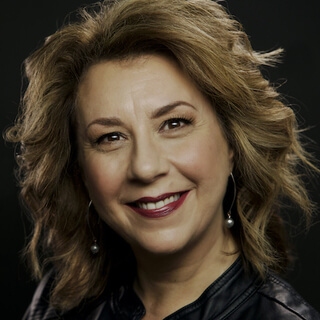
Your host,
Holly Duckworth.
Welcome to another episode of Everyday Mindfulness Show.
Today our show is going to take a really different and powerful turn.
It is with a humble servant heart that I bring on to the show,
A guest who's been on our show before.
But we're going to navigate some awkward and we're going to have some tough talk in the spirit of service and a spirit of love for what's going on in the world today.
Today I get to have an authentic and love and light field conversation with someone I've had so many beautiful conversations with,
My dear friend,
The owner of Beyond Your Grief,
The author of A New Morning,
M-O-U-R-N-I-N-G,
Discovering the Gifts of Grief,
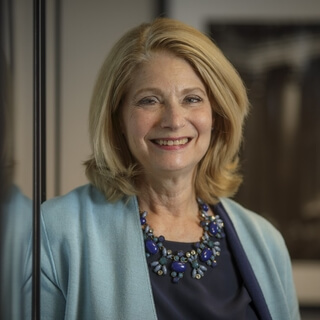
Georgina Eggleston.
Georgina,
Thank you for your yes.
You're welcome.
We're living in some interesting transformative times.
In my coaching practice,
I know in your coaching practices,
Well,
We're having many different waves of fear and anxiety and stress and overwhelm as the shelter in places are taking effect,
As the working from home has been evolving.
I kind of wanted to devote this show to two conversations.
One is this,
What is this thing we call grief and how do we deal with that?
And then the second half,
I'm going to ask you some real questions about sickness and death and dying from what's going on in my world.
Because if I'm having the questions,
I think others are too.
And I'm so grateful for our ability to navigate this awkward and sensitive topic on behalf of the listeners.
So let's,
Is that sound okay with you?
It's perfect,
Holly.
Thank you so,
So much.
So we're going to,
I want to unpack this idea of a new morning and that double entendre of that.
How can we deal with this new normal?
Like seriously,
The world's not going to go back?
No,
The world is not going to go back.
Things will never be the way they were before.
And so the way of navigating is to be in the moment,
To still be aware that there are four aspects to us as people.
There's our physical body,
Our emotions,
Which were really being,
Oh my goodness,
Overwhelmed now.
There's our mind and there's our spirit.
And the only way through this is to go to the center where there's always been stillness and to realize that this problem is so big that we cannot navigate it with our rational mind.
It's so important for every one of us right now,
Holly,
To be in this place of trusting that we're okay.
And that may sound like pie in the sky to people,
But if you stop in the moment and simply breathe,
There's air.
That air supply has never gone away.
And the one thing every one of us has to have moment by moment is air.
And it's there.
So it's really important for people to pause.
Pause when you're pissed off,
Pause when you're anxious to simply pause.
Yesterday,
It was really interesting.
I was in the grocery store and I was standing in line and I'd gone early and I was so surprised there were so many people there.
And there was a young man that came up behind me and I caught him out of the corner of my eye and I could see his frenzy.
And in his little cart were three gallons of milk.
And I would say he was in his 20 somethings.
And so I looked at him and I said,
Would you like to go ahead of me?
And he said,
Yes.
And my regret is that I didn't say because all of my groceries were on the cart or on the belt by then to the checker,
Put those on my bill.
I didn't.
And he bought the milk and apparently his wife or somebody in his family is ill and was not at work that day.
So they had this conversation with two people who knew one another.
And he was in the state of grief,
Which is the natural consequence of loss because it was their baby's first birthday and they had to cancel the birthday party.
So I got my groceries.
I went outside and as I walked out,
Theirs was the first car and on the ground was literally spilled milk.
In his frenzy of putting these in the car,
One slipped,
Dropped and his intense frenzy was magnified so much more.
And there was a part of me that just simply went out to him and was in such sadness.
I got home,
Holly,
Sat down and I cried.
I cried because I know he's not the only one in our country.
And I have the tools to breathe in the moment.
Just like I said,
The air is always there for every one of us,
But he didn't have those tools to center.
And that's why this program is so essential for every single person,
We have to do this moment by moment,
Breath by breath in connection with our body and absolutely feeling our feelings.
So much to unpack there,
Georgina.
I want to start with that word,
Natural consequence of loss.
I think a lot of us right now are feeling like we did something wrong or something's being done to us.
How do we get to that place that we just,
Okay,
It's natural?
Like,
Really?
Loss is a part of life.
We go to nature.
We go to nature and we see that the leaves fall,
Every fall in different parts of the world,
Not everywhere,
But many places.
And there's a trigger in the tree that allows the leaves to fall.
We don't cry because the leaves are falling.
We know that it's natural.
But when it happens to us,
That's when it gets scary.
We personalize it.
And then we go to that place that you named at the beginning of the program.
We feel like we've done something wrong.
We feel like victims.
And many people feel that way right now because it's bigger than we are.
But for you and the work you do and the people listening to this,
What we know is grief is an inside job.
That it's essential for us to go to that place of stillness to be absolutely in this moment,
Feeling what's going on in us so that we're that grounded presence in the world.
And we come from that place of authenticity.
We have safety.
We have connection.
We have trust that there's a new direction.
We don't know what it looks like right now,
But it's coming.
So grief is like new for us.
The magnitude of this grief is new for us.
And I know in your book you reference the five steps of grief.
Can you break those down for us and maybe help us so we can have maybe new languaging as we start to explore grief in our own bodies that maybe we can identify where we are in those steps?
Okay.
So first of all,
The five steps that you're referring to are the five stages that Elizabeth Kübler-Ross identified for people who were dying.
And because in our country we're a grief phobic country,
We don't want to have anything to do with death.
We don't want to even name it,
Let alone claim that it's a reality for us.
And so in those it was interesting because there's the denial.
And then it goes from denial to acceptance.
But those really aren't stages for us to navigate.
For us to be aware of the state that we're in,
I talk about raw grief where you can't absolutely get away from your feelings.
They're overpowering you.
And fragile grief where you begin to intellectualize this loss.
And you can't intellectualize somebody,
Holly,
That's really an emotionally based process.
And then finally where I live now is in gentle grief.
Like what happened to me yesterday.
I saw that loss.
I came home.
The feelings were so intense.
I sat down and cried.
What I talk about in my book is that we must absolutely recognize when we're in grief.
When we have loss.
And let's go back,
Holly,
To the very beginning and define what is grief.
Grief is a process.
It's not an emotion.
Grief is a universal consequence of loss.
And loss,
As we said earlier,
Is a natural part of life.
So first we have to recognize that right now every one of us is in a state of grieving the loss of life as we knew it.
Then we have to relate to the feelings that are coming up.
For many people it's fear.
Will I ever have a job to go back to?
Will I be able to feed my children?
For others it's anxiety.
For others it's anger.
For others it's hopelessness.
The list goes on and on.
When we can relate though to that feeling and where it is in our body and pause and listen,
Which is what everything mindful is about,
So often those feelings just melt away.
We don't have to do anything.
And then with our breathing in and breathing out we can renew our energy and then from that place we can go into a realignment.
Wow,
Georgina.
Grief is a process,
Not an emotion.
That changes everything I think for me and for the listeners recognizing that we may have to tackle this on a little grief way and some of us are going to navigate it on big grief ways.
But by switching that feeling from grief is either good or grief is bad,
To grief is just simply the process that I'm going through brings again that little bit of breath,
A little bit of air into what could be something better on the other side of this grief experience.
And what that does too,
Holly,
Is that puts us in the awareness that we are at choice.
Are we going to choose to be a victim,
Which is so understandable because not any one of us ever asked that this happen,
Or are we going to be a victor?
Are we going to thrive?
Because what loss does is it doesn't break us,
It breaks us open.
I say grief is an opportunity for growth and the listeners of this program really can get that.
Now it's not something any of us like.
I didn't say it's something we like,
But it's an opportunity to grow,
To go back and find that peace that's within us that we were born with,
That's always been there,
That we're worthy of activating,
Of realigning with so that we can navigate this huge ocean of emotion,
So we can get out of our heads,
Holly,
And into our bodies to connect with our breath,
To connect with how we are feeling,
And a new way of being gentle with ourselves.
I talked about the three qualities.
Courage is required to do this.
There's going to be a lot of people who don't make it through this journey,
Holly.
And then compassion.
How can I be compassionate with myself when I'm scared to death and I don't have the tools to center or I forget to use them?
And I forgot this week to do that twice.
And it was like,
Oh,
So I had to do forgiveness work for myself,
Holly.
You know,
I bless you,
Georgina.
I forgive you for being mindless and I release this to love.
Come back to the moment.
Well,
Thank you so much for that opening to authenticity because when we navigate awkward,
We're navigating the new.
And I've been closing a lot of my emails,
Be gentle with you,
Be gentle with you.
And some of these words,
Just the words are new for us.
Like thank you for this new definition of grief and loss and mourning.
And we're talking about zoo meetings now.
And that's kind of a tricky transition.
But I want to move to the tougher topic of that.
There's the illness piece and there's the death piece.
And for a lot of us,
We've been able to keep that out of the workplace.
This is this deep,
Dark hole thing we never talk about.
We know Mary left and she went to Ted's funeral and then she comes home and we never really talk about it.
You know,
That's one experience that at least for me.
And now in this interesting place of both social isolation and I think social opening,
We're often sharing more now on Facebook and LinkedIn and Twitter and we're calling more people.
And we actually are connecting,
I think,
Differently.
It's put something really hard on my heart.
And that's why I wanted to call you.
And I'm so grateful you let me share this conversation,
Which is I was on a work call,
150 CEOs.
And one of the CEOs said,
I have three people who've been diagnosed.
What do I do?
What do I say?
How do I be?
Help me hear my grief guide.
So that person gave you a fact and you get to choose if you're going to respond with a fact or given that person,
If you're going to say,
And how does that make you feel?
That might not be appropriate in the workplace.
But you may yourself respond from an emotional place that says,
Wow,
Whatever his name is,
I'm scared to death because I know that it's very likely that I'll know three people who are diagnosed.
See the difference there?
Absolutely.
And it's very important for us now.
I'm so grateful to the people on the media because when they say be kind to one another,
Take deep care,
You can hear the feeling under it.
But right now,
This is a call to have a conversation about how we're feeling.
To ask that person who's had somebody die by the virus,
How's your grief?
How are you feeling in this moment?
And when they tell you,
Don't flip it to back to intellectual or factual,
But simply stay present to them in that feeling or say to them,
When I hear you talk about the longing to go to the funeral,
The longing for that,
I feel your longing.
You see,
People give us the words.
All we have to do is listen and be present and not try to fix a thing.
That's so easy to say and hard to do.
It is because every single person on this call has so many skills,
So many talents,
And they're in touch with their power.
And they're used to using that power to make things happen in the world.
But right now,
The power is our presence.
And that's what we need to remember.
That when we come from that place of groundedness,
When we come from that place of centeredness,
When we say to the man behind us,
Go ahead and then have the thought to say and put that on my bill because we can,
We're present to what's going on right in front of us.
And I think this is a good time for a reminder that many of us have had workplace transitions and we're now working from home and there's a lot of stuff happening,
That it sometimes can become an easy accident to have multiple screens going and multiple conversations going or you're texting and you're tweeting or whatever.
This is a great reminder for that.
Be in the Zoom meeting when you're in the Zoom meeting.
Be in your email when you're in the email.
Be on the phone and in a direct conversation.
Mindfulness is the practice of being present in the moment.
It is without doing anything else.
And so in this new navigating awkward or I'm heartbroken,
But I do connect to your word grief phobia that now suddenly somebody that I kind of know or sort of don't really know has called me or I see a Facebook post and says,
My grandma Mary just died of the disease or my coworker just died.
I was on a Zoom call and somebody said my neighbor died last night.
And I hope that no one else has this experience,
But I feel called to bring in a conversation with you so we can equip the listeners with again,
This process of making the choice of do I say something?
How do I say something?
What do I do?
So I think we can use that process that you just used in the diagnosis phase of listening to how they're wording,
Are they coming from fact or they coming from feeling?
And then the power of that question,
How does this make you feel?
And follow your own intuition around increasing the connection to this person or decreasing the connection.
And one thing that I think is critical right now,
And I welcome your insights on it is truly this idea of the Zoom funeral.
How do we,
How do we,
Georgina,
How do we do this?
Have you done one?
Do you know what we do?
How do we create this?
It's interesting because this week three clients had this issue.
One was the only one in the cemetery with the camera and the person standing on the other side of the grave doing the graveside service.
And this person then sent the funeral out.
And their experience was of service.
They then had done the morning,
The new morning of being sad that the person who was very old had died.
And then when they got to the funeral,
They could be present for the people that couldn't be there.
Somebody else had someone die in another country and could not go there.
And that was harder for me because that was a business relationship.
And I simply came from my experience,
How hard that must be.
Okay,
Because again,
They provided the fact,
Holly,
And I chose to go to how hard that could be.
Now for everyone that's listening,
You may take it deeper if you choose.
Because what this whole thing is calling for in my experience is a recognition of feelings.
I said to someone not long ago,
We're grief phobic.
They said,
Are you kidding?
We're emotion phobic in our country.
So by modeling then,
When I hear you say you can't go to that funeral in another country,
I'm feeling tightness in my body and sadness.
Because what that did is that took it out of the intellect,
What's happening with me,
And that person may or may not be comfortable with what I shared.
But I'm coming once again from that place of authenticity.
And I do that,
Not authenticity,
I do easily feel what's in my body because I'm a body mind therapist.
And I teach that skill to others.
And it is a skill,
Because then we're coming from the body,
The mind,
The emotions,
So we can connect with that spirit.
We're coming from synergy.
We're coming from a place of integration.
On another show,
We spoke with a woman named Teresa Rose,
And she talked about energy visualization in every day that she'd get up and think about her day and feel it before she got up and created the movie of it.
And that was part of this chat,
I believe,
Around Zoom funerals or these loving,
Thoughtful conversations around people having this illness that I would invite listeners on the show to just take a minute and pre-play that film with your strength,
With your courage,
With your compassion,
So that you're already in that centered place.
You know in your mind and in your body,
You've already done this play once,
So that when that shows up for you,
You can do it.
That was the one thing I wish I had done when I was on the Zoom call and this person happened to be in New York.
It should have been an obvious thing to me that I would come across that.
And I wasn't prepared.
So the show is partly about us opening our compassion channels and opening our centering channels so that sadly it's probably not if,
But when this happens to you,
You have this tool from Georgina to move and navigate you in an empowered way and thus bring peace and empowerment to those people that are on the front lines.
And yesterday it was interesting.
I had a client that said they're in an anticipatory grief,
Knowing someone is dying,
Won't be able to go back for that funeral,
Wants to create a gathering with their immediate family.
And so we talked about that.
I said,
Anyway,
I can facilitate that.
And I just simply said,
You know,
You can light a candle.
Each person can share their favorite story.
How you will miss that person in your life.
Those are simple,
Holly.
It doesn't take a funeral,
You know,
Anyone in the funeral industry to do that.
We have that within us.
And I just invite people in this practice of mindfulness to think and put yourself compassionately in the shoes of that other person.
And it,
So many of us,
We do want to hear that person's name.
We do want to want to speak.
And yet it is this sense of grief phobia that holds us back.
That as courageous,
Mindful leaders and practitioners in your families and in your life right now,
Any one of these questions that Georgina has presented,
How are you feeling when I hear you talk?
Would it be helpful if just those few little questions can allow an invitation for that connection?
And sometimes you just don't have to say anything at all,
But just allow that person,
The presence to share.
Beautifully said,
Because when you show up present,
That's a lovely gift.
Well,
Georgina,
I'm so grateful for your yes,
To navigate this,
This challenging show and help me to prepare my listeners for understanding that grief is a step,
Grief is a process.
It's not an emotion.
Yes.
And the invitation that then as we move and navigate that process,
We're going to have different feelings and they're all unique to us and we can have grace and compassion for ourselves and listen to that,
The importance of our beingness and not just our doing this.
And not get in your head.
It's painful.
It hurts the body to have a loss.
And yet it's our thoughts that can keep us in the suffering and prolong the process.
I just had a thought too,
And I know the show is going a little bit long,
But I want to go back to the story of the gentleman with the milk.
I think that that's a metaphor for all of us are going to drop something right now and we've talked about the power of a natural energy exchange that sometimes people laugh at me because I'll hear a sneeze.
This was way before our current experience.
And I didn't grow up in a bless you world.
I grew up in a world where I,
You know,
In my brain,
In my brain,
I would say,
You know,
I am happy,
Healthy,
Whole and complete.
Like I would like literally,
I'm not taking on that germ.
I'm happy,
Healthy,
Whole and complete.
And I would actually use that sneeze from somebody else as like an opportunity to grow.
And I love for those who aren't watching the show or can't hear Georgina's giving a smile and a little loving laugh to me on that.
But it's an energy exchange that when we're in these experiences,
Whether it's an online,
A virtual face to face right now,
Because we can't touch just using your energetic touch.
And if you've never done that before,
Just just inviting that,
That if you're in the grocery store and you see somebody drop the milk,
Just bless you.
Love you sending you ease.
You know,
These are little tips blessing you sending you ease that we can all use in good times and in bad.
You know,
We're going to have online birthday parties.
We're having online funerals.
But you said it earlier,
We have a power in us.
And just just feeling that and sending that that out to the guy with the milk or or any of these life adventures right now can be so Holly,
I see myself as a lighthouse.
And I invite all of your listeners to see themselves as a lighthouse.
And a lighthouse doesn't run up and down the shore looking for clients or doing anything.
It simply stands.
It comes from what it knows to do.
And that's what every person on this call can do.
And simply be open to say,
Okay,
What am I going to learn to do today?
So for me,
It was the learning of the okay,
Next time pay for the groceries.
And I was already sending that man calm.
And next time I'm going to ramp it up so that the milk doesn't get spilled in the parking lot.
Well,
Georgina,
Thank you for your heart and your smiles and your listening ear on this show and for being a great resource for all of us.
I do want to remind you that as part of the show's commitment to sending that motivational and inspirational energy out into the world,
We are doing the show live every day.
In addition to these recorded episodes,
This is going to be an additional bonus episode.
And we're going to do more bonus episodes.
So continue to get your Monday show is your motivational,
You know,
Mindful Monday show will give you some special shows on Wednesday in addition to a live energy boost available on Facebook or on recorded everyday mindfulness show.
Com.
Georgina,
Any last minute thoughts or words of wisdom as we move out of grief and into gratitude for this new expression of life?
Just remember to turn on the switch within you.
That is your power.
That is your presence.
That is the love that you are.
Remember mindful matters and so do you.
Thank you for joining us for today's show.
For more mindfulness every day,
Visit everydaymindfulnessshow.
Com and download the three day challenge and experience the ABCs of mindfulness.