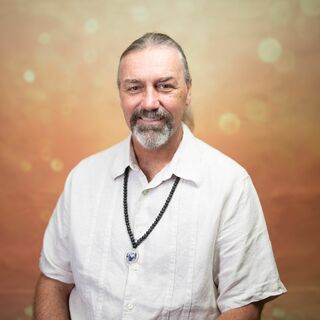
I absolutely love life.
I am very life affirmative.
If you want to consider me or think of me as a mystic,
That's appreciated.
I've spent years understanding what's been given to me and what makes my life so special,
What makes life so worth living and so enthusiastic about.
And we have discussed Sufiism,
We've discussed Tantra,
We've discussed Buddha,
We've discussed many things.
But there's something else in my life,
Another part of my life I want to share with you,
And that is Zen,
The art of Zen.
So when we talk about Zen,
We have to give you a little background as to how it developed,
When it developed,
So you have a better grasp,
A better understanding of what we're talking about.
So this story goes way back,
Way back to Buddha's time,
And in Buddha's day when he was traveling around India.
And Buddha was getting a little bit older in his years,
And I think the story says that Buddha lived to be about 80 years old.
He was about 40 when he was enlightened,
And then he lived another 40 years after that.
But Buddha,
I think,
Was wondering who was going to be his successor,
Who was going to pass on the tradition,
Because there were many,
Many people became enlightened under Buddha,
But maybe they weren't masters,
Or maybe they weren't ready to be the leader of this religion that was created by Buddha.
And I know many might argue that Buddhism is not really a religion,
It's just a way of life,
And I can agree with that totally.
So what happened was Buddha was a little worried about who was going to be his successor.
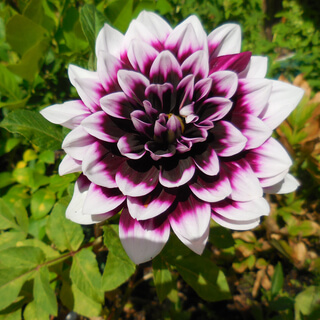
So one day he grabbed a flower,
Picked a flower out of the ground,
And usually in the mornings he would get up and give a sermon to his bhikkhus,
To his followers.
And this time Buddha came out and stood in front of a thousand,
Two thousand people,
Two thousand of his followers,
And instead of giving a lecture he held up the flower up above his head.
He didn't say a word,
He just held the flower.
Then after several minutes of silence,
One of the bhikkhus,
One of the monks,
Began a big belly laugh.
He just let out this big belly laugh,
You know,
This ha ha ha ha ha.
And Buddha looked at him and he said to his followers at that moment,
He said,
Look,
Everything that I've discussed,
Everything I could share with words,
I've given to you.
Everything that I have not shared with words,
Everything that's beyond what words could imply or convey,
I gave to Mahakashapa.
Mahakashapa was the,
That union between Buddha and Mahakashapa was the seed,
It was the beginning of the seed of Zen.
Not much else is known about Mahakashapa after that moment.
And unfortunately,
Buddhism basically came to an end in India after five hundred years after Buddha's passing.
But Buddhism was flowering about five,
Six hundred years after Buddha passed away.
And a female enlightened master in India sent one of her favorite disciples to spread the real truth of Buddhism in China.
Like I said,
Buddhism had been flowering in China for six hundred years,
But there wasn't one enlightened person to verify or to guide these new monks and these new followers of Buddha's.
So this man named Bhojidarama in Chinese is known as Ta Mo,
And in Hindi is known as Daha Rama.
So Bhojidarama was sent to China.
And when he arrived in China,
He was met by the emperor of China because he heard,
The emperor heard so many great things about Bhojidarama.
This great mystic was going to come and help China and help Buddhism grow.
And the emperor had actually built over like six hundred temples and got thousands of followers to become Buddhist.
And what the story is to say is that when Bhojidarama was called to the emperor's court,
He walked into the court with one of his shoes on his head.
And that was very embarrassing to the emperor.
The emperor didn't understand,
You know,
Why are you acting like an idiot?
But so Bhojidarama basically said,
You know,
That he doesn't want anyone to have any expectations of him.
He doesn't want to be put on a pedestal.
But the emperor was quite curious.
He asked the fellow Bhojidarama what will be his reward in heaven for making so many temples and spread Buddhism throughout China.
So Bhojidarama looked at the emperor and said,
No,
Your reward will be you'll be sent to the seventh hell.
I guess in Dharama's time,
They believed that hell had different layers and different levels.
And this seventh hell was like the worst layer.
Because how Bhojidarama felt was that the emperor did more harm because he had not spread any light.
He just spread,
You know,
The words and were empty words without light have no meaning.
They have no purpose.
But all we know is that Bhojidarama was a great mystic.
He helped many,
Many people become enlightened.
But the Sita Zen traveled to China through Bhojidarama.
And Bhojidarama was quite a mystical person.
There's a story about him that he faced a wall for nine years.
Now,
I've tried to grasp that,
But he waited nine years for a successor for someone to finally come along and prove that they could be his successor,
Maybe the one that can take over his religion for him in China.
And it wasn't until a monk nine years later came to Bhojidarama and basically cut off his hand and threw it at him and said,
Look,
If you don't turn and face me,
Then I will cut off my head too.
And at that point,
Bhojidarama said,
Yes,
Okay,
You are definitely worth being my successor and being a devotee of mine.
So yeah,
That's the kind of character that Bhojidarama was.
And you might notice pictures of Bhojidarama nowadays.
He's always known as this fierce looking guy with really big eyes and kind of scary looking.
But I've read that I think a lot of people might agree to this is that Bhojidarama was actually more like the son of a prince and he was very charming and he's just very clairvoyant and very charismatic.
And his personality was just very piercing.
And he could pierce through your aura or your essence with just the look of his eyes.
But yeah,
So Bhojidarama was the fellow that's mostly gifted for bringing Zen to China.
And Zen really didn't flower in China till it meant Taoism.
Taoism is a religion formed by Lao Tzu.
And many may say also that it's not a religion,
It's just a way of life.
You live in the Tao or you don't.
The understanding of Taoism is very deep and we'll get into that in another video.
But for now we'll stick on the topic of Zen.
So when Bhojidarama's Daihan met Lao Tzu's Taoism,
Then Zen became a reality.
It's a hybrid.
So those in the Buddhist lineage tried to claim that Zen is Buddhism,
But it also can be claimed by Taoists.
And you can ask,
And if you read on Kahajo or Aisan,
These are Chinese fellows that developed and helped Zen to grow and turn into a large tree.
And that's what happened in China.
But it wasn't until it went to Japan that it actually flowered.
And it was just meant to be.
It was just something mystical that needed to happen to Japan.
And I think Japan was very open to this new teaching.
The people of Japan were so open to this religion,
This way of life because it totally resonated with their essence and their way of life and their simple simplicity.
But many began to wonder because maybe a couple hundred years after Zen reached Japan,
And now it's called Zen because that's the translation of Chan to Zen,
But not much longer after the formation of Zen in Japan.
Westerners were starting to influence Japan around the same time,
Or a few hundred years after the formation of Zen.
And I heard this one story.
It's kind of an interesting story.
A Christian monk showed the Bible and the teachings of Jesus to a Zen master.
This Zen master was known to be a very compassionate and understanding man.
So the Christian monk wanted to see what he thought about Jesus.
So the Zen master opened the book and the Westerner translated it for him.
And when the Zen master heard the words like,
The lilies in the field were more precious than all the gold in Solomon's kingdom,
The Zen master said,
Yes,
This man is a Buddha.
Only a Buddha could say these words.
This man was definitely an enlightened being.
And the Christian monk,
I guess he missed what he was saying.
When you try to bridge two worlds,
Eastern and Western together,
And I think what has also happened is that there's a man brought Zen to America named Suzuki.
And it's good that Suzuki brought it to the Western world,
To England,
To Europe,
To all the Americas at the time.
And I think what is very good about it was the fact that he was enlightened,
And he could actually translate the meanings of some of these things.
Because when you read Zen,
Without any training,
Without any understanding of their way of life,
And this language that developed all this time in China and all this time in Japan,
The language that they developed was very interesting.
Because you would think they're talking about something simple,
Something that has nothing to do with religion,
But yet it's the most deepest philosophical understanding of,
You know,
Do you know,
Do you understand my Zen?
Do you know what Zen is?
So with that thought,
I'll do my best to try to describe this thing Zen,
This essence,
This flowering that developed out of China and Japan and India and brought to us here in America by Suzuki and Osho and many other enlightened masters that have been able to spread the essence of Zen.
Because I can't say in words what Zen is,
But basically,
I can hint at it by saying it is action without mind,
Movement and being out of your consciousness instead of operating out of your mind.
So in Japan,
The Zen schools,
They taught their monks to do everything mindful,
To be mindful about everything and to be mindful means to be aware,
To be consciously attentive to what's going on in front of you in this very moment,
Not in the past,
Not what happened yesterday,
Not having too many minds,
Not having too many thoughts of,
You know,
Anxiety or depression or sadness or anything,
Which is interesting because if a monk ever felt these things like any mental illnesses in the Zen schools in Japan,
What they would do is they would take the monk into an isolation chamber.
They would feed him and make sure all his needs are met,
But they would just leave him alone for two weeks and let him sort it out in silence.
And this usually worked.
This worked so well that Westerners started to think about how to adapt that into psychology.
But anyway,
These monks in China and Japan would do simple things like sweep the floors or wash their clothes or chop wood and carry the water from the well to the monastery.
It would start with these simple things and then they carried this teaching into the martial arts,
Into the swordmanship.
And the great samurais of the time were known to be great and still alive because they learned Zen.
They learned how to move faster than the mind could move.
Your body,
Your consciousness is way faster than your mind could ever keep up with.
So yeah,
Basically the way it went was if you ever met up against a superior samurai,
Your best option is to just stand there and try not to think too much.
You know,
Just be in the moment and be in the present moment and maybe you might live through it.
Possibly not,
But maybe you might.
But that was the influence that Zen had on Kendo in Japan.
I can't even count the number of books,
The Zen books that I've read.
And after reading all these slowly I became aware of the language and the subtle essences of the doings and the goings ons of this thing we call Zen.
It's funny to think that now here in America,
A few hundred years later,
A couple centuries later,
I came out with what I coined Extreme Zen.
Now I practiced Zen doing the things I love to do like snowboarding and surfing and skydiving and things like that.
But it really started with snowboarding when I had this realization.
And I may have shared this on one of the other videos,
Zen Insight Timer,
I'm not sure.
It's been a few since I have,
But I will share it again real quick.
Basically,
When I surfed it was me,
Me,
Me,
My wave,
My wave,
My wave.
But when you're out there surfing,
You're not thinking these things.
You're not thinking of anything.
But I think I was a little bit selfish because it was I,
This ego,
This sense of,
Hey,
I want to ride this wave.
But when it came to snowboarding,
Something interesting happened.
Probably been snowboarding on the East Coast for a few years and then we moved to Texas and the closest resorts were New Mexico and then Colorado.
And one year,
Our first year to Colorado,
We went to Breckenridge.
Maria,
My wife at the time,
Really wanted to go to visit the town and all the mountains.
It's this big mammoth resort with like four or five different peaks.
And anyway,
It's got hundreds of trails.
It's a super great resort to go snowboarding.
So anyway,
We drove there and after my third day of snowboarding there,
I was just so over the moon,
Full of joy and just like,
You know,
All on this beautiful essence of the mountains,
You know,
Taking it all in and it just became so much of a beauty of a joy.
But anyway,
Getting off the point,
I got to the top of one of the peaks.
And at that moment,
I just felt so,
I mean,
In love of life and so full of,
You know,
Bliss and joy that I said,
You know what,
God,
Why don't you ride this one down and I'll just take a backseat.
I'll just be a watcher.
And you take over my body and use my body and you ride down the mountain and I'll just be the witness to it.
So anyway,
I did.
I buckled up my bindings and put my goggles and my hat on and took off down the mountain and I freaking flew faster than I'd ever flown before.
I just,
I mean,
It was a very steep run,
A couple of little cliff areas to jump over.
And I went down about halfway down the run,
Just flying as fast as I can.
I hit this big jump and they call them kickers nowadays,
But I hit this kicker and I flew 20,
30 feet in the air and,
You know,
Landed it,
Stuck it,
Stuck the landing and just kept flying on down the mountain all the way down to the base of the mountain where Maria was waiting for me.
But anyway,
I got to the bottom of the mountain and I'm like,
Oh my God,
What just happened to me?
What was that?
I mean,
That was more than me.
I have never been able to ride that fast or that beautifully with no fear.
I mean,
The fear was absent.
It wasn't even,
It couldn't have even come into the scene.
And I think this is the first moment that I ever experienced Zen in one of my physical activities that I do.
I mean,
Even though when you're surfing,
You're out there and you're not thinking and you're in the moment and everything like that,
But this time there was no I.
It was just total giving,
This total essence of,
You know,
Understanding.
But I was belittled,
Not long after that,
Because the next time we went snowboarding,
We went to ski Santa Fe in New Mexico.
And it was just a little quick weekend trip away.
And I got to the top of the mountain in Santa Fe and said the same little prayer to God.
It's like,
Hey God,
Use my body and let's ride like we did in Colorado.
I mean,
That was amazing.
Let's do that again.
So anyway,
I buckled up my bindings,
Put my hat on,
Put my goggles on,
Put my gloves on and started to take off down the mountain.
And 20 feet later,
I caught an edge,
Fell flat on my face.
I had snow up in my nostrils.
I was just like,
What the hell was that?
Anyway,
So I'm lying there with snow on my face and I get up to my feet and I'm like,
God,
What happened?
You don't want to experience snowboarding using my body?
And what I didn't understand at the time was that God doesn't like to do anything twice the same.
It's never the same experience.
And that's a very,
Very valuable lesson in life too,
Is that God doesn't create two human beings the same.
He doesn't create experiences the same.
You can say in surfing,
There's no two waves that are same.
Every single wave you ever come across is just a little bit different.
So I then moved my new experience of just witnessing and just letting the existence of everything come over and take over and you just be the watcher.
You just let your consciousness guide you through this.
And it's the most amazing feeling to have your consciousness be in charge rather than your mind.
And that's the way it should be in life,
Is that your consciousness should be the master and your mind should be its servant.
But in most people,
It's the other way around because they don't know any better.
They don't understand any difference in life.
What do you mean?
What else could be in control except for you?
But that's just the ego talking.
That is just the essence of I.
If you dive into your consciousness,
If you let go and let existence take the leads and you just be the watcher and witness what goes on,
Then your whole life changes.
And that's basically the essence of Zen.
And not long after that,
I did start incorporating it into my surfing and my surfing got a lot better of course.
I incorporated it in work and all the things I did at work.
And the Zen thing is not something that you do part time.
This is life of Zen.
I know Bush sings a song,
Everything Zen,
I Don't Think So.
And I think that I don't think so part is just that,
Yeah,
Exactly.
There's no thought.
You just exist.
You just be and be in your consciousness.
So that's my contribution towards Zen.
And then I took it into skydiving.
And I had to take it into skydiving because I was dangerous.
When I first started learning to skydive,
I did what the people told me,
My teachers told me,
My instructors told me that you have to be able to think in case you get in a situation,
You need to be able to think to get out of it.
So me being kind of just lame brain and not understanding the full meaning of it was that I was using my mind to skydive too.
But it was like I had blinders on.
I had blinders on each side of me and I couldn't see to the left or to the right.
I had like this tunnel vision because my mind was doing the skydive and not my consciousness.
So I said to myself after my 25th jump,
Right after I got my license,
I said to myself,
Why are you doing this?
You practice awareness with everything else you do.
You need to do it and try to do it with skydiving.
And as scary as that might sound,
Once I did bring awareness into my first jump,
And your mind is still there,
Your mind still works and you don't have to worry about that.
But if your consciousness is there,
It's like taking the blinders off.
It's like being able to see with peripheral vision now and taking everything.
You take in so much more when consciousness is there and your mind is just recording what happens.
And I have had my first cutaway and it wasn't even that scary.
I just like,
I knew what to do.
I didn't hesitate.
I didn't wait for it to get worse.
I just wham,
Got rid of my main parachute that wasn't flyable and pulled my reserve and next thing I know,
I had a good opening parachute ahead of me,
Except that it had line to us all the way up.
And I had to sit there and kick out line to us for probably about 30,
40,
50 seconds.
And I had like 10 line to us all the way up.
And there's no giving up.
When you're under your reserve,
You can't give up.
You have to just keep trying your hardest to get down or else you're going to get hurt.
And I knew that.
So I kicked out the line twist and by the time all the lines are done,
I was at 2000 feet.
I still had plenty of time to get back to the airport and land my reserve safely.
So if you're listening to this and you're one of my skydiving friends,
You know,
This is my contribution.
This is Zen.
I coined it Extreme Zen.
I gave it its name.
And I may not be the first one to come up with this term,
But I felt like to me,
It was born with me in that moment in that skydive in that moment on that mountain in Breckenridge,
Colorado.
But even I had to start somewhere.
It didn't start with skydiving.
It didn't start on the mountain Breckenridge.
It started doing simple things,
Doing little things.
I think growing up as a child,
And we all have our own experiences of this in one way or another where we may have experienced Zen.
Maybe while you were out running,
You came to a point where your mind became still and you were just jogging.
You were just the,
You know,
You weren't even the jogger.
You were just jogging.
It was this,
This verb.
It wasn't a noun.
Or like when I was a child,
I washed the dishes.
That was my duty in a home of five people.
After we ate,
That was always my duty to wash the dishes.
And sometimes I regret,
I mean,
Look at it and I don't want to wash the dishes and get all negative about it.
But as soon as I started washing and cleaning off the dishes and taking the suds off of them with rinse water,
I would get into it.
And I'd get into it so much that I wouldn't even be thinking.
I'd just be doing that.
I'd just wash them.
I'm just a washer.
It's no noun.
Just washing.
And before I knew it,
It was over and I felt really good.
And I didn't understand that that in itself was one.
But it was.
Many motorcycle enthusiasts like to go out on long country rides because the Zen takes over this essence of staying ahead of consciousness and just watching and enjoying the ride.
And the best way to enjoy a ride,
I mean,
Of course,
You have to think when you come to an intersection and there's cars in the way and you got to know who goes first and all that kind of stuff like that.
So the mind's always there.
The mind is not your enemy.
The mind is your best friend.
It's going to help you in more ways than one.
But you can take some tension off the mind by living in your consciousness.
When you lie down and meditate and you escape the mind,
Then in a sense that's a form of Zen.
But basically Zen is even deeper than that because it's just action without thought.
So this is the appeal of Zen is that it's very peaceful and it's very blissful.
But like I said,
You can't be a part time Zen-er.
You have to be full time Zen.
Make it a way of life.
Make it what flowers from you because if you don't do it 100% and put it into everything you do like work or play or anything,
If you don't practice it full time,
Then you won't reap the benefits of it.
It'll just be an experience that's just blissful in itself and that's beautiful.
But the transformation won't occur until you're basically 100 degrees Celsius.
Water boils at 100 degrees Celsius and evaporates and it turns into a new form.
So energy changes from one form to another at exactly 100 degrees.
And with us,
It's 100%.
100% diving into this essence.
And then you'll know what Zen is and then you'll maybe one day be thankful that you listen to this recording and let it become part of your life and help you to comprehend more,
Help you to grow more,
Help you to relax,
Help you to be stress free,
Help you to be happy.
Like I said in the beginning of this track,
I am ecstatic with life.
I mean,
I got to go surfing today.
I got to go surfing yesterday.
And those things make me happy.
I hate to go too long when I don't get to surf.
I get not miserable.
I just get the,
Not shakeys,
But a little jittery.
Like,
I got to go surfing.
I got to go surfing.
I hope this waves soon.
But that's basically the core of my life is everything's focused around surfing.
I moved to the beach and life is just this amazing event that's going on and I get to be a part of it.
And that's great.
Even with all the negative and hardships and sacrifices we make in life.
If you focus and allow consciousness to be the guide,
Then your life is going to change for the better.
Your life is going to be so great.
And I mean,
You don't have to be a surfer.
You don't have to be a skydiver.
You don't have to be anything.
You can find Zen playing with your children.
You can find Zen,
You know,
Like I said,
Riding a motorcycle or sweeping the floor or whatever you whatever you might do.
You can incorporate this essence into it.
And don't be scared of it.
You know,
When you dive into it and you just do it,
That's when the bliss happens.
That's when you realize you did something wonderful.
This consciousness I talk about has different levels and I've talked about that in other videos and other audio tracks.
When you're diving into Zen and this consciousness level,
Then you're diving into what we call super consciousness.
And so it's a consciousness just a little bit above what the normal people radiate at.
But super consciousness is your touch with the divine,
Your first experiences of touching the divine.
And then there's two more levels above that.
There's the collective and then there's the cosmic.
And we'll get into those things.
I think I may have mentioned one of those things,
A couple of those things about consciousness in some of the other videos or audio tracks I've made.
But anyway,
I guess we should wrap this one up.
Thank you very much for this little journey with Zen and how I think I've contributed to expanding it and westernizing it and making the West a little more beautiful with the Eastern influence.
Anyway,
Okay guys and girls,
Thank you very much.
If you like this talk,
I'll make plenty more.
If you give me a review or a rating,
Let me know how much you enjoyed it.
That would be great.
If you know of any improvements I might make or if you disagree with what I say altogether,
That's okay.
There are many thoughts when it comes to Zen and this is my journey.
And I'm glad to share it with all of you.
So thank you very much for joining me and take care of yourselves.