The Spirit of the Mountains Climb the mountains and get their good tidings.
Nature's peace will flow into you as sunshine flows into trees.
The winds will blow their own freshness into you and the storms their energy,
While cares will drop off like autumn leaves.
John Muir Mountain climbing was a traditional pastime in ancient China.
Emperors went to mountains to make sacrifices to heaven and the deities.
Scholars went to draw inspiration for poetry and painting.
Mystics went to become Buddhist monks or Taoist hermits.
Ordinary people went to pray and worship.
Thus,
Mountain climbing in China was more than a sport.
It was a popular religious and cultural activity.
Cherish Chan.
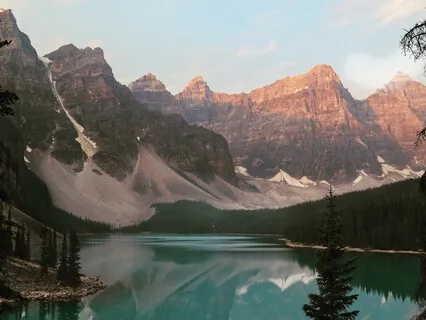
Mountains can have an especially strong spiritual or psychological pull for us.
There's something about their size and stillness that seems to have a profound effect on the mind.
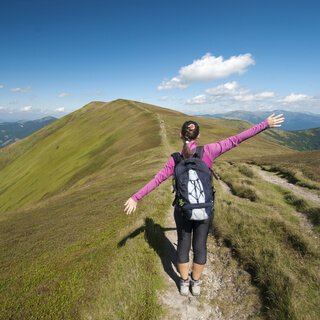
Climbing mountains gives us new vantage points and new perspectives on our surroundings and often on our very own lives.
As mountaineer George Wary wrote,
Truly it may be said that the outside of a mountain is good for the inside of a man.
The way many mountaineers view mountains is not so very different from Taoists.
For Taoists,
The mountain is the symbol of personal cultivation.
From the earliest times,
Heading into the mountains has been synonymous with pursuing the Tao.
Since many people in today's society have become so divorced from the natural world,
We can think of any exposure to nature as going to the mountain.
Each time we take a moment to become present and aware of our own inner nature and the nature around us can be like a momentary retreat from the hustle and bustle of our everyday lives.
As Murihayo Yashiba said,
Now and again it is necessary to seclude yourself among the deep mountains and hidden valleys to restore your link to the source of life.
As you circle or climb a mountain,
You begin to see its many faces.
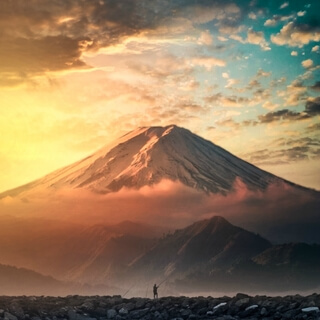
The evolving landscape of its slopes and cliffs as light and shadow change due to direction and time of day means that mountains never stay the same.
They may even change color throughout the day,
Most obviously around sunrise or sunset.
We tend to think of mountains as very unchanging,
At least in terms of a human lifespan,
But watching mountains transform from moment to moment as we climb or circle them can change this perspective.
As the medieval Japanese Zen master Dogen Zenji said,
Do not view mountains from the scale of human thought.
As we take a few moments in our day to sit in meditation,
We can sit with the stillness of a mountain.
Whatever thoughts arise,
Whatever sensations we notice in our bodies,
We can let them come and we can let them go.
The winds blow,
The clouds pass by overhead,
And yet the mountain remains in stillness and peace.
Okay.
.
.