Welcome to Life,
Lessons,
And Laughter with your host,
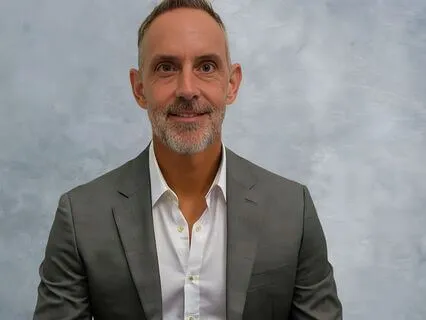
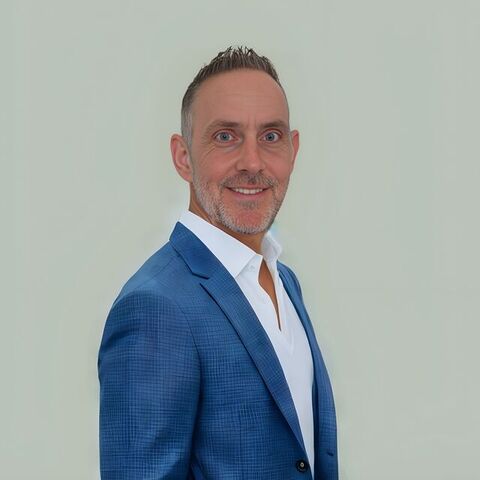
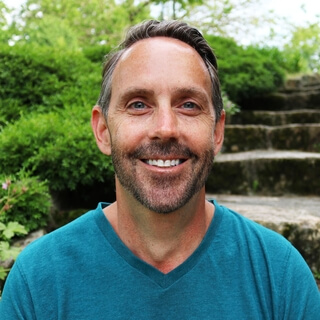
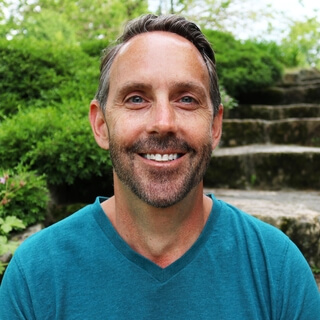
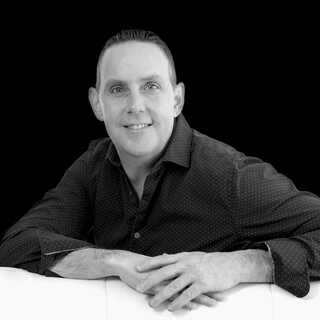
Glenn Ambrose.
Hello?
I wasn't added.
My video wasn't added for some reason.
Hello to you all.
Welcome to the show.
That was funny.
I was expecting to see myself when the intro stopped,
But I wasn't there.
Threw me off for a second.
So today,
I couldn't control it.
What a good segue into controlling.
So today,
I kind of want to dive into something.
It's really beautiful that our understandings and that the spiritual teachings are evolving as time goes on.
And we're getting more and more clear on things,
Which,
Of course,
Is how it should be.
So,
You know,
For a long time,
We've been talking about,
You know,
Learning to control your thoughts,
When you're meditating,
When you're out in everyday life.
And I think we kind of skipped over the aspect of control.
You know,
The term control.
Like,
If we slow down and look at that,
Is that what we really want,
Is to control our thoughts?
Well,
We don't want our thoughts to control us,
Right?
So therefore,
Controlling our thoughts seems like the opposite of that and what we would want.
And to some degree,
There's some truth to it.
But the beauty of spirituality is that it's very simple,
Right?
It just simplifies and simplifies and simplifies.
So as we go deeper,
We look at it.
And if you look at a lot of the deep teachings and where the teachings are going,
What I mean by deep teachings is like,
Deep teachings of ancient wisdom,
You know,
This is nothing is new,
Like this isn't any new information.
It's just there's different tiers of it.
There's different levels of it.
And,
You know,
Let's be honest,
Most of the stuff that reaches the masses is watered down at best.
But it's necessary for that.
It's because it's that's what the masses are going to understand.
If you're just launching out into a,
You know,
Into the spiritual path,
Or exploring self-improvement and stuff like this,
And somebody starts talking to you in riddles,
That you just don't understand,
Because your whole existence is wrapped up in unconsciousness,
Just like,
You know,
The masses,
Then you're not going to understand what they're talking about,
It's not going to make sense.
So it's okay,
That the the general teachings that are reaching the masses are are watered down.
There's a reason for that.
And and it's so people can understand and capture their interest and start coming in the door and start exploring this stuff at the level that they're at,
You know,
We have to meet people where they are.
So you know,
It's it's natural that the teachings start there,
You know,
One of the I think one of the most beautiful,
Wonderful things that there is,
Is yoga.
And and I mean,
The watered down.
Let's go to class and exercise for a while.
So we look good in a bathing suit.
And then experience a few minutes of relaxation at the end.
Like,
That is wonderful to me.
And a lot of people think that that's a problem.
And I don't see it as a problem.
I see it as a doorway into spirituality,
When we're living these busy lives and all this stuff.
And and all of a sudden,
We start going to yoga because we want to look good in the summertime.
And then all of a sudden,
We experience 10 minutes of shavasana at the end.
And we drop into this place of peace,
Which it's easier because we're in a class with other people doing it too.
And we're being guided into it.
That's the first time a lot of people experience peace.
So they're like,
Oh,
My goodness,
This feels wonderful.
I want more of this,
And then they can chase it.
So now,
You know,
If you take somebody that has immersed themselves in the entire understanding and in depth lifestyle that true yoga actually is,
And they look at this watered down version,
They're like,
Oh,
My God,
This is horrible.
They're not even learning what they're supposed to be learning.
The reason behind it isn't even there.
And all this stuff.
And it's like,
Yeah,
I understand that.
But it's a doorway.
Millions and 10s of millions and probably hundreds of millions of people have been exposed to a spiritual type of language,
A spiritual type of experience through shavasana and some of the physical aspects of yoga as well.
They've been exposed to spirituality,
And they never would have brought that into their lives before.
You know,
And then it's their choice whether they want to go deeper or not,
You know,
It's all based on free will.
So my point is,
Is that just because the the teachings are getting deeper,
Or some people have found going deeper,
I personally have found going much deeper is much more effective.
I talked about it all the time.
But I also understand why people are,
You know,
Why the masses aren't necessarily at the enjoying it as much as I am right now.
But there's an evolution.
And more and more of the people are starting are going to go deeper and deeper.
And the teachings have to be there to reflect that.
As people start striving for more and leaning in for more,
Then the teachings have to keep up and and they organically do.
So this is what I see as part of the spiritual shift that's transpiring.
The teachings just keep getting deeper and deeper,
And it's beautiful.
So the teaching that I'm talking about is most people have been taught to control their thoughts through meditation or throughout their life,
Right?
And there's varying degrees,
Like if we're trying to control our thoughts,
Can if we have some success with it,
It can help us learn to focus more,
Right?
So that's a good thing.
You know,
We do need to be able to focus on something for more than half a second,
Right?
This is because we need to focus on something to travel down deeper.
So if so,
Extending our focus time is a beneficial thing.
One of the ways to achieve that is kind of through control.
But as we go further,
We have to understand like that's not the end all be all one.
And some we're going to have varying degrees of success with this.
Some people are going to be doing be able to do it better.
I imagine it's those people like I don't do very well at it.
And I think part of the reason is the ADHD type brain that I have.
Right now,
If you have people that are very good at it and can do it really well,
Naturally,
Well,
Then it's going to serve them even more because it suits their style of their,
You know,
Their individual ability to,
To focus their mind.
Where like,
I can hyper focus.
But focus is not my strong point.
So we're going from trying to control our mind to understanding that control is not our goal.
Okay,
It's it's not about controlling,
Because because control implies efforting.
So,
You know,
Like in my book,
I talk about different spiritual terms,
Spiritual terms imply non efforting,
Remembering,
Forgetting,
Allowing,
Surrendering,
All those terms of spiritual terms,
You can't effort at them,
You can't remember real hard,
You can't forget,
You can't try real hard to forget and have it work.
You can't surrender real hard,
You can't allow real hard,
Like you can't effort and do a spiritual term at the same time.
Right control,
You can try really hard to control something.
And that means it's not a spiritual term.
Why?
Because you can attach effort to it.
Right.
And control is the opposite of our foundational principle of free will.
We're not,
We're not supposed to control things,
We're not supposed to control others.
In fact,
The harder we try to control the external,
The more struggling we have,
The more resistance there is more suffering.
So,
So it's,
It's not about control,
You know,
And so I found a couple things that kind of address this in different ways.
And one of the ways that I liked was this,
This post from,
Oh,
I'm gonna,
I have to say it because I want to give the right credit,
But I'm gonna butcher this name,
People.
Okay.
Sri Nisargadatta Maharaj.
That's my best shot at it.
Okay.
So that's who this quote is from.
And it says,
It has nothing to do with effort.
Just turn away,
Look between the thoughts rather than at the thoughts.
And this I really like because it,
You know,
It gives a real life example,
Which I like to do to,
To,
To help us wrap our brain around what they're trying to say.
Okay.
So it says,
When you happen to walk in a crowd,
You do not fight every man you meet.
You just find your way between when you fight,
You invite a fight,
But when you do not resist,
You meet no resistance.
When you refuse to play the game,
You are out of it.
Okay.
So I like that visual of trying to walk through a crowd.
When you're trying to walk through the crowd,
What you're doing is you're looking for the empty space.
You're not looking for the obstruction,
Right?
So when we're dealing with our thoughts,
We're used to,
And this,
We're like this in many ways,
Things grab our attention.
This is one of the reasons why when I go out at the night sky,
I love like above my house,
Above this gigantic mango tree,
Right outside my house,
There is the big dipper at night.
And most nights I can see,
And it sits right there.
And it's,
You know,
It's just beautiful.
So I just look up at,
And I'm like,
Oh,
Thank you for being there.
Isn't that beautiful?
You know,
And I look at it,
But I don't do this every night,
But many nights,
What I do is after I look at the stars and the constellation of the star,
What I'll do is I'll take a few moments to look in between the stars,
To look at what our brain tells us is empty space.
And now we know scientifically,
It's not empty space,
But I focus in the middle of nothing,
No thing,
No.
So the things are what capture our attention.
And I focus on a spot of space where I can't see a thing.
There's nothing,
There's no thing to capture my attention,
But I still focus there.
And I feel this expansion in my chest.
I feel this connection to the universe,
Just this beautiful connection to everything.
And it just fills up my heart.
And I don't get that when I focus on a thing,
Because I can focus on a thing,
Like let's say a star in a situation.
I can focus on a star and it minimizes that star into what my brain thinks a star is,
Which is a thing.
And a star is much more than what my brain thinks it is.
It has an energy,
An essence to it.
And I'm basically taking all that out and minimizing it into what my brain thinks it is,
Some object,
Right?
So when we focus on empty space,
It's much more expansive because we're not minimizing it.
Our brain isn't saying,
Oh,
This is one of those things.
This is one of those objects,
And then minimizing what it is.
That's why we feel the expansion when we do it.
And you can do this with anything.
I mean,
I used to do it driving down.
I don't know if this was the best idea,
But I used to drive up an outside highway,
Not the highway that went through the city in Rhode Island,
Like not 95,
I believe it was 295.
So there wasn't a lot of traffic.
So if I was driving and there were no cars around me,
And it was straight,
And I could just kind of focus a little bit for a few seconds,
I would focus as I got close to one of those overhead highway signs,
I would pick a space that was like in the corner of where the braces met at a 90 degree angle,
I would pick a space,
Just empty space right there,
Because the frame kind of gives it a framework.
And,
You know,
So like,
Then I'll just move away from the frame a little into a corner,
And I'd focus on an empty space.
And I would,
And I would feel myself connect to the universe.
You know,
And at home,
I would do it with a coffee table,
Looking at the leg of a coffee table or something,
And then go off of that a little bit into some empty space.
And I would just connect to something bigger than me.
Because I wasn't focusing on a thing.
I was focusing on everything.
And nothing with no concept attached to it.
Right?
So this is just other ways of explaining what this was talking about.
So when you're walking in a crowd,
If you look for the empty space,
That's how you can navigate your way around the people.
And in our minds,
If we look for the empty space,
That's how we can navigate our way around the thoughts is putting our attention on the emptiness,
The space,
The no thing,
The not not a thing,
Not an object.
Okay,
So so this is what we're trying to do.
And it's kind of the opposite.
I remember of when,
When I was first trying to get sober,
Like,
You know,
I,
I read the big book of Alcoholics Anonymous,
And I'm underlining it,
And I'm making some notes.
And I'm going like,
I'm trying to understand it.
And I sit down with my sponsor the first day,
And I'm like,
So I was reading what we're going to go over.
And I had some thoughts about it.
And he was like,
Why?
Why would you do that?
I'm like,
I thought this was a good thing.
I'm being proactive,
You know?
And he's like,
No,
No,
Like,
You're all messed up.
Why would I want your opinion on what the book says?
And I'm like,
Oh,
Yeah,
Okay.
Good point.
No.
So he said,
Don't pay attention to the white parts in the big book.
Pay attention to the black parts.
And my brain is like,
What's he talking about?
What?
What?
What parts are white in the big book?
And my brain was kind of jumbled at that time,
Too.
And I'm like,
The black parts,
Like you mean the words,
The words?
He's like,
Yeah,
Yeah,
The words of the black part.
Pay attention to those.
They say exactly what they want to say.
They don't need your interpretation.
Your interpretation lies in the white area.
When you stop focusing on what the words mean,
And you stop bringing it into your broader perspective.
That's the white area.
That's where everything goes all haywire because of your thinking.
Don't go into the white parts,
Just focus on the black parts.
Right.
And that was that was the opposite.
But in that teaching that see,
There's a time and a place for everything,
Right.
And when I when I was trying to get sober,
Not bringing my interpretation into what I thought things meant,
And just took it taking them at face value,
When I was taking in information that was new,
And that was going to rewrite my old program.
That was a necessary thing to do.
Now we're talking about the opposite.
Now we want to pay attention to the white areas,
Not the black areas,
Not the things.
We want to pay attention to what's happening in between things.
You know,
There's a space in between words.
And that space is very small when I talk because I talk fast.
Because there's a flow I'm riding.
Right.
So but there's a space in between the words.
And if we can just catch those spaces,
Totally does a masterful job at teaching this Eckhart Tolle.
You know,
There's a space in between the words.
Pay attention to those.
There's a space in between our thoughts,
Pay attention to those.
The more we can just,
Those are the gaps in our life.
Those are the the calming,
Peaceful places.
Right.
So we need to learn to navigate those instead of trying to control something,
You know,
Oh,
I'm gonna,
I'm not going to think this thought.
Don't think of the color red.
You know,
People have been saying this for hundreds of years.
Don't think of the color red.
What are you thinking of?
Well,
The color red.
Right.
It doesn't work to say don't think of something because then you just think of what you were told not to think of.
Right.
So it doesn't work when we're trying to control things in that manner.
This is why the teachings are going deeper now.
So another thing that I was watching and listening to the Law of One recordings last week or something,
And this part jumped out at me.
Let's see.
So it says,
An entity by itself to control thought processes or impulses,
Except where they may result in actions consistent to the Law of One.
So that means like,
Um,
If you're trying to think of a way to help others,
Because we are all one,
And you're trying to direct your thoughts into that,
Then then there's a purpose.
Okay,
You're controlling your thought in that manner and directing it where you want it to go to a beneficial place.
That can be helpful in certain situations where you're directing it.
Okay.
So except there,
Control may seem to be a shortcut to discipline,
Peace,
And illumination.
However,
This very control potentiates and necessitates the further incarnative experience in order to balance this control or repression of self,
That of of that self,
Excuse me,
Which is perfect.
This is very dense,
This information.
And I've noticed the more dense it is,
The sometimes the harder it is to read.
And you get really focused to conceive it as well.
So I know you guys are trying to follow me.
My apologies.
I'm human.
So that which is perfect.
Instead,
We appreciate and recommend the use of your second verb in regard to the use of the will,
Acceptance of self,
Forgiveness of self,
And the direction of the will.
This is the path towards the disciplined personality.
Your faculty of will is that which is powerful within you as co-creator.
You cannot ascribe to this faculty too much importance.
Thus,
It must be carefully used and directed in service to others for those upon the positively oriented path.
There is great danger in the use of will as the personality becomes stronger,
For it may be used even subconsciously in ways of reducing the polarity of the entity.
So what they're saying here is that there's danger of the use of our will as it becomes stronger.
So as we learn to direct our things,
It gives us the illusion of control.
And sometimes it even gives us the ability to control others,
Which is a sense of power,
Which can be addictive,
Which there's danger that now all of a sudden we start going down the wrong path,
Right?
So we do need to use our free will in service to others.
And there's an aspect of developing that which is helpful.
And there's basically an aspect of control to developing our will that we can learn to play with and get better at.
So it will serve us when we use it in the right way.
However,
Acceptance of self and forgiveness of self,
You know,
Other than the direction of our will,
Is the path towards disciplined personality.
So which is what we're trying to ultimately land in.
We're trying to land into our personality being disciplined,
Being pointed in a specific direction towards service to others.
And we don't think of acceptance to self and forgiveness of self as parts of that very often.
And I think that that's an important part.
Acceptance of self and forgiveness of self,
It's just,
We land in our perfection when we stop judging ourselves and judging others.
And when we drop into our true authenticity,
And just once we're relaxed,
And we're not struggling and fighting and trying to control everything,
And we're just us,
Divine wisdom just flows through us,
And we find ourselves doing the right things.
It's not about all this effort and trying and control.
It's about acceptance of who we are.
Because how can we just relax and let our true self flow into reality naturally,
If we're trying to control every aspect of it?
If we haven't forgiven ourselves for this illusion of separateness,
And forgiven ourselves for this illusion of control that we think we have over things.
Control is not that big of a deal.
Do we need to be disciplined and direct our thinking and our energy in particular areas?
Yeah,
We do.
But that's just a small portion of it.
And when we focus there,
One,
A lot of times,
Whatever we resist persists,
So we don't get a lot of benefit out of it.
We don't have a lot of success doing it.
And then if people are somehow finding a way to control things too much and get too good at it,
Now all of a sudden we're leaning into this whole new level of danger,
Where it's addictive and can pull us out and give us this illusion that we can control things that we can't control.
Right?
So it's just this soft space.
Sure,
Practice our disciplines and directing our self-will and our ability to focus on things.
That's an aspect of it.
And we can improve that.
But we can't go into it thinking it's the end-all be-all.
Or once we have a little success,
We can't keep pushing down that direction.
Everything becomes a thing.
I just saw this little video clip of these four young guys talking about spirituality.
And they were really deep into spirituality in their lifestyles and stuff.
And they were talking about how they just let go and allowed themselves to live the life.
One of them went out clubbing every night for a little while.
These young guys in their 20s and stuff.
And they were so tired of living this rigorous,
Disciplined,
Spiritual life all the time,
That they just had to cut loose.
And when they cut loose,
They actually,
After a little while,
They actually had a spiritual awakening.
They experienced this level of bliss because they weren't trying to control every little aspect of their life to become spiritual.
Because that's when it just becomes another identity.
Oh,
You're spiritual.
You talk with spiritual words.
You go to spiritual events.
You meditate every day.
And it becomes another identity that you're attached to instead of it being a tool to help you evolve and find more peace and love in your life and express more of it and help others.
So we have to be careful that it doesn't become another identity that we're attached to.
There was something I shot through when I was saying that,
And I don't know if it'll come back.
So I'm pausing for a moment.
But yeah,
So it's just this,
We can't try to control it too much and turn ourselves into these robots.
It's about the self-acceptance,
Self-love,
Just being able to be and be happy.
So yeah,
This is why I want to talk to you guys about this.
Just relax.
It's not all about this efforting and trying and pushing.
It's more about just being and being good at being.
And one of the ways we get there is through forgiveness.
The levels of forgiveness,
I'm still finding new levels of forgiveness of self and acceptance of self constantly because the conditioning is so deep.
Even me,
I resisted a lot of what society said to do my whole life.
And I still am so inundated and so conditioned by society and what it thinks and the way it thinks that I'm constantly disconnecting from that and stepping away and forgiving myself.
Because unfortunately,
We're very judgmental.
We tend to judge everything,
Including ourselves.
So yeah,
I think that this is cool.
I always would like to do a shorter podcast,
But it very rarely happens because of the way the information flows.
But I think this one,
I think I actually did it.
I think I did a shorter podcast.
So I'll just center myself for a moment to make sure there's nothing else I want to touch on before I wrap up.
Not really.
I think it was just a version of the whatever we resist persists.
If we're pushing against something,
We're giving it our energy.
So when we're trying to control our thoughts,
We're giving it our energy.
So okay,
So I'll leave with this tip.
For me,
What I found,
I'm much better at feeling because my mind is,
That's who I am.
Everybody's different.
So play around and find out what works for you.
But I've never had much luck trying to control my mind.
So I played around and tried to find other ways of meditating and doing what I need to do.
And one of the ways that I do it is I pay attention to how I feel in my heart area when I'm meditating.
When I drop into that connection,
I can feel that connection.
Like when I look up into the emptiness in the sky or something,
I just,
I feel it.
I feel it in my body.
And that feeling is how,
That's when I know I'm attached.
So that's what I try to feed.
Yes,
I feel it.
Okay,
Let me continue feeling it.
Let me continue feeling it.
And I can elongate that.
I can extend that.
I can stay connected to the feeling.
And the more practice I do it,
The better I get at it.
And that is where I can do it.
If I'm thinking about my thoughts or even thinking about going in between my thoughts,
I'm probably not going to have too much luck because I'm very,
You know,
Fast-paced intellectually.
It's just,
You know,
It's the ADHD mind is the best way to explain it.
So like half the time,
I don't really know if I've been thinking or if I haven't been thinking because I'm more paying attention to the feeling that I'm having and elongating that.
And I think by proxy,
The thinking lessons,
Just because I'm not feeding it any energy.
If I'm paying attention to my thinking,
Trying to control it or anything else,
Then the thinking speeds up.
But if I'm just focused on how I'm feeling,
Then all of a sudden,
That's where my energy is flowing.
So it's not flowing to my thoughts.
So the thoughts minimize.
And if they,
Some of them are still there,
I don't really,
I don't attach to them.
And that's really the key.
It's okay if thoughts float by.
Like if you have a thought float by,
It's not that big of a deal.
You know,
And I'm talking about when you're trying to meditate and actually even walk through life,
You can practice this just in your everyday life too.
But so like,
If I'm paying attention to how I'm feeling,
Then I'm not feeding that.
So I'm just like,
And I'm not attaching to a thought.
If a thought goes through,
Most of my awareness is focused on the feeling.
So it doesn't grab onto a thought.
If the thought goes,
Oh,
I have to go to a grocery store.
I don't grab onto it and say,
Oh,
What do I need at the grocery store?
Am I going to need some fruits?
How about some vegetables?
Like,
I don't do that.
Why?
Because my attention isn't flowing to the thoughts.
So a thought can just come in and pass right by and I don't grab onto it.
And that's the most important thing.
So it's not that a thought going by isn't a big deal.
It's the attaching to it and extending it and having our attention drawn into it that pulls us off.
So I can have a thought pass by every once in a while and half the time I don't even know that they did.
Or maybe a part of me does know that they did.
It doesn't matter because most of my attention is to elongating the feeling that I'm having within.
So I'm feeding what I want,
Which is that feeling.
And I'm starving what I don't want,
Which is the thoughts.
That's the spiritual law,
Pete.
Starve what everything is energy.
Starve what you don't want.
Feed what you do want.
Right?
So when you're in a crowd walking through,
You're starving.
You're not putting attention to people.
Because if you put your attention to people,
You're going to walk right into them.
Instead,
You're putting attention on the empty spaces,
And you're finding them and you're walking in those.
Right?
Did you know,
And I'll,
So I'll wrap up with this promise.
Did you know,
Like,
I heard this thing years ago,
Where they had people in the desert that had these long,
They build these long,
Straight roads in the desert,
Right?
And they found out that they were putting,
They'd put telephone poles up along the road,
Right?
And people would drive right into the telephone pole,
And,
You know,
Like,
Really smash up their car and get hurt and all this stuff.
So like,
They were going,
Like,
Why is this happening?
Like,
There's barely anything for these people to hit.
And sometimes these people are finding a way to hit it.
And it and it was happening more than just random,
You know,
Like somebody fell asleep.
It was like they were driving right into it purposely.
So they're like,
What,
How,
Why is this happening?
How is this happening?
And what they found was that people would zone out,
Right,
When they're driving along straight thing,
Straight line with nothing to look at,
They would just zone out,
And their eyes would attach to the only thing there was to look at,
Which was a telephone pole.
So they'd be staring at this telephone pole off into space,
Just because it's a random object,
And their eyes were looking for something to focus on.
So they'd just be driving,
And they'd be focusing on the telephone pole,
And they'd be getting closer,
Gradually closer,
Closer,
Closer,
Closer,
And their brain isn't zoned out.
So their brain isn't really engaged.
And they would just drive right into it.
Oh,
My God.
So I mean,
This is,
This is what happens if we're focused on something.
We'll just go right at it.
And we have to practice being okay in the empty space,
Not focusing on a thing or an object and a word is a thing,
A thought is a thing,
They can measure it in quantum physics as a unit of energy.
So if we're focused on that,
That's where our attention is going to go.
So we have to focus on nothing,
No thing.
Okay.
So,
All right,
That's gonna do it.
All right.
Thanks,
Everybody.
Thanks for listening.
Thanks for watching.
I'm gonna wrap it up.
And you guys have a great day.
Peace.