Hello friends!
Today I'm going to share you stories about Välamo,
The Finnish goddess of the sea and waters.
Enjoy!
Väki is an animistic,
Everything has a spirit and soul,
And fantastic,
Nature is divine or energy is connected,
Concept found in Finnish folklore and is an essential part of the old pagan worldview.
It represents a universal energy that exists in everything.
Väki is equivalent to concepts like mana from Polynesia,
Chi from China,
The great spirit in many Native American myths,
Or the force from Star Wars.
In Estonia,
A similar concept is referred to as Väki.
Väki can be found in trees,
Plants,
Animals,
The elements,
Women,
Men,
Babies,
Children,
Saunas,
Food,
Cats,
Dogs,
Rain,
And the sun.
It exists everywhere and in everything.
Both you and I possess Väki.
In Finnish witchcraft,
Witches and shamans work with this energy.
The power of the witch was also called Väki.
Väki resides in thoughts and words as well.
Among all forms of Väki,
Venenväki,
The Väki of water,
Is considered the most powerful.
An old Finnish saying goes,
Vesi vanhin voiteista,
Which translates to,
Water is the oldest medicine.
The Väki of water can be found in the sea,
Rivers,
Ponds,
Lakes,
Rain,
Steam from saunas,
Milk,
Blood,
And ale,
All kinds of drinks and liquids,
And even in tears,
Whether they arise from joy or sadness.
The term Väki can be translated as strength,
Energy,
Or power,
As well as folk,
Group,
Or group of people,
Or other beings.
The Väki of water encompasses several aspects.
One,
Healing powers of water.
This includes the cooling effects of water on a hot day,
The relief it provides when quenching thirst,
And the use of cold water to wash wounds,
Washing,
Taking a bath,
And boiling hot water to make a healing drink.
It can also refer to the danger that water can possess,
Such as giant waves and storms.
Two,
Aquatic life.
The Väki of water also refers to the various animals associated with water,
Such as fish,
Frogs,
Seals,
And otters,
And plants such as reeds,
Seaweed,
And flowers,
And trees,
That grow near beaches and areas of water.
Third one is mythical creatures.
This concept includes water-related mythical beings such as Vellamo,
Ahti,
Mermaids,
Mermen,
Näkki,
Ikuturso,
Lake maidens,
And other folklore figures,
Tied to water.
They are all part of the Väki of water.
The name Vellamo originates from the Finnish verb Vellua,
Which means the movement of water.
Another interpretation of the word relates to dwelling,
Such as dwelling in emotions or sadness.
Stories about Vellamo date back to the Iron Age and are preserved in old poems,
Spells,
Chants,
And songs,
Many of which are connected to fishing and the powers of the sea.
Vellamo's origins trace even further back.
Her earlier form was known as Veden emä,
Which means the mother of waters.
She was worshipped by the hunter-gatherers in the Neolithic times,
Making her one of the oldest Finnish deities,
And her veneration might even go back 9000 years.
In folk songs,
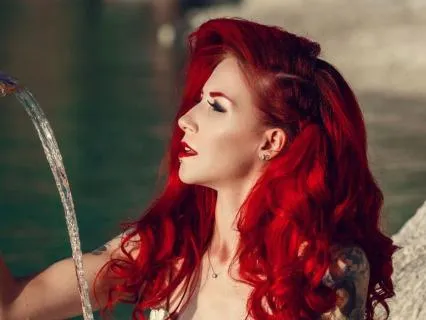
Vellamo is often depicted as a beautiful,
Tall,
And voluptuous woman.
Sometimes she is described wearing a red made of water lilies,
And that she has a beautiful singing voice.
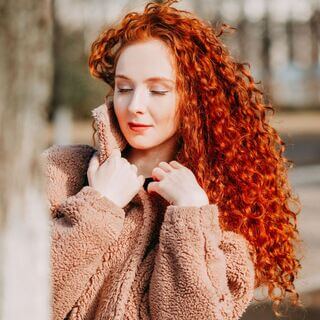
Vellamo is depicted with long,
Flowing hair.
The description of the hair color varies from red to dark and dark blonde,
And wearing a dress that is blue,
Green,
Or white.
Although she is often classified as a mermaid goddess,
She does not have a tail,
As Finnish mermaids rarely do in older myths.
Her dress is made of sea foam and seaweed.
She is often described wearing silver or golden jewelry.
Vellamo possesses the power to control and create waves and winds.
She can calm the waters or conjure up storms.
Additionally,
She has the ability to guide fish towards fishermen's nets,
Or lead them away from them.
She governs all sea life,
Including seabirds,
Fish,
And seals.
In folktales,
Sea animals are often referred to as Vellamo's cattle.
Vellamo's sacred animal is the cow.
Vellamo was the goddess of divination,
Water dancing.
Worshipped by both men and women,
She was associated with healing and was invoked in spells related to women's health,
Such as menstruation and pregnancy.
As a goddess of water,
She was sometimes also called upon to assist in the healing of wounds with cold water.
Vellamo slash Venen emä was first mentioned in the list of Finnish deities written by Finnish archbishop Mikael Akrikola in 1551.
Vellamo in folktales Vellamo and her cows It was a beautiful morning.
World was just awakening.
A lonely owl would make noise and little birds were awakening to a new day.
The lake was still and covered with mysterious morning mist.
Birds on the shore took a flight when the water began to stir.
From the water beautiful cows stepped to the shore,
Their skin glistening from the sparkling water.
They were followed by a woman with her long hair flowing freely.
It was Vellamo,
The goddess of the sea,
Lakes,
Waters,
And shores.
Vellamo allowed her cows to roam freely in the woods and along the sandy shores.
A mortal could hear them from distance,
The sounds of bells ringing in the cows' necks.
And Vellamo sang with her beautiful voice to the cows.
In ancient times,
Cows roamed freely in the fields and woods.
To keep them safe from predators,
People created various protective spells.
Each morning the cows were released into nature and in the evening they were summoned back.
Some cows preferred the cool shade of the forest to the sunlit fields.
Where they could wander among the trees with their calves.
To ensure their safety,
The cows were led three times around the cowshed and over iron rods.
Protective plants such as birch and roven branches were placed in the cowshed.
The bundles made from these branches were used to craft protective spells.
If one of the magical cows happened to mix with the land cows,
Vellamo usually led the herder to keep her cow.
If a person encountered Vellamo's cow on land,
They could keep it for themselves by simply walking in a circle around the cow,
But only if the cow agreed to accompany them.
Selling Vellamo's cows was not permitted even if someone happened to own one.
However,
It was allowed to give them as gifts to friends and family members.
When milking Vellamo's cows,
One had to squeeze the other three times toward the ground while saying,
One to the land,
One to water and one to the beings of the air.
Vellamo's relationship with her cows at the misty morning shores reflects the notion of symbiosis with nature.
The act of allowing her cows to roam freely in the woods and along the shores indicates a deep connection with the environment.
Where nature is not something to dominate,
But rather something to live in harmony with.
The cows,
Both magical and earthy,
Represent two planes of existence.
The mystical and the grounded,
Coexisting without conflict.
Cows were seen as woman's animals.
Cows provided milk,
Which was turned into butter,
And they were seen as very important animals because of that.
In Finnish folk poems,
Milk is seen as a sacred drink,
Often associated with the feminine and the divine.
Vellamo and the Spinner Once upon a time,
There was a little house by the shore.
One night,
The lady of the house heard someone knocking at the door.
A beautiful woman stood outside,
Carrying a basket of fresh wool.
She asked the lady if she would kindly cart and spin the wool into yarn,
As her spinning wheel was broken.
In return for the work,
She promised a generous payment.
The lady agreed,
And the mysterious woman left,
Saying that she would return after a few days.
The lady began to cart and spin the wool.
A few days later,
The mysterious woman returned.
She examined the wool and stated that she could not accept it because the lady had used her,
Quote,
Hard water while spinning.
The lady reflected on this and realized that she had tipped her fingers with saliva,
As it was an old habit she used to tame the bristle hair in the wool.
Guests said that she would bring another basket of wool,
And the lady could keep the spun yarns.
After receiving the new basket,
The lady used a cup of water to moisten her fingers while spinning.
The mysterious woman returned and expressed her gratitude,
Complimenting the lady on her work.
She declared that from that day forward,
There would always be fish in the lake for her.
The lady was confused,
But thanked the guest,
Thinking that the basket of yarn had been a generous reward.
As the strange woman left,
The lady watched her through the window and saw her walking towards the shore.
To her astonishment,
The woman with her basket whirled straight into the waves and vanished.
This mysterious woman was Vellamo,
The goddess of water.
After that encounter,
The family never ran out of fish,
And the lady knitted beautiful shirts from the yarn for her loved ones.
In the Finnish version of the story,
Vellamo states that she cannot take the first batch of yarns because the lady has used sydänvesi,
Hard water.
Saliva,
To moisten her fingertips while spinning.
The next time,
The lady uses a bowl filled with water,
Which we can assume is from the lake.
This suggests that Vellamo cannot accept the threads unless they are connected to the element of lake water.
Additionally,
We can interpret this story as a representation of the idea that humans are not permitted to enter the realm of the water spirits.
Vellamo,
As the goddess of the water,
Cannot accept work that is not aligned with her divine realm.
In other words,
Hard water is too personal,
Too human,
And not aligned with the divine forces represented by the lake.
This suggests that the sacred must be approached with respect and in the right manner.
In contrast,
Lake water is tied to the natural spiritual world of the goddess.
The water from the lake is not human in origin,
But rather connected to the divine,
To nature,
And to the mystical forces that Vellamo controls.
Vellamo and the Fisherman One beautiful summer morning,
Man greeted the forest,
And he shouted good morning to the matron of the sea as well.
Water started to stir and bubble.
Goddess of the water rose from the lake with a wreath made of reeds in her head.
Good morning to you,
My good man,
She said.
Fish never runs out from your table.
And so happened,
Man never ran out of fish.
On the lake he caught pikes,
Breams,
And herrings.
And just before Christmas,
Someone had brought a large salmon to his store.
It could have been nothing else than a fish of Vellamo.
The story shows that the water spirits reply to kindness and help those who they deem worthy.
Relationships Vellamo's spouse was the sea god,
Ahti.
A rather mysterious god in Finnish folklore,
He was the god of the sea.
God of water,
Protector of the fish and the sea life.
The name Ahti refers to the depths of water.
He could be seen as a shamanistic god as well.
It is believed that Ahti was originally a god of seals.
Ahti's symbol is a trident.
The ancient Finnish tribes used tridents when hunting seals,
So it is likely that the trident originates from there.
Both Vellamo and Ahti were able to shapeshift themselves into seals and to different sea animals.
Ahti was described as a bearded younger man or an old man with a long beard,
Covered with seaweed.
Like Vellamo,
He did not have a tail either in the older myths,
And he wore trousers made of sea foam.
The fishermen tapped the waters three times with their oar.
It was believed that this way,
Ahti would grant them fish.
In some stories,
Ahti is described to be musical and that he plays a harp.
Ahti and Vellamo lived in an underwater manor slash kingdom called Ahtola.
Once there lived a blacksmith by the shore.
One day,
An unknown man knocked on his door and asked for the services of a blacksmith.
When the blacksmith inquired where the stranger lived,
The man replied that he resided in Ahtola,
Located at the bottom of the sea.
The blacksmith felt scared and disappointed.
The stranger walked away.
However,
After a moment,
The stranger returned and urged the blacksmith to reconsider his decision.
He promised to bring him to Ahtola and back.
This time,
The blacksmith agreed,
And the water spirit took him to the underwater city.
Once there,
The blacksmith was guided to an underwater forge.
Where he set to work.
After completing his task,
He was given a tour of a beautiful underwater town.
It resembled towns on land,
But the inhabitants wore unusual clothing,
And some of the cats,
Dogs,
Cows,
And horses had scales or tails.
The blacksmith enjoyed a magnificent feast before the water spirit brought him back home.
However,
When he recounted his adventure,
No one believed him.
This story came from Alajärvi from southern Ostrobothnia.
In Finnish folklore,
It is very common that the realm of gods and goddesses reflected the life of humans.
Therefore,
The deities lived in great manners and farms,
And did the same things as humans,
Hunting,
Fishing,
And farming.
For example,
Mielikki,
The goddess of the forest,
Also resided in a manor in the middle of the woods with her family and servants.
Ahtola,
Vellamo,
And Ahti kept cows,
Horses,
Pigs,
Chicken,
Cats,
And dogs,
And other animals,
Which all could breed and live underwater.
They also had blacksmiths,
Maids,
And servants underwater,
In the form of merpeople.
In many stories,
Mermaids and mermen are referred to as Vellamos and Ahti's sons and daughters.
This most likely is a metaphor to connect them all together.
Folklore does not tell any literal names of their children.
Ahti was asked to help with chanting healing spells.
Ahti,
King of waters,
Golden ruler of the seas,
Step upon the mossy pathways where swine have trod with cloven feet,
Where pigs have wandered,
Wandered away.
Come here when the need is great,
Come here when the call is heard,
To aid me in my hurried pain,
To soothe the aches upon my feet,
The sufferings upon my hands.
So it is to dwell in pain,
To live within the grip of woe.
When water was taken from a stream or from the well for healing or for spells,
Silver was left for Ahti,
Golden king of waters,
Mighty scepter of the seas.
Come to take the golden prize,
Come to claim the silver's share,
Gold I give in honour's name,
Silver I offer for your care,
Copper too for your pains.
Healing powers of water.
Folklorist Uuno Haarava wrote in 1915 that the goddess of water and the water spirits possessed knowledge of remedies for every illness.
If someone wanted to seek advice from a water spirit,
They could ask for the spirit to appear in their dreams.
To facilitate this,
One would need to take two branches of a roven tree,
Tie them together and place a burnt stone at the top.
The stone had to be burnt in a sauna stove.
The tied branches and the stone would then be placed in a stream,
And then the individual would wait for the water spirit to appear in their dreams.
In Karelia there is a story about a child of a water spirit who sat on a stone by the shore.
Water that was dripping from child's clothes was believed to have healing powers.
An old tale recounts a story about a woman who sadly drowned,
And her body was never recovered.
Her husband mourned her deeply,
And one night she appeared in his dream,
Reassuring him that he need not worry,
Because she was living with the spirits of the water.
Vellamo and me and divine cows.
My holy trinity of Finnish goddesses are Mielikki,
Goddess of the forest,
Vellamo,
Goddess of water,
And Ellovietar,
Goddess of shamanism.
These three are the ones that I connect with the most.
Vellamo to me represents both healing and destructive powers of nature.
She also represents subconsciousness and emotions.
In the folktales her emotions are connected with her powers.
When she was in a good mood,
The seas were calm.
When she was in a bad mood,
She created floods,
Giant waves and storms.
Through her association with cows,
Vellamo can be seen as a goddess related to abundance.
To me all the Finnish deities have shamanistic aspects within them.
In the oldest layers of storytelling,
Water areas,
Lakes and ponds have been portals to other worlds.
There was a belief that water birds were messengers from the other world.
When people saw loons and swans diving and being underwater for long periods of time,
They thought that the birds took messages from the living to the spirits.
The story about Vellamo and her cows was my first introduction to Vellamo.
I have always taken a kin to this story.
It is very easy for me to imagine the setting.
There's magic in Finnish summer nights.
When the sun does not go down.
When I think of this story,
I see an early summer morning.
Birds are chirping and a cuckoo is cuckooing.
Lake is completely still.
Trees are humming in the slight wind.
Sun is behind the clouds,
But will appear within few hours.
And then she,
The goddess,
Raises from the water,
Followed by her slightly blue-tinted beautiful cows.
The cows walk on the sand between the reeds.
And the goddess walks between them,
Petting them.
She sings them a lullaby and smiles.
In Finland,
Cows were seen as women's animals.
And often women told their troubles to the cows.
They talked to them.
And for many women,
Their cow was more of a friend or a pet rather than just an animal or a milk machine.
Milk and butter provided nutrition during a time when sources of nutrition were limited.
Cows are connected with motherhood,
Abundance and the divine.
They are seen as a symbol of the earth's nurturing essence,
Providing sustenance and representing prosperity.
I grew up in a little country village.
And when I was a child and I went to school,
There was a cow pastor next to my school.
So I walked by the cows every morning during my formative years.
Still today,
Every time when I see cows in a pastor,
I need to stop and admire their beauty.
My mind tends to automatically think about the story of Vellamo every time when I see a cow.
Looking into the eyes of a cow is like looking into the depths of a mysterious pond.
I have always loved mermaid stories,
So my affiliation towards Vellamo should not be a surprise to anyone.
Stories about Vellamo,
She grants wishes to people who are respectful towards her.
This is a very common universal myth that is related with goddesses of the sea.
The stories about her reveal the magical underwater world that for many people in the past was unknown,
For the water was unknown.
Only brain once dived underwater to see what lied beneath the waves.
Flowing seaweed looked like hair and maybe they came across unusual looking fish and strange water animals.
Vellamo represented a liminal space.
For in Finnish folklore,
Water areas,
Lakes and ponds were gateways to the world of the spirits,
And she was the goddess who ruled these gateways.